A Three Trillion Dollar Gamble and Global Diffusion: The Dual Narratives of AI in 2026

marsbitPublicado a 2025-12-23Actualizado a 2025-12-23

Resumen

Analysis of 2026 AI trends from top institutions (a16z, Goldman Sachs, J.P. Morgan, Morgan Stanley, BlackRock) reveals two competing narratives: 1) AI infrastructure capital expenditure is projected to reach $3 trillion, with less than 20% currently deployed. Major cloud providers are heavily investing in data centers and GPUs, but J.P. Morgan cautions that near-term profit boosts will be limited to select companies. True productivity gains remain years away, indicating 2026 will still be an intensive investment phase rather than a harvest period. 2) A divergence exists in market expectations. BlackRock's "Micro is Macro" concept highlights how AI investments by a few firms already impact macro trends. The S&P 500 market-cap weighted index outperformed the equal-weight version by 8% YTD, suggesting concentrated AI benefits for tech giants. Morgan Stanley projects the S&P 500 to reach 7800, betting on continued dominance of big tech. Conversely, J.P. Morgan and Goldman Sachs anticipate AI红利global spillover, especially to emerging markets (10.9% expected returns), Europe (7.1%), and Japan (8.2%), fueled by a weaker dollar and global infrastructure upgrades. The divide centers on whether AI红利remains concentrated in U.S. tech or disperses globally.

After reviewing the 2026 trend outlook reports from five top institutions—a16z, Goldman Sachs, J.P. Morgan, Morgan Stanley, and BlackRock—two key insights have been distilled:

1) Forget the Bubble, the AI Industry is Entering an Accelerated Investment Phase

Morgan Stanley provided a staggering figure: AI infrastructure capital expenditure is projected to reach $3 trillion, with less than 20% currently deployed.

What does this mean? Hyperscale cloud providers like Amazon, Google, Meta, Microsoft, and Oracle are pouring massive investments into building data centers, purchasing GPUs, and expanding power infrastructure—but this is just the beginning.

However, J.P. Morgan offered a more cautious perspective on the actual benefits of widespread AI adoption, suggesting that it will only boost profits for some companies in the short term, helping giants optimize their earnings narrative. Achieving the transformative productivity gains from AI will take many more years.

In essence, 2026 will be another year of frenzied spending on AI, but it remains an investment phase, far from the harvest season.

2) U.S. Stock Concentration Dividends vs. Spillover to Non-U.S. Markets: Which Side Are You On?

BlackRock introduced the concept of “Micro is Macro,” arguing that the AI investments of a few companies already have macro-level impact.

Data shows that year-to-date in 2025, the equal-weighted S&P 500 has risen only 3%, while the market-cap-weighted version of top tech companies has surged 11%. This 8% gap may be attributed to the concentration of AI dividends.

On this front, Morgan Stanley is the most aggressive, setting a target of 7800 points for the S&P 500—a 14% increase from current levels—based on the sustained strengthening of the profitability of the tech giants.

However, J.P. Morgan believes that as the U.S. dollar weakens, AI dividends will spill over into global supply chains, projecting an annualized return of 10.9% for emerging markets, higher than the 6.7% for U.S. large-cap stocks. Goldman Sachs also sides with the spillover effect, giving emerging markets the same 10.9% projection and suggesting opportunities in Europe (7.1%) and Japan (8.2%).

Simply put, these are two entirely different bets: BlackRock and Morgan Stanley are betting that AI dividends will continue to be monopolized by U.S. tech giants, while J.P. Morgan and Goldman Sachs are wagering that AI is a global infrastructure upgrade, with benefits diffusing to non-U.S. markets worldwide.

Preguntas relacionadas

QWhat is the projected AI infrastructure capital expenditure by 2026 according to Morgan Stanley, and what does it indicate about the current deployment?

AMorgan Stanley projects AI infrastructure capital expenditure to reach $3 trillion by 2026, with current deployment at less than 20%. This indicates that major cloud providers like Amazon, Google, Meta, Microsoft, and Oracle are in the early stages of investing heavily in data centers, GPUs, and power facilities, signaling a period of accelerated investment rather than immediate returns.

QHow does J.P. Morgan assess the short-term impact of AI adoption on corporate profits?

AJ.P. Morgan believes that the large-scale adoption of AI will only provide a short-term boost to some corporate profits in the near term, primarily helping giants optimize their earnings narrative. It will take many years for AI to achieve a qualitative leap in productivity and deliver substantial returns.

QWhat is the 'Micro is Macro' concept proposed by BlackRock, and how is it reflected in the stock market performance?

ABlackRock's 'Micro is Macro' concept suggests that the AI investments of a few companies already have macro-level influence. This is reflected in the stock market where the equal-weight S&P 500 index rose only 3% year-to-date in 2025, while the market-cap-weighted version, dominated by top tech companies, rose 11%, indicating an 8% gap driven by AI concentration红利 (dividends).

QWhat are the differing views between Morgan Stanley and J.P. Morgan regarding the geographical distribution of AI红利 (dividends)?

AMorgan Stanley bets that AI红利 will continue to be monopolized by U.S. tech giants, setting an ambitious S&P 500 target of 7800 points. In contrast, J.P. Morgan believes that AI红利 will spill over to the global supply chain as the U.S. dollar weakens, forecasting a 10.9% annualized return for emerging markets, higher than the 6.7% for U.S. large-cap stocks.

QWhich institutions side with the view that AI红利 will globalize and benefit non-U.S. markets, and what are their specific forecasts?

AJ.P. Morgan and Goldman Sachs side with the view that AI红利 will globalize. J.P. Morgan forecasts a 10.9% annualized return for emerging markets, while Goldman Sachs also predicts 10.9% for emerging markets, along with 7.1% for Europe and 8.2% for Japan, anticipating that AI-driven infrastructure upgrades will benefit markets outside the U.S.

Lecturas Relacionadas

Apple Also Has to Pay Rent Now

Apple Pays Rent Too: The Two-Way Flow of "Traffic Tax" and "AI Capability Rent" Between Tech Giants For over two decades, Google has paid Apple an estimated $20 billion annually to remain the default search engine on Safari, a "traffic tax" for a critical user entry point. However, in 2026, the direction of this cash flow partially reversed. Apple agreed to pay Google roughly $1 billion per year to license its Gemini AI models, as Apple's own models reportedly struggled with complex tasks. This creates a unique dynamic: Apple acts as the "landlord" in the established search ecosystem, collecting rent from Google for access. Simultaneously, in the emerging AI arena, Apple becomes the "tenant," paying Google for access to cutting-edge AI capabilities it cannot currently match internally. While Apple claims its new models are "distilled" from Gemini outputs and contain "not a drop" of Google's original code, core dependencies remain. Its knowledge base is refined using Gemini's outputs, and its most powerful cloud model runs on Google's infrastructure. Apple has structured the deal as non-exclusive, allowing it to theoretically switch AI suppliers—a hedge against over-reliance. The future hinges on whether advanced AI models become a commodity (cheap and abundant) or remain a concentrated, scarce resource (expensive and controlled by few). Apple is betting on the former, leveraging its massive device ecosystem to be a powerful, choosy customer. If the latter proves true, its bargaining power could erode. This power dynamic is extending to developers. Apple, Google, and WeChat are all pushing for apps to expose their core functions as standardized "actions" or "intents" that their respective AI assistants (Siri, Gemini, WeChat AI) can directly call. The new scarce resource is no longer just app store visibility, but "being selected by the AI." The currency of "rent" has changed from a 30% revenue share to ceding control over how users interact with an app's functions.

marsbitHace 41 min(s)

Apple Also Has to Pay Rent Now

marsbitHace 41 min(s)

Missed the SpaceX IPO? WEEX's "First Trade Protection" Lets You Experience US Stock Trading Risk-Free.

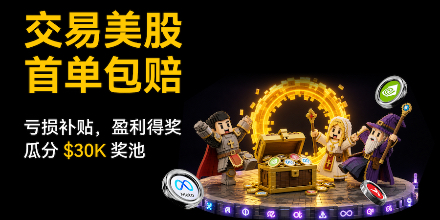
With the excitement around SpaceX's recent public listing reigniting interest in the US stock market, Chinese investors face significant challenges accessing compliant and convenient trading channels following regulatory actions against major online brokers. This article explores the available options, highlighting their risks and limitations. Traditional paths for US stock investments remain problematic. Qualified Domestic Institutional Investor (QDII) and Listed Open-Ended Fund (LOF) products, while compliant, suffer from high fees, significant purchase premiums, and a very limited selection of assets. Small, unregulated offshore brokers pose substantial risks, including potential insolvency. While secure, VIP accounts at banks in Hong Kong or Singapore require high minimum deposits (often 1-2 million RMB) and in-person visits, placing them out of reach for most retail investors. The article positions cryptocurrency exchanges, specifically their TradFi (traditional finance on-chain) offerings, as a compelling alternative. Platforms like WEEX are noted for providing access to a wide range of US stocks and ETFs, including SpaceX (SPCXON), through tokenized assets. This method offers advantages such as a single account for both crypto and traditional assets, USDT-based settlement avoiding fiat complexities, flexible leverage, and robust risk management. To attract users, WEEX is promoting a "First Trade Guarantee" campaign. Running from June 15 to July 8 (UTC+8), it features a $30,000 prize pool. Users who trade $500 worth of US stock contracts can qualify for a guarantee on their first eligible trade: 100% loss coverage up to $30 or a 20% bonus on profits up to $30. The campaign is presented as a low-risk opportunity for both crypto natives and traditional investors to experience US stock trading.

marsbitHace 42 min(s)

Missed the SpaceX IPO? WEEX's "First Trade Protection" Lets You Experience US Stock Trading Risk-Free.

marsbitHace 42 min(s)

How Difficult is Chip Making? A Division Error Costs 475 Million Dollars

How Hard Is It to Make a Chip? A Division Error Cost $475 Million Chip expert Shi Kan, a researcher at the Chinese Academy of Sciences and a popular tech creator, explains the immense challenges of chip development. Chips are foundational to modern technology, but their creation is extraordinarily difficult. The journey from sand to a functional chip involves complex design and manufacturing, but a critical bottleneck is verification—ensuring the design works flawlessly before costly production. A single, undetected bug can have catastrophic consequences, as illustrated by the infamous 1994 Intel Pentium FDIV bug. A flaw in the floating-point division unit forced a recall costing $475 million. Unlike software, chips cannot be easily patched after manufacture, making "first-time success" paramount. However, industry surveys show only 24% of chip projects achieve this; over three-quarters require at least one costly re-spin due to design flaws. Verification has thus become the dominant phase, consuming up to 70% of the design cycle. The core challenge is a "verification impossible triangle" between high performance, good debuggability, and low cost. Exhaustively verifying a modern CPU core could take 15,000 years with software simulation, or 30 years with advanced hardware emulation—timeframes utterly impractical for development. Despite being essential, verification is often seen as unglamorous "dirty work," receiving less academic attention than fields like AI. Shi and his team are tackling this by developing an agile verification research framework called ENCORE, based on FPGA technology, to improve verification efficiency and debug capability. Beyond research, Shi engages in public science communication through long-form video content, aiming to demystify chip technology, AI, and computer science. He argues for the value of pursuing "hard and long-term" endeavors, whether in the meticulous world of chip verification or in creating substantive educational content, believing such sustained effort is likely the right path forward.

marsbitHace 52 min(s)

How Difficult is Chip Making? A Division Error Costs 475 Million Dollars

marsbitHace 52 min(s)

Trading

Spot
Futuros

Artículos destacados

Cómo comprar BILL

¡Bienvenido a HTX.com! Hemos hecho que comprar Billions Network (BILL) sea simple y conveniente. Sigue nuestra guía paso a paso para iniciar tu viaje de criptos.Paso 1: crea tu cuenta HTXUtiliza tu correo electrónico o número de teléfono para registrarte y obtener una cuenta gratuita en HTX. Experimenta un proceso de registro sin complicaciones y desbloquea todas las funciones.Obtener mi cuentaPaso 2: ve a Comprar cripto y elige tu método de pagoTarjeta de crédito/débito: usa tu Visa o Mastercard para comprar Billions Network (BILL) al instante.Saldo: utiliza fondos del saldo de tu cuenta HTX para tradear sin problemas.Terceros: hemos agregado métodos de pago populares como Google Pay y Apple Pay para mejorar la comodidad.P2P: tradear directamente con otros usuarios en HTX.Over-the-Counter (OTC): ofrecemos servicios personalizados y tipos de cambio competitivos para los traders.Paso 3: guarda tu Billions Network (BILL)Después de comprar tu Billions Network (BILL), guárdalo en tu cuenta HTX. Alternativamente, puedes enviarlo a otro lugar mediante transferencia blockchain o utilizarlo para tradear otras criptomonedas.Paso 4: tradear Billions Network (BILL)Tradear fácilmente con Billions Network (BILL) en HTX's mercado spot. Simplemente accede a tu cuenta, selecciona tu par de trading, ejecuta tus trades y monitorea en tiempo real. Ofrecemos una experiencia fácil de usar tanto para principiantes como para traders experimentados.

267 Vistas totalesPublicado en 2026.05.07Actualizado en 2026.06.02

Cómo comprar BILL

Qué es ATWO

I. Introducción al ProyectoArena Two es una plataforma interactiva descentralizada que permite a los fanáticos jugar un papel activo y tokenizado en los resultados de eventos en tiempo real. A diferencia de los modelos de transmisión tradicionales que reducen a los fanáticos a espectadores pasivos, Arena Two aprovecha la tecnología blockchain para permitir que los fanáticos voten directamente en tiempo real e influyan en los resultados en el campo.II. Información del TokenNombre del token: ATWO (Arena Two)III. Enlaces RelacionadosSitio web: https://arenatwo.com/Exploradores: https://basescan.org/token/0x499D35eBE6cEe9B2Ac35Fd003fcBbeeB9CFc7B32Twitter: https://x.com/arenatwoXNota: La introducción del proyecto proviene de los materiales publicados o proporcionados por el equipo oficial del proyecto, que es solo para referencia y no constituye asesoramiento de inversión. HTX no se hace responsable de ninguna pérdida directa o indirecta resultante.

179 Vistas totalesPublicado en 2026.05.18Actualizado en 2026.06.02

Qué es ATWO

Cómo comprar ATWO

¡Bienvenido a HTX.com! Hemos hecho que comprar Arena Two (ATWO) sea simple y conveniente. Sigue nuestra guía paso a paso para iniciar tu viaje de criptos.Paso 1: crea tu cuenta HTXUtiliza tu correo electrónico o número de teléfono para registrarte y obtener una cuenta gratuita en HTX. Experimenta un proceso de registro sin complicaciones y desbloquea todas las funciones.Obtener mi cuentaPaso 2: ve a Comprar cripto y elige tu método de pagoTarjeta de crédito/débito: usa tu Visa o Mastercard para comprar Arena Two (ATWO) al instante.Saldo: utiliza fondos del saldo de tu cuenta HTX para tradear sin problemas.Terceros: hemos agregado métodos de pago populares como Google Pay y Apple Pay para mejorar la comodidad.P2P: tradear directamente con otros usuarios en HTX.Over-the-Counter (OTC): ofrecemos servicios personalizados y tipos de cambio competitivos para los traders.Paso 3: guarda tu Arena Two (ATWO)Después de comprar tu Arena Two (ATWO), guárdalo en tu cuenta HTX. Alternativamente, puedes enviarlo a otro lugar mediante transferencia blockchain o utilizarlo para tradear otras criptomonedas.Paso 4: tradear Arena Two (ATWO)Tradear fácilmente con Arena Two (ATWO) en HTX's mercado spot. Simplemente accede a tu cuenta, selecciona tu par de trading, ejecuta tus trades y monitorea en tiempo real. Ofrecemos una experiencia fácil de usar tanto para principiantes como para traders experimentados.

196 Vistas totalesPublicado en 2026.05.18Actualizado en 2026.06.02

Cómo comprar ATWO

Discusiones

Bienvenido a la comunidad de HTX. Aquí puedes mantenerte informado sobre los últimos desarrollos de la plataforma y acceder a análisis profesionales del mercado. A continuación se presentan las opiniones de los usuarios sobre el precio de A (A).

活动图片