A Robotic Version of MicroStrategy Has Arrived! Can Ordinary People Invest in Giants in the Robotics Sector?

marsbitPublicado a 2026-05-21Actualizado a 2026-05-21

Resumen

Andrew Kang, a prominent former crypto investor, has shifted his focus to AI and robotics, taking on the role of CEO at RoboStrategy. This publicly traded closed-end fund, inspired by MicroStrategy's capital model, aims to give retail investors access to early-stage robotics investments, a sector traditionally dominated by institutional capital. RoboStrategy recently listed on NASDAQ under the ticker "BOT" and secured a $2 billion equity financing commitment. Kang, co-founder of Mechanism Capital, began investing in robotics two years ago, with a notable early investment in Figure AI. RoboStrategy's portfolio now includes several robotics companies across hardware and software. The fund differentiates itself through permanent capital, a team of industry experts, and strong marketing capabilities. Its core strategy, termed R.I.S.E., involves raising capital when its share price trades at a premium to Net Asset Value (NAV), investing in high-conviction private robotics companies, scaling those investments, and using the resulting NAV growth to attract further capital—creating a potential flywheel effect. However, risks include its current high share price premium over NAV, the subjective valuation and illiquidity of its private holdings, and the inherent volatility of a closed-end fund structure.

Author: Nancy, PANews

Andrew Kang, a star investor once active in the crypto market, is shifting his focus to the AI and robotics sectors. On May 20, Andrew Kang announced his official appointment as CEO of RoboStrategy, responsible for the company's strategic direction and investment portfolio management.

As an innovative fund inspired by the capital model of the crypto DAT company Strategy, RoboStrategy recently officially launched on Nasdaq and secured up to $20 billion in equity financing commitments, quickly drawing market attention.

From Crypto to Robotics, Already Invested in Star Companies Like Figure

RoboStrategy is a public closed-end fund focused on robotics and embodied AI, co-founded by Andrew Kang and Marc Weinstein in 2025. Its goal is to open up early-stage robotics investment opportunities, previously accessible only to a few institutional investors, to a broader base of ordinary investors.

Andrew Kang and Marc Weinstein are also co-founders of the crypto investment firm Mechanism Capital. Since its establishment in 2020, Mechanism Capital has invested in over a hundred crypto projects, including well-known protocols and platforms such as Arbitrum, Pendle, Near, Deribit, and 1inch. However, based on public information, Mechanism Capital has rarely disclosed new crypto investment activities since October 2025. Andrew Kang recently admitted that he has not been closely following the crypto market for the past few months.

In contrast, he has been dedicating more effort to the robotics field. According to Andrew Kang, he began researching the robotics industry two years ago, but at that time, most VCs advised against entering this sector. In the market environment back then, robotics companies generally faced fundraising difficulties. The industry lacked mature, large-scale success stories, and there were many doubts from the outside world regarding their commercialization paths, technology implementation capabilities, and potential market size.

In his view, however, the acceleration of embodied AI development will completely transform the entire industry. Humanoid robots are one of the few directions with the potential to go "from zero to a multi-trillion dollar market," similar to the developmental stage of Bitcoin in 2013, but with a larger long-term market space. Particularly as manufacturing, logistics, and service industries continue to face labor shortages, embodied AI and robotics technologies are accelerating their entry into real industrial scenarios.

Therefore, in February 2024, Andrew Kang completed his first significant investment in robotics, investing $19 million in Figure AI. Today, Figure AI has become one of the world's highest-valued humanoid robotics companies, with a latest valuation of $39 billion, compared to its pre-money valuation of approximately $2 billion in February 2024. (Related reading:The Entrepreneur from the Farm: After Building Flying Cars, Gambles on a $39 Billion Giant in the Robotics Sector)

However, Andrew Kang also realized that the future development of the robotics industry will heavily rely on massive long-term capital, which is difficult to sustain through individuals or traditional funds alone. Meanwhile, robotics startups also need a long-term capital platform that truly understands industry demands to help them secure continuous financing, industrial resources, and market recognition support. More importantly, current robotics innovation is mainly concentrated in the private market, making it difficult for most ordinary investors to participate.

Based on this, Andrew Kang co-founded RoboStrategy. Currently, RoboStrategy has invested in robotics companies including Figure AI, Apptronik, Dyna Robotics, Dexmate, Standard Bots, and Path Robotics, covering multiple areas from hardware and infrastructure to software, with an average investment size per round of approximately $7 million.

In Andrew Kang's view, compared to traditional VCs, RoboStrategy possesses several differentiated advantages. First, as a closed-end fund, its capital is permanent, free from the fund term limitations of traditional VCs, allowing it to adopt an extremely long-term perspective in deploying in the robotics and embodied AI industry. Second, the team brings together multiple seasoned professionals from the robotics industry, including long-time founders or operators, making it regarded by many startups as one of the "most professional and knowledgeable investment institutions in the robotics industry." Additionally, leveraging the team's strengths in digital marketing and social media, RoboStrategy not only has stronger fund distribution capabilities but is also more adept at expanding market influence and industry awareness, thereby helping its portfolio companies gain more attention, talent, and resources.

Launched on Nasdaq, Attempting to Replicate the Strategy Capital Flywheel

As the first closed-end fund specifically designed for public market investors, RoboStrategy officially began trading on Nasdaq on May 11, under the ticker symbol "BOT." As of now, the BOT stock price is around $28.2, having declined approximately 21.58% since listing.
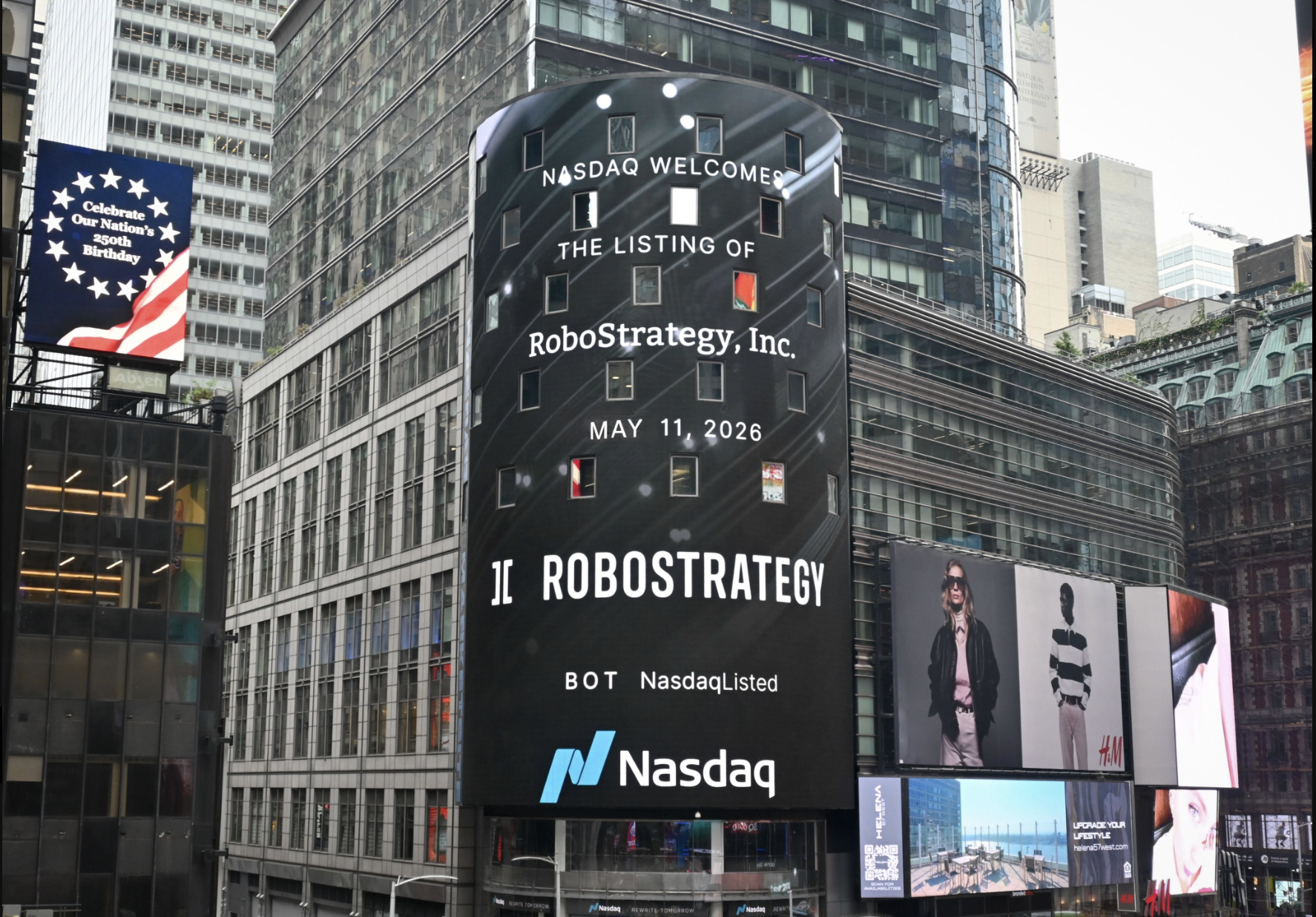
Public information shows that RoboStrategy board member Jason Zhao purchased 400,000 shares of the company at $10 per share in October last year; subsequently, Andrew Kang also purchased 246,000 shares at the same price. Meanwhile, the investment advisory firm FP Strategies LLC continued to increase its holdings by 290,000 shares at $10 per share in April this year, currently holding a cumulative total of approximately 390,000 shares.

In terms of capital operation logic, RoboStrategy draws inspiration from Strategy's Bitcoin treasury model. The latter continuously issues stocks and convertible bonds in the public capital market to obtain low-cost funds for consistently increasing its Bitcoin holdings, leveraging stock price premiums to form a capital flywheel. This model has been emulated by numerous companies.

RoboStrategy attempts to replicate this logic in the robotics sector. The fund's core idea is to use three main financing instruments—CEF, PIPE, and ATM—to continuously raise funds when the fund's stock price trades at a premium relative to its Net Asset Value (NAV), then deploy that capital into high-growth private robotics and embodied AI companies, thereby constructing the R.I.S.E capital compound interest flywheel.
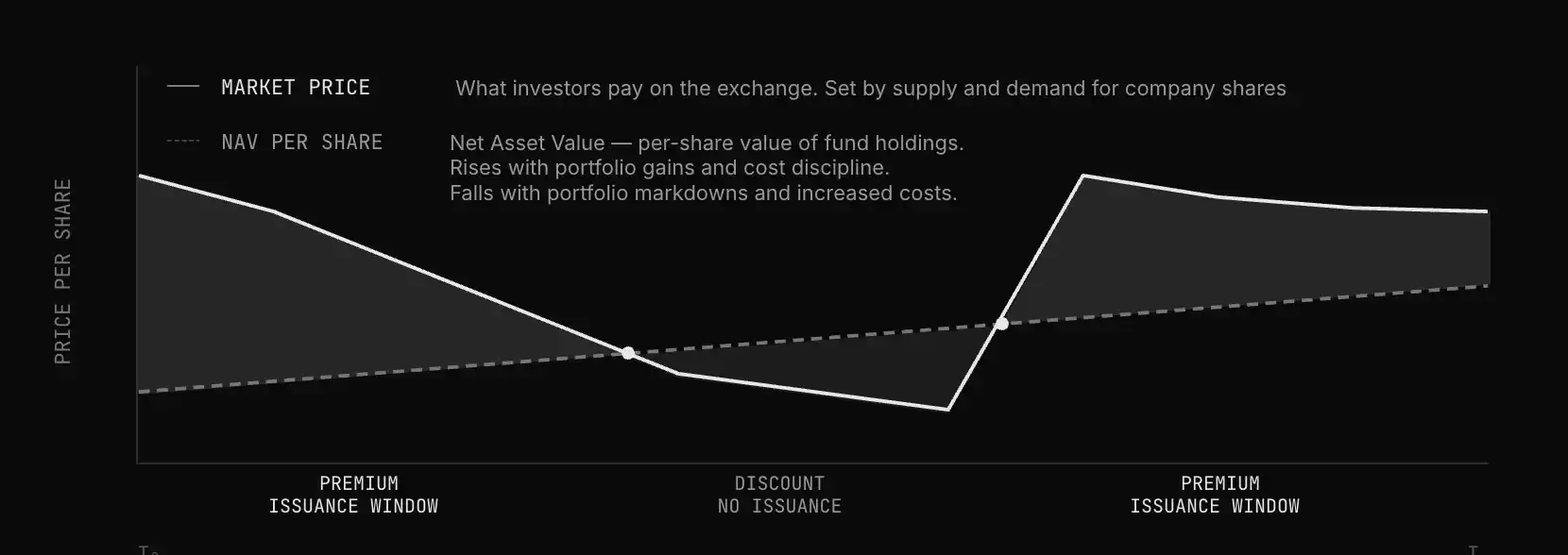
The so-called R.I.S.E represents four stages:

· Raise: Issue shares at a premium when the market price is above NAV to obtain more cash.

· Invest: Through deep due diligence, allocate funds to high-conviction robotics projects.

· Scale: Portfolio companies use the new capital to accelerate expansion, driving fund NAV growth.

· Expand: As NAV increases and industry enthusiasm rises, further attract investors and new capital, expanding the fund's scale and influence.

This model essentially utilizes the dual pricing mechanism of closed-end funds (market price vs. net asset value), aiming to achieve compound growth in NAV per share over the long term, while replacing the multi-layered fee structure of traditional private equity funds with a single public fund structure.

Earlier this month, RoboStrategy signed a $20 billion Committed Equity Financing (CEF) agreement with Roth Principal Investments, a subsidiary of Roth Capital Partners, to support its strategic growth plans.

However, just as most crypto DAT companies' treasury stories are difficult to sustain, RoboStrategy also faces risks that cannot be ignored.

As of March 31, 2026, RoboStrategy's NAV was approximately $7.31 per share, with total net assets around $145.5 million. Based on the current stock price, the market's valuation premium for it is close to 3 times. But a high premium does not mean discount risk will not materialize. Meanwhile, since the fund's investment targets are mostly unlisted robotics companies, their asset valuations themselves are highly subjective and have limited liquidity. Exit paths heavily rely on IPO or M&A markets. Once the capital environment cools down, these assets may face valuation adjustment pressure.

Furthermore, the closed-end fund structure means investors cannot redeem shares at any time like with open-end funds; they can only trade on the secondary market. Therefore, price volatility is often amplified.

Whether RoboStrategy can sustain its high premium and market enthusiasm in the long term remains to be verified by the market.


Preguntas relacionadas

QWhat is RoboStrategy, and what is its primary goal?

ARoboStrategy is a publicly traded, closed-end fund focused on robotics and embodied AI. Its primary goal is to open up early-stage investment opportunities in the robotics sector, traditionally available only to institutional investors, to the broader public market.

QWho founded RoboStrategy, and what is Andrew Kang's background?

ARoboStrategy was co-founded by Andrew Kang and Marc Weinstein in 2025. Andrew Kang is a former star investor in the crypto market and a co-founder of the crypto investment firm Mechanism Capital. He has now shifted his focus to the AI and robotics sector and serves as the CEO of RoboStrategy.

QHow is RoboStrategy's capital model inspired by MicroStrategy?

ARoboStrategy's capital model is inspired by MicroStrategy's Bitcoin treasury strategy. It aims to create a capital flywheel by issuing shares at a premium when its market price exceeds its Net Asset Value (NAV). The raised capital is then invested in high-growth private robotics companies, aiming to increase the fund's NAV and attract more capital, similar to MicroStrategy's approach with Bitcoin.

QWhat does the R.I.S.E. strategy stand for in the context of RoboStrategy?

AR.I.S.E. is RoboStrategy's four-stage capital strategy: Raise (issuing shares at a premium), Invest (allocating capital to high-conviction robotics projects), Scale (helping portfolio companies grow to increase NAV), and Expand (attracting more investors and capital as NAV and industry interest rise).

QWhat are some key risks associated with investing in RoboStrategy?

AKey risks include: 1) Potential discount to NAV if market sentiment cools. 2) Subjective and illiquid valuations of its private company investments. 3) High dependence on favorable IPO or M&A markets for exits. 4) Price volatility amplified by its closed-end fund structure, which prevents direct redemptions, forcing trades on the secondary market.

Lecturas Relacionadas

How to Define "Real U.S. Stocks": Differences Between On-Chain Tokens, Price Contracts, and Direct Broker Connections

**Title:** Defining "Real US Stocks": Differences Among On-Chain Tokens, Price Contracts, and Broker-Direct Access **Summary:** In 2026, using stablecoins to purchase US stocks is mainstream, but products marketed as "buying US stocks with USDT" offer fundamentally different assets. This article analyzes three primary models. **1. Tokenized Stocks:** These are on-chain tokens representing economic exposure to underlying stocks, held by an issuer or custodian. They offer benefits like 24/7 trading and DeFi composability (e.g., use as loan collateral). However, users lack direct legal shareholder status; dividends may not be paid in cash, and voting rights are typically non-binding advisory expressions. Examples include platforms like Ondo Finance. **2. Stock Futures / Equity Perpetuals:** These are derivative contracts tracking a stock's price, allowing leveraged long/short positions 24/7, similar to crypto perpetuals. They offer high efficiency and flexibility but involve funding fees, which can be a significant long-term cost, especially during strong trends. Crucially, they confer no ownership rights (dividends, voting) to the holder. **3. Broker-Direct Model:** This model provides access to real securities via licensed broker-dealers. Stocks/ETFs are bought and held within the US clearing and custodial system (e.g., DTCC), making it the only path to genuine stock ownership. Users receive cash dividends and formal proxy voting rights (where applicable). It supports thousands of stocks and ETFs, far exceeding the coverage of the other two models. Key advantages include no funding fees, a clean cost structure for long-term holds, and the potential to transfer holdings to other brokers. Some platforms facilitate stablecoin (USDT/USDC) deposits, reducing reliance on traditional banking. A critical distinction exists *within* the broker-direct model: the underlying brokerage architecture (e.g., Fully Disclosed IB, Omnibus IB, Self-Clearing) determines how client assets are held, protected, and how safeguards like SIPC insurance are conveyed. Users should verify the specific clearing structure and regulatory compliance of any platform. In conclusion, "buying US stocks with USDT" can mean holding an on-chain economic proxy (Tokenized Stocks), trading a price derivative (Stock Futures), or owning the actual security (Broker-Direct). For users seeking full ownership rights and long-term investment, the broker-direct model is the definitive choice, though its implementation details require careful scrutiny.

marsbitHace 20 min(s)

How to Define "Real U.S. Stocks": Differences Between On-Chain Tokens, Price Contracts, and Direct Broker Connections

marsbitHace 20 min(s)

NVIDIA Launches DSX Platform, Expanding into AI Factory Infrastructure

NVIDIA has unveiled the DSX platform at its GTC Taipei event, marking a strategic expansion from GPU sales into comprehensive AI factory infrastructure solutions. The platform addresses challenges like power supply, cooling, and resource orchestration as AI models scale, shifting the industry focus from single-chip performance to overall infrastructure efficiency. DSX integrates NVIDIA's chips, systems, software, and partner technologies to cover the entire AI factory lifecycle—from design and simulation to deployment and operations. It aims to accelerate deployment, improve reliability and operational efficiency, and reduce the cost per generated token in AI inference. The software suite includes DSX MaxLPS, which uses 45°C liquid cooling and rack-level optimization to allow up to 40% more GPUs per megawatt, and DSX OS, an open-source platform for AI factory operations. The platform also encompasses reference designs, digital twin simulation (DSX Sim), dynamic workload adjustment based on grid conditions (DSX Flex), and data exchange between systems. Early adopters include cloud providers like CoreWeave and Lambda. Major hardware partners, including Dell, HPE, Lenovo, and Supermicro, are developing DSX-ready systems. Pilot projects for DSX Flex are underway with energy providers. Strategically, DSX represents NVIDIA's ongoing transition from an AI chip supplier to a full-stack AI infrastructure platform provider, aiming to set industry standards and solidify its market leadership.

marsbitHace 26 min(s)

NVIDIA Launches DSX Platform, Expanding into AI Factory Infrastructure

marsbitHace 26 min(s)

After Burning Tens of Billions of Dollars in Tokens, Silicon Valley Giants Start Limiting Employee Token Usage

After burning tens of billions of dollars on AI tokens, major Silicon Valley firms are now restricting employee usage. Companies like Microsoft, Uber, and Salesforce, which heavily promoted AI for "efficiency," are facing a cost crisis. The practice of "tokenmaxxing"—pushing employees to maximize AI tool usage—led to wasteful spending on trivial tasks like checking the weather or writing birthday messages, with studies showing significant hidden costs for bug fixes and code rewrites. The core issue is a misalignment between individual productivity gains and actual business value. While employees use AI to automate tasks they dislike, such as writing reports, this often doesn't translate to increased company revenue or improved core business outcomes. For instance, AI-generated code speeds up development but also sees an 800% increase in "code churn" (code being discarded or rewritten). As a result, only 14% of CFOs report seeing a clear, measurable return on AI investments. Firms are now shifting strategies. Microsoft has revoked most internal licenses for Claude Code, while others are implementing monitoring and cost controls. New tools from companies like Harness and CloudZero aim to track AI spending and tie costs to business results. Some AI vendors, like HubSpot, are moving from token-based pricing to charging based on outcomes, such as "resolved conversations" or "leads generated." This represents a necessary correction in the AI adoption cycle. The challenge now is for companies to move beyond using AI merely to speed up old tasks and instead rethink their workflows and business models fundamentally. The future of enterprise AI depends on proving its value, not just its usage.

marsbitHace 47 min(s)

After Burning Tens of Billions of Dollars in Tokens, Silicon Valley Giants Start Limiting Employee Token Usage

marsbitHace 47 min(s)

I've Been a VC in Web3 for Nine Years: Asian Funds Are Experiencing "Hell Mode"

After nine years as a Web3 VC, the author observes a severe downturn in Asia's crypto venture capital scene, with many funds disappearing or pivoting away. The market has cooled dramatically since the 2021-2024 frenzy, leading to fewer deals and active investors. IOSG Ventures, a firm that has endured three market cycles, has adapted its strategy: shifting from 80-90% early-stage investments to a 50% early-stage, 30% post-TGE, and 20% OTC portfolio to find better value and liquidity. The current bear market is described as "hell mode" for Asian funds due to scarce LP capital, forcing extreme precision in targeting only top projects. The author argues the core industry problem has been the disconnect between tokens and real value, where tokens served as fundraising tools without granting holders rights to protocol revenue. A positive shift is emerging where projects like Uniswap and Morpho are programmatically binding token value to protocol profits. Investment focus has moved towards fundamentals: real-yield financial infrastructure (stablecoins, lending) and crypto-native AI infrastructure, while avoiding narrative-driven projects. The conclusion is that true, durable companies are born in pessimistic times when focus shifts to real user needs and sustainable business models. The industry's future will be shaped by those who remain after the泡沫 dissipates.

marsbitHace 1 hora(s)

I've Been a VC in Web3 for Nine Years: Asian Funds Are Experiencing "Hell Mode"

marsbitHace 1 hora(s)

Trading

Spot
Futuros

Artículos destacados

Cómo comprar PEOPLE

¡Bienvenido a HTX.com! Hemos hecho que comprar ConstitutionDAO (PEOPLE) sea simple y conveniente. Sigue nuestra guía paso a paso para iniciar tu viaje de criptos.Paso 1: crea tu cuenta HTXUtiliza tu correo electrónico o número de teléfono para registrarte y obtener una cuenta gratuita en HTX. Experimenta un proceso de registro sin complicaciones y desbloquea todas las funciones.Obtener mi cuentaPaso 2: ve a Comprar cripto y elige tu método de pagoTarjeta de crédito/débito: usa tu Visa o Mastercard para comprar ConstitutionDAO (PEOPLE) al instante.Saldo: utiliza fondos del saldo de tu cuenta HTX para tradear sin problemas.Terceros: hemos agregado métodos de pago populares como Google Pay y Apple Pay para mejorar la comodidad.P2P: tradear directamente con otros usuarios en HTX.Over-the-Counter (OTC): ofrecemos servicios personalizados y tipos de cambio competitivos para los traders.Paso 3: guarda tu ConstitutionDAO (PEOPLE)Después de comprar tu ConstitutionDAO (PEOPLE), guárdalo en tu cuenta HTX. Alternativamente, puedes enviarlo a otro lugar mediante transferencia blockchain o utilizarlo para tradear otras criptomonedas.Paso 4: tradear ConstitutionDAO (PEOPLE)Tradear fácilmente con ConstitutionDAO (PEOPLE) en HTX's mercado spot. Simplemente accede a tu cuenta, selecciona tu par de trading, ejecuta tus trades y monitorea en tiempo real. Ofrecemos una experiencia fácil de usar tanto para principiantes como para traders experimentados.

424 Vistas totalesPublicado en 2024.12.12Actualizado en 2025.03.21

Cómo comprar PEOPLE

Discusiones

Bienvenido a la comunidad de HTX. Aquí puedes mantenerte informado sobre los últimos desarrollos de la plataforma y acceder a análisis profesionales del mercado. A continuación se presentan las opiniones de los usuarios sobre el precio de PEOPLE (PEOPLE).

活动图片












