Telegram founder Pavel Durov internationally wanted, Russia’s FSB says

cointelegraphPublicado a 2026-07-29Actualizado a 2026-07-29

Resumen

Russian authorities have placed Telegram founder Pavel Durov on an international wanted list, escalating a criminal case. The Federal Security Service (FSB) charged him with facilitating terrorist activity for allegedly failing to remove channels and bots used by Ukrainian intelligence, terrorist groups, and extremists to coordinate attacks and recruit operatives. Durov, who confirmed an earlier case in February, accused Russia of using investigations to pressure Telegram and restrict access. Separately, he faces an ongoing criminal probe in France over alleged illegal activity on the platform, though travel restrictions there have been lifted.

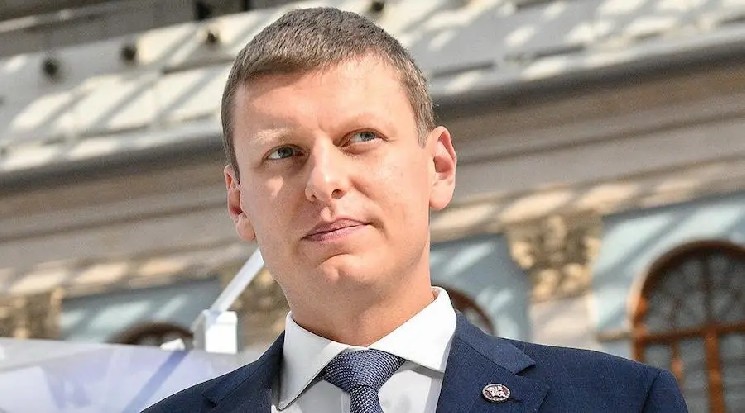
Russian authorities have placed Telegram founder Pavel Durov on an international wanted list as they escalate a criminal case accusing him of facilitating terrorist activity.

Russia’s Federal Security Service (FSB) said on Wednesday that it had charged Durov with facilitating terrorist activity and issued an international warrant for his arrest, local news agency Interfax reported.

The FSB alleged that Telegram failed to remove channels, chats and bots that Ukrainian intelligence services, terrorist groups and extremist organizations used to coordinate attacks, recruit operatives and conduct cyber fraud.

The development follows reports in February that Russian authorities had opened a criminal case against Durov. At the time, Durov confirmed the case in a post on X and accused Russian authorities of using the investigation to pressure Telegram, writing: “Each day, the authorities fabricate new pretexts to restrict Russians’ access to Telegram as they seek to suppress the right to privacy and free speech.”

Separately, Durov still faces an ongoing criminal investigation in France over alleged illegal activity on Telegram, although French authorities lifted travel restrictions earlier this year, allowing him to leave the country.

Related: Pavel Durov says Telegram to roll out native Gram crypto wallet

Preguntas relacionadas

QWhat are the specific allegations against Pavel Durov made by Russia's FSB?

ARussia's FSB alleges that Pavel Durov facilitated terrorist activity. Specifically, they accuse Telegram of failing to remove channels, chats, and bots that were used by Ukrainian intelligence services, terrorist groups, and extremist organizations to coordinate attacks, recruit operatives, and conduct cyber fraud.

QWhat action did the FSB take regarding Pavel Durov's case according to the article?

ARussia's Federal Security Service (FSB) charged Pavel Durov with facilitating terrorist activity and issued an international warrant for his arrest, placing him on an international wanted list.

QWhat was Pavel Durov's response to the initial criminal case opened against him by Russian authorities in February?

AIn a post on X, Pavel Durov accused Russian authorities of using the investigation to pressure Telegram. He stated that authorities were fabricating new pretexts each day to restrict Russians' access to Telegram in an attempt to suppress the right to privacy and free speech.

QBesides Russia, which other country is mentioned as having a criminal investigation involving Pavel Durov and Telegram?

APavel Durov also faces an ongoing criminal investigation in France over alleged illegal activity on Telegram, although French authorities lifted travel restrictions earlier this year.

QWhat related topic involving Telegram was mentioned at the end of the article?

AThe article mentions a related topic: "Pavel Durov says Telegram to roll out native Gram crypto wallet."

Lecturas Relacionadas

When 8 Million ETH Start 'Moving': The Post-Pectra Era Ushers in a Structural Transformation for Staking?

A major shift is underway in Ethereum staking, as Lido begins migrating over 8 million ETH (worth ~$16B) from traditional validators to a new architecture enabled by the Pectra upgrade. This migration involves consolidating over 265,000 legacy validators (using 0x01 withdrawal credentials) into a smaller number of higher-balance "0x02" validators, potentially reducing the total validator count on Ethereum by nearly a third. The core driver is EIP-7251 from the Pectra upgrade, which introduced "compounding validators." These allow a single validator's effective balance to grow up to 2048 ETH, with staking rewards automatically reinvested to compound earnings. This contrasts with the old model, where rewards exceeding 32 ETH were automatically sent to a withdrawal address, creating idle funds and operational complexity for reinvestment. While the direct APR boost from compounding is modest—estimated at a ~4.7% relative improvement for smaller validators—the structural benefits are significant. For large operators like Lido, the primary value is operational efficiency: managing fewer validators reduces node, key management, and network message overhead. For smaller individual stakers, the upgrade lowers the barrier to reinvestment by eliminating the need to manually accumulate 32 ETH for new validators. The migration signifies a deeper change in Ethereum's staking landscape. Competition is evolving beyond simple yield, focusing instead on capital efficiency, liquidity management, risk distribution, and infrastructure optimization. Lido's parallel move to require node operator security deposits further highlights this shift towards more robust, capital-backed services. Ultimately, Pectra's compounding validators represent a key step in maturing Ethereum's staking lifecycle, moving the ecosystem from standardized yield products towards more sophisticated capital management and infrastructure solutions.

marsbitHace 10 min(s)

When 8 Million ETH Start 'Moving': The Post-Pectra Era Ushers in a Structural Transformation for Staking?

marsbitHace 10 min(s)

Double Long Hynix ETF Plummets, Halved and Halved Again

On July 29th, shares of South Korean semiconductor firm SK Hynix plummeted over 19% intraday, marking its largest single-day drop on record. The Hong Kong-listed "CSOP SK Hynix Daily Leveraged (2x) Product" (Stock Code: 07709) tumbled more than 28% intraday before closing 13.99% lower at HK$32.70. This leveraged product, designed to deliver twice the daily return of SK Hynix, has seen a catastrophic decline of over 80% from its June 25th high of HK$193.65, far exceeding the underlying stock's roughly 50% drop from its peak. Its assets under management have shrunk dramatically, falling over 70% from a high of HKD 130 billion in June to approximately HKD 31.9 billion. This steep sell-off occurred despite SK Hynix reporting stellar Q2 2026 earnings, with revenue and operating profit surging 257% and 557% year-over-year, respectively. However, the results fell short of market expectations. Analysts cited concerns about potential oversupply from expansion and noted that long-term supply agreements for its high-bandwidth memory (HBM) chips might limit near-term price increases. In response to heightened volatility and regulatory changes, the product's issuer, CSOP Asset Management, announced a transition to a "flexible leverage mechanism" starting August 3rd. Under new Hong Kong SFC rules, the fund's daily leverage multiplier can now be dynamically adjusted between 1.1x and 2x (or -1.1x to -2x for inverse products) based on market conditions, moving away from a fixed 2x target. The fund's name will also be changed to clarify its nature as a daily trading tool unsuitable for long-term holding. Experts warn that this change means investors can no longer assume constant 2x returns and must check the disclosed leverage ratio daily.

marsbitHace 27 min(s)

Double Long Hynix ETF Plummets, Halved and Halved Again

marsbitHace 27 min(s)

Trading

Spot
活动图片