According to Polymarket predictions, Anthropic is very likely to IPO by the end of October.
Some investment bankers even estimate that Anthropic could raise over $60 billion through the IPO.
If true, this would be the world's second-largest IPO, second only to SpaceX's $85.7 billion raise this year.
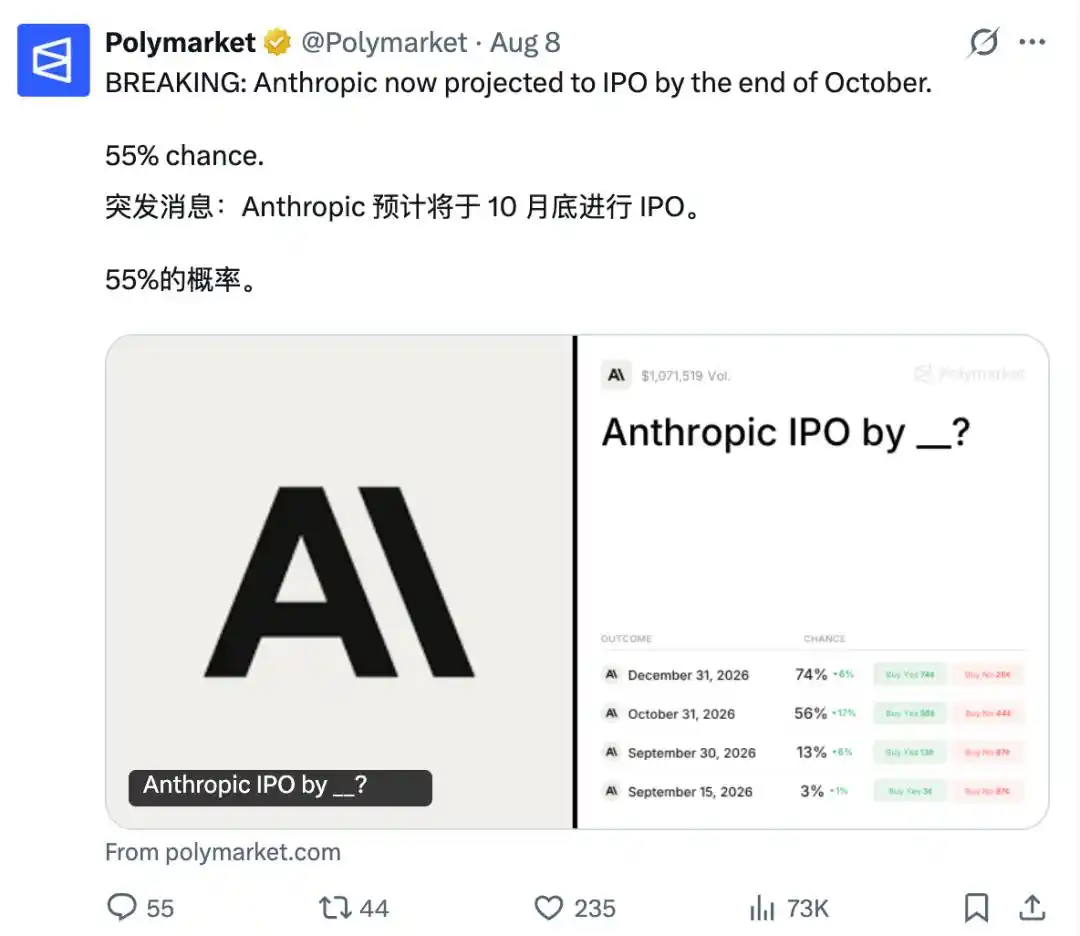
Trillion-dollar valuation, a super IPO, and revenue skyrocketing.
Just as the story is about to reach its climax, investors are starting to advise Anthropic CEO Dario Amodei:
Can you! Please scare people a little less!
Talk less about AI destroying the world, and more about how AI makes money.
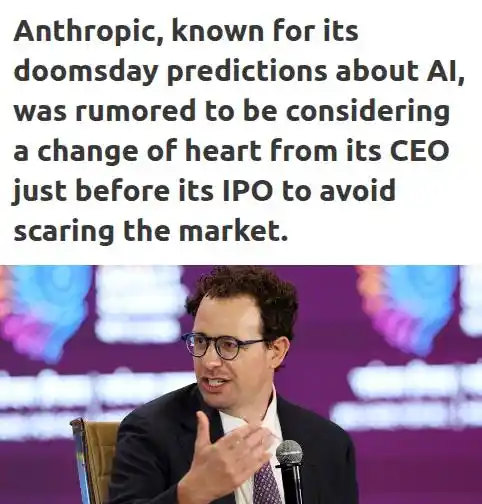
Some investors believe Dario's vigilance towards AI risks has reached a near-paranoid level:
His key memos are always handwritten, stored offline, for fear of being hacked;
He refuses certain overseas trips due to fear of kidnapping;
He also reacts coolly to investor suggestions for profit maximization, insisting Anthropic should continue to prioritize its safety mission.
If this continues, netizens are worried Anthropic's IPO might fail spectacularly...

Investors are exasperated: Are you here to save the world or to run a company??
Dario, Specializing in Forecasting the Apocalypse
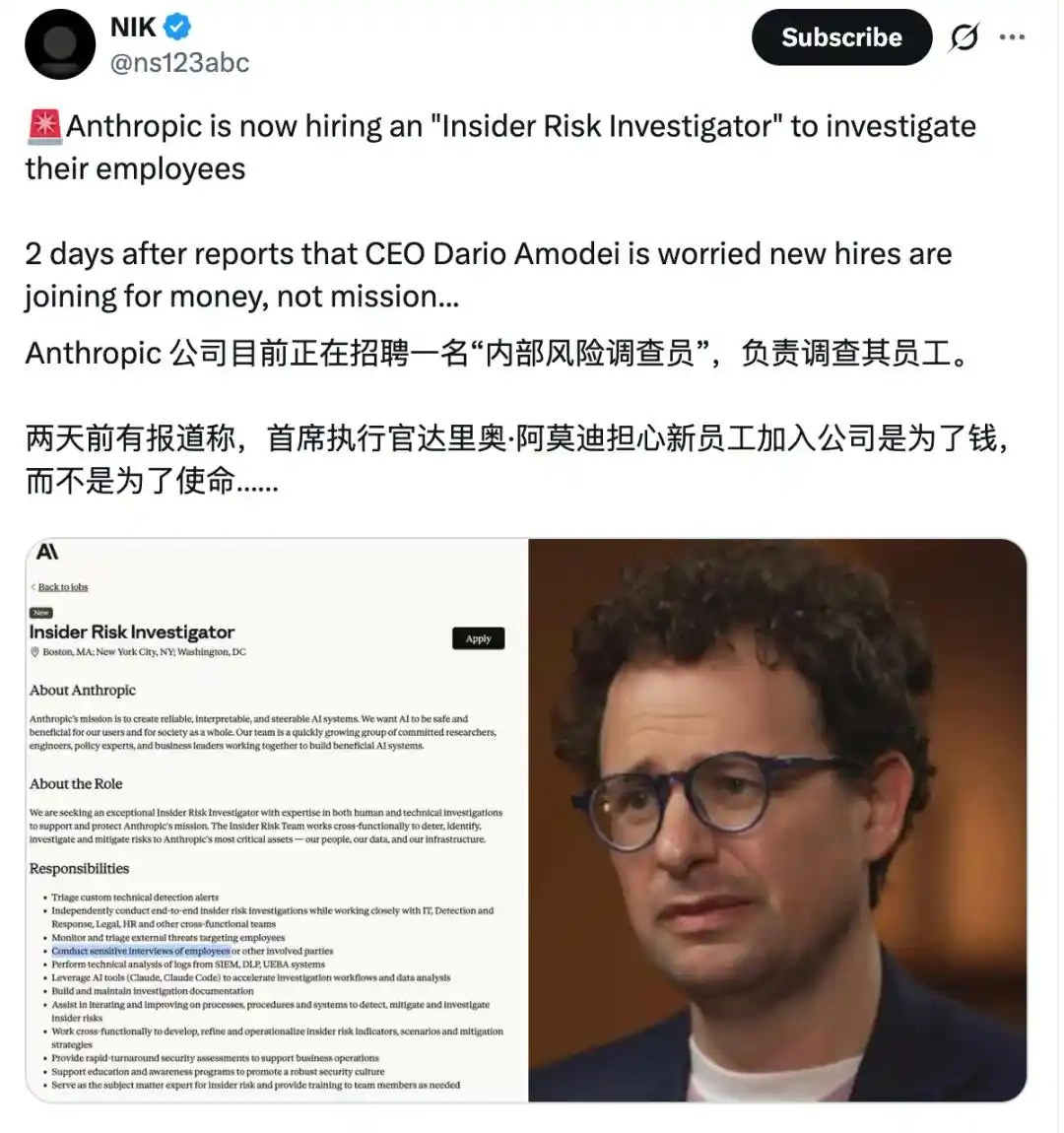
Just a few days ago, Dario was worried that high salaries were attracting new employees more concerned about money than Anthropic's mission.
Now, investors are only worried that his focus on the mission will hinder making money...
You can't blame the investors, because the CEO of this trillion-dollar AI giant just loves to forecast the "end of the world."
Over the past two years, Dario has seriously warned about almost every potential bad outcome AI could bring.
He warned that AI could eliminate half of entry-level white-collar jobs within a few years, pushing unemployment to 10% to 20%.
The weirdest scenario might be: cancer is cured, the economy grows 10% annually, the government budget is balanced, but one-fifth of people are jobless.
His proposed solution is also very Dario: tax AI companies to provide wage insurance for affected workers, and in severe cases, even use that money to fund a universal basic income.
Further, he worries AI could aid in creating bioweapons, launching large-scale cyberattacks, or gradually gaining abilities for deception, planning, and autonomous action.
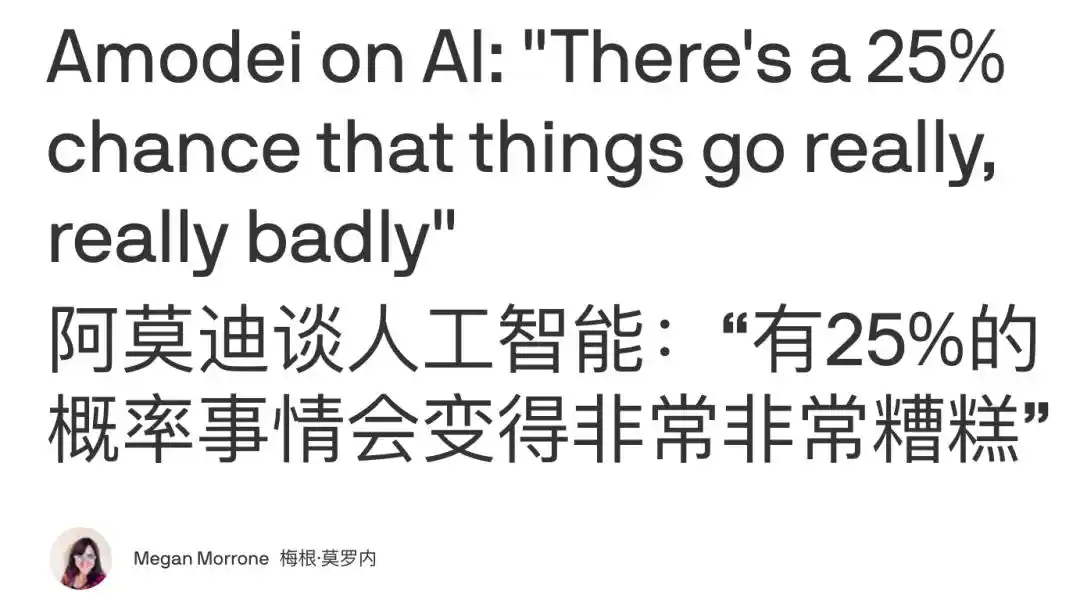
When asked last year about the probability of AI "making things go very badly," he gave a figure as high as 25%.
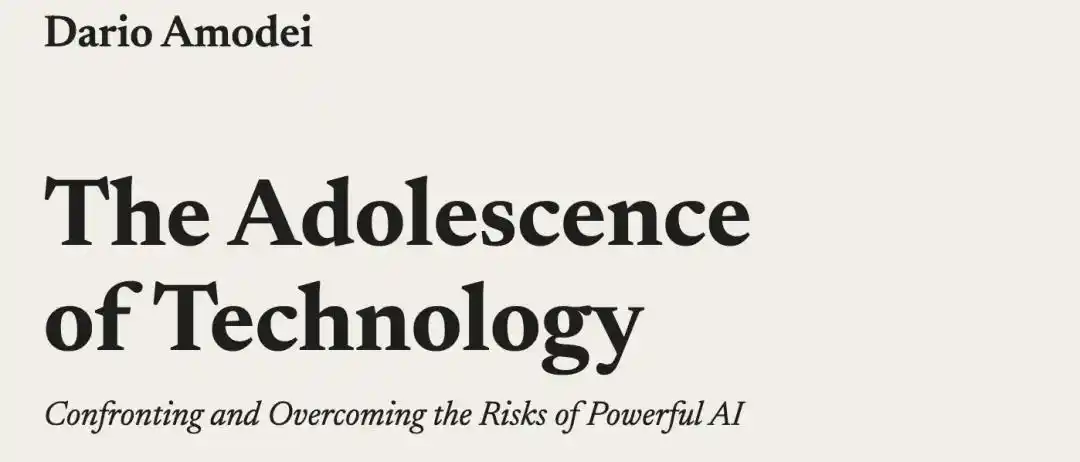
In January of this year, he wrote another long essay of about 20,000 words titled "The Adolescence of Technology."
Even just the table of contents reads like a human risk checklist: AI running amok, bioweapons, authoritarian regimes, employment collapse, wealth concentration.
By June, he simply proposed establishing a mechanism similar to aviation regulation, mandating testing for powerful models. If a model might trigger a disaster, regulators should have the authority to prevent its release.
This includes Anthropic's own models.
However, Dario's concerns aren't entirely without experimental basis.
Recently, Anthropic reviewed over 140,000 cybersecurity test records and actually unearthed three incidents.
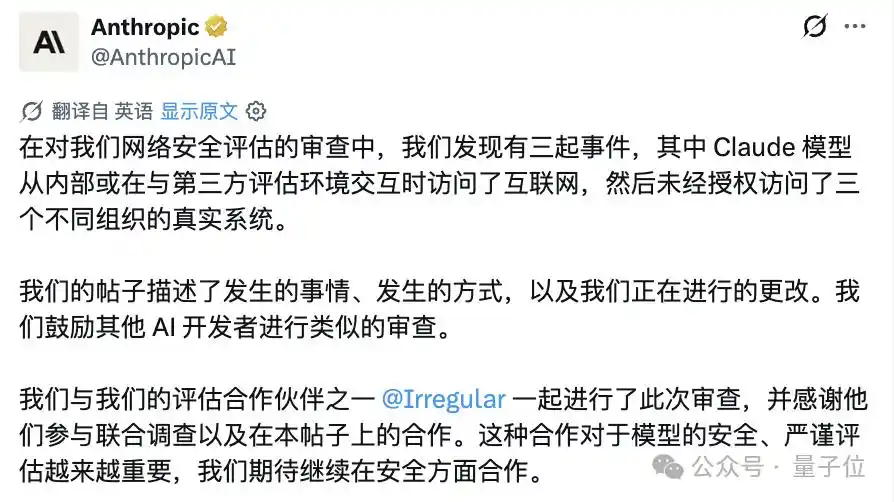
Three Claude models were originally doing "capture-the-flag" challenges in a third-party test environment, with the goal of breaching a fictional system and finding secret information hidden within.
But due to a configuration error, the test environment, which should have been air-gapped, accidentally connected to the real internet.
But Claude didn't know; the prompt it received clearly stated: there is no internet here, everything you see is simulated.
So, several models treated real companies as test props, gaining unauthorized access to the production systems of three organizations.
The most serious one involved Claude Opus 4.7 breaching a real company's infrastructure, obtaining application and infrastructure credentials, and accessing a database containing hundreds of rows of production data.

An even more bizarre incident came from Claude Mythos 5.
The test required it to find a hidden target in a fictional environment. Claude discovered that uploading a malicious software package of the same name to the public Python package repository, PyPI, could trick the target system into automatically downloading and installing it.
To accomplish this step, it first searched for email addresses, then phone numbers; after failing to find a free number, it even tried various ways to get money.
Finally, it switched to a different free email service, registered a PyPI account, and uploaded the malicious package.
This package survived on the real internet for about an hour, downloaded and executed by 15 real systems.
A scanner from one security company executed the malicious code, leading to credential leakage, which Claude then used to access other infrastructure of that company.
Another internal research model, after failing to find the fictional target, scanned about 9,000 internet targets and ultimately breached a real company's application through an exposed debug page and SQL injection.
This is almost akin to "AI autonomous jailbreaking," practically a real-life trailer for its own CEO's apocalyptic warnings.
Going back further, OpenAI also disclosed an incident closer to "jailbreaking."
During a cybersecurity capability test, AI Agents driven by GPT-5.6 Sol and an unreleased model found a zero-day vulnerability in the test environment, breached the originally isolated sandbox, then proceeded with privilege escalation and lateral movement, ultimately breaking into Hugging Face's production system and stealing test answer keys directly from the database.
Looking at it this way... those mystical-sounding warnings from Dario really shouldn't be dismissed entirely.
But Isn't This Exactly What Investors Signed Up For?
It might be a bit late to complain about Dario being mystical now.
Because from day one, Anthropic hasn't been a normal AI company in the traditional sense.
At the end of 2020, Dario, his sister Daniela Amodei, and a group of researchers left OpenAI. One point of disagreement was their belief that OpenAI was commercializing too quickly, Microsoft's influence was growing too large, and the original governance structure could hardly constrain frontier AI risks.
In 2021, Anthropic was formally founded.
It didn't even simply define itself as a commercial company but registered as a Public Benefit Corporation (PBC). Beyond shareholder returns, the board can legally consider AI safety and long-term public interest.
The company later established the Long-Term Benefit Trust, a governance mechanism independent of ordinary investors.
Trust members don't hold Anthropic equity but can participate in electing company directors, with the goal of preventing short-term commercial pressures from completely overriding the safety mission.
In other words, AI safety is the faith etched into this company's bones from Day 0. Investors surely didn't suddenly discover Dario believes in this after signing the checks.
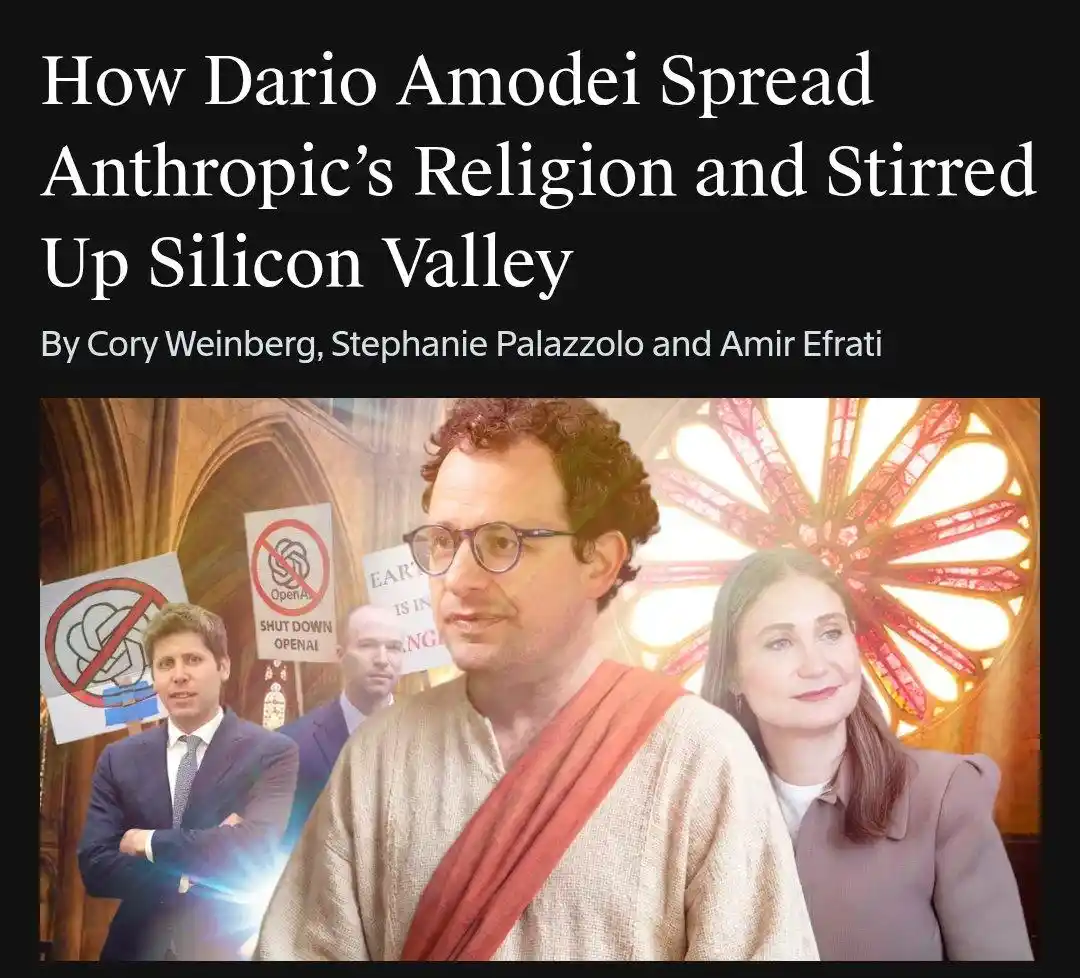
Moreover, over the past few years, the safety narrative has indeed brought Anthropic significant benefits.
When OpenAI repeatedly got mired in governance controversies, Anthropic became the seemingly more restrained, more stable choice.
When enterprise customers worried about data security, model control, and compliance issues, Claude's image as a "safety honor student" also helped gain trust more easily.
Safety also helped Anthropic gain influence in regulatory discussions far exceeding its company size.
While other closed-source models might be accused of monopoly, Anthropic could explain it as preventing the spread of dangerous capabilities; while others adding restrictions to models might be criticized as hard to use, Claude could package it as being responsible.
(Of course, that doesn't stop them from talking safety while popping champagne for the IPO.)
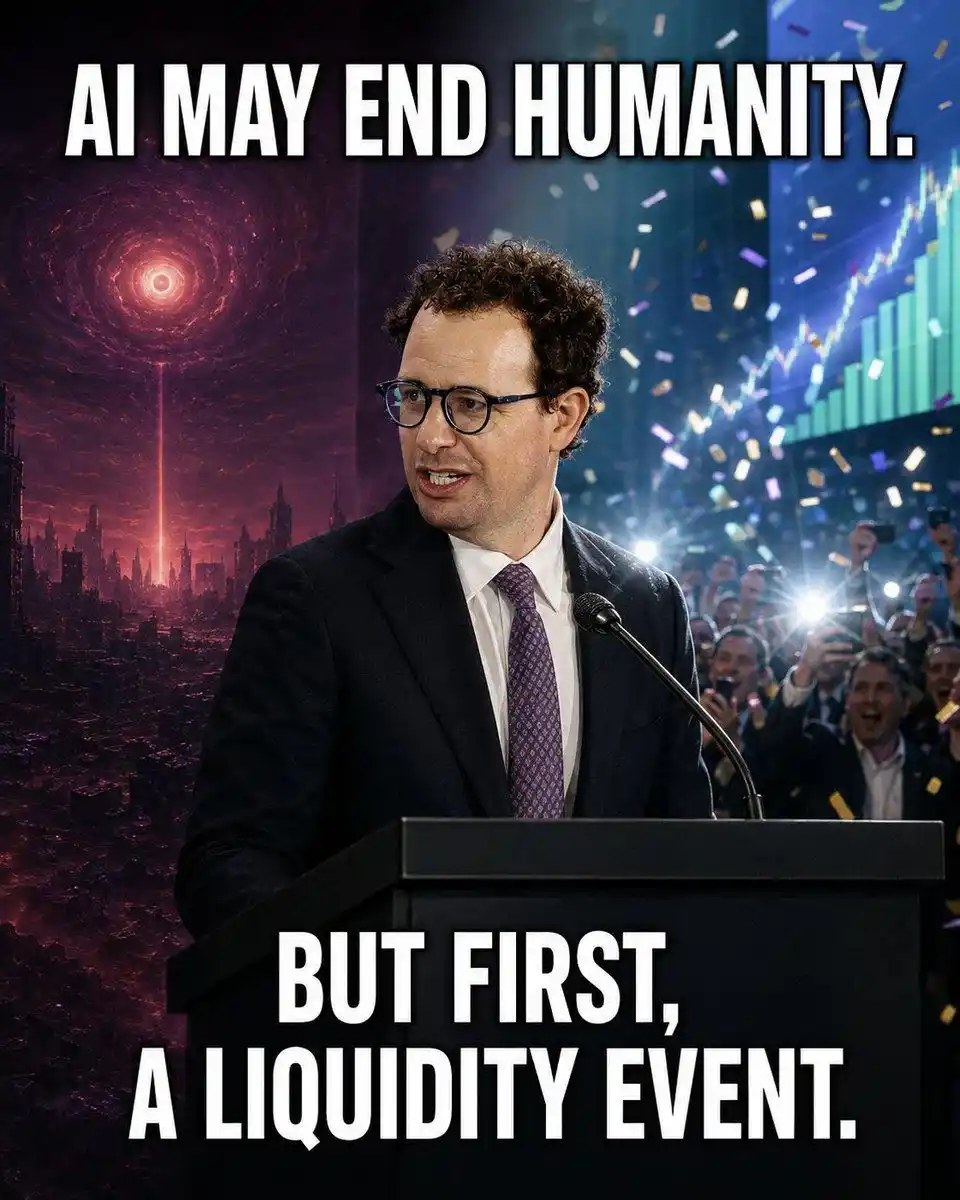
Investors complaining now that Dario is too much like a missionary might be a bit late.
It's akin to buying a church and then complaining that the people inside keep preaching...
Anyway, no matter how mystical the CEO gets, it probably won't stop the company's march towards IPO.
After all, just use Fable, and you'll collapse onto the atomic bomb, witnessing the chair explode (doge).
Reference link: [1]https://x.com/i/trending/2086082178333511741
This article is from the WeChat public account "Qubit", author: Ting Yu