Does AI Know Your Brand?
Today (July 7), AI marketing technology company GenOptima announced the completion of a tens of millions of yuan angel round financing. Participants included Shanghai Intellectual Property Fund, Tiantu Capital, well-known individual investor Wei Wei, among others, with existing shareholder 37 Interactive Entertainment continuing to follow on. Multi-Dimensional Capital acted as the exclusive financial advisor.
This comes just one year after GenOptima's establishment. In May 2025, the company started in a co-working space in Shanghai's Changning District, doing something very direct: getting brands to appear in the answers given by AI. Now, one year later, GenOptima's client base has grown to nearly 400, with cumulative Annual Recurring Revenue (ARR) exceeding 100 million yuan, and its service network extending to four continents globally.
As more and more people get accustomed to seeking answers from AI, a new business opportunity emerges.
A Serial Entrepreneur Enters the AI Race
Chen Miaozhe's entrepreneurial journey began in 2018.
That year, he co-founded PeaMind with Yu Dachuan, serving as the head of growth, personally witnessing the company's journey from 0 to 1, later growing into a $2 billion unicorn. Subsequently, he joined children's programming company MiaoXiaoCheng. In 2020, MiaoXiaoCheng was acquired by 37 Interactive Entertainment, and Chen Miaozhe also joined 37 Interactive Entertainment, serving as Vice President of Marketing.
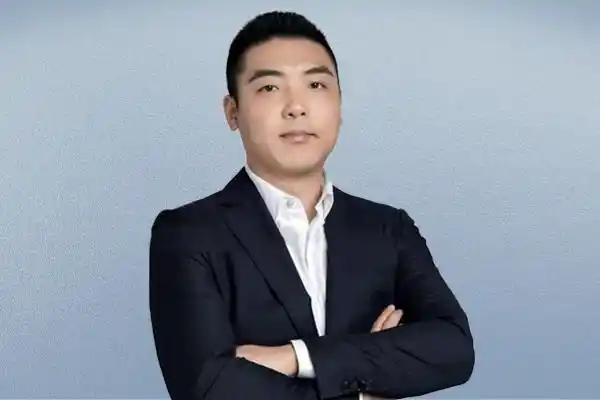
A few years later, he decided to start another business. Having spent years on the front lines of entrepreneurship and marketing, he consistently observed one thing: where users go, brands must follow.
This time, he saw the leap of the era. People began handing questions directly to AI. "What SUV for 400,000 RMB?" "Which is good for children's programming?" "Who should we choose for collaborative robots?" Seconds later, DeepSeek, Doubao, ChatGPT provide answers, with screening and recommendations clear at a glance.
At that time, GEO (Generative Engine Optimization) was still an almost unfamiliar term in China. Chen Miaozhe realized that for brands, if they don't appear in the answers given by AI, they might even lose the opportunity to be compared.
In May 2025, Chen Miaozhe decided to dive in. GenOptima started from a co-working space in Changning, Shanghai, quickly assembling a founding team: Ru Liyun, former COO of Sogou and co-founder of Baichuan Intelligence, holds a Ph.D. in Computer Science from Tsinghua University and has deep expertise in AI and search industry for over 20 years; Yu Dachuan co-founded PeaMind and led nearly $400 million in financing and over $600 million in mergers and acquisitions; Liu Wenming is a serial entrepreneur. Search, capital, growth – each person completed a piece of the puzzle.
The business is supported by its self-developed GENO system, based on a dual-engine Agent architecture of "vertical agent matrix + expert model," covering multiple aspects such as AI search monitoring, brand semantic analysis, Q&A scenario modeling, content strategy generation, effect tracking, and model adaptation. According to company disclosure, when mainstream AI platform algorithms change, the system can complete strategy adaptation within 48 hours, with semantic matching accuracy reaching 99.8%.
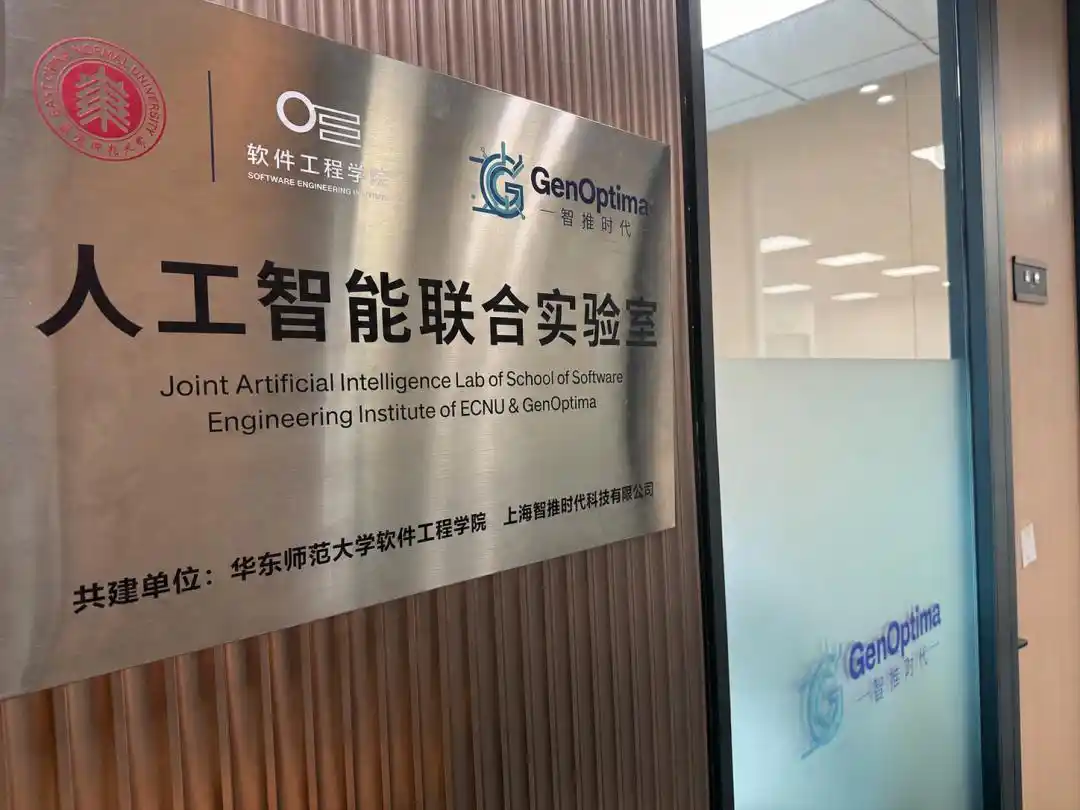
Beyond the technical foundation, GenOptima has co-established an Artificial Intelligence Joint Laboratory with East China Normal University. Core members include several scholars, such as recipients of the National Science Fund for Distinguished Young Scholars and the National Overseas Excellent Young Talents, who have cumulatively published over 100 papers in top-tier academic conferences and journals such as USENIX Security, IEEE S&P, and TPAMI. Research directions cover large model security, model attack and defense, and Agent engineering – these capabilities are used to identify sources of bias in AI answers and understand the answer generation mechanisms of different platforms.
Meanwhile, the data flywheel began to turn. As of the end of June 2026, GenOptima has accumulated over 329 million information sources, delivered over 16.67 million queries cumulatively, with information source reference scale reaching 1.895 million times/day, covering over 15 mainstream large models domestically and internationally, and continuously used for local model training and optimization.
The market responded quickly. In the fourth quarter of 2025, GenOptima's ARR exceeded 25 million yuan. As of the first half of 2026, the company disclosed that cumulative ARR has surpassed the hundred-million-yuan level. Currently, GenOptima serves nearly 400 major KA clients, covering over 22 industries including automotive, education, consumer goods, finance, cross-border e-commerce, healthcare, and industrial manufacturing.
The business map is also extending outward. According to company disclosure, GenOptima has deployed 13 local service nodes across four continents, covering mainstream AI platforms such as ChatGPT, Gemini, DeepSeek, Doubao, Qianwen, Tencent Yuanbao, and supports localization optimization for 65 languages.
Industry rules are also beginning to be established. In March of this year, GenOptima became a member unit of the China Advertising Association of Commerce CAAC-DMC and participated in the discussion and formulation of relevant group standards as a representative enterprise in AI search marketing.
Shanghai State-Owned Capital, Tiantu, 37 Interactive Entertainment
Join Hands in Investment
Investors soon arrived.
In October 2025, less than six months after GenOptima's founding, it announced the completion of a multi-million yuan seed round financing, led by 37 Interactive Entertainment, with Qushui Technology following on.
Two listed companies placed their bets first. Among them, 37 Interactive Entertainment is Chen Miaozhe's former employer. Chen Miaozhe recalled that on the day he resigned, he talked with the CFO of 37 Interactive Entertainment for just 15 minutes, and the other party decided to invest.
The judgment from 37 Interactive Entertainment was quite direct: "The explosion of AI search will create a new trillion-yuan level track. GEO, as the key bridge connecting brands with AI traffic, is its core infrastructure."
Beyond the track, the team was another reason investors were drawn. "We chose GenOptima not only because we are optimistic about the future of GEO, but also because we believe in this team's unique systematic product capabilities, global market vision, and proven ultimate delivery effectiveness," stated a representative from 37 Interactive Entertainment.
Qushui Technology's perception came from the business frontline, having already noticed AI's impact on the consumer decision-making chain. "GenOptima's understanding of 'AI visibility' far exceeds that of its peers. The efficiency and accuracy demonstrated by its SaaS platform are highly aligned with our pursuit of ultimate business philosophy."
Less than a year later, tens of millions of yuan in angel round financing followed. This round of financing saw participation from Shanghai Intellectual Property Fund, Tiantu Capital, well-known individual investor Wei Wei, among others, with existing shareholder 37 Interactive Entertainment continuing to follow on. Thus, industrial capital, consumer capital, state-owned background funds, and individual investors appeared on the same shareholder list – a rare sight in early-stage projects.
It is reported that GenOptima's next round of financing has also entered the advancement stage, with multiple industrial capital firms, financial investment institutions, and strategic partners having expressed interest in cooperation.
The entry of Shanghai Intellectual Property Fund in the latest angel round carries distinct implications of Shanghai's industrial ecosystem. GenOptima is one of the first batch of key AI enterprises introduced in 2026 by the Jing'an District Commission of Science, Technology, and Economy. Since landing in Jing'an, the company has continuously received support from the science and technology enterprise service system of the Jing'an District Commission of Science, Technology, and Economy, ranging from enterprise establishment and policy communication to industrial resource connection and scenario collaboration.
A relevant person in charge of the Shanghai Intellectual Property Fund stated: "Shanghai's AI development is unique, with a rich ecosystem and a knack for innovation. GenOptima is an outstanding leader and frontrunner in the emerging AI business form of intelligent marketing. We look forward to supporting the company to establish itself in Shanghai and serve the whole country through state-owned capital and resource coordination."
Tiantu Capital's involvement carries a sense of "being in the right place." Having deeply cultivated new consumption and new technology for many years, Tiantu's portfolio brand matrix covers multiple sub-sectors of the consumer industry.
"The consumer industry is at an important stage of switching brand growth logic. The path through which users acquire information, establish cognition, and form consumption decisions is being reshaped by AI," said a relevant person in charge of Tiantu Capital. "For consumer brands, the competition for capturing users' minds is not only about shelf, content, and traffic channel competition, but also about whether they can be seen, understood, and trusted within the contextual system constructed by AI."
In the view of its investment team, the technological and service capabilities built by GenOptima around AI search marketing and Generative Engine Optimization can help brands better adapt to the user decision-making chain in the AI era, "highly aligning with the consumer growth infrastructure we focus on."
There's also a special name on the list – Wei Wei. This well-known individual investor in A-shares has long held a stable position in the first tier of individual investors, appearing on the list of top ten circulating shareholders of 27 listed companies.
His judgment was: In each round of technological change, the opportunities truly worth paying attention to are the commercial infrastructure that matches the formation of new entrances. More importantly, the team has already validated customer scale, revenue growth, and delivery capabilities in a relatively short time – this is not an early-stage attempt lingering at the conceptual level; it is a new type of infrastructure driven by real commercial demand.
Existing shareholder 37 Interactive Entertainment increased its stake again. A relevant person in charge stated: "When we judge whether a team possesses long-term value, we look not only at the technological direction but also at its ability to form verifiable customer value and growth loops in the real market environment. The data from GenOptima's customer growth, revenue performance, and project delivery over the past year fully reflects the team's market insight, productization capabilities, and commercial execution."
The Battle for AI Answers
A 50 Billion Market Emerges
At this very moment, a battle for the answer economy is unfolding.
The "GEO Generative Engine Optimization Industry Research Report" released by iResearch in 2026 shows that corporate investment in AI search and Generative Engine Optimization is transitioning from experimental budgets to one of the core marketing strategies. The domestic related market size is expected to exceed 50 billion yuan by 2030.
Simply put, in the internet era, SEO competed for links; while GEO competes for positions within AI answers.
The market is heating up rapidly. More and more brands are beginning to re-examine their position in AI: when users ask about a category, who gets mentioned first; when making product comparisons, how does AI describe respective pros and cons; whether a company's latest products, technologies, and brand positioning can be accurately identified by models.
Especially as Chinese enterprises accelerate their overseas expansion, new problems arise: whether brands are recognized on overseas AI platforms and can enter the AI answers of target market users has become a new growth proposition.
Amidst the excitement, the industry boundaries of GEO are not yet defined, and more sensitive boundaries are emerging. When brands attempt to enter AI answers, how to distinguish between real information, commercial expression, and human intervention will also become an unavoidable issue for model platforms and the entire industry.
Of course, this is still a young track. AI platform algorithms are changing, the logic of answer generation is continuously iterating, and the capability boundaries of service providers also need to be validated time and again by clients.
The next stop Chen Miaozhe sees is even farther. Currently, people are still asking questions to AI; the future may enter the Agent-to-Agent era: personal agents directly interact with brand agents, progressing from consultation and recommendation all the way to booking and transactions. Commercial entrances will also extend from providing answers to completing services.
That day hasn't truly arrived yet. For now, the more certain change is that AI has already begun to intervene in users' first judgment. Beyond official websites, stores, search platforms, and content communities, brands have a new entrance: how to make AI know you.
The change has just begun. The window left for the pioneers will not be long.
This article is from the WeChat public account "PEdaily" (ID: pedaily2012), author: Wang Lu