Cursor's New 1.5T Model Abandons Kimi Foundation, $60 Billion Stock Swap for Cursor, Musk's First Move Targets Microsoft's GitHub

marsbitPublicado a 2026-06-17Actualizado a 2026-06-17

Resumen

Cursor, a popular AI-powered coding tool, has been acquired by SpaceX in an all-stock deal valued at $60 billion. The announcement coincided with Cursor's unveiling of major new developments at the Compile conference: a new 1.5 trillion+ parameter AI model and a "GitHub for agents" platform called Origin. The upcoming model, trained from scratch on over 100,000 GPUs with 10-20x more computational power than before, marks a shift from Cursor's previous reliance on models like Kimi. Cursor's CEO, Michael Truell, emphasized the model will be a "generally intelligent" assistant, moving beyond just code generation to handle broader engineering tasks like planning, testing, and UI interaction. Simultaneously, Cursor introduced Origin, a "Git-native" code hosting platform designed for AI agents that perform thousands of operations daily, featuring automated conflict resolution for large-scale, AI-generated code changes. The acquisition by SpaceX provides Cursor with significant computational resources. Analysts suggest this combination—Cursor's expertise in reinforcement learning and SpaceX's computing power—could position them strongly in the AI race, potentially challenging established players like GitHub, Claude Code, and Codex.

Today, at the Compile conference, Cursor announced several product "futures": an upcoming 1.5T model utilizing more computing power, and Origin, a "GitHub-like" Git platform designed for AI agents.

This quickly drew widespread attention from users, as it came almost simultaneously with the news that SpaceX had officially announced it had exercised its option to acquire Cursor in an all-stock transaction. According to the agreement, Cursor will receive SpaceX stock valued at $60 billion, with the specific transaction expected to be completed in the third quarter of 2026. Previous reports indicated that Cursor had turned down acquisition interest from several major AI companies last year.

"At this rate, Cursor will become the #1 or #2 coding agent within a year. The team is incredible... and now backed by unlimited compute. This is the best acquisition since Instagram and YouTube." commented one netizen.

Secured Compute, Training Models from Scratch

Several netizens revealed that Cursor CEO Michael Truell shared details about the new model at today's Compile conference: a new model with over 1.5T parameters, no longer a shell over Kimi, pre-trained from scratch on over 100,000 GPUs.
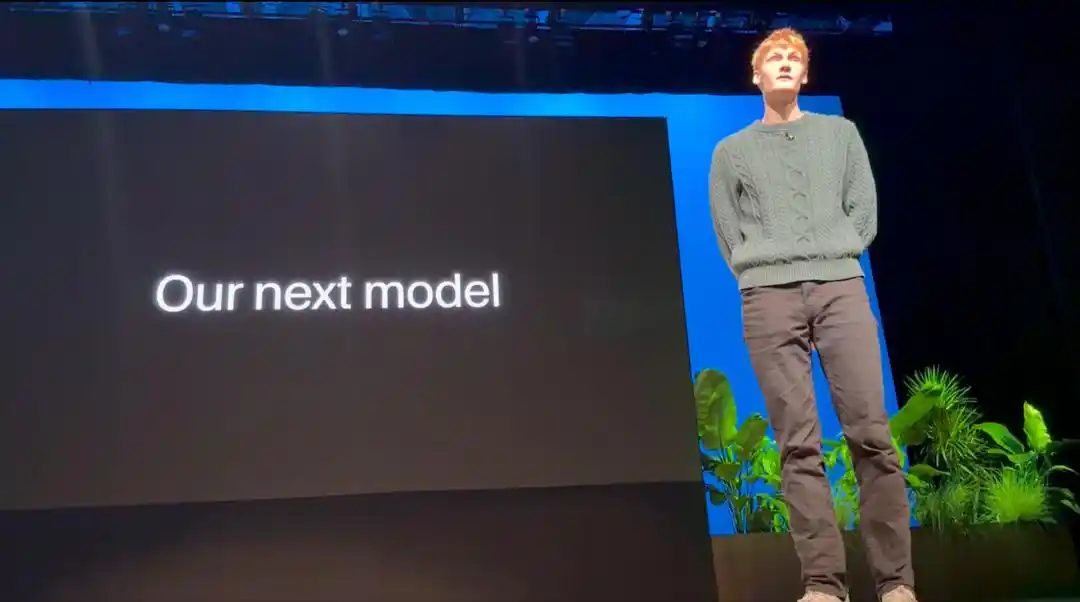
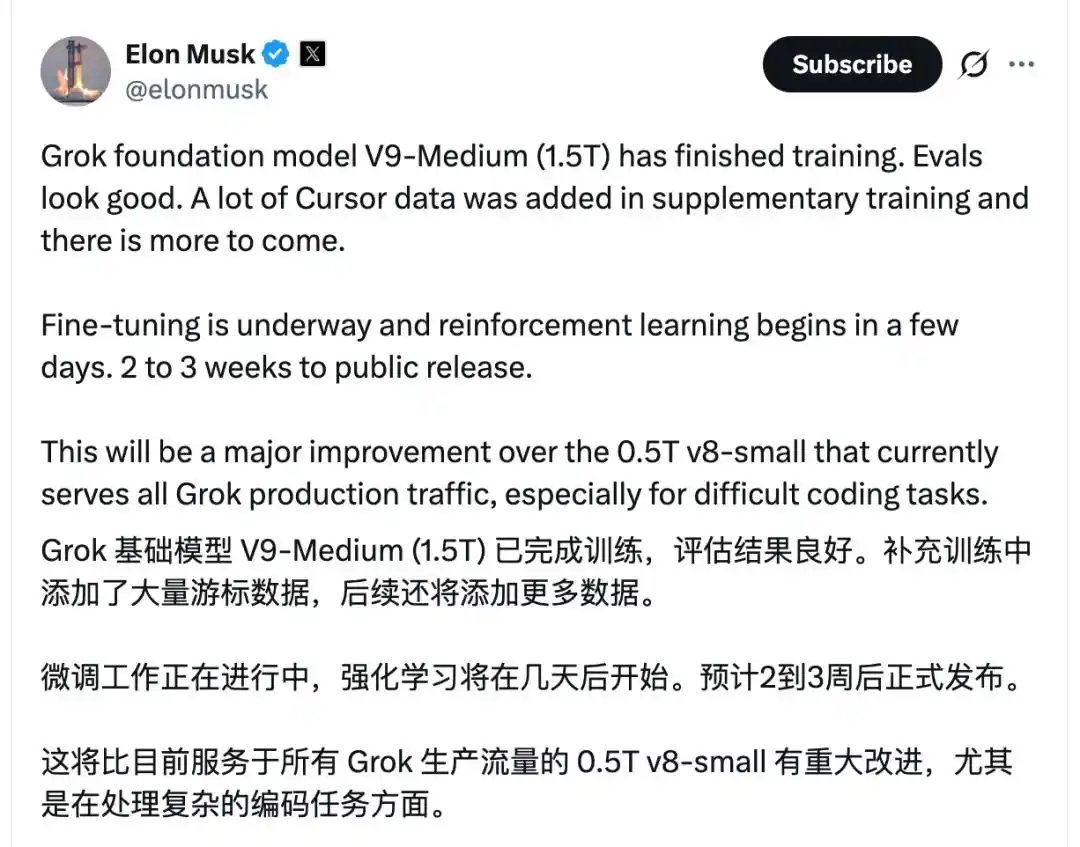
Over the past few months, SpaceXAI has been jointly training a model with Cursor, which will soon be released on Cursor and Grok Build.

Speculation is that the new model Michael mentioned is the 1.5T foundation model Musk referred to on May 25th, followed by two reinforcement learning pipelines, one for Cursor and one for Grok.
At the conference, Michael revealed three key differences in the new model being trained.

First, it is large-scale, on the same magnitude as OpenAI's AGI-level models.

Second, it is trained from scratch, not fine-tuned from an open-source model. "We love open source and want to find more ways to give back to the community. But training a base model from the ground up allows us better control over model behavior and further coverage of the workloads that I and you truly care about," Michael said. Previously, Cursor was alleged to have been a shell over Kimi.

Third, and most crucially, the computational resources Cursor now uses are 10 to 20 times what was previously available. While the previous generation model used more resources than before, this marks the first truly massive increase in compute investment.

"This is hugely important," Michael stated. "In the past, from Composer 1 to Composer 2.5, the compute scale for training our models was actually quite small compared to frontier labs, which greatly limited what we could do. Many methods for making models better essentially run into the same problem: can we run more experiments, can we train the model longer. So, this order-of-magnitude increase in compute does allow us to create differentiated capabilities and, hopefully very soon, get those into your hands and deliver truly exciting, powerful new features."

However, netizen Lisan al Gaib pointed out, "Opus 4.5 to 4.8, and GPT-5 to GPT-5.5, aren't actually that huge! (They are all below 2 trillion parameters)." He continued, "This means the current performance of GPT-5.5 and Opus 4.8 is achievable for open-source models. Because guess what else is at this scale? DeepSeek-V4-Pro."

Gaib stated that the only remaining moat is scale:

So far, Anthropic is the only lab that has successfully transitioned to the ~10T parameter scale, which is also why I no longer think OpenAI can catch up by year-end. Anthropic just needs to keep pouring RL compute into Mythos, and it will keep improving for the next 1-2 years.

Google didn't go that big, and they pulled back a bit too much on sparsity. They also clearly don't know how to actually polish a model to usability with RL.

OpenAI is still haunted by the ghost of GPT-4.5.

xAI and Meta are still in the planning phase.

Previously, Wall Street investor Gavin Baker spoke highly of Cursor: "Besides Anthropic, Cursor has more 'proprietary code training data tokens' than any other lab in the world. Cursor's internal code model, Composer 2.5, is already approaching frontier model levels even before undergoing a full Colossus-level training."

Some netizens are optimistic about the acquisition deal: "Cursor excels at reinforcement learning, and SpaceX has enough computing power to train a 10T model. Therefore, SpaceX might win the AI race."

More Than Just Code

Additionally, some netizens noticed that Cursor's announcement tweet did not describe itself as "for developers," but simply as "useful AI." Therefore, they believe Cursor is likely to become a direct competitor to Codex and Claude Desktop.

To some extent, this aligns with Michael's emphasis on the new model's positioning at the conference: "This will be an intelligent model that's not just good at writing code."

Michael believes this is crucial for what the team wants to achieve. "Our goal is to enable anyone to build what they want with a computer. And right now, the bottleneck is shifting from 'writing code' itself to the full range of capabilities you'd want from an engineering colleague."

This means it needs to know how to use the tools an engineer uses; it needs to be able to monitor, plan, genuinely test software, and click buttons in an interface; it also means the team needs to present the user experience well, letting users clearly see what changes the agent has made.

"So, we're moving beyond just 'trustworthy coding' to give this model stronger general intelligence. The training for this has already started and will be released in the coming weeks. And all of this is powered by our collaboration with SpaceX. And as you know, this is more than just an ordinary partnership now," Michael said.

In his view, there aren't actually many AI players or institutions today that can truly co-design both the product layer and the model layer simultaneously. The company DNA of other players often comes from either big tech companies or started as labs before gradually moving towards the developer and product side. The company behind Cursor, for better or worse, is fundamentally built around developers. It's a company made up of people who genuinely want to make tools useful for developers.

Therefore, Michael believes that as the company enters its next phase, it's the first time a group of people who truly understand product details and developer workflows are combined with the ability to directly modify the foundational capabilities of the model. "What we can influence isn't just pixels on the screen; we can also edit the underlying capabilities of the model itself, and model capability is a very important part of the product."

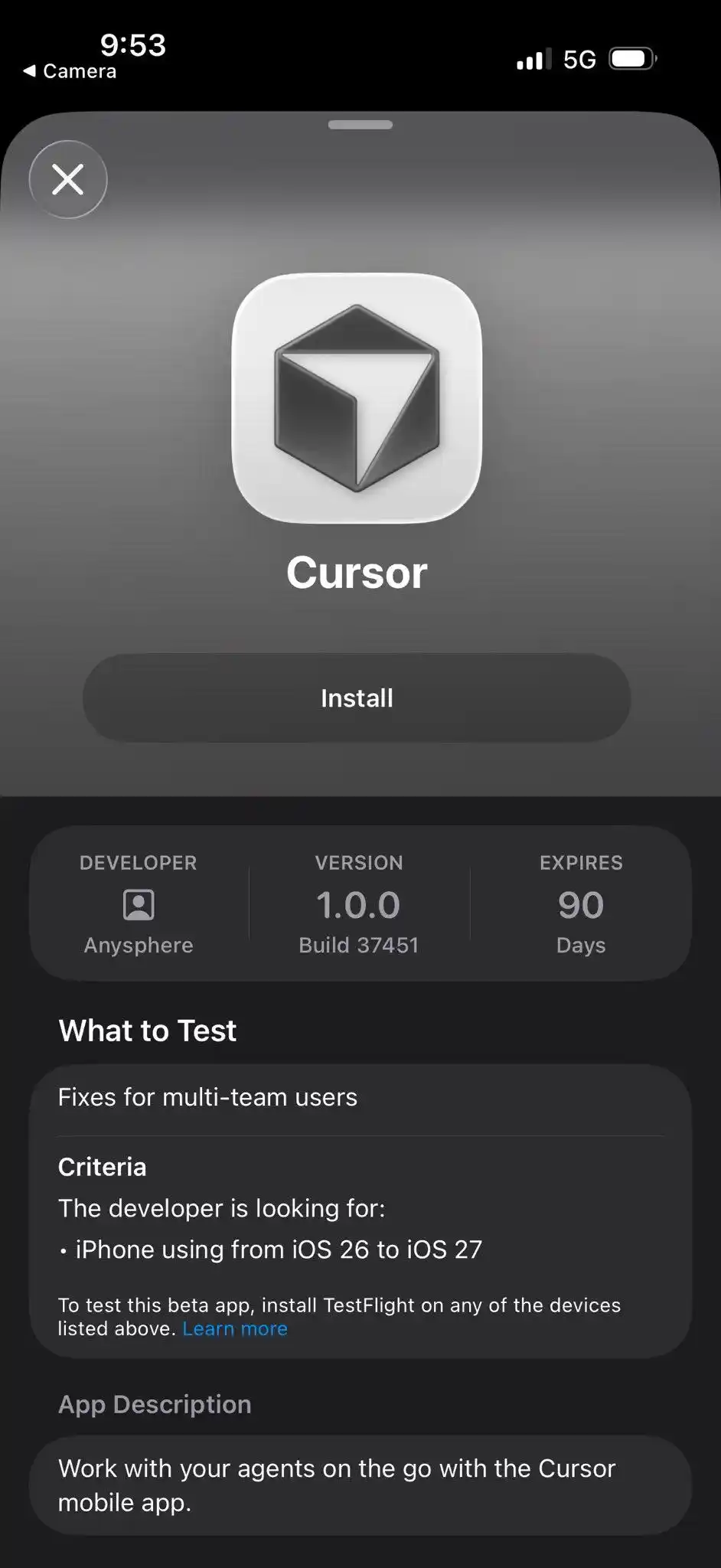
It's worth noting that Cursor Mobile is now in beta, which includes remote control functionality for Mac hosts.
Git Platform for Agents, Challenging Microsoft's GitHub

In addition to the model, Cursor also announced Origin, an agent-native Git platform.

"Modern Git hosting platforms are designed for human developers: they only clone repos occasionally, push code a few times a day, not for AI agents that will clone and push thousands of times a day," Cursor engineer Austin Nick Piel stated on X. "Excited to be building a Git hosting platform for this new world."

Origin is Cursor's attempt to build a "agent-native" competitor to GitHub: it's a Git-compatible code hosting platform, but its underlying assumption is that in the future, a massive number of AI agents will be cloning, creating branches, committing code, rebasing, reviewing code, and fixing failed tasks in parallel.

Some netizens believe this also makes the company's acquisition of Graphite last year more interesting. "Graphite brought stacked PRs, code review workflows, merge queues, and a clearer collaboration experience, while Origin adds the code hosting layer underneath."

Thus, Cursor is no longer just "VS Code with AI." They are attempting to control the entire AI software factory: write code in Cursor, run agents in parallel, review code with a Graphite-style workflow, and host and merge code via Origin.

"GitHub was built for human-scale software development. Origin is packaged as the infrastructure for the next bottleneck: in an era of mass agent-generated code, how do you coordinate, review, and safely merge that code?" they summarized.

According to videos posted by netizens, Graphite co-founder Tomas Reimers was the one introducing Origin at the Compile conference.
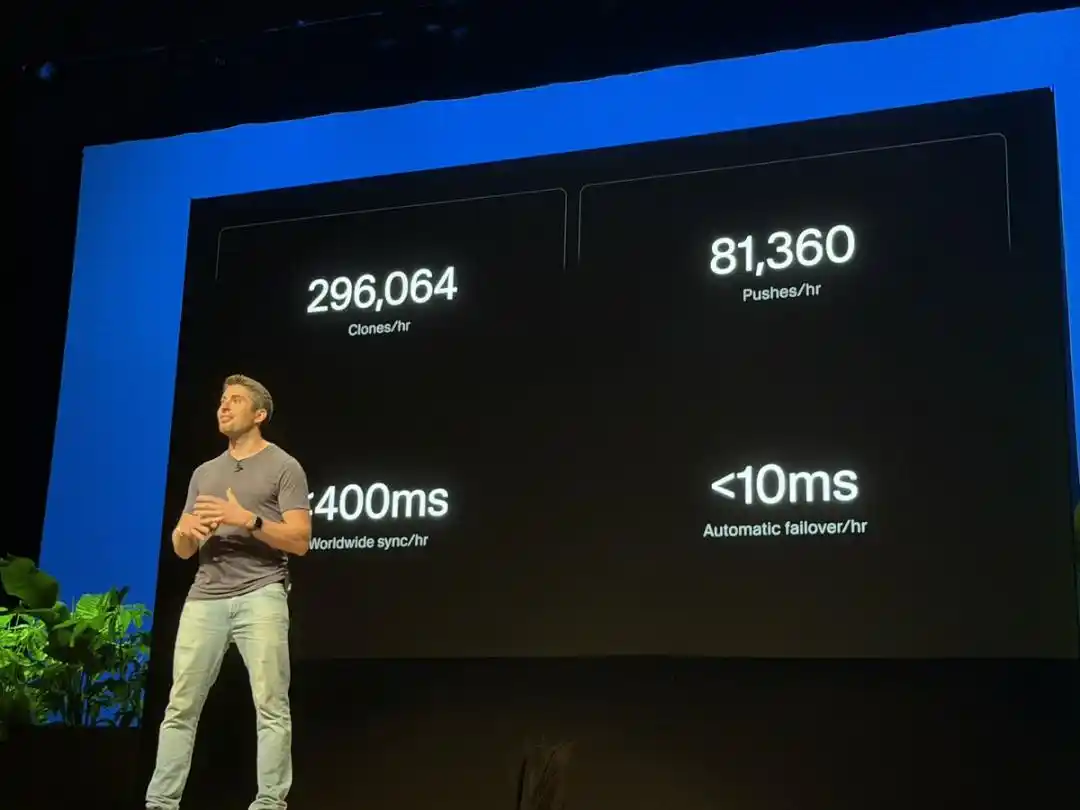
Software development is far more than just writing code. It also includes testing, reviewing, merging, and deploying correctly. We've been working hard to find the best ways to accelerate these parts of the software development process.

"Over the past few years, we've noticed a trend: as these companies start adopting AI programming, the tools they've relied on in the past are beginning to become unreliable. That's because AI tools have completely transformed the industry over the last few years. They've given every developer the chance to become a 10x to 100x more productive developer," Tomas said. "But that change also requires developer tools to fundamentally change. That's why, after being acquired by Cursor, we accelerated our most ambitious project: rebuilding this layer of infrastructure from scratch."

Reportedly, Origin is scalable to handle agent workloads, supports API and MCP extensions, and has built-in agent mechanisms for automatically resolving merge conflicts and collaboration failures.

One developer commented, "My favorite feature is probably automatic conflict resolution. When dozens of AI agents submit code simultaneously, causing huge merge conflicts, Origin will be able to automatically fix those conflicts."

"Perhaps it's time for a competitor to GitHub, to see if that can bring about change," another netizen quipped. "GitHub watches everyone slowly recreate its features, one by one." Of course, some also questioned, "Cursor can't even manage its own customer service, and now they want to do Git?"

Officially, Origin is set to launch this fall, with a waitlist now open. Some developers worry that by the time this "future" product actually launches, people might have forgotten about it.

Conclusion

Many are impressed by the achievements of Cursor, founded in 2023 by four MIT graduates: starting as a crypto communications startup, later expanding into AI programming tools. The company was one of the earliest to fully integrate major model capabilities into an IDE. It is a fork of Visual Studio Code with deep AI integration. However, incumbent platforms and larger AI companies have since introduced similar features.

Currently, Cursor's annualized revenue has reached several billion dollars. But as Anthropic's Claude Code gained dominance in this space, Cursor's market share has also declined. Foreign media reports indicate that Cursor is still striving to achieve profitability.

Cursor's tools allow developers to switch between different AI models, including those from OpenAI, Anthropic, xAI, Google, and others. The company competes with Anthropic's Claude Code and OpenAI's Codex, products capable of writing code, debugging software, and automating tasks.

As a wholly-owned subsidiary of SpaceX, Cursor now has more computing power, and some analysts suggest SpaceX can also leverage this to win lucrative enterprise customers. Previously, many enterprise customers largely avoided using SpaceX's self-developed chatbot assistant, Grok. Competing with Claude and ChatGPT, Musk positions Grok as an "anti-woke," truth-seeking chatbot, but it still lags behind other frontier models.

News of Cursor's acquisition by SpaceX emerged as early as April. At that time, SpaceX signed a compute and option agreement with Anysphere, Cursor's parent company. SpaceX would provide Cursor with GPU cluster compute at a certain scale, and the two would collaborate to improve existing models, including Grok, and potentially jointly develop new AI models and related products.

At the time, this collaboration did not equate to an acquisition. According to SpaceX's prospectus, SpaceX obtained a right, but not an obligation, to acquire Cursor in the future at a pre-agreed price. If SpaceX exercised the option after this offering, the consideration would be paid in SpaceX Class A common stock, based on an implied equity valuation of $60 billion for Cursor and the volume-weighted average closing price of SpaceX Class A common stock over the seven consecutive trading days preceding the acquisition's completion.

The agreement also included a substantial exit "breakup fee." If SpaceX terminated the option agreement, or if Cursor terminated it due to a material breach by SpaceX, Cursor would be entitled to a $1.5 billion termination fee, plus $8.5 billion in deferred service fees under the agreement, totaling $10 billion. The fee could be paid in cash; if SpaceX's IPO had not been completed by then, it could also be paid in Class A common stock.

SpaceX completed its public offering last Friday, with its stock rising 19% on the first day, 20% on Monday, and about 5% on Tuesday, with a current market capitalization of approximately $2.66 trillion. After the stock price increase, SpaceX's market cap surpassed Amazon's on Tuesday, entering the ranks of the top 5 US-listed companies by market value.

Today, SpaceX's acquisition of Cursor is finalized, but it's also a new beginning. Whether the two can disrupt the current market landscape as many developers hope remains to be seen.

References:

https://www.wsj.com/business/spacex-agrees-to-buy-ai-coding-agent-cursor-for-60-billion-7a473340?st=2addXh&reflink=article_copyURL_share

https://x.com/morganlinton/status/2066946225837109735

This article is from WeChat official account "InfoQ" (ID: infoqchina), author: Chu Xingjuan.

Criptos en tendencia

Preguntas relacionadas

QWhat is the key reason why Cursor's new 1.5T+ model is significant, according to its CEO Michael Truell?

AThe key reasons are its scale, being on par with OpenAI's AGI-level models; its training from scratch, which allows for better control over model behavior; and most importantly, the 10 to 20 times increase in computational resources, which enables more experiments and longer training to achieve differentiated capabilities.

QWhat is Cursor's new 'Origin' platform, and who is its primary target competitor?

AOrigin is an 'agent-native' Git hosting platform designed for a future with numerous AI agents performing tasks like cloning, committing, and reviewing code in parallel. Its primary target competitor is Microsoft's GitHub.

QWhat was the reported implied equity value of Cursor in the SpaceX acquisition deal?

AThe implied equity value of Cursor in the SpaceX acquisition deal was $60 billion, to be paid in SpaceX A-class common stock.

QAccording to the article, what is the broader goal for Cursor's new model, beyond just writing code?

AThe broader goal is to build a useful AI model with stronger general intelligence. It aims to help anyone build what they want on a computer, encompassing all the capabilities one would expect from an engineering colleague, such as using tools, monitoring, planning, testing software, and interacting with interfaces.

QWhat was one of the major concerns or challenges mentioned for Cursor prior to the SpaceX deal?

APrior to the SpaceX deal, a major challenge for Cursor was that its market share was declining as Anthropic's Claude Code gained dominance in the AI programming tool space, and the company was still working towards achieving profitability.

Lecturas Relacionadas

Why Is the World Nervous About Japan Raising Interest Rates?

In June 2026, the Bank of Japan raised its policy rate to 1%, marking its first hike to this level since 1995. While this rate remains low compared to global peers like the US and Europe, the move signals a profound shift for a nation that has been a global source of ultra-cheap funding for decades. Japan's long-standing near-zero or negative interest rates had facilitated massive "yen carry trades," where international investors borrowed low-cost yen to invest in higher-yielding assets worldwide, such as US tech stocks and emerging market bonds. This made Japan a critical, often overlooked, source of global liquidity. Japan's ultra-loose policy stemmed from structural challenges post-1990s asset bubble: aging demographics, chronic low inflation/deflation, and high public debt. Recent shifts, including sustained wage growth (exceeding 5% in recent years) and inflation consistently above the 2% target, have created a "wage-price spiral" possibility, prompting the policy normalization. The global market's concern lies not in the absolute rate but in the potential unwinding of the yen carry trade. As Japanese borrowing costs rise, the economics of these leveraged global investments change, potentially triggering deleveraging and capital outflows from risk assets. Market anxiety focuses on the end of a thirty-year consensus that Japan would perpetually provide cheap funding. Ultimately, the global impact will depend on the interplay with US monetary policy. While Japan is tightening, the significant interest rate differential with the US remains. The key future dynamic is whether simultaneous Japanese hikes and eventual US rate cuts will narrow this gap, forcing a major recalibration of global capital flows and asset pricing built on an era of abundant, cheap yen liquidity.

marsbitHace 2 hora(s)

Why Is the World Nervous About Japan Raising Interest Rates?

marsbitHace 2 hora(s)

Research Report Analysis: MRVL's Optical AI Booming, Why High Valuation Keeps Morgan Stanley's Star Analyst Sidelined?

Report Recap: MRVL Optical AI Boom - Why High Valuation Led Morgan Stanley's Star Analyst to Stay Neutral? Morgan Stanley analyst Joseph Moore maintained an "Equal-weight" (Neutral) rating on Marvell Technology (MRVL) on May 28, raising the price target from $172 to $195, below the trading price. This stance comes despite Marvell reporting a record quarter and significantly raising its full-year outlook (FY27 revenue ~$11.5B, up ~40%). Moore's neutral view is based on valuation. The $195 target implies ~40x CY2027 P/E. He contrasts MRVL with NVDA: both trade near ~$200, but Nvidia's forward EPS is more than double Marvell's. For MRVL's valuation to hold, it needs consistent earnings upgrades, proof of networking market share gains, or certainty on large-scale custom AI chip shipments—none of which are confirmed yet. Growth is driven by two pillars: **1) Optical Interconnect** (the faster runner): Moore raised FY27 growth expectations to >70%, with the optical module product line nearing a $1B annualized run rate. **2) Custom AI Chips** (the climber): Confidence in FY28 is growing, but a major new customer project only ramps in FY28, with no current revenue visibility. Key risks are the underperforming Storage, Enterprise, and legacy Networking segments. Moore acknowledges the real AI opportunity but believes the current price already reflects it. For the stock to work from here, investors need to see the optical business hit its targets, custom chips ramp as planned, and a recovery in the weaker business units.

marsbitHace 3 hora(s)

Research Report Analysis: MRVL's Optical AI Booming, Why High Valuation Keeps Morgan Stanley's Star Analyst Sidelined?

marsbitHace 3 hora(s)

Trading

Spot
Futuros

Artículos destacados

Qué es $S$

Entendiendo SPERO: Una Visión General Completa Introducción a SPERO A medida que el panorama de la innovación continúa evolucionando, la aparición de tecnologías web3 y proyectos de criptomonedas juega un papel fundamental en la configuración del futuro digital. Un proyecto que ha atraído la atención en este campo dinámico es SPERO, denotado como SPERO,$$s$. Este artículo tiene como objetivo reunir y presentar información detallada sobre SPERO, para ayudar a entusiastas e inversores a comprender sus fundamentos, objetivos e innovaciones dentro de los dominios web3 y cripto. ¿Qué es SPERO,$$s$? SPERO,$$s$ es un proyecto único dentro del espacio cripto que busca aprovechar los principios de descentralización y tecnología blockchain para crear un ecosistema que promueva la participación, la utilidad y la inclusión financiera. El proyecto está diseñado para facilitar interacciones de igual a igual de nuevas maneras, proporcionando a los usuarios soluciones y servicios financieros innovadores. En su esencia, SPERO,$$s$ tiene como objetivo empoderar a los individuos al proporcionar herramientas y plataformas que mejoren la experiencia del usuario en el espacio de las criptomonedas. Esto incluye habilitar métodos de transacción más flexibles, fomentar iniciativas impulsadas por la comunidad y crear caminos para oportunidades financieras a través de aplicaciones descentralizadas (dApps). La visión subyacente de SPERO,$$s$ gira en torno a la inclusividad, buscando cerrar brechas dentro de las finanzas tradicionales mientras aprovecha los beneficios de la tecnología blockchain. ¿Quién es el Creador de SPERO,$$s$? La identidad del creador de SPERO,$$s$ sigue siendo algo oscura, ya que hay recursos públicos limitados que proporcionan información de fondo detallada sobre su(s) fundador(es). Esta falta de transparencia puede derivarse del compromiso del proyecto con la descentralización, una ética que muchos proyectos web3 comparten, priorizando las contribuciones colectivas sobre el reconocimiento individual. Al centrar las discusiones en torno a la comunidad y sus objetivos colectivos, SPERO,$$s$ encarna la esencia del empoderamiento sin señalar a individuos específicos. Como tal, comprender la ética y la misión de SPERO sigue siendo más importante que identificar a un creador singular. ¿Quiénes son los Inversores de SPERO,$$s$? SPERO,$$s$ cuenta con el apoyo de una diversa gama de inversores que van desde capitalistas de riesgo hasta inversores ángeles dedicados a fomentar la innovación en el sector cripto. El enfoque de estos inversores generalmente se alinea con la misión de SPERO, priorizando proyectos que prometen avances tecnológicos sociales, inclusión financiera y gobernanza descentralizada. Estas fundaciones de inversores suelen estar interesadas en proyectos que no solo ofrecen productos innovadores, sino que también contribuyen positivamente a la comunidad blockchain y sus ecosistemas. El respaldo de estos inversores refuerza a SPERO,$$s$ como un contendiente notable en el dominio de proyectos cripto que evoluciona rápidamente. ¿Cómo Funciona SPERO,$$s$? SPERO,$$s$ emplea un marco multifacético que lo distingue de los proyectos de criptomonedas convencionales. Aquí hay algunas de las características clave que subrayan su singularidad e innovación: Gobernanza Descentralizada: SPERO,$$s$ integra modelos de gobernanza descentralizada, empoderando a los usuarios para participar activamente en los procesos de toma de decisiones sobre el futuro del proyecto. Este enfoque fomenta un sentido de propiedad y responsabilidad entre los miembros de la comunidad. Utilidad del Token: SPERO,$$s$ utiliza su propio token de criptomoneda, diseñado para servir diversas funciones dentro del ecosistema. Estos tokens permiten transacciones, recompensas y la facilitación de servicios ofrecidos en la plataforma, mejorando la participación y la utilidad general. Arquitectura en Capas: La arquitectura técnica de SPERO,$$s$ apoya la modularidad y escalabilidad, permitiendo la integración fluida de características y aplicaciones adicionales a medida que el proyecto evoluciona. Esta adaptabilidad es fundamental para mantener la relevancia en el cambiante paisaje cripto. Participación de la Comunidad: El proyecto enfatiza iniciativas impulsadas por la comunidad, empleando mecanismos que incentivan la colaboración y la retroalimentación. Al nutrir una comunidad sólida, SPERO,$$s$ puede abordar mejor las necesidades de los usuarios y adaptarse a las tendencias del mercado. Enfoque en la Inclusión: Al ofrecer tarifas de transacción bajas e interfaces amigables para el usuario, SPERO,$$s$ busca atraer a una base de usuarios diversa, incluyendo a individuos que anteriormente pueden no haber participado en el espacio cripto. Este compromiso con la inclusión se alinea con su misión general de empoderamiento a través de la accesibilidad. Cronología de SPERO,$$s$ Entender la historia de un proyecto proporciona información crucial sobre su trayectoria de desarrollo y hitos. A continuación se presenta una cronología sugerida que mapea eventos significativos en la evolución de SPERO,$$s$: Fase de Conceptualización e Ideación: Las ideas iniciales que forman la base de SPERO,$$s$ fueron concebidas, alineándose estrechamente con los principios de descentralización y enfoque comunitario dentro de la industria blockchain. Lanzamiento del Whitepaper del Proyecto: Tras la fase conceptual, se lanzó un whitepaper completo que detalla la visión, los objetivos y la infraestructura tecnológica de SPERO,$$s$ para generar interés y retroalimentación de la comunidad. Construcción de Comunidad y Primeras Interacciones: Se realizaron esfuerzos de divulgación activa para construir una comunidad de primeros adoptantes y posibles inversores, facilitando discusiones en torno a los objetivos del proyecto y obteniendo apoyo. Evento de Generación de Tokens: SPERO,$$s$ llevó a cabo un evento de generación de tokens (TGE) para distribuir sus tokens nativos a los primeros seguidores y establecer liquidez inicial dentro del ecosistema. Lanzamiento de la dApp Inicial: La primera aplicación descentralizada (dApp) asociada con SPERO,$$s$ se puso en marcha, permitiendo a los usuarios interactuar con las funcionalidades centrales de la plataforma. Desarrollo Continuo y Alianzas: Actualizaciones y mejoras continuas a las ofertas del proyecto, incluyendo alianzas estratégicas con otros actores en el espacio blockchain, han moldeado a SPERO,$$s$ en un jugador competitivo y en evolución en el mercado cripto. Conclusión SPERO,$$s$ se erige como un testimonio del potencial de web3 y las criptomonedas para revolucionar los sistemas financieros y empoderar a los individuos. Con un compromiso con la gobernanza descentralizada, la participación comunitaria y funcionalidades diseñadas de manera innovadora, allana el camino hacia un paisaje financiero más inclusivo. Como con cualquier inversión en el espacio cripto que evoluciona rápidamente, se anima a los posibles inversores y usuarios a investigar a fondo y participar de manera reflexiva con los desarrollos en curso dentro de SPERO,$$s$. El proyecto muestra el espíritu innovador de la industria cripto, invitando a una mayor exploración de sus innumerables posibilidades. Mientras el viaje de SPERO,$$s$ aún se desarrolla, sus principios fundamentales pueden, de hecho, influir en el futuro de cómo interactuamos con la tecnología, las finanzas y entre nosotros en ecosistemas digitales interconectados.

76 Vistas totalesPublicado en 2024.12.17Actualizado en 2024.12.17

Qué es $S$

Qué es AGENT S

Agent S: El Futuro de la Interacción Autónoma en Web3 Introducción En el paisaje en constante evolución de Web3 y las criptomonedas, las innovaciones están redefiniendo constantemente cómo los individuos interactúan con las plataformas digitales. Uno de estos proyectos pioneros, Agent S, promete revolucionar la interacción humano-computadora a través de su marco agente abierto. Al allanar el camino para interacciones autónomas, Agent S busca simplificar tareas complejas, ofreciendo aplicaciones transformadoras en inteligencia artificial (IA). Esta exploración detallada profundizará en las complejidades del proyecto, sus características únicas y las implicaciones para el dominio de las criptomonedas. ¿Qué es Agent S? Agent S se presenta como un marco agente abierto innovador, diseñado específicamente para abordar tres desafíos fundamentales en la automatización de tareas informáticas: Adquisición de Conocimiento Específico del Dominio: El marco aprende inteligentemente de diversas fuentes de conocimiento externas y experiencias internas. Este enfoque dual le permite construir un rico repositorio de conocimiento específico del dominio, mejorando su rendimiento en la ejecución de tareas. Planificación a Largo Plazo de Tareas: Agent S emplea planificación jerárquica aumentada por la experiencia, un enfoque estratégico que facilita la descomposición y ejecución eficiente de tareas complejas. Esta característica mejora significativamente su capacidad para gestionar múltiples subtareas de manera eficiente y efectiva. Manejo de Interfaces Dinámicas y No Uniformes: El proyecto introduce la Interfaz Agente-Computadora (ACI), una solución innovadora que mejora la interacción entre agentes y usuarios. Utilizando Modelos de Lenguaje Multimodal de Gran Escala (MLLMs), Agent S puede navegar y manipular diversas interfaces gráficas de usuario sin problemas. A través de estas características pioneras, Agent S proporciona un marco robusto que aborda las complejidades involucradas en la automatización de la interacción humana con las máquinas, preparando el terreno para una multitud de aplicaciones en IA y más allá. ¿Quién es el Creador de Agent S? Si bien el concepto de Agent S es fundamentalmente innovador, la información específica sobre su creador sigue siendo elusiva. El creador es actualmente desconocido, lo que resalta ya sea la etapa incipiente del proyecto o la elección estratégica de mantener a los miembros fundadores en el anonimato. Independientemente de la anonimidad, el enfoque sigue siendo en las capacidades y el potencial del marco. ¿Quiénes son los Inversores de Agent S? Dado que Agent S es relativamente nuevo en el ecosistema criptográfico, la información detallada sobre sus inversores y patrocinadores financieros no está documentada explícitamente. La falta de información disponible públicamente sobre las bases de inversión u organizaciones que apoyan el proyecto plantea preguntas sobre su estructura de financiamiento y hoja de ruta de desarrollo. Comprender el respaldo es crucial para evaluar la sostenibilidad del proyecto y su posible impacto en el mercado. ¿Cómo Funciona Agent S? En el núcleo de Agent S se encuentra una tecnología de vanguardia que le permite funcionar de manera efectiva en diversos entornos. Su modelo operativo se basa en varias características clave: Interacción Humano-Computadora Similar a la Humana: El marco ofrece planificación avanzada de IA, esforzándose por hacer que las interacciones con las computadoras sean más intuitivas. Al imitar el comportamiento humano en la ejecución de tareas, promete elevar las experiencias de los usuarios. Memoria Narrativa: Empleada para aprovechar experiencias de alto nivel, Agent S utiliza memoria narrativa para hacer un seguimiento de las historias de tareas, mejorando así sus procesos de toma de decisiones. Memoria Episódica: Esta característica proporciona a los usuarios una guía paso a paso, permitiendo que el marco ofrezca apoyo contextual a medida que se desarrollan las tareas. Soporte para OpenACI: Con la capacidad de ejecutarse localmente, Agent S permite a los usuarios mantener el control sobre sus interacciones y flujos de trabajo, alineándose con la ética descentralizada de Web3. Fácil Integración con APIs Externas: Su versatilidad y compatibilidad con varias plataformas de IA aseguran que Agent S pueda encajar sin problemas en ecosistemas tecnológicos existentes, convirtiéndolo en una opción atractiva para desarrolladores y organizaciones. Estas funcionalidades contribuyen colectivamente a la posición única de Agent S dentro del espacio cripto, ya que automatiza tareas complejas y de múltiples pasos con una intervención humana mínima. A medida que el proyecto evoluciona, sus posibles aplicaciones en Web3 podrían redefinir cómo se desarrollan las interacciones digitales. Cronología de Agent S El desarrollo y los hitos de Agent S pueden encapsularse en una cronología que resalta sus eventos significativos: 27 de septiembre de 2024: El concepto de Agent S fue lanzado en un documento de investigación integral titulado “Un Marco Agente Abierto que Usa Computadoras Como un Humano”, mostrando las bases del proyecto. 10 de octubre de 2024: El documento de investigación fue puesto a disposición del público en arXiv, ofreciendo una exploración profunda del marco y su evaluación de rendimiento basada en el benchmark OSWorld. 12 de octubre de 2024: Se lanzó una presentación en video, proporcionando una visión visual de las capacidades y características de Agent S, involucrando aún más a posibles usuarios e inversores. Estos marcadores en la cronología no solo ilustran el progreso de Agent S, sino que también indican su compromiso con la transparencia y la participación comunitaria. Puntos Clave Sobre Agent S A medida que el marco Agent S continúa evolucionando, varios atributos clave destacan, subrayando su naturaleza innovadora y potencial: Marco Innovador: Diseñado para proporcionar un uso intuitivo de las computadoras similar a la interacción humana, Agent S aporta un enfoque novedoso a la automatización de tareas. Interacción Autónoma: La capacidad de interactuar de manera autónoma con las computadoras a través de GUI significa un salto hacia soluciones informáticas más inteligentes y eficientes. Automatización de Tareas Complejas: Con su metodología robusta, puede automatizar tareas complejas y de múltiples pasos, haciendo que los procesos sean más rápidos y menos propensos a errores. Mejora Continua: Los mecanismos de aprendizaje permiten a Agent S mejorar a partir de experiencias pasadas, mejorando continuamente su rendimiento y eficacia. Versatilidad: Su adaptabilidad en diferentes entornos operativos como OSWorld y WindowsAgentArena asegura que pueda servir a una amplia gama de aplicaciones. A medida que Agent S se posiciona en el paisaje de Web3 y criptomonedas, su potencial para mejorar las capacidades de interacción y automatizar procesos significa un avance significativo en las tecnologías de IA. A través de su marco innovador, Agent S ejemplifica el futuro de las interacciones digitales, prometiendo una experiencia más fluida y eficiente para los usuarios en diversas industrias. Conclusión Agent S representa un audaz avance en la unión de la IA y Web3, con la capacidad de redefinir cómo interactuamos con la tecnología. Aunque aún se encuentra en sus primeras etapas, las posibilidades para su aplicación son vastas y atractivas. A través de su marco integral que aborda desafíos críticos, Agent S busca llevar las interacciones autónomas al primer plano de la experiencia digital. A medida que nos adentramos más en los reinos de las criptomonedas y la descentralización, proyectos como Agent S sin duda desempeñarán un papel crucial en la configuración del futuro de la tecnología y la colaboración humano-computadora.

488 Vistas totalesPublicado en 2025.01.14Actualizado en 2025.01.14

Qué es AGENT S

Cómo comprar S

¡Bienvenido a HTX.com! Hemos hecho que comprar Sonic (S) sea simple y conveniente. Sigue nuestra guía paso a paso para iniciar tu viaje de criptos.Paso 1: crea tu cuenta HTXUtiliza tu correo electrónico o número de teléfono para registrarte y obtener una cuenta gratuita en HTX. Experimenta un proceso de registro sin complicaciones y desbloquea todas las funciones.Obtener mi cuentaPaso 2: ve a Comprar cripto y elige tu método de pagoTarjeta de crédito/débito: usa tu Visa o Mastercard para comprar Sonic (S) al instante.Saldo: utiliza fondos del saldo de tu cuenta HTX para tradear sin problemas.Terceros: hemos agregado métodos de pago populares como Google Pay y Apple Pay para mejorar la comodidad.P2P: tradear directamente con otros usuarios en HTX.Over-the-Counter (OTC): ofrecemos servicios personalizados y tipos de cambio competitivos para los traders.Paso 3: guarda tu Sonic (S)Después de comprar tu Sonic (S), guárdalo en tu cuenta HTX. Alternativamente, puedes enviarlo a otro lugar mediante transferencia blockchain o utilizarlo para tradear otras criptomonedas.Paso 4: tradear Sonic (S)Tradear fácilmente con Sonic (S) en HTX's mercado spot. Simplemente accede a tu cuenta, selecciona tu par de trading, ejecuta tus trades y monitorea en tiempo real. Ofrecemos una experiencia fácil de usar tanto para principiantes como para traders experimentados.

1.0k Vistas totalesPublicado en 2025.01.15Actualizado en 2026.06.02

Cómo comprar S

Discusiones

Bienvenido a la comunidad de HTX. Aquí puedes mantenerte informado sobre los últimos desarrollos de la plataforma y acceder a análisis profesionales del mercado. A continuación se presentan las opiniones de los usuarios sobre el precio de S (S).

活动图片