The Macroeconomic Underpinnings of Africa's Payment Market Landscape

链捕手Publicado a 2026-06-05Actualizado a 2026-06-05

Resumen

The African payments market, characterized by the world's highest mobile money penetration and fastest-growing cryptocurrency adoption, is not a coincidence but a macroeconomic necessity driven by deep structural factors. Two key drivers create this landscape: (1) Africa's heavy reliance on commodity exports, trade, and remittances, generating massive cross-border settlement and remittance demand; and (2) chronically underdeveloped financial infrastructure, exacerbated by international bank de-risking, foreign exchange mismanagement, and persistent inflation. This vacuum has allowed mobile money and crypto to thrive. Mobile money platforms replace banks for domestic payments, while cryptocurrencies serve as a store of value against local currency depreciation and a low-cost medium for cross-border exchange. A crucial division lies along the Sahara Desert. North Africa is integrated into the oil-anchored MENA framework, while Sub-Saharan Africa (SSA), plagued by dollar shortages and fragmented currencies, has become a natural, massive market for mobile money and crypto. Nigeria, Kenya, and South Africa are global leaders in adoption. The SSA economy is deeply dollarized due to currency instability, yet suffers from a severe "dollar shortage" caused by trade deficits and limited export capacity. This creates parallel forex markets and high remittance costs. Cryptocurrencies, particularly stablecoins, fill this gap by providing access to dollar liquidity, cheaper cross-border...

Africa's payment market exhibits distinct characteristics, boasting the world's highest mobile money penetration rate and fastest cryptocurrency adoption growth. This is not a coincidence at the market level, but an inevitability stemming from the long-term evolution of its macroeconomic structure.

This article analyzes the two underlying structural drivers behind this inevitability: (1) Africa's long-term reliance on resource exports, trade flows, and remittances creates immense demand for cross-border settlement and money transfers; (2) Africa's local financial infrastructure is underdeveloped, plagued by international bank de-risking and mismanaged foreign exchange controls, leading to a chronic banking sector gap and persistent inflationary pressures.

These two forces jointly create a vacuum where mobile money and cryptocurrencies have flourished: mobile money platforms replace banks as daily payment channels, while cryptocurrencies assume roles traditionally held by local fiat currencies or the US dollar in emerging economies, serving both as a store of value against currency depreciation and as a low-cost cross-border exchange medium.

On this continent, the key dividing line is the Sahara Desert: north of it integrates into the Middle East and North Africa (MENA) framework anchored by oil and aligned with the Middle East; while Sub-Saharan Africa (SSA), amid severe dollar shortages and fragmented currency systems, has given rise to a vast market with an inherent need for mobile money and cryptocurrencies. SSA countries represented by Nigeria, Kenya, and South Africa are among the global leaders in mobile money and cryptocurrency adoption.

1 Africa's Macroeconomic Panorama: A Large, Young, Yet Commodity-Dependent Primary Economy

1.1 Demographic Structure

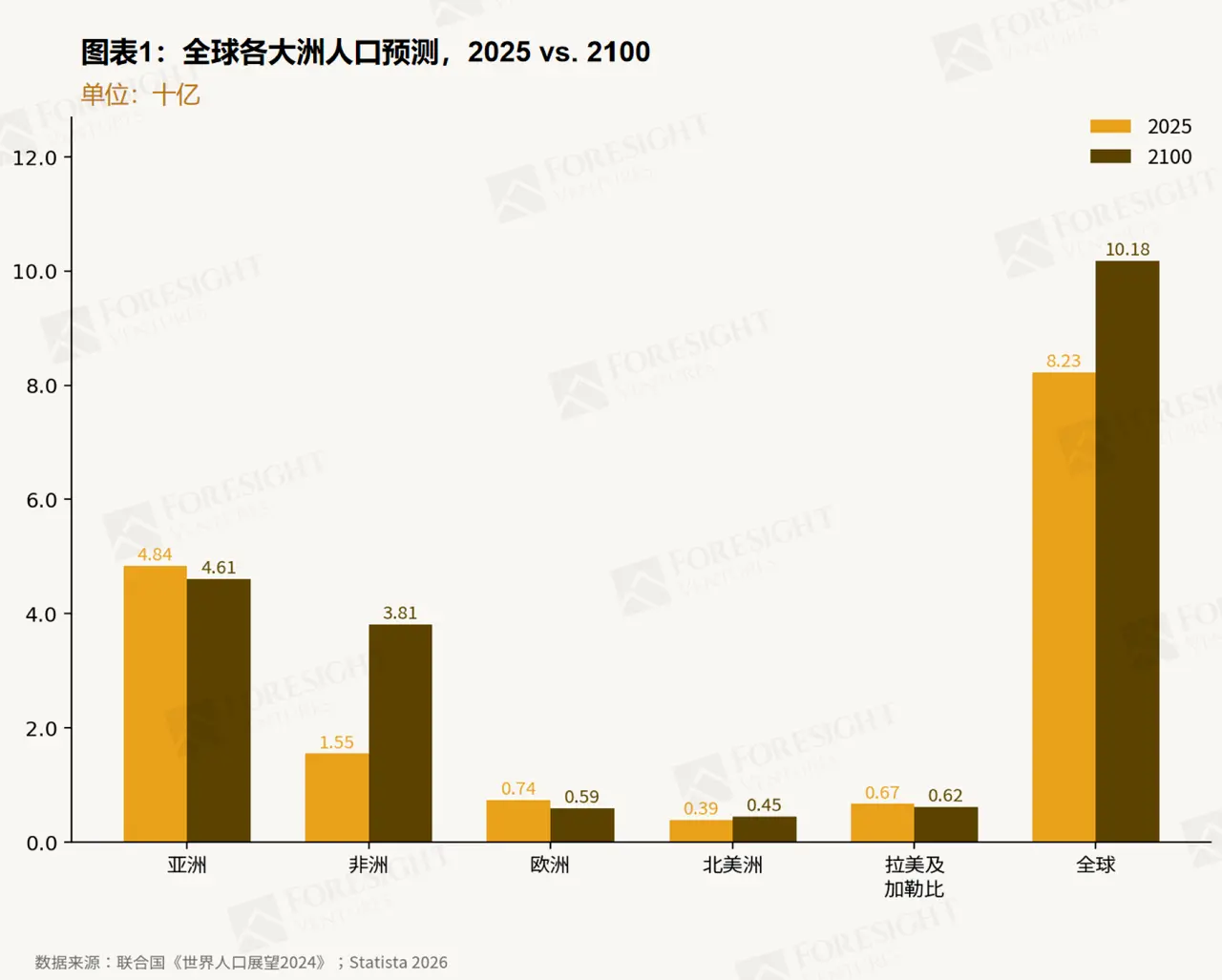
In 2025, Africa's population reached approximately 1.55 billion, accounting for about 19% of the global total. It is the world's youngest continent, with a median age of only 19, and also the fastest-growing continent, with an annual growth rate of around 2%, unmatched by other continents.

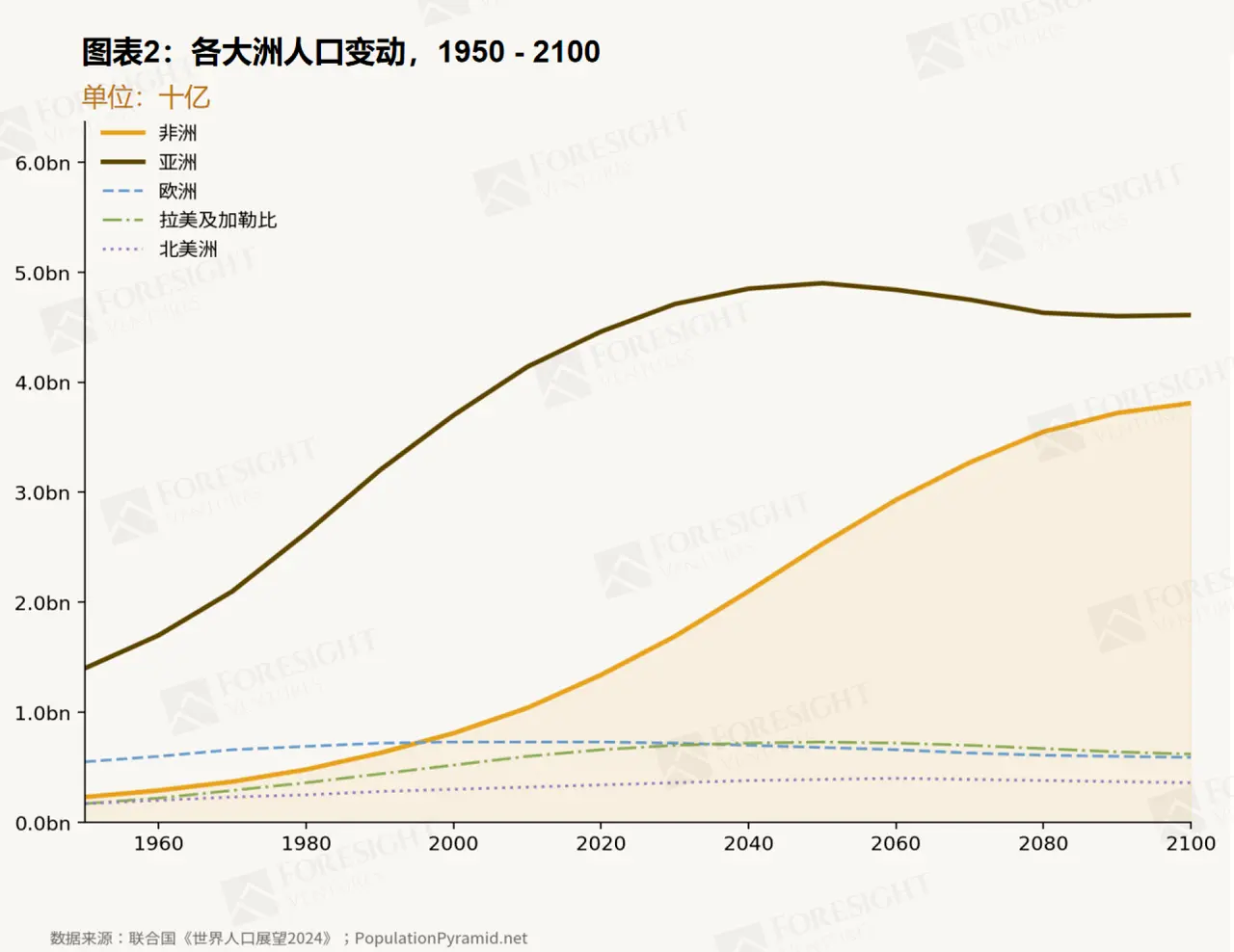
By 2100, Africa's population is projected to nearly triple to 3.81 billion, constituting 37% of humanity. In stark contrast, Asia's population is expected to peak mid-century before declining, while Europe and Latin America face absolute shrinkage; only Africa will experience substantial growth throughout the century (see Figures 1 and 2).

This demographic trend has profound implications for payment infrastructure. With traditional bank coverage still relatively low, large numbers of young, urbanizing, mobile-native cohorts are entering the labor market and consumer economy at scale. Consequently, demand for convenient, low-cost financial services (including payments, savings, and credit) will only intensify.
1.2 Resource Endowment and Industrial Structure

Africa possesses exceptionally rich natural resources. According to OPEC's Annual Statistical Bulletin, as of 2024, Africa's proven crude oil reserves were approximately 119.4 billion barrels, accounting for about 7.6% of the global total, with the largest reserves concentrated in Libya, Nigeria, Algeria, and Angola. Beyond hydrocarbons, Africa's mineral resources hold significant global importance and dominate several categories: the continent is the world's primary diamond-producing region, holds about 49% of global cobalt reserves, and is the absolute source for platinum group metals (PGMs), with South Africa alone controlling around 78% of global PGM reserves. These endowments make Africa a crucial node in the global commodity supply chain.

However, much of this wealth is still extracted and exported as raw materials, with minimal downstream processing or value addition. Concurrently, local manufacturing and agriculture are underdeveloped, infrastructure is severely lacking, and finished goods like refined petroleum and processed foods remain import-dependent. This economic structure of being "large in both imports and exports" locks the continent into the trade dependency pattern discussed next.

1.3 Trade Dependency and Remittance Flows

The African economy is deeply intertwined with global trade and overseas remittances. In 2023, Africa's cross-border merchandise exports and imports reached $604.5 billion and $684.5 billion, respectively, while remittance inflows stood at $52.16 billion. For reference, Africa's total GDP in 2023 was approximately $2.96 trillion. These two pillars—trade and remittances—are pivotal in Africa's economic structure and have generated massive demand for B2B cross-border trade settlement and C2C cross-border money transfers, respectively.

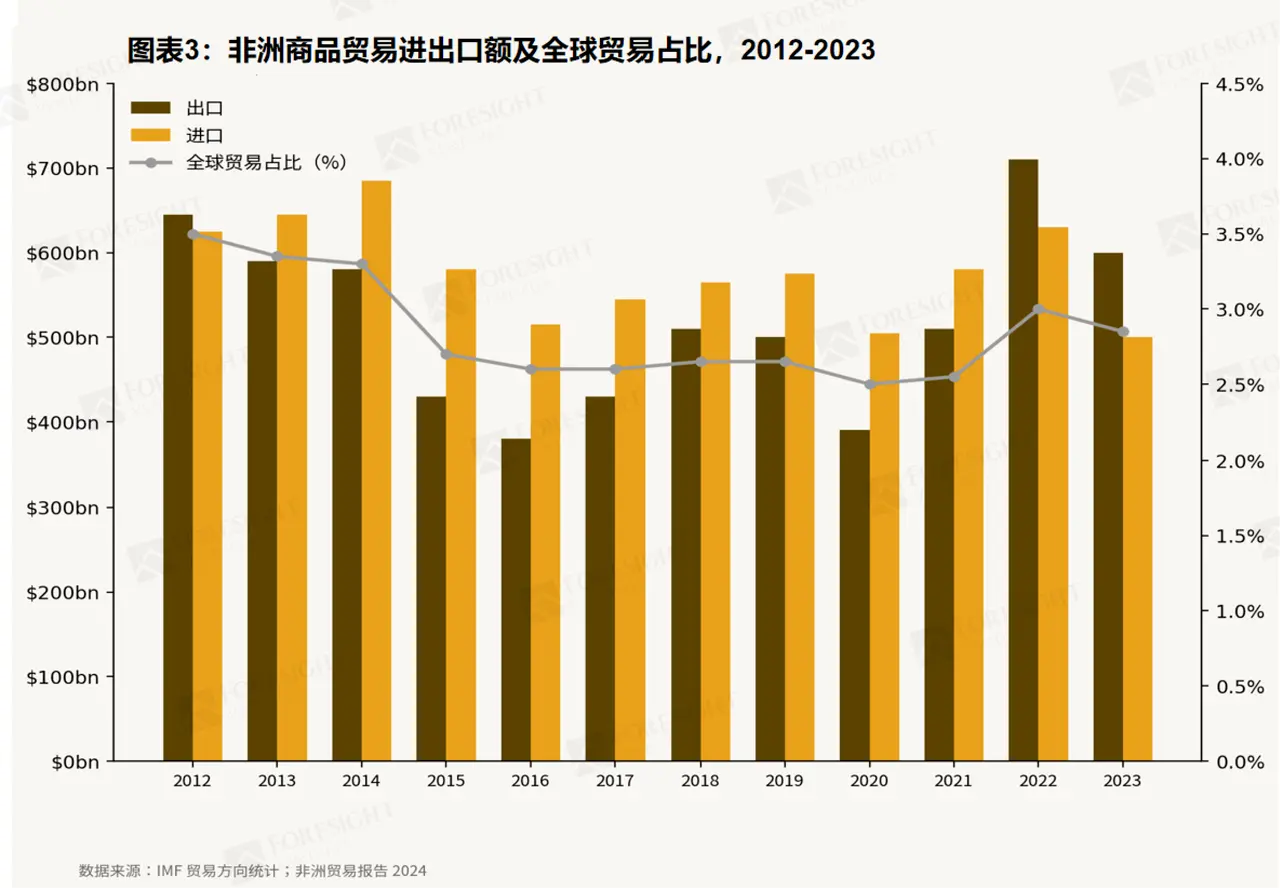
Cross-border trade is a vital pillar of the African economy, but its commodity-dependent export structure and persistent trade deficits make it highly sensitive to global macro cycles. In 2023, African merchandise exports totaled $604.5 billion (down 15.1% year-on-year), imports were $684.5 billion (down 1.6% year-on-year), resulting in a trade deficit of about $80 billion (see Figure 3). Over a ten-year trend, Africa is extremely sensitive to global commodity cycle volatility. The 2015–2016 oil price plunge pushed African trade volumes to a two-decade low, stalling resource-dependent economies (e.g., oil exporters like Nigeria, Angola) while non-resource economies maintained 7%–8% growth, creating a clear divergence. The 2020 COVID-19 shock triggered another collapse: global commodity prices plummeted, African GDP growth fell to -2%, followed by a V-shaped recovery in 2021. Most recently, in 2022–2023, driven by the commodity price surge from the Russia-Ukraine conflict, African exports briefly spiked. However, simultaneously, the Fed's aggressive rate hike cycle boosted the dollar and tightened global liquidity, subjecting the continent to severe imported inflation and currency depreciation.
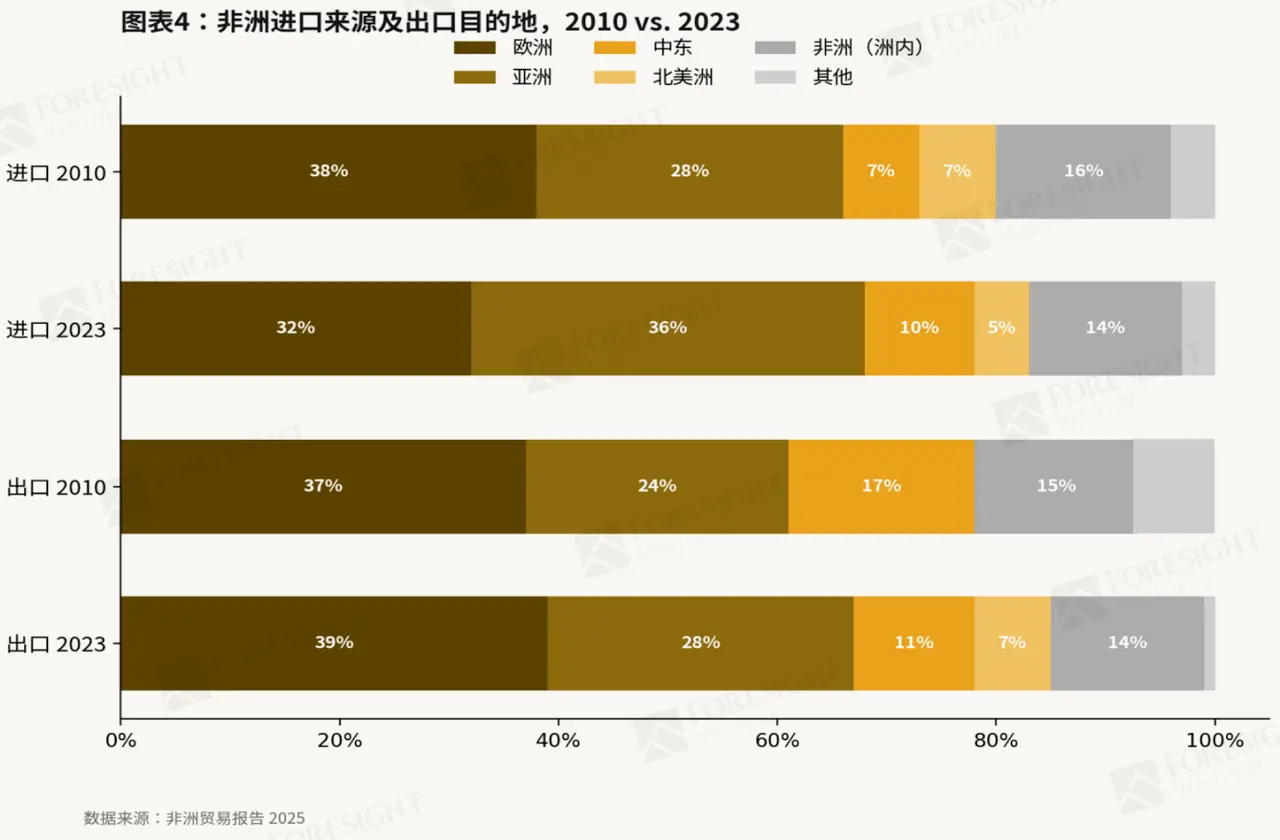
Africa's trade partner structure has shifted significantly over the past decade (see Figure 4). Asia, led by China and India, has surpassed Europe to become Africa's largest source of imports—its share of Africa's total imports rose from 28% in 2010 to 36% in 2023, while Europe's share fell from 38% to 32%. On the export side, Europe remains the top destination with a 39% share, but Asia's share grew from 24% to 28%, and the Middle East's share expanded sharply from 3% to 11%. North America's role has shrunk on both ends. These changes reflect the deepening commodity trade corridor with China and the growing importance of Gulf states as energy buyers and investment partners.

Beyond intercontinental trade, Intra-Africa Trade is also growing rapidly, but barriers such as currencies and languages between countries remain bottlenecks to be overcome. Intra-African trade volume reached $192.2 billion in 2023, up 3.8%. However, intra-regional trade accounts for only 18% of Africa's total exports, compared to 70% for Europe and 52% for Asia. This reflects persistent barriers like tariff fragmentation, currency inconvertibility, and weak cross-border infrastructure. Against this backdrop, the African Continental Free Trade Area (AfCFTA) began operation in 2021, aiming to boost intra-regional trade by 52% upon full implementation, but progress has been slow.

Remittances are another lifeline for the African economy and a source of massive C2C payment demand. According to World Bank data, remittance inflows to Africa were $52.2 billion in 2023. The top five remittance corridors were Saudi Arabia → Egypt, UAE → Egypt, USA → Nigeria, Kuwait → Egypt, France → Morocco. African labor export to the Gulf, North America, and Europe creates a continuous reverse flow of income to households. These corridors constitute one of the largest sources of cross-border C2C remittance demand and also feel the acute pain points of the traditional financial system in cross-border transfers—high cost, long time, and opaque progress—issues that will be discussed in detail in the next chapter.
2 The Deep Mismatch Between Trade/Remittance Demand and the Underdeveloped Financial System

2.1 Low Bank Coverage, Massive Unbanked Population Gap

Africa's formal financial system covers only a minority. According to the World Bank's Global Findex Database 2021–2022, only 49% of adults in Sub-Saharan Africa had a financial account; by 2024, this figure rose to 58%, still among the lowest globally. Beyond low coverage, bank branch density in Africa is also lagging. The IMF's Financial Access Survey shows Kenya has only 4.4 bank branches per 100,000 adults, Morocco has 22.2, and even South Africa, Africa's most developed banking system, has only 38.7, all well below the global average. The result is massive unmet demand for basic financial services: payments, savings, credit, and insurance.

2.2 International De-risking and Correspondent Banking Withdrawal

Africa's second major obstacle stems from the retreat of the international financial system itself. Due to concerns over anti-money laundering (AML) and know-your-customer (KYC) compliance risks, compounded by local realities like lack of formal ID, fixed addresses, incomplete tax records, and a high cash economy share, global major banks have engaged in a wave of de-risking. Since 2016, correspondent banking relationships have contracted sharply. According to SWIFT data, South Africa lost over 10% of its overseas correspondent banks, while Angola's decline reached 37%. This withdrawal directly increases the cost of legitimate cross-border transactions and excludes smaller African financial institutions from the global financial system.

2.3 Mismanaged Forex Controls and Chronic Inflation

Currency system fragility further amplifies these structural flaws. Due to fiscal deficits and a weak tax base, many African central banks resort to printing money to finance government spending, fueling persistent imported inflation. Food, fuel, and raw material prices for manufactured goods rise sharply due to currency depreciation. Concurrently, shallow capital markets, a highly concentrated banking sector, and a historical deficit in central bank independence lead to a broken monetary policy transmission mechanism, making interest rate hikes ineffective at curbing inflation or stabilizing exchange rates. In 2024, Africa's overall inflation rate reached 20.1%, the highest among major global regions, severely eroding the real value of local currency savings.

2.4 Consequence: Cash Dominance and Payment System Failure

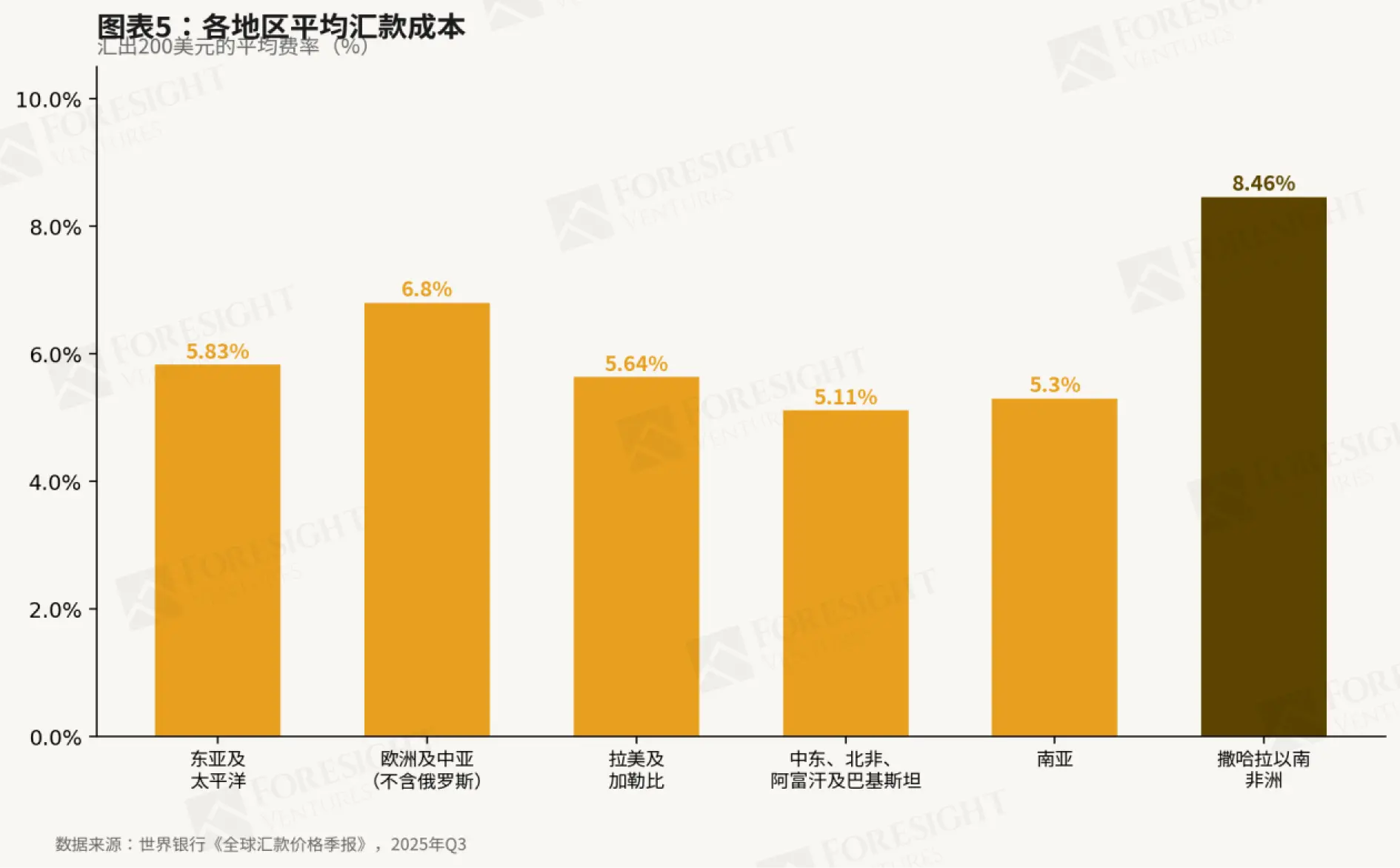
The triple failure of banking exclusion, de-risking, and monetary instability leads to evident consequences. The vast majority of Africans still rely on cash for daily transactions; Sub-Saharan Africa has the world's highest remittance costs, averaging 8.46% per transfer according to the World Bank's Q3 2025 Global Remittance Price Report; and ordinary citizens lack effective inflation-hedging stores of value. The banking system comprehensively fails on three dimensions: access convenience, affordability, and currency stability, thus creating a market vacuum rapidly being filled by emerging payment channels and cryptocurrencies.
3 In the Vacuum Left by the Traditional Financial System, Mobile Money and Cryptocurrencies Flourish

In the gap created by an absent banking system, forced by severe inflation and currency depreciation pressures, Africa has developed the world's most vibrant mobile money and cryptocurrency markets. The emergence of these alternative payment channels is not a matter of choice but of necessity—they solve real problems the banking system cannot address: accessibility, affordability, and stability.

3.1 Mobile Money: Africa Leads the World

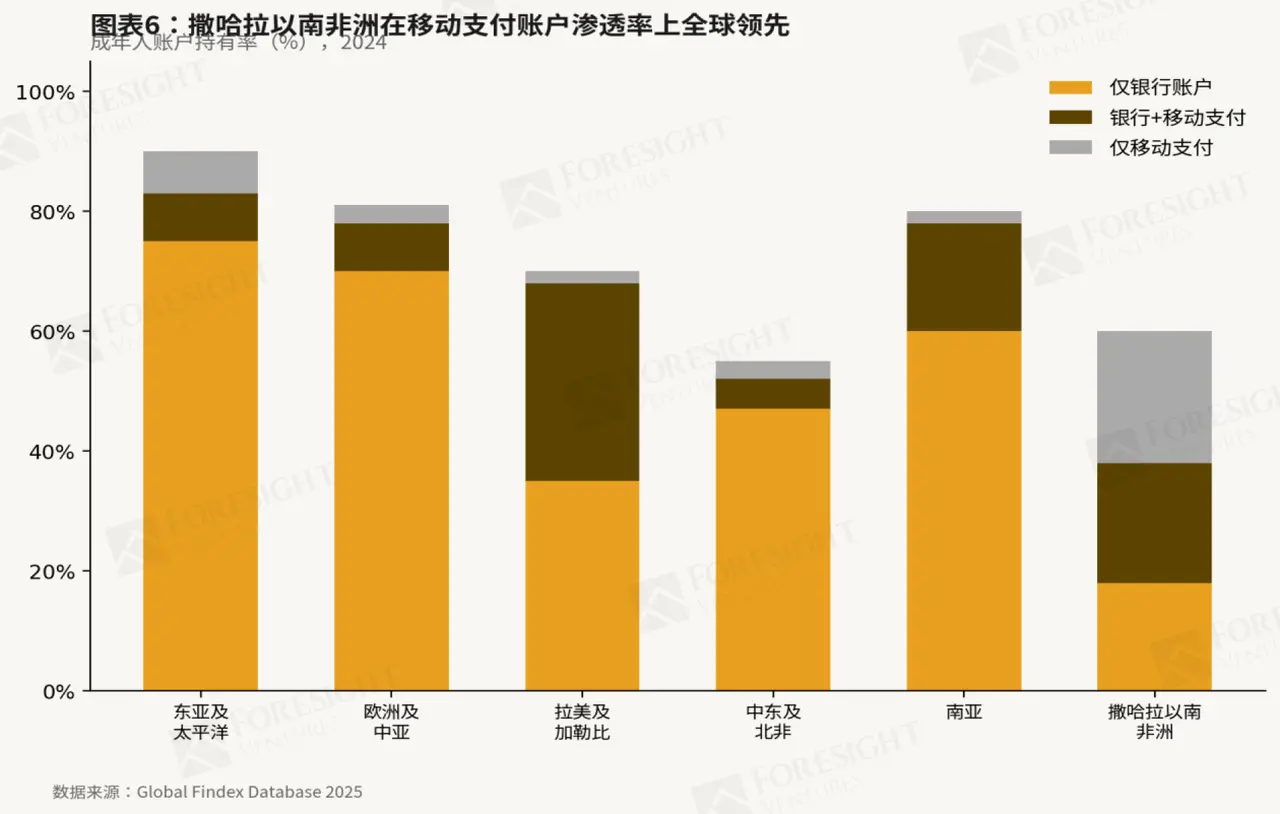
Africa accounts for the majority of global mobile money transactions. According to the 2025 Global Findex database, about 40% of adults in Sub-Saharan Africa use a mobile money account as their primary (or only) formal financial service. Kenya's M-Pesa platform is the archetype: leveraging ubiquitous USSD technology (accessible via basic feature phone keypads), it built a network of millions of offline agent points, supported by near-universal mobile coverage, ultimately capturing 90.8% of Kenya's mobile money market share, and successfully expanded to seven other African countries including Tanzania, Ghana, and Egypt. This architecture based on offline agents and low-tech barriers proves far more scalable and inclusive than traditional branch-based banking, accumulating a massive user base across urban and rural Africa.
3.2 Widespread Cryptocurrency Adoption Across the Continent

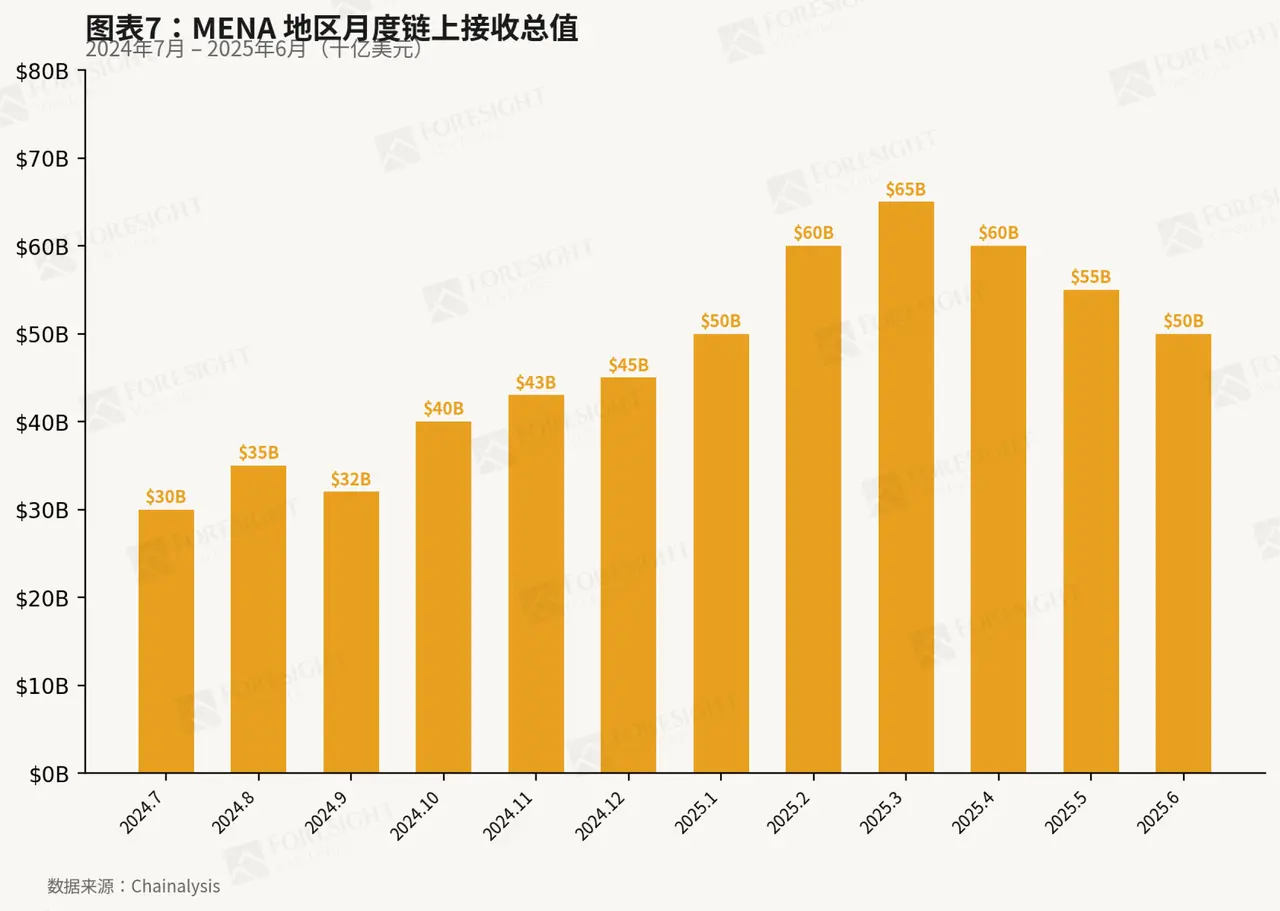
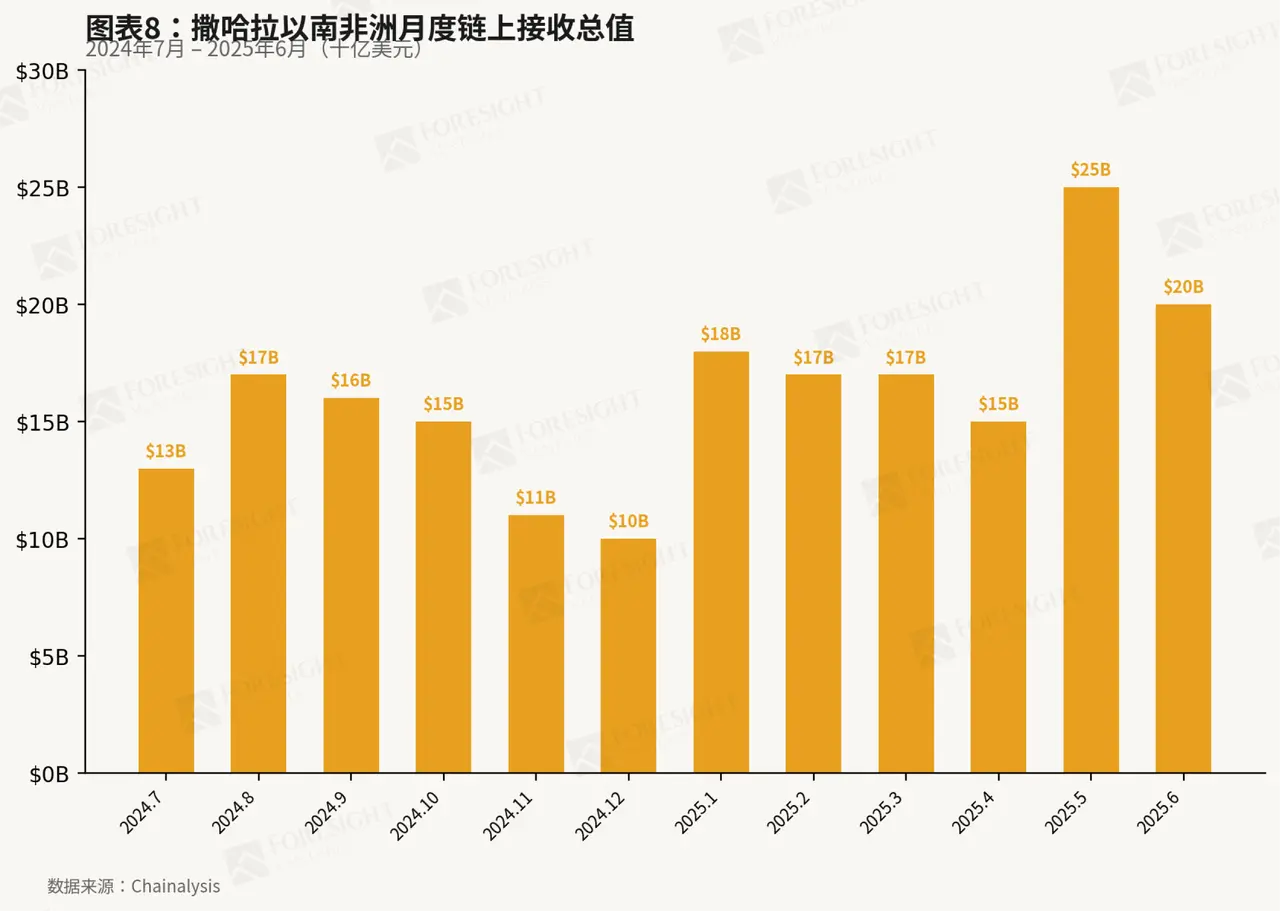
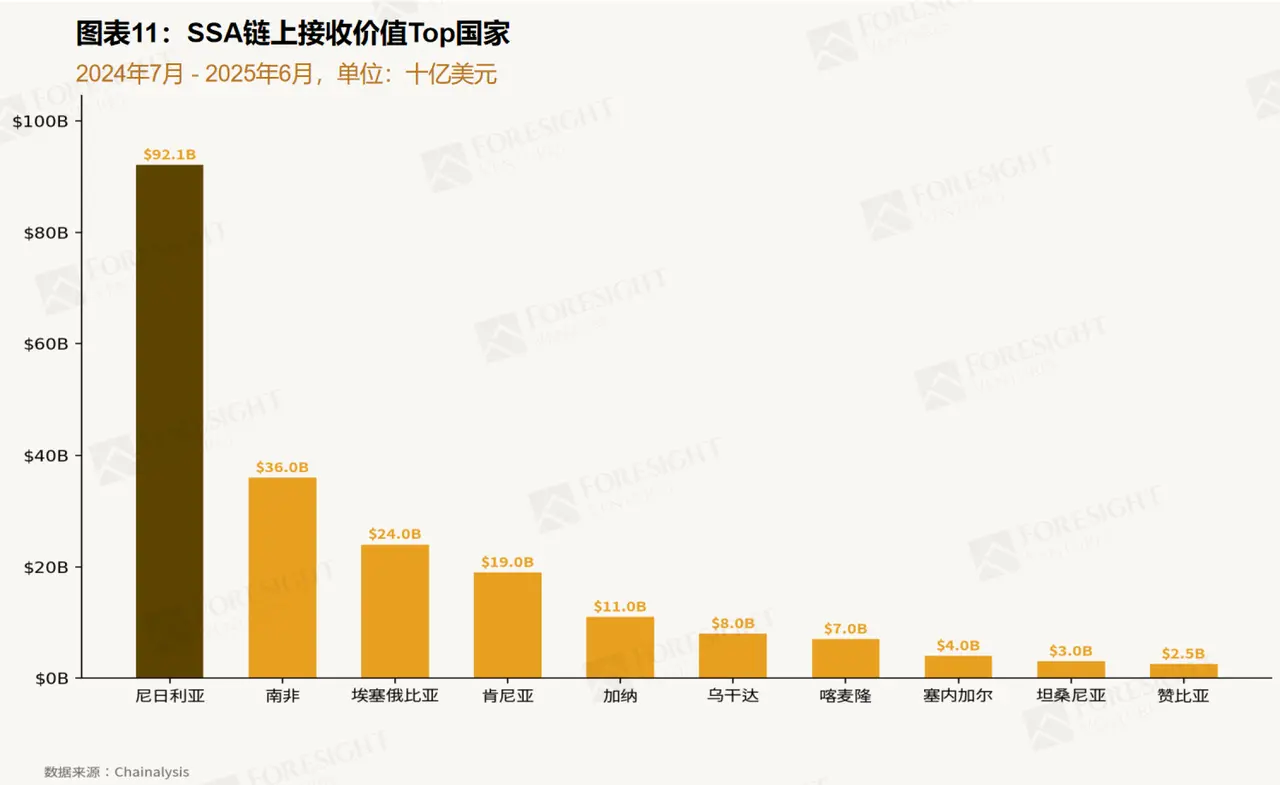
Cryptocurrency adoption rates in Africa are globally leading and rising sharply. In the Middle East and North Africa region, the total on-chain value received between July 2024 and June 2025 was approximately $600 billion; Sub-Saharan Africa recorded $200 billion in the same period, a 52% year-on-year growth, primarily driven by retail users and concentrated in a few countries (Nigeria, South Africa, Ethiopia, Kenya). Cryptocurrencies effectively meet the dual needs of African businesses and individuals for a store of value against inflation and low-cost cross-border settlement, precisely the needs that neither mobile money nor the formal banking system can adequately fulfill.
4 Heterogeneity Within the African Continent

4.1 Why Understanding Internal Divergence Within Africa is Crucial

Africa's 54 countries span 42 different currency systems and belong to multiple language spheres: Francophone, Anglophone, Arabophone, Lusophone, and Hispanophone. This linguistic and monetary fragmentation is not merely a cultural distinction but deeply embedded in cross-border trade, financial flows, and regulatory systems: payment networks are disjointed, regulatory frameworks are independent, and market opportunities are highly fragmented. Therefore, beyond establishing a holistic understanding of the continent's macroeconomic environment, it is essential to recognize the differences in culture, regulation, and financial systems across its internal sub-regions.

4.2 Dividing by the Sahara: MENA vs. Sub-Saharan Africa (SSA)

The most common analytical framework currently divides Africa by the Sahara Desert into two major systems: the Middle East and North Africa (MENA) and Sub-Saharan Africa (SSA).

North Africa is highly integrated with the Arab world in culture, institutions, and economic structure, with its economy centered on oil and gas resources and deeply embedded in the global energy market. Correspondingly, its financial system and policy frameworks operate more within the MENA ecosystem, with a relatively mature banking sector and lower financial exclusion.

In contrast, Sub-Saharan Africa largely operates outside this system. It is precisely this market, long plagued by deep-seated financial system inadequacies, dollar shortages, and monetary instability, that drives the explosive growth of crypto and mobile money. SSA currently accounts for nearly 60% of global mobile money transaction volume and is also the world's fastest-growing region for cryptocurrency adoption.

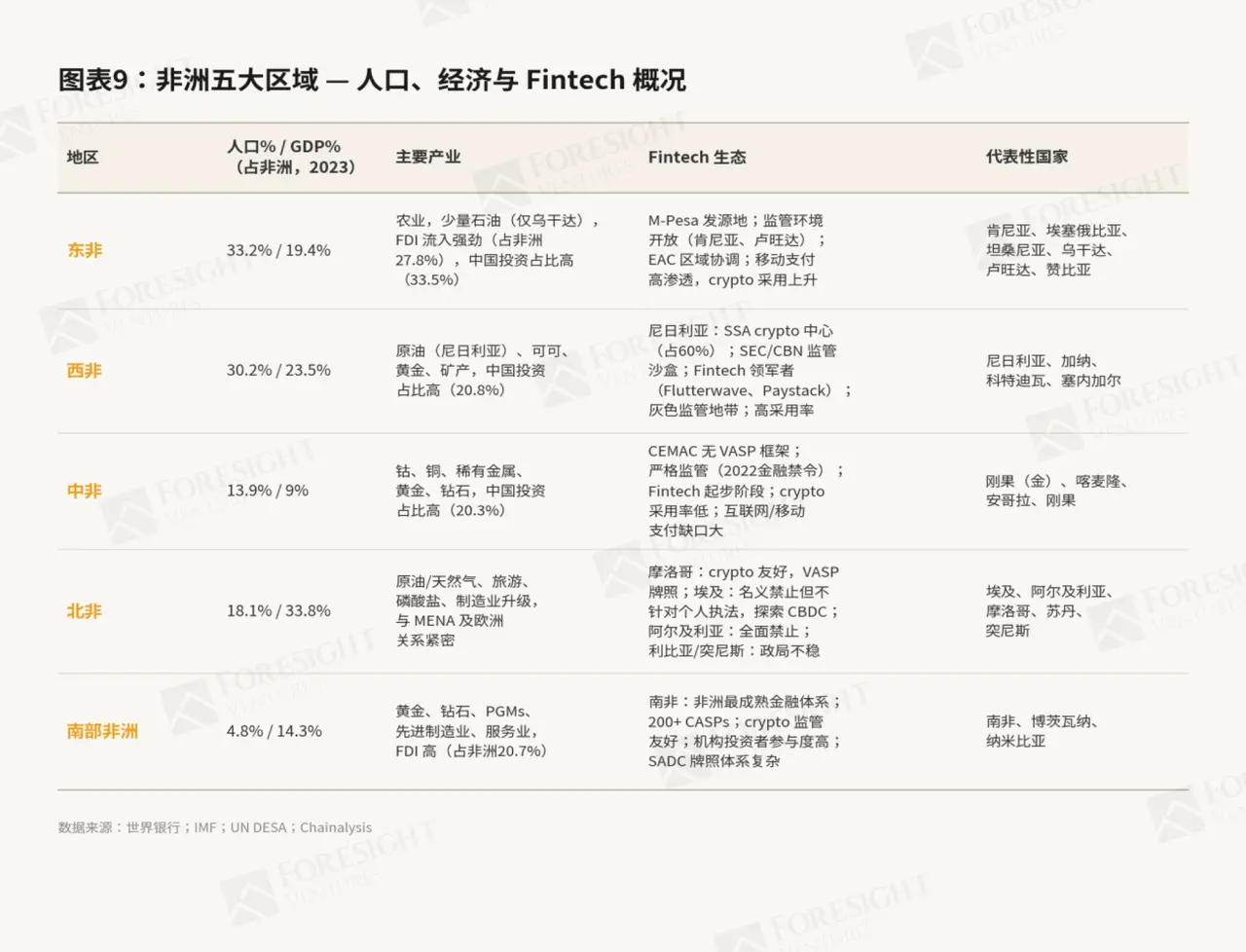
4.3 The Five-Region Framework: Divergence in Demographics, Economy, and Fintech Ecosystems

For further granularity, Africa can be divided into five regions, each exhibiting distinct macroeconomic characteristics. North Africa and Southern Africa have the highest GDP per capita; West Africa and Central Africa are relatively less developed; East Africa has the lowest per capita income. However, economic growth rates exhibit an inverse relationship with wealth levels: East Africa grows the fastest, followed by Central Africa, North Africa, West Africa, and Southern Africa.

Cryptocurrency adoption patterns show similar features. Nigeria alone (in West Africa) accounts for most SSA crypto transaction volume; simultaneously, East Africa, South Africa, and North Africa also show high cryptocurrency adoption. Central Africa and broader West Africa are still largely in early-stage markets. This divergence essentially reflects differences in financial exclusion levels, dollar shortage pressures, and regulatory environments across regions.
5 The "Dollarization" and "Dollar Shortage" Behind Sub-Saharan Africa's Payment Market

5.1 Dollarization in Sub-Saharan Africa

Sub-Saharan African economies exhibit a high degree of dollarization, far exceeding most other regions globally. The share of US dollar deposits and loans serve as key proxy indicators for dollarization levels: in Nigeria, dollar deposits once accounted for up to 40% of total deposits, and over 80% of external debt is dollar-denominated; in Ghana, dollar deposits have also reached relatively high levels of 20%–30%. This dollarization is not accidental but a manifestation of rational economic behavior in the face of long-term monetary instability.

5.2 Three Structural Drivers of Dollarization

Dollarization in Sub-Saharan Africa stems from three distinct economic pressures.

First, Store of Value: Due to fiscal deficits and external imbalances forcing central banks to print money, local currencies depreciate continuously, and the dollar provides a stable measure of value.

Second, Medium of Exchange: Commodity prices (oil, minerals, food) are globally priced in dollars, and intra-African trade, even between African countries, is often settled in dollars—because the dollar is more stable than any single local currency.

Third, Financing Channel: Shallow local capital markets mean businesses and governments must borrow dollars from international creditors; when dollar debt becomes too large relative to dollar income, exchange rate risk becomes acute, further pushing more funds into dollar deposits.

5.3 Causes of the "Dollar Shortage"

The real pain point in Sub-Saharan Africa's current payment market is the dollar shortage. Limited foreign exchange earnings from exports (due to commodity dependency and weak manufacturing exports), coupled with huge trade deficits and debt servicing pressures, continuously drain government foreign exchange reserves. Consequently, central banks can only ration official forex supply through administrative controls. This scarcity breeds a parallel black market where dollars trade at a significant premium—sometimes 50% to 100% above the official rate. Residents and businesses unable to access forex through official channels turn to informal channels: global remittance companies like Western Union, informal exchange houses, and increasingly, stablecoins and cryptocurrencies. The gap between the official and parallel market exchange rates is precisely the crack through which alternative payment systems can wedge.

5.4 Why Cryptocurrencies Thrive in This Vacuum

Stablecoins and other cryptocurrencies perform three key functions missing from the formal banking system. They bypass capital controls, providing access to dollars via parallel markets; they complete cross-border transactions at costs lower than banks and traditional remittance corridors; and they offer a globally liquid store of value unaffected by local currency risks. Therefore, cryptocurrency adoption in Sub-Saharan Africa is overwhelmingly retail-driven, with small individual transaction amounts. As shown in Figure 11, compared to other global regions, Sub-Saharan Africa has a higher proportion of transfers in the $1,000 to $10,000 range, reflecting small-scale remittances, informal business trade settlement, and individual savings flows. Nigeria dominates the region, accounting for about 45% of Sub-Saharan Africa's on-chain transaction volume (as shown in Figure 12), but Kenya, South Africa, and Ethiopia are also important regional hubs.
5.5 De-dollarization Attempts and Their Structural Limitations

African policymakers and regional institutions have attempted to reduce dollar dependence. The Pan-African Payment and Settlement System (PAPSS) aims to settle intra-African trade in local currencies and reduce forex costs; the planned West African "Eco" currency zone seeks stability through monetary union; central banks have also employed aggressive interest rate hikes and capital controls. However, all these efforts face a fundamental constraint: Sub-Saharan Africa's structural trade dependency. As long as the continent imports more than it exports, runs persistent external account deficits, and earns most foreign exchange from commodities, dollar demand will persistently outstrip supply. De-dollarization requires industrialization and trade rebalancing, a multi-decade transformation process that policy alone cannot achieve. In the interim, mobile money and cryptocurrencies will continue to play a significant role, filling gaps left by the traditional financial system.

Conclusion

Africa's standout performance in mobile money and cryptocurrency adoption is not a market coincidence but a macroeconomic inevitability.

The continent's young demographic structure, abundant natural resources, and deep integration into global commodity markets have spawned massive cross-border payment flows. However, its weak financial system, chronic monetary instability, and severe dollar shortage render the formal banking system fundamentally incapable of meeting this demand.

Mobile money solves domestic payment issues; cryptocurrencies are solving cross-border value transfer and inflation hedging issues. These are not niche applications or speculative holdings, but critical financial infrastructure filling the vacuum left by structural economic constraints. The crucial point is that these constraints are not cyclical; they are rooted in Africa's resource dependence, limited industrialization, and underdeveloped financial markets.

De-dollarization requires trade rebalancing and industrialization, both multi-decade transformations. Until then, and likely long after, alternative payment channels and currencies will remain at the heart of the African economy.

Original article link

Preguntas relacionadas

QWhat are the two main macroeconomic structural drivers that have led to Africa's unique payments market landscape, characterized by high mobile money and crypto adoption?

AThe two main drivers are: (1) Africa's heavy reliance on commodity exports, trade flows, and remittances, creating massive demand for cross-border settlements and payments. (2) The continent's underdeveloped traditional financial infrastructure, which suffers from issues like 'de-risking' by international banks and poor foreign exchange management, leading to a chronic absence of reliable banking services and persistent inflationary pressures.

QHow does the economic and payments landscape differ between North Africa (MENA) and Sub-Saharan Africa (SSA)?

ANorth Africa (MENA) is economically integrated with the Middle East, anchored by oil, and has a relatively more developed banking system. Sub-Saharan Africa (SSA), in contrast, suffers from severe US dollar shortages and fragmented monetary systems. This makes SSA a market with a natural, acute demand for mobile payments and cryptocurrencies, which have seen the fastest adoption rates in the world here.

QWhy have cryptocurrencies seen such rapid adoption in Sub-Saharan Africa, and what specific needs do they fulfill?

ACryptocurrencies have seen rapid adoption in SSA because they fulfill critical needs left unmet by traditional finance: (1) They act as a store of value against local currency depreciation and inflation. (2) They serve as a low-cost medium for cross-border exchange and remittances, bypassing expensive and restrictive official channels. They effectively fill the vacuum created by a lack of dollar access, capital controls, and unstable local currencies.

QWhat is 'dollarization' in the context of Sub-Saharan Africa, and what are its three structural drivers?

ADollarization in SSA refers to the widespread use of the US dollar alongside or instead of local currencies. Its three structural drivers are: (1) Store of Value: The US dollar provides stability against chronic local currency devaluation. (2) Medium of Exchange: Commodities are priced in dollars, and even intra-African trade is often dollar-denominated for stability. (3) Financing Channel: Shallow local capital markets force governments and firms to borrow in dollars, reinforcing dollar dependency.

QWhat role does mobile money (like M-Pesa) play in Africa's financial ecosystem, and how does it differ from the role of cryptocurrencies?

AMobile money (e.g., M-Pesa) primarily solves the problem of domestic financial inclusion and daily payments. It provides accessible, low-cost payment, savings, and transfer services via basic mobile phones, effectively replacing banks for everyday transactions. Cryptocurrencies, on the other hand, primarily address the problems of cross-border value transfer (remittances, trade) and inflation hedging. They function as a store of value and a global settlement network, filling gaps that mobile money and traditional banks cannot.

Lecturas Relacionadas

Anthropic Cries Wolf: Is the AGI Threat Real, or Just an IPO Story?

Anthropic has published an article titled "When AI builds itself," discussing the emerging concept of "recursive self-improvement," where AI begins to actively participate in designing, training, testing, and optimizing its own subsequent versions. The company presents internal data showing that by May 2026, over 80% of code merged into its codebase was written by Claude, its AI model. Claude's capabilities have expanded to handling complex, open-ended engineering tasks, achieving a 76% success rate in such areas, and even contributing to research processes, such as optimizing code performance and conducting AI safety experiments. Anthropic outlines an evolution from human-driven development to AI-assisted workflows, culminating in the current stage where AI agents can autonomously write, run, and delegate code. The company cautions that the path toward a "closed loop," where AI continuously improves itself, is becoming visible. It calls for coordinated global mechanisms to potentially slow or pause frontier AI development to allow safety research and societal structures to catch up. However, the timing of this warning coincides with Anthropic's preparations for an IPO, framing the narrative not just as a safety concern but also as a demonstration of Claude's advanced capabilities and its integral role in accelerating Anthropic's own R&D—creating a potential "flywheel" effect for competitive advantage. This contrasts with OpenAI's recent, more policy-oriented discussion of the same risks, highlighting the competitive dynamics in the AI industry as companies position themselves in both the technological and regulatory landscape.

marsbitHace 59 min(s)

Anthropic Cries Wolf: Is the AGI Threat Real, or Just an IPO Story?

marsbitHace 59 min(s)

BIT Research: ETF Purchases Have Slowed, Strategy (MicroStrategy) Has Slowed, What Else Can Drive Bitcoin's Rise?

Market Refocus on Inflation and Rate Expectations Weighs on Bitcoin Currently, the market is in a phase of macro-repricing dominated by inflation and interest rate expectations. Bitcoin, which previously benefited from easy liquidity and low inflation, is seeing its core bullish drivers weaken. These drivers were market expectations for interest rate cuts and strong inflows from Bitcoin ETFs and institutions like MicroStrategy (referred to as "Strategy" in the text). The logic has shifted. Recent high inflation data (e.g., CPI hitting 3.8% in a May 2026 report) has caused the market to sharply reduce its rate cut expectations for 2025 and even price in potential hikes. This is a key constraint for Bitcoin, as it lacks cash flows and is highly sensitive to rate expectations. Concurrently, institutional capital flows have slowed significantly. Following the hot CPI data, Bitcoin ETFs saw accelerated outflows, with around $4.3 billion leaving over a period. MicroStrategy's ability to keep adding substantial Bitcoin to its balance sheet is also diminishing. Together, ETF and MicroStrategy holdings total roughly $110 billion, but their momentum as growth engines is cooling. In summary, Bitcoin's current pressure stems not from its own fundamentals but from a changing macro environment. As long as inflation stays elevated, Bitcoin is likely to remain in a consolidating phase. However, historically, inflation eventually peaks. Once it recedes and rate cut expectations rebuild, institutional capital could return, potentially fueling a new and more robust recovery phase for Bitcoin.

marsbitHace 1 hora(s)

BIT Research: ETF Purchases Have Slowed, Strategy (MicroStrategy) Has Slowed, What Else Can Drive Bitcoin's Rise?

marsbitHace 1 hora(s)

Earning 1000 Trillion in Half a Year, 'Pocketing' 20 Million per Capita: This Round of Wealth Creation in the Korean Stock Market is Unprecedented in Scale

The South Korean stock market is experiencing an unprecedented wealth surge in 2026, with household equity and fund asset values soaring by over 1,000 trillion KRW (~$730bn) year-to-date. This translates to an average per capita wealth increase of roughly 20 million KRW, fueled by a historic 109% rally in the KOSPI index. The boom is driven by three converging forces: an AI-driven semiconductor supercycle boosting giants like Samsung and SK Hynix; the government's "Value-Up" market reforms addressing long-standing corporate governance issues; and aggressive real estate regulations that have locked capital within financial markets, preventing profits from flowing back into property. This has triggered a wealth effect, boosting high-end consumption significantly. However, the gains are highly concentrated. The two semiconductor behemoths account for over half the index's value, but retail investors own relatively low stakes in them, systematically missing the biggest rallies. Wealth and consumption benefits are skewed towards luxury goods and imported cars, bypassing mainstream retail. Further risks stem from excessive leverage, with high trading volume in leveraged ETFs, and a market sentiment heavily reliant on the AI sector's fortunes and speculative rumors. While this cycle marks a potential shift from real estate to equities as a primary wealth generator for Koreans, its sustainability, amid structural imbalances and leverage, remains a critical test.

marsbitHace 1 hora(s)

Earning 1000 Trillion in Half a Year, 'Pocketing' 20 Million per Capita: This Round of Wealth Creation in the Korean Stock Market is Unprecedented in Scale

marsbitHace 1 hora(s)

Trading

Spot
Futuros

Artículos destacados

Qué es $S$

Entendiendo SPERO: Una Visión General Completa Introducción a SPERO A medida que el panorama de la innovación continúa evolucionando, la aparición de tecnologías web3 y proyectos de criptomonedas juega un papel fundamental en la configuración del futuro digital. Un proyecto que ha atraído la atención en este campo dinámico es SPERO, denotado como SPERO,$$s$. Este artículo tiene como objetivo reunir y presentar información detallada sobre SPERO, para ayudar a entusiastas e inversores a comprender sus fundamentos, objetivos e innovaciones dentro de los dominios web3 y cripto. ¿Qué es SPERO,$$s$? SPERO,$$s$ es un proyecto único dentro del espacio cripto que busca aprovechar los principios de descentralización y tecnología blockchain para crear un ecosistema que promueva la participación, la utilidad y la inclusión financiera. El proyecto está diseñado para facilitar interacciones de igual a igual de nuevas maneras, proporcionando a los usuarios soluciones y servicios financieros innovadores. En su esencia, SPERO,$$s$ tiene como objetivo empoderar a los individuos al proporcionar herramientas y plataformas que mejoren la experiencia del usuario en el espacio de las criptomonedas. Esto incluye habilitar métodos de transacción más flexibles, fomentar iniciativas impulsadas por la comunidad y crear caminos para oportunidades financieras a través de aplicaciones descentralizadas (dApps). La visión subyacente de SPERO,$$s$ gira en torno a la inclusividad, buscando cerrar brechas dentro de las finanzas tradicionales mientras aprovecha los beneficios de la tecnología blockchain. ¿Quién es el Creador de SPERO,$$s$? La identidad del creador de SPERO,$$s$ sigue siendo algo oscura, ya que hay recursos públicos limitados que proporcionan información de fondo detallada sobre su(s) fundador(es). Esta falta de transparencia puede derivarse del compromiso del proyecto con la descentralización, una ética que muchos proyectos web3 comparten, priorizando las contribuciones colectivas sobre el reconocimiento individual. Al centrar las discusiones en torno a la comunidad y sus objetivos colectivos, SPERO,$$s$ encarna la esencia del empoderamiento sin señalar a individuos específicos. Como tal, comprender la ética y la misión de SPERO sigue siendo más importante que identificar a un creador singular. ¿Quiénes son los Inversores de SPERO,$$s$? SPERO,$$s$ cuenta con el apoyo de una diversa gama de inversores que van desde capitalistas de riesgo hasta inversores ángeles dedicados a fomentar la innovación en el sector cripto. El enfoque de estos inversores generalmente se alinea con la misión de SPERO, priorizando proyectos que prometen avances tecnológicos sociales, inclusión financiera y gobernanza descentralizada. Estas fundaciones de inversores suelen estar interesadas en proyectos que no solo ofrecen productos innovadores, sino que también contribuyen positivamente a la comunidad blockchain y sus ecosistemas. El respaldo de estos inversores refuerza a SPERO,$$s$ como un contendiente notable en el dominio de proyectos cripto que evoluciona rápidamente. ¿Cómo Funciona SPERO,$$s$? SPERO,$$s$ emplea un marco multifacético que lo distingue de los proyectos de criptomonedas convencionales. Aquí hay algunas de las características clave que subrayan su singularidad e innovación: Gobernanza Descentralizada: SPERO,$$s$ integra modelos de gobernanza descentralizada, empoderando a los usuarios para participar activamente en los procesos de toma de decisiones sobre el futuro del proyecto. Este enfoque fomenta un sentido de propiedad y responsabilidad entre los miembros de la comunidad. Utilidad del Token: SPERO,$$s$ utiliza su propio token de criptomoneda, diseñado para servir diversas funciones dentro del ecosistema. Estos tokens permiten transacciones, recompensas y la facilitación de servicios ofrecidos en la plataforma, mejorando la participación y la utilidad general. Arquitectura en Capas: La arquitectura técnica de SPERO,$$s$ apoya la modularidad y escalabilidad, permitiendo la integración fluida de características y aplicaciones adicionales a medida que el proyecto evoluciona. Esta adaptabilidad es fundamental para mantener la relevancia en el cambiante paisaje cripto. Participación de la Comunidad: El proyecto enfatiza iniciativas impulsadas por la comunidad, empleando mecanismos que incentivan la colaboración y la retroalimentación. Al nutrir una comunidad sólida, SPERO,$$s$ puede abordar mejor las necesidades de los usuarios y adaptarse a las tendencias del mercado. Enfoque en la Inclusión: Al ofrecer tarifas de transacción bajas e interfaces amigables para el usuario, SPERO,$$s$ busca atraer a una base de usuarios diversa, incluyendo a individuos que anteriormente pueden no haber participado en el espacio cripto. Este compromiso con la inclusión se alinea con su misión general de empoderamiento a través de la accesibilidad. Cronología de SPERO,$$s$ Entender la historia de un proyecto proporciona información crucial sobre su trayectoria de desarrollo y hitos. A continuación se presenta una cronología sugerida que mapea eventos significativos en la evolución de SPERO,$$s$: Fase de Conceptualización e Ideación: Las ideas iniciales que forman la base de SPERO,$$s$ fueron concebidas, alineándose estrechamente con los principios de descentralización y enfoque comunitario dentro de la industria blockchain. Lanzamiento del Whitepaper del Proyecto: Tras la fase conceptual, se lanzó un whitepaper completo que detalla la visión, los objetivos y la infraestructura tecnológica de SPERO,$$s$ para generar interés y retroalimentación de la comunidad. Construcción de Comunidad y Primeras Interacciones: Se realizaron esfuerzos de divulgación activa para construir una comunidad de primeros adoptantes y posibles inversores, facilitando discusiones en torno a los objetivos del proyecto y obteniendo apoyo. Evento de Generación de Tokens: SPERO,$$s$ llevó a cabo un evento de generación de tokens (TGE) para distribuir sus tokens nativos a los primeros seguidores y establecer liquidez inicial dentro del ecosistema. Lanzamiento de la dApp Inicial: La primera aplicación descentralizada (dApp) asociada con SPERO,$$s$ se puso en marcha, permitiendo a los usuarios interactuar con las funcionalidades centrales de la plataforma. Desarrollo Continuo y Alianzas: Actualizaciones y mejoras continuas a las ofertas del proyecto, incluyendo alianzas estratégicas con otros actores en el espacio blockchain, han moldeado a SPERO,$$s$ en un jugador competitivo y en evolución en el mercado cripto. Conclusión SPERO,$$s$ se erige como un testimonio del potencial de web3 y las criptomonedas para revolucionar los sistemas financieros y empoderar a los individuos. Con un compromiso con la gobernanza descentralizada, la participación comunitaria y funcionalidades diseñadas de manera innovadora, allana el camino hacia un paisaje financiero más inclusivo. Como con cualquier inversión en el espacio cripto que evoluciona rápidamente, se anima a los posibles inversores y usuarios a investigar a fondo y participar de manera reflexiva con los desarrollos en curso dentro de SPERO,$$s$. El proyecto muestra el espíritu innovador de la industria cripto, invitando a una mayor exploración de sus innumerables posibilidades. Mientras el viaje de SPERO,$$s$ aún se desarrolla, sus principios fundamentales pueden, de hecho, influir en el futuro de cómo interactuamos con la tecnología, las finanzas y entre nosotros en ecosistemas digitales interconectados.

72 Vistas totalesPublicado en 2024.12.17Actualizado en 2024.12.17

Qué es $S$

Qué es AGENT S

Agent S: El Futuro de la Interacción Autónoma en Web3 Introducción En el paisaje en constante evolución de Web3 y las criptomonedas, las innovaciones están redefiniendo constantemente cómo los individuos interactúan con las plataformas digitales. Uno de estos proyectos pioneros, Agent S, promete revolucionar la interacción humano-computadora a través de su marco agente abierto. Al allanar el camino para interacciones autónomas, Agent S busca simplificar tareas complejas, ofreciendo aplicaciones transformadoras en inteligencia artificial (IA). Esta exploración detallada profundizará en las complejidades del proyecto, sus características únicas y las implicaciones para el dominio de las criptomonedas. ¿Qué es Agent S? Agent S se presenta como un marco agente abierto innovador, diseñado específicamente para abordar tres desafíos fundamentales en la automatización de tareas informáticas: Adquisición de Conocimiento Específico del Dominio: El marco aprende inteligentemente de diversas fuentes de conocimiento externas y experiencias internas. Este enfoque dual le permite construir un rico repositorio de conocimiento específico del dominio, mejorando su rendimiento en la ejecución de tareas. Planificación a Largo Plazo de Tareas: Agent S emplea planificación jerárquica aumentada por la experiencia, un enfoque estratégico que facilita la descomposición y ejecución eficiente de tareas complejas. Esta característica mejora significativamente su capacidad para gestionar múltiples subtareas de manera eficiente y efectiva. Manejo de Interfaces Dinámicas y No Uniformes: El proyecto introduce la Interfaz Agente-Computadora (ACI), una solución innovadora que mejora la interacción entre agentes y usuarios. Utilizando Modelos de Lenguaje Multimodal de Gran Escala (MLLMs), Agent S puede navegar y manipular diversas interfaces gráficas de usuario sin problemas. A través de estas características pioneras, Agent S proporciona un marco robusto que aborda las complejidades involucradas en la automatización de la interacción humana con las máquinas, preparando el terreno para una multitud de aplicaciones en IA y más allá. ¿Quién es el Creador de Agent S? Si bien el concepto de Agent S es fundamentalmente innovador, la información específica sobre su creador sigue siendo elusiva. El creador es actualmente desconocido, lo que resalta ya sea la etapa incipiente del proyecto o la elección estratégica de mantener a los miembros fundadores en el anonimato. Independientemente de la anonimidad, el enfoque sigue siendo en las capacidades y el potencial del marco. ¿Quiénes son los Inversores de Agent S? Dado que Agent S es relativamente nuevo en el ecosistema criptográfico, la información detallada sobre sus inversores y patrocinadores financieros no está documentada explícitamente. La falta de información disponible públicamente sobre las bases de inversión u organizaciones que apoyan el proyecto plantea preguntas sobre su estructura de financiamiento y hoja de ruta de desarrollo. Comprender el respaldo es crucial para evaluar la sostenibilidad del proyecto y su posible impacto en el mercado. ¿Cómo Funciona Agent S? En el núcleo de Agent S se encuentra una tecnología de vanguardia que le permite funcionar de manera efectiva en diversos entornos. Su modelo operativo se basa en varias características clave: Interacción Humano-Computadora Similar a la Humana: El marco ofrece planificación avanzada de IA, esforzándose por hacer que las interacciones con las computadoras sean más intuitivas. Al imitar el comportamiento humano en la ejecución de tareas, promete elevar las experiencias de los usuarios. Memoria Narrativa: Empleada para aprovechar experiencias de alto nivel, Agent S utiliza memoria narrativa para hacer un seguimiento de las historias de tareas, mejorando así sus procesos de toma de decisiones. Memoria Episódica: Esta característica proporciona a los usuarios una guía paso a paso, permitiendo que el marco ofrezca apoyo contextual a medida que se desarrollan las tareas. Soporte para OpenACI: Con la capacidad de ejecutarse localmente, Agent S permite a los usuarios mantener el control sobre sus interacciones y flujos de trabajo, alineándose con la ética descentralizada de Web3. Fácil Integración con APIs Externas: Su versatilidad y compatibilidad con varias plataformas de IA aseguran que Agent S pueda encajar sin problemas en ecosistemas tecnológicos existentes, convirtiéndolo en una opción atractiva para desarrolladores y organizaciones. Estas funcionalidades contribuyen colectivamente a la posición única de Agent S dentro del espacio cripto, ya que automatiza tareas complejas y de múltiples pasos con una intervención humana mínima. A medida que el proyecto evoluciona, sus posibles aplicaciones en Web3 podrían redefinir cómo se desarrollan las interacciones digitales. Cronología de Agent S El desarrollo y los hitos de Agent S pueden encapsularse en una cronología que resalta sus eventos significativos: 27 de septiembre de 2024: El concepto de Agent S fue lanzado en un documento de investigación integral titulado “Un Marco Agente Abierto que Usa Computadoras Como un Humano”, mostrando las bases del proyecto. 10 de octubre de 2024: El documento de investigación fue puesto a disposición del público en arXiv, ofreciendo una exploración profunda del marco y su evaluación de rendimiento basada en el benchmark OSWorld. 12 de octubre de 2024: Se lanzó una presentación en video, proporcionando una visión visual de las capacidades y características de Agent S, involucrando aún más a posibles usuarios e inversores. Estos marcadores en la cronología no solo ilustran el progreso de Agent S, sino que también indican su compromiso con la transparencia y la participación comunitaria. Puntos Clave Sobre Agent S A medida que el marco Agent S continúa evolucionando, varios atributos clave destacan, subrayando su naturaleza innovadora y potencial: Marco Innovador: Diseñado para proporcionar un uso intuitivo de las computadoras similar a la interacción humana, Agent S aporta un enfoque novedoso a la automatización de tareas. Interacción Autónoma: La capacidad de interactuar de manera autónoma con las computadoras a través de GUI significa un salto hacia soluciones informáticas más inteligentes y eficientes. Automatización de Tareas Complejas: Con su metodología robusta, puede automatizar tareas complejas y de múltiples pasos, haciendo que los procesos sean más rápidos y menos propensos a errores. Mejora Continua: Los mecanismos de aprendizaje permiten a Agent S mejorar a partir de experiencias pasadas, mejorando continuamente su rendimiento y eficacia. Versatilidad: Su adaptabilidad en diferentes entornos operativos como OSWorld y WindowsAgentArena asegura que pueda servir a una amplia gama de aplicaciones. A medida que Agent S se posiciona en el paisaje de Web3 y criptomonedas, su potencial para mejorar las capacidades de interacción y automatizar procesos significa un avance significativo en las tecnologías de IA. A través de su marco innovador, Agent S ejemplifica el futuro de las interacciones digitales, prometiendo una experiencia más fluida y eficiente para los usuarios en diversas industrias. Conclusión Agent S representa un audaz avance en la unión de la IA y Web3, con la capacidad de redefinir cómo interactuamos con la tecnología. Aunque aún se encuentra en sus primeras etapas, las posibilidades para su aplicación son vastas y atractivas. A través de su marco integral que aborda desafíos críticos, Agent S busca llevar las interacciones autónomas al primer plano de la experiencia digital. A medida que nos adentramos más en los reinos de las criptomonedas y la descentralización, proyectos como Agent S sin duda desempeñarán un papel crucial en la configuración del futuro de la tecnología y la colaboración humano-computadora.

471 Vistas totalesPublicado en 2025.01.14Actualizado en 2025.01.14

Qué es AGENT S

Cómo comprar S

¡Bienvenido a HTX.com! Hemos hecho que comprar Sonic (S) sea simple y conveniente. Sigue nuestra guía paso a paso para iniciar tu viaje de criptos.Paso 1: crea tu cuenta HTXUtiliza tu correo electrónico o número de teléfono para registrarte y obtener una cuenta gratuita en HTX. Experimenta un proceso de registro sin complicaciones y desbloquea todas las funciones.Obtener mi cuentaPaso 2: ve a Comprar cripto y elige tu método de pagoTarjeta de crédito/débito: usa tu Visa o Mastercard para comprar Sonic (S) al instante.Saldo: utiliza fondos del saldo de tu cuenta HTX para tradear sin problemas.Terceros: hemos agregado métodos de pago populares como Google Pay y Apple Pay para mejorar la comodidad.P2P: tradear directamente con otros usuarios en HTX.Over-the-Counter (OTC): ofrecemos servicios personalizados y tipos de cambio competitivos para los traders.Paso 3: guarda tu Sonic (S)Después de comprar tu Sonic (S), guárdalo en tu cuenta HTX. Alternativamente, puedes enviarlo a otro lugar mediante transferencia blockchain o utilizarlo para tradear otras criptomonedas.Paso 4: tradear Sonic (S)Tradear fácilmente con Sonic (S) en HTX's mercado spot. Simplemente accede a tu cuenta, selecciona tu par de trading, ejecuta tus trades y monitorea en tiempo real. Ofrecemos una experiencia fácil de usar tanto para principiantes como para traders experimentados.

962 Vistas totalesPublicado en 2025.01.15Actualizado en 2026.06.02

Cómo comprar S

Discusiones

Bienvenido a la comunidad de HTX. Aquí puedes mantenerte informado sobre los últimos desarrollos de la plataforma y acceder a análisis profesionales del mercado. A continuación se presentan las opiniones de los usuarios sobre el precio de S (S).

活动图片