Behind Robinhood's Chain Launch and Tokenized Stocks: No Equity Rights, How Far Can This Packaging Game Go?

marsbitPublicado a 2026-07-12Actualizado a 2026-07-12

Resumen

Robinhood is launching its own Layer 2 blockchain (Robinhood Chain) and "tokenized stocks," but these are not actual equity shares. The tokens are legally structured as debt securities or derivatives, offering economic exposure to a reference stock without granting voting rights or direct ownership. This move represents Robinhood's strategy to expand from a traditional brokerage into a "financial super app," building a user-friendly, programmable financial interface on top of complex, legally compliant, and jurisdiction-specific backend structures. The company's existing business remains strong, driven by options, event contracts, and stock trading. The new blockchain and tokenization efforts are an ambitious layer of infrastructure built atop this core, aiming to make financial products more portable and globally accessible via crypto rails. Key components include the Robinhood Wallet, Bitstamp acquisition (for institutional reach), the Lighter perpetual contracts platform, and Robinhood Earn (DeFi yield). The central challenge is the "brokerage chain paradox": maintaining a simple, intuitive user experience while the underlying assets are highly structured, regulated, and legally distinct from direct ownership. The success of this strategy depends on users, developers, and regulators accepting this model. If the complexity is misunderstood or deemed misleading, it could create product liability issues and stall expansion. The initiative is a significant infrastructure pla...

Author: insights4vc

Compiled by: Deep Chao TechFlow

Deep Chao Introduction: Robinhood's launch of its own Layer 2 chain and "tokenized stocks" appears to bring stocks onto the blockchain, but in reality, users receive only packaged debt instruments—with neither voting rights nor actual equity ownership. How far this packaging game can go depends on whether users, developers, and regulators can accept this contradiction of a "simple interface with a complex underlying mechanism."

Robinhood's move is easy to misinterpret if taken at face value. On the surface, the story is appealing: a major retail broker launches a public, Ethereum-compatible, Arbitrum-based Layer 2 chain; it supports wallets, ETH gas, bridges, tokenized market exposure, and DeFi integration; it aims to make financial products cheaper, more portable, and more global. These points are largely true.

The real strategic questions lie beneath. Robinhood is building a permissionless financial chain, but the assets that make this chain strategically interesting are not truly permissionless financial instruments. They are packaged claims on rights, still bound by legal constraints. The chain may be free to deploy. Tokens may be transferable between supporting wallets. But economically meaningful instruments still rely on issuers, prospectuses, custodians, networks of authorized participants, sanctions and KYC controls, jurisdictional exclusions, oracle designs, and legal recourse that looks nothing like direct share ownership.

This is the broker-chain paradox. Robinhood's opportunity lies in hiding this complexity well enough for the product to feel simple, global, and useful. Robinhood's risk lies in users, developers, and regulators refusing to ignore the underlying complexity. If users think "tokenized stock" means "stock," the gap between language and legal reality becomes a product liability issue. If regulators deem the packaging clear and fairly disclosed, the structure may expand. If they believe the packaging encourages misunderstanding, expansion could stall right where the story gets interesting.

Viewed this way, Robinhood Chain is neither a pure crypto experiment nor a simple extension of a brokerage app. It is an attempt to create a new layer in the middle: a consumer-facing financial stack whose interface feels intuitive, but whose underlying mechanics are deeply structured, strictly controlled, and jurisdiction-specific. This is commercially rational. But it is also inherently fragile. If Robinhood cannot maintain the illusion of simplicity without exaggerating what users actually own, no part of the strategy will work.

Robinhood's Current Position and Super App Ambitions

Robinhood's launch of Robinhood Chain is not a defensive move. The company is acting from an unusual position of operational strength—for a broker that, just a few years ago, was viewed by many investors as a cyclical retail trading platform.

Robinhood (Nasdaq: HOOD) plans to release its Q2 2026 earnings after the market close on Wednesday, July 29, 2026.

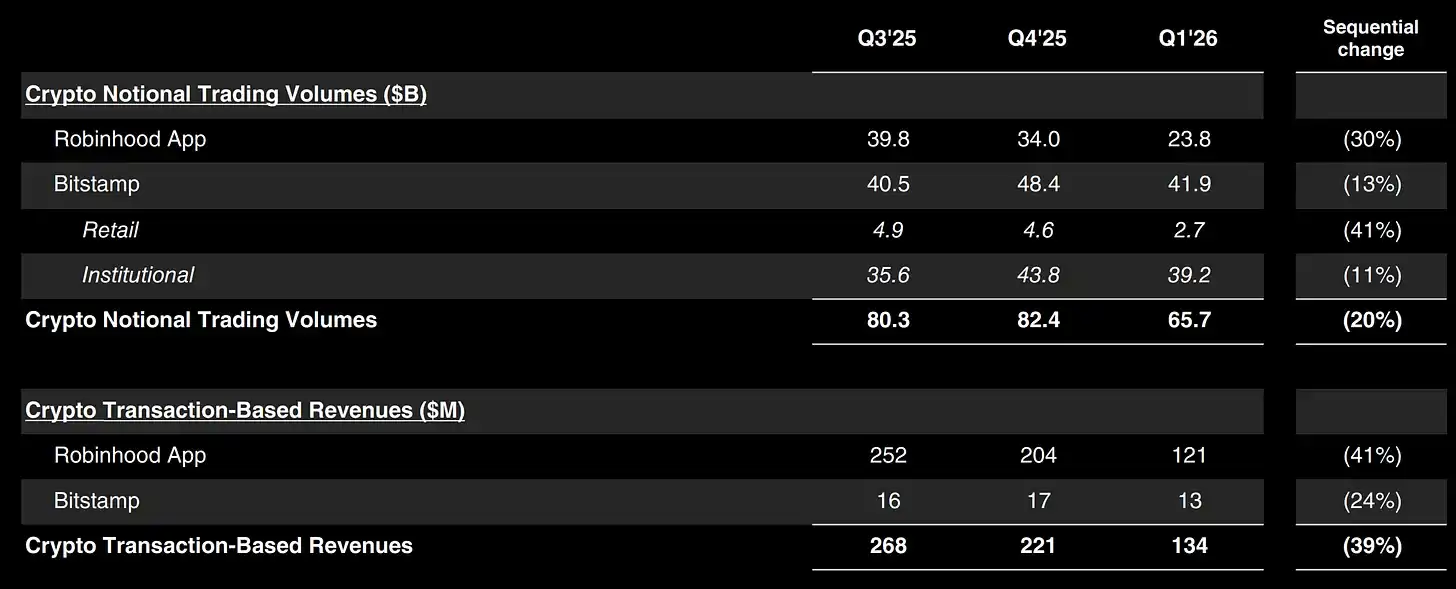
Revenue structure matters because it shows where the business actually monetizes today. In Q1 2026, options generated $260 million in transaction-based revenue, equities $82 million, event contracts $104 million, other transaction revenue $43 million, and cryptocurrency $134 million. The standout growth line is event contracts, rising from $3 million year-over-year to $104 million, while crypto revenue declined from $252 million to $134 million. Thus, the launch of Robinhood Chain comes as company earnings are still driven primarily by active retail trading, high-margin products, and balance sheet monetization, not any existing on-chain business line.

This distinction is important for strategy and valuation. Robinhood Chain is not rescuing the business. It is trying to create a new interface on top of a business that is already working. This makes the move more credible because the company can afford to experiment. It also makes the move easier to overhype, because the existing earnings engine remains rooted in established brokerage economics.

The rest of the balance sheet and user engagement point in the same direction. Robinhood disclosed a $17 billion margin book, $16.7 billion in cash and deposits, $27.4 billion in retirement assets under custody, and $66 billion in crypto notional trading volume in Q1 2026, with $42 billion from Bitstamp and $24 billion from the Robinhood app. This last number is particularly relevant. Bitstamp already makes Robinhood's crypto footprint look more like infrastructure than an isolated retail trading feature.

From Brokerage App to Financial Super App

Robinhood's strategic logic now appears more coherent than when the company first began adding piecemeal products around its core brokerage. In Q1 2026 and subsequent public materials, the company no longer merely describes product expansion. It outlines a more complete operating model: brokerage, options, futures, event contracts, banking, Gold, retirement, crypto, wallet, private market access, AI tools, global licenses, tokenized assets, and DeFi-linked yield. Management's talk about building a "global financial ecosystem" is not just corporate rhetoric. It is an attempt to explain how the layers fit together.

The broader stack now includes several parts that would seem disconnected in isolation. Robinhood Banking and higher cash engagement are important because they deepen deposit and balance relationships. Robinhood Gold is important because it boosts subscription attach rates and supports premium packaging models. Retirement is important because it extends the asset lifecycle and reduces pure trading cyclicality. Futures and event contracts are important because they increase engagement and monetization intensity. Crypto is important because it offers 24/7 markets, self-custody rails, and global funding flexibility. Bitstamp is important because it expands institutional and international reach. The wallet is important because it gives Robinhood a credible non-custodial interface. Robinhood Chain is important because it provides a programmable settlement layer where, in principle, all this financial activity could begin to converge.

The company's international direction reinforces the same point. Robinhood expanded into Canada via WonderFi, disclosed regulatory progress in Singapore, and described crypto plans for the UK. These steps matter not just for new territories, but because they create a sandbox for products that do not fit neatly into the U.S. retail brokerage rulebook. Tokenized wrappers and wallet-native products are easier to introduce at the edges of the group than to force into the regulated core of the U.S. app overnight.

The strategic sentence is simple: Robinhood Chain matters because it may let Robinhood extend its consumer distribution advantage into programmable finance without having to turn its core U.S. brokerage into a crypto-native venue overnight. This is why the chain should be read as infrastructure strategy, not launch marketing.

What Robinhood Chain Actually Is

Robinhood Chain's documentation describes it as an Arbitrum Layer 2 chain built on Ethereum, using Ethereum blobs for data availability, and ETH as the native gas token. Robinhood Wallet supports it natively, and other EVM wallets can add it manually. Assets can be moved onto the chain using the canonical Arbitrum bridge or partner routing. Public materials also emphasize the chain is open and permissionless, EVM-compatible, and designed for tokenized real-world assets.

Robinhood's July 2026 launch materials say the chain is built using the Arbitrum platform to "institutional standards" and name Uniswap as the day-one AMM and Pleiades as the proprietary AMM/proprietary trading venue. Robinhood's technical documentation adds that Stock Tokens are standard ERC-20s, each with a Chainlink price feed, and corporate actions are reflected via on-chain multipliers rather than rebalancing balances.

However, public documentation is not equally complete on all infrastructure questions. We found clear documentation on connectivity, gas, bridges, token formats, and oracle design, but less clear public explanation on sequencer decentralization, governance path, fraud-proof status, or the exact current production role of each named infrastructure partner. This doesn't mean the system is weak; it means some institutional-grade diligence questions still require more disclosure than the public documentation currently provides.

The main takeaway is straightforward. Robinhood Chain is real but still early. It has infrastructure, partners, and live products associated with it. What it does not yet have is proof of durable liquidity, broad developer adoption, seamless regulatory portability, or substantive revenue contribution. This distinction matters. A public mainnet and a few live products are enough to take the strategy seriously. They are not enough to prove it.

The Legal Reality of Stock Tokens and On-Chain Stocks

The most important sentence of this article is also the simplest: Robinhood's Stock Tokens should not be described as on-chain stocks. They are tokenized economic exposures to securities via a legal wrapper.

Robinhood's on-chain Stock Tokens are described in public materials and offering documents as tokenized debt securities issued by Robinhood Assets Jersey Limited. They provide economic exposure to a reference stock or ETF, but users do not receive direct legal ownership of the underlying security, beneficial ownership of those shares, or ordinary shareholder rights like voting. Product documentation is clear on this point, and the prospectus framework is clearer than most marketing shorthand around "stock tokens" implies.

The earlier "Classic Stock Tokens" from Robinhood Europe are legally distinct again. Those products are described as derivative contracts between the user and Robinhood Europe, UAB. They cannot be transferred to external wallets and can only be entered into or terminated via the Robinhood Europe platform. The legal boundary there is even less ambiguous: the customer is dealing with derivative exposure, not tokenized holder claims.

The newer on-chain products are more aggressive on distribution but more conservative on legal architecture. This is precisely why it might work. Tokens can behave like crypto assets at the interface layer: on-chain transfers, holding in compatible wallets, referencing in DeFi, and pricing by oracles. But the underlying claim remains conservative: Jersey-issued, prospectus-governed, collateralized, limited-recourse debt securities referencing underlying shares. Robinhood isn't tearing down securities law. It is wrapping around it.

The structure also relies on designated service providers and legal control points. Documentation reviewed for underlying research identifies Robinhood Assets Jersey Limited as the issuer and tokenizer, Bitstamp Global Ltd. as an authorized offeror in reviewed terms, and Alpaca Securities LLC as custodian and broker for the reference series. These roles matter because tokenized exposure that aspires to be globally portable, in practice, remains stitched together by highly traditional financial plumbing.

Even the asset-backing story is more complex than the phrase implies. Robinhood's materials say each token is 1:1 backed by underlying stock. The prospectus framework describes segregated accounts per series but also allows securities lending. During the lifecycle of a securities loan transaction, the issuer's economic exposure runs through collateral and contract rights, not through untouched shares sitting idle in custody. In stressed conditions, this difference may matter. It introduces borrower, collateral, operational, and recovery value risks that are foreign to the simple intuition a retail user might draw from the product name.

Corporate actions and dividends are similarly indirect. Robinhood's materials explain that dividends are handled via a multiplier mechanism adjusting token reference economics, not through direct shareholder distributions to users. The prospectus also flags withholding tax and Section 871(m) considerations for dividend equivalents. Again, this doesn't make the product defective. It makes it structured. Users should buy into this structure with eyes open.

Transferability is real but not absolute. Robinhood says on-chain Stock Tokens can be held and transferred on supported blockchains and compatible wallets. Simultaneously, documentation allows for suspension, freezing, and restrictions under certain conditions, and purchasing or redeeming remains subject to KYC, AML, sanctions compliance, and jurisdictional exclusions. This is closer to a programmable, wrapped, conditional product than an unrestricted bearer instrument.

The business conclusion is plain. The product is aggressive on distribution but conservative on legal architecture. This combination is not a flaw. It may be the only viable go-to-market route. But it also means Stock Tokens should be evaluated as legal and market-structure experiments in making economic exposure portable, not as on-chain substitutes for actual stock ownership.

Digital Assets as Infrastructure, Not Just Trading Revenue

Robinhood's digital assets strategy is now too broad to fit into the old "crypto trading revenue" box. Crypto as a revenue line still matters, but its role as infrastructure is becoming more important. This shift is precisely the deeper significance of Robinhood Chain.

Crypto trading revenue still matters, but it no longer tells the full story. In Q1 2026, Robinhood generated $134 million in crypto trading revenue, a significant year-over-year decline, despite crypto notional trading volume reaching $66 billion. Of this $66 billion in notional volume, $42 billion came from Bitstamp and $24 billion from the Robinhood app. In other words, Robinhood's digital asset footprint has outgrown its consumer-facing crypto label.
Bitstamp is central here. Robinhood completed its acquisition of Bitstamp for approximately $200 million in cash in June 2025, explicitly positioning the deal for global exchange capabilities, institutional clients, white-label infrastructure, staking, institutional lending, and broader license coverage. In subsequent filings, Robinhood has already described Bitstamp as extending the institutional side of the business into services like on-exchange lending, OTC settlement, post-trade settlement, and institutional perpetuals. A company that still viewed crypto as an appendage to its retail business would not talk this way.

Robinhood Earn makes the same point from the consumer side. Public materials describe a simple flow: users purchase USDG on Robinhood Crypto, transfer it to a self-custody wallet, then lend it via Morpho. Robinhood carefully discloses the wallet is non-custodial, and withdrawal timing depends on pool liquidity. Morpho, for its part, describes Robinhood Earn as a progressive rollout to eligible U.S. users. This is not just about adding yield to cash balances; it is about educating the Robinhood user base that DeFi can live behind an interface without requiring crypto-native behavior from customers.

The stablecoin angle matters because it may be more durable than any single speculative trading cycle. If Robinhood can turn stablecoin balances into an invisible funding rail, it gains a portable, programmable financing layer for wallet-native activities, international flows, and future collateral use cases. In that model, the stablecoin is not the product itself but the settlement medium underlying the product. This is a strategically more important role.

Robinhood Wallet is the user-facing bridge to this tech stack. Supporting materials show the wallet already covers several major blockchains and now includes Robinhood Chain itself. This matters because the wallet strategy is where brokerage distribution and crypto infrastructure meet. The broker can custody, the wallet can compose. Robinhood increasingly wants to own both within the same customer relationship.

Why Lighter Matters

Lighter is one of the clearest examples of Robinhood's infrastructure positioning. Lighter gives Robinhood advanced on-chain trading design without having to build a crypto-native perpetuals exchange from scratch. Public materials describe Lighter as a custom zk-rollup with order matching and clearing proofs, price-time priority execution, and emergency exit designs if certain operations are not processed on time. Robinhood Wallet materials describe perpetual contracts within the wallet, including liquidation mechanics and funding rate dynamics, with the underlying decentralized protocol handling liquidation.
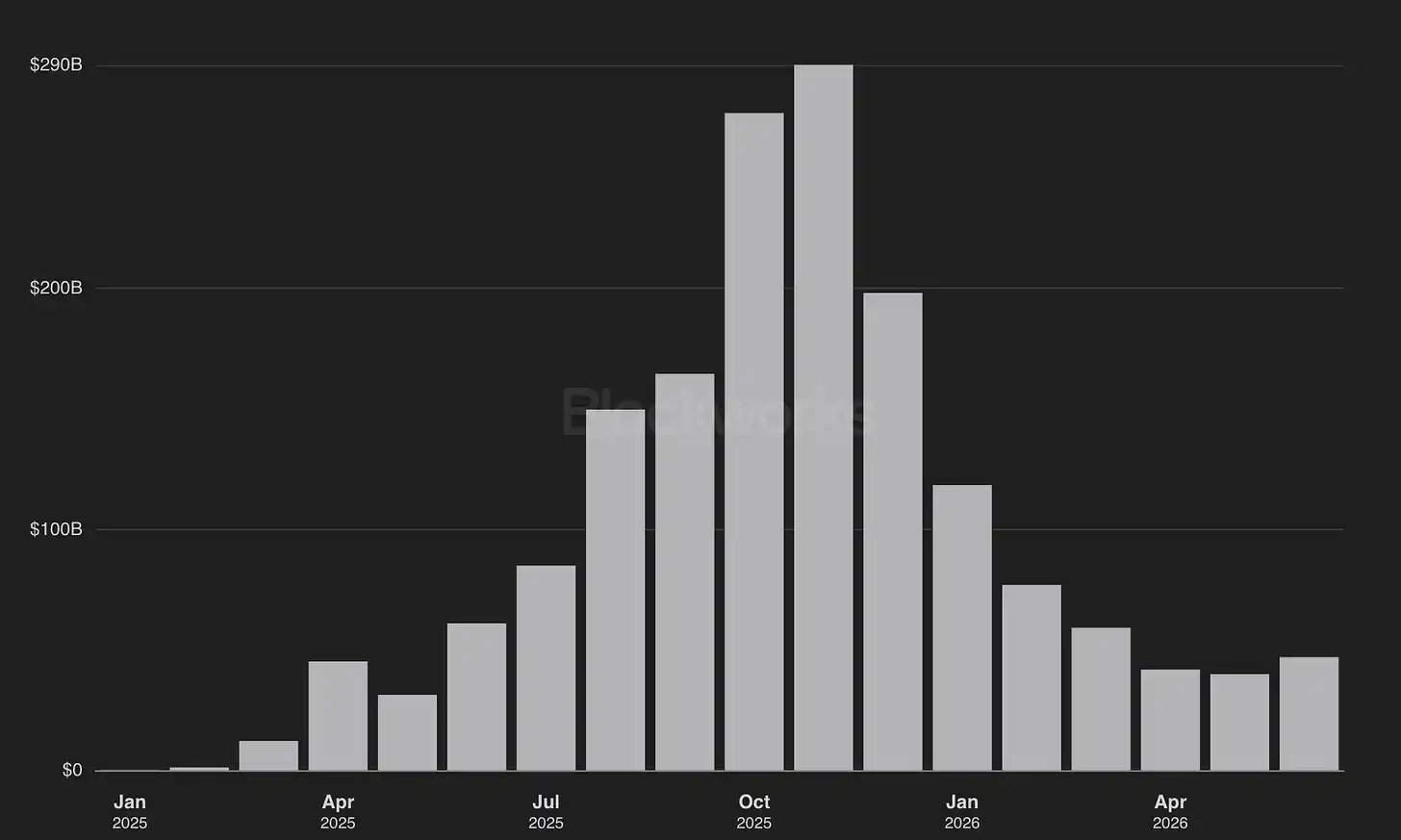
Perpetual Contracts Notional Trading Volume (Source: Blockworks)
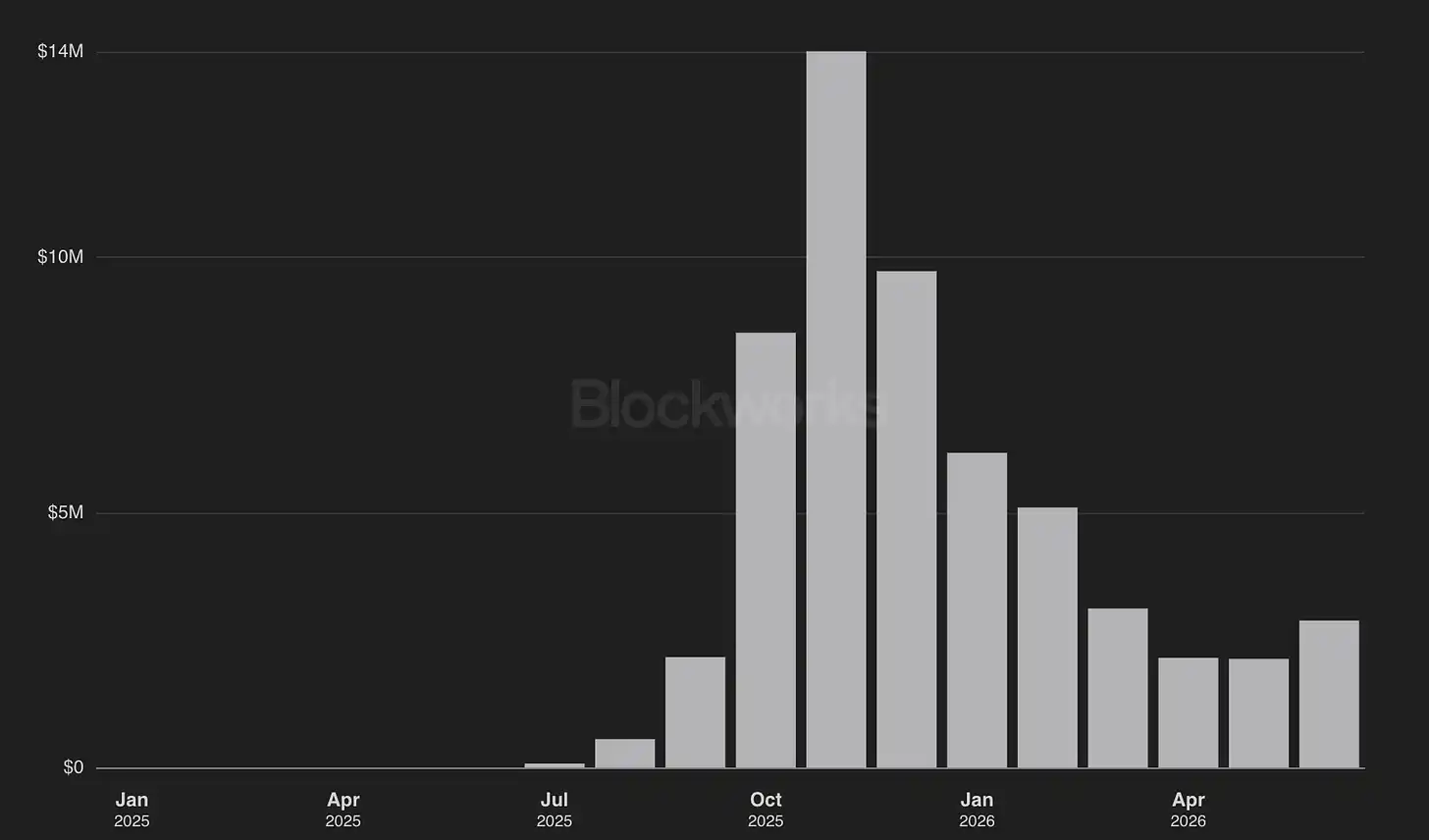
Revenue (Source: Blockworks)
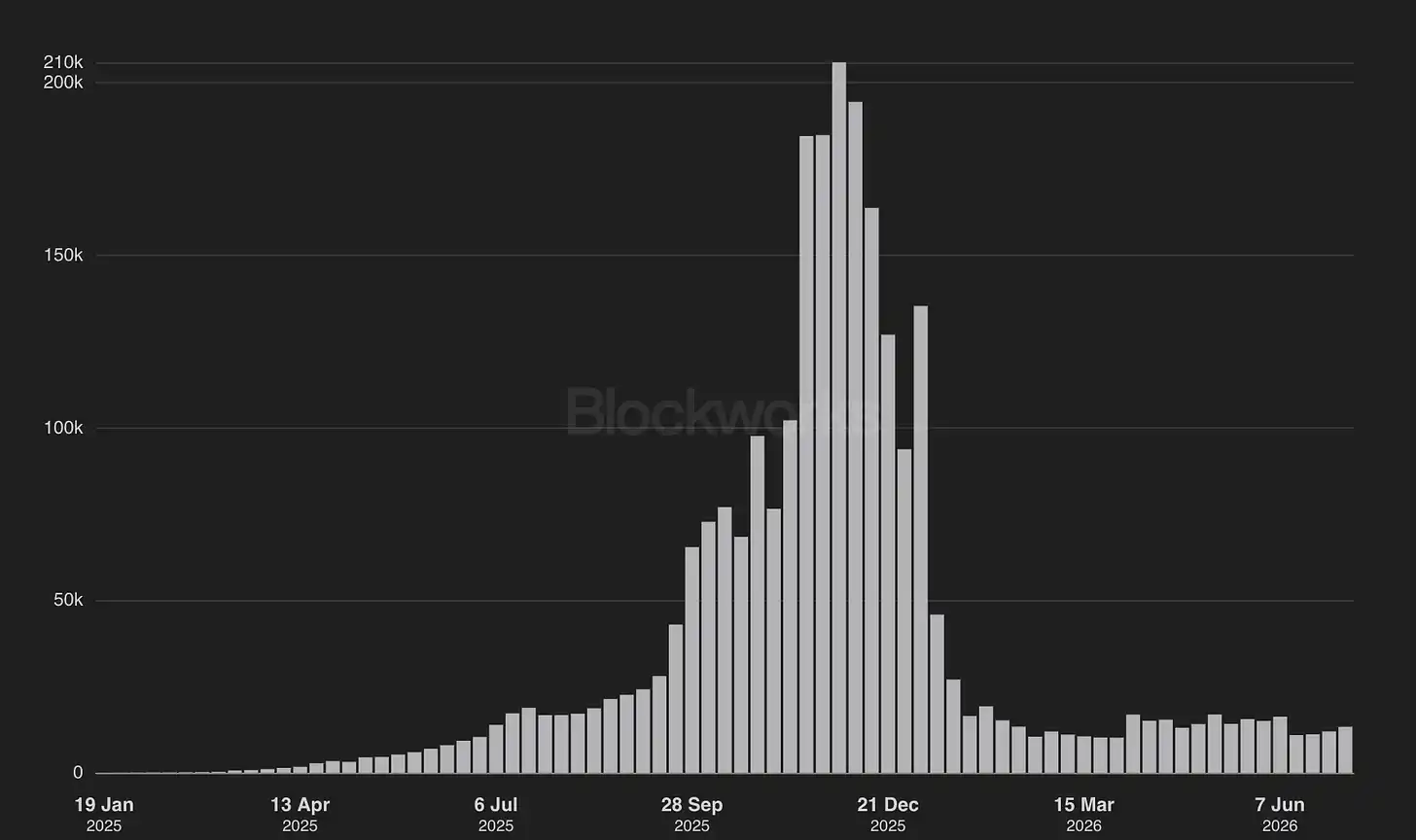
Traders (Source: Blockworks)

This is strategically useful in several ways. It expands the wallet's engagement surface. It lets Robinhood test high-frequency, high-engagement trading demand in a self-custody environment. It shortens time to market. It exposes Robinhood to the economic model and user behavior of global 24/7 trading without having to shift the entire burden onto the regulated U.S. brokerage architecture.

But Lighter also intensifies the brand challenge. Perpetuals bring leverage, liquidation, incentive-sensitive liquidity, and retail loss risk closer to the Robinhood ecosystem. Lighter's own documentation explicitly states that RWA markets trade around the clock and use margin mechanisms. This may be commercially attractive, but it is also the kind of product layer that could create political, regulatory, and reputational friction for a mass-market broker.

Therefore, the correct conclusion is narrower than the market might hope. Lighter is not proof Robinhood can own perpetuals economics like Hyperliquid, but proof Robinhood can plug crypto-native trading infrastructure into its consumer wallet funnel. This makes strategic sense, but it is not the same as owning the trading venue.

Risk Disclosure:

insights4.vc and its newsletter provide research and information for educational purposes only and should not be considered professional advice of any kind. We do not advocate any investment action, including buying, selling, or holding digital assets.

Content reflects author opinion only and does not constitute financial advice. Before engaging with digital assets or related technologies, please conduct your own due diligence, as they carry high risk and value can fluctuate significantly.

Criptos en tendencia

Preguntas relacionadas

QAccording to the article, what is the fundamental difference between Robinhood's Stock Tokens and actual ownership of stock?

ARobinhood's Stock Tokens are tokenized debt securities (or derivative contracts in Europe) that provide economic exposure to the reference stock or ETF. They do not grant the user direct legal ownership, beneficial ownership, or shareholder rights like voting. The underlying mechanism involves a structured, legally compliant wrapper, not a direct chain-based representation of equity.

QWhat is the 'broker-chain paradox' highlighted in the article regarding Robinhood Chain's strategy?

AThe 'broker-chain paradox' refers to Robinhood's attempt to build an open, permissionless financial chain (Robinhood Chain) while populating it with strategically important assets that are not truly permissionless financial objects. These assets are wrapped legal claims dependent on issuers, custodians, KYC controls, and jurisdiction-specific regulations. The paradox lies in hiding this complexity behind a simple user interface.

QHow does the article frame Robinhood's strategic shift regarding its digital assets business?

AThe article frames Robinhood's digital assets business as evolving beyond just a source of 'crypto trading revenue.' It is increasingly playing a strategic role as infrastructure. This is evidenced by the Bitstamp acquisition (for institutional capabilities and global reach), the development of Robinhood Wallet (as a non-custodial bridge), and the launch of Robinhood Chain (as a programmable settlement layer) to support broader financial activities.

QWhat is the stated purpose and strategic importance of Lighter within the Robinhood ecosystem?

ALighter provides Robinhood with advanced on-chain trading infrastructure for perpetual contracts without requiring the company to build a crypto-native exchange from scratch. Its strategic importance is to expand the wallet's utility, allow Robinhood to test high-engagement trading behaviors in a self-custody environment, and access global 24/7 trading economies, all while keeping it somewhat separate from the core regulated US brokerage.

QWhat are the key legal and operational constraints on the transferability of Robinhood's chain-based Stock Tokens?

AWhile Robinhood's chain-based Stock Tokens can be held and transferred on supported blockchains and compatible wallets, their transferability is not absolute. The documentation allows for the suspension, freezing, or restriction of tokens under certain conditions. Furthermore, purchases and redemptions remain subject to KYC (Know Your Customer), AML (Anti-Money Laundering), sanctions compliance, and jurisdiction-based exclusions.

Lecturas Relacionadas

Nearly a Hundred Players Rush into Embodied Data: With 4.47 Billion Yuan in Financing in One Year, Who Can Really Make Money by 'Selling Data'?

The domestic embodied AI data industry has attracted nearly 100 players, with 70 focused on data collection and 27 on data infrastructure. In the past year, 15 independent embodied data service providers raised approximately 4.47 billion yuan. Despite this growth, the sector remains early-stage, fragmented, and faces significant challenges. Data collection methods are diverse, categorized into four main routes: teleoperation of real robots, human demonstration without a robot (using motion capture, exoskeletons, etc.), simulation synthesis, and distillation from internet videos. Most companies (43%) adopt hybrid approaches, combining multiple routes, as no single method can meet all training needs. Teleoperation alone is pursued by 31% of players, often by state-owned platforms and robot companies, while newer firms favor asset-light, no-hardware human demonstration. Independent data service providers now form the largest player group (40%), indicating the emergence of a distinct industry segment rather than just a subsidiary function for robot makers. Two-thirds of all players are "embodied-native" startups, while one-third are companies that pivoted from fields like AI data annotation, which are more prevalent in the data infrastructure layer. Current annual industry capacity is estimated at 1.6-1.8 million hours plus 70-80 million data points, with a short-term goal to increase this 15-20 fold within 1-3 years. Data collection factories are spread across 20 provinces in China, concentrated in the Yangtze River Delta, Beijing-Tianjin-Hebei, and Pearl River Delta regions. Financially, the 4.47 billion yuan raised in the past year pales compared to the 43.8 billion yuan raised by the broader embodied intelligence sector in just the first half of 2026, highlighting that data remains a less "sexy" bet for investors. The 15 funded independent providers show clear stratification: a top tier led by a unicorn (Lightwheel Intelligence, 3.1 billion yuan), a middle tier of 11 firms raising tens to hundreds of millions, and an early-stage tier of 3 companies. Sixty-nine investment institutions have participated, but none have made concentrated bets, reflecting uncertainty about viable business models. Over half of these funded companies are less than a year old, most are at pre-A or A rounds, and profitability remains largely unproven. In summary, the embodied data industry has become an independent track creating jobs and local economic activity. However, it is still nascent, with unformed consensus, unsolved problems, and unproven business models. The coming 1-2 years will be a critical validation window to see if companies can build sustainable, profitable businesses purely by "selling data."

marsbitHace 28 min(s)

Nearly a Hundred Players Rush into Embodied Data: With 4.47 Billion Yuan in Financing in One Year, Who Can Really Make Money by 'Selling Data'?

marsbitHace 28 min(s)

Dialogue with Multicoin Partner: The Crypto Market Has Bottomed Out, Favoring Three Cryptocurrencies in This Cycle

In a recent interview, Multicoin Capital managing partner Tushar Jain shared his views on the crypto market. He believes the market has bottomed and is at an inflection point, citing that negative news no longer causes significant price declines and application adoption continues to grow. Jain remains highly bullish on Solana, viewing it as the correct architectural choice for internet capital markets, particularly for spot and tokenized security trading. He is also positive on Hyperliquid, noting its leadership in decentralized derivatives trading. His investment approach focuses on concentrating capital in top convictions rather than equal allocation. A distinct opportunity he highlights is Zcash (ZEC), which he sees as a return to the industry's cypherpunk ethos and a potential top-five asset by market cap. For assets like Zcash without cash flows, his valuation framework is based on relative market cap ranking. Regarding investment strategy, Jain employs a "three-part" entry method to avoid timing pitfalls and emphasizes long-term "active management" over "active trading." He outlines four sources of investment edge: informational, analytical, behavioral/psychological, and structural. On portfolio management, the fund uses Bitcoin as its "cash," selling assets into Bitcoin during market euphoria to reduce beta risk and using Bitcoin to buy dips. Sales occur only if a better opportunity arises, the investment thesis breaks, or valuations become excessively overheated. While respectful of Ethereum's resilience, he questions its unclear scaling roadmap. Finally, Jain reaffirms his commitment to the thesis that blockchains will form the foundational architecture for future capital markets.

marsbitHace 53 min(s)

Dialogue with Multicoin Partner: The Crypto Market Has Bottomed Out, Favoring Three Cryptocurrencies in This Cycle

marsbitHace 53 min(s)

Zhipu, Afraid of Becoming the Next MiniMax

Title: Zhipu, Fearing to Become the Next MiniMax In July 2026, amid the success of its coding-focused AI, Zhipu's founder, Tang Jie, issued an internal letter titled "The Giant Wave Has Come." It notably avoided celebrating recent triumphs, such as Zhipu's trillion-HKD market cap and booming MaaS revenue driven by its GLM-5.2 model in coding applications. Instead, the letter pivoted the narrative to future-oriented concepts like Long Horizon Task, Autonomous Agents, Self-Evolving systems, and AGI. This strategic shift in messaging followed the sharp devaluation of its competitor, MiniMax. After its lock-up period expired, MiniMax's stock plummeted as the market began evaluating it with traditional SaaS metrics like ARR and user growth, rather than as a frontier AI pioneer. Seeing this, Tang Jie aimed to preempt a similar revaluation of Zhipu. He fears that if the market starts viewing Zhipu primarily as a profitable "AI coding company," its valuation would become anchored to conventional financial metrics, losing the premium associated with AGI potential. Therefore, the letter reframed Zhipu's mission. While acknowledging that coding was the current commercial driver, Tang positioned Zhipu on the "infrastructure path," akin to OpenAI and Anthropic. The new focus is on developing agents capable of complex, long-term planning and autonomous operation—moving from assisting individuals (OPC: One Person Company) to automating entire organizations (NPC: No People Company). This "Touch High" plan explicitly prioritizes long-term AGI research over short-term monetization. The article frames this as a critical divergence in China's AI landscape: the "commercialization path" (exemplified by MiniMax) versus the "infrastructure path" (chosen by Zhipu). The former risks being judged harshly by internet-era metrics once growth slows, while the latter risks failing if technological breakthroughs stall. Tang Jie's letter is thus a calculated move to secure Zhipu's identity as an AGI contender, buying time before the inevitable market demand for commercial proof. The core question remains: can Zhipu's "mo gao" (reach high) plan achieve genuine technological leaps fast enough to outpace the market's diminishing patience for stories over substance?

marsbitHace 1 hora(s)

Zhipu, Afraid of Becoming the Next MiniMax

marsbitHace 1 hora(s)

Trading

Spot

Artículos destacados

Qué es $S$

Entendiendo SPERO: Una Visión General Completa Introducción a SPERO A medida que el panorama de la innovación continúa evolucionando, la aparición de tecnologías web3 y proyectos de criptomonedas juega un papel fundamental en la configuración del futuro digital. Un proyecto que ha atraído la atención en este campo dinámico es SPERO, denotado como SPERO,$$s$. Este artículo tiene como objetivo reunir y presentar información detallada sobre SPERO, para ayudar a entusiastas e inversores a comprender sus fundamentos, objetivos e innovaciones dentro de los dominios web3 y cripto. ¿Qué es SPERO,$$s$? SPERO,$$s$ es un proyecto único dentro del espacio cripto que busca aprovechar los principios de descentralización y tecnología blockchain para crear un ecosistema que promueva la participación, la utilidad y la inclusión financiera. El proyecto está diseñado para facilitar interacciones de igual a igual de nuevas maneras, proporcionando a los usuarios soluciones y servicios financieros innovadores. En su esencia, SPERO,$$s$ tiene como objetivo empoderar a los individuos al proporcionar herramientas y plataformas que mejoren la experiencia del usuario en el espacio de las criptomonedas. Esto incluye habilitar métodos de transacción más flexibles, fomentar iniciativas impulsadas por la comunidad y crear caminos para oportunidades financieras a través de aplicaciones descentralizadas (dApps). La visión subyacente de SPERO,$$s$ gira en torno a la inclusividad, buscando cerrar brechas dentro de las finanzas tradicionales mientras aprovecha los beneficios de la tecnología blockchain. ¿Quién es el Creador de SPERO,$$s$? La identidad del creador de SPERO,$$s$ sigue siendo algo oscura, ya que hay recursos públicos limitados que proporcionan información de fondo detallada sobre su(s) fundador(es). Esta falta de transparencia puede derivarse del compromiso del proyecto con la descentralización, una ética que muchos proyectos web3 comparten, priorizando las contribuciones colectivas sobre el reconocimiento individual. Al centrar las discusiones en torno a la comunidad y sus objetivos colectivos, SPERO,$$s$ encarna la esencia del empoderamiento sin señalar a individuos específicos. Como tal, comprender la ética y la misión de SPERO sigue siendo más importante que identificar a un creador singular. ¿Quiénes son los Inversores de SPERO,$$s$? SPERO,$$s$ cuenta con el apoyo de una diversa gama de inversores que van desde capitalistas de riesgo hasta inversores ángeles dedicados a fomentar la innovación en el sector cripto. El enfoque de estos inversores generalmente se alinea con la misión de SPERO, priorizando proyectos que prometen avances tecnológicos sociales, inclusión financiera y gobernanza descentralizada. Estas fundaciones de inversores suelen estar interesadas en proyectos que no solo ofrecen productos innovadores, sino que también contribuyen positivamente a la comunidad blockchain y sus ecosistemas. El respaldo de estos inversores refuerza a SPERO,$$s$ como un contendiente notable en el dominio de proyectos cripto que evoluciona rápidamente. ¿Cómo Funciona SPERO,$$s$? SPERO,$$s$ emplea un marco multifacético que lo distingue de los proyectos de criptomonedas convencionales. Aquí hay algunas de las características clave que subrayan su singularidad e innovación: Gobernanza Descentralizada: SPERO,$$s$ integra modelos de gobernanza descentralizada, empoderando a los usuarios para participar activamente en los procesos de toma de decisiones sobre el futuro del proyecto. Este enfoque fomenta un sentido de propiedad y responsabilidad entre los miembros de la comunidad. Utilidad del Token: SPERO,$$s$ utiliza su propio token de criptomoneda, diseñado para servir diversas funciones dentro del ecosistema. Estos tokens permiten transacciones, recompensas y la facilitación de servicios ofrecidos en la plataforma, mejorando la participación y la utilidad general. Arquitectura en Capas: La arquitectura técnica de SPERO,$$s$ apoya la modularidad y escalabilidad, permitiendo la integración fluida de características y aplicaciones adicionales a medida que el proyecto evoluciona. Esta adaptabilidad es fundamental para mantener la relevancia en el cambiante paisaje cripto. Participación de la Comunidad: El proyecto enfatiza iniciativas impulsadas por la comunidad, empleando mecanismos que incentivan la colaboración y la retroalimentación. Al nutrir una comunidad sólida, SPERO,$$s$ puede abordar mejor las necesidades de los usuarios y adaptarse a las tendencias del mercado. Enfoque en la Inclusión: Al ofrecer tarifas de transacción bajas e interfaces amigables para el usuario, SPERO,$$s$ busca atraer a una base de usuarios diversa, incluyendo a individuos que anteriormente pueden no haber participado en el espacio cripto. Este compromiso con la inclusión se alinea con su misión general de empoderamiento a través de la accesibilidad. Cronología de SPERO,$$s$ Entender la historia de un proyecto proporciona información crucial sobre su trayectoria de desarrollo y hitos. A continuación se presenta una cronología sugerida que mapea eventos significativos en la evolución de SPERO,$$s$: Fase de Conceptualización e Ideación: Las ideas iniciales que forman la base de SPERO,$$s$ fueron concebidas, alineándose estrechamente con los principios de descentralización y enfoque comunitario dentro de la industria blockchain. Lanzamiento del Whitepaper del Proyecto: Tras la fase conceptual, se lanzó un whitepaper completo que detalla la visión, los objetivos y la infraestructura tecnológica de SPERO,$$s$ para generar interés y retroalimentación de la comunidad. Construcción de Comunidad y Primeras Interacciones: Se realizaron esfuerzos de divulgación activa para construir una comunidad de primeros adoptantes y posibles inversores, facilitando discusiones en torno a los objetivos del proyecto y obteniendo apoyo. Evento de Generación de Tokens: SPERO,$$s$ llevó a cabo un evento de generación de tokens (TGE) para distribuir sus tokens nativos a los primeros seguidores y establecer liquidez inicial dentro del ecosistema. Lanzamiento de la dApp Inicial: La primera aplicación descentralizada (dApp) asociada con SPERO,$$s$ se puso en marcha, permitiendo a los usuarios interactuar con las funcionalidades centrales de la plataforma. Desarrollo Continuo y Alianzas: Actualizaciones y mejoras continuas a las ofertas del proyecto, incluyendo alianzas estratégicas con otros actores en el espacio blockchain, han moldeado a SPERO,$$s$ en un jugador competitivo y en evolución en el mercado cripto. Conclusión SPERO,$$s$ se erige como un testimonio del potencial de web3 y las criptomonedas para revolucionar los sistemas financieros y empoderar a los individuos. Con un compromiso con la gobernanza descentralizada, la participación comunitaria y funcionalidades diseñadas de manera innovadora, allana el camino hacia un paisaje financiero más inclusivo. Como con cualquier inversión en el espacio cripto que evoluciona rápidamente, se anima a los posibles inversores y usuarios a investigar a fondo y participar de manera reflexiva con los desarrollos en curso dentro de SPERO,$$s$. El proyecto muestra el espíritu innovador de la industria cripto, invitando a una mayor exploración de sus innumerables posibilidades. Mientras el viaje de SPERO,$$s$ aún se desarrolla, sus principios fundamentales pueden, de hecho, influir en el futuro de cómo interactuamos con la tecnología, las finanzas y entre nosotros en ecosistemas digitales interconectados.

120 Vistas totalesPublicado en 2024.12.17Actualizado en 2024.12.17

Qué es $S$

Qué es AGENT S

Agent S: El Futuro de la Interacción Autónoma en Web3 Introducción En el paisaje en constante evolución de Web3 y las criptomonedas, las innovaciones están redefiniendo constantemente cómo los individuos interactúan con las plataformas digitales. Uno de estos proyectos pioneros, Agent S, promete revolucionar la interacción humano-computadora a través de su marco agente abierto. Al allanar el camino para interacciones autónomas, Agent S busca simplificar tareas complejas, ofreciendo aplicaciones transformadoras en inteligencia artificial (IA). Esta exploración detallada profundizará en las complejidades del proyecto, sus características únicas y las implicaciones para el dominio de las criptomonedas. ¿Qué es Agent S? Agent S se presenta como un marco agente abierto innovador, diseñado específicamente para abordar tres desafíos fundamentales en la automatización de tareas informáticas: Adquisición de Conocimiento Específico del Dominio: El marco aprende inteligentemente de diversas fuentes de conocimiento externas y experiencias internas. Este enfoque dual le permite construir un rico repositorio de conocimiento específico del dominio, mejorando su rendimiento en la ejecución de tareas. Planificación a Largo Plazo de Tareas: Agent S emplea planificación jerárquica aumentada por la experiencia, un enfoque estratégico que facilita la descomposición y ejecución eficiente de tareas complejas. Esta característica mejora significativamente su capacidad para gestionar múltiples subtareas de manera eficiente y efectiva. Manejo de Interfaces Dinámicas y No Uniformes: El proyecto introduce la Interfaz Agente-Computadora (ACI), una solución innovadora que mejora la interacción entre agentes y usuarios. Utilizando Modelos de Lenguaje Multimodal de Gran Escala (MLLMs), Agent S puede navegar y manipular diversas interfaces gráficas de usuario sin problemas. A través de estas características pioneras, Agent S proporciona un marco robusto que aborda las complejidades involucradas en la automatización de la interacción humana con las máquinas, preparando el terreno para una multitud de aplicaciones en IA y más allá. ¿Quién es el Creador de Agent S? Si bien el concepto de Agent S es fundamentalmente innovador, la información específica sobre su creador sigue siendo elusiva. El creador es actualmente desconocido, lo que resalta ya sea la etapa incipiente del proyecto o la elección estratégica de mantener a los miembros fundadores en el anonimato. Independientemente de la anonimidad, el enfoque sigue siendo en las capacidades y el potencial del marco. ¿Quiénes son los Inversores de Agent S? Dado que Agent S es relativamente nuevo en el ecosistema criptográfico, la información detallada sobre sus inversores y patrocinadores financieros no está documentada explícitamente. La falta de información disponible públicamente sobre las bases de inversión u organizaciones que apoyan el proyecto plantea preguntas sobre su estructura de financiamiento y hoja de ruta de desarrollo. Comprender el respaldo es crucial para evaluar la sostenibilidad del proyecto y su posible impacto en el mercado. ¿Cómo Funciona Agent S? En el núcleo de Agent S se encuentra una tecnología de vanguardia que le permite funcionar de manera efectiva en diversos entornos. Su modelo operativo se basa en varias características clave: Interacción Humano-Computadora Similar a la Humana: El marco ofrece planificación avanzada de IA, esforzándose por hacer que las interacciones con las computadoras sean más intuitivas. Al imitar el comportamiento humano en la ejecución de tareas, promete elevar las experiencias de los usuarios. Memoria Narrativa: Empleada para aprovechar experiencias de alto nivel, Agent S utiliza memoria narrativa para hacer un seguimiento de las historias de tareas, mejorando así sus procesos de toma de decisiones. Memoria Episódica: Esta característica proporciona a los usuarios una guía paso a paso, permitiendo que el marco ofrezca apoyo contextual a medida que se desarrollan las tareas. Soporte para OpenACI: Con la capacidad de ejecutarse localmente, Agent S permite a los usuarios mantener el control sobre sus interacciones y flujos de trabajo, alineándose con la ética descentralizada de Web3. Fácil Integración con APIs Externas: Su versatilidad y compatibilidad con varias plataformas de IA aseguran que Agent S pueda encajar sin problemas en ecosistemas tecnológicos existentes, convirtiéndolo en una opción atractiva para desarrolladores y organizaciones. Estas funcionalidades contribuyen colectivamente a la posición única de Agent S dentro del espacio cripto, ya que automatiza tareas complejas y de múltiples pasos con una intervención humana mínima. A medida que el proyecto evoluciona, sus posibles aplicaciones en Web3 podrían redefinir cómo se desarrollan las interacciones digitales. Cronología de Agent S El desarrollo y los hitos de Agent S pueden encapsularse en una cronología que resalta sus eventos significativos: 27 de septiembre de 2024: El concepto de Agent S fue lanzado en un documento de investigación integral titulado “Un Marco Agente Abierto que Usa Computadoras Como un Humano”, mostrando las bases del proyecto. 10 de octubre de 2024: El documento de investigación fue puesto a disposición del público en arXiv, ofreciendo una exploración profunda del marco y su evaluación de rendimiento basada en el benchmark OSWorld. 12 de octubre de 2024: Se lanzó una presentación en video, proporcionando una visión visual de las capacidades y características de Agent S, involucrando aún más a posibles usuarios e inversores. Estos marcadores en la cronología no solo ilustran el progreso de Agent S, sino que también indican su compromiso con la transparencia y la participación comunitaria. Puntos Clave Sobre Agent S A medida que el marco Agent S continúa evolucionando, varios atributos clave destacan, subrayando su naturaleza innovadora y potencial: Marco Innovador: Diseñado para proporcionar un uso intuitivo de las computadoras similar a la interacción humana, Agent S aporta un enfoque novedoso a la automatización de tareas. Interacción Autónoma: La capacidad de interactuar de manera autónoma con las computadoras a través de GUI significa un salto hacia soluciones informáticas más inteligentes y eficientes. Automatización de Tareas Complejas: Con su metodología robusta, puede automatizar tareas complejas y de múltiples pasos, haciendo que los procesos sean más rápidos y menos propensos a errores. Mejora Continua: Los mecanismos de aprendizaje permiten a Agent S mejorar a partir de experiencias pasadas, mejorando continuamente su rendimiento y eficacia. Versatilidad: Su adaptabilidad en diferentes entornos operativos como OSWorld y WindowsAgentArena asegura que pueda servir a una amplia gama de aplicaciones. A medida que Agent S se posiciona en el paisaje de Web3 y criptomonedas, su potencial para mejorar las capacidades de interacción y automatizar procesos significa un avance significativo en las tecnologías de IA. A través de su marco innovador, Agent S ejemplifica el futuro de las interacciones digitales, prometiendo una experiencia más fluida y eficiente para los usuarios en diversas industrias. Conclusión Agent S representa un audaz avance en la unión de la IA y Web3, con la capacidad de redefinir cómo interactuamos con la tecnología. Aunque aún se encuentra en sus primeras etapas, las posibilidades para su aplicación son vastas y atractivas. A través de su marco integral que aborda desafíos críticos, Agent S busca llevar las interacciones autónomas al primer plano de la experiencia digital. A medida que nos adentramos más en los reinos de las criptomonedas y la descentralización, proyectos como Agent S sin duda desempeñarán un papel crucial en la configuración del futuro de la tecnología y la colaboración humano-computadora.

525 Vistas totalesPublicado en 2025.01.14Actualizado en 2025.01.14

Qué es AGENT S

Cómo comprar S

¡Bienvenido a HTX.com! Hemos hecho que comprar Sonic (S) sea simple y conveniente. Sigue nuestra guía paso a paso para iniciar tu viaje de criptos.Paso 1: crea tu cuenta HTXUtiliza tu correo electrónico o número de teléfono para registrarte y obtener una cuenta gratuita en HTX. Experimenta un proceso de registro sin complicaciones y desbloquea todas las funciones.Obtener mi cuentaPaso 2: ve a Comprar cripto y elige tu método de pagoTarjeta de crédito/débito: usa tu Visa o Mastercard para comprar Sonic (S) al instante.Saldo: utiliza fondos del saldo de tu cuenta HTX para tradear sin problemas.Terceros: hemos agregado métodos de pago populares como Google Pay y Apple Pay para mejorar la comodidad.P2P: tradear directamente con otros usuarios en HTX.Over-the-Counter (OTC): ofrecemos servicios personalizados y tipos de cambio competitivos para los traders.Paso 3: guarda tu Sonic (S)Después de comprar tu Sonic (S), guárdalo en tu cuenta HTX. Alternativamente, puedes enviarlo a otro lugar mediante transferencia blockchain o utilizarlo para tradear otras criptomonedas.Paso 4: tradear Sonic (S)Tradear fácilmente con Sonic (S) en HTX's mercado spot. Simplemente accede a tu cuenta, selecciona tu par de trading, ejecuta tus trades y monitorea en tiempo real. Ofrecemos una experiencia fácil de usar tanto para principiantes como para traders experimentados.

1.1k Vistas totalesPublicado en 2025.01.15Actualizado en 2026.06.02

Cómo comprar S

Discusiones

Bienvenido a la comunidad de HTX. Aquí puedes mantenerte informado sobre los últimos desarrollos de la plataforma y acceder a análisis profesionales del mercado. A continuación se presentan las opiniones de los usuarios sobre el precio de S (S).

活动图片