SEC Crypto Task Force Receives New Submissions on Self-Custody and DeFi Rules

TheNewsCryptoPublicado a 2026-01-21Actualizado a 2026-01-21

Resumen

The U.S. SEC Crypto Task Force has received two new public submissions addressing key regulatory issues in digital assets, including self-custody rights and DeFi oversight. One submission, referencing Louisiana’s HB 488 law, advocates for federal crypto market regulations that include registration requirements, transparency, and anti-fraud measures, while cautioning against overly broad exemptions. Another, from the Blockchain Association, requests SEC guidance on whether entities involved in tokenized equity and DeFi trading should be classified as dealers under the Securities Exchange Act, suggesting adaptations to traditional broker-dealer frameworks for smart contract-based trading. These inputs come amid ongoing congressional negotiations on the CLARITY Act, which seeks to clarify digital asset regulations, with industry stakeholders actively engaging in the debate around investor protection and innovation.

The U.S. Securities and Exchange Commission (SEC) Crypto Task Force has received two new written submissions to its public input page, which have once again highlighted important issues in digital asset regulation, such as self-custody rights and the regulatory status of decentralised finance (DeFi).

One of the proposals, from a Louisiana resident named DK Willard, references the Louisiana HB 488 law, which protects the state’s residents’ right to control their own digital assets. The proposal states that the upcoming federal law on the structure of the crypto market should contain proper registration requirements, transparency, and robust anti-fraud and anti-manipulation provisions. The proposal warns that too wide-reaching exemptions at the federal level could permit developers or platforms to circumvent investor protections.

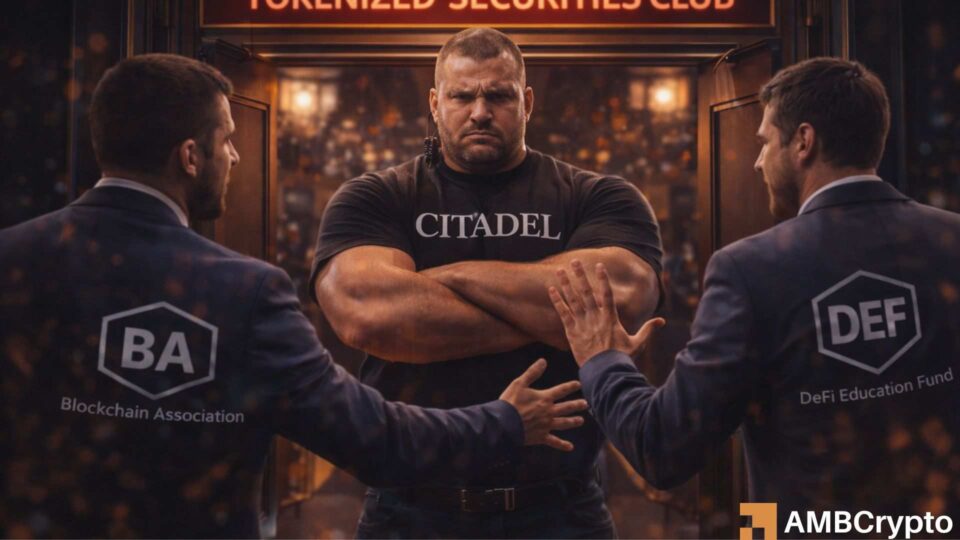
The second observation is from the Blockchain Association Trading Firm Working Group, which urges the SEC to issue guidance on whether firms engaging in tokenized equity and DeFi trading on their own behalf should or should not be considered dealers subject to registration under the Securities Exchange Act. The comment suggests that the conventional broker-dealer framework applicable in traditional markets may need to be adapted to accommodate smart contract settlement and trading without necessarily requiring dealer registration.

These comments were posted on the SEC’s “Written Input” page for the Crypto Task Force, which is intended to allow stakeholders to share their views that may help shape the federal approach to digital assets.

Context Within Ongoing Regulatory Debate

The timing of these new filings is as Congress is in the middle of negotiations on the federal crypto market structure bill, known as the CLARITY Act, which aims to provide clarity on the regulatory framework and update investor protection regulations for digital assets. There have been debates among industry participants and regulators on matters such as stablecoin regulation, DeFi liquidity, and innovation vs. regulation.

A senior crypto advisor to the White House, Patrick Witt, has urged a compromise in order to move the CLARITY Act in a period of time in which the Republican Party controls both the House of Representatives and the Senate, and in which the Trump administration is still in power. Industry leaders, such as Coinbase CEO Brian Armstrong, have been part of the process.

The recent filings with the SEC Crypto Task Force indicate the ongoing interest of the industry in federal regulation of digital assets, in particular with respect to self-custody rights and the nature of DeFi trading activity. As federal legislative development progresses and various parties make their voices heard, these perspectives may inform how regulatory frameworks balance investor protection and innovation.

Highlighted Crypto News:

Galaxy Digital Bets on Balanced Strategy With New $100M Crypto-Linked Hedge Fund

TagsDeFiSEC

Preguntas relacionadas

QWhat are the two main issues highlighted in the new submissions to the SEC Crypto Task Force?

AThe two main issues highlighted are self-custody rights and the regulatory status of decentralized finance (DeFi).

QWhich state law was referenced in the proposal from DK Willard, and what right does it protect?

AThe proposal referenced Louisiana HB 488 law, which protects the state's residents' right to control their own digital assets.

QWhat does the Blockchain Association Trading Firm Working Group urge the SEC to provide guidance on?

AIt urges the SEC to issue guidance on whether firms engaging in tokenized equity and DeFi trading on their own behalf should be considered dealers subject to registration under the Securities Exchange Act.

QWhat is the name of the federal crypto market structure bill currently being negotiated in Congress?

AThe federal crypto market structure bill is called the CLARITY Act.

QAccording to the article, what is the White House senior crypto advisor Patrick Witt urging to help move the CLARITY Act forward?

APatrick Witt is urging a compromise to move the CLARITY Act forward during a period of Republican control of both the House and Senate and while the Trump administration is still in power.

Lecturas Relacionadas

After Laying Off 30,000 Employees, Oracle Hires a CFO Who Managed Power Plants

Oracle, the global enterprise database giant, laid off approximately 30,000 employees, sparking widespread discussion. Shortly after, the company appointed Hilary Maxson as its new CFO with a compensation package of $297 million. Maxson’s background is notable: she spent nearly a decade as group CFO at Schneider Electric, a major energy management firm, and previously worked for 12 years at AES Corporation, a U.S. power company. Her entire career has revolved around the energy sector—managing power plants, grids, and data center energy solutions. This appointment signals a strategic shift for Oracle. After 12 without a dedicated CFO, the company is pivoting from its traditional software business toward cloud and AI infrastructure. Oracle’s cloud infrastructure revenue surged 84% year-over-year, with a capital expenditure budget of around $50 billion this year—almost entirely allocated to AI data center construction. The company has secured massive contracts, including one with OpenAI exceeding $300 billion, contributing to a total backlog of $553 billion. Data centers, especially at the gigawatt scale, require enormous power—equivalent to a nuclear power plant’s output—making energy management critical. Oracle is no longer just a software company; it’s transforming into an energy-intensive infrastructure provider. While Wall Street remains optimistic, the stock has fallen about 24% this year, reflecting investor concerns over this high-cost, capital-intensive transition. The hiring of an energy-focused CFO underscores Oracle’s new direction.

marsbitHace 5 min(s)

After Laying Off 30,000 Employees, Oracle Hires a CFO Who Managed Power Plants

marsbitHace 5 min(s)

Anthropic Has Developed the Most Powerful AI Model in History, But Dares Not Release It...

Anthropic has developed its most powerful AI model to date, named Mythos, which boasts over 10 trillion parameters—far surpassing current leading models—and a training cost of $10 billion. Mythos demonstrates exceptional capabilities in software coding, academic reasoning, and cybersecurity, significantly outperforming its predecessor, Claude Opus 4.6, in benchmark tests. In a matter of weeks, Mythos autonomously identified thousands of previously unknown zero-day vulnerabilities across major operating systems, browsers, and critical software. Notable discoveries include a 27-year-old flaw in OpenBSD and a 16-year-old vulnerability in FFmpeg, demonstrating its ability to find and exploit complex security weaknesses with minimal human intervention. Due to its unprecedented power and potential for misuse by malicious actors, Anthropic has refrained from publicly releasing Mythos. Instead, it launched the "Project Glasswing" initiative, partnering with leading tech and financial firms like Amazon, Apple, Google, Microsoft, and JPMorgan. Through this program, select organizations gain early access to Mythos Preview to identify and patch vulnerabilities in critical systems. Anthropic is providing $100 million in usage credits to participants and donating millions to open-source security foundations. While AI like Mythos could lower the barrier for cyber attacks, Anthropic emphasizes its potential to greatly enhance defensive capabilities, helping to build more resilient systems and maintain a balanced security landscape.

Odaily星球日报Hace 1 hora(s)

Anthropic Has Developed the Most Powerful AI Model in History, But Dares Not Release It...

Odaily星球日报Hace 1 hora(s)

Trading

Spot
Futuros
活动图片