LATEST NEWS: Long-Awaited Fed Interest Rate Decision Announced! Here is Bitcoin's Initial Reaction

cryptonews.ruPublicado a 2026-07-29Actualizado a 2026-07-29

Resumen

The Federal Reserve has kept interest rates unchanged as expected. All attention is now focused on the press conference by new Fed Chairman Kevin Warsh, scheduled for 21:00. Bitcoin's initial reaction to the rate decision is shown in the provided chart. Chairman Warsh, like his predecessor Jerome Powell, has emphasized controlling inflation, with some investors perceiving his stance as tougher than anticipated. While rate cuts were expected under Trump-appointed Warsh, market expectations for a potential rate hike by year-end have strengthened. Notably, Trump's frequent public criticism of Powell for not cutting rates fast enough has ceased since Warsh took office, despite no major shift in the Fed's decision-making approach. An investment strategist noted significant continuity between the two Fed chairs. *This is not investment advice.

The Federal Reserve, as expected, kept interest rates unchanged.

All attention is now focused on the press conference of Federal Reserve Chairman Kevin Warsh, scheduled for 21:00 (14:30 Eastern Time).

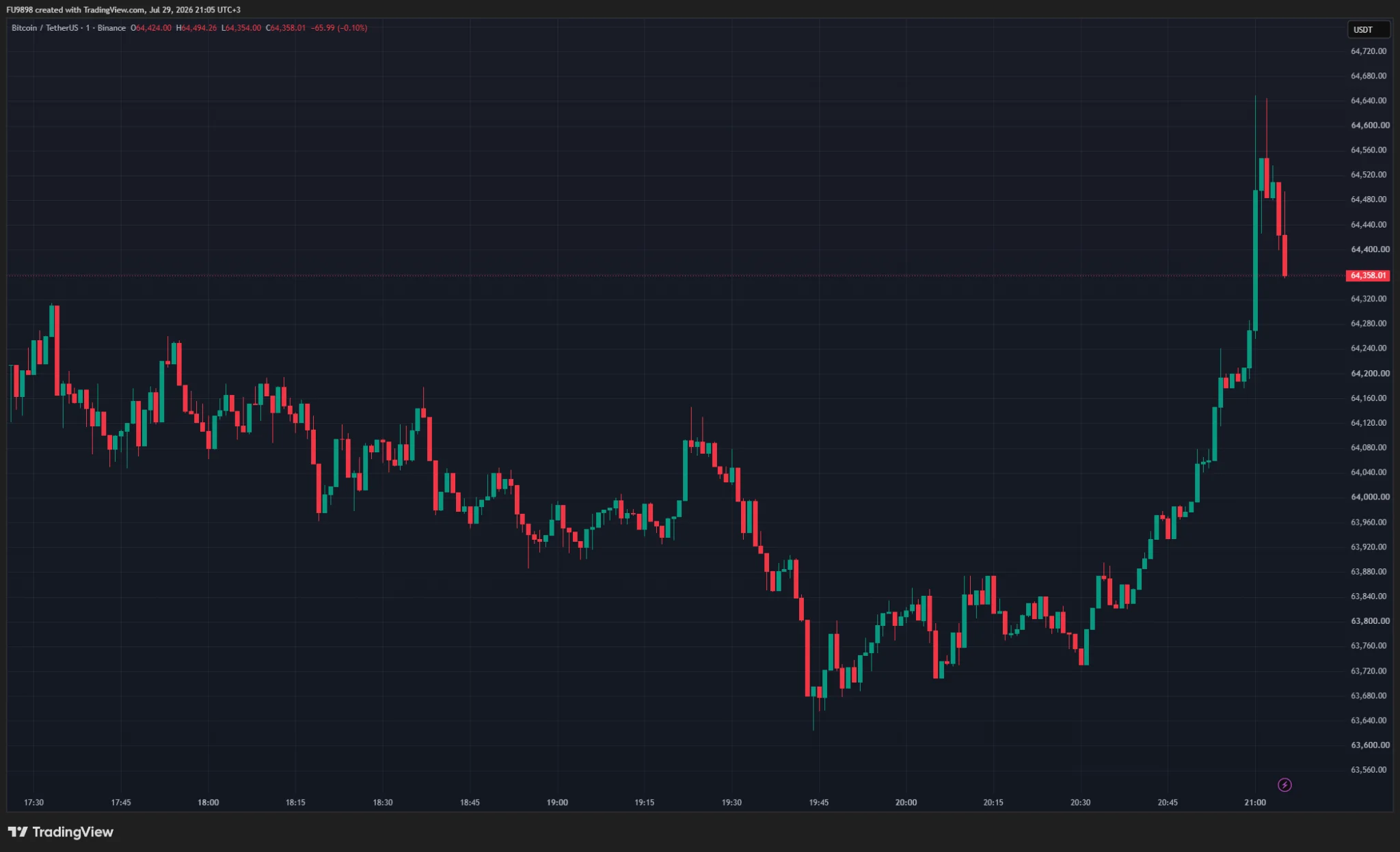
Here is Bitcoin's reaction to the interest rate decision:
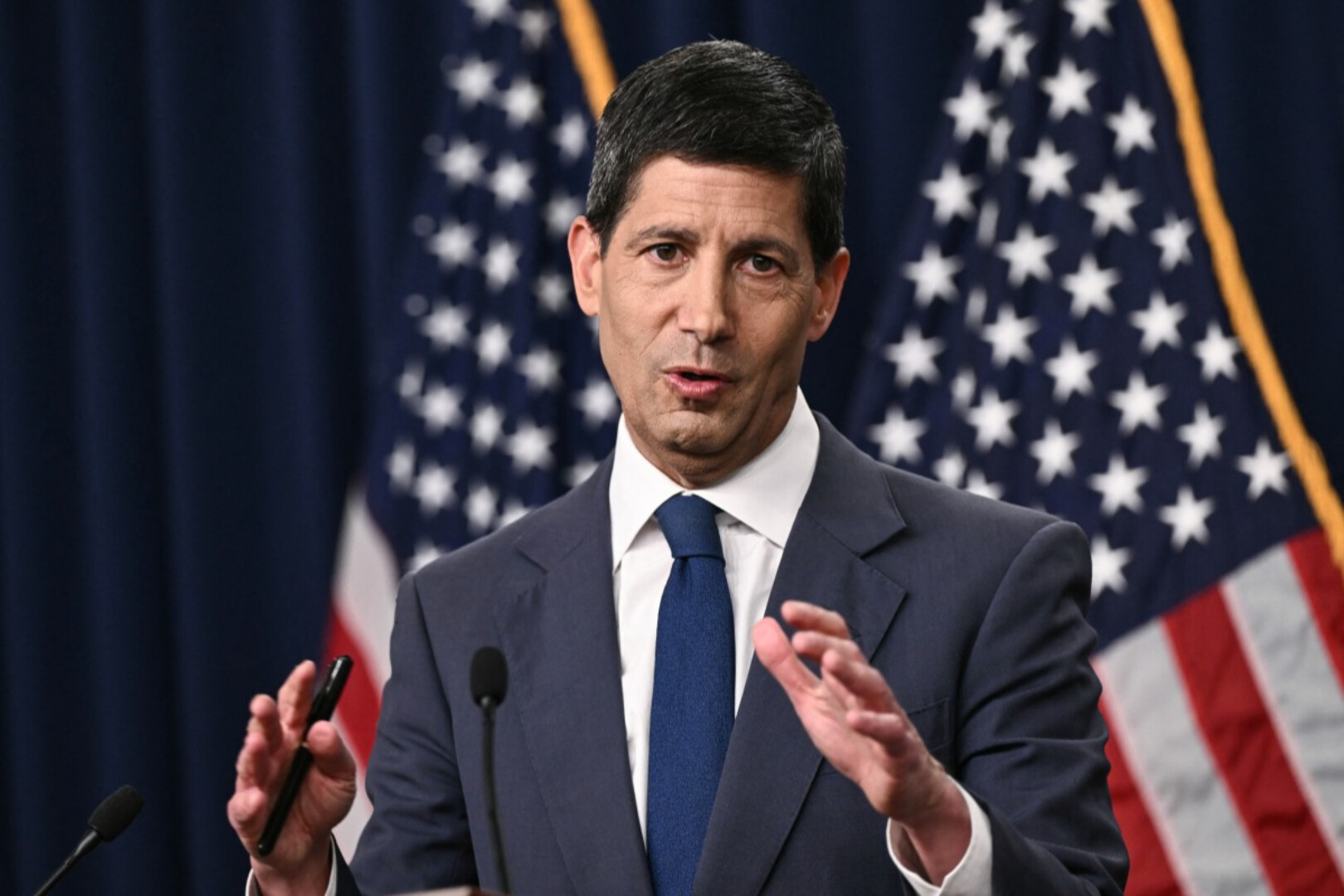
The new Federal Reserve Chairman, Kevin Warsh, like his predecessor Jerome Powell, has repeatedly emphasized the importance of controlling inflation. Some investors believe Warsh has taken a tougher stance on inflation than expected.

Although interest rate cuts were expected during Warsh's tenure as the Fed Chair appointed by Trump, market expectations that the central bank might raise interest rates by the end of the year have strengthened.

Trump frequently criticized the Fed Chair on social media, claiming that interest rates were not being lowered quickly enough during Powell's tenure and even threatened his removal. However, despite no significant changes in the Fed's decision-making approach since Warsh took office, Trump's attacks on the central bank chief have ceased.

Michael Reynolds, Vice President of Investment Strategy at Glenden, noted the similarity between the two Federal Reserve Chairmen, stating: "There is considerable continuity between the two chairmen."

*This is not an investment recommendation.

end-content
Preguntas relacionadas

QWhat decision did the Federal Reserve make regarding interest rates according to the article?

AAs expected, the Federal Reserve kept interest rates unchanged.

QWho is the new Chairman of the Federal Reserve mentioned in the article, and how are his views described compared to his predecessor?

AThe new Chairman is Kevin Warsh. Some investors believe he has taken a tougher stance on inflation than his predecessor, Jerome Powell, was expected to, though there is noted continuity between their approaches.

QWhat was Bitcoin's immediate reaction to the Federal Reserve's interest rate decision?

AThe article mentions a chart illustrating Bitcoin's reaction but does not describe the specific price movement in the text. The focus is on the visual representation.

QHow did former President Trump's criticism of the Federal Reserve change with the appointment of the new Chairman?

AWhile Trump frequently criticized Chairman Powell on social media, his attacks on the central bank's chairman stopped after Kevin Warsh assumed the position, despite no major change in the Fed's decision-making approach.

QWhat are the market's current expectations regarding future interest rate moves by the Fed, as suggested in the article?

AMarket expectations have strengthened that the central bank could raise interest rates by the end of the year, even though rate cuts were initially anticipated when Warsh, appointed by Trump, took office.

Lecturas Relacionadas

E Fund "Quits Drinking"

"Yi Fang Da 'Gives Up Alcohol'" - Summary The article analyzes the recent portfolio adjustments of star fund manager Zhang Kun, focusing on his flagship funds, the Yi Fang Da Blue Chip Select and Yi Fang Da Quality Select. The key trend highlighted is a significant and ongoing reduction in exposure to the consumer sector, particularly liquor (baijiu) stocks like Kweichow Moutai and Wuliangye, which were once core holdings. This shift is driven by several factors: a downturn in the consumer sector's business cycle post-pandemic, with slowing earnings growth for major players; a change in consumer behavior towards value over premium brands; and high channel inventory pressures, especially in the liquor industry. These fundamentals have led to a prolonged phase of valuation contraction for consumer stocks. Concurrently, market capital has rotated aggressively towards the high-growth technology sector, especially AI-related chains, which have dominated fund inflows. This style shift has further diminished the attractiveness of traditional consumer "core assets" for many funds. As a result, Zhang Kun's funds have drastically cut their consumer stock allocations. For example, the Blue Chip Select's baijiu holding proportion has fallen from over 40% to around 20%, and its overall top 10 holdings concentration dropped sharply. This mirrors a broader trend in the active equity fund industry, where allocations to consumer staples have plummeted to multi-year lows while technology holdings have surged. The article concludes that while the consumer sector's valuations are now at historical lows, offering some margin of safety, the fundamental outlook remains challenging due to weak macro consumption recovery and intense internal competition. Therefore, the sector is likely to see only sporadic rebounds rather than a sustained recovery, continuing to weigh on the performance of funds still heavily invested in it. Zhang Kun's timely reduction of Korean semiconductor holdings in his Asia Select fund amid a market crash is also noted as a contrast to his domestic strategy.

marsbitHace 23 min(s)

E Fund "Quits Drinking"

marsbitHace 23 min(s)

Before the Second Attempt at Hong Kong IPO, Topstar 'Hands Out' 548 Million in Related-Party Orders

Tosda, an industrial robotics firm, is making its second attempt at a Hong Kong listing shortly after its first application lapsed. The company has undergone a significant strategic shift, pivoting away from its lower-margin intelligent energy and environmental management system (IEEMS) business to focus on core robotics and machinery. This "revenue-reduction, profit-growth" strategy saw revenue nearly halve from 2022 to 2025, but resulted in a sharp turnaround to profitability, with a 1147% year-on-year increase in Q1 2026 net profit. This restructuring involved spinning off the IEEMS business, leading to a substantial jump in related-party transactions. Following the departure of a former executive, two newly associated companies are expected to handle up to 548 million RMB worth of IEEMS orders in 2026, with Tosda acting as a platform charging a 3% management fee. While profitability has improved, several financial concerns remain. Accounts receivable collection cycles have lengthened, inventory—particularly for robots—has surged significantly despite falling revenue, and the company faces challenges in overseas market expansion. Notably, overseas business currently has a lower gross margin than domestic operations. The company was also recently reprimanded by regulators for accounting inaccuracies related to revenue recognition and bad debt provisions. The success of its strategic pivot and its second listing attempt will depend on managing these financial risks, the transparency of its new business model, and the long-term performance of its core robotics segment.

marsbitHace 33 min(s)

Before the Second Attempt at Hong Kong IPO, Topstar 'Hands Out' 548 Million in Related-Party Orders

marsbitHace 33 min(s)

Is the AI Bull Market in Jeopardy? Philadelphia Semiconductor Index Breaks Below Key Support at 11,200 Points

The Philadelphia Semiconductor Index (SOX) faces a critical technical and fundamental test. It recently breached a key short-term support level around 11,200 points—a level that held in mid-July—and closed below it. Technical indicators have deteriorated, with the 21-day moving average crossing below the 50-day, signaling bearish momentum. Should the 11,200 support fail, the next major support is the 200-day moving average. The sell-off, which saw memory chip stocks like Micron and Western Digital plunge over 10%, stems from growing concerns about the cyclicality and quality of AI demand. Market participants question the sustainability of the AI capital expenditure boom, highlighted by divergences between the capital expenditures of mega-cap tech firms and semiconductor index performance. However, some positive structural shifts are emerging. Institutional positioning has normalized, unwinding the previously crowded "long semiconductors, short Mag 7" trade, leaving cleaner positioning. Seasonal tailwinds are also approaching, as the NDX historically performs well after this period, potentially supporting a rebound if retail inflows resume. The core question is whether the SOX can hold the 11,200 support. A failure could trigger further declines toward the 200-day moving average, while a successful defense, combined with lighter positioning and seasonal support, could offer a recovery window for the sector.

marsbitHace 33 min(s)

Is the AI Bull Market in Jeopardy? Philadelphia Semiconductor Index Breaks Below Key Support at 11,200 Points

marsbitHace 33 min(s)

Trading

Spot
活动图片