Source:Natalie Brunell
Compiled by:Felix, PANews
Famous divorce lawyer James Sexton has been practicing for 26 years, handling thousands of cases with clients ranging from billionaires to celebrities. In a recent podcast, he stated that money is not the root cause of marriage breakdowns, but rather emotional detachment. Below are the highlights from the podcast.
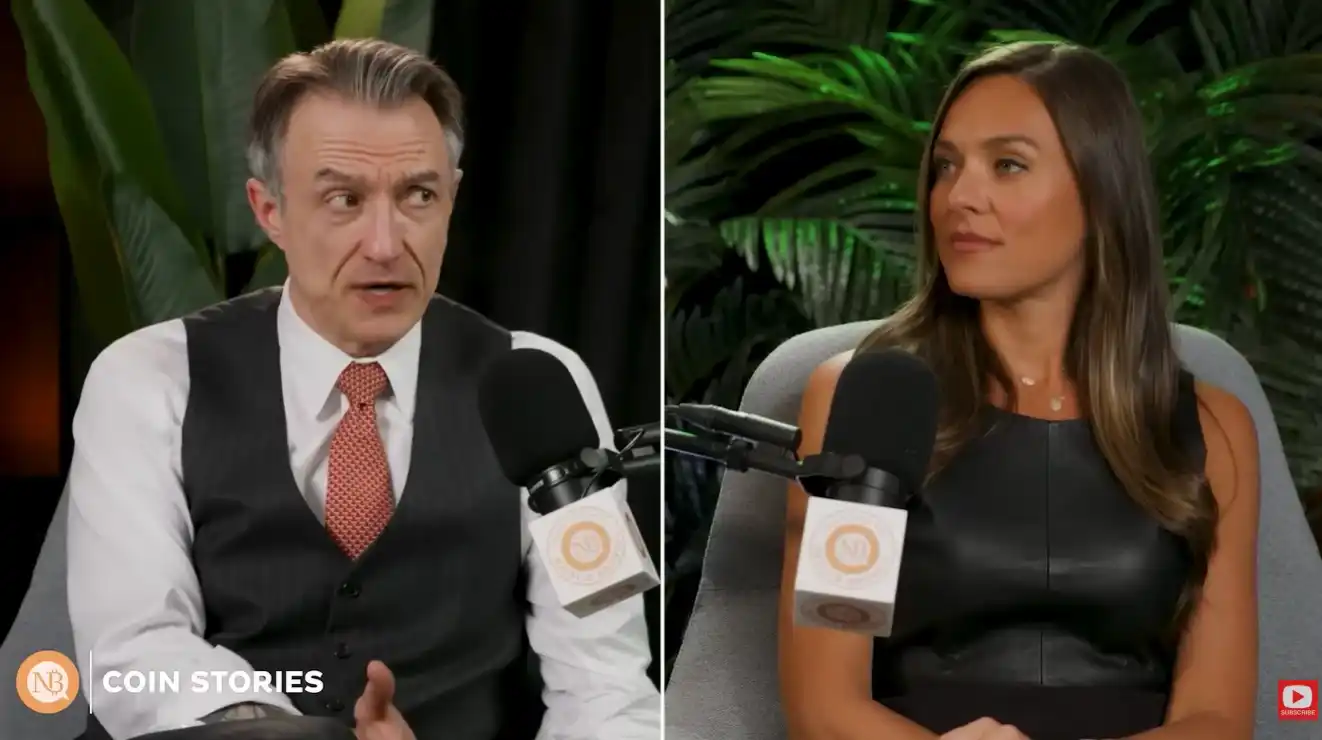
Host: Are money issues in marriage a significant problem for couples?
James: Yes. I think it's not just about the money itself, but what money symbolizes for people. For many, it symbolizes security and stability. If you grew up without money, it symbolizes everything you desire, like security and a sense of being valued. Obviously, we all need money to meet our needs, to feel safe, to do what we want, and to give our children what they need. But behind that, in a world out of control, money symbolizes our control over daily life.
Host: Based on your clientele, does having more money make couples happier?
James: No. But statistics do show that economic hardship and shortage are extremely detrimental to marriage. If society wants to reduce divorce rates and increase marital satisfaction, it should ensure better economic security for people. One of the biggest indicators of divorce is the lack of a college degree (which is the reality for most Americans), and people with lower socioeconomic status have higher divorce rates. But wealth also reaches a point of diminishing returns. When you're economically stable enough, divorce becomes easy, allowing you to exit an unhappy relationship easily. Most people, even if financially comfortable, can't afford a second house in the Hamptons or a second luxury car, but the super-rich can easily say, 'I'm moving out; I'll still be fine even if half my assets are split.' If you have $500 million, you're still doing well with $250 million. Excessive abundance makes money lose its meaning, and people no longer have the motivation to solve marital problems to maintain their standard of living.
Host: So, what percentage of marriages do you think end due to financial issues?
James: These kinds of questions are always hard to answer, like how many divorces are caused by infidelity or financial stress? But in my view, these are just symptoms of an underlying illness; the real disease is 'disconnection.' There are 7 billion people in the world, you meet this person, and you say, 'This is my favorite person, I want to face the unknown holding hands.' It's the most beautiful feeling in the world. But most people lose their way. About 53% of marriages end in divorce, another 5-10% separate without divorcing, plus there are 10-20% who regret getting married. That adds up to roughly 70% of situations not reaching a satisfactory stage. The last straw for a marriage is sometimes money, sometimes infidelity, but the root cause is disconnection because happy people don't cheat. Partners with deep emotional bonds are transparent about money, whether it's a good investment or a bad decision; they can communicate honestly, and the other feels proud, not blamed. It's like the early stages of love, when the other person snoring while laughing seems cute, but five years later it becomes annoying; the initial grace given to each other disappears. Most people spend 5 days a week, or even 50 weeks a year, working for the remaining two days or two weeks of rest. It's a strange game and system.
Host: How do successful couples manage money? Who controls the accounts? Do they merge their finances?
James: There's no one-size-fits-all model for relationships. The touchstone should be: How did you do it when you were first deeply in love? If he paid in the beginning and now it's changed, it's worth asking why. If someone loves earning money but hates managing it, handing it over to their partner is fine. It's like cooking; if I like cooking and you don't, forcing us to split the task equally isn't fair. But even if you dislike financial management, you need to understand the basics, just in case something happens to me, you should know where the family's money is. At the core are honest conversations and a sense of security. I've represented victims of domestic violence and controlling partners; I know that without security (physical, emotional, and financial), you can't feel loved. Even if you don't understand cryptocurrency, at least learn the basics. Even if you're not interested in your partner's hobbies (like the World Cup or Game of Thrones), your excitement can make me excited; listening to each other doesn't cost anyone anything.
Host: Should all ledgers and debts be laid completely open on the table before marriage?
James: Every marriage has a prenuptial agreement, either written by the government (which can change at any time) or created by yourselves. I never believe the government can set the best rules for the financial aspects of marriage. I like prenups because they are binding and make you clear about the rules of the game you're playing. In my book, I mention a 'yours, mine, and ours' financial system. Marriage is like a Venn diagram, with 'you,' 'me,' and the overlapping 'us.' If you and I completely disappear into the 'us,' it kills what we loved about each other, so we need to retain some self. Financially, if we're completely merged and transparent, and you know the price of every birthday gift I buy, there's no surprise. It's necessary for partners to keep a little privacy and mystery. What's mine is mine, what's yours is yours, and joint assets are split equally; it's a very clean prenuptial agreement. If you can't even have that tough financial conversation, then don't get married.
Host: If there's no prenup, can you sign a postnuptial agreement? Do most people sign prenups?
James: You can sign one, but postnuptial agreements are harder to negotiate because they require both parties to voluntarily agree after marriage. Regarding prevalence, prenups aren't public record, so they're actually much more common than you think. I've done prenups for celebrities, but they say on TV, 'We're in love, we didn't sign one,' while the actual agreement is locked in my safe. Now, among the younger generation, with women owning more assets and having higher education, signing prenups has become very normalized and practical.
Host: Can you share a story about a couple you've encountered involved in cryptocurrency investments?
James: I've been a divorce lawyer for 26 years. Back when everyone was using tape recorders, I heard people mention Bitcoin. I attended computer camp in 1984; I've always been interested in tech, so I started early trying to understand what cryptocurrency and blockchain really are, making it as comprehensible as possible to others. Later, when other cryptocurrencies emerged, whether Ethereum or other early ones, I think many lawyers back then had no clue what they were talking about.
Cryptocurrency gradually became an asset that people could transfer anonymously. After 9/11 in 2001, the Patriot Act was passed. One of its biggest impacts was changing financial regulation and how banks operate, making it very difficult to transfer money without leaving a trace.
In the early days, cryptocurrency was like the Wild West; it was almost impossible to track anything because it's a decentralized currency, and people didn't use platforms like Coinbase or any others easily identifiable or subpoenable. So, early on, I wanted to understand cryptocurrency, partly to track assets that might need dividing in a divorce and to prevent people from trying to hide assets; also to be able to explain to my clients what options they might have in divorce planning.
Even as cryptocurrency evolved, Bitcoin's price soared and then rose even higher. But the legal community, all lawyers practicing marital law, realized that many people still knew little about cryptocurrency. For example, in New York, in a divorce, you must file a document called a 'Statement of Net Worth.' This lists all a person's assets and liabilities. The 2026 version is the first to include cryptocurrency.
Host: Really?
James: Yes. The New York State Unified Court System didn't decide until 2026 that we should add cryptocurrency to this document. Before that, it was listed under 'Other.'
Host: So, you have to report crypto assets to the government for division? How does that work exactly?
James: Yes, full financial disclosure is required to decide how to divide or waive assets. A few weeks ago, I had a client who was a Bitcoin enthusiast; he preferred giving other assets to his wife to keep his Bitcoin. At the start of the divorce, Bitcoin was over $100,000, then it dropped to around $60,000; when the property division happened, you could say he got a great deal.
Of course, many people lie, swearing they have nothing. In one case, the other party claimed to have lost the hard wallet password, turning it into a 'brick.' Midway through the litigation, I suddenly understood. I said, 'You have a way,' and indeed, they were able to recover the password; afterward, the other party didn't persist. We went along and made concessions on other terms. Often, because the spouse and their lawyer don't understand Bitcoin, the knowledgeable party gets a huge advantage. As a lawyer, you must constantly learn new things and understand how they work.
Host: Are most divorces you handle highly adversarial?
James: I'm like a weapon. If it's a simple divorce, people don't hire me. I specialize in highly adversarial and complex financial trials. Sometimes, in marriage, people engage in legal tax avoidance (like setting up generation-skipping trusts or intentionally defective grantor trusts); these wealth transfer maneuvers make property division an absolute disaster in divorce. Clients worth hundreds of millions use these loopholes, paying less tax than a janitor.
Host: Do you think that's fair?
James: Those are the rules of the game. If there are gray areas, the fault lies with the rule-makers, not the players using the rules. Personally, I don't cheat and I pay my taxes on time. The world is indeed unfair; on one side, thousands of children are starving, and on the other, my client is worth $8 billion, or celebrities fly private jets to talk about environmental protection. But as long as it's within legal bounds, that's the current system.
Host: Have you seen couples in terrible situations who eventually reconciled?
James: Yes. Sometimes you have to come close to losing something to realize how important it is to you. It's like a toothache; when it doesn't hurt, you're not grateful, but when it hurts, you know the pain. When a partner is away on a business trip, you can really feel the silence and pain of their absence.
Host: Given the frightening divorce rates, how can couples struggling to repair their relationship?
James: We fall in love quickly, but falling out of love is like going bankrupt—very slowly, then suddenly falling off a cliff. We don't need grand gestures; saving a relationship relies on 'small reconnecting behaviors.' Partners often fall into a negative spiral: 'Because they didn't do it, I won't do it either.' But you can reverse that spiral. For example, leave a note in the morning saying, 'I enjoyed watching the show together last night, I married the most beautiful girl in the world.' That doesn't cost money but means a lot. Text your wife saying a song reminded you of her; tell your husband he's the most handsome, sexiest man you've ever seen. That takes two seconds. We all crave connection, which requires a little vulnerability and kindness. Constructive criticism is important, but constant affirmation and building up your partner brings positive change. I used to have a beard; one ex complained it was prickly, making shaving feel like a chore; another ex praised me clean-shaven, saying I looked like the lead in 'Mad Men,' incredibly sexy, and I'd shave three times a day. How you express things is crucial; emphasizing the positive is far more effective than direct criticism.
Host: I strongly agree; how we treat others often reflects our internal struggles; hurt people hurt people.
James: Yes, radiating warmth and kindness to others can also make you feel better. Love is a verb. Couples can absolutely take ten minutes a week to walk together, asking each other, 'Tell me three things I did this week that made you feel loved? Three things that attracted you? Three things I could do better?' Often, what makes people feel loved in life are the little things, like a hand on the shoulder when feeling down, or a favorite meal. If you ask a man to help open a pickle jar and praise him for it, no matter his age, he'll be incredibly proud. Everyone wants to be told they're attractive, smart. It's all free; algorithms don't promote these methods, but it's the simplest, most effective way to put divorce lawyers like me out of business.
Related reading: Cryptocurrency Inheritance—How to Inherit Safely?