Vitalik and Aya Hong Kong Conversation: The Ethereum Ecosystem Is Entering a Multi-Node Future

marsbitPublicado a 2026-07-13Actualizado a 2026-07-13

Resumen

"Vitalik Buterin and Aya Miyaguchi's dialogues in Hong Kong, along with subsequent events, signal Ethereum's shift into a multi-node future. Over two months, key developments included the Ethereum Foundation's restructuring to focus on longevity and core protocol values (CROPS), the establishment of independent non-profit organizations like Ethlabs for R&D and Ethereum Institutional as an institutional gateway, and continued efforts by Etherealize to connect Ethereum with traditional finance. These moves reflect a broader transition where the EF is deliberately doing less, embracing a 'subtraction' philosophy and a 'walk-away test' to ensure the ecosystem's resilience isn't dependent on a single central body. Instead, specialized nodes are emerging to handle different functions like protocol development, institutional adoption, and regional community coordination. The opening of the ETH HK Hub in Asia exemplifies this trend, positioning Hong Kong as a key node for builder coordination and institutional outreach. The core takeaway is that Ethereum's strength and future evolution increasingly depend on a decentralized network of independent, collaborative organizations rather than a single central coordinator."

Author: @cynthiaju333 ; Review: @NPC_Leo
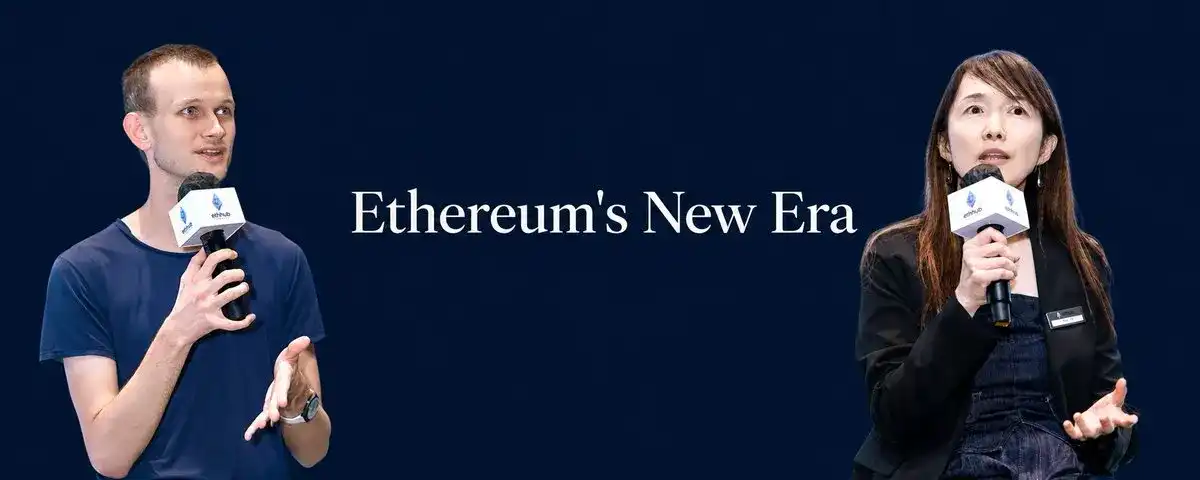
Over the past two months, a series of important events have occurred within the Ethereum ecosystem: the Ethereum Foundation (hereinafter referred to as EF) completed an organizational restructuring; Ethlabs was established as an independent non-profit R&D organization; Ethereum Institutional officially launched as an independent entity serving as an institutional on-ramp; and Etherealize continues to push the narrative of Ethereum for Wall Street and capital markets. The community has engaged in extensive discussions around EF's organizational restructuring, the establishment of new community-driven teams, initiatives for institutional adoption, and the division of R&D labor and governance structures.

On April 21, 2026, the ETH HK Hub officially opened in Hong Kong, hosting two significant conversations. One was a Chinese-language dialogue between Vitalik Buterin and Hong Kong Legislative Council Member Duncan Chiu. They discussed the development of the Chinese-speaking community over the past twelve years, touching on Layer 2, core protocol development, the anti-quantum roadmap, Layer 1 scaling, and the directions truly worthy of builders' investment in Ethereum. The other was an English-language roundtable between EF Chairperson Aya Miyaguchi, Council Member Duncan Chiu, and QZ, Partner at an ecosystem fund. This conversation focused on the role of EF, the philosophy of subtraction, the Walk-away Test, and Hong Kong's position within the Ethereum ecosystem.

Looking back from over two months later, how can we more deeply understand the changes occurring across the entire Ethereum community? The two conversations with Vitalik and Aya provide important context and reference points, making it easier to grasp that Ethereum is entering a new stage of development, a future of community multi-nodes and the possible continued evolution of its direction.

What Happened to Ethereum Over the Past Two Months?

On May 24, Vitalik Buterin posted a lengthy thread on his X account, publicly sharing his personal views on EF's future direction. He emphasized that EF will pursue "longevity over breadth", reduce ETH sales and the Foundation's financial expenditures, and focus more on the core values of CROPS (Censorship-Resistance/Opposition-resistance, Open Source, Privacy, Security). He also pointed out that EF is not the center of Ethereum, but rather "one node, with a defined purpose", and advocated for an ecosystem structure of pluralism where multiple focused nodes collaborate.

On June 23, EF officially announced a new organizational structure on its official blog. The new structure includes layers for Protocol, Access, Users, Community, and Institutions, along with supporting structures for operations and management. Through this restructuring, EF aims to align its organizational form more closely with long-term strategic goals, ensuring Ethereum's sustainable development in the future.

Almost simultaneously, the independent non-profit R&D organization Ethlabs announced its establishment, co-founded by five former senior EF researchers: Ansgar Dietrichs, Barnabé Monnot, Caspar Schwarz-Schilling, Josh Rudolf, and Julian Ma, with funding support from Bitmine, Sharplink, Joe Lubin, SNZ, and others. Its goal is to prepare Ethereum for the next phase's needs, such as institutional adoption, agentic finance, DeFi, stablecoins, and RWAs, and to coordinate with EF in advancing Ethereum protocol development across different domains, jointly building a multi-node ecosystem.

On July 1, EF's Global Policy & Strategy team released a guide for governments and institutions: "Ethereum for Governments & Institutions: Why Neutral Infrastructure Is Crucial Now." This report actively helps policymakers and large institutions worldwide better understand Ethereum. Its core premise is: the world today needs "shared, neutral digital public infrastructure not controlled by any single centralized entity," and Ethereum is a public, programmable network designed precisely for this purpose.

On the same day, Ethereum Institutional officially launched as an independent non-profit organization, positioning itself as the "dedicated institutional front door" to the Ethereum ecosystem. It has taken over the institution-facing work conducted by the Ethereum Foundation's go-to-market team over the past year, operating with a clearer mission, broader geographic coverage, and long-term financial independence. Key focus areas include institutional education and outreach, institutional insights, ETH and ecosystem marketing, standards and best practices, and institutional events.

Concurrently, Etherealize continues to drive connections between Ethereum and traditional finance. Its website positions itself as "Rewiring Wall Street with Ethereum", building financial infrastructure for tokenization, Ethereum-native settlement, and institutional-grade privacy protection aimed at multi-trillion dollar markets. Wall Street's interest in Ethereum is shifting from proof-of-concepts and pilot projects to viewing public chains as production infrastructure; discussions have also expanded beyond stablecoins to include tokenized stocks, bonds, real estate, and investment funds.

Viewed together, these events point to a larger shift: Ethereum is transitioning from a phase where the Ethereum Foundation (EF) primarily undertook significant coordination and public narrative-building, to a new phase where multiple specialized organizations collectively assume different capabilities. EF is becoming more focused on protocol governance, credible neutrality, self-sovereignty, and long-term resilience. Ethlabs is taking on R&D for next-stage adoption and infrastructure capability building. Ethereum Institutional is handling institutional education, standards development, market awareness promotion, and serving as an entry point for global financial institutions. Etherealize continues to advance Ethereum's narrative in capital markets and traditional finance.

These organizations are not part of a single centralized plan, nor should they be simply understood as EF's outsourcing or replacements. Together, they reflect a clearer division of capabilities emerging within the Ethereum ecosystem: protocol neutrality, institutional adoption, capital market narrative, application-oriented R&D, and local community coordination are now being undertaken by different nodes.

More accurately, Ethereum is entering a new stage of development and ecosystem structure. And if we return to the scene of the ETH HK Hub on April 21st, we find that what Vitalik and Aya discussed that day were precisely the long-term principles underlying these changes.

EF Chairperson Aya on the Philosophy of Subtraction

During the roundtable at the ETH HK Hub, Aya Miyaguchi repeatedly mentioned a concept: the Walk-away Test.

Her point is that EF's long-term goal is not to become a larger, more controlling central organization, but to ensure that the entire system can continue to function even without EF.

She said: "Ethereum must pass the Walk-away Test—the whole system must still be able to function normally even without the Ethereum Foundation."

Aya recalled that when she joined EF, it was during the ICO boom. Many people suggested the Foundation expand rapidly, establish roles like CTO and CMO like a traditional tech company, and take on more centralized functions.

But EF did not do that.

She explained: "If the Foundation builds everything for the entire ecosystem, participants will become dependent. In the long run, this will weaken competition, and without competition, optimal solutions cannot emerge."

This is rooted in a fundamental belief of Ethereum: the health of the system does not come from the strength of a single organization, but from the ecosystem's own ability to continually generate new capabilities, new organizations, and new builders.

So when Aya says: "Success means the Foundation does less, and Ethereum becomes stronger."

This statement gains more specific context two months later.

From this perspective, the emergence of Ethlabs, Ethereum Institutional, Etherealize, and global Ethereum community Hubs is more like a manifestation of EF's philosophy of subtraction: as the foundational protocol matures, what the ecosystem needs is no longer an all-powerful command and dispatch center, but multiple independent organizations with shared beliefs, each assuming different responsibilities.

Vitalik on the Boundaries of Protocol Coordination

In his dialogue at the ETH HK Hub, Vitalik also made a crucial distinction that appears very relevant today.

He said, "Core protocol development and L2 development are completely different in terms of difficulty. L2 is more like a free market. If an outsider builds something better, they have a chance to win."

But the core protocol is different. Core protocol development requires long-term coordination with existing developers and must achieve consensus among client teams, researchers, the community, and upgrade roadmaps.

Therefore, the truly important question is: Do these efforts still serve Ethereum's long-term protocol goals? Do they still uphold credible neutrality, security, privacy, censorship-resistance, and the fundamental attributes of Ethereum as public infrastructure?

The most core work for Ethereum remains the continuous evolution of a decentralized protocol through long-term coordination.

Why Hong Kong?

In Aya's roundtable, she mentioned that "the community Hubs emerging in Hong Kong are themselves an embodiment of EF's philosophy of subtraction."

If Ethereum's future is not driven by a single center but built collectively by multiple independent nodes, then a local Hub is not just an event venue or a community event organizer. It is more like a new type of ecosystem infrastructure.

It connects not only developers, but also institutions, researchers, capital, policymakers, public goods builders, and new participants entering Ethereum from traditional finance, AI, hardware, stablecoins, RWAs, and payments.

Hong Kong happens to be at the intersection of these forces. It is an international financial center and a place where Eastern and Western capital, policy, and technological contexts converge; it connects Chinese-speaking builders with the global Ethereum community and is close to Shenzhen's hardware, AI, and manufacturing ecosystems.

Therefore, when Hong Kong and Singapore appear in Ethereum Institutional's global layout, when SNZ appears among Ethlabs' supporters, when ETH HK Hub becomes Asia's first physical Ethereum community center, they all point to a trend: Asia is becoming an important node for Ethereum's institutional adoption and builder coordination.

This is also the role that SNZ and ETH HK Hub hope to play. Our role is to establish a long-term coordination node in Hong Kong and Asia, where builders, researchers, institutions, capital, policymakers, and the global Ethereum community can meet, and extend the dialogues from each event into longer-term construction.

Two Months Later, What Has Really Changed?

Over the past two months, many have asked: What's happening with EF? Who left? Who started new organizations? Will Ethlabs replace EF? Does Ethereum Institutional mean Ethereum is actively vying for the institutional market?

If we start from the two conversations on April 21st, perhaps the answer becomes clearer.

EF is focusing more on what it should most protect: protocol neutrality, long-term security, openness, privacy, censorship-resistance, and self-sovereignty. At the same time, more specialized organizations have emerged within the ecosystem, taking on R&D, institutional adoption, capital market narrative, local community coordination, developer education, and policy communication respectively.

EF doing less does not mean Ethereum is doing less. On the contrary, it requires more people, more organizations, more regions, and more builders to step forward.

Perhaps the main theme of the past two months is that Ethereum continues to prove what it has always believed:

A resilient ecosystem relies on continually generating new nodes, new ways of collaboration, and new builders.

The existence of ETH HK Hub is precisely to participate in such a future.

ETH HK Hub is jointly operated by SNZ and ETHTAO, with support from the Ethereum Foundation.

Criptos en tendencia

Preguntas relacionadas

QAccording to the article, what is the 'Walk-away Test' that Ethereum Foundation Chair Aya Miyaguchi discussed?

AThe 'Walk-away Test' is the idea that the Ethereum ecosystem must be resilient enough to continue functioning and thriving even in the absence of the Ethereum Foundation. Success for EF is measured by it doing less while the Ethereum network becomes stronger and more independent.

QWhat significant shift in Ethereum's ecosystem structure does the article describe based on the events of the past two months?

AThe article describes a shift from a stage where the Ethereum Foundation (EF) bore significant coordination and public narrative responsibilities to a new 'multi-node' future. This involves multiple specialized, independent organizations (like Ethlabs, Ethereum Institutional, and Etherealize) taking on distinct roles such as R&D, institutional adoption, capital market narratives, and local community coordination, while the EF focuses more narrowly on core protocol values.

QWhat are the core long-term protocol goals for Ethereum that Vitalik Buterin emphasized should be maintained?

AVitalik Buterin emphasized that core development must continue to serve Ethereum's long-term protocol goals, which include maintaining credible neutrality, security, privacy, anti-censorship capabilities, and the fundamental properties of Ethereum as a public infrastructure.

QWhy is Hong Kong considered a significant node in Ethereum's evolving multi-node ecosystem according to the article?

AHong Kong is seen as a significant node because it is an international financial hub at the confluence of Eastern and Western capital, policy, and technology. It connects Chinese-speaking builders with the global Ethereum community and is near hardware, AI, and manufacturing ecosystems like Shenzhen, making it a crucial location for institutional adoption and builder coordination in Asia.

QWhat is the stated purpose of the newly formed independent non-profit organization 'Ethereum Institutional'?

AEthereum Institutional's purpose is to act as a dedicated institutional front door for the Ethereum ecosystem. It focuses on institutional education and对接, institutional insights, ETH and ecosystem marketing, standards and best practices, and institutional events, aiming to foster wider institutional adoption.

Lecturas Relacionadas

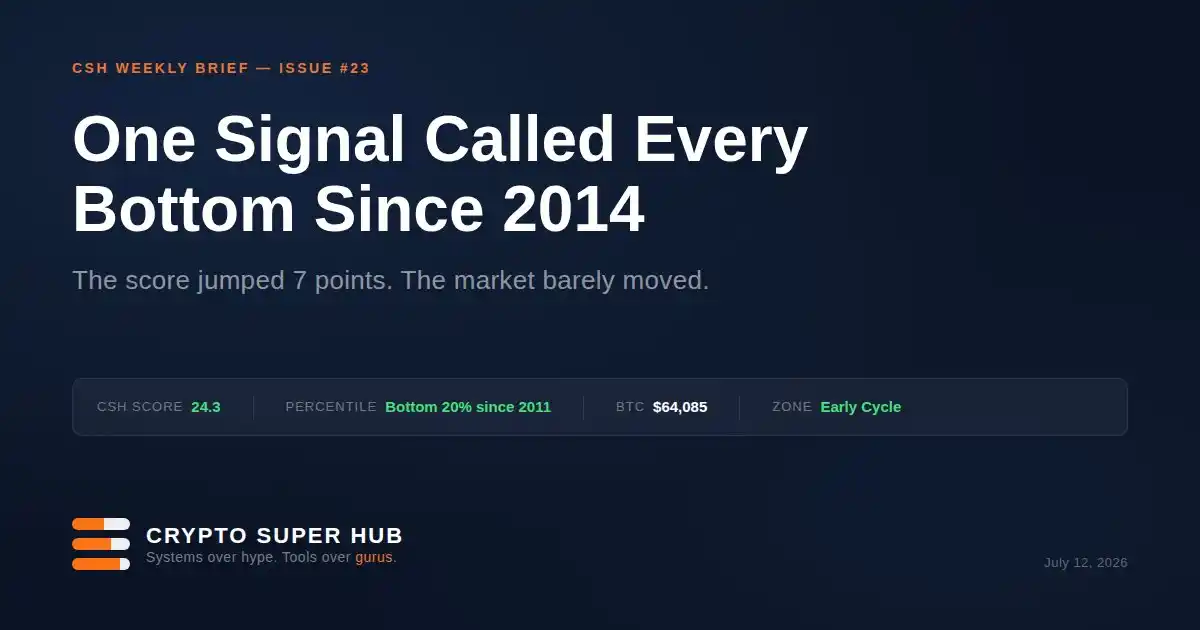
The Signal That Has Appeared Before Every BTC Bottom Since 2014, It Was Close This Time

A valuation model tracking Bitcoin for 12 years has been updated. The new model shows a current score of 24.3, placing BTC in the historical bottom 20% range. However, analysis reveals that since 2014, every Bitcoin bear market bottom has seen this score drop *below 20* for a sustained period before turning around. The current cycle's low so far was 21.5 on July 1st. The author explains the model was rebuilt to address a flaw in its historical baseline, making it a more accurate "map" of current value. Two interpretations are offered: either the historically definitive washout has not yet occurred, or this cycle's bottom will be shallower, as each cycle has been less volatile than the last. The author's action plan involves automated buying triggered at specific score levels. A purchase was made at the cycle's cheapest reading (21.5), with more capital allocated for a potential drop below 20. The strategy emphasizes following a pre-written plan over emotion. Additional market context is provided: Bitcoin reclaimed its 200-week moving average, the BTC/Gold ratio is at a 3-year low showing capital preference for gold, and Bitcoin dominance remains high at 59%, indicating no "altcoin season." The summary concludes by noting the model's inconvenient implication—the market looks less like a bottom now—and poses a question to readers: at what score would they deploy their final capital?

marsbitHace 14 min(s)

The Signal That Has Appeared Before Every BTC Bottom Since 2014, It Was Close This Time

marsbitHace 14 min(s)

Qingyan Jingzhun Raises Hundreds of Millions in Funding, with Investment from National Equipment Manufacturing Giants

Qingyan Precision, a provider of physical AI infrastructure, has secured billions of RMB in Series B financing. The investment round, led by prominent automotive industry funds and notably featuring the state-owned China National Machinery Industry Corp. (Sinomach) fund, underscores a strategic shift in the capital market towards companies with proven industrial application capabilities. The company positions itself as the "engineering foundation for physical AI," specializing in enabling embodied intelligence (like humanoid robots) to operate in complex, real-world industrial environments. Its core offering is the "TsingLoop" multi-modal data engineering pipeline, which captures and standardizes data from physical workspaces (like visual, force, and process parameters) to create reusable data assets. This system supports a "Robot-in-the-Loop" testing framework that validates robotic performance in digital twin simulations and real-world conditions before deployment. Qingyan Precision leverages over eight years of experience and a network of 2000+ industrial sensor nodes across sectors like automotive and mining. This provides a crucial "training ground" for embodied AI models. The founding team combines academic pedigree from Tsinghua University and Stanford with deep industry experience from leading robotics firms. The company's vision is to build "one foundation, one brain, and hundreds of vertical applications," using its data platform and industrial world model to deploy scalable physical intelligence across various industrial tasks.

marsbitHace 22 min(s)

Qingyan Jingzhun Raises Hundreds of Millions in Funding, with Investment from National Equipment Manufacturing Giants

marsbitHace 22 min(s)

Making a Fortune of $10.32 Million: The World Cup Money-Printing Tactic of a Polymarket Whale

**Earning $10.32 Million: A Polymarket Whale's World Cup Profit Strategy** While teams battle for the World Cup trophy, a hidden whale nicknamed "swisstony" has been quietly making a fortune on the prediction market Polymarket. This account, created around July 2025, boasts total profits of $18.62 million, with $10.33 million earned in the past month alone. With a 52.9% win rate, it has placed over 139,600 predictions, averaging about 380 trades per day—indicating it is likely a high-frequency quantitative bot. The account's signature "trash panda" aptly describes its strategy: sifting through vast market data and tiny price discrepancies to build wealth. Its current holdings are heavily concentrated on the France vs. Spain semi-final, including a roughly $160,000 bet against France. Analysis shows two core tactics driving its success: 1. **High-Volume "Anti-Favorite" Bets:** Placing large wagers (often $400k-$1M) against overvalued favorites like Germany or England, buying "No" shares at favorable prices when market-implied win probability is 46%-64%. It has recorded over 17 individual profits exceeding $1 million using this method. 2. **"Lottery-Ticket" Bets on Extreme Long Shots:** Allocating small amounts (thousands of dollars) to buy shares priced as low as 0.2¢-1.2¢ on outcomes deemed nearly impossible. While most of these bets lose, the occasional win—like those with payouts over 100x—generates significant profits (over $100,000 per hit) that boost overall returns without risking much capital. This dual approach combines consistent, large-scale profit from correcting major market mispricings with opportunistic, high-reward bets on extreme underdogs. The account exemplifies how systematic, high-frequency execution can amplify a small statistical edge into millions in profits on prediction markets.

Foresight NewsHace 49 min(s)

Making a Fortune of $10.32 Million: The World Cup Money-Printing Tactic of a Polymarket Whale

Foresight NewsHace 49 min(s)

AI Token Factory Explosion: Tsinghua University Team Raises 10 Billion in Half a Year

Qijing Tech, a company founded by a Tsinghua University team of faculty and students, has rapidly become a significant player in China's AI infrastructure sector, focusing on high-quality AI token production. Over the past six months, the startup has secured over 1 billion RMB in funding. The company specializes in AI inference—the efficient use of AI models—positioning itself as a "high-quality AI token factory." Unlike many competitors initially focused on model training, Qijing Tech believes inference is where real economic value is generated. Its core technology optimizes the entire AI token production chain through innovations like "full-system heterogeneous collaboration," aiming for stable, efficient, and low-cost output suitable for enterprise use. This strategy has attracted significant investor interest. Major funding rounds have been led by institutions such as Henan Investment Group Huirong Fund, with continued backing from existing investors. The company's "less models, deeper optimization" approach, concentrating resources on key models and high-value scenarios, is resonating in a market where a few top models dominate token usage. The results are promising. Since early 2026, Qijing Tech reports a threefold increase in token production efficiency per unit of computing power and a thirtyfold increase in total high-quality token output. Monthly revenue for June 2026 alone surpassed its entire 2025 revenue. Operating on a "Token as a Service" (TaaS) model, Qijing Tech engages in both direct token sales and collaborative operations, helping partners like state-owned enterprises transition from traditional computing power leasing to high-value token production. As AI token usage in China surges, Qijing Tech aims to be a key enabler in the emerging AI token economy, building the essential infrastructure for the AI era.

marsbitHace 1 hora(s)

AI Token Factory Explosion: Tsinghua University Team Raises 10 Billion in Half a Year

marsbitHace 1 hora(s)

Financing Weekly Report | SBI Makes Consecutive Moves, Bets $125 Million on Gauntlet; Crypto Capital Continues to Flow to Trading and Infrastructure

Weekly crypto financing highlights show capital continues to flow into trading, compliance, and digital asset infrastructure, with traditional financial institutions like Japan's SBI Holdings playing a larger role. SBI made two major investments: a $125M exclusive investment in DeFi risk management and asset allocation platform Gauntlet, and leading a $76M Series C round for crypto exchange EDX Markets. Other notable crypto deals included: QIZ Security ($17M seed) for post-quantum cryptography management; TrueDAO ($10M strategic) for AI-powered DeFi infrastructure; KOR Protocol ($7.5M Series A) for an on-chain creative asset clearing platform; Tether's $20M strategic investment in Brazil's Mercado Bitcoin; and M1X Global ($5.5M seed) for sovereign financial infrastructure. The AI sector saw larger individual rounds. Prime Intellect raised $130M Series A for its decentralized AI protocol stack. AI legal services firm Norm raised $120M, reaching a $1.2B valuation. Voice AI company Gradium's total funding surpassed $100M. The report also notes a shift towards business models focused on specific enterprise-level AI infrastructure and application scenarios. Overall, the crypto primary market remains subdued, with nine deals totaling over $261M last week, centered on centralized finance, DeFi, and infrastructure.

marsbitHace 1 hora(s)

Financing Weekly Report | SBI Makes Consecutive Moves, Bets $125 Million on Gauntlet; Crypto Capital Continues to Flow to Trading and Infrastructure

marsbitHace 1 hora(s)

Trading

Spot

Artículos destacados

Qué es ETH 2.0

ETH 2.0: Una Nueva Era para Ethereum Introducción ETH 2.0, conocido ampliamente como Ethereum 2.0, marca una actualización monumental para la blockchain de Ethereum. Esta transición no es solo una mejora superficial; busca mejorar fundamentalmente la escalabilidad, seguridad y sostenibilidad de la red. Con un cambio del mecanismo de consenso intensivo en energía Prueba de Trabajo (PoW) a una Prueba de Participación (PoS) más eficiente, ETH 2.0 promete un enfoque transformador para el ecosistema blockchain. ¿Qué es ETH 2.0? ETH 2.0 es un conjunto de actualizaciones interconectadas y distintivas centradas en optimizar las capacidades y el rendimiento de Ethereum. La reestructuración está diseñada para abordar desafíos críticos que el mecanismo actual de Ethereum ha enfrentado, particularmente en lo que respecta a la velocidad de transacción y la congestión de la red. Objetivos de ETH 2.0 Los objetivos principales de ETH 2.0 giran en torno a mejorar tres aspectos clave: Escalabilidad: Con el objetivo de aumentar significativamente el número de transacciones que la red puede manejar por segundo, ETH 2.0 busca superar la limitación actual de aproximadamente 15 transacciones por segundo, potencialmente alcanzando miles. Seguridad: Las medidas de seguridad mejoradas son fundamentales para ETH 2.0, particularmente a través de una mejor resistencia contra ciberataques y la preservación del ethos descentralizado de Ethereum. Sostenibilidad: El nuevo mecanismo PoS está diseñado no solo para mejorar la eficiencia, sino también para reducir drásticamente el consumo de energía, alineando el marco operativo de Ethereum con consideraciones ambientales. ¿Quién es el Creador de ETH 2.0? La creación de ETH 2.0 se puede atribuir a la Fundación Ethereum. Esta organización sin fines de lucro, que desempeña un papel crucial en el apoyo al desarrollo de Ethereum, es liderada por el notable cofundador Vitalik Buterin. Su visión de un Ethereum más escalable y sostenible ha sido la fuerza motriz detrás de esta actualización, involucrando contribuciones de una comunidad global de desarrolladores y entusiastas dedicados a mejorar el protocolo. ¿Quiénes son los Inversores de ETH 2.0? Si bien los detalles sobre los inversores de ETH 2.0 no se han hecho públicos, se sabe que la Fundación Ethereum recibe apoyo de varias organizaciones e individuos en el ámbito de blockchain y tecnología. Estos socios incluyen firmas de capital de riesgo, compañías tecnológicas y organizaciones filantrópicas que comparten un interés mutuo en apoyar el desarrollo de tecnologías descentralizadas e infraestructura blockchain. ¿Cómo Funciona ETH 2.0? ETH 2.0 se distingue por introducir una serie de características clave que lo diferencian de su predecesor. Prueba de Participación (PoS) La transición a un mecanismo de consenso PoS es uno de los cambios más destacados de ETH 2.0. A diferencia de PoW, que se basa en la minería intensiva en energía para la verificación de transacciones, PoS permite a los usuarios validar transacciones y crear nuevos bloques de acuerdo con la cantidad de ETH que apuestan en la red. Esto conduce a una mayor eficiencia energética, reduciendo el consumo en aproximadamente un 99.95%, convirtiendo a Ethereum 2.0 en una alternativa considerablemente más verde. Cadenas Shard Las cadenas shard son otra innovación crítica de ETH 2.0. Estas cadenas más pequeñas operan en paralelo con la cadena principal de Ethereum, lo que permite que múltiples transacciones sean procesadas simultáneamente. Este enfoque mejora la capacidad general de la red, abordando las preocupaciones de escalabilidad que han afectado a Ethereum. Cadena Beacon En el núcleo de ETH 2.0 se encuentra la Cadena Beacon, que coordina la red y gestiona el protocolo PoS. Funciona como un organizador de cierta manera: supervisa a los validadores, asegura que los shards permanezcan conectados a la red y monitorea la salud general del ecosistema blockchain. Cronología de ETH 2.0 El viaje de ETH 2.0 ha estado marcado por varios hitos clave que trazan la evolución de esta importante actualización: Diciembre 2020: El lanzamiento de la Cadena Beacon marcó la introducción de PoS, preparándose para la migración hacia ETH 2.0. Septiembre 2022: La finalización de “La Fusión” representa un momento crucial en el que la red Ethereum se trasladó exitosamente de un marco PoW a uno PoS, anunciando una nueva era para Ethereum. 2023: El lanzamiento esperado de cadenas shard tiene como objetivo mejorar aún más la escalabilidad de la red Ethereum, consolidando a ETH 2.0 como una plataforma robusta para aplicaciones y servicios descentralizados. Características Clave y Beneficios Escalabilidad Mejorada Una de las ventajas más significativas de ETH 2.0 es su escalabilidad mejorada. La combinación de PoS y cadenas shard permite que la red expanda su capacidad, permitiendo acomodar un volumen mucho mayor de transacciones en comparación con el sistema heredado. Eficiencia Energética La implementación de PoS representa un gran paso hacia la eficiencia energética en la tecnología blockchain. Al reducir drásticamente el consumo de energía, ETH 2.0 no solo disminuye los costos operativos, sino que también se alinea más estrechamente con los objetivos de sostenibilidad global. Seguridad Mejorada Los mecanismos actualizados de ETH 2.0 contribuyen a mejorar la seguridad en toda la red. El despliegue de PoS, junto con las medidas de control innovadoras establecidas a través de cadenas shard y la Cadena Beacon, asegura un mayor grado de protección contra posibles amenazas. Costos Más Bajos para los Usuarios A medida que la escalabilidad mejora, los efectos sobre los costos de transacción también serán evidentes. Se espera que una mayor capacidad y una menor congestión se traduzcan en tarifas más bajas para los usuarios, haciendo que Ethereum sea más accesible para transacciones cotidianas. Conclusión ETH 2.0 marca una evolución significativa en el ecosistema blockchain de Ethereum. A medida que aborda problemas fundamentales como la escalabilidad, el consumo de energía, la eficiencia en las transacciones y la seguridad general, la importancia de esta actualización no puede ser subestimada. La transición a la Prueba de Participación, la introducción de cadenas shard y el trabajo fundamental de la Cadena Beacon son indicativos de un futuro donde Ethereum puede satisfacer las crecientes demandas del mercado descentralizado. En una industria impulsada por la innovación y el progreso, ETH 2.0 se erige como un testimonio de las capacidades de la tecnología blockchain para allanar el camino hacia una economía digital más sostenible y eficiente.

193 Vistas totalesPublicado en 2024.04.04Actualizado en 2024.12.03

Qué es ETH 2.0

Qué es ETH 3.0

ETH3.0 y $eth 3.0: Un Examen Profundo del Futuro de Ethereum Introducción En el paisaje en rápida evolución de las criptomonedas y la tecnología blockchain, ETH3.0, a menudo denotado como $eth 3.0, ha surgido como un tema de considerable interés y especulación. El término abarca dos conceptos principales que merecen aclaración: Ethereum 3.0: Esto representa una posible actualización futura destinada a aumentar las capacidades de la blockchain existente de Ethereum, enfocándose particularmente en mejorar la escalabilidad y el rendimiento. ETH3.0 Meme Token: Este proyecto de criptomoneda distinto busca aprovechar la blockchain de Ethereum para crear un ecosistema centrado en memes, promoviendo la participación dentro de la comunidad de criptomonedas. Comprender estos aspectos de ETH3.0 es esencial no solo para los entusiastas de las criptomonedas, sino también para aquellos que observan tendencias tecnológicas más amplias en el espacio digital. ¿Qué es ETH3.0? Ethereum 3.0 Ethereum 3.0 se presenta como una actualización propuesta para la red de Ethereum ya establecida, que ha sido la columna vertebral de muchas aplicaciones descentralizadas (dApps) y contratos inteligentes desde su inicio. Las mejoras previstas se concentran principalmente en la escalabilidad, integrando tecnologías avanzadas como sharding y pruebas de conocimiento cero (zk-proofs). Estas innovaciones tecnológicas tienen como objetivo facilitar un número sin precedentes de transacciones por segundo (TPS), potencialmente alcanzando millones, abordando así una de las limitaciones más significativas que enfrenta la tecnología blockchain actual. La mejora no es meramente técnica, sino también estratégica; está destinada a preparar la red de Ethereum para su adopción generalizada y utilidad en un futuro marcado por una mayor demanda de soluciones descentralizadas. ETH3.0 Meme Token En contraste con Ethereum 3.0, el ETH3.0 Meme Token se aventura en un ámbito más ligero y juguetón al combinar la cultura de memes de internet con la dinámica de las criptomonedas. Este proyecto permite a los usuarios comprar, vender e intercambiar memes en la blockchain de Ethereum, proporcionando una plataforma que fomenta la participación comunitaria a través de la creatividad y los intereses compartidos. El ETH3.0 Meme Token tiene como objetivo demostrar cómo la tecnología blockchain puede intersectarse con la cultura digital, creando casos de uso que son tanto entretenidos como financieramente viables. ¿Quién es el Creador de ETH3.0? Ethereum 3.0 La iniciativa hacia Ethereum 3.0 es impulsada principalmente por un consorcio de desarrolladores e investigadores dentro de la comunidad de Ethereum, incluyendo notablemente a Justin Drake. Conocido por sus ideas y contribuciones a la evolución de Ethereum, Drake ha sido una figura prominente en las discusiones sobre la transición de Ethereum a una nueva capa de consenso, denominada “Beam Chain.” Este enfoque colaborativo para el desarrollo significa que Ethereum 3.0 no es el producto de un creador singular, sino más bien una manifestación de ingenio colectivo centrado en avanzar la tecnología blockchain. ETH3.0 Meme Token Los detalles sobre el creador del ETH3.0 Meme Token son actualmente inidentificables. La naturaleza de los tokens de memes a menudo conduce a una estructura más descentralizada y dirigida por la comunidad, lo que podría explicar la falta de atribución específica. Esto se alinea con la ética de la comunidad cripto más amplia, donde la innovación a menudo surge de esfuerzos colaborativos en lugar de individuales. ¿Quiénes son los Inversores de ETH3.0? Ethereum 3.0 El apoyo a Ethereum 3.0 proviene principalmente de la Fundación Ethereum junto con una entusiasta comunidad de desarrolladores e inversores. Esta asociación fundamental proporciona un grado significativo de legitimidad y mejora la perspectiva de una implementación exitosa, ya que aprovecha la confianza y credibilidad construidas a lo largo de años de operaciones en la red. En el clima cambiando rápidamente de las criptomonedas, el apoyo de la comunidad juega un papel crucial en impulsar el desarrollo y la adopción, posicionando a Ethereum 3.0 como un contendiente serio para futuros avances en blockchain. ETH3.0 Meme Token Si bien las fuentes actualmente disponibles no proporcionan información explícita sobre las fundaciones o organizaciones de inversión que respaldan el ETH3.0 Meme Token, es indicativo del modelo de financiamiento típico para tokens de memes, que a menudo depende del apoyo de base y la participación comunitaria. Los inversores en tales proyectos suelen consistir en individuos motivados por el potencial de innovación impulsada por la comunidad y el espíritu de cooperación que se encuentra dentro de la comunidad cripto. ¿Cómo Funciona ETH3.0? Ethereum 3.0 Las características distintivas de Ethereum 3.0 radican en su implementación propuesta de sharding y tecnología zk-proof. Sharding es un método de particionamiento de la blockchain en piezas más pequeñas y manejables o “shards,” que pueden procesar transacciones de manera concurrente en lugar de secuencial. Esta descentralización del procesamiento ayuda a prevenir la congestión y asegura que la red permanezca receptiva incluso bajo una carga pesada. La tecnología de prueba de conocimiento cero (zk-proof) contribuye con otra capa de sofisticación al permitir la validación de transacciones sin revelar los datos subyacentes involucrados. Este aspecto no solo mejora la privacidad, sino que también aumenta la eficiencia general de la red. También se habla de incorporar una Máquina Virtual de Ethereum de conocimiento cero (zkEVM) en esta actualización, amplificando aún más las capacidades y utilidad de la red. ETH3.0 Meme Token El ETH3.0 Meme Token se distingue al capitalizar la popularidad de la cultura de memes. Establece un mercado para que los usuarios participen en el comercio de memes, no solo por entretenimiento sino también por el posible beneficio económico. Al integrar características como staking, provisión de liquidez y mecanismos de gobernanza, el proyecto fomenta un entorno que incentiva la interacción y participación de la comunidad. Al ofrecer una mezcla única de entretenimiento y oportunidad económica, el ETH3.0 Meme Token tiene como objetivo atraer a una audiencia diversa, que abarca desde entusiastas de las criptomonedas hasta conocedores casuales de memes. Línea de Tiempo de ETH3.0 Ethereum 3.0 11 de noviembre de 2024: Justin Drake insinúa la próxima actualización de ETH 3.0, centrada en mejoras de escalabilidad. Este anuncio significa el comienzo de las discusiones formales sobre la futura arquitectura de Ethereum. 12 de noviembre de 2024: Se espera que la propuesta anticipada para Ethereum 3.0 se desvele en Devcon en Bangkok, preparando el escenario para una mayor retroalimentación de la comunidad y posibles próximos pasos en el desarrollo. ETH3.0 Meme Token 21 de marzo de 2024: El ETH3.0 Meme Token se lista oficialmente en CoinMarketCap, marcando su incursión en el dominio público de las criptomonedas y mejorando la visibilidad de su ecosistema basado en memes. Puntos Clave En conclusión, Ethereum 3.0 representa una evolución significativa dentro de la red de Ethereum, enfocándose en superar las limitaciones en términos de escalabilidad y rendimiento a través de tecnologías avanzadas. Sus actualizaciones propuestas reflejan un enfoque proactivo hacia las demandas y la usabilidad futura. Por otro lado, el ETH3.0 Meme Token encapsula la esencia de la cultura impulsada por la comunidad en el espacio de las criptomonedas, aprovechando la cultura de memes para crear plataformas atractivas que fomentan la creatividad y participación del usuario. Comprender los distintos propósitos y funcionalidades de ETH3.0 y $eth 3.0 es fundamental para cualquiera interesado en los desarrollos en curso dentro del espacio cripto. Con ambas iniciativas abriendo caminos únicos, subrayan colectivamente la naturaleza dinámica y multifacética de la innovación en blockchain.

216 Vistas totalesPublicado en 2024.04.04Actualizado en 2024.12.03

Qué es ETH 3.0

Cómo comprar ETH

¡Bienvenido a HTX.com! Hemos hecho que comprar Ethereum (ETH) sea simple y conveniente. Sigue nuestra guía paso a paso para iniciar tu viaje de criptos.Paso 1: crea tu cuenta HTXUtiliza tu correo electrónico o número de teléfono para registrarte y obtener una cuenta gratuita en HTX. Experimenta un proceso de registro sin complicaciones y desbloquea todas las funciones.Obtener mi cuentaPaso 2: ve a Comprar cripto y elige tu método de pagoTarjeta de crédito/débito: usa tu Visa o Mastercard para comprar Ethereum (ETH) al instante.Saldo: utiliza fondos del saldo de tu cuenta HTX para tradear sin problemas.Terceros: hemos agregado métodos de pago populares como Google Pay y Apple Pay para mejorar la comodidad.P2P: tradear directamente con otros usuarios en HTX.Over-the-Counter (OTC): ofrecemos servicios personalizados y tipos de cambio competitivos para los traders.Paso 3: guarda tu Ethereum (ETH)Después de comprar tu Ethereum (ETH), guárdalo en tu cuenta HTX. Alternativamente, puedes enviarlo a otro lugar mediante transferencia blockchain o utilizarlo para tradear otras criptomonedas.Paso 4: tradear Ethereum (ETH)Tradear fácilmente con Ethereum (ETH) en HTX's mercado spot. Simplemente accede a tu cuenta, selecciona tu par de trading, ejecuta tus trades y monitorea en tiempo real. Ofrecemos una experiencia fácil de usar tanto para principiantes como para traders experimentados.

4.3k Vistas totalesPublicado en 2024.12.10Actualizado en 2026.06.02

Cómo comprar ETH

Discusiones

Bienvenido a la comunidad de HTX. Aquí puedes mantenerte informado sobre los últimos desarrollos de la plataforma y acceder a análisis profesionales del mercado. A continuación se presentan las opiniones de los usuarios sobre el precio de ETH (ETH).

活动图片