XLM falls despite Stellar’s $114T tokenization opportunity – Just bad timing?

ambcryptoPublicado a 2026-07-17Actualizado a 2026-07-17

Resumen

Stellar (XLM) is a leading blockchain for tokenization, partnering with DTCC to potentially tokenize over $114 trillion in securities by 2027 and securing $1 billion in private credit transfers. This has fueled significant network activity, with daily transactions averaging 5.5 million and tokenized market cap exceeding $2.9 billion. Despite these strong fundamentals and institutional backing, the price of XLM has declined slightly, trading near $0.183. Analysts note the price is consolidating in a symmetrical triangle pattern, with an impending breakout likely to determine its next major price move. The current lag is attributed to capital outflow, but the long-term tokenization opportunity remains substantial.

Stellar [XLM] has been among the top chains when it comes to tokenization. However, it trails behind Securitize, Ondo Finance [ONDO], and Centrifuge [CFG], among others. They occupy the top three positions in terms of tokenized market cap.

Despite being among the trendy tokens, the price of XLM crypto is down about 2.60% in the past 24 hours, trading at around $0.1830. Interestingly, its chain activity remains sizeable.

XLM’s tokenization influence on its chain activity

The tokenization narrative is making XLM crypto one of the trendiest chains. The good news is that its fault tolerance and institutional trust have been improved. This is because MoneyGram, Figure, and Range became XLM’s tier 1 validators.

On top of that, Stellar has partnered with DTCC to tokenize more than $114 trillion in securities by 2027. Moreover, Tradable would make a transfer of $1 billion in private credit through Stellar.

Both moves bridge traditional finance (TradFi) and decentralized finance (DeFi), enhancing blockchain infrastructure in financial markets.

As such, it is expected to grow the market cap of tokenized securities on XLM even further. At press time, this cap had already exceeded $2.90 billion.
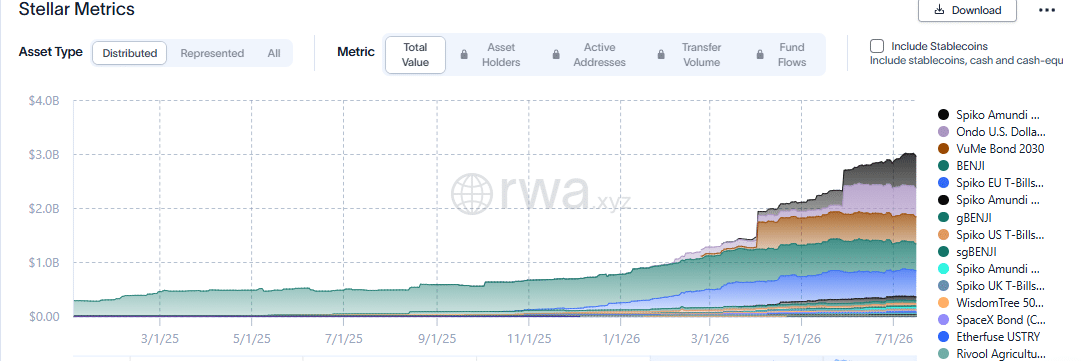
Source: rwa.xyz

The tokenized stablecoin market cap on Stellar was above $689 million at press time. This showed a big chunk of capital was moving through the chain. This resulted in high network activity.

In fact, the number of transactions on XLM was averaging 5.5 million per day. In total, more than 37.9 million transactions were processed this week, reinforcing the chain’s usage for tokenization.
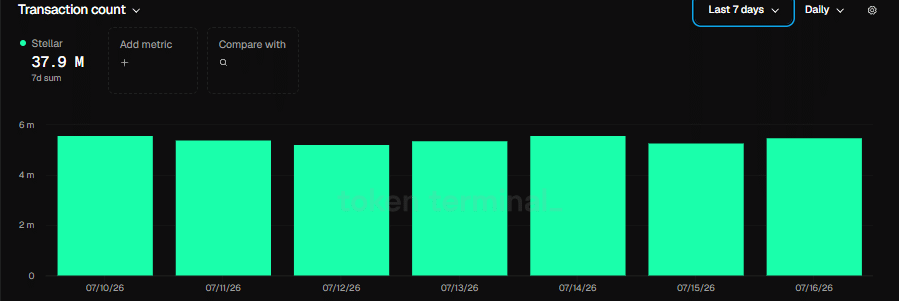
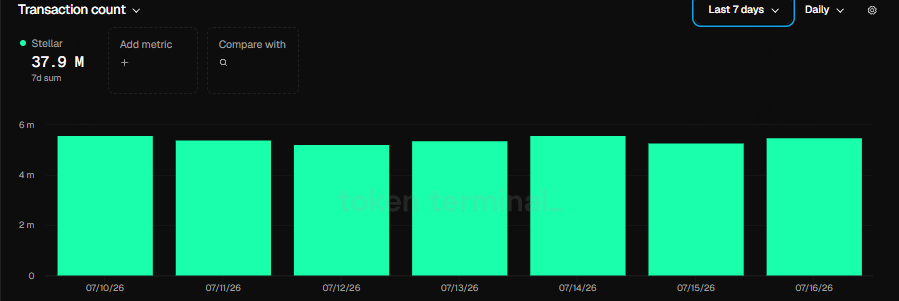
Source: Token Terminal

XLM price prediction – Should traders buy?

Despite the high network usage and a roadmap to tokenize $114 trillion in securities, the price of XLM is still lagging.

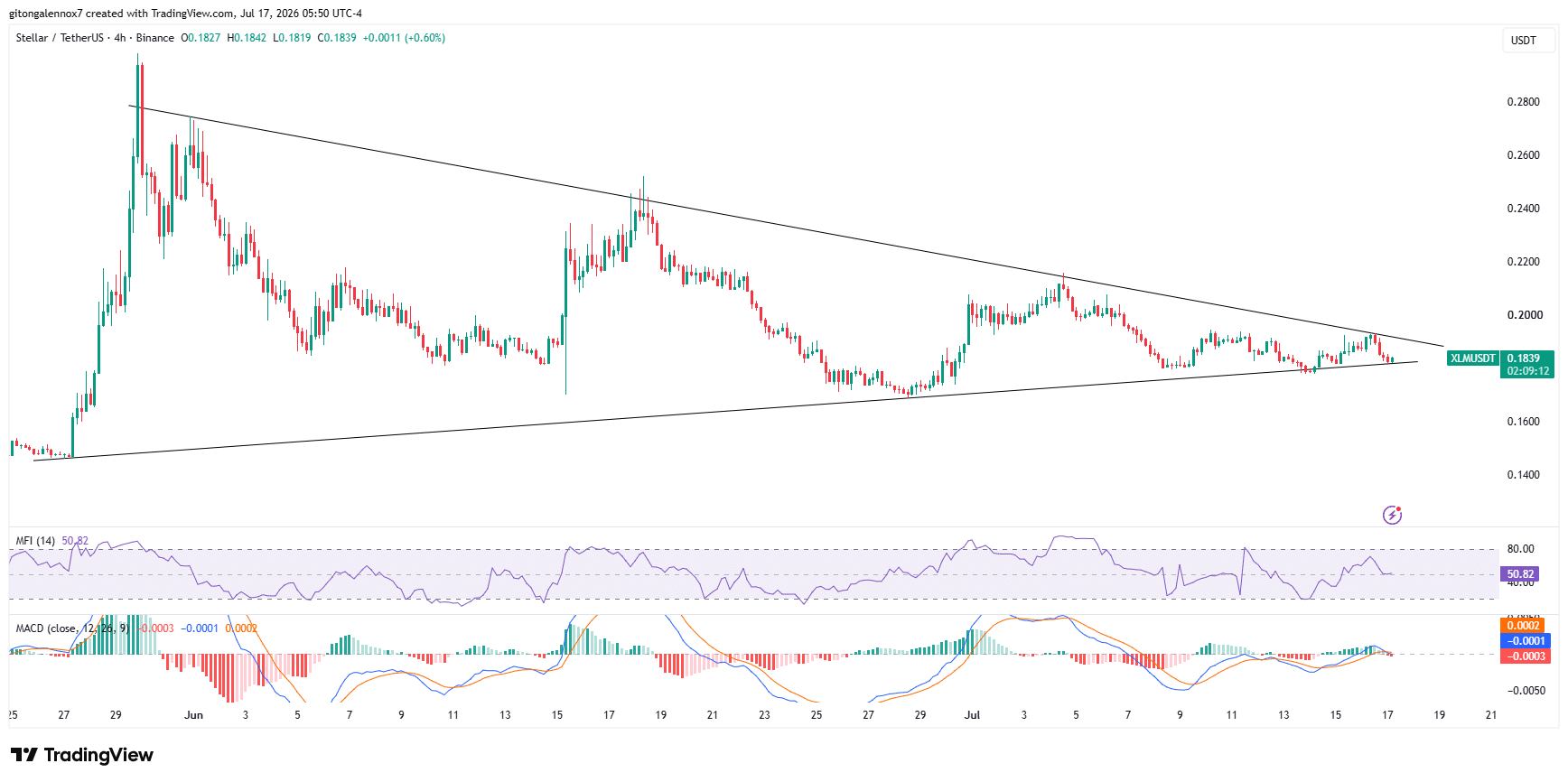
The altcoin has been consolidating in a symmetrical triangle pattern since late May. However, it’s nearing a breakout as it trades at the apex of the pattern. The breakout is anticipated because contraction is usually followed by expansion.

The lag is as a result of capital outflow, as the Money Flow Index (MFI) is declining but above the neutral level. Moreover, the MACD shows bears are in control, though their strength is minimal.
Source: XLM/USDT on TradingView

A breakout and hold above the pattern would suggest prices are likely to go up. On the other hand, a breakdown would extend the bearish market structure that has been in place since last August.


Final Summary

  • XLM crypto partners with DTCC to tokenize $114 trillion, as tokenization on the chain continues to grow and fuel network activity.
  • XLM price action is trading inside a massive triangle pattern where a breakout on either side would determine the altcoin’s next trajectory.


Criptos en tendencia

Preguntas relacionadas

QWhat major partnership did Stellar (XLM) recently announce, and what is its potential impact?

AStellar has partnered with DTCC (Depository Trust & Clearing Corporation) to tokenize over $114 trillion in securities by 2027. This partnership bridges traditional finance (TradFi) and decentralized finance (DeFi) and is expected to significantly grow the market cap of tokenized securities on the Stellar network.

QDespite positive developments, why is the price of XLM falling?

AThe price of XLM is falling (down about 2.60% in the past 24 hours) due to capital outflow, as indicated by a declining Money Flow Index (MFI), and bearish control shown by the MACD indicator. It's also consolidating within a symmetrical triangle pattern after a bearish market structure since last August.

QHow does Stellar's current tokenized market cap compare to other leading platforms?

AWhile Stellar (XLM) is among the top chains for tokenization, it trails behind platforms like Securitize, Ondo Finance (ONDO), and Centrifuge (CFG), which occupy the top three positions in terms of tokenized market cap.

QWhat key metric indicates high network activity on the Stellar blockchain?

AThe Stellar network is processing an average of 5.5 million transactions per day, with over 37.9 million transactions processed in the week of the report. Additionally, the tokenized stablecoin market cap on Stellar was above $689 million, indicating significant capital movement.

QWhat technical pattern is XLM's price action currently in, and what does it suggest for future price movement?

AXLM's price is consolidating in a symmetrical triangle pattern. It is nearing the apex of the pattern, which typically precedes a breakout. A breakout and hold above the pattern would suggest a bullish move, while a breakdown would extend the existing bearish trend.

Lecturas Relacionadas

From Somersaults to Working 24/7: We Saw the ‘Working-Class’ Aura in Robots at WAIC

From performing acrobatics to working 24/7: Robots at WAIC are getting down to business. This year's World Artificial Intelligence Conference (WAIC) in Shanghai showcased a significant shift in the robotics industry. While "show-off" robots that dance, play music, or compete in sports are still present, the dominant trend is now practical, task-oriented machines. Hundreds of wheeled and humanoid robots were deployed as guides, baristas, factory workers, and even traffic controllers, moving beyond mere demonstrations to highlight real-world "work capabilities." The focus has pivoted from showcasing technical parameters to pursuing mass production and industrial落地 (landing/implementation). This transition presents major challenges. First, deploying powerful AI models onto robots requires overcoming hardware limitations in computing power and latency. Second, robots demand complex, integrated systems for real-time perception and control. Third, achieving reliable mass production necessitates unprecedented industry-wide collaboration on standards and supply chains. A key bottleneck identified by industry leaders is the robot's "brain"—its AI and cognitive capabilities. While hardware and basic movement ("little brain") have advanced rapidly, the higher-level intelligence for understanding complex instructions and adapting to unstructured environments is progressing more slowly. Companies are investing heavily in developing more advanced "brain" systems, but fully autonomous operation in dynamic settings remains a work in progress. Cost is another critical hurdle. While some consumer-oriented humanoid robots are now priced under $15,000, capable industrial models often cost $50,000 or more. The industry consensus is that bringing robots into unstructured home environments for tasks like comprehensive cleaning is still at least five years away due to technical, safety, and cost barriers. Therefore, 2026 is being called the "first year of mass production," but primarily for industrial and specific commercial applications. WAIC 2026 served less as a stage for spectacular tricks and more as a serious examination of robots' commercial viability, marking their transition from laboratory prototypes to real-world products that must prove their value through stable, repetitive work.

marsbitHace 2 hora(s)

From Somersaults to Working 24/7: We Saw the ‘Working-Class’ Aura in Robots at WAIC

marsbitHace 2 hora(s)

Live-Action Short Series Forced onto the Big Screen by AI

Live-action short dramas, originally a popular online format, are now attempting to enter the cinema. Several top IPs like "What a Good Girl" and "One Family, Same Class" have received approval for film adaptations. This shift is driven by several pressures within the short drama industry. After rapid growth fueled by low costs and platform support, the sector now faces a slowdown with fewer hits and reduced investment. A major disruptor is the explosive rise of AI-generated short dramas, which dominate new releases and challenge the traditional model with their speed and low cost. Platform policy changes, such as adjustments to revenue guarantees, have further squeezed producers. In this context, film adaptation is seen as a potential new growth path. It offers a chance to extend a short-lived online hit into a longer-lasting IP asset, moving beyond the "fast production, fast consumption" cycle. Established short dramas bring pre-validated stories and emotional appeal to the table, potentially lowering the risk for film investors. However, significant challenges remain. Translating a fast-paced, fragmented viewing experience designed for phones into a compelling cinematic narrative is difficult. Past attempts by popular TV shows and variety programs to make films have often failed due to weak content. A short drama's massive online viewership does not guarantee box office success, as cinema requires a higher commitment of time and money from audiences. Ultimately, the success of these adaptations will depend not on their original popularity, but on their ability to tell complete, emotionally resonant stories that meet the standards of the theatrical market.

marsbitHace 3 hora(s)

Live-Action Short Series Forced onto the Big Screen by AI

marsbitHace 3 hora(s)

Trading

Spot

Artículos destacados

Cómo comprar XLM

¡Bienvenido a HTX.com! Hemos hecho que comprar Stellar (XLM) sea simple y conveniente. Sigue nuestra guía paso a paso para iniciar tu viaje de criptos.Paso 1: crea tu cuenta HTXUtiliza tu correo electrónico o número de teléfono para registrarte y obtener una cuenta gratuita en HTX. Experimenta un proceso de registro sin complicaciones y desbloquea todas las funciones.Obtener mi cuentaPaso 2: ve a Comprar cripto y elige tu método de pagoTarjeta de crédito/débito: usa tu Visa o Mastercard para comprar Stellar (XLM) al instante.Saldo: utiliza fondos del saldo de tu cuenta HTX para tradear sin problemas.Terceros: hemos agregado métodos de pago populares como Google Pay y Apple Pay para mejorar la comodidad.P2P: tradear directamente con otros usuarios en HTX.Over-the-Counter (OTC): ofrecemos servicios personalizados y tipos de cambio competitivos para los traders.Paso 3: guarda tu Stellar (XLM)Después de comprar tu Stellar (XLM), guárdalo en tu cuenta HTX. Alternativamente, puedes enviarlo a otro lugar mediante transferencia blockchain o utilizarlo para tradear otras criptomonedas.Paso 4: tradear Stellar (XLM)Tradear fácilmente con Stellar (XLM) en HTX's mercado spot. Simplemente accede a tu cuenta, selecciona tu par de trading, ejecuta tus trades y monitorea en tiempo real. Ofrecemos una experiencia fácil de usar tanto para principiantes como para traders experimentados.

322 Vistas totalesPublicado en 2024.12.13Actualizado en 2026.06.02

Cómo comprar XLM

Discusiones

Bienvenido a la comunidad de HTX. Aquí puedes mantenerte informado sobre los últimos desarrollos de la plataforma y acceder a análisis profesionales del mercado. A continuación se presentan las opiniones de los usuarios sobre el precio de XLM (XLM).

活动图片