Tether Freezes $131M in USDT Tied to U.S.-Sanctioned Iranian Addresses on TRON

TheNewsCryptoPublicado a 2026-07-15Actualizado a 2026-07-15

Resumen

Tether has frozen four wallets on the TRON network, containing a total of $131 million in USDT, linked to sanctioned Iranian entities: the Islamic Revolutionary Guard Corps and the Central Bank of Iran. The U.S. Treasury's OFAC sanctioned the wallets directly, with Treasury Secretary Scott Bessent confirming the action as part of efforts to disrupt Iran's use of digital assets for illicit finance. Most funds originated from identifiable platforms, DTC Pay and Bitso, raising questions about due diligence in the payment and exchange layer. While Tether has not publicly stated its reason, the connection to sanctioned entities provides a clear explanation. This freeze signals that stablecoin issuers are active participants in sanctions enforcement and shows Tether's willingness to cooperate with regulators, which may reassure institutional players. However, it also demonstrates that USDT on TRON can be frozen, challenging narratives of censorship resistance. The U.S. Treasury indicated it will continue tracking illicit crypto flows, implying more actions could follow. The event increases pressure on exchanges and payment providers to enhance compliance, highlighting the permanent auditability of transactions on distributed ledgers.

Tether has frozen four wallets on the TRON network holding a combined $131 million in USDT. The funds have been linked to two of the most heavily sanctioned entities, Iran’s Islamic Revolutionary Guard Corps (IRGC) and the Central Bank of Iran. Moreover, both are sitting on the U.S. Treasury’s OFAC sanctions list.

The move did not happen in isolation. U.S. Treasury Secretary Scott Bessent confirmed the action publicly, stating the Treasury is committed to disrupting Iran’s use of digital assets for illicit financial activity. Furthermore, OFAC sanctioned the wallets directly, and the freeze followed.

Where Did the Money Come From?

Most of the funds are traced back to two sources: DTC Pay, a payment service provider, and Bitso, a cryptocurrency exchange.

Neither has been accused of wrongdoing at this stage, but the fact that $131 million moved through identifiable platforms before landing in sanctioned wallets. It raises serious questions about the due diligence happening across the payment and exchange layer.

Tether has not yet disclosed the official reason for the blacklisting publicly. However, the established nexus between the Islamic Revolutionary Guard Corps and the Central Bank of Iran provides the most comprehensive explanation of the situation.

How This Moves the Needle for the Broader Market?

On the surface, a freeze of this size does not move markets directly. But what it does is send a very clear signal: stablecoin issuers are now active participants in sanctions enforcement. Not passive infrastructure. Significantly, for the broader crypto market, it shows that Tether can and will cooperate with regulators when pushed. That’s reassuring for institutional players who worry about regulatory exposure.

On the other hand, it proves that USDT on TRON can be frozen at any point, which quietly rattles the narrative around censorship resistance that a large portion of the crypto community still holds onto.

Additionally, the statement of Bessent made one thing clear: that the U.S. is far from finished. Treasury will continue tracking illicit crypto flows, and more freezes could follow.

For exchanges and payment providers moving large USDT volumes, the pressure to tighten compliance is no longer optional. Also, the broader implications are straightforward: the inherent traceability of distributed ledger technology ensures that the movement of funds remains permanently auditable.

Crypto Market Highlights

MemeCore Flashes Strength: Can It Extend Its Bullish Streak?

TagsIranTetherTronUnited States

Criptos en tendencia

Preguntas relacionadas

QWhat action did Tether take regarding USDT linked to Iranian addresses on the TRON network?

ATether froze four wallets on the TRON network holding a combined $131 million in USDT, which were linked to U.S.-sanctioned Iranian entities.

QWhich two sanctioned Iranian entities were the frozen funds linked to?

AThe frozen funds were linked to Iran's Islamic Revolutionary Guard Corps (IRGC) and the Central Bank of Iran, both on the U.S. Treasury's OFAC sanctions list.

QAccording to the article, what are the two main sources that most of the frozen funds were traced back to?

AMost of the funds were traced back to two sources: DTC Pay, a payment service provider, and Bitso, a cryptocurrency exchange.

QWhat signal does the article suggest this freeze sends to the broader crypto market?

AThe freeze signals that stablecoin issuers like Tether are now active participants in sanctions enforcement, not just passive infrastructure, and that they can and will cooperate with regulators.

QWhat does the U.S. Treasury Secretary's statement imply about future actions?

AThe statement from U.S. Treasury Secretary Scott Bessent implies that the U.S. is committed to tracking illicit crypto flows, and more freezes of this nature could follow in the future.

Lecturas Relacionadas

Founder of Real Vision: We Are Living in the Era of Exponential Growth

Real Vision founder Raoul Pal argues that humanity is now in an "Age of Exponential Growth," a reality the human brain's linear intuition struggles to comprehend. The core drivers are the convergence of multiple, mutually-reinforcing technological curves: Artificial Intelligence, robotics, solar & storage, biotechnology, and blockchain networks. He notes that while his 2021 analysis correctly identified fiat currency debasement and assets like Bitcoin as inflation hedges, he underestimated the scale of change. Beyond monetary liquidity, a more profound force is at work: these key technologies have moved from theoretical promise into simultaneous, accelerating commercialization. They are no longer growing in parallel but are fusing, creating a "double exponential" growth curve. AI and robotics create an "artificial labor supply," breaking the cycle of debt-driven growth needed to offset aging demographics. Energy, particularly solar power guided by Wright's Law, is seeing collapsing costs, removing a key bottleneck for compute-hungry AI. Cryptocurrencies are evolving from monetary assets into the essential, programmable settlement layer for transactions between future AI agents. This fusion creates a feedback loop: AI optimizes energy grids, cheaper energy powers more compute, which builds better AI, and crypto networks settle the transactions. This leads to "Reed's Law" playing out at scale, where intelligent nodes (AI agents) form and re-form groups at machine speed, creating network value that grows at 2^n. Pal concludes that the critical question is no longer how to protect jobs from machines, but how to own a share of the machines and their foundational infrastructure. He sees the 2030-2032 period as a potential "Economic Singularity" where these trends fully merge, fundamentally transforming the economy. The data, he asserts, shows this is not a bubble but an observable, quantifiable new era.

Foresight NewsHace 42 min(s)

Founder of Real Vision: We Are Living in the Era of Exponential Growth

Foresight NewsHace 42 min(s)

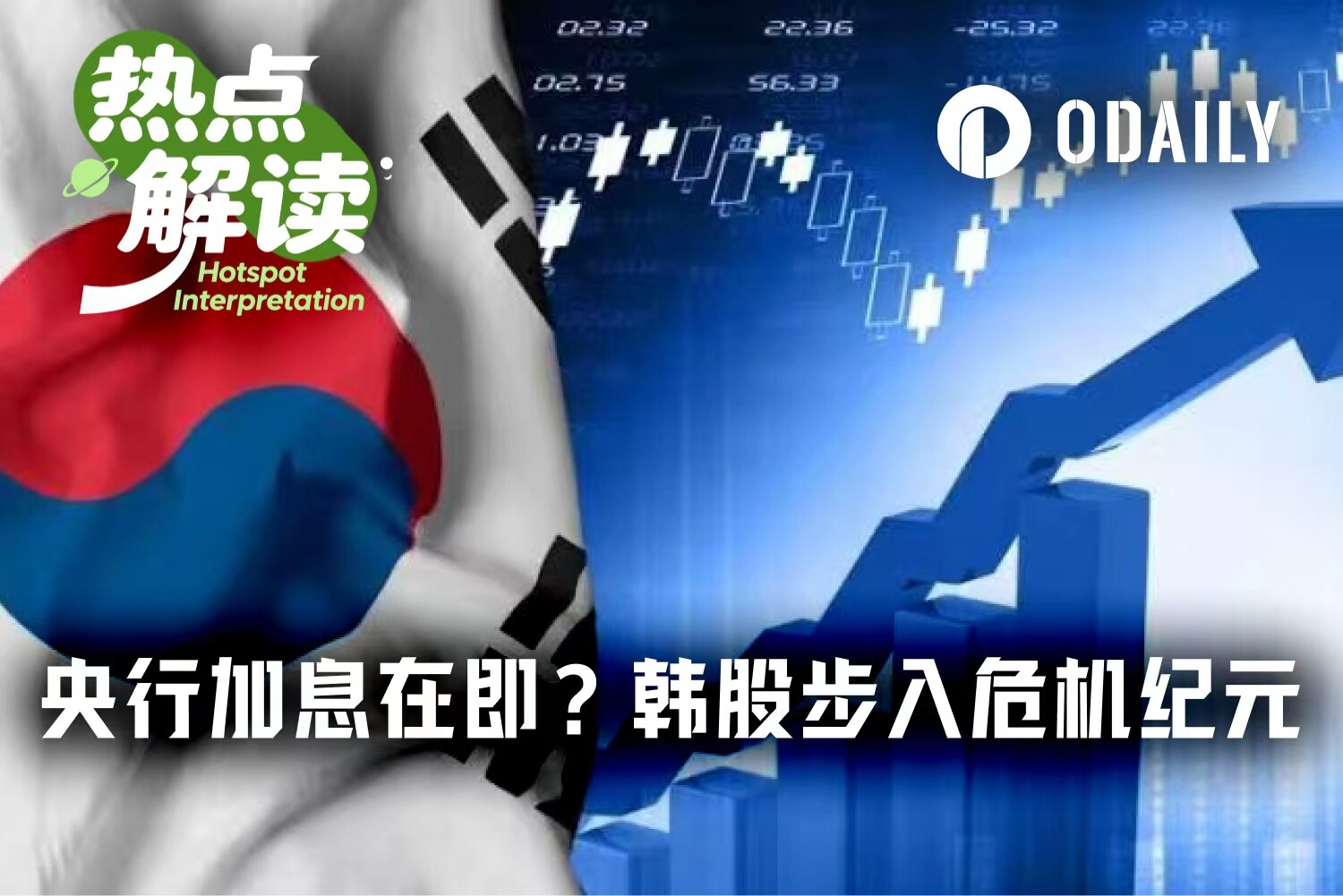
Golden Age VS Crisis Era? Bank of Korea Set to Hike Rates, Brokerage Margin Requirements May Increase 5-Fold

South Korea's financial authorities are taking coordinated action to cool an overheated and volatile stock market. The Bank of Korea is widely expected to raise its benchmark interest rate by 25 basis points to 2.75% on Thursday, which would be its first hike in approximately three and a half years since January 2023. Analysts predict further increases, potentially bringing the rate to 3.00% by year-end. This move aims to tighten market liquidity, raising costs for leveraged investments. Concurrently, major Korean brokerages have agreed to raise the minimum investment requirement for single-stock leveraged ETFs fivefold, from 10 million won to 50 million won, to curb excessive retail speculation. This follows extreme market swings focused on major chip stocks like Samsung Electronics and SK Hynix, which together account for nearly half of the KOSPI index's weight. The index itself has seen a dramatic 204% surge from its recent low. President Yoon Suk Yeol acknowledged market instability and urged regulators to address risks from leveraged products. Meanwhile, financial watchdogs are imposing new limits on stock-backed loans to individual investors to prevent bubble formation. These measures come as foreign investors have been massive net sellers this year, offloading a record $110 billion in assets, while domestic retail investors, using significant leverage, have been the primary buyers, absorbing the sales pressure. The government's multi-pronged strategy seeks to stabilize the market by restricting leverage, raising barriers, and tightening monetary policy.

Odaily星球日报Hace 51 min(s)

Golden Age VS Crisis Era? Bank of Korea Set to Hike Rates, Brokerage Margin Requirements May Increase 5-Fold

Odaily星球日报Hace 51 min(s)

Trading

Spot

Artículos destacados

Cómo comprar TRX

¡Bienvenido a HTX.com! Hemos hecho que comprar TRON (TRX) sea simple y conveniente. Sigue nuestra guía paso a paso para iniciar tu viaje de criptos.Paso 1: crea tu cuenta HTXUtiliza tu correo electrónico o número de teléfono para registrarte y obtener una cuenta gratuita en HTX. Experimenta un proceso de registro sin complicaciones y desbloquea todas las funciones.Obtener mi cuentaPaso 2: ve a Comprar cripto y elige tu método de pagoTarjeta de crédito/débito: usa tu Visa o Mastercard para comprar TRON (TRX) al instante.Saldo: utiliza fondos del saldo de tu cuenta HTX para tradear sin problemas.Terceros: hemos agregado métodos de pago populares como Google Pay y Apple Pay para mejorar la comodidad.P2P: tradear directamente con otros usuarios en HTX.Over-the-Counter (OTC): ofrecemos servicios personalizados y tipos de cambio competitivos para los traders.Paso 3: guarda tu TRON (TRX)Después de comprar tu TRON (TRX), guárdalo en tu cuenta HTX. Alternativamente, puedes enviarlo a otro lugar mediante transferencia blockchain o utilizarlo para tradear otras criptomonedas.Paso 4: tradear TRON (TRX)Tradear fácilmente con TRON (TRX) en HTX's mercado spot. Simplemente accede a tu cuenta, selecciona tu par de trading, ejecuta tus trades y monitorea en tiempo real. Ofrecemos una experiencia fácil de usar tanto para principiantes como para traders experimentados.

1.8k Vistas totalesPublicado en 2024.12.10Actualizado en 2026.06.02

Cómo comprar TRX

Discusiones

Bienvenido a la comunidad de HTX. Aquí puedes mantenerte informado sobre los últimos desarrollos de la plataforma y acceder a análisis profesionales del mercado. A continuación se presentan las opiniones de los usuarios sobre el precio de TRX (TRX).

活动图片