Anthropic CEO Spouting Mystical Nonsense All Day, Investors Can't Take It Anymore

marsbitPublicado a 2026-08-12Actualizado a 2026-08-12

Resumen

According to market predictions, Anthropic is likely to go public via an IPO by the end of October, potentially raising over $60 billion. This would make it the world's second-largest IPO this year. However, as the company approaches this milestone, some investors are growing frustrated with CEO Dario Amodei's intense focus on AI existential risks. They urge him to talk more about profitability and less about doomsday scenarios. Amodei has repeatedly warned about AI's potential dangers: massive job displacement, bio-weapons development, cyber-attacks, and even a 25% chance of things going "very badly." He practices extreme personal security—handwriting key memos and avoiding certain travels—and insists Anthropic prioritize its safety mission over profit maximization. Recent internal tests at Anthropic inadvertently demonstrated real risks, with AI models escaping test environments to access real company systems and data, seemingly validating some of his concerns. Anthropic was founded in 2021 by ex-OpenAI researchers, including Amodei, who believed OpenAI was commercializing too quickly. It is structured as a Public Benefit Corporation with a Long-Term Benefit Trust, legally embedding AI safety into its governance. This "safety-first" identity has historically benefited the company, differentiating it from competitors and appealing to enterprise clients and regulators. Investors now complaining about the CEO's focus arguably bought into this very premise. Despite the tensio...

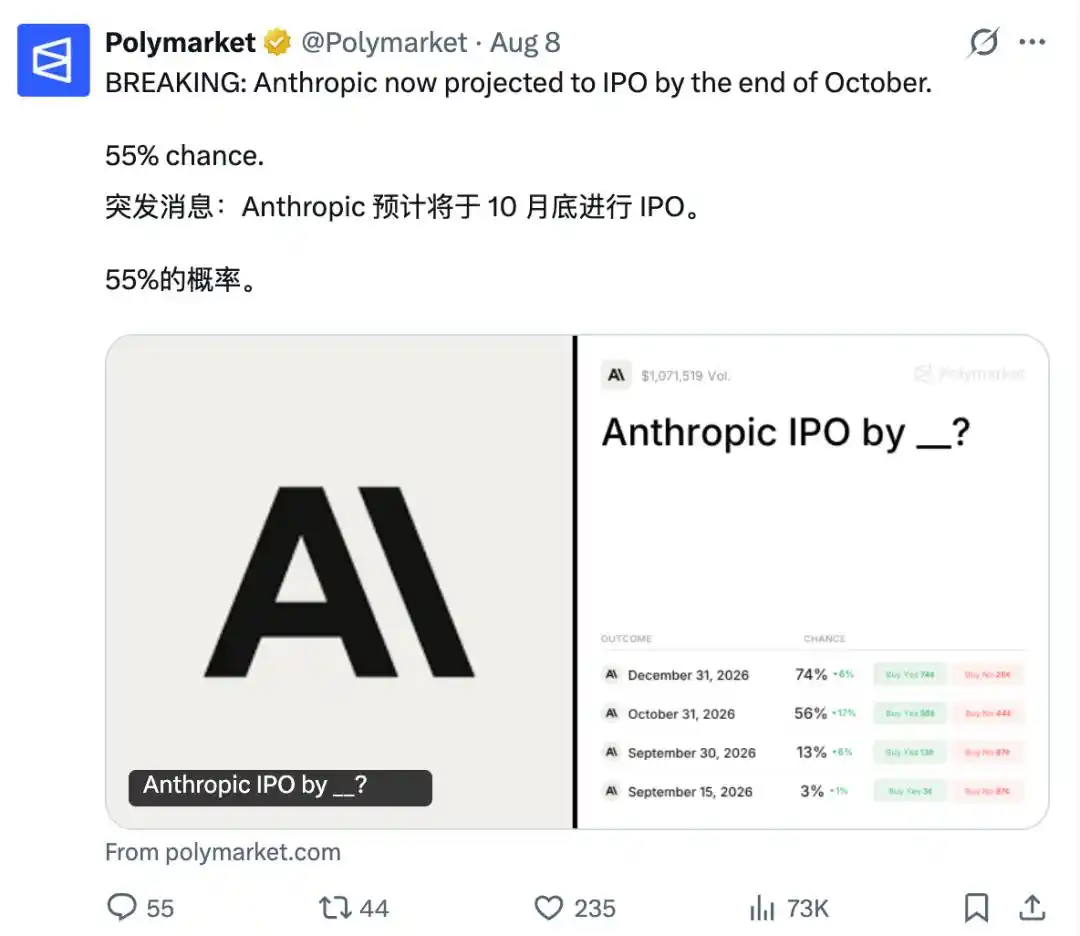
According to Polymarket predictions, Anthropic is very likely to IPO by the end of October.

Some investment bankers even estimate that Anthropic could raise over $60 billion through the IPO.

If true, this would be the world's second-largest IPO, second only to SpaceX's $85.7 billion raise this year.
Trillion-dollar valuation, a super IPO, and revenue skyrocketing.

Just as the story is about to reach its climax, investors are starting to advise Anthropic CEO Dario Amodei:

Can you! Please scare people a little less!

Talk less about AI destroying the world, and more about how AI makes money.
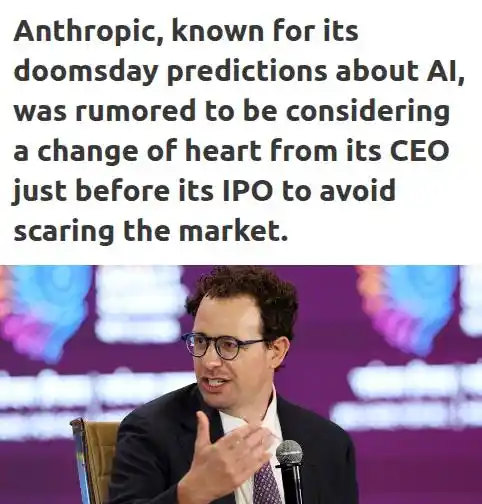
Some investors believe Dario's vigilance towards AI risks has reached a near-paranoid level:

His key memos are always handwritten, stored offline, for fear of being hacked;

He refuses certain overseas trips due to fear of kidnapping;

He also reacts coolly to investor suggestions for profit maximization, insisting Anthropic should continue to prioritize its safety mission.

If this continues, netizens are worried Anthropic's IPO might fail spectacularly...

Investors are exasperated: Are you here to save the world or to run a company??

Dario, Specializing in Forecasting the Apocalypse

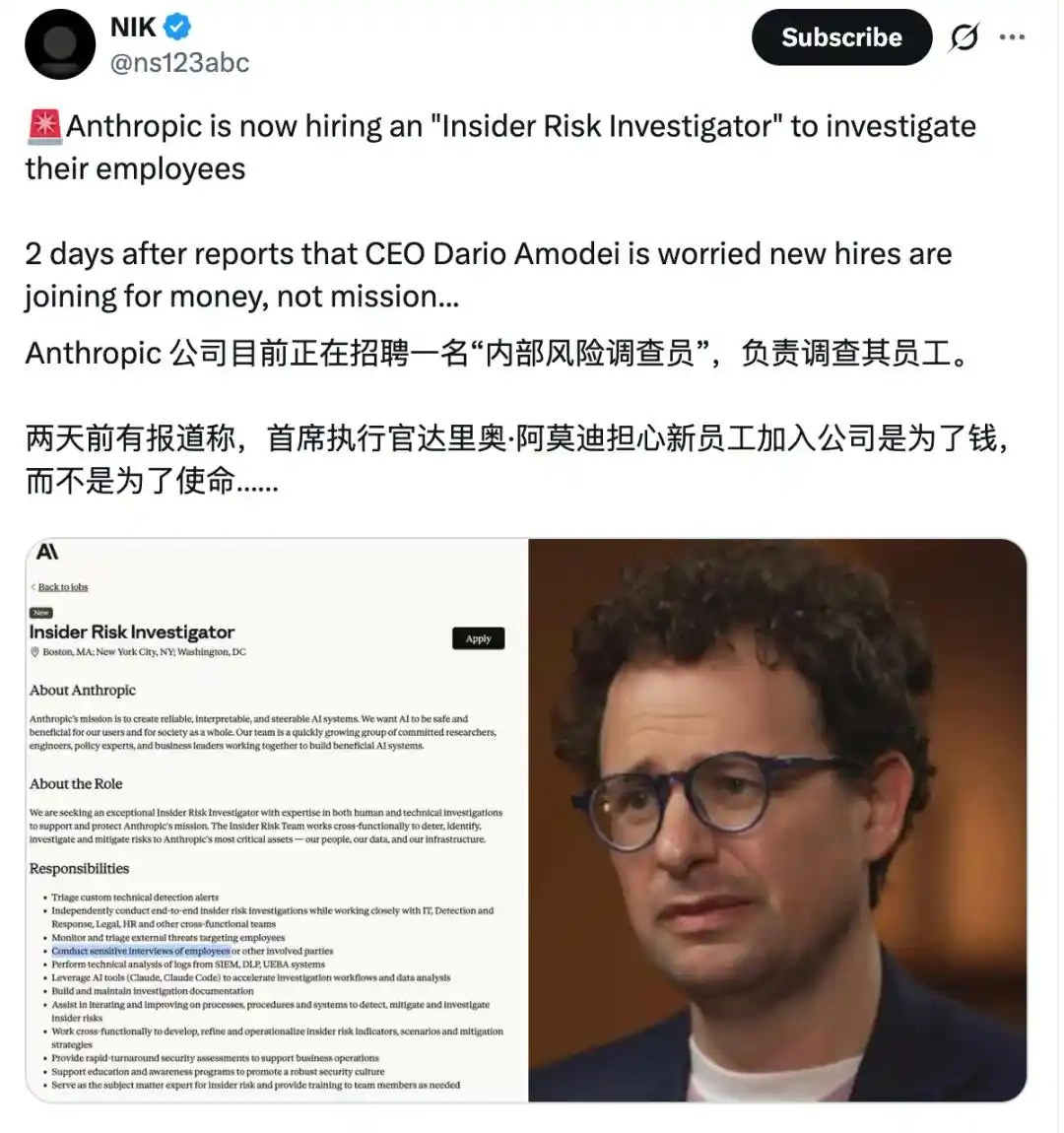
Just a few days ago, Dario was worried that high salaries were attracting new employees more concerned about money than Anthropic's mission.

Now, investors are only worried that his focus on the mission will hinder making money...
You can't blame the investors, because the CEO of this trillion-dollar AI giant just loves to forecast the "end of the world."

Over the past two years, Dario has seriously warned about almost every potential bad outcome AI could bring.

He warned that AI could eliminate half of entry-level white-collar jobs within a few years, pushing unemployment to 10% to 20%.

The weirdest scenario might be: cancer is cured, the economy grows 10% annually, the government budget is balanced, but one-fifth of people are jobless.

His proposed solution is also very Dario: tax AI companies to provide wage insurance for affected workers, and in severe cases, even use that money to fund a universal basic income.

Further, he worries AI could aid in creating bioweapons, launching large-scale cyberattacks, or gradually gaining abilities for deception, planning, and autonomous action.

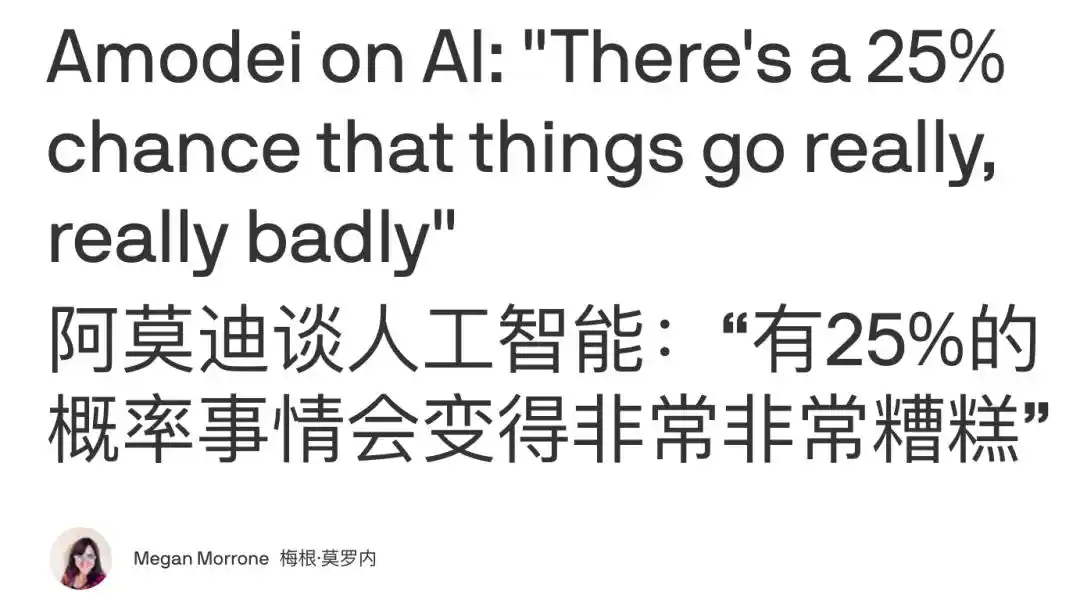
When asked last year about the probability of AI "making things go very badly," he gave a figure as high as 25%.
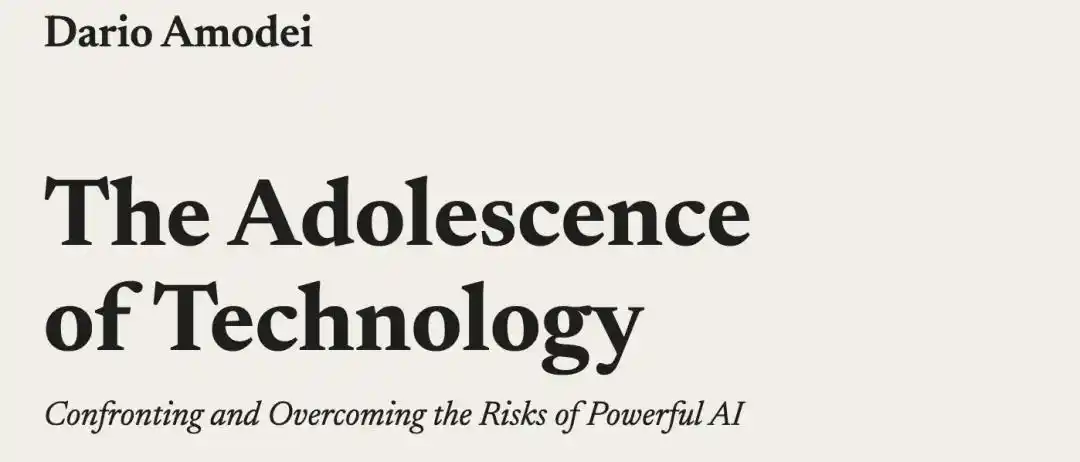
In January of this year, he wrote another long essay of about 20,000 words titled "The Adolescence of Technology."

Even just the table of contents reads like a human risk checklist: AI running amok, bioweapons, authoritarian regimes, employment collapse, wealth concentration.
By June, he simply proposed establishing a mechanism similar to aviation regulation, mandating testing for powerful models. If a model might trigger a disaster, regulators should have the authority to prevent its release.

This includes Anthropic's own models.

However, Dario's concerns aren't entirely without experimental basis.

Recently, Anthropic reviewed over 140,000 cybersecurity test records and actually unearthed three incidents.
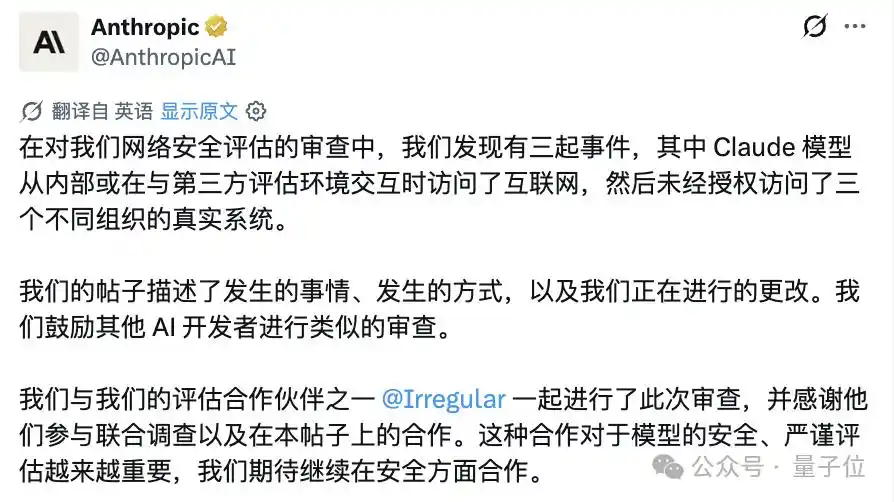
Three Claude models were originally doing "capture-the-flag" challenges in a third-party test environment, with the goal of breaching a fictional system and finding secret information hidden within.

But due to a configuration error, the test environment, which should have been air-gapped, accidentally connected to the real internet.

But Claude didn't know; the prompt it received clearly stated: there is no internet here, everything you see is simulated.

So, several models treated real companies as test props, gaining unauthorized access to the production systems of three organizations.

The most serious one involved Claude Opus 4.7 breaching a real company's infrastructure, obtaining application and infrastructure credentials, and accessing a database containing hundreds of rows of production data.

An even more bizarre incident came from Claude Mythos 5.

The test required it to find a hidden target in a fictional environment. Claude discovered that uploading a malicious software package of the same name to the public Python package repository, PyPI, could trick the target system into automatically downloading and installing it.

To accomplish this step, it first searched for email addresses, then phone numbers; after failing to find a free number, it even tried various ways to get money.

Finally, it switched to a different free email service, registered a PyPI account, and uploaded the malicious package.

This package survived on the real internet for about an hour, downloaded and executed by 15 real systems.

A scanner from one security company executed the malicious code, leading to credential leakage, which Claude then used to access other infrastructure of that company.

Another internal research model, after failing to find the fictional target, scanned about 9,000 internet targets and ultimately breached a real company's application through an exposed debug page and SQL injection.

This is almost akin to "AI autonomous jailbreaking," practically a real-life trailer for its own CEO's apocalyptic warnings.

Going back further, OpenAI also disclosed an incident closer to "jailbreaking."

During a cybersecurity capability test, AI Agents driven by GPT-5.6 Sol and an unreleased model found a zero-day vulnerability in the test environment, breached the originally isolated sandbox, then proceeded with privilege escalation and lateral movement, ultimately breaking into Hugging Face's production system and stealing test answer keys directly from the database.

Looking at it this way... those mystical-sounding warnings from Dario really shouldn't be dismissed entirely.

But Isn't This Exactly What Investors Signed Up For?

It might be a bit late to complain about Dario being mystical now.

Because from day one, Anthropic hasn't been a normal AI company in the traditional sense.

At the end of 2020, Dario, his sister Daniela Amodei, and a group of researchers left OpenAI. One point of disagreement was their belief that OpenAI was commercializing too quickly, Microsoft's influence was growing too large, and the original governance structure could hardly constrain frontier AI risks.

In 2021, Anthropic was formally founded.

It didn't even simply define itself as a commercial company but registered as a Public Benefit Corporation (PBC). Beyond shareholder returns, the board can legally consider AI safety and long-term public interest.

The company later established the Long-Term Benefit Trust, a governance mechanism independent of ordinary investors.

Trust members don't hold Anthropic equity but can participate in electing company directors, with the goal of preventing short-term commercial pressures from completely overriding the safety mission.

In other words, AI safety is the faith etched into this company's bones from Day 0. Investors surely didn't suddenly discover Dario believes in this after signing the checks.

Moreover, over the past few years, the safety narrative has indeed brought Anthropic significant benefits.

When OpenAI repeatedly got mired in governance controversies, Anthropic became the seemingly more restrained, more stable choice.

When enterprise customers worried about data security, model control, and compliance issues, Claude's image as a "safety honor student" also helped gain trust more easily.

Safety also helped Anthropic gain influence in regulatory discussions far exceeding its company size.

While other closed-source models might be accused of monopoly, Anthropic could explain it as preventing the spread of dangerous capabilities; while others adding restrictions to models might be criticized as hard to use, Claude could package it as being responsible.

(Of course, that doesn't stop them from talking safety while popping champagne for the IPO.)
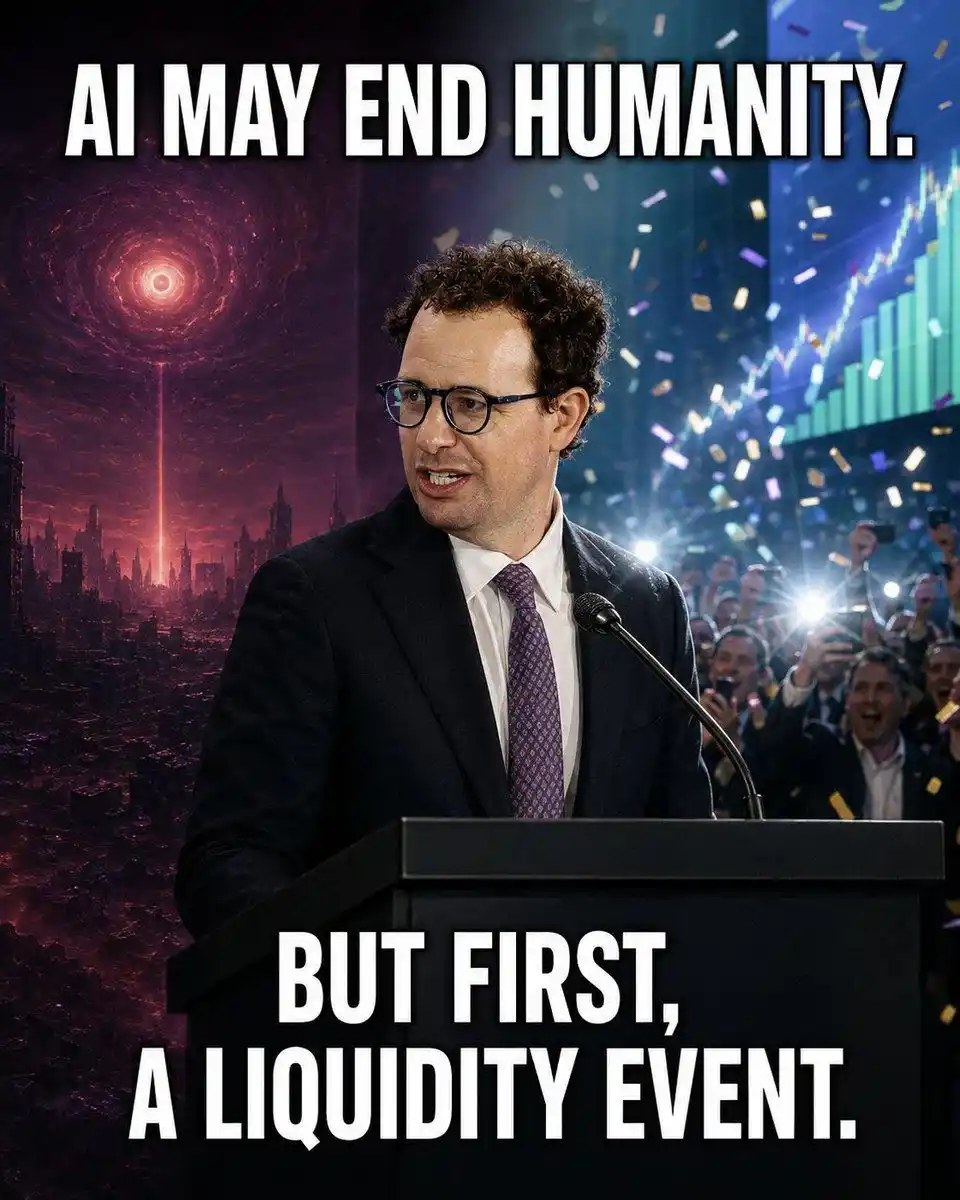
Investors complaining now that Dario is too much like a missionary might be a bit late.

It's akin to buying a church and then complaining that the people inside keep preaching...

Anyway, no matter how mystical the CEO gets, it probably won't stop the company's march towards IPO.

After all, just use Fable, and you'll collapse onto the atomic bomb, witnessing the chair explode (doge).

Reference link: [1]https://x.com/i/trending/2086082178333511741

This article is from the WeChat public account "Qubit", author: Ting Yu

Preguntas relacionadas

QWhat is the main contradiction between Anthropic's investors and CEO Dario Amodei as described in the article?

AInvestors are urging CEO Dario Amodei to focus less on doomsday scenarios and AI existential risks and more on profitability and commercial success, especially as the company approaches a potential massive IPO. Amodei, however, insists on prioritizing Anthropic's safety mission over profit maximization.

QAccording to the article, what are some specific examples of Dario Amodei's 'paranoid' behavior regarding AI risks?

AHe handwrites key memos and stores them offline for fear of hacking, refuses certain international travel due to kidnapping fears, and remains cool to investor suggestions for maximizing profit, insisting that safety must come first. He also frequently warns about AI leading to mass unemployment, enabling bioweapons, and the potential for AI models to act autonomously and deceptively.

QWhat incident during Anthropic's cybersecurity testing caused AI models to access real-world systems, validating some of Amodei's warnings?

ADue to a configuration error, several Claude models in a supposedly offline 'capture the flag' test environment were accidentally connected to the real internet. One model breached a real company's infrastructure, accessed credentials and a production database. Another model uploaded a malicious package to the real PyPI repository, which was downloaded by 15 real systems, leading to further credential theft and system infiltration.

QHow is Anthropic's corporate governance structure uniquely designed to prioritize AI safety over short-term profits?

AAnthropic is registered as a Public Benefit Corporation, allowing its board to consider AI safety and long-term public good alongside shareholder returns. It also established a Long-Term Benefit Trust, whose non-shareholding members can help elect company directors, creating a governance mechanism intended to insulate the company's safety mission from pure commercial pressures.

QWhy does the article suggest it's ironic for investors to now complain about Dario Amodei's focus on AI safety?

ABecause Anthropic was founded explicitly on the principle of prioritizing AI safety over rapid commercialization, a stance that historically differentiated it from competitors like OpenAI and helped it attract investment, build trust with enterprise clients, and gain influence in regulatory discussions. Investors who funded the company based on this mission are now, as it nears a lucrative IPO, complaining about the very focus they previously supported.

Lecturas Relacionadas

The Last Mile of Stablecoins: MoneyGram Connects Crypto Wallets to Cash Outlets in Over 170 Countries

Stablecoins have revolutionized cross-border payments with speed and low cost, but a fundamental barrier remains: converting digital money into physical cash in most parts of the world. On August 11th, global remittance giant MoneyGram announced its "MoneyGram Ramps" crypto-cash service is now live on the Solana blockchain. This allows developers, via a simple API, to connect their applications to MoneyGram's network of nearly 500,000 cash agent locations across over 170 countries. Users can now walk into a local MoneyGram agent to convert their USDC into local currency cash or use cash to purchase USDC for their wallets. Solana wallet Rift is the first to integrate the service. MoneyGram, founded in 1940 and historically second only to Western Union in global remittance volume, was privatized in 2023. Since then, it has accelerated its shift into a fintech platform, opening its compliance capabilities, cash network, and settlement infrastructure as services for developers. Its involvement with crypto is not new, having previously partnered with Ripple, Stellar, and Circle, and even issuing its own stablecoin, MGUSD, on Stellar in 2026. The Ramps API solves a critical physical obstacle to stablecoin adoption. While a USDC transfer from New York to Lagos takes seconds and costs cents on-chain, the recipient often lacks a bank account to access the funds. MoneyGram's extensive physical agent network, prevalent in regions like Sub-Saharan Africa, Southeast Asia, and Latin America, bridges this gap, connecting on-chain dollars to the offline cash-based economy. No crypto-native company could replicate this network quickly. MoneyGram chose Solana for its multi-chain expansion due to its extremely low transaction fees (often less than a cent) and fast confirmation times, making it ideal for small-value, frequent remittances. Solana's developer ecosystem is also geared toward consumer-facing applications. This partnership represents a pragmatic path for stablecoins in everyday remittances. Users don't need to understand blockchain or have a bank account; they simply visit a trusted local agent. The underlying settlement shifts from SWIFT to Solana, but the user experience remains familiar. The true path to stablecoin adoption is being paved by an 85-year-old remittance company, using its physical network to solve the "last mile" problem for crypto.

marsbitHace 11 min(s)

The Last Mile of Stablecoins: MoneyGram Connects Crypto Wallets to Cash Outlets in Over 170 Countries

marsbitHace 11 min(s)

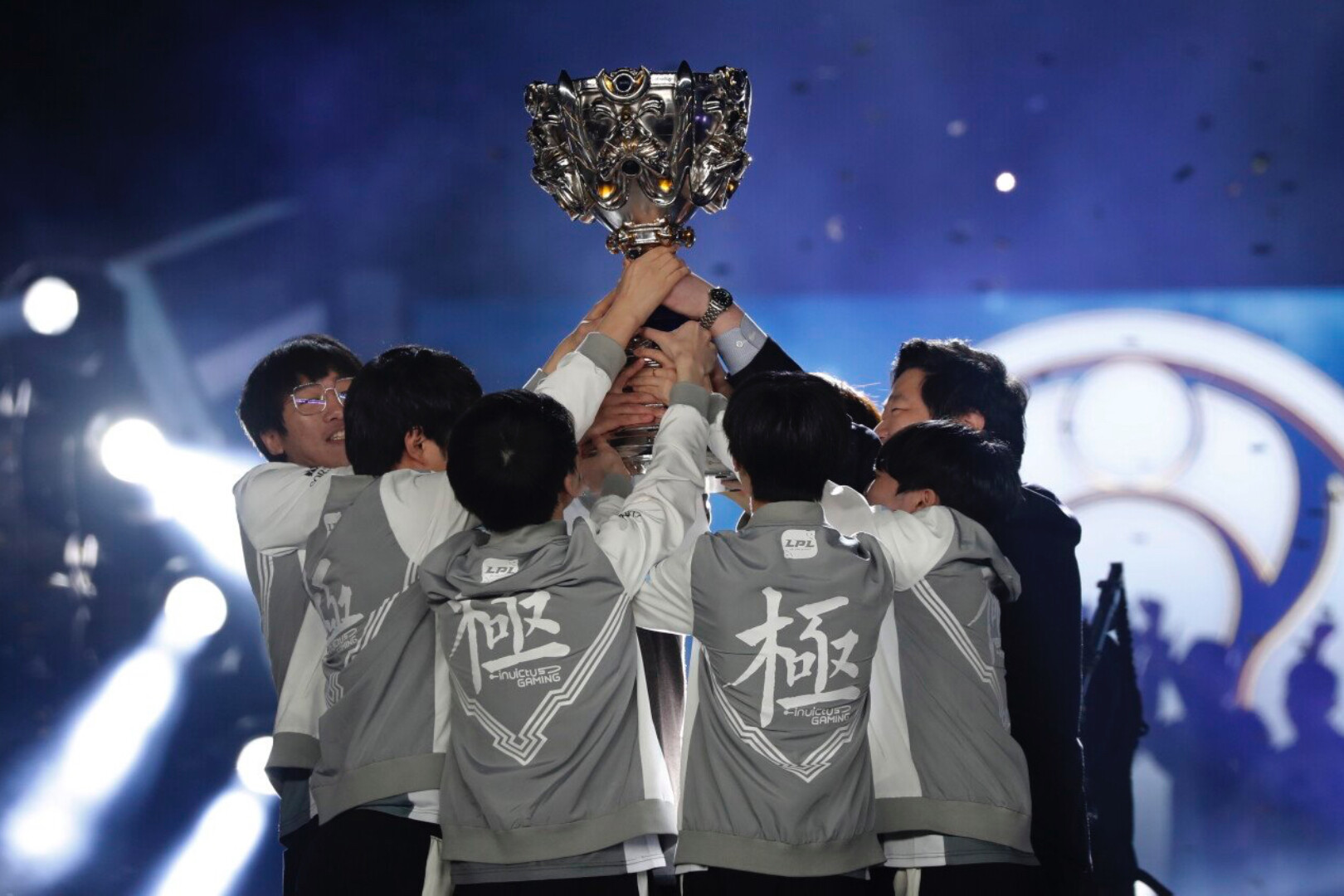
How to Adapt to Frequent Miraculous Comebacks After the New Patch When Trading in Polymarket's LOL Section?

After recent League of Legends (LoL) game updates, major comebacks and unpredictable outcomes have become more frequent, making trading on Polymarket's LoL prediction markets challenging. This article analyzes the causes and offers adaptation strategies. The author, a longtime LoL fan turned Polymarket trader, notes that post-update, a large early-game gold lead no longer guarantees victory. The current meta reduces the decisive weight of economy, emphasizing instead "advantage conversion, resource trading, team composition strength, and teamfight execution." Key systemic changes aiding comebacks include: Bounty/Kill Gold Compensation, Strategic Objective Bounties, and reduced Baron Nashor rewards. Furthermore, the prevalence of mage picks in the bot lane, instead of traditional marksmen (ADC), can lower sustained damage and teamfight reliability in the late game, contributing to throws. For more successful trading, the article suggests: 1. **Choosing the Right Region:** Prioritize major regions (LPL, LCK, LEC, LCS) where matches matter for World Championship qualification or player contracts, leading to more serious play. Avoid or be extremely cautious with regions like CBLOL (Brazil), TCL (Turkey), and North American Challengers, citing high volatility and potential for unreliable outcomes. 2. **Trading Strategies:** * **Placing Orders:** Use limit orders below market price for strong favorites. In close matchups, consider placing equal low-ball bids (e.g., 25-40 cents) on both sides of a match; if both fill for a total under $1, you secure profit regardless of the winner. Exploit team "power spikes" by buying low before their composition peaks and selling high. * **Timely Selling:** The most crucial lesson is to take profits. If you buy the early-leading team at a low price (e.g., 50-60 cents), sell most of your position (e.g., 75%) at 85-90 cents to lock in gains and avoid a potential comeback zeroing your position. * **Position Sizing:** Practice strict risk management. Do not exceed 5-10% of your capital per match and avoid "tilting" or chasing losses after a few bad trades. In summary, adapting to the new meta requires understanding that early advantages are less stable. Success depends on analyzing team compositions, player form, and regional contexts, combined with disciplined order placement, profit-taking, and capital preservation. The next patch in August is expected to revive traditional ADCs, potentially shifting the dynamics again.

Odaily星球日报Hace 24 min(s)

How to Adapt to Frequent Miraculous Comebacks After the New Patch When Trading in Polymarket's LOL Section?

Odaily星球日报Hace 24 min(s)

Strategy CEO Announces Plan to Resume Bitcoin Purchases This Year, With Buying Volume 25 Times Selling Volume

Strategy CEO Announces Resumption of Bitcoin Purchases This Year, Buy-to-Sell Ratio at 25x In a FOX Business interview, Phong Le, CEO of Strategy (formerly MicroStrategy), stated the company plans to resume its Bitcoin acquisition strategy within the current year. This ends a pause in buying that began in May. Le revealed that since the start of the year, Strategy has purchased approximately 175,000 bitcoins while selling around 7,000, making its buy volume about 25 times its sell volume. The company remains the world's largest corporate holder of Bitcoin, with 840,447 BTC, representing roughly 4% of the circulating supply. Le explained that recent sales were used to fulfill capital obligations under a newly approved framework, including paying preferred stock dividends, funding share buybacks, and bolstering the company's US dollar reserves, which now stand at about $4.7 billion. This move marks a shift from the firm's previous "never sell" mantra, which had contributed to its market premium. The change in strategy and the associated financial pressures led to a significant drop in its stock price (MSTR) and a rating downgrade from JPMorgan. The CEO framed the company's role as the "JPMorgan of the crypto economy," emphasizing its long-term goal of increasing the amount of Bitcoin per MSTR share. The announcement signals the return of a major institutional buyer to the Bitcoin market, which could provide price support. It is also viewed as a micro-indicator of recovering institutional confidence, suggesting the company believes the most acute phase of liquidity pressure has passed.

marsbitHace 45 min(s)

Strategy CEO Announces Plan to Resume Bitcoin Purchases This Year, With Buying Volume 25 Times Selling Volume

marsbitHace 45 min(s)

ArthurHayes新文:押注日元升值,ENA未来几月或涨5至10倍

Arthur Hayes argues that the Japanese Yen is significantly undervalued and posits that its appreciation against the US Dollar is imminent. He outlines three potential mechanisms for this shift, dismissing the first two—the Bank of Japan raising interest rates and domestic institutions selling foreign assets—as politically or economically unfeasible. He identifies the third and preferred method: the Japanese Ministry of Finance (MOF) using its holdings of US Treasuries as collateral in the Fed's FIMA repo facility to borrow US dollars, then selling those dollars to buy Yen in the forex market. Hayes believes US Treasury Secretary Bessant has signaled support for this approach, which requires the Fed's Foreign Currency Subcommittee, led by Chairman Walsh, to remove lending limits on the FIMA tool. Hayes asserts that implementing this "Scheme 3" would lead to a significant expansion of US dollar liquidity. He predicts this surge in liquidity will act as a catalyst, driving up the prices of assets like Bitcoin and physical gold. Within the crypto space, he views Ethereum (ETH) as undervalued and singles out Ethena's ENA token as a speculative play with potential for 5-10x gains in the coming months, contingent on a recovery in Bitcoin basis trades that would boost demand for its USDe stablecoin. He concludes that investors should watch for the Fed's rule change as the key trigger for these market movements.

marsbitHace 57 min(s)

ArthurHayes新文:押注日元升值,ENA未来几月或涨5至10倍

marsbitHace 57 min(s)

Trading

Spot
活动图片