Written by: Ryan Rasmussen, Head of Research at Bitwise
Compiled by: Luffy, Foresight News
Each quarter, we publish the "Bitwise Crypto Market Review," a report containing over 50 charts covering market performance, on-chain fundamentals, institutional adoption, and other comprehensive data.
Data always sketches the industry's full picture. Sometimes it shows purely bullish or bearish signals; more often, bullish and bearish information intertwine, with highlights and negatives coexisting, worthy of in-depth analysis. The second quarter was such a case, with fundamentals like crypto business revenue, real-world asset adoption, and institutional deployment all improving significantly. Crypto-themed stocks surged, yet mainstream crypto asset prices declined overall. How should we understand this divergent market?
If you want to quickly grasp the core conclusions, here are the five most important charts I believe.
Crypto Stocks and Crypto Currencies Show Severe Divergence
In the first half of 2026, crypto assets fell by 36% overall; only gold fell concurrently, down 7%, while all other major asset classes rose. This is a key reason why this crypto bear market has been particularly difficult: only the crypto sector has been under pressure alone.
But in stark contrast, crypto-themed stocks rose 23% cumulatively in the first half, outperforming all mainstream assets except emerging market stocks. The Bitwise Crypto Innovators 30 Index, which tracks 30 leading publicly traded crypto companies, delivered returns more than double that of the S&P 500.
This data conveys a key signal: even in a bear market, the crypto industry is still full of investment opportunities. Bitcoin mining companies benefit from the AI industry boom; stablecoin issuers and asset tokenization platforms continue to onboard Wall Street business; the integration between traditional finance and crypto markets is deepening. I predict cryptocurrency prices will see a recovery in the second half, but the first half's performance has already confirmed one fact: crypto is not a single category of assets; the sector is diverse and dynamic, requiring a broader perspective.
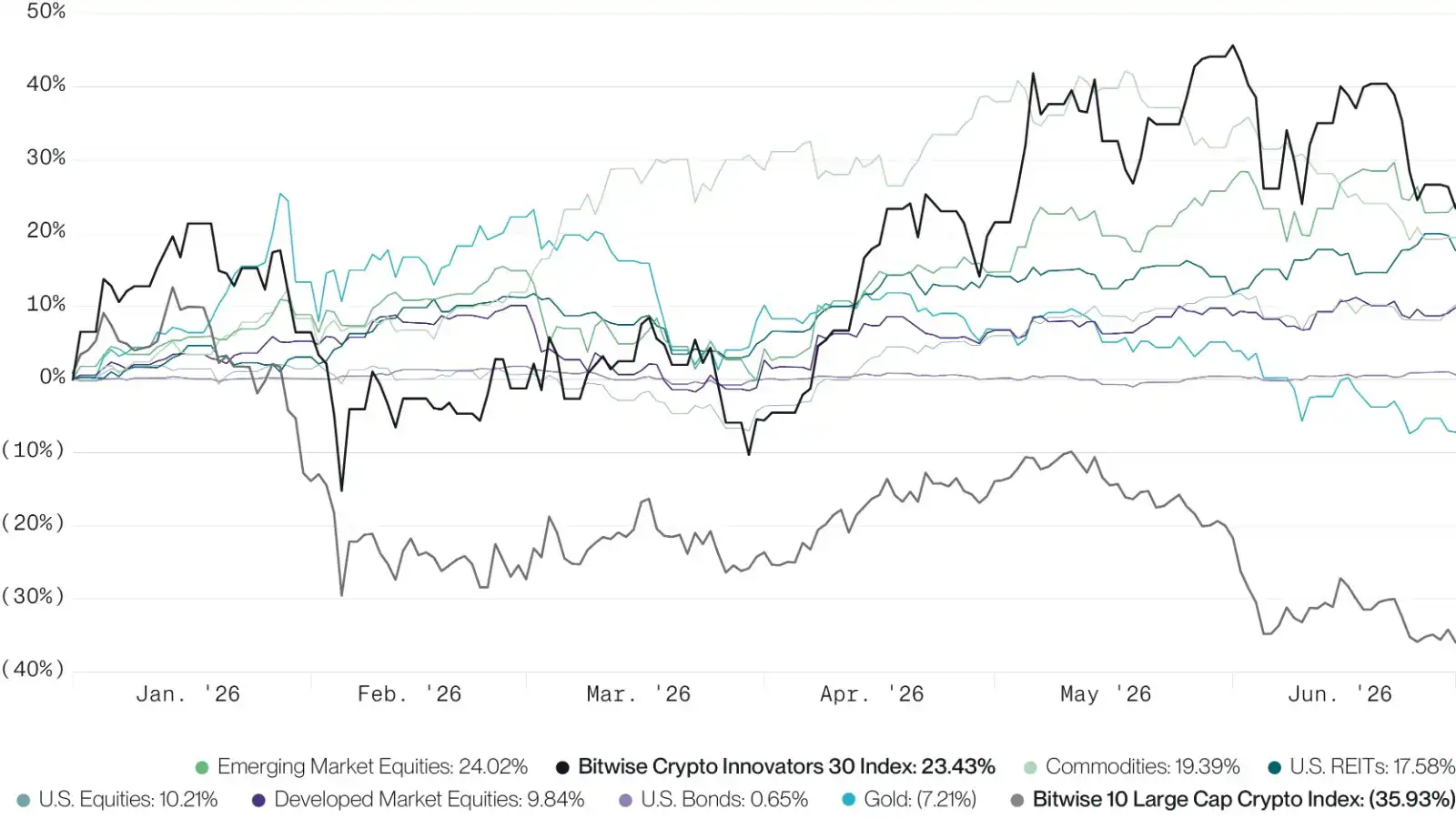
Performance Comparison: Cryptocurrencies vs. Major Asset Classes. Data source: Bitwise, Bloomberg; Statistics as of June 30, 2026.
Crypto Applications Generate Significant Revenue Scale
Over the past 12 months, the top ten crypto applications globally have generated a combined $5.9 billion in revenue; the top three—PancakeSwap, Hyperliquid, Aave—each have revenues approaching $1 billion.
Even in a bear market, these products are still commercial entities with stable cash flows, earning revenue from trading fees, lending interest, and staking rewards. Whenever someone questions whether the crypto industry has real fundamentals, I pull out this chart.
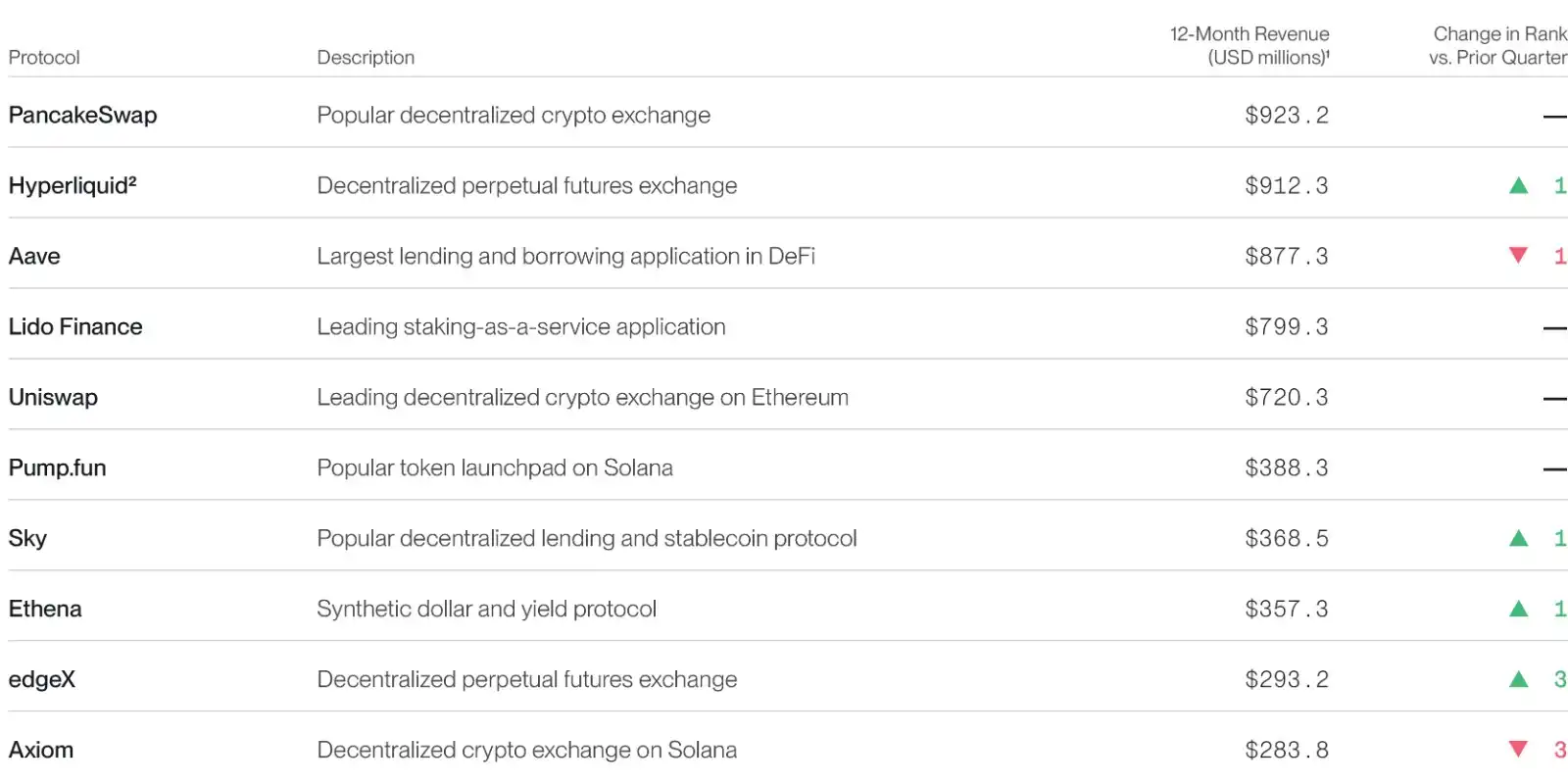
Top Ten Crypto Applications by Revenue. Data source: Bitwise, Token Terminal; Statistics timeframe: Jan 1, 2025 – Jun 30, 2026.
Real World Asset (RWA) Tokenization Enters a Bull Market
U.S. Treasury Secretary Scott Bessent publicly stated weeks ago: "Digital assets, stablecoins, asset tokenization, and new payment systems will collectively shape the future of the monetary system."
In a sense, the future he described is already here. In Q2, the total value of tokenized real-world assets reached a record high of $33 billion, up 12% quarter-over-quarter and 45% year-to-date; growth was mainly driven by tokenized U.S. Treasuries, corporate credit, stocks, and venture capital shares.
This chart clearly shows that global leading asset management firms are moving real-world assets onto the blockchain on a large scale—a trend worth continuous tracking.
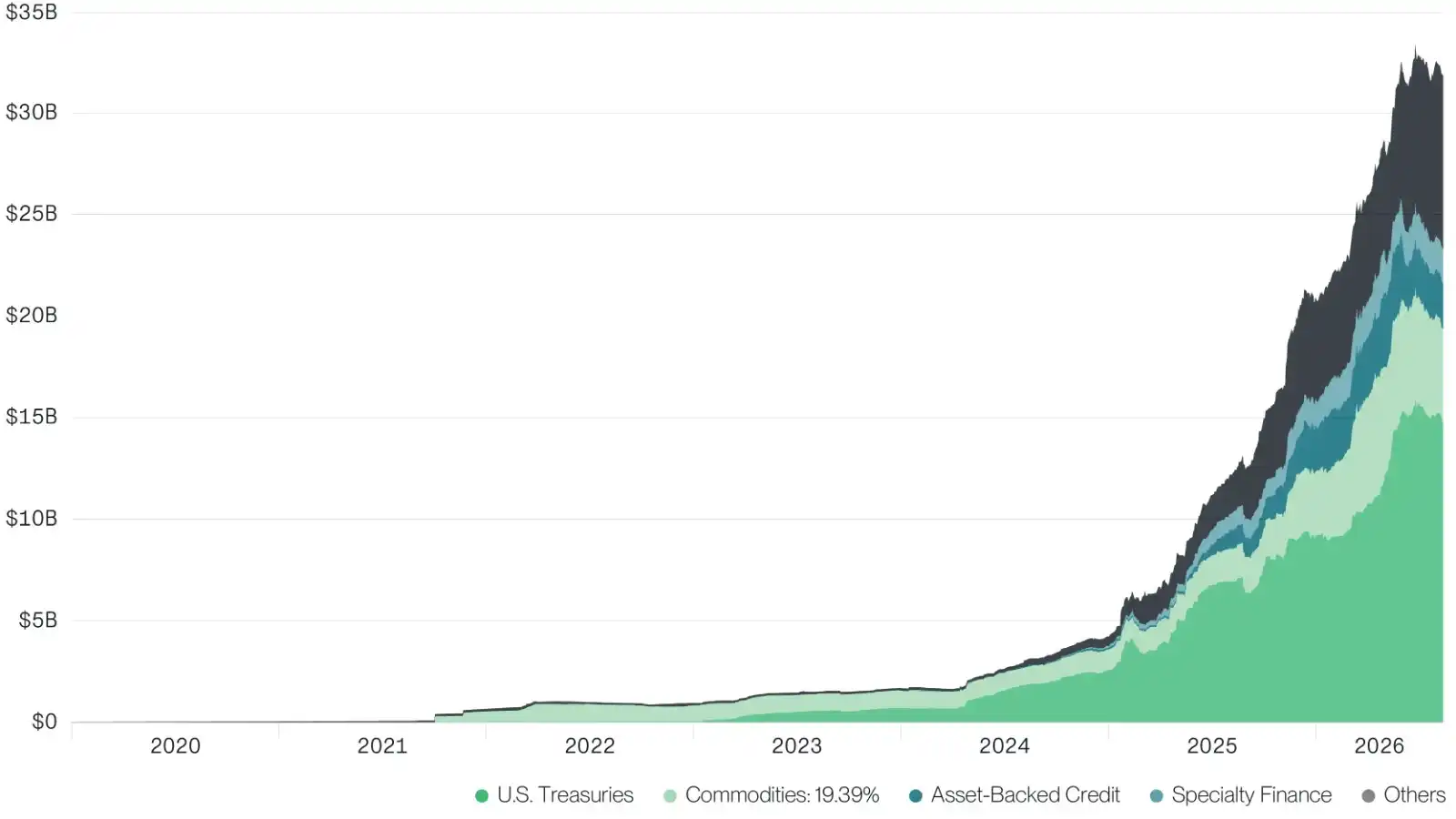
Value of Tokenized Real World Assets (RWA). Data source: Bitwise Asset Management, RWA.xyz; Statistics timeframe: Jan 1, 2020 – Jun 30, 2026.
Prediction Markets Continue to Expand
In Q2, prediction market open interest hit a record high of $1.8 billion, with sports events becoming a core trading category; total quarterly trading volume also hit a record, reaching $43 billion.
Platforms like Polymarket reflect a hidden side of crypto retail adoption: millions of users use underlying crypto tools to bet on real-world event outcomes, but the vast majority of users are unaware of and indifferent to the underlying blockchain technology.
As the U.S. midterm elections approach, I predict prediction market trading volume and open interest will hit new all-time highs multiple times this year. The 2024 election cycle brought prediction markets into the public eye, after which the industry's size directly tripled.
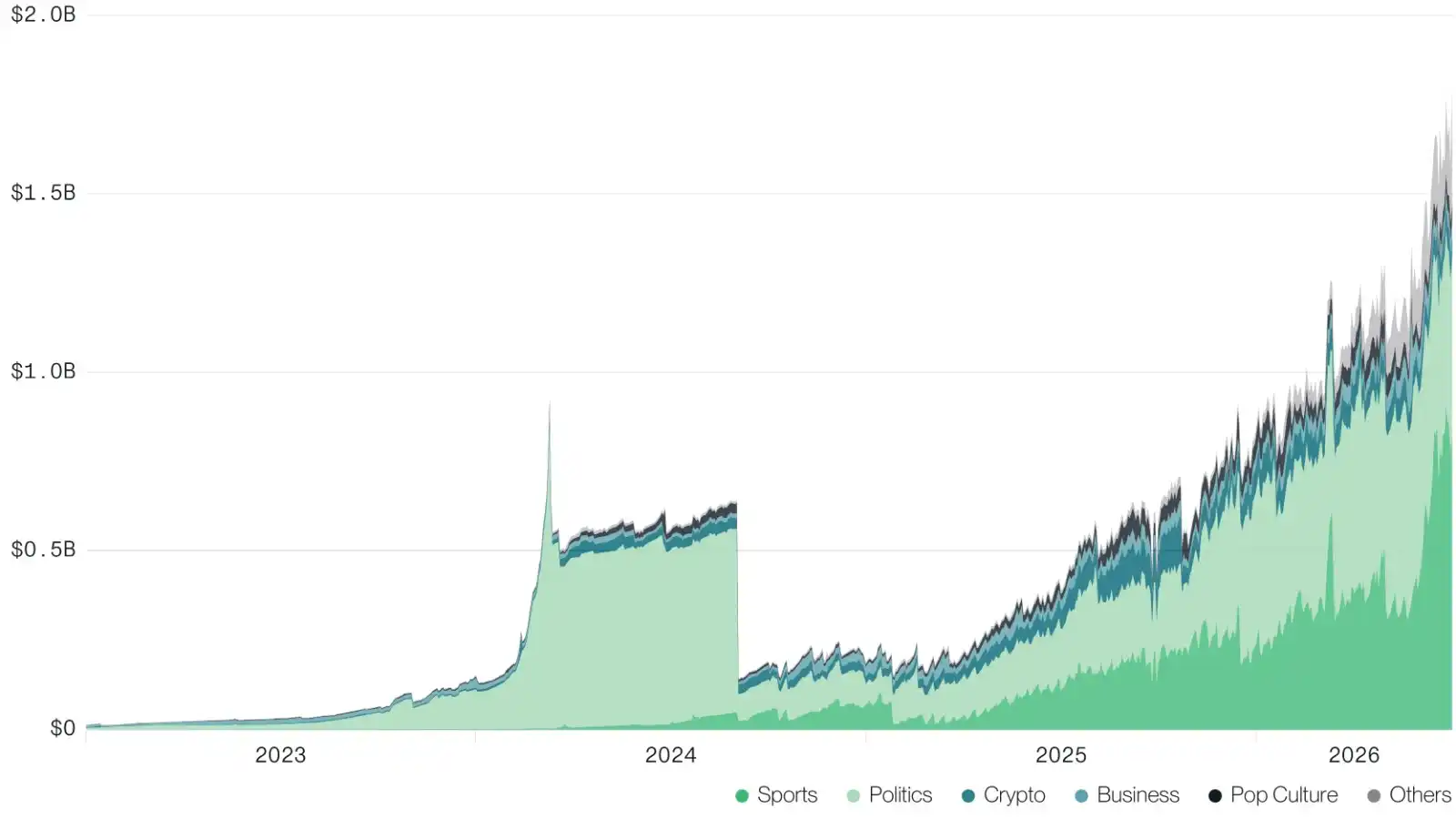
Prediction Market Open Interest Changes. Data source: Bitwise, Blockworks; Statistics timeframe: Jan 1, 2023 – Jun 30, 2026.
Low Correlation Between Crypto Stocks and Mainstream Assets
Returning to crypto-themed stocks, the most valuable chart shows the 90-day rolling correlation between the Bitwise Crypto Innovators 30 Index and various assets. The key highlight is that compared to the broader U.S. stock market, this index has a lower correlation with the vast majority of assets—developed market stocks, emerging market stocks, U.S. REITs, U.S. Treasuries, and gold are all examples. The sole exception is commodities, where correlations are negative.
In short, in the first half of 2026, crypto stock returns were double those of the U.S. stock market, while also being weakly correlated with most assets in an investment portfolio. This combination of high returns and risk dispersion is precisely what institutional investors seek in allocation targets.
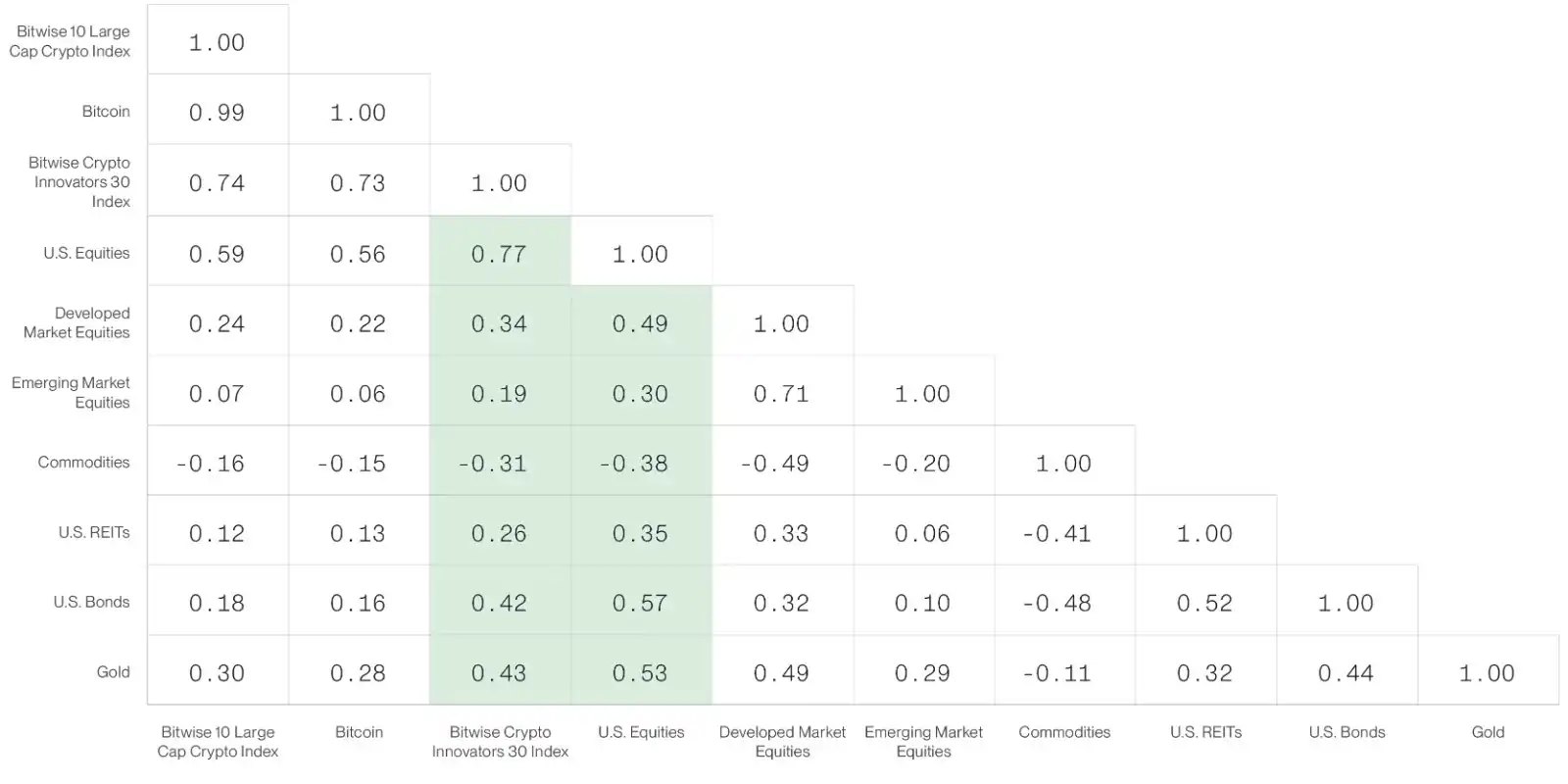
90-Day Rolling Correlation Comparison Across Asset Classes. Data source: Bitwise, Bloomberg; Statistics as of June 30, 2026.
Summary
That concludes my complete interpretation of the Q2 market. The over 50 charts in the report cannot directly answer the market's most pressing question: Have crypto prices bottomed? However, all the data collectively prove that the crypto industry's fundamentals are extremely resilient. Even during bear market cycles, user scale, business revenue, and institutional adoption continue to grow.
The current stage of the industry is highly valuable for research and forms the underlying foundation for the next bull market.