Data: 75% of Traders on Hyperliquid Are Losing Money. What Are the Profitable Ones Using?

marsbitPublicado a 2026-05-20Actualizado a 2026-05-20

Resumen

On Hyperliquid, approximately 75% of addresses are losing money, indicating that manual traders are increasingly competing against automated systems. Profitable traders primarily employ one of three approaches: 1) Running systematic, high-frequency strategies (e.g., one address executed 261k trades with a 64.75% win rate), 2) Placing high-conviction, asymmetric bets with large positions (e.g., 50 trades yielding $4.48M at a 28% win rate), or 3) Using algorithms for execution while making manual macro judgments. The article argues that traditional methods like chart patterns or reacting to social media news are often already priced in by bots, making such traders the "exit liquidity" for systematic players. Success now depends on unique narrative timing, structural insights, or conviction during market capitulation.

Author: Stacy Muur

Compiled by: Deep Tide TechFlow

Deep Tide Guide: Three-quarters of addresses on Hyperliquid are losing money. It's not bad luck; the rules of the game have changed. While you're still looking at candlestick patterns for formations, arbitrage bots have already made their profit. Data shows that truly profitable traders either use algorithmic systematic execution or place large bets on asymmetric opportunities with high conviction. Manual retail traders watching screens are becoming the exit liquidity for others.
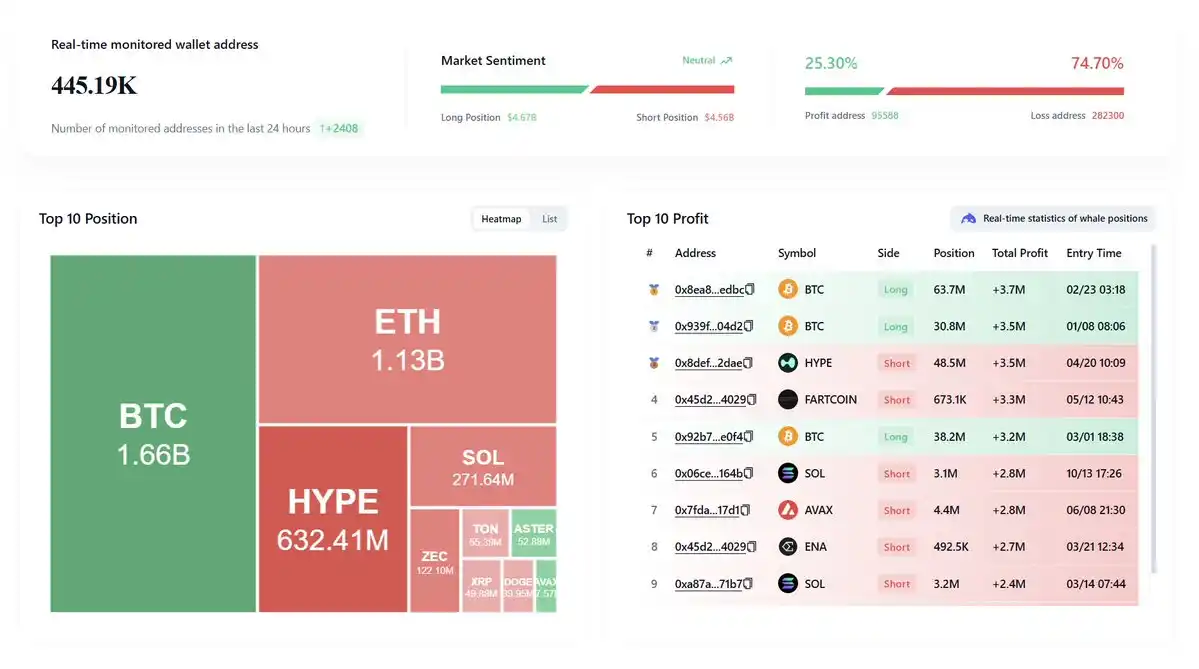
About 75% of addresses on Hyperliquid are in a loss-making position.

The reality is that people trading manually on Hyperliquid are competing against systems that never rest. The trading opportunity you just discovered has likely already been priced in by the system.

When you see a certain pattern, chances are it has already been arbitraged.

Extreme funding rates are balanced in an instant.

Technical patterns have already appeared across more than 50 order books.

News headlines are priced in as soon as they appear.

What the most profitable traders are doing:

→1. Running systematic strategies (the second most profitable address executed 261,000 trades this month with a 64.75% win rate)

→ 2. Holding high-conviction positions, betting on asymmetric returns (a wallet made $4.48 million with just 50 trades and a 28% win rate)

→ 3. Using algorithms as execution tools while making macro judgments manually

If you have timing in narratives, structural insight, or conviction when everyone else capitulates, you can still make profitable trades.

But if your trades are based on chart patterns or news you saw on X, you are likely just exit liquidity.


Preguntas relacionadas

QAccording to the article, what percentage of addresses on Hyperliquid are losing money, and what is presented as the primary reason?

AApproximately 75% of addresses on Hyperliquid are losing money. The primary reason is that manual traders are competing against automated, systemized strategies that execute trades faster and more efficiently, often pricing in opportunities before a human trader can act.

QWhat are the two main strategies used by the most profitable traders on Hyperliquid, as described in the article?

AThe two main strategies are: 1. Running systematic, automated strategies (one example executed 261,000 trades with a 64.75% win rate). 2. Holding high-conviction positions to bet on asymmetric opportunities (one wallet made $4.48M with only 50 trades, despite a 28% win rate).

QThe article suggests that several common trading signals are often ineffective. Name at least three of these signals.

AThree common but often ineffective signals mentioned are: 1. Technical chart patterns (which appear across many order books). 2. Extreme funding rates (which get arbitraged instantly). 3. News headlines (which are priced in immediately upon release).

QWhat role does the article suggest algorithms can play for a trader who still wants to make manual, high-level decisions?

AThe article suggests using algorithms as an execution tool. A trader can make macro or high-level directional judgments manually, and then use an algorithm to handle the rapid, systematic execution of trades based on that judgment.

QAccording to the article's conclusion, what kind of manual trader is most likely to succeed, and what kind is most likely to fail?

AA manual trader who succeeds is likely one acting on deep narrative timing, unique structural insights, or having strong conviction when others are capitulating. A manual trader who fails is likely one whose decisions are based on commonly seen chart patterns or news headlines found on social media (like X), as they become 'exit liquidity' for others.

Lecturas Relacionadas

AI Saved a Group of New Energy Investors

The article "AI Saves a Group of New Energy Investors" details a remarkable turnaround in the green energy investment sector, driven by its convergence with artificial intelligence infrastructure. After a prolonged downturn marked by valuation slumps and funding cold spells since 2022, the sector has experienced a dramatic resurgence in 2026. This shift is attributed to new policies, particularly the "AI-Energy Synergy" national strategy, which mandates green power and energy storage systems for new large-scale computing centers. This redefines green electricity and storage from traditional manufacturing into core, indispensable assets for AI's operational backbone, creating a new narrative where "computing power equals electricity, and green power equals assets." This paradigm change is reflected in surging market performance. Power stocks like Datang Power have seen massive gains, and green energy ETFs have recorded significant capital inflows. The IPO market is also active, with companies like Sige New Energy listing successfully. Investment and financing have accelerated sharply, with major expansion projects and large-scale IPOs like China Resources New Energy's record-breaking offering. Notably, some top projects have seen valuations rebound by approximately 60%. The article highlights that the previous industry trough became a prime investment window. With AI-driven demand predicted to create massive power shortfalls (e.g., a projected 55GW gap for data centers), sectors like energy storage, grid upgrades, and green power are seeing explosive growth. Investors are now prioritizing areas like power management, large-scale storage, virtual power plants, and supporting technologies like liquid cooling—the "pick-and-shovel" plays of the AI infrastructure boom. Examples like KKR's highly successful investment in cooling company CoolIT Systems underscore the lucrative opportunities. In conclusion, the integration with AI has sparked a fundamental revaluation of new energy assets. For investors who endured the sector's低谷, a harvest season has arrived, with the broader investment upswing seemingly just beginning.

marsbitHace 8 min(s)

AI Saved a Group of New Energy Investors

marsbitHace 8 min(s)

Learn Codex with the "Morning Briefing": Six Replicable Levels of Use

This article introduces a "Morning Briefing" as a simple, progressive framework for learning to effectively use Codex (an AI assistant), moving from basic information gathering to a more sophisticated, autonomous work partner. It outlines six actionable levels: **Level 1: Basic Information Query.** Start by simply asking Codex to check your Slack, Gmail, and Calendar to summarize what needs your attention today. **Level 2: Personalization with an Agents File.** Create a persistent file containing your default preferences for the briefing's format and content, so it's consistently useful. **Level 3: Automation.** Set the briefing to run automatically every weekday morning, creating a reliable starting point for your day. **Level 4: Project-Specific Briefings.** Instead of one overwhelming summary, create separate, dedicated threads for different projects (e.g., a launch, recruitment), each with its own focused briefing. **Level 5: Drafting Follow-Up Actions.** Elevate the briefing from a summary to an action starter by having it draft replies, prepare meeting notes, or highlight stalled decisions—ready for your review. **Level 6: Building a Memory System (Vault).** Integrate a knowledge vault (a structured file system) where important recurring information (project statuses, key people, decisions) is stored and updated. The briefing consults this vault to provide richer context and learns over time. The approach's strength is its incremental nature. Each level teaches a core Codex capability (connectors, personalization, automation, project context, assisted work, persistent memory) within a familiar, practical workflow, avoiding overwhelming theoretical concepts. It transforms a simple daily check-in into a personalized, evolving work operating system.

marsbitHace 46 min(s)

Learn Codex with the "Morning Briefing": Six Replicable Levels of Use

marsbitHace 46 min(s)

Trading

Spot
Futuros
活动图片