Author: Coinstack
Compiled by: Deep Tide TechFlow
Deep Tide Intro: Bitcoin briefly broke above $66K last week before falling back to the $63K range, coinciding with a key FOMC window under new Fed Chair Warsh. When markets trade the Fed first and themselves second, macro-crypto cross-market linkages are becoming the strongest short-term directional signals, perfectly aligning with the 'cross-market linkage' theme.
Weekly Snapshot
- After closing above $64,300 on July 26th (temporarily hitting a high of $66,910 on Tuesday), Bitcoin entered the Fed's rate decision week.
- Spot Bitcoin ETFs recorded a net inflow of $33.79 million for the week, while Ethereum ETFs recorded a net inflow of $103.9 million (July 24th); Bitcoin's seven-day inflow streak ended with a net outflow of $240.08 million on Friday (SoSoValue).
- Tesla held 11,509 BTC unchanged in Q2, recording an $112 million after-tax unrealized loss under fair value accounting.
- Morgan Stanley filed final documents for its MSSE and MSOL spot staking ETFs on July 22nd, to be listed on NYSE Arca with a management fee of 0.14%.
- CME FedWatch shows a ~64% probability of unchanged rates in July and a 35.5% chance of a 25 bps hike.
- This Week's Focus: The FOMC statement will be released at 2:00 PM ET on July 29th, followed by a Warsh press conference at 2:30 PM.
Weekly Market Dashboard
Ethereum closed near $1,953 on Sunday, with spot Ethereum ETFs seeing a third consecutive week of net inflows and a second week of inflows surpassing Bitcoin funds. Sunday evening's rebound touched an intraday high of $1,960, boosted by US-Iran ceasefire news lifting risk assets broadly.
All major large-cap coins closed higher for the week. XRP saw the smallest gain, closing near $1.10, consolidating near support; Bitcoin (+1.0%) and Solana (+0.3%) also posted slight gains.
Institutional demand dominated early in the week, fading as Treasury yields rose ahead of the FOMC. Bitcoin ETFs saw their longest inflow streak since May until Thursday, before outflows of about $465 million on Thursday and Friday erased gains. Ethereum was stronger mid-week before following Bitcoin lower. Tesla's earnings and Morgan Stanley's staking ETF application were narrative threads on Wednesday.
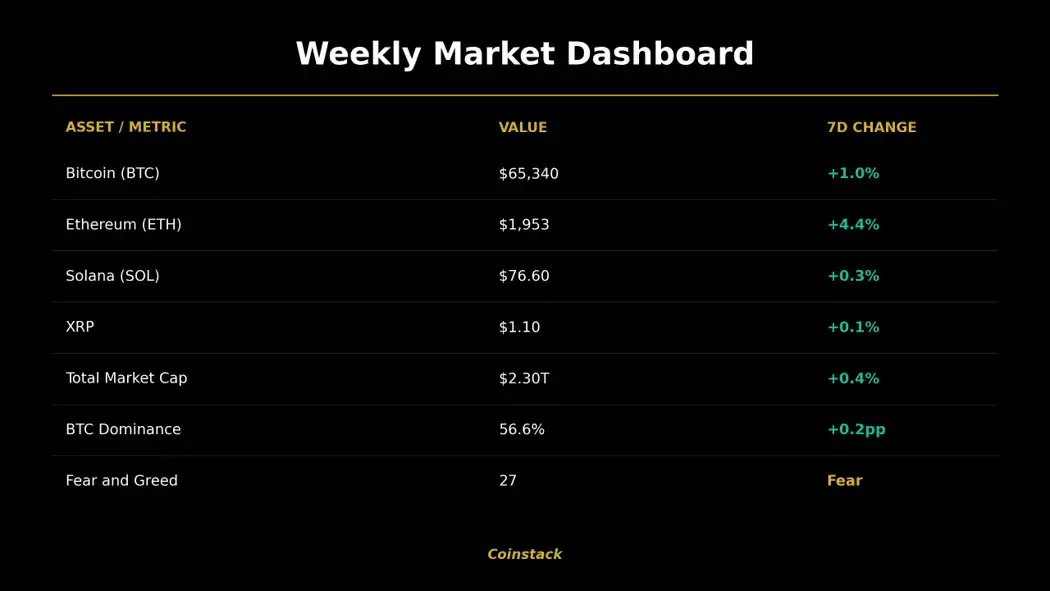
Chart: Crypto Market Weekly Dashboard (as of July 26, 2026). Source: CoinMarketCap, CoinGecko, SoSoValue, Yahoo Finance, Alternative.me.
Bitcoin: Pullback After Rally to $66K
Bitcoin surged on Tuesday, breaking above $66,500, driven by five consecutive days of ETF net inflows (totaling ~$727.25 million from July 14-20, the strongest institutional impulse since May); by Friday, with Treasury yields rising ahead of the FOMC, spot Bitcoin ETFs saw outflows of $465.26 million over two trading sessions (SoSoValue). Ethereum maintained structural buying, extending its net inflow streak to a third week, while Tesla left its 11,509 BTC stash untouched. Attention now turns to Chair Warsh, whose Wednesday press conference will set the tone for the September path.
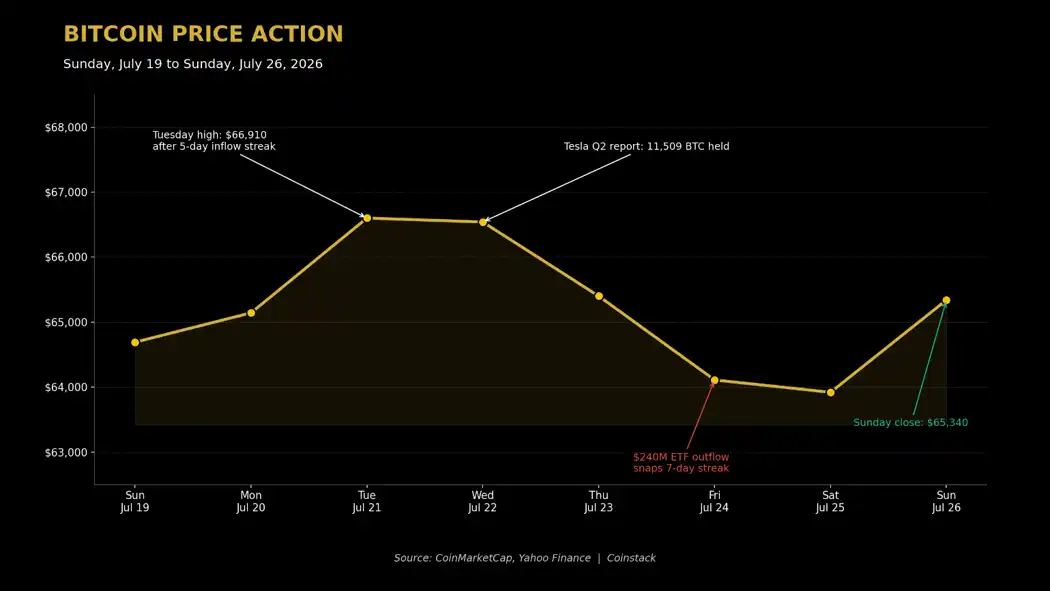
Chart: Bitcoin Price Action (July 19 - 26, 2026).
Focus Turns to FOMC: Warsh's Second Meeting
The July 28-29 FOMC meeting is Warsh's second, with the federal funds rate unchanged for the fourth consecutive time at 3.50%–3.75%.
CME FedWatch as of Friday shows a ~64% chance of no change and a 35.5% probability of a 25 bps hike. No Summary of Economic Projections (SEP) will be released, making the statement wording and press conference solely responsible for any repricing.
Bitcoin's Tuesday rally to $66,910 and Friday's retreat stemmed from shifting Fed expectations, not crypto-native flows. A hawkish hold that brings forward September cut expectations could reignite ETF demand; a press conference reinforcing September hike expectations would extend the tightening trade.
Position for the path, not the point. Watch September and December Fed funds contracts, and the 10-year Treasury yield, until Wednesday afternoon.
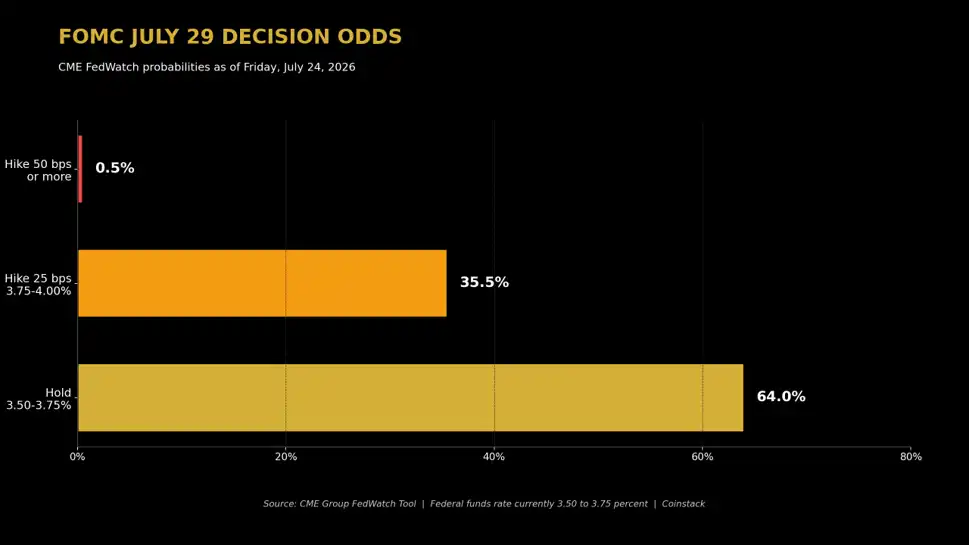
Chart: CME FedWatch Tool Probabilities for July Rate Decision (as of July 24, 2026). Source: CME FedWatch Tool.
Tesla: Unchanged Holdings for Four Years, Yet Records Paper Loss
Tesla held 11,509 BTC unchanged in Q2, recording an $112 million after-tax unrealized loss under the 2024 FASB fair value rules. Adjusted EPS was $0.33, missing market expectations.
This four-year HODL through drawdowns is the clearest institutional endorsement this quarter, while MSTR pivoted to cash reserves.
Fair value accounting will create quarterly noise as long as the price is below cost basis; Tesla's HODL adds no incremental demand at the margin.
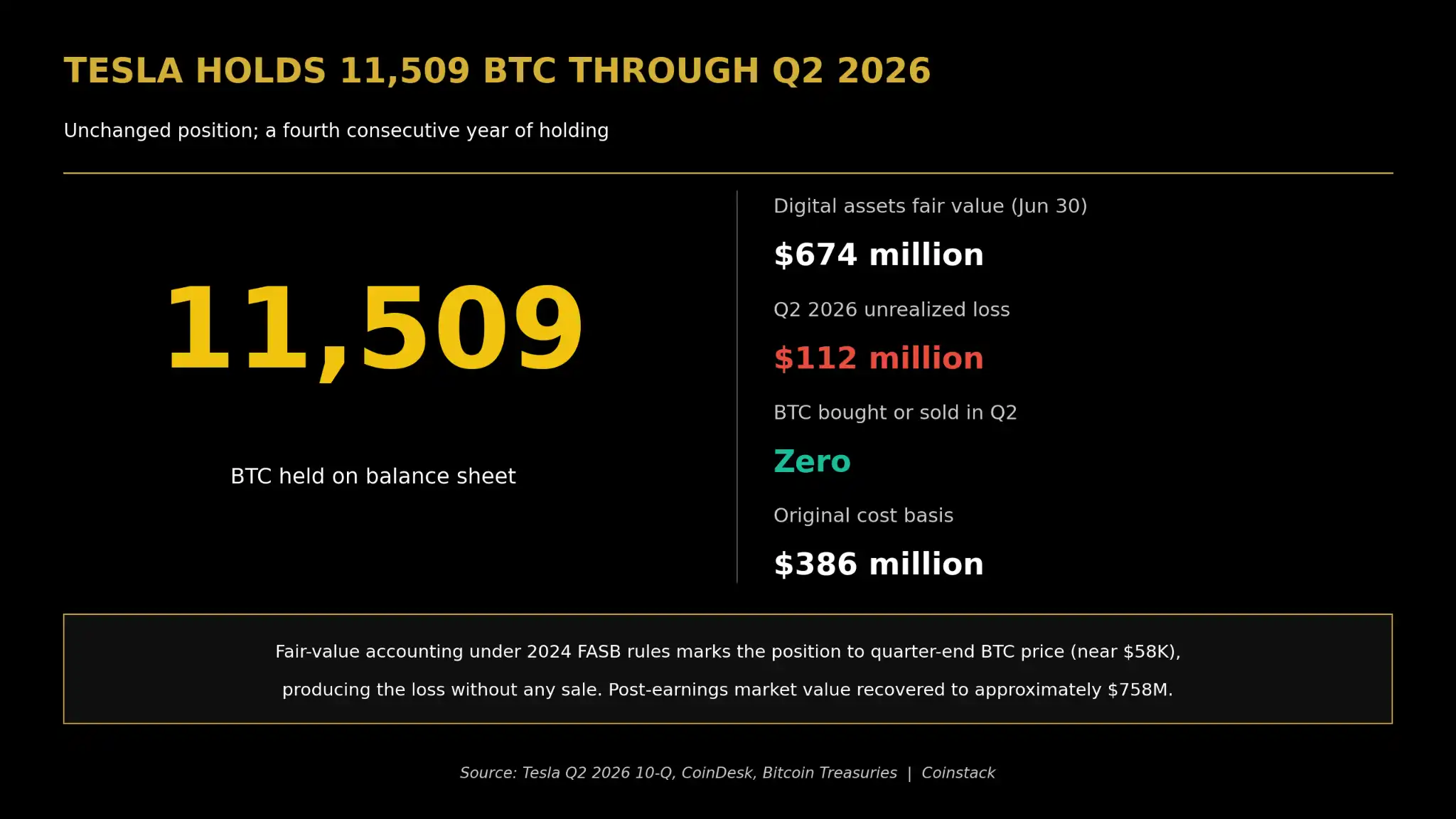
Chart: Tesla's Bitcoin Holdings and Fair Value Change in Q2 2026 Earnings. Source: Tesla Q2 2026 Update.
Morgan Stanley Races Ahead with Staking ETFs
Morgan Stanley filed final documents for its spot Ethereum (MSSE) and Solana (MSOL) staking ETFs on July 22nd, to be listed on NYSE Arca with a fee structure of 0.14%. Coinbase Prime and BNY Mellon serve as custodians; MSSE plans to stake 50%–80% of ETH, MSOL can stake up to 100% of SOL.
A 0.14% fee undercuts most Bitcoin ETFs and packages staking yields into a vehicle accessible to advisors and retirement accounts.
Staking design and tax treatment remain unresolved at the SEC. If final approvals are delayed, this fee-compression selling point loses shelf appeal over time.
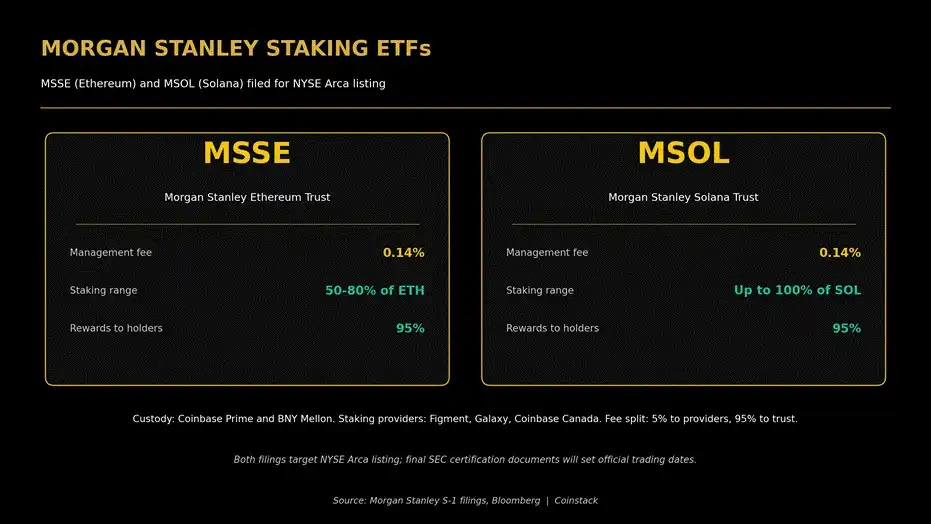
Chart: Morgan Stanley Spot Ethereum (MSSE) & Solana (MSOL) Staking ETF Structure. Source: SEC Filing.
Strategy: Zero Accumulation for Two Weeks, Cash Reserve Hits $3.2B
Strategy (formerly MicroStrategy) disclosed the sale of $263.5 million in MSTR shares from July 13-19, boosting its dollar reserve to $3.225 billion. It bought/sold no BTC, holding 843,775 BTC as of July 20 (Form 8-K).
A larger cash buffer enhances Strategy's ability to pay Digital Credit dividends without being forced to sell BTC.
For the second consecutive week, Strategy made no Bitcoin purchases, pausing its BTC accumulation flywheel.
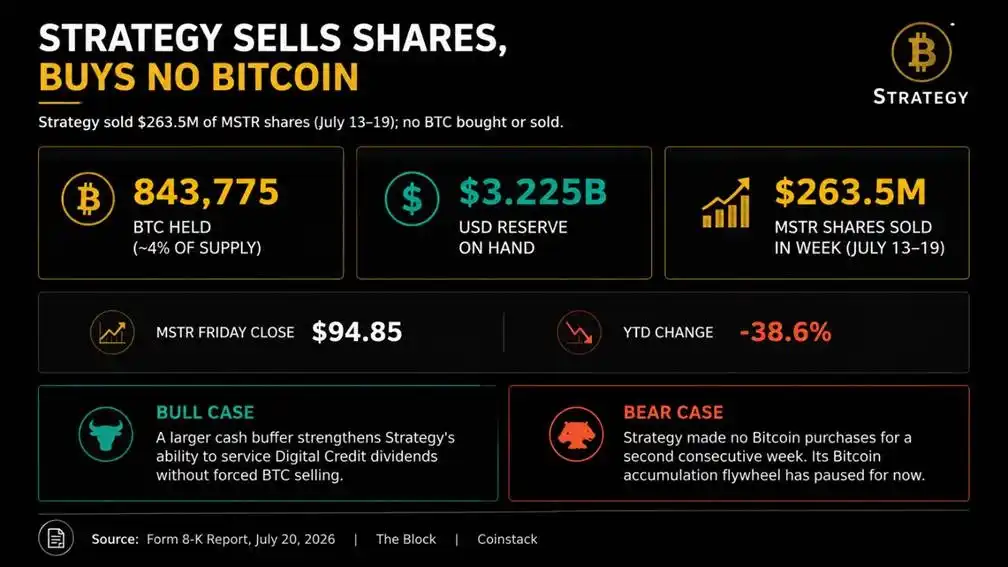
Chart: Strategy (formerly MicroStrategy) Cash Reserve & BTC Holdings Change (as of July 20, 2026). Source: Form 8-K.
Ethereum Staking Queue: 2.52M Tokens Waiting to Enter
Over 2.52 million ETH are in the validator entry queue (~2% of circulating supply), with an activation wait time of 43 days 22 hours (as of 10:30 AM ET, July 27). Exit demand is nearly zero.
New ETH is queuing to be locked, not sold. Similar backlogs have coincided with ETH accumulation phases and rising staking ratios.
Institutional demand for yield-bearing ETH is accelerating, coinciding with Grayscale preparing to distribute Ethereum staking ETF rewards in cash quarterly starting around August 7th (pending SEC approval). Together, they point to a mature structural bid that doesn't require price momentum.
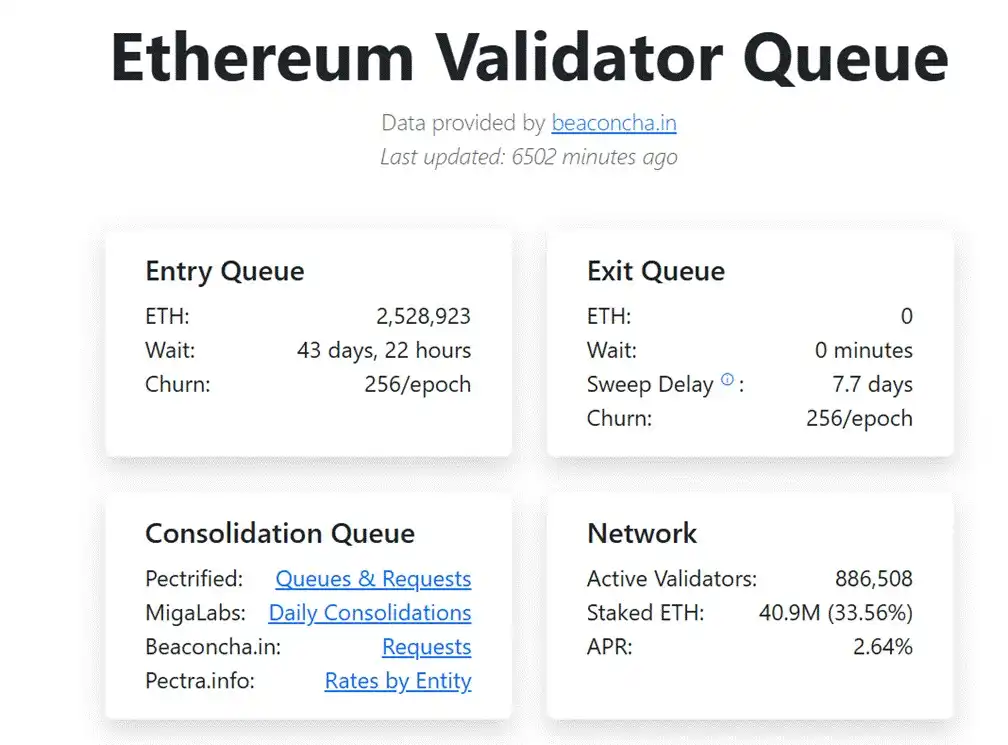
Chart: Ethereum Validator Entry Queue Size & Activation Wait Time (as of July 27, 2026). Source: Validator Queue.
Staking Yields Become New ETF Battleground
With Grayscale soon to distribute ETH staking rewards in cash, Morgan Stanley planning to stake 50%–80% of its ETH and up to 100% of its SOL, and Bitwise's BSOL already employing staking, yield is becoming a differentiating factor among US crypto ETFs.
Staking yields turn crypto ETFs into income products advisors can slot alongside REITs and dividend stocks. The ~44-day ETH entry queue signals real institutional demand.
The SEC hasn't finalized staking treatment under the Investment Company Act; any changes to tax or custody rules could weaken this selling point.
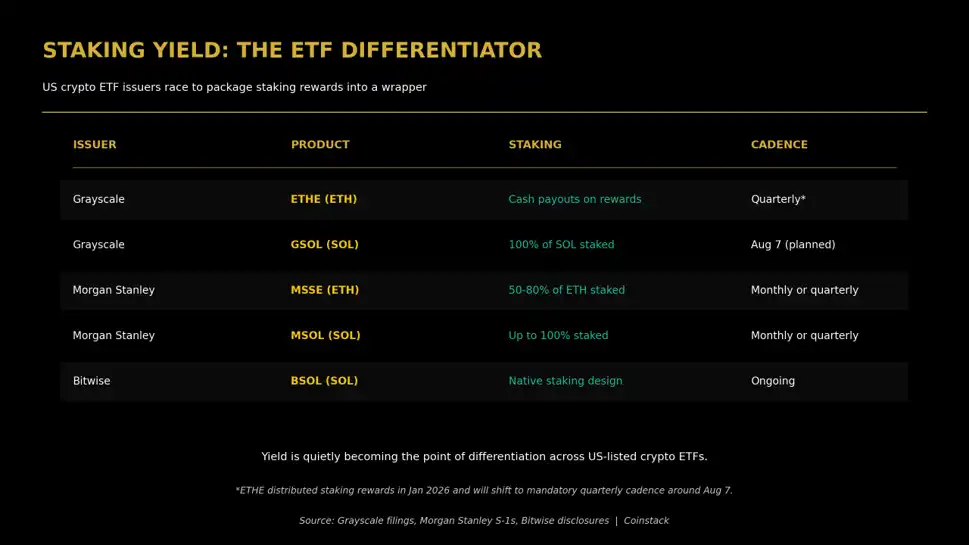
Chart: Overview of US-Listed Crypto Staking ETFs.
Panorama of US-Listed Staking ETFs
US-listed staking ETFs transform ETH and SOL into wrapped yield vehicles with regulated custody and cash distribution, opening access to capital that would never touch a validator directly.
Nodes to watch: Grayscale's August 7th Ethereum staking distribution launch, final SEC action on MSSE & MSOL, and more filings with fees ≤0.14%.
A hawkish Warsh press conference could compress risk appetite for high-beta L1s, and any rules limiting fee capture for staking would repricethis vehicle.
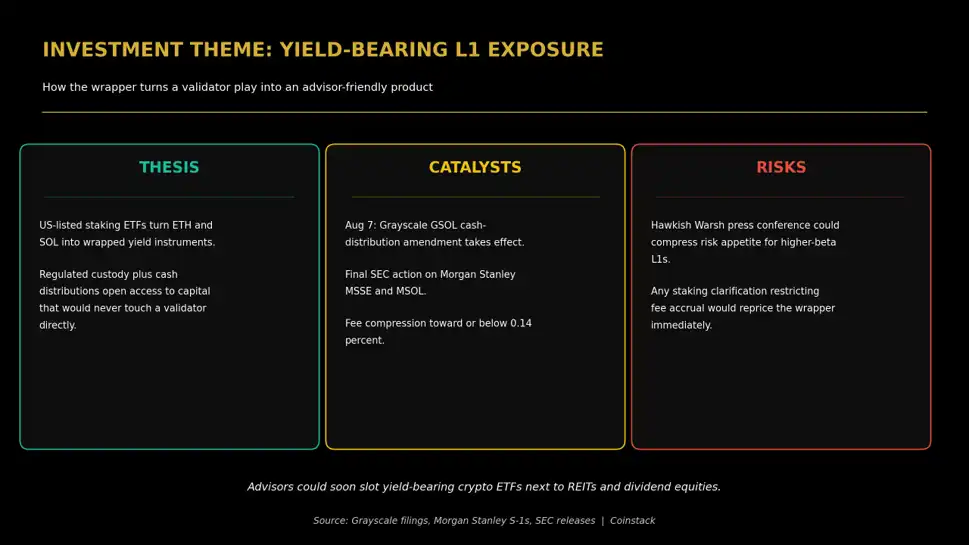
Chart: Ethereum Staking Entry Queue vs. Exit Queue.
Entry Queue: Locked Supply as a Leading Indicator
Ethereum's staking design limits the rate of new validator activation, so when demand spikes, ETH piles up in the entry queue. A long queue means holders are willing to lock capital for weeks in exchange for base-layer yield.
The queue is a leading indicator of committed supply. Coins in line are unlikely to hit exchanges soon, and when the exit queue is empty, the pool of ETH available for sale shrinks. A surge in the exit queue would reverse the signal.
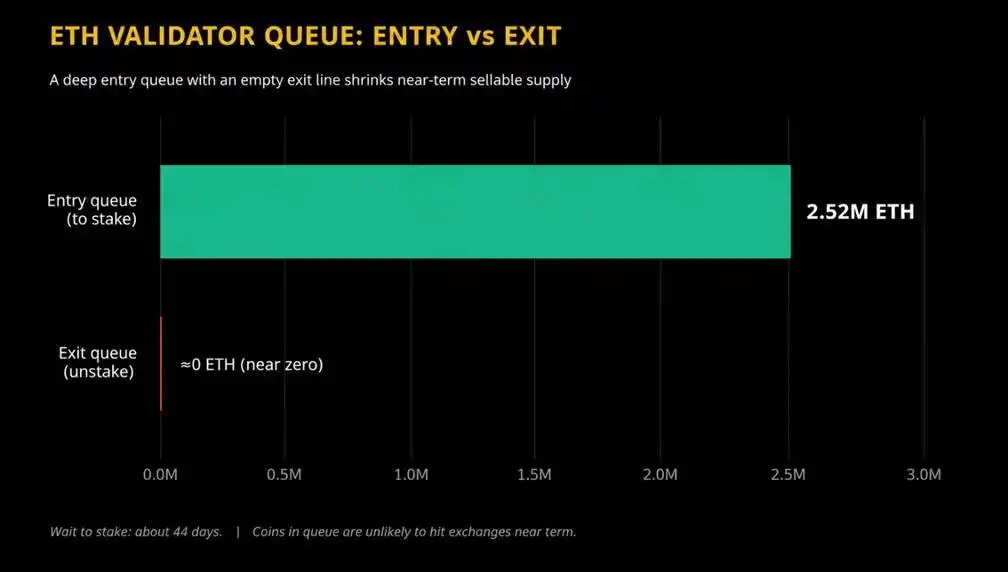
Chart: Ethereum Validator Activation Rate & Entry Queue Mechanism Schematic.