Dalio's Major Article: How to Position in the Current Market Environment?

链捕手Publicado a 2026-06-18Actualizado a 2026-06-18

Resumen

In the current market environment, dominated by excitement and uncertainty around revolutionary AI technology, Ray Dalio emphasizes the critical importance of diversification. He identifies key drivers—debt/monetary conditions, political/social issues, geopolitics, natural forces, and new tech—that create a highly concentrated and risky landscape, reminiscent of past technological cycles. Dalio argues that while AI presents immense opportunities, investing heavily in a few leading tech stocks carries significant risk due to their inherent volatility, competitive pressures, potential over/under-investment, and unforeseen disruptions. Historical precedent shows that most investors fail during such phases by making concentrated bets. His core principle is to embrace diversification—holding 15+ high-quality, uncorrelated, and risk-balanced investments. This mathematically improves the risk-return profile, allowing for better returns at the same risk level through engineering, compared to any single concentrated bet. He notes that current equity valuations suggest low-to-negative expected returns, and cautions against conflating excitement for the technology with the attractiveness of the stocks. Ultimately, Dalio advises that knowing when not to bet—acknowledging the limits of one's knowledge—is as vital as knowing when to bet. In an environment of high uncertainty and concentration, a well-constructed, diversified portfolio is the optimal strategy.

This article aims to explore: How should you play your hand in the current investment game?

Imagine you're playing a game of bridge, poker, chess, or Go, and when it's your turn to move, a computer beside you assesses the situation and gives suggestions. In my view, investing is exactly like that—whether you use a computer as an aid or not, you should proceed this way: based on the current state of the "board," ask yourself what your next move should be. In other words, you need to act based on the existing characteristics of the market and the various forces influencing it.

I have been playing this investment game for many years. At this stage, my goal is not only to share how I play my hand but, more importantly, to build a platform where everyone can explore the path of investing according to their own wishes, learn from it, backtest past performance, and truly master this art. I believe that for a given hand, there are right and wrong ways to play. Therefore, when encountering a situation like XYZ, you should ask yourself, "How should I bet in this scenario?" and be able to provide a good answer.

Now, I want to share with you my views on the current market characteristics, what I think should be done, and what I am actually doing.

How to Respond to the Current Environment

What are the most important environmental factors now? How should one bet under these factors?

In my view (and perhaps in the view of many), we are in an industry cycle driven by a major new technology—primarily artificial intelligence—with only a few companies dominating market trends. These companies account for an extremely high proportion of the total market capitalization and have a huge impact on the market and the economy. All such periods share a common theme: there is significant excitement, uncertainty, and volatility surrounding the new technology industry, which transmits to global stock markets through this industry. Therefore, the volatility and uncertainty surrounding this industry are crucial.

Furthermore, there are uncertainties brought by other major drivers. I call them the "Five Big Forces":

  • The state of debt and money;

  • Political and social issues (which may significantly impact market factors like taxation);

  • How geopolitical factors (such as wars) affect the market;

  • Natural forces;

  • The development of new technologies.

I would input these conditions into my investment system to consider how to bet in such an environment, while also thinking independently about where to place specific bets.

When considering how to respond to this environment, the most important question is: What choice do you really want to make?

  • (a) Make a concentrated bet on new technology, over-weight this emerging industry or its top few companies, compared to a broad-based index like the S&P 500;

  • (b) Keep exposure roughly at the index weight;

  • (c) Diversify away from such concentration.

Almost everyone wants to find the best investment and is willing to work hard for it. Right now, a new technology seems to be changing everything. However, history shows that at this stage of such a cycle, most people fail because they put most of their chips on the stocks of a few leading technology companies. There is a logic behind this, and it has consistently evolved this way in the past. Although this AI technology is indeed unique, there have been many similarly "unique" new technologies in history that can serve as analogies and references. People should study these cases; if they choose to ignore them, they must be able to explain well why this time is different.

The Risk is Undoubtedly High

All past major new technology cases have shown similar evolutionary trajectories due to the same logical reasons. High risk and great uncertainty are inherent characteristics of these new technology companies. Looking back at the performance of such companies in similar historical environments, even the most revolutionary new technology companies that prospered in the long run, like Microsoft and Apple, suffered significant setbacks at similar stages of development. Moreover, in the early stages of these new technology companies, it's not easy to tell which ones will succeed and which will fail (think of IBM). If you look at all these cases, you'll find that major new technology companies inherently have highly uncertain futures.

For example, they either over-invest or under-invest. The reason is: if they under-invest and fail to win the competition, they are doomed to fail; but they also cannot accurately predict the future to judge if they are over-investing. Both over-investment and under-investment carry high costs.

Furthermore, they cannot accurately foresee all changes, including external shocks such as monetary tightening, wars, major tax adjustments, etc. Therefore, they all experience sharp up-and-down cycles: first exciting investors, then making them fearful and washing out weak-handed investors, ultimately leading to exaggerated market swings. Moreover, just as these new technologies and companies disrupted their predecessors, most of them will eventually be disrupted by newer technologies and companies in ways we cannot imagine in advance. Therefore, we should also consider whether the current new technology and tech companies face the same risk. The impact of quantum computing is one known risk. What about risks that haven't been imagined yet?

And what about the risk from competitors? For instance, China is producing and promoting AI technology, and Chinese policymakers have fundamentally different views on the economy and AI. We are in a new technology war, and leaders of all nations believe they must win it. Their understanding of AI and its impact on the economy and human well-being will drive them to provide this technology for free or at a low price because of its huge productivity-enhancing effect that raises overall living standards. In their view, the overall benefit of having more people use these new technologies is more important than profits. I believe they will compete internationally as they have with cars, solar panels, batteries, and many other products.

The current environment is reminiscent of many historical cases offering valuable lessons. I can't help but think of when the British Empire defeated the Dutch in key industries like shipbuilding at the end of the Dutch Empire and the beginning of the British Empire. AI stocks also face other risks, such as wealth taxes and other tax increases that could force large-scale selling by shareholders holding significant wealth; and growing anti-AI sentiment that could limit the space for companies to advance the technology.

I could list more concerning things, but I could also list an equally long list of huge opportunities that AI will create—and that's where I'm willing to place my bets. I am not saying these risks will necessarily materialize, nor am I saying one shouldn't bet on AI companies. I am only saying that there is undoubtedly a high degree of concentration risk in the market, and people should be aware of how to navigate such an environment. Based on my study of all similar cases and their logical reasons, I am certain the risk is high, and the best way to navigate this environment is: embrace diversification.

Embrace Diversification

You might be familiar with my mantra "diversification." My "Holy Grail of Investing" is to strive to hold 15 good-quality, uncorrelated, risk-balanced bets. In other words:

A portfolio of well-diversified, high-quality bets will outperform a single concentrated bet. It offers a higher risk-return ratio and can be engineered to deliver better returns at the same risk level. The more market risk is concentrated in one area, the more one should diversify; especially when the market is driven by a revolutionary new technology, as the technology itself brings great uncertainty.

This is not an opinion; it is a mathematical certainty. For example, suppose an investment has a risk-return ratio of 0.3 (6% return, 18% standard deviation, a common assumption for stocks); then, if I hold 5, 10, or 15 uncorrelated bets, I can keep the 6% return while reducing risk (measured by standard deviation) to 8%, 6%, and 5% respectively. Therefore, by holding 15 good-quality, uncorrelated bets, my risk-return ratio increases from 0.3 to 1.29, a 4.3x improvement. You can then apply leverage on top of that if you wish, achieving higher returns at the same risk level. This is fact.

I am very confident about this. It comes from my backtesting, the actual returns from my more than 50-year investment career, and the probability logic within it: well-diversified bets, adjusted to an individual's risk tolerance, will produce much better returns over the long term than the concentrated bets most investors tend to hold. Specifically, through good diversification, you can achieve a higher risk-return ratio than any concentrated bet; adjusting it to your desired risk level allows you to get higher returns at your target risk than any other way.

Because I've shared this method, it's no longer my not-so-secret way of investing. However, I rarely encounter investors who truly think about investment strategy in this way. That is, I rarely meet people who genuinely think from a portfolio construction perspective—considering how a well-structured, diversified portfolio of bets would perform differently from simply holding the stock of one great, transformative industry company. Most people are just thinking about whether these stocks and this industry will perform well and how to bet on them. The final performance results between those who think about portfolio construction and those who don't can be worlds apart. Therefore, I will elaborate more fully on my views on this at another opportunity.

For all these reasons, in the current environment, when thinking about how to play your hand, you should ask yourself: How much concentration should I maintain before diversifying?

Expected Returns Look Low

The high risk is unquestionable. Next, I'll present a view that may prove wrong: expected future returns look low. My judgment on expected future returns comes from valuation-related analytical work and readings from my bubble indicators: real returns on stocks over the next 5 to 10 years seem to be in the range of -5% to -10%, although these numbers have a lot of uncertainty. In my view, these stocks are long-duration assets with high risk because it's difficult to reliably see far into the future; they also seem overvalued and held by an unstable investor base.

A Question Raised by the Research Team:

In the last meeting, a member of my research team asked me: Why do you think the market's configuration today is incorrect? How do you know that today's lack of market diversification is not for good reason? For example, some investors believe the expected returns of AI stocks will be very high; or when an industry accounts for such a high proportion of total market capitalization, index concentration naturally occurs; or when an industry is being hyped, many investors buy these stocks without making wise and reliable calculations about future earnings and how those earnings should be reflected in stock prices.

My Response:

Prices rise for various reasons, not all of which are good. Some investors consider prices and push them up because they believe prices remain attractive relative to fundamentals; some investors hold these stocks for a long time because they recognize it's a great new technology and see price increases as confirmation that these are good stocks; others hold index exposure, passively giving them large weightings in these stocks.

In my view, you can agonize over these issues to decide what you want to do; or you can realize that you don't need to agonize over this question at all because you don't have enough information to confidently place a bet. You can simply say: "I don't know enough to confidently bet." And then don't bet.

What gets people into trouble is thinking they must form a view and believing their view has value; but more likely, they are unable to form a reliable, bettable view.

To be clear, I'm not suggesting avoiding bets. Besides, you can't avoid betting because you have to put your money in some portfolio or cash. Most people think cash is the safest investment, but in the long run, it's almost certainly the worst investment. My advice is that even if you have no tactical views on which markets are good or bad, you should know how to place good bets through diversification. Specifically, by holding a balanced strategic asset allocation portfolio and sticking to it when you have no tactical views to bet on. But that's for another discussion.

So, I think: Knowing what you don't know and deciding when not to bet is just as important as knowing what you do know and deciding when to bet.

In short, I believe in the following principle: because it's usually hard to have enough information to justify a concentrated bet rationally, the best practice is to only hold diversified bets you have strong confidence in and that are uncorrelated with each other—that is, an engineered portfolio designed to your desired risk level. This is my "Holy Grail of Investing."

At this moment, given the current environment, I don't think anyone can see clearly enough what will happen next in this technology-driven market to make large concentrated bets. For me, avoiding concentration and maintaining diversification is the best way to deal with this "unknown." I know this is different from what you read in textbooks. Textbooks basically assume markets are efficient, so you should "trust the market."

In summary, the current market is exceptionally concentrated, revolving around a revolutionary new technology. This fact should remind us: don't confuse excitement about a new technology with whether the stocks of that technology are attractive, and don't abandon caution by holding a high-risk, highly correlated concentrated bet. Especially when, through clever diversification, we can achieve similarly attractive returns at a much lower risk level.

Postscript:

I won't share my specific holdings or tactical views with you because I don't want to be your investment advisor. But soon, I will share with you some key perspectives behind these views, including my bubble indicators and the logic behind them.

(Note: The above translation was completed with the assistance of DeepSeek, and the content is for reference only.)

Original link

Criptos en tendencia

Preguntas relacionadas

QAccording to Ray Dalio, what are the 'five big forces' that create uncertainty in the current market environment?

AAccording to Ray Dalio, the 'five big forces' creating uncertainty are: 1) The condition of debt and money, 2) Political and social issues (which can significantly affect factors like taxes), 3) Geopolitical forces (like wars) and how they affect markets, 4) Natural forces, and 5) The development of new technologies.

QWhat core investment principle does Ray Dalio advocate for, especially in the context of a revolutionary new technology like AI driving the market?

ARay Dalio advocates for the principle of 'embracing diversification.' His 'holy grail of investing' is to hold 15 or more good, uncorrelated, and risk-balanced bets. He argues that a well-diversified portfolio with quality bets offers a better risk/return ratio than a concentrated bet, especially when market risk is highly concentrated in a sector with high uncertainty like a new revolutionary technology.

QWhy does Dalio believe the current market environment, dominated by a few AI-related companies, presents high risk?

ADalio believes the environment presents high risk because all major new technologies in history have followed a similar, volatile trajectory. He cites several inherent risks: the high uncertainty of which companies will succeed or fail, the tendency for these companies to over-invest or under-invest, susceptibility to external shocks (like monetary tightening or wars), and the likelihood of being disrupted by newer technologies in the future. He also mentions specific risks like international competition (e.g., from China) and potential regulatory or tax changes.

QWhat are the three main choices Dalio outlines for an investor when facing the current concentrated market?

ADalio outlines three main choices: (a) Go overweight on the new technology, over-betting on the emerging sector or a few of its top companies relative to a broad index like the S&P 500. (b) Maintain exposure roughly in line with the index weighting. (c) Diversify away from this concentration.

QAccording to Dalio, what is a crucial mistake many investors make when they lack sufficient information to form a confident view?

ADalio states that a crucial mistake is feeling compelled to form a view and believing that view has value. He argues it's more likely that they cannot form a reliable, bet-able view. He emphasizes that 'knowing what you don't know and deciding not to bet is just as important as knowing what you know and deciding to bet.' The best approach in such cases is to hold a diversified portfolio of bets you have conviction in, rather than making a concentrated bet without sufficient information.

Lecturas Relacionadas

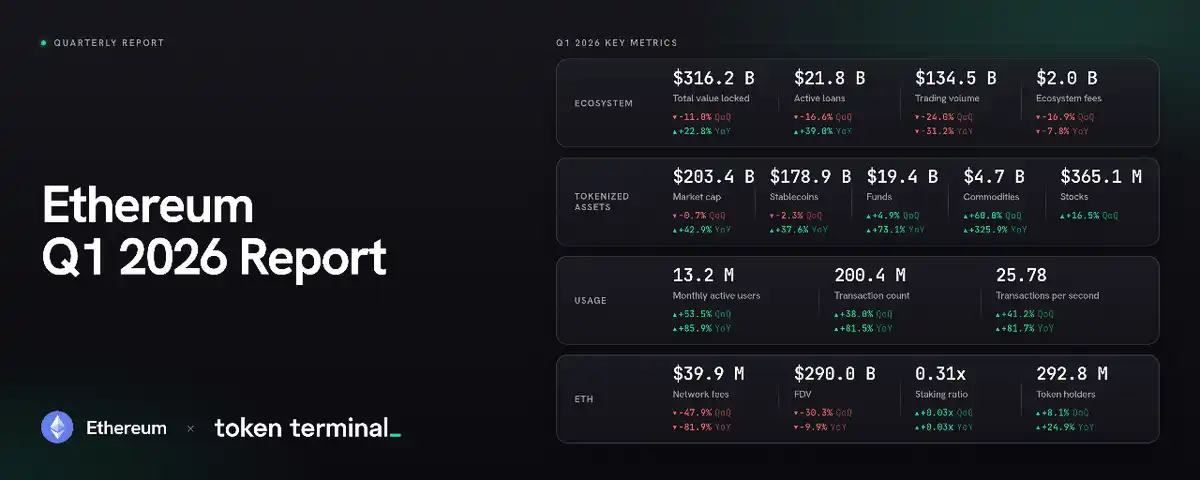
Ethereum 2026 Q1 Review: On-Chain Activity Hits Record Highs, Tokenized Assets Lead the Industry

Ethereum Q1 2026 Review: Record On-Chain Activity, Tokenized Assets Lead the Industry. Despite a price correction impacting USD-denominated metrics, Ethereum's on-chain usage hit all-time highs in Q1 2026. Monthly active addresses surged 85.9% year-over-year to 13.2 million, while L1 transactions and throughput also set new records. This growth occurred alongside a significant 47.9% quarterly drop in L1 transaction fees, demonstrating the impact of network scaling via upgrades like the Blob Parameter Fork. The ecosystem maintained its dominance in decentralized finance (DeFi), holding 71% of the total value locked among top chains and 79.2% of active borrowing. Ethereum solidified its position as the primary platform for tokenized real-world assets (RWAs), with a total market cap of $203.4B. It holds leading shares in stablecoins (61.8%), tokenized funds (73%), and tokenized commodities (84%) across major chains. Key developments included the ERC-8004 standard for AI agents and heightened institutional engagement at forums. Major financial institutions like BlackRock, JPMorgan, and a European banking consortium announced new tokenized products on Ethereum throughout the period. The report draws parallels to the early internet, suggesting Ethereum is sacrificing short-term fee revenue for long-term network expansion and adoption. Its strategy focuses on becoming a neutral, open settlement layer for global finance, with scaling roadmaps aiming for tens of thousands of TPS by 2029.

marsbitHace 53 min(s)

Ethereum 2026 Q1 Review: On-Chain Activity Hits Record Highs, Tokenized Assets Lead the Industry

marsbitHace 53 min(s)

Matrixdock Featured Again in SBMA’s 《Crucible》: Discussing How Tokenisation Enhances Efficiency in the Precious Metals Market

Matrixdock's research article, titled "Why Tokenisation Matters for the Bullion Industry and How Carrying Costs Fit In," has been featured again in the SBMA's industry publication *Crucible*. Authored by Matrixdock lead Eva Meng, the piece examines how tokenisation enhances the efficiency and utility of the precious metals market. The article argues that tokenisation builds upon the accessibility improvements brought by gold ETFs, not by redefining gold's value but by enabling it to function within digital finance. It extends gold's role beyond a portfolio holding, potentially facilitating instant settlement, digital collateral, and operation in 24/7 markets. A key focus is transparently handling the unavoidable carrying costs (storage, insurance) of physical assets like gold and silver. Matrixdock introduces the Fungible Reserve Standard (FRS) framework, based on an "Economic Purity Principle," which aims to reflect these real-world economic costs clearly within the token mechanism, rather than bundling them opaquely. The platform's practical applications are highlighted, including its gold token XAUm and its silver token XAGm, the first built on the FRS framework. As the tokenised gold market surpassed $6 billion in February 2026, the industry's focus is shifting from initial proofs of reserves to broader concerns of market efficiency and capital utilization. Tokenisation is positioning gold and other precious metals to become active components within the evolving digital financial system.

marsbitHace 1 hora(s)

Matrixdock Featured Again in SBMA’s 《Crucible》: Discussing How Tokenisation Enhances Efficiency in the Precious Metals Market

marsbitHace 1 hora(s)

Trading

Spot
Futuros

Artículos destacados

Qué es $S$

Entendiendo SPERO: Una Visión General Completa Introducción a SPERO A medida que el panorama de la innovación continúa evolucionando, la aparición de tecnologías web3 y proyectos de criptomonedas juega un papel fundamental en la configuración del futuro digital. Un proyecto que ha atraído la atención en este campo dinámico es SPERO, denotado como SPERO,$$s$. Este artículo tiene como objetivo reunir y presentar información detallada sobre SPERO, para ayudar a entusiastas e inversores a comprender sus fundamentos, objetivos e innovaciones dentro de los dominios web3 y cripto. ¿Qué es SPERO,$$s$? SPERO,$$s$ es un proyecto único dentro del espacio cripto que busca aprovechar los principios de descentralización y tecnología blockchain para crear un ecosistema que promueva la participación, la utilidad y la inclusión financiera. El proyecto está diseñado para facilitar interacciones de igual a igual de nuevas maneras, proporcionando a los usuarios soluciones y servicios financieros innovadores. En su esencia, SPERO,$$s$ tiene como objetivo empoderar a los individuos al proporcionar herramientas y plataformas que mejoren la experiencia del usuario en el espacio de las criptomonedas. Esto incluye habilitar métodos de transacción más flexibles, fomentar iniciativas impulsadas por la comunidad y crear caminos para oportunidades financieras a través de aplicaciones descentralizadas (dApps). La visión subyacente de SPERO,$$s$ gira en torno a la inclusividad, buscando cerrar brechas dentro de las finanzas tradicionales mientras aprovecha los beneficios de la tecnología blockchain. ¿Quién es el Creador de SPERO,$$s$? La identidad del creador de SPERO,$$s$ sigue siendo algo oscura, ya que hay recursos públicos limitados que proporcionan información de fondo detallada sobre su(s) fundador(es). Esta falta de transparencia puede derivarse del compromiso del proyecto con la descentralización, una ética que muchos proyectos web3 comparten, priorizando las contribuciones colectivas sobre el reconocimiento individual. Al centrar las discusiones en torno a la comunidad y sus objetivos colectivos, SPERO,$$s$ encarna la esencia del empoderamiento sin señalar a individuos específicos. Como tal, comprender la ética y la misión de SPERO sigue siendo más importante que identificar a un creador singular. ¿Quiénes son los Inversores de SPERO,$$s$? SPERO,$$s$ cuenta con el apoyo de una diversa gama de inversores que van desde capitalistas de riesgo hasta inversores ángeles dedicados a fomentar la innovación en el sector cripto. El enfoque de estos inversores generalmente se alinea con la misión de SPERO, priorizando proyectos que prometen avances tecnológicos sociales, inclusión financiera y gobernanza descentralizada. Estas fundaciones de inversores suelen estar interesadas en proyectos que no solo ofrecen productos innovadores, sino que también contribuyen positivamente a la comunidad blockchain y sus ecosistemas. El respaldo de estos inversores refuerza a SPERO,$$s$ como un contendiente notable en el dominio de proyectos cripto que evoluciona rápidamente. ¿Cómo Funciona SPERO,$$s$? SPERO,$$s$ emplea un marco multifacético que lo distingue de los proyectos de criptomonedas convencionales. Aquí hay algunas de las características clave que subrayan su singularidad e innovación: Gobernanza Descentralizada: SPERO,$$s$ integra modelos de gobernanza descentralizada, empoderando a los usuarios para participar activamente en los procesos de toma de decisiones sobre el futuro del proyecto. Este enfoque fomenta un sentido de propiedad y responsabilidad entre los miembros de la comunidad. Utilidad del Token: SPERO,$$s$ utiliza su propio token de criptomoneda, diseñado para servir diversas funciones dentro del ecosistema. Estos tokens permiten transacciones, recompensas y la facilitación de servicios ofrecidos en la plataforma, mejorando la participación y la utilidad general. Arquitectura en Capas: La arquitectura técnica de SPERO,$$s$ apoya la modularidad y escalabilidad, permitiendo la integración fluida de características y aplicaciones adicionales a medida que el proyecto evoluciona. Esta adaptabilidad es fundamental para mantener la relevancia en el cambiante paisaje cripto. Participación de la Comunidad: El proyecto enfatiza iniciativas impulsadas por la comunidad, empleando mecanismos que incentivan la colaboración y la retroalimentación. Al nutrir una comunidad sólida, SPERO,$$s$ puede abordar mejor las necesidades de los usuarios y adaptarse a las tendencias del mercado. Enfoque en la Inclusión: Al ofrecer tarifas de transacción bajas e interfaces amigables para el usuario, SPERO,$$s$ busca atraer a una base de usuarios diversa, incluyendo a individuos que anteriormente pueden no haber participado en el espacio cripto. Este compromiso con la inclusión se alinea con su misión general de empoderamiento a través de la accesibilidad. Cronología de SPERO,$$s$ Entender la historia de un proyecto proporciona información crucial sobre su trayectoria de desarrollo y hitos. A continuación se presenta una cronología sugerida que mapea eventos significativos en la evolución de SPERO,$$s$: Fase de Conceptualización e Ideación: Las ideas iniciales que forman la base de SPERO,$$s$ fueron concebidas, alineándose estrechamente con los principios de descentralización y enfoque comunitario dentro de la industria blockchain. Lanzamiento del Whitepaper del Proyecto: Tras la fase conceptual, se lanzó un whitepaper completo que detalla la visión, los objetivos y la infraestructura tecnológica de SPERO,$$s$ para generar interés y retroalimentación de la comunidad. Construcción de Comunidad y Primeras Interacciones: Se realizaron esfuerzos de divulgación activa para construir una comunidad de primeros adoptantes y posibles inversores, facilitando discusiones en torno a los objetivos del proyecto y obteniendo apoyo. Evento de Generación de Tokens: SPERO,$$s$ llevó a cabo un evento de generación de tokens (TGE) para distribuir sus tokens nativos a los primeros seguidores y establecer liquidez inicial dentro del ecosistema. Lanzamiento de la dApp Inicial: La primera aplicación descentralizada (dApp) asociada con SPERO,$$s$ se puso en marcha, permitiendo a los usuarios interactuar con las funcionalidades centrales de la plataforma. Desarrollo Continuo y Alianzas: Actualizaciones y mejoras continuas a las ofertas del proyecto, incluyendo alianzas estratégicas con otros actores en el espacio blockchain, han moldeado a SPERO,$$s$ en un jugador competitivo y en evolución en el mercado cripto. Conclusión SPERO,$$s$ se erige como un testimonio del potencial de web3 y las criptomonedas para revolucionar los sistemas financieros y empoderar a los individuos. Con un compromiso con la gobernanza descentralizada, la participación comunitaria y funcionalidades diseñadas de manera innovadora, allana el camino hacia un paisaje financiero más inclusivo. Como con cualquier inversión en el espacio cripto que evoluciona rápidamente, se anima a los posibles inversores y usuarios a investigar a fondo y participar de manera reflexiva con los desarrollos en curso dentro de SPERO,$$s$. El proyecto muestra el espíritu innovador de la industria cripto, invitando a una mayor exploración de sus innumerables posibilidades. Mientras el viaje de SPERO,$$s$ aún se desarrolla, sus principios fundamentales pueden, de hecho, influir en el futuro de cómo interactuamos con la tecnología, las finanzas y entre nosotros en ecosistemas digitales interconectados.

78 Vistas totalesPublicado en 2024.12.17Actualizado en 2024.12.17

Qué es $S$

Qué es AGENT S

Agent S: El Futuro de la Interacción Autónoma en Web3 Introducción En el paisaje en constante evolución de Web3 y las criptomonedas, las innovaciones están redefiniendo constantemente cómo los individuos interactúan con las plataformas digitales. Uno de estos proyectos pioneros, Agent S, promete revolucionar la interacción humano-computadora a través de su marco agente abierto. Al allanar el camino para interacciones autónomas, Agent S busca simplificar tareas complejas, ofreciendo aplicaciones transformadoras en inteligencia artificial (IA). Esta exploración detallada profundizará en las complejidades del proyecto, sus características únicas y las implicaciones para el dominio de las criptomonedas. ¿Qué es Agent S? Agent S se presenta como un marco agente abierto innovador, diseñado específicamente para abordar tres desafíos fundamentales en la automatización de tareas informáticas: Adquisición de Conocimiento Específico del Dominio: El marco aprende inteligentemente de diversas fuentes de conocimiento externas y experiencias internas. Este enfoque dual le permite construir un rico repositorio de conocimiento específico del dominio, mejorando su rendimiento en la ejecución de tareas. Planificación a Largo Plazo de Tareas: Agent S emplea planificación jerárquica aumentada por la experiencia, un enfoque estratégico que facilita la descomposición y ejecución eficiente de tareas complejas. Esta característica mejora significativamente su capacidad para gestionar múltiples subtareas de manera eficiente y efectiva. Manejo de Interfaces Dinámicas y No Uniformes: El proyecto introduce la Interfaz Agente-Computadora (ACI), una solución innovadora que mejora la interacción entre agentes y usuarios. Utilizando Modelos de Lenguaje Multimodal de Gran Escala (MLLMs), Agent S puede navegar y manipular diversas interfaces gráficas de usuario sin problemas. A través de estas características pioneras, Agent S proporciona un marco robusto que aborda las complejidades involucradas en la automatización de la interacción humana con las máquinas, preparando el terreno para una multitud de aplicaciones en IA y más allá. ¿Quién es el Creador de Agent S? Si bien el concepto de Agent S es fundamentalmente innovador, la información específica sobre su creador sigue siendo elusiva. El creador es actualmente desconocido, lo que resalta ya sea la etapa incipiente del proyecto o la elección estratégica de mantener a los miembros fundadores en el anonimato. Independientemente de la anonimidad, el enfoque sigue siendo en las capacidades y el potencial del marco. ¿Quiénes son los Inversores de Agent S? Dado que Agent S es relativamente nuevo en el ecosistema criptográfico, la información detallada sobre sus inversores y patrocinadores financieros no está documentada explícitamente. La falta de información disponible públicamente sobre las bases de inversión u organizaciones que apoyan el proyecto plantea preguntas sobre su estructura de financiamiento y hoja de ruta de desarrollo. Comprender el respaldo es crucial para evaluar la sostenibilidad del proyecto y su posible impacto en el mercado. ¿Cómo Funciona Agent S? En el núcleo de Agent S se encuentra una tecnología de vanguardia que le permite funcionar de manera efectiva en diversos entornos. Su modelo operativo se basa en varias características clave: Interacción Humano-Computadora Similar a la Humana: El marco ofrece planificación avanzada de IA, esforzándose por hacer que las interacciones con las computadoras sean más intuitivas. Al imitar el comportamiento humano en la ejecución de tareas, promete elevar las experiencias de los usuarios. Memoria Narrativa: Empleada para aprovechar experiencias de alto nivel, Agent S utiliza memoria narrativa para hacer un seguimiento de las historias de tareas, mejorando así sus procesos de toma de decisiones. Memoria Episódica: Esta característica proporciona a los usuarios una guía paso a paso, permitiendo que el marco ofrezca apoyo contextual a medida que se desarrollan las tareas. Soporte para OpenACI: Con la capacidad de ejecutarse localmente, Agent S permite a los usuarios mantener el control sobre sus interacciones y flujos de trabajo, alineándose con la ética descentralizada de Web3. Fácil Integración con APIs Externas: Su versatilidad y compatibilidad con varias plataformas de IA aseguran que Agent S pueda encajar sin problemas en ecosistemas tecnológicos existentes, convirtiéndolo en una opción atractiva para desarrolladores y organizaciones. Estas funcionalidades contribuyen colectivamente a la posición única de Agent S dentro del espacio cripto, ya que automatiza tareas complejas y de múltiples pasos con una intervención humana mínima. A medida que el proyecto evoluciona, sus posibles aplicaciones en Web3 podrían redefinir cómo se desarrollan las interacciones digitales. Cronología de Agent S El desarrollo y los hitos de Agent S pueden encapsularse en una cronología que resalta sus eventos significativos: 27 de septiembre de 2024: El concepto de Agent S fue lanzado en un documento de investigación integral titulado “Un Marco Agente Abierto que Usa Computadoras Como un Humano”, mostrando las bases del proyecto. 10 de octubre de 2024: El documento de investigación fue puesto a disposición del público en arXiv, ofreciendo una exploración profunda del marco y su evaluación de rendimiento basada en el benchmark OSWorld. 12 de octubre de 2024: Se lanzó una presentación en video, proporcionando una visión visual de las capacidades y características de Agent S, involucrando aún más a posibles usuarios e inversores. Estos marcadores en la cronología no solo ilustran el progreso de Agent S, sino que también indican su compromiso con la transparencia y la participación comunitaria. Puntos Clave Sobre Agent S A medida que el marco Agent S continúa evolucionando, varios atributos clave destacan, subrayando su naturaleza innovadora y potencial: Marco Innovador: Diseñado para proporcionar un uso intuitivo de las computadoras similar a la interacción humana, Agent S aporta un enfoque novedoso a la automatización de tareas. Interacción Autónoma: La capacidad de interactuar de manera autónoma con las computadoras a través de GUI significa un salto hacia soluciones informáticas más inteligentes y eficientes. Automatización de Tareas Complejas: Con su metodología robusta, puede automatizar tareas complejas y de múltiples pasos, haciendo que los procesos sean más rápidos y menos propensos a errores. Mejora Continua: Los mecanismos de aprendizaje permiten a Agent S mejorar a partir de experiencias pasadas, mejorando continuamente su rendimiento y eficacia. Versatilidad: Su adaptabilidad en diferentes entornos operativos como OSWorld y WindowsAgentArena asegura que pueda servir a una amplia gama de aplicaciones. A medida que Agent S se posiciona en el paisaje de Web3 y criptomonedas, su potencial para mejorar las capacidades de interacción y automatizar procesos significa un avance significativo en las tecnologías de IA. A través de su marco innovador, Agent S ejemplifica el futuro de las interacciones digitales, prometiendo una experiencia más fluida y eficiente para los usuarios en diversas industrias. Conclusión Agent S representa un audaz avance en la unión de la IA y Web3, con la capacidad de redefinir cómo interactuamos con la tecnología. Aunque aún se encuentra en sus primeras etapas, las posibilidades para su aplicación son vastas y atractivas. A través de su marco integral que aborda desafíos críticos, Agent S busca llevar las interacciones autónomas al primer plano de la experiencia digital. A medida que nos adentramos más en los reinos de las criptomonedas y la descentralización, proyectos como Agent S sin duda desempeñarán un papel crucial en la configuración del futuro de la tecnología y la colaboración humano-computadora.

488 Vistas totalesPublicado en 2025.01.14Actualizado en 2025.01.14

Qué es AGENT S

Cómo comprar S

¡Bienvenido a HTX.com! Hemos hecho que comprar Sonic (S) sea simple y conveniente. Sigue nuestra guía paso a paso para iniciar tu viaje de criptos.Paso 1: crea tu cuenta HTXUtiliza tu correo electrónico o número de teléfono para registrarte y obtener una cuenta gratuita en HTX. Experimenta un proceso de registro sin complicaciones y desbloquea todas las funciones.Obtener mi cuentaPaso 2: ve a Comprar cripto y elige tu método de pagoTarjeta de crédito/débito: usa tu Visa o Mastercard para comprar Sonic (S) al instante.Saldo: utiliza fondos del saldo de tu cuenta HTX para tradear sin problemas.Terceros: hemos agregado métodos de pago populares como Google Pay y Apple Pay para mejorar la comodidad.P2P: tradear directamente con otros usuarios en HTX.Over-the-Counter (OTC): ofrecemos servicios personalizados y tipos de cambio competitivos para los traders.Paso 3: guarda tu Sonic (S)Después de comprar tu Sonic (S), guárdalo en tu cuenta HTX. Alternativamente, puedes enviarlo a otro lugar mediante transferencia blockchain o utilizarlo para tradear otras criptomonedas.Paso 4: tradear Sonic (S)Tradear fácilmente con Sonic (S) en HTX's mercado spot. Simplemente accede a tu cuenta, selecciona tu par de trading, ejecuta tus trades y monitorea en tiempo real. Ofrecemos una experiencia fácil de usar tanto para principiantes como para traders experimentados.

1.0k Vistas totalesPublicado en 2025.01.15Actualizado en 2026.06.02

Cómo comprar S

Discusiones

Bienvenido a la comunidad de HTX. Aquí puedes mantenerte informado sobre los últimos desarrollos de la plataforma y acceder a análisis profesionales del mercado. A continuación se presentan las opiniones de los usuarios sobre el precio de S (S).

活动图片