ChangXin Technology: A Cyclical Stock Standing Atop the Cycle Peak

marsbitPublicado a 2026-07-29Actualizado a 2026-07-29

Resumen

Changxin Technology: A Cyclical Stock at the Peak On July 27, 2026, Changxin Technology topped the A-share market with a market capitalization of 3.28 trillion yuan, surging 465% on its first trading day. The company, which lost 16.3 billion yuan in 2023, reported an estimated net profit of 50-57 billion yuan for the first half of 2026. Its dramatic reversal mirrors the volatile DRAM (Dynamic Random Access Memory) cycle. The DRAM industry is inherently cyclical, with booms and busts every 3-4 years. This is due to product standardization and a significant time lag in supply adjustment. When prices rise, manufacturers expand capacity, but new production takes 2-3 years to come online, often leading to oversupply and price crashes when demand cools. Changxin's performance perfectly tracks this cycle. It recorded deep losses in 2023-2024 during the industry downturn, turned its first annual profit in 2025, and saw profits skyrocket in Q1 2026. This surge is primarily price-driven. The AI boom has led major players like Samsung and SK Hynix to shift 70-80% of new capacity to high-margin HBM (High Bandwidth Memory), creating a severe shortage and price explosion in general-purpose DRAM markets where Changxin competes. However, a massive global capacity expansion is underway. The top three manufacturers have announced nearly $70 billion in capital expenditure for 2026. Changxin itself plans to expand from three to seven 12-inch wafer fabs. This investment will translate into si...

Article | Zhi Xie Dao, Author | Shen Huaizheng

On July 27, 2026, ChangXin Technology topped the A-share market with a market capitalization of 3.28 trillion yuan. On its first day of trading, its stock price surged 465%, with trading volume reaching 141.1 billion yuan, setting a new A-share historical record.

A company that reported a loss of 16.3 billion yuan in 2023 achieved a stunning reversal in just over two years, with projected net profit for the first half of 2026 estimated between 50 billion and 57 billion yuan.

Retail investors swarmed to subscribe, institutions competed to grab shares, Hefei State-Owned Assets saw floating profits exceeding one trillion yuan, and thousands of employees joined the ranks of millionaires. Driven by the dual narratives of domestic substitution and AI dividends, market sentiment was pushed to extremes.

Whether ChangXin Technology is worth three trillion yuan depends on how one views its identity.

If it is a growth stock, AI-driven demand growth and the vast space for domestic substitution are sufficient to support a high valuation. If it is a cyclical stock, then the current peak profit levels corresponding to peak-cycle pricing paint a different picture.

The greatest common denominator between these two perspectives points to an unavoidable question: Is ChangXin Technology's explosive performance due to a qualitative change in the company's fundamentals, or is it a gift from the industry cycle?

ChangXin Technology's performance curve is a perfect mirror of the DRAM cycle.

I. DRAM DNA: An Industry Unable to Escape the Cycle

Understanding ChangXin Technology requires first understanding the endogenous laws of the DRAM industry.

DRAM, or Dynamic Random-Access Memory, is a fundamental component indispensable to all electronic devices like mobile phones, computers, and servers. It sounds like a stable business, but in fact, it is known for its severe cyclical fluctuations, completing a cycle from prosperity to recession approximately every three to four years.

This cyclicality is rooted in two structural characteristics of the industry.

First, DRAM products are highly standardized. Chips of the same specifications produced by different manufacturers have almost no functional difference; customers only care about price and supply stability. This means the essence of competition is a contest of scale and cost. Whoever has greater capacity, higher yield, and lower unit cost can survive price wars.

Second, adjustments on the supply side suffer from significant time lags. Building a wafer fab takes two to three years, and another one to two years from production start to yield ramp-up. When prices rise, all manufacturers simultaneously initiate capacity expansion, but these new capacities only translate into actual supply two to three years later. By the time capacities are concentratedly released, demand may have already cooled, leading to oversupply and price crashes.

The combination of these two factors causes the DRAM industry to perpetually swing like a pendulum between shortage and surplus. This is unrelated to management level or strategic choices; it is an inevitable law determined by the industry's underlying structure.
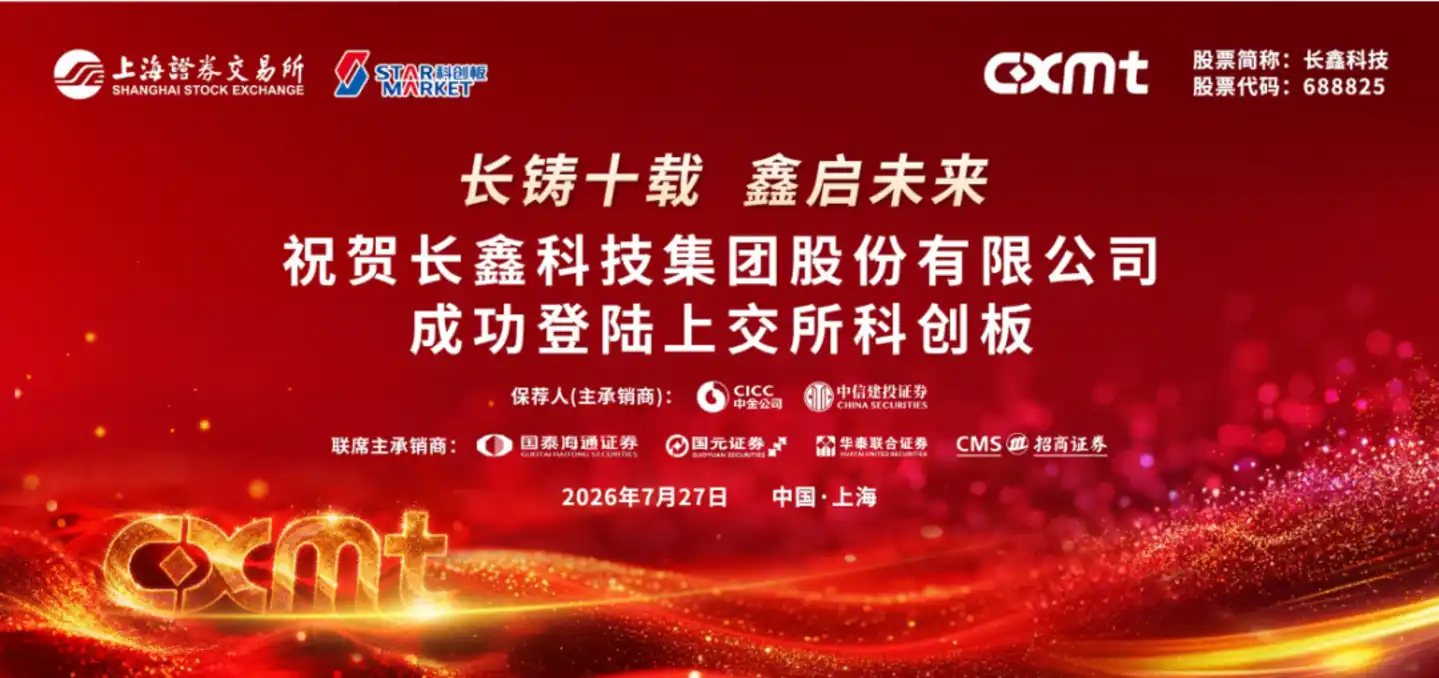
Image Source: ChangXin Technology

ChangXin Technology's growth trajectory has precisely and completely experienced such a cycle. In 2023, when the industry bottomed out, the company's revenue was only 9.087 billion yuan, with a net loss attributable to shareholders as high as 16.34 billion yuan. In 2024, the market began to recover, narrowing the loss to 7.145 billion yuan. In 2025, the explosion of AI demand triggered storage price hikes, with revenue jumping to 61.799 billion yuan and achieving its first annual profit of 1.875 billion yuan.

By the first quarter of 2026, its single-quarter net profit attributable to shareholders soared to 24.762 billion yuan—thirteen times the profit of the entire year 2025.

Going from a loss of tens of billions to earning 300 million per day took only two years. Such a speed of reversal is the most typical performance characteristic of a cyclical stock. Placing the DRAM price trend chart alongside ChangXin's profit curve shows almost perfectly aligned movements.

The steep profit climb did not stem from a sudden market share shift due to technological generational leaps; it was a systemic红利 release granted by the industry to all incumbents.

II. The Cycle Pendulum: How Long Can the Price Rise Last?

The core driver of this surge in performance boils down to one word: price.

In the first quarter of 2026, DRAM contract prices rose by 93% to 98% quarter-on-quarter. In the second quarter, general-purpose DRAM contract prices continued to rise by 58% to 63%. The company's gross profit margin consequently leapt from -2.19% in 2023 to 41.02% in 2025, approaching 65% in Q1 2026. The vast majority of the profit explosion came from the price surge.

The root cause of the price increase lies in the reallocation of capacity triggered by AI.

The three giants—Samsung, SK Hynix, and Micron—allocated 70% to 80% of their new capacity to HBM, the High Bandwidth Memory most critical for AI servers, which yields far higher profits than general-purpose products. This directly led to a significant contraction in the supply of general-purpose DRAM. Simultaneously, the DRAM demand for AI servers is eight to ten times that of traditional servers.

With supply being siphoned away and demand multiplying, a supply-demand gap was torn open. The money ChangXin earned in this round essentially came from the market space released when giants shifted production to HBM—it's the territory yielded by industry leaders pursuing higher profits.

However, the reverse movement of the cycle is already gathering force.

A wave of capacity expansion is sweeping the globe. The combined capital expenditure of the three giants is approaching $70 billion: Samsung's total investment in 2026 exceeds 110 trillion won, breaking the 100 trillion won mark for the first time; SK Hynix's capital expenditure is projected at $20.5 billion; Micron's capital expenditure for fiscal year 2026 is expected to exceed $25 billion, a year-on-year increase of over 80%.

ChangXin itself is also expanding, planning to grow from its current three 12-inch wafer fabs to seven, with a new Shanghai factory expected to commence operations in 2027.

Massive capital expenditure signifies a cliché yet harsh reality: today's high prices are breeding tomorrow's oversupply.

It takes two to three years for a wafer fab to be built and reach mass production. Every dollar invested today will translate into specific capacity figures in the next two to three years. When these new capacities are concentratedly released, whether demand remains robust is a question all storage manufacturers must face squarely.

The pace of price increases is also changing. TrendForce predicts that DRAM contract price increases will narrow to 13% to 18% in the third quarter of 2026. Downstream customers' wallets are stretched thin; some manufacturers are beginning to cut configurations or lower shipment forecasts.

Although prices are still rising, the slope has noticeably flattened. Multiple institutions judge that from the second half of 2026 to 2027, DRAM contract prices will maintain a high level with fluctuating increases, but the rate of increase will gradually narrow. Around 2028, as overseas new factory capacities complete their ramp-up, the supply-demand relationship may reverse and enter a downward channel.

The most critical variable in this process is HBM itself. HBM is currently the most profitable and rapidly growing segment of the memory market, and also ChangXin's most obvious shortcoming. ChangXin's HBM3 samples have been delivered to leading customers for verification, with mass production expected in 2026. However, Samsung and SK Hynix are already mass-shipping the more advanced HBM3E and moving towards HBM4.

The gap objectively exists; catching up takes time, and the cycle's pendulum won't stop and wait. Whether ChangXin can successfully tackle the HBM challenge before the next price decline determines whether it merely enjoyed this round's price increase红利 or truly gained the ability to穿越 cycles.

III. Conclusion

ChangXin Technology is a good company; this is beyond doubt.

It broke the monopoly of overseas giants in the DRAM market over a decade, giving China genuine话语权 in the global storage industry; its business is about the infrastructure of the digital economy; its growth is related to the security and autonomy of the national supply chain.

From an industrial perspective, ChangXin's rise is one of the most significant breakthroughs worthy of documentation in China's semiconductor field.

However, between a good company and a good investment often lies a清醒 recognition of the cycle.

In today's market, ChangXin Technology simultaneously carries two different narratives.

One narrative views it as a growth stock: vast space for domestic substitution, continuously climbing global market share, AI红利 just beginning to be released—these stories are real, forming the solid foundation for ChangXin's long-term value.

The other narrative views it as a cyclical stock: calculated based on projected 2026 profits, the dynamic price-to-earnings ratio is about 5 to 6 times,恰好 falling within the typical valuation range for cyclical stocks at peak prosperity; a market capitalization of 3.28 trillion yuan has already提前 digested growth expectations for many years to come.

These two judgments are not contradictory. ChangXin is an excellent company while also being a typical cyclical stock.

The cycle of the DRAM industry will not disappear because of the rise of a Chinese company. AI has indeed extended the duration of this cycle, but it has only changed the slope; it has not eliminated the cycle itself.

For investors, facing a cyclical stock at the peak of the cycle, what truly requires deep thought is: When the tide recedes, will there be sufficient preparation to handle the pullback?

Criptos en tendencia

Preguntas relacionadas

QAccording to the article, what are the two key structural characteristics of the DRAM industry that create its inherent cyclical nature?

AThe two key structural characteristics are: 1. DRAM products are highly standardized, with competition based primarily on scale and cost. 2. Supply adjustments have a significant time lag, as building and ramping up a new wafer fab takes several years, often leading to supply overshooting demand.

QWhat is identified as the primary driver behind ChangXin Technology's dramatic profit surge from 2023 to 2026 Q1?

AThe primary driver is the sharp increase in DRAM prices. The article states that the core reason for the profit surge is essentially one word: 'price'. The profit growth is largely attributed to price increases driven by AI-induced supply shortages.

QHow has the AI boom specifically affected the supply and demand dynamics for general-purpose DRAM, creating the opportunity for ChangXin?

AThe AI boom has redirected the major global memory makers (Samsung, SK Hynix, Micron) to allocate 70-80% of their new capacity to HBM production, which is more profitable. This has severely contracted the supply of general-purpose DRAM. Meanwhile, the demand for DRAM in AI servers is 8-10 times that of traditional servers. This supply-demand gap is the opportunity ChangXin captured.

QWhat is the author's view on whether AI has eliminated the cyclical nature of the DRAM industry for ChangXin Technology?

AThe author believes AI has not eliminated the cycle. The view is that 'AI has indeed extended the duration of this cycle and changed its slope, but it has not eliminated the cycle itself.' The inherent cyclicality of the DRAM industry remains.

QWhat two contrasting narratives does the market hold about ChangXin Technology according to the article's conclusion?

AThe market holds two narratives: 1. A growth stock narrative, focusing on its vast domestic substitution potential, rising global market share, and the early stages of AI红利 (AI红利). 2. A cyclical stock narrative, where its current high valuation at the peak of the cycle already prices in years of future growth, and its P/E ratio is typical for a cyclical stock at a peak.

Lecturas Relacionadas

From 'Western Learning Ants' to Korean Pension Funds: Why Does Korean Capital Continue to Flow to the US?

Summary: "From 'Western Ants' to National Pension: Why Korean Capital Continues to Flow to the U.S.?" South Korea’s capital is increasingly moving toward U.S. markets, driven by two key investor groups. Individual retail investors, known as "Western Ants," actively trade U.S. stocks overnight, seeking exposure to major tech firms and higher returns often unavailable in Korea’s concentrated domestic market. Simultaneously, the National Pension Service (NPS), managing over $1.16 trillion in assets, is expanding its global investment footprint. Facing demographic pressures and the sheer size of its fund, NPS has steadily increased overseas allocations, with over half its financial assets now invested abroad. A recent memorandum of understanding with six top U.S. venture capital firms (including Sequoia and a16z) marks a strategic extension into Silicon Valley’s private investment ecosystem, aiming to access growth-stage tech opportunities while leveraging external managers’ expertise. While both flows reflect limitations of Korea’s home market, their risk profiles differ sharply: retail investors often pursue speculative, concentrated bets, whereas NPS must ensure long-term, diversified returns for national retirement security. This outward shift also creates macroeconomic tensions, as demand for dollars from both groups pressures the Korean won, prompting coordinated measures between NPS and the central bank to mitigate currency volatility. Ultimately, Korea’s growing financial integration with global markets—especially the U.S.—signals a broader structural shift where citizens’ wealth and pension sustainability are increasingly tied to worldwide economic dynamics.

marsbitHace 4 min(s)

From 'Western Learning Ants' to Korean Pension Funds: Why Does Korean Capital Continue to Flow to the US?

marsbitHace 4 min(s)

This Strategy Earned Hefei One Trillion Yuan

This article analyzes the "Hefei Model" that enabled a municipal state-owned investment to generate paper profits exceeding one trillion yuan through the 2026 IPO of ChangXin Memory Technologies (CXMT). It argues against framing this success as a "lucky gamble," instead presenting it as the result of a deliberate institutional system designed to enable long-term industrial investment. The system comprises three core components. First, a **quantified risk-tolerance mechanism**, including a 40% loss allowance for venture funds and a clear "duty-fulfilled exemption" list, decouples project failure from personal career risk for decision-makers, allowing them to focus on industrial potential rather than personal liability. Second, **strategic investment in critical supply chain gaps**: Hefei doesn't just invest in "good" projects, but targets "missing" links essential for its key industries (appliances, displays, cars). The investment in CXMT aimed to fill the critical DRAM memory chip gap, subsequently attracting over 450 upstream and downstream firms and creating a full semiconductor cluster. Third, **institutional authorization for counter-cyclical investment**: Protected by the risk-tolerance framework, Hefei supported CXMT with increased investment during the 2023 global memory industry downturn, enabling it to scale production and capitalize on the 2025 AI-driven demand surge. The article concludes that the true lesson is not the specific investment but building the institutional infrastructure—quantified risk tolerance, deep industry chain analysis, and counter-cyclical mandates—that makes such long-term, strategic bets possible. It notes the final challenge is perfecting the exit mechanism to complete the investment cycle and transform paper gains into sustainable fiscal returns and reinvestment capacity.

marsbitHace 18 min(s)

This Strategy Earned Hefei One Trillion Yuan

marsbitHace 18 min(s)

Silicon Valley VC's On-the-Ground Observations of Chinese Entrepreneurship: A Harsher Capital Environment Breeding Fiercer Companies

A Silicon Valley VC's on-the-ground observations of China's startup ecosystem reveal a harsher capital environment forging more aggressive and execution-driven companies. Unlike Silicon Valley's patient capital focused on long-term growth, China's venture landscape is characterized by intense pressure for exits. Startups often face "equity in name, debt in reality" terms with strict timelines and personal founder liability, pushing IPO as the nearly mandatory exit path due to a virtually non-existent M&A market. This high-stakes system, while potentially fostering short-termism, cultivates extreme cost discipline, rapid execution, and formidable commercialization skills—traits evident as these companies expand overseas. The funding ecosystem comprises three main pools: local RMB funds (often government-backed with economic development mandates), domestic USD funds (more founder-friendly, like Sequoia China), and dwindling direct foreign capital. Financial Advisors (FAs) play a crucial intermediary role, packaging deals and navigating China's opaque, relationship-based business networks where platforms like LinkedIn haven't taken root. Underpinning it all is significant state influence through industrial policy, directing capital and incentives toward strategic sectors like semiconductors and AI. The result is a distinct, parallel innovation model—less forgiving than Silicon Valley's, but capable of concentrating resources, accelerating iteration, and producing fiercely competitive companies in targeted industries.

marsbitHace 24 min(s)

Silicon Valley VC's On-the-Ground Observations of Chinese Entrepreneurship: A Harsher Capital Environment Breeding Fiercer Companies

marsbitHace 24 min(s)

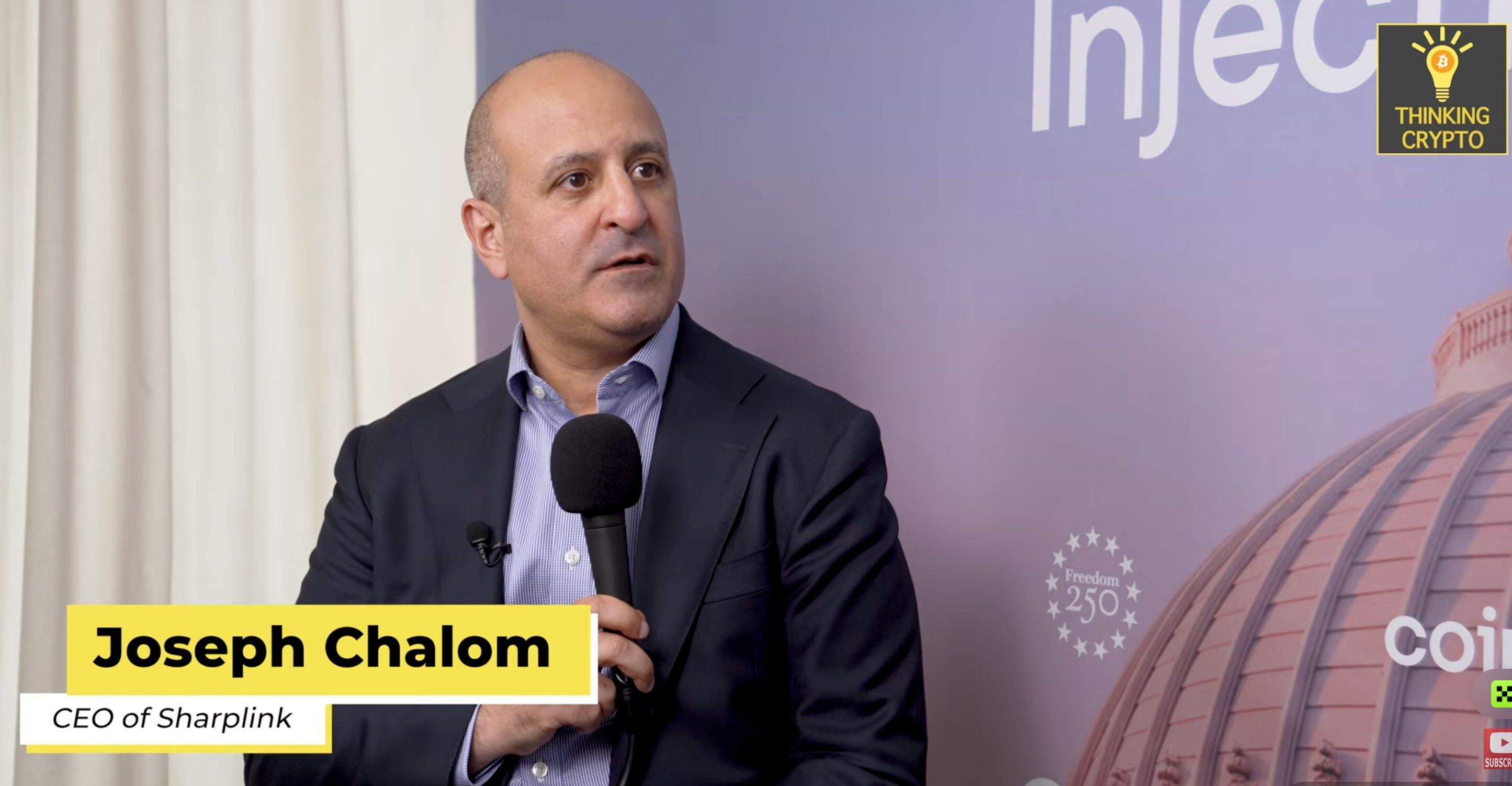
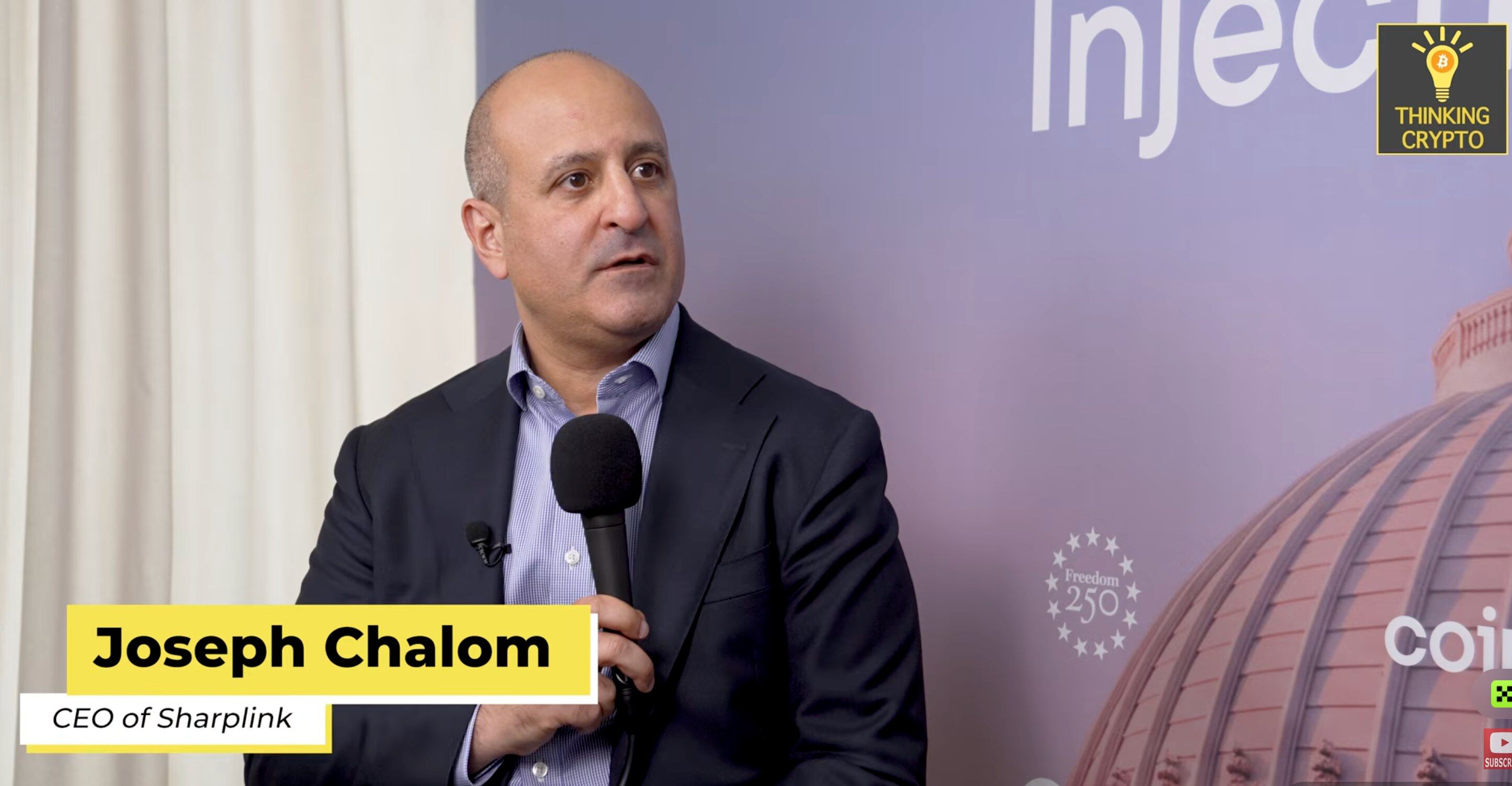
SharpLink's Helm: Buying Only, Never Selling, Making ETH Generate Profits Through the Cold Winter

SharpLink co-CEO Joseph Chalom shares his bullish outlook on Ethereum during the recent "Injective Summit 2026." Despite prevailing negative market sentiment, Chalom argues that fundamentals and data tell a different story: Ethereum dominates with over 50% of stablecoin transaction volume, nearly 60% of tokenized real-world assets (RWA), and remains the uncontested leader in DeFi. He attributes the communication gap and lack of confidence partly to the Ethereum Foundation's restructuring. In response, SharpLink, alongside ConsenSys and Bitmain, is funding three key spin-off teams from the Foundation: ETH Labs (for institutional-scale scalability), Ethereum Institutional (for business development and marketing), and EthSystems (for next-gen privacy and compliance solutions). Chalom emphasizes these are critical for accelerating institutional adoption. Regarding SharpLink's strategy, Chalom details a conservative, yield-focused approach. The firm holds 886,725 ETH, acquired with zero leverage or debt. They generate revenue by staking ETH and strategically deploying capital into DeFi protocols via a dedicated fund, aiming for returns above the native staking yield. This contrasts with some Bitcoin-focused firms that have become net sellers. On the broader institutional adoption of tokenization, Chalom sees current progress as just the beginning. He breaks it down into layers: stablecoins as the currency/value layer, tokenized assets as the exposure layer, and DeFi as the execution layer. He predicts regulatory clarity, like the potential Clarity Act, will be a major catalyst. A key future inflection point will be when fiduciary managers prefer tokenized, 24/7 tradable digital assets over traditional "analog" versions due to their programmability and instant settlement. In conclusion, Chalom positions SharpLink not just as an ETH accumulator and yield generator, but as an active "ecosystem steward," funding essential development and marketing initiatives to support Ethereum's long-term growth, which he believes is directly aligned with shareholder interests.

Odaily星球日报Hace 24 min(s)

SharpLink's Helm: Buying Only, Never Selling, Making ETH Generate Profits Through the Cold Winter

Odaily星球日报Hace 24 min(s)

Trading

Spot

Artículos destacados

Cómo comprar DAO

¡Bienvenido a HTX.com! Hemos hecho que comprar DAO Maker (DAO) sea simple y conveniente. Sigue nuestra guía paso a paso para iniciar tu viaje de criptos.Paso 1: crea tu cuenta HTXUtiliza tu correo electrónico o número de teléfono para registrarte y obtener una cuenta gratuita en HTX. Experimenta un proceso de registro sin complicaciones y desbloquea todas las funciones.Obtener mi cuentaPaso 2: ve a Comprar cripto y elige tu método de pagoTarjeta de crédito/débito: usa tu Visa o Mastercard para comprar DAO Maker (DAO) al instante.Saldo: utiliza fondos del saldo de tu cuenta HTX para tradear sin problemas.Terceros: hemos agregado métodos de pago populares como Google Pay y Apple Pay para mejorar la comodidad.P2P: tradear directamente con otros usuarios en HTX.Over-the-Counter (OTC): ofrecemos servicios personalizados y tipos de cambio competitivos para los traders.Paso 3: guarda tu DAO Maker (DAO)Después de comprar tu DAO Maker (DAO), guárdalo en tu cuenta HTX. Alternativamente, puedes enviarlo a otro lugar mediante transferencia blockchain o utilizarlo para tradear otras criptomonedas.Paso 4: tradear DAO Maker (DAO)Tradear fácilmente con DAO Maker (DAO) en HTX's mercado spot. Simplemente accede a tu cuenta, selecciona tu par de trading, ejecuta tus trades y monitorea en tiempo real. Ofrecemos una experiencia fácil de usar tanto para principiantes como para traders experimentados.

208 Vistas totalesPublicado en 2024.12.11Actualizado en 2026.06.02

Cómo comprar DAO

Discusiones

Bienvenido a la comunidad de HTX. Aquí puedes mantenerte informado sobre los últimos desarrollos de la plataforma y acceder a análisis profesionales del mercado. A continuación se presentan las opiniones de los usuarios sobre el precio de DAO (DAO).

活动图片