Robot Vacuums Have Been Competing for 20 Years, So Why Are 90% of Chinese Households Still Hesitant?

marsbitPublicado a 2026-06-15Actualizado a 2026-06-15

Resumen

The article explores why over 90% of Chinese households are still hesitant to adopt robotic vacuum cleaners despite two decades of industry development, identifying a core "trust gap" as the primary barrier. The central issue is not a lack of need, but user concerns about reliability in dynamic, real-world home environments. Common anxieties include the robot dragging pet waste, colliding with transparent objects, tangling in cords, scattering cat litter, getting stuck on thresholds, missing corners under furniture, and requiring high-maintenance bases that develop odors. The industry's past focus on competing on technical specs (suction power, mopping functions) has not adequately addressed these practical usability and trust problems. The piece then examines DJI's entry into the market with its ROMO 2 model as a potential new approach. Leveraging its expertise in spatial perception and obstacle avoidance from drones, DJI's solution emphasizes "less intervention" through three key principles: less manual re-cleaning, less user rescue missions, and less maintenance. Specific ROMO 2 features highlighted include advanced obstacle recognition (handling transparent objects and small items), adaptive leg mechanisms for climbing thresholds (up to 8.5cm), an extendable arm for reaching under furniture, AI for identifying and appropriately handling different mess types (e.g., avoiding scattering dry debris), and a self-cleaning base designed to minimize user upkeep. The article ar...

When she pushed open her front door after work, Ye Zi smelled a strange odor.

It turned out that her robot vacuum had dragged her puppy's waste across half the living room, even contaminating its docking station. What was supposed to be an automatic cleaning session turned into a scene of Ye Zi wearing a mask, cleaning both the floor and the machine.

Such experiences are not uncommon. Power cords, toys, transparent vases, door thresholds, low furniture, and chair legs are all variables a robot vacuum must confront upon entering a real home. It's supposed to reduce housework, but one misjudgment can turn a minor hassle into a major one.

This is also an awkward point for the robot vacuum industry. Despite years of intense competition, market penetration remains below 10%. The core issue is that while it has proven "a machine can sweep floors," it hasn't sufficiently proven "users can safely hand over their floors to the machine."

Behind the low penetration rate is a barrier of trust.

I. User Hesitancy: Not a Lack of Need, But a Lack of Confidence

Robot vacuums don't actually face a standard floor, but a dynamic household.

These dynamic variables dictate that a robot vacuum cannot merely accomplish "vacuuming" + "mopping." It must also assess the environment, identify risks, plan routes, handle corners and edges, and disturb people as little as possible.

In recent years, industry competition has heavily focused on specs: suction power gets stronger, mop configurations constantly change, docking station features keep adding up, SKUs proliferate, and product combinations become increasingly complex. Improving specs is certainly meaningful, but it hasn't fully addressed users' most pressing concerns:

  • Will it knock over a vase?

  • Will it get tangled in wires?

  • Will it scatter cat litter?

  • Will it get stuck on a threshold?

  • Will it miss the space under cabinets and around chair legs?

  • Will the docking station start to smell after a few uses?

If these problems aren't consistently solved, it's hard to put users at ease.

This is precisely why robot vacuums have yet to become a household staple appliance like refrigerators or washing machines.

Therefore, what the robot vacuum industry truly needs to compete on in the next phase is not "how powerful it looks," but "how few hassles it causes in use."

II. DJI's Approach: Less Manual Sweeping, Less Rescue, Less Maintenance

Against this backdrop, DJI's entry into the robot vacuum segment becomes noteworthy.
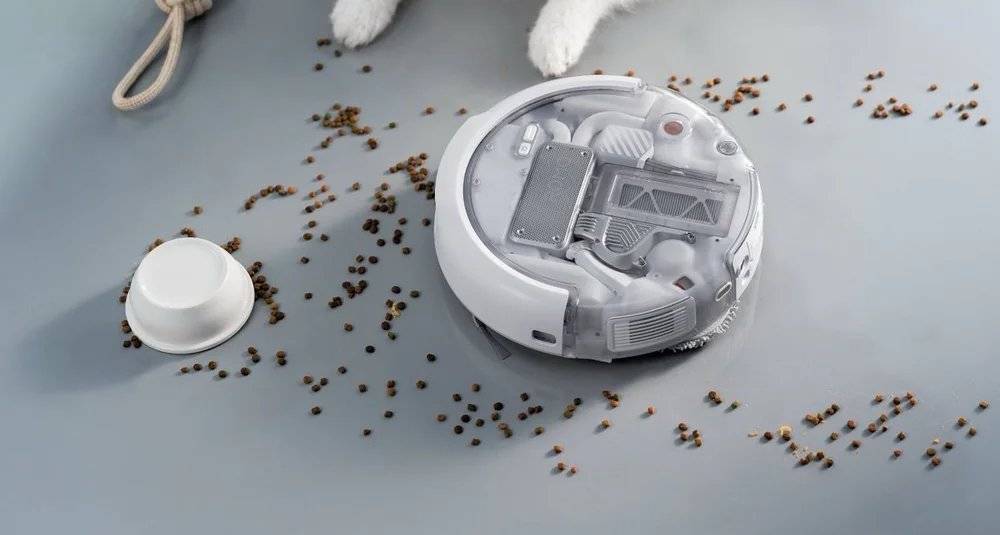
As the undisputed global leader in consumer drones, DJI has also rapidly risen to the top in action cameras and handheld imaging devices. Its repeated success in entering new categories isn't luck, but the application of a transferable skill set: spatial perception, environmental recognition, motion control, and systems engineering. Applied to the home floor, these translate precisely into obstacle avoidance, path planning, coverage, and stability—the very core experience issues for robot vacuums.

The recently launched new product, ROMO 2, materializes this transfer of capability.

Its product logic revolves around three keywords: less manual sweeping, less rescue, less maintenance.

1. Obstacle Avoidance: For the First Time, "Tidying the Floor Before Starting" Becomes Optional

Many people only realize after buying a robot vacuum that they must first perform "pre-cleaning": picking up cables, putting away toys, moving small objects to prevent the machine from getting stuck, bumping into things, or dragging them around.

This is a core pain point for robot vacuum complaints. Due to insufficient recognition accuracy, they either directly knock over transparent glass vases or swerve too early, leaving large areas for manual touch-up cleaning.
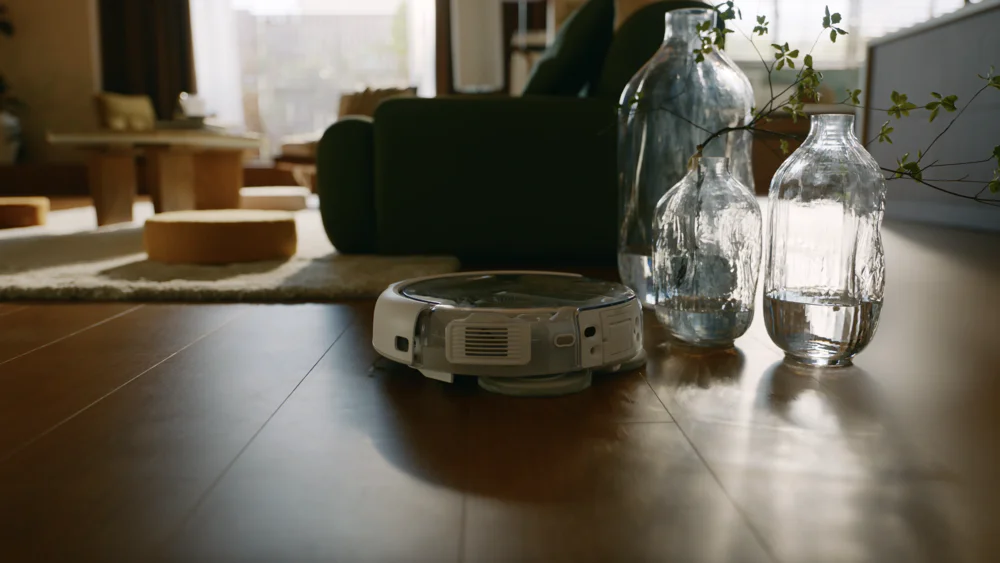
This is especially true in households with children or pets, where floor environments are often less predictable. Lego pieces, cards, data cables, cat toys can appear on the floor at any moment.

ROMO 2's obstacle avoidance approach clearly continues DJI's drone technology path. It enhances recognition of transparent objects, small objects, and low obstacles through millimeter-level sensing, active light sources, and a new generation of avoidance algorithms.

More importantly, it doesn't simply "see an obstacle and detour." It first judges the object type and position, then decides whether to approach, pause, or go around. For example, when encountering glass, mirrors, or data cables, it handles them more cautiously to reduce collisions, tangling, and accidental dragging.

The resulting change in experience is direct: users don't need to clear the floor before every use, and the robot vacuum no longer feels like a "semi-automatic device" that constantly needs supervision.

2. Obstacle Crossing: Not Hard Charging, But an Elegant "Leg Lift"

A common embarrassment for robot vacuums is getting trapped by home thresholds, floor tracks, or sliding door rails.

These are almost non-existent for humans, but for a robot vacuum, they can be an insurmountable hurdle. The machine gets stuck at the kitchen or balcony doorway, requiring human intervention. Many users even resort to installing additional ramp pads, which adds cost and disrupts the home's aesthetics.

ROMO 2's approach isn't "hard charging." It first identifies the obstacle's height and position, then crosses it using dynamic adaptive mechanical "feet." Depending on the scenario, it can choose synchronized two-wheel crossing or a step-by-step, "hurdling" style crossing.

Its dual-layer continuous crossing capability reaches 8.5cm. The significance of this number is that many thresholds, tracks, and level differences that previously required manual intervention can now be handled by the machine itself.

For users, improved obstacle crossing isn't about showing off technical prowess. It means the robot vacuum can truly perform cross-area cleaning. Kitchen, balcony, and bathroom doorways cease to be frequent "SOS points."

3. Cleaning: From "Can Reach" to "Cleans Intelligently"

People have come to accept that robot vacuums inevitably have blind spots requiring manual touch-up.

Cleaning blind spots roughly fall into two categories: areas hard to reach, like around table and chair legs, under cabinet overhangs, beneath refrigerator doors; and scenarios hard to clean thoroughly, like mixed dry and wet messes. The classic case: a child knocks over a breakfast plate, spilling milk on the floor with dry cereal scattered around.

For the first type of blind spot, ROMO 2 primarily uses LiDAR and an ultra-long extending mechanical arm.

The mechanical arm increases its coverage length by 7.8cm. Paired with an independent TOF LiDAR, it can more accurately perceive the environment, discern whether ahead is irregular furniture, table legs, or cabinet undersides, and adjust its extension angle accordingly to quickly clean blind spots.

For instance, in the dining area, ROMO 2 can navigate around table and chair legs, easily sweeping up floor debris without bumping and moving furniture, and more precisely removing crumbs. Users no longer need to move dining chairs beforehand, clear the floor, or perform touch-up cleaning.

The second type of blind spot stems from floor environment complexity, requiring evolution in both "brainpower" and "physical capability."

ROMO 2 enhances AI recognition to accurately identify multiple types of dirt and match corresponding cleaning strategies. This is also an industry-first innovation.

For example, upon detecting cat litter, it lowers its movement speed and side brush rotation, approaching slowly to avoid scattering; upon detecting liquid stains, it first detours to clean surrounding dry debris, then returns, extends the arm, and cleans in a "回" shaped pattern without the robot contacting the liquid, preventing "dirty mopping dirty."

4. Self-Cleaning Capability: No Need to Worry About It

Robot vacuums have another often-overlooked problem: after cleaning the floor, the trouble often shifts to the user.

The mop pads might seem clean, but wastewater, hair, and fine debris generated during cleaning can remain in the docking station base, corners, crevices, and water channels. After some use, the station can become sticky, smelly, and users still need to manually disassemble and clean the base, wipe死角.

High maintenance frequency essentially replaces the original "sweeping and mopping" with "servicing the robot vacuum."

ROMO 2's emphasis on "365-day annual maintenance-free" targets precisely this issue.

Through its station self-cleaning system, it reduces residue buildup and manual cleaning frequency. During cleaning, it minimizes wastewater overflow and enhances the thoroughness of station rinsing. For example, the station base uses materials less prone to trapping dirt, coupled with high-pressure water flow, waste suction, and air duct systems to automate actions like mop washing, wastewater drainage, and station cleaning as much as possible.
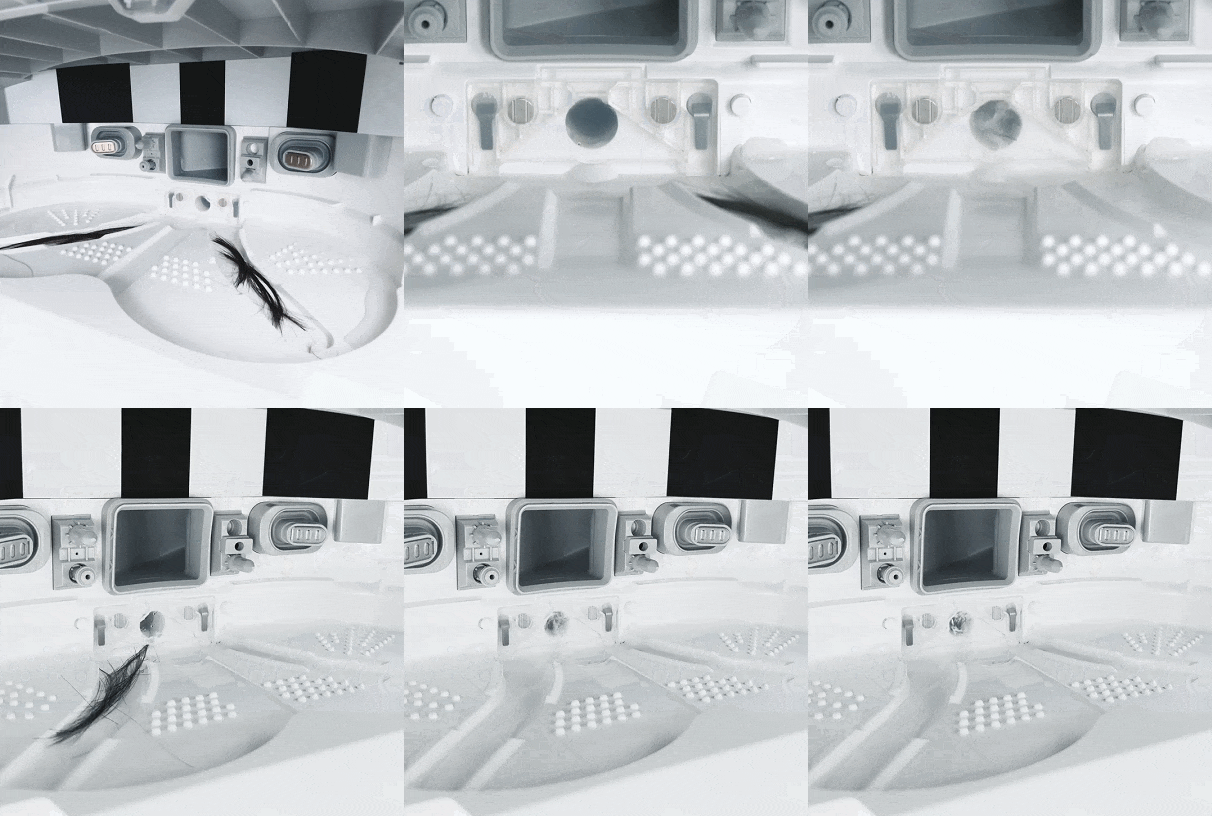
These technical details may not be overtly noticeable in daily use, but they determine one outcome: after the machine finishes cleaning, users don't need to clean the machine next. This is the true value of "less maintenance."

5. Detail Refinement: Carpets, Hair, and Design

For more specific home scenarios, ROMO 2 also incorporates targeted designs.
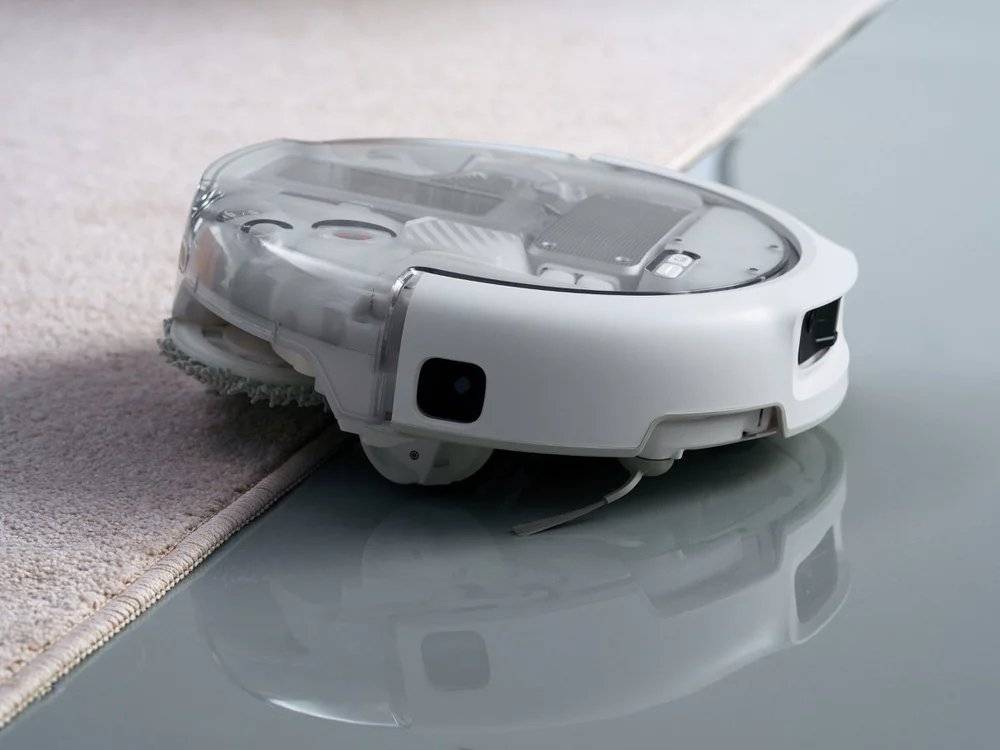
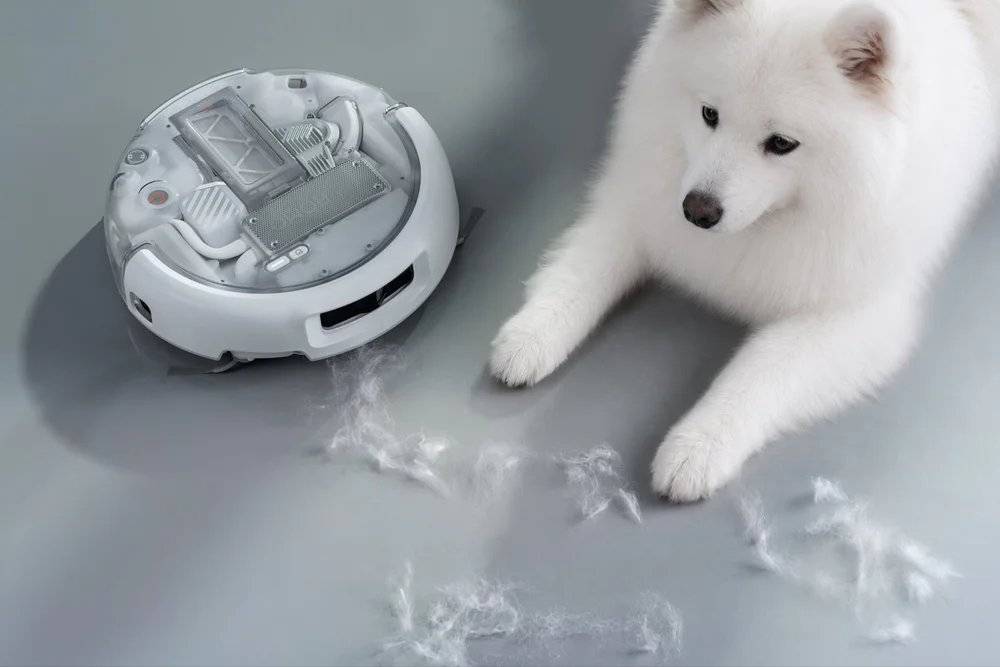
For carpet cleaning, it uses 36,000Pa focused suction and intelligent pressure boost to handle dust and debris deep within carpet fibers. For pet-owning or long-haired households, it employs dual-disc mops and a dual-coverage structure to reduce hair tangling and cleaning omissions.
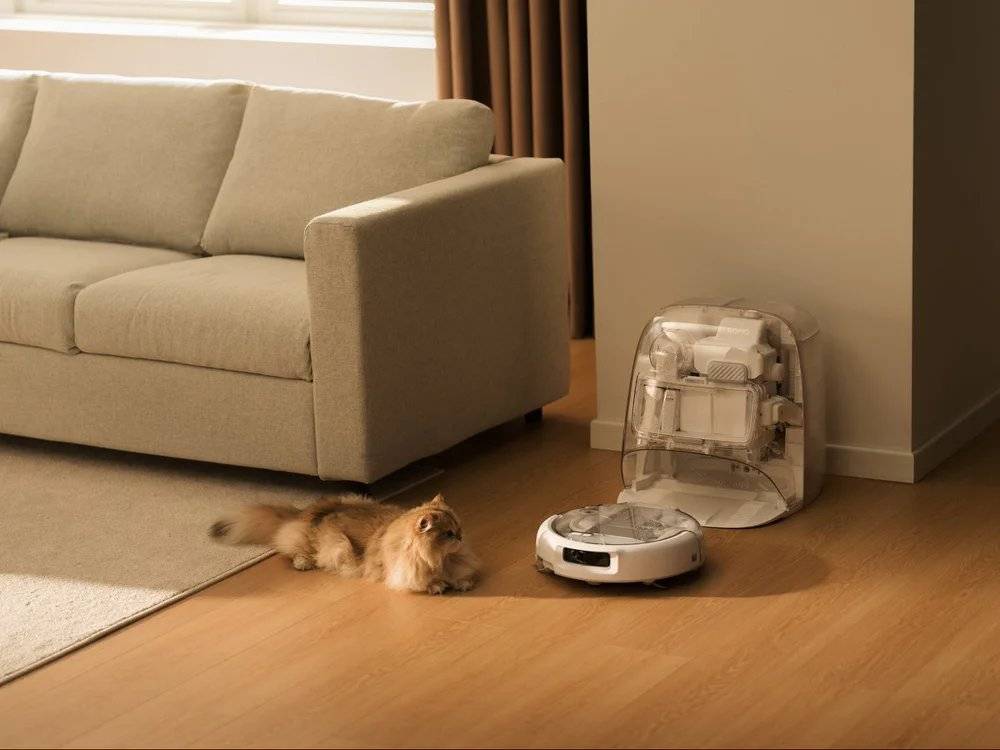
Design-wise, ROMO 2's transparent aesthetic also differentiates it from traditional robot vacuums. As an appliance meant to stay in the home long-term, appearance isn't just an aesthetic issue; it affects whether it can blend naturally into the living space.

Overall, ROMO 2 isn't simply about stacking robot vacuum specs another level higher. It更像是 translates DJI's capabilities in spatial perception, obstacle avoidance control, and systems engineering into specific cleaning experiences: less frequent manual touch-up, less constant rescue, less repeated maintenance.

This is the most noteworthy aspect of DJI's entry into this segment.

III. What the Industry Truly Needs to Compete On Is Trust

Any frequently used appliance first needs to solve one problem: establish trust. But currently, many users are stuck at step one: not knowing whom to trust.

Brand strength is foundational. Data from research firm Ipsos shows that globally, 77% of respondents are more inclined to trust new products from familiar brands. That is, before even encountering the specific product, they screen decisions based on brand. When trust is strong enough, users may not even spend much time researching specs. This is one advantage for DJI entering the robot vacuum field.

Over the past 20 years, DJI has long held a leading position in the global consumer drone market; over the past 3 years, it has risen to global prominence in handheld intelligent imaging; Pocket 3 sold millions, and Pocket 4, recently launched, also quickly gained market attention. Throughout this process, DJI has built a distinctive brand culture and appeal.

Leveraging brand strength as a foundation, DJI excels at applying its technological积累 to new fields, bringing fresh problem-solving approaches to industries.

It also "listens to advice."

During ROMO 2's development, the team collected extensive user feedback. For instance, some users mentioned wanting it to display drying time like a washing machine, or wanting low-water alerts—features ROMO 2 ultimately incorporated.

In the robot vacuum segment, which requires patience, DJI's long-termism基因 is helping reduce industry noise, refocus on user experience itself, and form a clearer product narrative: not competing on specs, not showing off tech, but establishing a core user experience of "less intervention." This might attract more users to try and gradually help them build trust.

Of course, whether a single product can change an industry requires longer-term验证. Robot vacuums aren't发布会 products; repurchase, retention,闲置 rates, and word-of-mouth are the real tests.

The development of the smartphone industry might serve as a reference.

Before Steve Jobs pulled out that first iPhone in 2007, global smartphone penetration was only around 5%. Most products had bulky physical keyboards and complex operation. The iPhone boldly did subtraction, removing the physical keyboard, replacing buttons with touchscreens, returning to user experience, and focusing on three core functions: calling, browsing the internet, and listening to music.

The rest, as they say, is history. People also habitually use the "iPhone moment" to define key inflection points in various industries.

This is also one reason ROMO 2 deserves close attention. It refocuses the product on user experience, making it simpler, easier to use, and more stable—much like the iPhone's initial approach.

As robot vacuums shift from spec competition to trust competition, how will a company with technological积累 and cross-domain capabilities reorganize the cleaning, obstacle avoidance, maintenance, and interaction experience? Will it bring about the "iPhone moment" for the robot vacuum industry?

Conclusion

That messy cleaning incident Ye Zi experienced points not to utter user失望 in robot vacuums, but to a real test this category must face: a home is not a laboratory.

Real homes have pets, toys, wires, thresholds, furniture gaps, and various unplanned surprises. Whether a robot vacuum can clean thoroughly is just the first step. Whether it can understand the environment, avoid risks, cover corners and edges, clean itself, and trouble people as little as possible determines if it can become a reliable household helper.
Robot vacuums have developed to a point where specs are already plenty热闹. The next phase of competition must ultimately return to a simpler question: do users dare to hand over their home floors to it?

Whoever can consistently deliver less manual sweeping, less rescue, and less maintenance will have a chance to truly sway those 90% of Chinese households still hesitating.

Preguntas relacionadas

QWhy are over 90% of Chinese households still hesitant to adopt floor-cleaning robots despite 20 years of industry development?

AThe primary reason is a lack of user trust. While the technology can clean, current products have not consistently proven they can reliably handle the dynamic, unpredictable environments of real homes (e.g., avoiding obstacles like pet waste or wires, navigating thresholds, cleaning corners thoroughly, and maintaining themselves without frequent human intervention). This reliability gap prevents users from feeling confident enough to fully delegate floor cleaning to the machine.

QAccording to the article, what is the core challenge preventing floor-cleaning robots from becoming a basic household appliance like refrigerators or washing machines?

AThe core challenge is moving beyond competing on technical specifications (e.g., suction power, mopping functions) and focusing on solving real-world usability problems. The article argues that the next phase of competition should center on 'trust'—specifically, creating a user experience that requires 'less manual touch-up cleaning, less rescuing of the robot from stuck situations, and less maintenance' of the robot itself.

QHow does the DJI ROMO 2 robot attempt to address the key user pain point of 'pre-cleaning' before use?

AThe DJI ROMO 2 addresses 'pre-cleaning' by significantly improving its obstacle avoidance capabilities. Leveraging technologies from DJI's drones (like millimeter-level perception and active lighting), it can better identify and intelligently navigate around transparent objects, small items, and low-lying obstacles. This reduces the need for users to constantly clear the floor of cables, toys, or other objects before starting the robot, making its use more convenient.

QWhat are the two main types of cleaning 'blind spots' mentioned in the article, and how does the ROMO 2 tackle them?

AThe two main types of blind spots are: 1) Hard-to-reach areas (like around table/chair legs, under cabinets). ROMO 2 uses a TOF laser radar and an extendable mechanical arm to sense and reach into these spaces. 2) Hard-to-clean scenarios (like mixed dry and wet waste, e.g., spilled milk and cereal). ROMO 2 uses enhanced AI to identify different types of debris (like cat litter or liquid stains) and adapts its cleaning strategy accordingly (e.g., slowing down to avoid scattering, or cleaning dry debris first before tackling liquids).

QWhat parallel does the article draw between the current state of the floor-cleaning robot industry and the early smartphone market?

AThe article draws a parallel to the early smartphone market before the iPhone, which had low penetration (~5%) and complex, clunky devices. It suggests that DJI's approach with the ROMO 2—focusing on simplifying the user experience, improving core reliability, and moving away from a pure specification war—mirrors the 'iPhone moment' that redefined smartphones. The key question posed is whether this focus on building trust through a 'less intervention' experience could trigger a similar拐点 (inflection point) for floor-cleaning robots.

Lecturas Relacionadas

Blockchain Has Finally Started to Sail into the Mainstream After 18 Years

Blockchain Finds Its True Path After 18 Years: Becoming the Financial Backbone for AI Agents and Autonomy This analysis explores a pivotal shift in the blockchain and crypto investment landscape, driven by the dominance of AI. Major venture capital firms, including Variant, Paradigm, Haun Ventures, and YZi Labs, are moving beyond pure "crypto" investment theses. They are expanding their focus to AI, robotics, and frontier tech, signaling that blockchain is no longer seen as a standalone sector but as an underlying infrastructure layer. The core argument is that blockchain's killer application may not be user-facing apps, but rather providing the economic rails for the coming wave of AI agents, autonomous robots, and automated systems. Key capabilities like self-custody wallets, programmable stablecoins for micropayments, on-chain identity, and verifiable smart contracts are positioned as essential for a future where machines conduct economic activity. The recent $1.4 billion investment by Tether (via its venture arm) in German robotics company NEURA Robotics exemplifies this, aiming to embed Tether's wallet tools directly into robots for autonomous transactions. While many "AI + Crypto" projects remain superficial, the article concludes that true value lies where crypto is a necessary component—enabling machine-to-machine payments, agent autonomy, verifiable data provenance, and open financial settlement for the AI era. For crypto venture capital, this convergence with AI represents both an adaptation to shifting capital flows and a potential path to unlocking the large-scale, non-speculative utility the industry has long sought.

marsbitHace 4 min(s)

Blockchain Has Finally Started to Sail into the Mainstream After 18 Years

marsbitHace 4 min(s)

Blockchain has finally begun sailing toward the main channel after 18 years

After 18 years of development, blockchain technology is beginning to move from a specialized niche into mainstream adoption, according to a recent industry analysis. The shift is reflected in the changing strategies of major crypto venture capital firms, which are expanding their focus beyond pure "digital ownership" towards broader themes like "autonomy." The report highlights that leading VC firms like Variant, Paradigm, Haun Ventures, and YZi Labs are broadening their investment mandates to include not only crypto but also artificial intelligence (AI), robotics, biotech, and other frontier technologies. This reflects a recognition that the isolated "crypto investment" narrative is losing appeal to limited partners (LPs) as capital and attention increasingly flow toward AI and other high-growth tech sectors. A key emerging thesis is that blockchain's most significant future application may not be as a consumer-facing product, but as the underlying economic and settlement infrastructure for the AI era. As AI agents and autonomous systems become more prevalent, they will require programmable, global, and low-cost payment networks (like stablecoins), verifiable digital identities, and secure wallets to manage transactions and assets on behalf of users. The investment by stablecoin issuer Tether into robotics company NEURA, with plans to integrate its wallet technology, is cited as a prime example of this convergence. However, the article cautions that simply labeling projects as "AI + Crypto" is insufficient. True value lies in integrations where blockchain technology is essential—such as enabling machine-to-machine micropayments, verifiable data provenance for AI, or transparent governance for autonomous organizations—rather than being a superficial marketing add-on. In conclusion, while AI currently dominates the tech narrative and capital flows, it may ultimately create the real-world, high-frequency demand that the crypto industry has long sought. For crypto VCs and projects, the path forward is to position blockchain not as a competing sector, but as a critical foundational layer powering autonomy and economic activity in an AI-driven future.

链捕手Hace 10 min(s)

Blockchain has finally begun sailing toward the main channel after 18 years

链捕手Hace 10 min(s)

Y Combinator Co-founder: How to Make a Billion Dollars?

The Y Combinator co-founder argues that becoming a billionaire by founding a successful startup is not only possible but demonstrably achievable without unfair or unethical practices. He disputes a politician's claim to the contrary, using the example of a founder whose company grew at 93% monthly solely through creating a product users loved and recommended. The core mechanism is exponential growth. A conservative 15% monthly growth rate compounds to a 4384x increase over five years, which can easily lead to billion-dollar valuations and founder wealth. The process depends on two key variables: the growth rate and the duration it can be sustained. A high growth rate stems from a great product that users naturally promote, while a long duration requires a large enough market. For aspiring founders, especially young ones, the simplest path is to build something they and their friends genuinely need. Young people's current needs often predict future mass-market trends. He advises against actively "searching" for ideas, as this tends to filter out unconventional but promising ones. Instead, inspiration should come from working on interesting projects with friends, as many iconic companies (e.g., Apple, Facebook) started this way. Ultimately, building a massively valuable startup is not about exploitation but empathy: deeply understanding a user group and building a product that significantly improves their lives. This, powered by exponential growth in a large market, is the legitimate path to immense wealth creation.

Foresight NewsHace 13 min(s)

Y Combinator Co-founder: How to Make a Billion Dollars?

Foresight NewsHace 13 min(s)

The 800V Voltage Standard Championed by Nvidia: Which Infrastructure Providers Stand to Benefit?

NVIDIA is actively promoting the 800VDC architecture as a key direction for its next-generation AI factories and high-power racks, particularly for the upcoming Rubin and Kyber platforms. The primary driver is the rapidly increasing power density of AI racks, with designs like GB200/GB300 NVL72 reaching 120-140kW and future systems potentially hitting 180-220kW. At such high power levels, traditional low-voltage power delivery becomes inefficient due to massive current, leading to significant copper use, cable bulk, heat, and power loss. The 800VDC standard aims to increase efficiency by transmitting power at higher voltage and lower current to the rack before stepping it down locally for GPUs. NVIDIA claims this can improve efficiency by up to 5%, reduce total cost of ownership (TCO) by up to 30%, and cut copper usage by approximately 45%. This shift redefines infrastructure roles, pushing power engineering to the forefront alongside GPU performance. Key beneficiaries and ecosystem partners highlighted include: 1. **Power Infrastructure Providers:** Companies like Vertiv, Schneider Electric, Delta Electronics (台达电), and Korean firms LS Electric and HD Hyundai Electric are involved in designing next-gen AI factory power distribution, rack power supplies, and backup systems. 2. **Power Semiconductors:** Suppliers of SiC/GaN devices, such as Infineon and STMicroelectronics, are better suited for high-voltage, high-efficiency conversion in this new architecture. 3. **Connectivity & Structure:** The focus shifts to high-reliability components like busbars, high-voltage connectors, and advanced PCBs that meet stricter insulation and safety requirements. 4. **Liquid Cooling & Rack ODM:** As power and heat density rise, liquid cooling becomes critical. Full-rack system integrators (e.g., Dell, Wiwynn, Wistron) must now demonstrate robust pre-delivery testing capabilities, including burn-in testing under full load, requiring significant power and cooling infrastructure in their factories. The transition is not immediate for all data centers but is targeted at high-density AI factories. NVIDIA’s 800VDC ecosystem is in a preparatory phase, with full-scale production expected to align with the 2027 launch of Kyber rack-scale systems. The investment thesis revolves around which companies can demonstrate proven product integration, customer validation, and reliable delivery of complete, high-power AI rack systems, making power, cooling, and testing capabilities new critical variables in the AI infrastructure value chain alongside GPUs.

marsbitHace 33 min(s)

The 800V Voltage Standard Championed by Nvidia: Which Infrastructure Providers Stand to Benefit?

marsbitHace 33 min(s)

Did 'Unlimited Minting' Actually Happen? Zcash Founder Responds to Four Major Market Concerns

The Orchard shielding pool in the privacy cryptocurrency Zcash was recently found to have contained a critical counterfeiting vulnerability that existed for four years. This discovery caused significant market panic and a sharp drop in the price of ZEC, though it has since recovered partially. Zcash founder Zooko Wilcox addressed four key questions raised by the vulnerability. First, while it's unknown if the bug was exploited, he believes it likely was not, citing advanced, targeted discovery methods, a rapid response to freeze the pool, and the typical "smash-and-grab" nature of past crypto exploits. Second, he states that if no exploitation occurred, all legitimate user funds in Orchard are recoverable. However, cautious users moving funds should be aware of privacy trade-offs and other risks involved in transferring to transparent or Sapling pools. Third, users currently cannot independently verify that the total ZEC supply hasn't been inflated due to this bug. However, the proposed "Ironwood" network upgrade will restore this ability by permanently sealing the Orchard pool. This will prevent any counterfeit funds from circulating and allow anyone running a node to cryptographically verify that the supply cap has not been breached. Finally, regarding other undiscovered vulnerabilities, Wilcox notes that intensive ongoing audits by multiple teams, including using advanced AI-assisted tools, have so far found no other counterfeiting bugs. This provides increased, though not absolute, confidence. In conclusion, while assessments suggest the bug was likely unused and funds are safe, the core issue was the loss of user-verifiable supply integrity. The Ironwood upgrade is presented as the solution, aiming to restore trust by allowing users to independently verify Zcash's supply security without relying on third-party assurances.

marsbitHace 34 min(s)

Did 'Unlimited Minting' Actually Happen? Zcash Founder Responds to Four Major Market Concerns

marsbitHace 34 min(s)

Trading

Spot
Futuros
活动图片