Profits Fall by a Quarter: Why Tether Abandoned Its $20 Billion Financing Plan

marsbitPublicado a 2026-02-05Actualizado a 2026-02-05

Resumen

In the face of a cooling crypto market and investor skepticism, Tether, the world's largest stablecoin issuer, has significantly scaled back its ambitious fundraising plans. Initially targeting $15-20 billion, which would have valued the company at $500 billion, the firm is now considering raising only about $5 billion. CEO Paolo Ardoino downplayed the original target, calling it a "misunderstanding" and a maximum cap, not a goal, while emphasizing that Tether is highly profitable and doesn't urgently need the capital. Despite the success of its USDT stablecoin, which has a market cap of approximately $185 billion, Tether faces persistent investor caution. Concerns revolve around its $500 billion valuation—comparable to major AI firms and SpaceX—ongoing regulatory scrutiny, and the lack of a full independent audit, relying instead on quarterly attestations. Ardoino defended the valuation, contrasting Tether's substantial profits with the losses of highly-valued AI companies. While new U.S. stablecoin legislation and competitor Circle's IPO have boosted momentum, regulatory risks and Tether's controversial history remain hurdles. The company's profits fell by about a quarter in 2025, attributed to declining Bitcoin prices, though it gained $8-10 billion from its gold holdings. Tether's massive scale has made it a major player in U.S. Treasuries and gold markets, positioning it as a critical bridge between traditional finance and the volatile crypto world.

Editor's Note: Against the backdrop of a cooling crypto market and pressured valuation narratives, Tether finds itself in a delicate position. On one hand, the continued expansion of USDT has made it an undeniable 'new financial player' in the U.S. Treasury and gold markets. On the other hand, a lofty $500 billion valuation expectations, an incomplete comprehensive audit, and long-standing regulatory and compliance controversies continue to make potential investors cautious.

Tether's next move may reflect not only its own choices but also the practical boundaries the entire stablecoin industry is facing.

The following is the original text:
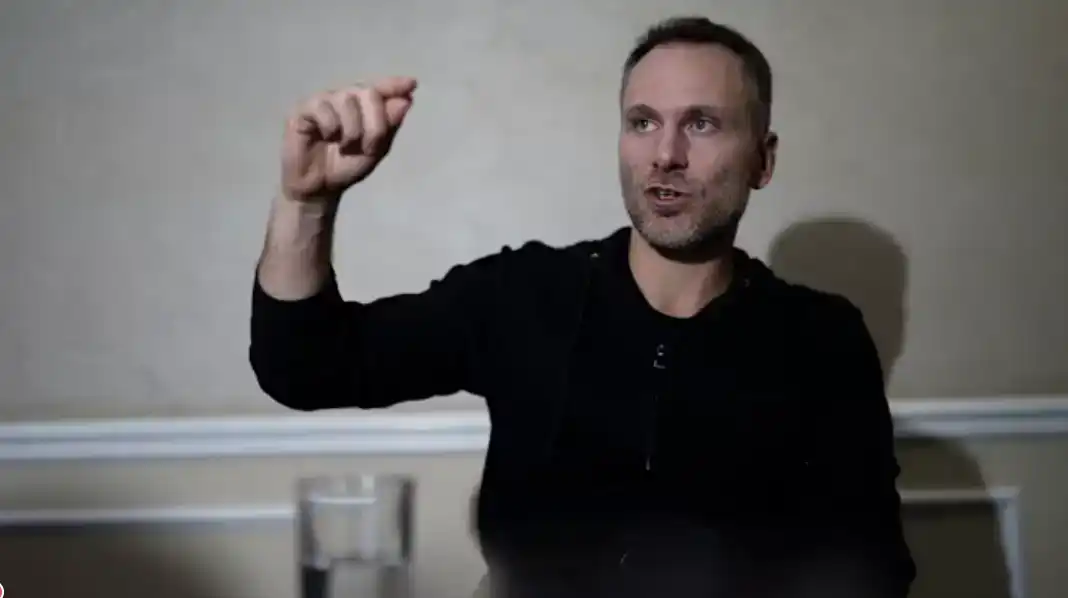
As investors expressed skepticism about its $500 billion valuation target, the CEO of Tether, the world's largest stablecoin issuer, proactively downplayed expectations and attention regarding its financing scale.

This crypto group, registered in El Salvador, initiated financing negotiations last year, planning to raise $15 to $20 billion. Had the deal been completed, it would have placed Tether among the world's most valuable private companies.

But according to informed sources, after encountering investor hesitation, Tether's advisors have begun exploring the possibility of raising only about $5 billion.

Tether CEO Paolo Ardoino downplayed the potential financing scale, calling the previously stated $15 to $20 billion target "a misunderstanding."

"That number was not our target; it was just the maximum we were willing to sell," he said in an interview. "We would be equally happy not selling a single cent."

Ardoino stated that Tether is highly profitable and has received "significant interest" at the $500 billion valuation level. He added that the company has not yet decided how much equity to sell, partly because insiders are reluctant to reduce their holdings.

The company's dollar-pegged stablecoin, USDT, currently has a scale of approximately $1.85 trillion and is regarded as the "reserve currency" of the digital asset market. Control of Tether is concentrated in the hands of a small group of long-serving executives.

The market has been closely watching Tether's progress in attracting well-known investors, seeing it as a key indicator of investor interest in the crypto industry. It is widely believed that this move is more about consolidating Tether's credibility and network, as the company, generating billions of dollars in profit annually, does not urgently need new capital.

Following Trump's election as president, the market was once boosted by expectations of a more friendly U.S. regulatory environment for digital assets. However, over the past six months, as traders retreated from high-risk speculative assets, the crypto market has seen a significant pullback.

Some investors have privately expressed concerns about the $500 billion valuation, which would place Tether among the top private companies globally, alongside AI firms like OpenAI and Anthropic, as well as Musk's SpaceX and TikTok's parent company ByteDance.

Ardoino argued that Tether—which disclosed profits of approximately $10 billion last year, primarily from returns on the asset reserves backing USDT's value—deserves a valuation comparable to these still-unprofitable AI model companies.

"These AI companies make about the same amount of money as we do, just with a huge minus sign in front," he said. "If you're willing to believe an AI company with a massive minus sign in front is worth $800 billion, that's your choice."

Both Tether and its financing advisor, Cantor Fitzgerald, declined to comment on the size of this financing. The investment bank, run by the children of U.S. Commerce Secretary Howard Lutnick, also holds a stake in Tether.

Informed sources cautioned that the negotiations are ongoing and the financing terms could still change; if the overall crypto market strengthens again, investor sentiment could also reverse.
Ardoino stated that the new U.S. stablecoin legislation signed into law by Trump, coupled with the listing of U.S. rival Circle last year, has further increased market attention and momentum for Tether. Tether recently also launched a new token in the U.S. that complies with this regulatory framework.

But informed sources said some potential investors remain cautious about the regulatory risks surrounding Tether. Since its founding in 2014, this crypto group has long faced scrutiny, with controversies primarily focusing on whether its tokens are used for illegal activities and the transparency and quality of its asset reserves.

In recent years, Tether has begun publishing quarterly reserve attestations by the accounting firm BDO Italia, but it has never undergone a full independent audit.

Ardoino stated that the company has demonstrated the depth of its technical tools for collaboration with various law enforcement agencies to potential investors, to prove its capabilities in compliance and law enforcement cooperation.

S&P Global Ratings downgraded Tether's reserve rating to the lowest tier in its system late last year, citing its increasing exposure to high-risk assets like Bitcoin and gold. In response, Ardoino said at the time: "We wear your disdain as a badge of honor."

Since 2020, the growth of USDT has significantly accelerated, making Tether one of the world's largest buyers of U.S. Treasuries and, in recent months, a major player in the gold market.

Asset allocation on such a massive scale makes Tether one of the most critical connecting nodes between the global financial system and the highly volatile world of cryptocurrency.

Compared to the previous year, Tether's profits for 2025 fell by about a quarter. Ardoino attributed this change to the decline in Bitcoin's price. He added that the company gained approximately $8 to $10 billion in profits from its gold holdings, benefiting from rising precious metal prices.


Preguntas relacionadas

QWhy did Tether significantly scale back its fundraising target from up to $20 billion to potentially only $5 billion?

ATether's CEO, Paolo Ardoino, stated that the initial $15-20 billion figure was a 'misunderstanding' and represented the maximum they were *willing* to sell, not a target. Investor hesitation over the company's $500 billion valuation and internal shareholders' reluctance to sell their stakes contributed to the reduced scale.

QWhat was the primary reason for Tether's 25% profit decline in 2025, according to its CEO?

APaolo Ardoino attributed the approximately 25% profit decline in 2025 primarily to a decrease in the price of Bitcoin.

QWhat are the main regulatory and transparency concerns that make some potential investors cautious about Tether?

APotential investors are cautious due to Tether's long history of scrutiny over whether its tokens are used for illicit activity, the transparency and quality of its asset reserves, and the fact that it has not undergone a full independent audit, relying instead on quarterly attestations from BDO Italia.

QHow does Tether's CEO justify the company's proposed $500 billion valuation compared to major AI companies?

APaolo Ardoino argues that Tether, which is highly profitable, deserves a valuation comparable to major AI companies that are still reporting losses, stating, 'These AI companies make about the same money as us, just with a big minus sign in front.'

QWhat two major roles does Tether now play in the broader financial system, according to the article?

ATether has become one of the world's largest buyers of U.S. Treasury bonds and a significant participant in the gold market. This makes it a critical connecting node between the global financial system and the highly volatile world of cryptocurrencies.

Lecturas Relacionadas

Why Do You Always Lose Money on Polymarket? Because You're Betting on News, While the Pros Read the Rules

Why do you always lose money on Polymarket? Because you bet on news, while the pros study the rules. This article explains how top traders ("che tou") profit by meticulously analyzing market rules, not just predicting events. Polymarket, a prediction market platform, often sees disputes over event outcomes due to ambiguous rule wording. For instance, a market asking "Who will be the leader of Venezuela by the end of 2026?" was misinterpreted by many who bet on Delcy Rodríguez, assuming she held power. However, the rules specified "officially holds" as the formally appointed, sworn-in individual. Since Nicolás Maduro was still recognized as president officially, he won the market—even being in prison. To resolve such disputes, Polymarket uses a decentralized arbitration system via UMA protocol. The process involves: 1. Proposal: Anyone can propose a market outcome by staking 750 USDC, earning 5 USDC if unchallenged. 2. Dispute: A 2-hour window allows challenges with a 750 USDC stake; successful challengers earn 250 USDC. 3. Discussion: A 48-hour period on UMA Discord for evidence and debate. 4. Voting: UMA token holders vote in two 24-hour phases (blind then public). Outcomes require >65% consensus and 5M tokens voted; otherwise, four re-votes occur before Polymarket intervention. 5. Settlement: Results are final and automatic. Unlike traditional courts, Polymarket’s system lacks separation between arbitrators and stakeholders—voters often hold market positions, creating conflicts of interest. This leads to herd mentality in discussions and non-transparent outcomes without explanatory rulings, preventing precedent formation. Thus, success on Polymarket hinges on deep rule interpretation, not just event prediction, exploiting gaps between reality and contractual wording.

marsbitHace 2 hora(s)

Why Do You Always Lose Money on Polymarket? Because You're Betting on News, While the Pros Read the Rules

marsbitHace 2 hora(s)

DeepSeek Funding: Liang Wenfeng's 'Realist' Pivot

DeepSeek, a leading Chinese AI company, has initiated its first external funding round, aiming to raise at least $300 million at a valuation of no less than $10 billion. This move marks a significant shift from its founder Liang Wenfeng’s previous idealistic stance of rejecting external capital to maintain independence. Despite strong financial backing from its parent company, quantitative trading firm幻方量化 (Huanfang Quant), which provided an estimated $700 million in revenue in 2025 alone, DeepSeek faces mounting challenges. Key issues include a 15-month gap in major model updates, delays in its flagship V4 release, and the loss of several core researchers to competitors offering significantly higher compensation. The company is also undergoing a strategic pivot by migrating its infrastructure from NVIDIA’s CUDA to Huawei’s Ascend platform, a move aligned with China’s push for technological self-reliance amid U.S. export controls. However, DeepSeek lags behind rivals like智谱AI and MiniMax—both now publicly listed—in areas such as product ecosystem, multimodal capabilities, and commercialization. The funding round, though relatively small in scale, is seen as a way to establish a market-validated valuation anchor, making employee stock options more competitive and facilitating talent retention. It also signals DeepSeek’s transition from a pure research-oriented organization to a commercially-driven player in the global AI ecosystem.

marsbitHace 3 hora(s)

DeepSeek Funding: Liang Wenfeng's 'Realist' Pivot

marsbitHace 3 hora(s)

Trading

Spot
Futuros
活动图片