China's No.1, Closing in on OpenAI, Mysterious "Sweeping Monk" Rises to Top Seven Globally

marsbitPublicado a 2026-06-30Actualizado a 2026-06-30

Resumen

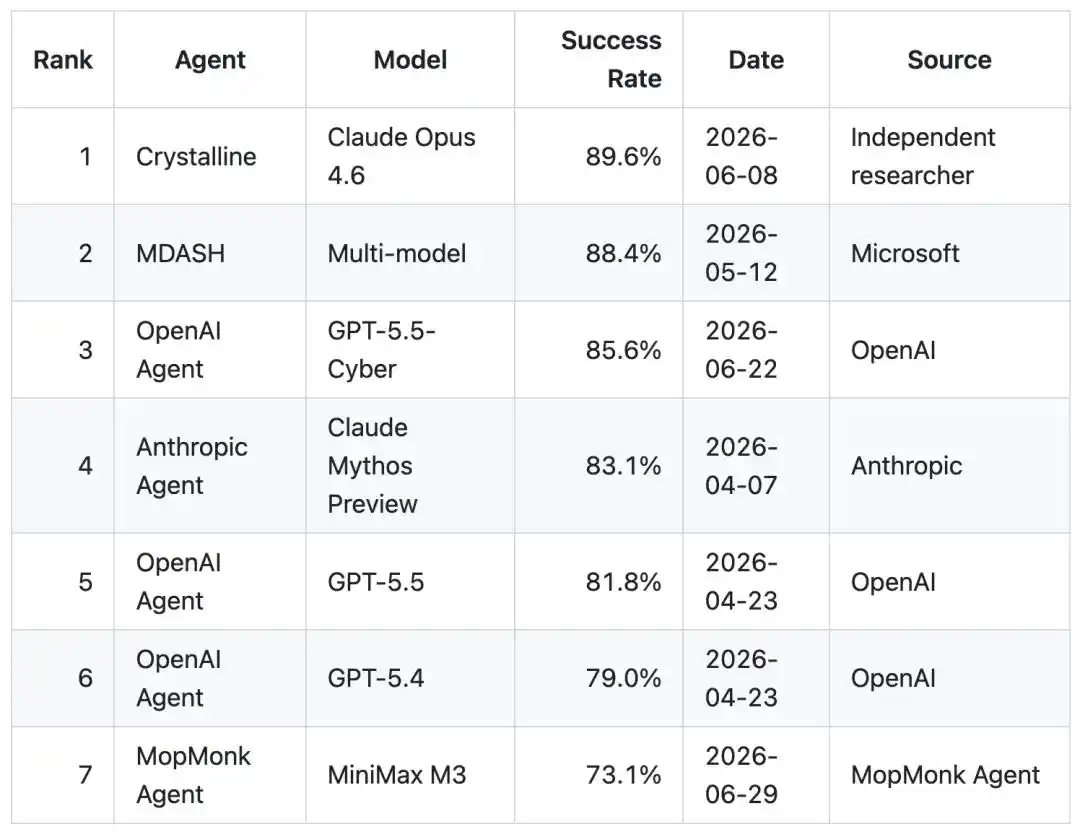
A mysterious Chinese AI project named "MopMonk" (meaning "Sweeping Monk") has achieved a top-ranking result on the globally recognized CyberGym cybersecurity benchmark. With a 73.1% success rate, it ranks seventh worldwide and first among Chinese entries, performing closely behind OpenAI. The significance lies in the benchmark itself. CyberGym, created by UC Berkeley, is considered a premier "Olympics" for AI security. It tests models on over 1500 real-world software vulnerabilities, requiring them to not just identify but actually generate working exploits (PoCs) in a complex, offline environment. This moves beyond simple knowledge to testing an AI's practical "execution" capabilities. MopMonk's approach is notable. It uses the open-source MiniMax M3 model from Shanghai as its powerful reasoning "brain," leveraging its strong coding skills and long context window. However, the key to its performance is a custom-built, multi-agent security framework—its "Harness." This system uses structured "vulnerability memory" to efficiently guide the search for exploits, allowing multiple agents to explore in parallel while sharing lessons learned from failures. This engineering layer effectively translates the model's intelligence into actionable, iterative testing steps. The project remains highly secretive, with no official website or team information, embodying the "dark horse" spirit of its literary namesake. Its success highlights a potential industry shift: beyond simply scalin...

It's insane! A mysterious Chinese AI "Sweeping Monk" without even an official website, stormed into the CyberGym global top seven with a 73.1% win rate, hot on OpenAI's heels. The whole internet is going crazy trying to figure out, whose master is this?

These past few days, on a leaderboard where global AI giants are fiercely competing, a name no one has ever heard of suddenly appeared.

It's called MopMonk (Sweeping Monk).

No grand launch event, no official blog post, no cheerleading on social media.

It just emerged out of thin air and charged straight into the CyberGym global top ten.

With a 73.1% success rate, it closely trailed OpenAI by a narrow margin, setting a new record for the highest historical score by a Chinese team on this leaderboard.
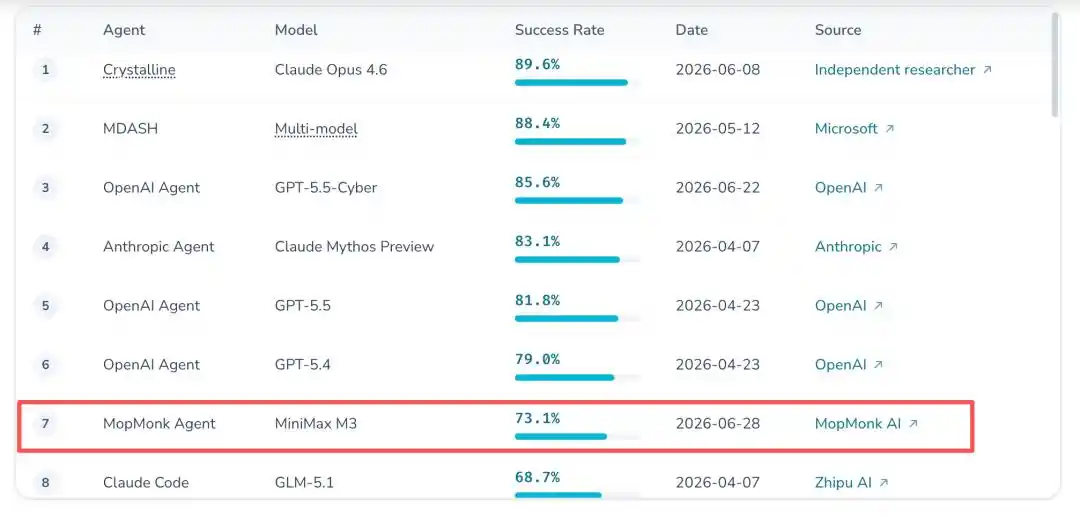
The most surreal part of the whole thing is that, to this day, no one knows its true identity.

Just how significant is the CyberGym leaderboard?

How explosive is MopMonk's achievement this time? Look at the arena it stepped onto.

CyberGym, meticulously crafted by a UC Berkeley team, had its core paper accepted at the ICLR 2026 top conference.
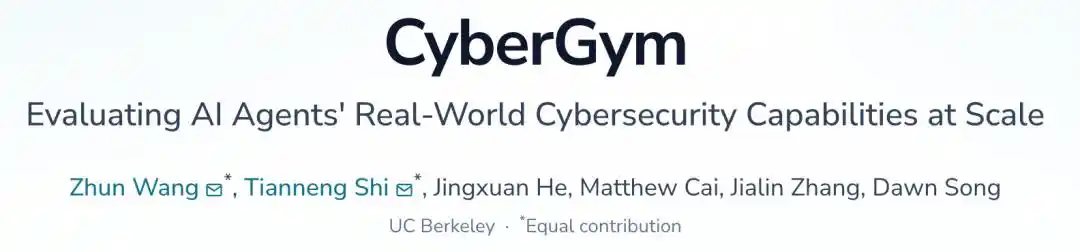
Portal: https://arxiv.org/pdf/2506.02548

As one of the most authoritative public benchmarks in AI cybersecurity capability assessment, this place is essentially a "battleground of the gods" for large models—

Even top-tier heavyweights like GPT-5.5-Cyber and Claude Mythos have been in close combat on this leaderboard.

The entire benchmark focuses on "live-fire exercises":

1507 vulnerability instances, 188 major open-source projects. All test questions are sourced from real historical vulnerabilities accumulated in Google's OSS-Fuzz.
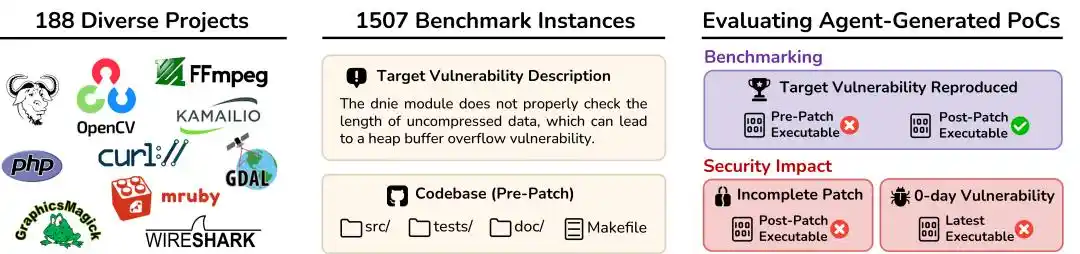
From an evaluation dimension perspective, this represents a breakthrough across scales.

Its scale is a full 7.5 times that of the previous largest public benchmark (NYU CTF, ~200 questions), and it leaves predecessors like CVE-Bench an order of magnitude behind.

Even more daunting is the difficulty. CyberGym doesn't offer multiple-choice questions.

It requires AI to perform deep reasoning within real-world projects involving thousands of files and millions of lines of code.

Precisely because it is large enough, real enough, and difficult enough, CyberGym has "differentiating power"—

It can slice out, bit by bit, the genuine capability gaps between different models and different Agent frameworks.

No wonder the security community directly crowned it the "Olympics of AI security."

This is also why almost all major global players are present: Microsoft, OpenAI, Anthropic, Google, Meta, Zhipu AI......
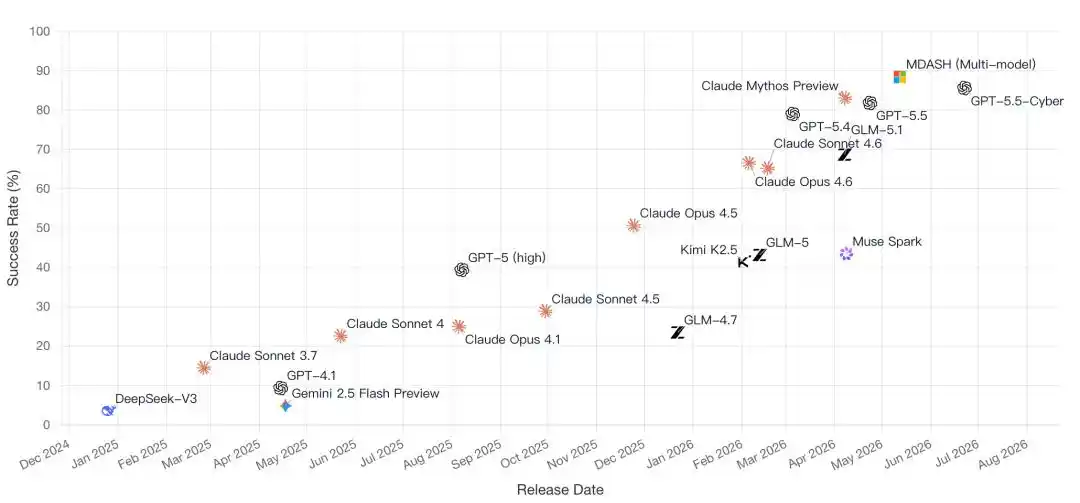
The CyberGym leaderboard itself is witnessing a crucial shift in AI competition:

From comparing who has more parameters, to comparing whose Agent can actually get the job done.

A mysterious Eastern codename suddenly appears among Silicon Valley AI giants

Who would have thought that on this very arena where "hard skills" speak the loudest, a "ghost player" would emerge as a dark horse?

Piercing through the fog, we currently only have three pieces of known information:

Mysterious Codename: MopMonk (Sweeping Monk)

Base Model: MiniMax M3

Leaderboard Record: Broke into CyberGym global top seven, China's number one

Normally, a team achieving such results should have already flooded the scene with technical reports and press conferences.

Yet, on this leaderboard teeming with masters, MopMonk is precisely that ultimate "outsider": It only tossed out a technical report, with its team, company, and location remaining complete unknowns.

This collision of "top-tier capability, information nakedness" itself is filled with a dramatic flair reminiscent of Eastern martial arts novels.

Those familiar with Jin Yong understand the weight carried by the three characters "Sweeping Monk" in "Demi-Gods and Semi-Devils"—

That old monk who swept floors for decades in the Shaolin Library, whose name no one remembered, yet with one move subdued the two great masters, Xiao Yuanshan and Murong Bo.

The most inconspicuous character, harboring the deepest skills.

Daring to challenge the arena under the banner of "Sweeping Monk," this team clearly has extremely cold confidence in its own strength!

A more crucial clue is hidden in its technical foundation—the base chosen by MopMonk is MiniMax M3.

As an open-source base originating from Shanghai, M3 can be called an all-round warrior, directly integrating three core capabilities: cutting-edge programming ability, a 1M ultra-long context window, and native multimodality.

On one side, an "Eastern cultural symbol" full of flavor; on the other, a technological base bearing a purely domestic label.

Placing these two clues on the table narrows the circle considerably. All the traces are frantically hinting at the same conclusion:

This is most likely a Chinese team.

The Deciding Factor Lies in the Harness

Putting aside the identity mystery, as those who have been long tracking AI technology, we want to figure out one question even more:

Why did MopMonk win?

To answer this, we must first return to CyberGym's hardest core—it doesn't test "whether you know," but "whether you can do."

Judging whether a piece of code has a vulnerability isn't too difficult for today's large models.

But CyberGym tests the next step, the deadliest step: generating an input that can trigger the vulnerability, i.e., a PoC.

It must trigger on the "vulnerable version," fail on the "patched version," and pass the execution verification in the benchmark environment.

This hurdle is far more tricky than imagined.

The trigger conditions for a vulnerability are often scattered among code paths, parsing logic, build environments, test harnesses, and input formats, requiring piece-by-piece assembly.

Even more troublesome, even if the PoC crashes the program locally, it might not count. As long as it doesn't satisfy the differential judgment of "triggers on vulnerable version, does not trigger on patched version," it's all wasted effort.
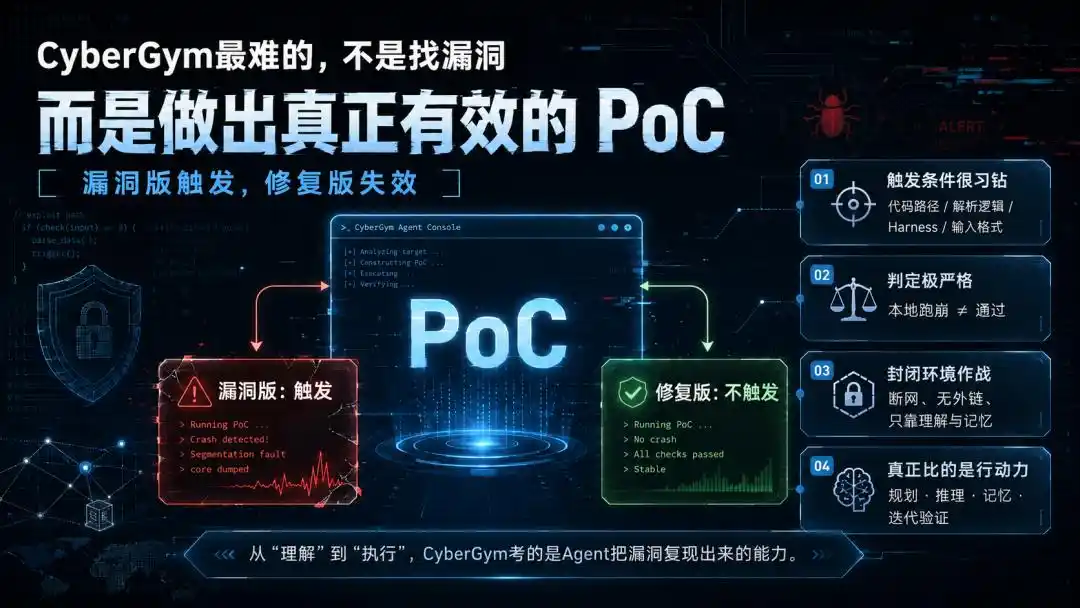
This step pulls the task completely from "understanding" into "execution." And a very specific kind of execution—

The entire exam takes place in a closed, offline environment.

No external search for help, no "outside resources" whatsoever. The AI can rely only on its understanding of the codebase before it and the memories it has accumulated step by step.

To "reproduce" a vulnerability under such conditions depends on a whole set of interlocking abilities:

Tool-calling planning: When to read files, when to run tests, when to go back and revise the plan;

Multi-round reasoning: The last attempt didn't trigger, what exactly was the problem, how to adjust next time;

Memory management: Structurally storing read code, tried inputs, and encountered pitfalls, rather than rereading everything from scratch each round;

Iterative verification: Repeatedly approaching that critical point until the vulnerability is truly reproduced.

In other words, the core of CyberGym competition is the Agent's "execution capability"; the model's "intelligence" is just the entry ticket.

And the key link that transforms "smartness" into "execution capability" is today's most underestimated term in the entire Agent field—Harness.

Harness is the "coordination layer" between the model and external tools, the execution environment.

It is responsible for tool orchestration, context state management, collection and re-feeding of execution feedback.
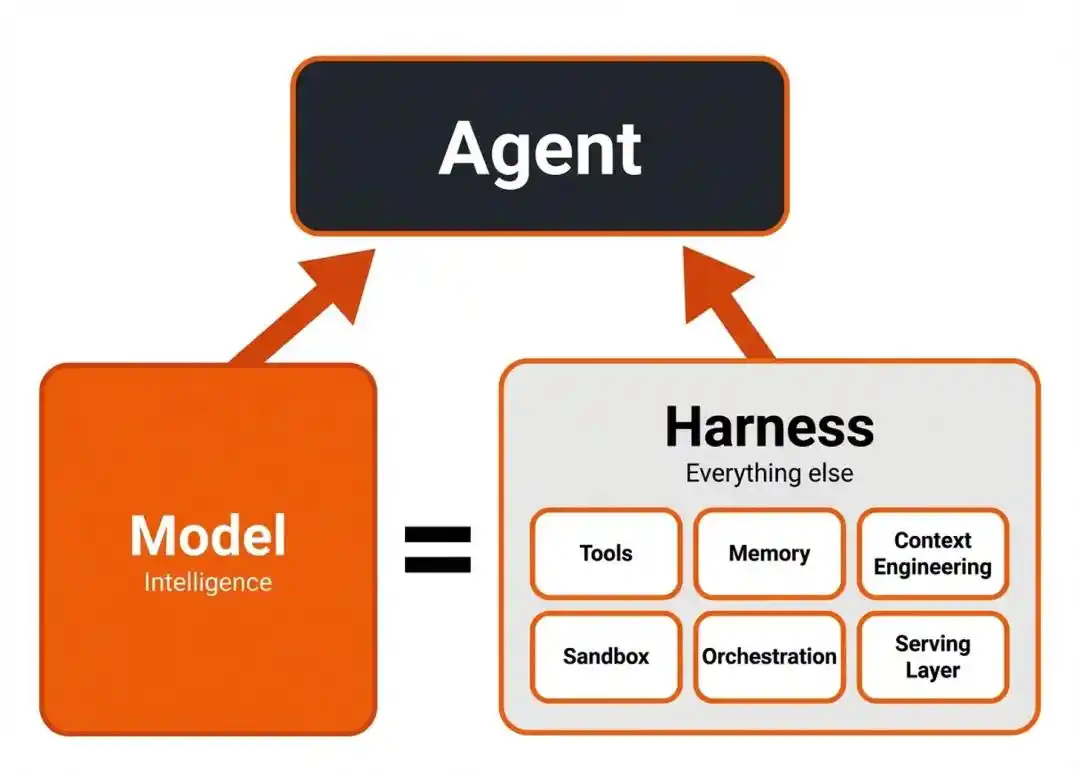
Simply put, the model is the brain, responsible for thinking "where the vulnerability might be, how to dig next."

The Harness is the limbs plus nervous system, responsible for turning the brain's thoughts into a series of real actions—

Which file to open, which command to run, how to adjust after getting an error, how to change the approach after a failed round.

On tasks like CyberGym, which require running dozens or hundreds of rounds and repeatedly trial-and-error within millions of lines of code, the quality of the Harness directly determines how much of the model's intelligence can be converted into combat effectiveness.

A smart model + a mediocre Harness often results in "can think of it, but can't do it";

A capable model + a strong Harness tailored for vulnerability mining is what can potentially achieve results in such long-range tasks.

An Agent "Tailor-Made" for Vulnerability Mining

Now, through the GitHub technical report, MopMonk's technical outline has become clear:

A security multi-Agent system newly designed specifically for vulnerability mining, powered by the thinking base MiniMax M3.
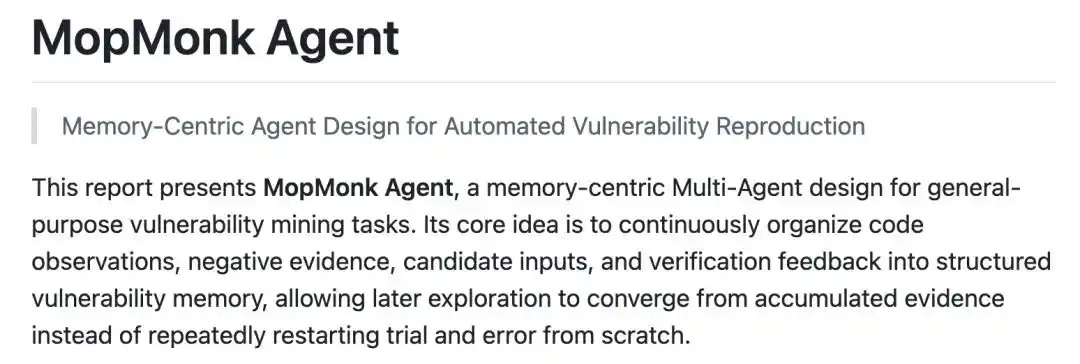
GitHub Address: https://github.com/MopMonkAI/MopMonkAgent

As mentioned, M3 is a rare open-source model today that integrates top-tier coding capability, a million-token context window, and native multimodality within a single architecture.

A glance at its benchmarks makes it clear: SWE-Bench Pro achieved 59.0%, Terminal-Bench 2.1 reached 66.0%, MCP Atlas scored 74.2%—
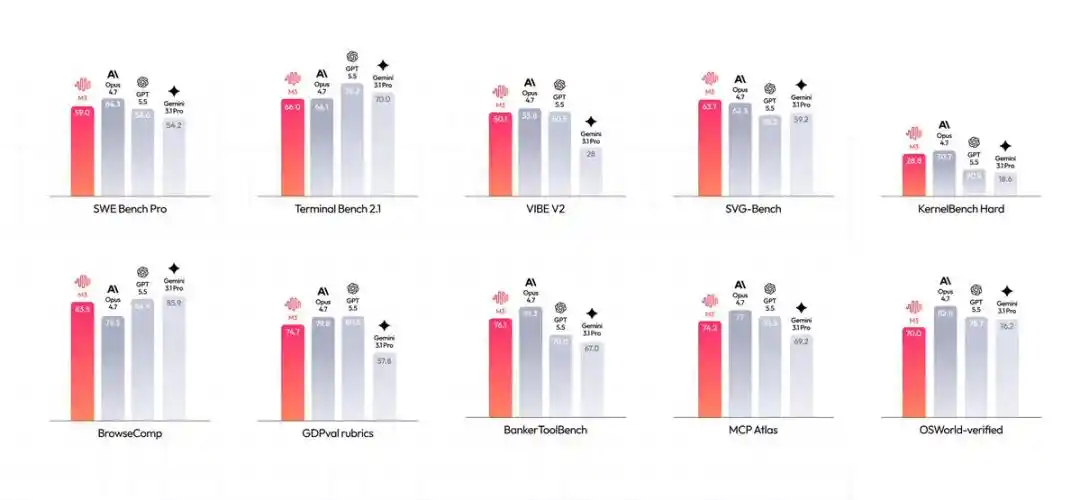
These impressive numbers precisely meet the most hardcore capability needs for Agent deployment in real-world scenarios.

Not only that, it can also autonomously iterate and self-correct over tasks lasting more than ten hours.

In other words, M3 plays the role of a "super brain" combining top-tier code parsing ability, ultra-long memory, and proficient tool-calling skills.

For tasks like CyberGym that often require swallowing an entire codebase and running dozens of rounds, a 1M context window is almost a necessity.

What MopMonk's security Agent framework does is amplify M3's brainpower into execution capability for vulnerability mining.

Its "core techniques," as seen from the technical details publicly available on GitHub, revolve around three key moves—

First move, structured "Vulnerability Memory."

It's not simply stacking chat history, nor is it dumping the ultra-long context wholesale into the model. Instead, it organizes a continuously updatable "Task Fact Memory" around the most critical types of objects in vulnerability mining:

Vulnerability target, code paths, input formats, candidate PoCs, failure evidence, verification status, and "Next Step Constraint" memory.

The last category especially shows skill: It doesn't generate vague abstract plans but directly extracts hard constraints that the next experiment must satisfy from the current evidence.

For example, "This time must cover that branch," "Which field to adjust," "Which type of failure cause to exclude."

This memory design transforms vulnerability mining from "repeated trial-and-error from scratch" into "an evidence-based convergence process."

Each code read, each execution result, each failed submission is converted into reusable constraints for the next PoC generation.
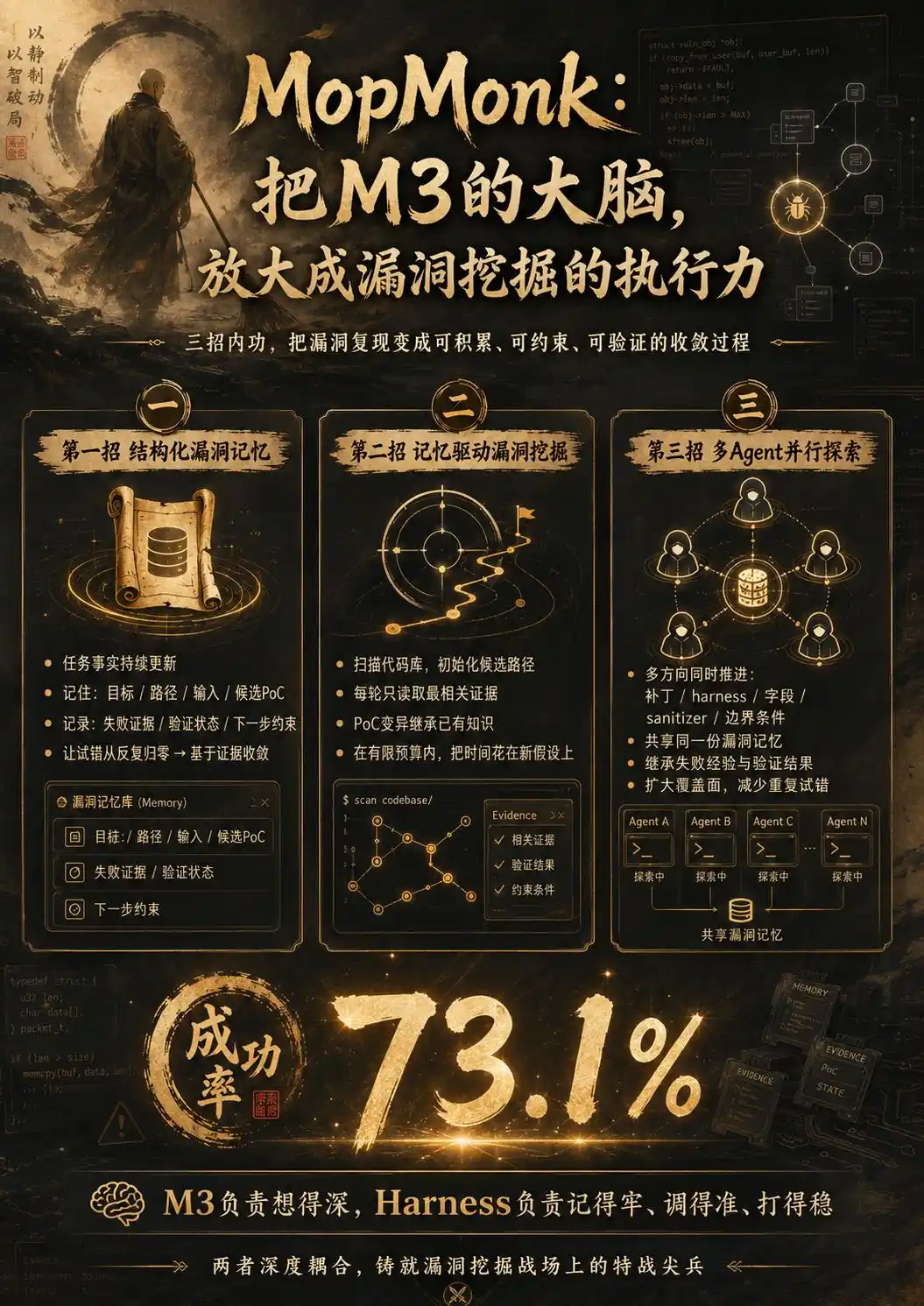
Second move, Memory-driven "Vulnerability Mining."

In vulnerability mining tasks, the system first initializes the vulnerability memory by scanning the codebase and using candidate trigger paths and directory information as planning starting points.

Then, it advances step by step, attempting to converge on the specific code location that triggers the crash.

Afterward, each exploration attempt reads the current memory, tests a specific hypothesis, and writes the results back into memory.

Thus, the model doesn't have to reread the entire task from the beginning each round. Instead, it precisely retrieves the most relevant piece of evidence from this structured memory—

This drastically reduces the burden of long context while allowing each mutation of a candidate PoC to inherit the previously accumulated knowledge of code paths and input formats, making the search increasingly accurate.

Within strict exploration budgets, time is therefore spent as much as possible on "new hypotheses," dramatically increasing the density of effective trials.

Third move, "Multi-Agent Parallel Exploration" under Shared Memory.

Multiple exploration attempts share the same vulnerability memory. They can advance simultaneously from multiple directions such as patch clues, harness entry points, file format fields, sanitizer types, boundary conditions, etc., inheriting each other's failure experiences and verification results.

This expands coverage while avoiding repetitive, ineffective exploration.

From this, it's evident that MopMonk has rewritten vulnerability reproduction from an open-ended trial-and-error process into a "accumulable, constrainable, verifiable" memory update process.

Combining all three moves, relying entirely on "internal skills" that precipitate, refine, and reuse bit by bit within the task, it forcefully dispatches a powerful open-source base into a special forces soldier on the vulnerability mining battlefield.

Ultimately, it achieved a 73.1% success rate.
The base is responsible for "thinking deeply," the Harness is responsible for "remembering solidly, tuning accurately, striking steadily."

The deep coupling of both ultimately forged that eye-catching breakthrough achievement on the leaderboard.

A Judgment More Valuable Than "Stacking Parameters"

The real inspiration of this matter lies in—

In recent years, the industry's inertia has been "stacking parameters": the larger the parameters, the stronger the model, the higher the leaderboard ranking.

But real-world attack/defense tasks like CyberGym offer another answer: increasingly, the deciding factor is the Agent's execution capability, the engineering depth of the Harness layer.

According to the GitHub technical report, the value of this approach lies in three points:

Powerful base model capabilities provide the foundation for the search;

Structured vulnerability memory provides the mechanism for convergence;

Multi-agent exploration with shared memory improves cost-effectiveness within limited budgets.

The base determines the upper limit of capability, while this memory-centric Harness determines how much of that capability can be actualized.

More critically is its compounding nature:

Model bases will be swapped generation after generation; using M3 today, possibly newer open-source models tomorrow.

But a Harness repeatedly tempered on real battlefields, accumulating attack/defense experience, is an asset that can compound continuously, transcending base model iterations.

In short, the long-term value of the MopMonk Harness might be greater than "stacking another doubling of parameters."

This is precisely the fundamental reason the industry is starting to seriously examine this mysterious "Sweeping Monk":

What people want to see isn't just its score, but that it demonstrates a path to maximizing open-source base models.

So, who exactly is the "Sweeping Monk"?

After circling around, we return to that initial, most tantalizing question.

MopMonk, who are you?!

Piecing the clues together: an Eastern martial arts-flavored codename + a base from Shanghai's MiniMax + a body of "internal skills" in the security field.

Almost all arrows point to the same judgment: This is an AI security company from China, most likely based in Shanghai.

Some, considering the two-way adaptation between the base model and the Agent, blindly speculate that its background is inseparable from the native AI large model team.

Various versions of guesses are circulating wildly, but no one has been able to produce hard evidence so far.

Who do you think MopMonk is? The master of which house? The comment section awaits your inside scoop.

This article is from the WeChat public account "New Zhiyuan", author: ASI Apocalypse

Criptos en tendencia

Preguntas relacionadas

QWhat is MopMonk's rank on the CyberGym leaderboard, and what is its success rate?

AMopMonk (Sweeping Monk) is ranked seventh globally and first among Chinese teams on the CyberGym leaderboard, achieving a success rate of 73.1%.

QWhat is the key focus of the CyberGym benchmark that makes it particularly challenging?

ACyberGym focuses on evaluating an AI's practical 'execution' capability, specifically the ability to generate a working Proof-of-Concept (PoC) that can trigger a historical vulnerability in a real codebase, rather than just identifying vulnerabilities.

QWhat base model does MopMonk's Agent system utilize?

AMopMonk's Agent system utilizes MiniMax M3 as its foundational base model.

QWhat is a 'Harness' in the context of AI Agents, and why is it crucial for tasks like CyberGym?

AA Harness is the 'coordination layer' between the AI model and the external execution environment. It manages tool orchestration, context state, and feedback loops. It's crucial for converting a model's analytical intelligence into actionable, multi-step execution capability required in complex, long-running tasks like vulnerability exploitation in CyberGym.

QAccording to the article, what are the three core techniques of MopMonk's architecture for vulnerability mining?

AThe three core techniques of MopMonk's architecture are: 1. Structured 'vulnerability memory' that organizes key information about the exploit task. 2. Memory-driven 'vulnerability exploitation' that guides the search using accumulated constraints. 3. 'Multi-agent parallel exploration' with shared memory, allowing multiple agents to investigate different hypotheses while learning from each other's results.

Lecturas Relacionadas

Earning Six Figures and Still Struggling to Rent in San Francisco

A couple in San Francisco with a combined tech income over $360,000 struggled for months to find a one-bedroom apartment under $5,000 per month. Their story highlights how the AI wealth boom, driven by upcoming IPOs from companies like OpenAI and Anthropic, is dramatically escalating the city's cost of living. Even six-figure salaries are becoming insufficient for a comfortable lifestyle. The article details the financial reality for tech workers earning around $180,000 annually. After taxes, retirement contributions, and healthcare, take-home pay is roughly $7,000 per month. With average rents exceeding $3,800 and one-bedrooms often costing $4,500-$5,200, discretionary income shrinks to $1,500-$2,500. This contrasts sharply with reported median total compensations of $640,000 at OpenAI and $420,000 at Anthropic. The AI gold rush is identified as the primary driver. The scale of potential wealth from these IPOs, far surpassing previous tech booms, is flooding the housing market. Data shows San Francisco's average rent is now the highest in the U.S., with vacancy rates in desirable neighborhoods plummeting to around 3%. The overall cost of living is 65.6% above the national average. The piece features multiple professionals, including a 25-year-old with a $250,000 salary, facing housing instability, fierce competition for rentals, and a persistent, low-grade financial anxiety despite high earnings. It concludes that the rapid concentration of AI wealth is redefining what constitutes a "high salary" in San Francisco, pushing out mid-tier tech talent and creating a stark divide between those in the AI sector and everyone else.

marsbitHace 50 min(s)

Earning Six Figures and Still Struggling to Rent in San Francisco

marsbitHace 50 min(s)

Rate Hikes to Save STRC, Selling Bitcoin to Preserve Credit: Strategy Picks Its Two Most Expensive Paths

Over the past six weeks, Strategy has faced a significant crisis of confidence, with its core securities MSTR and STRC experiencing sharp price declines. The situation escalated as the company utilized dollar reserves intended for dividends and interest payments to repurchase debt, and then sold a small amount of Bitcoin for the first time since 2022—an action that contradicted its "never sell" narrative and signaled potential liquidity strain. In response, Strategy introduced a Digital Credit capital framework. This formalized a series of measures to manage the pressure down its capital structure: ordinary shareholders have already borne costs through equity dilution from an $11.5 billion ATM offering; new rules enforce a hard dollar reserve covering at least 12 months of expected dividend and interest payments; the STRC dividend rate was increased from 11.5% to 12%; and, most notably, Bitcoin was officially integrated into the capital toolkit, with board authorization to sell up to $1.25 billion worth if needed to support obligations and repurchase programs. The market reacted with a mix of relief and skepticism. While the announcement triggered a sharp single-day rally in both MSTR and STRC, the preferred shares still trade at a significant discount. Supporters view the framework as pragmatic crisis management that provides a price floor and clearer rules. Critics argue that institutionalizing Bitcoin sales undermines the core investment thesis and, with Bitcoin's price below the company's average cost basis, amounts to selling assets at a loss to maintain its financial structure. The broader context shows institutional Bitcoin buying drying up, highlighting that Strategy's challenges and new framework are now a key indicator for overall market risk sentiment. Ultimately, the framework buys time, but STRC's return to par value depends on market belief in the company's ability to cover dividends without further dilution or substantial Bitcoin sales—a task that would be easier if Bitcoin's price recovers.

链捕手Hace 56 min(s)

Rate Hikes to Save STRC, Selling Bitcoin to Preserve Credit: Strategy Picks Its Two Most Expensive Paths

链捕手Hace 56 min(s)

Has Bitcoin Bottomed? Unpacking 12 Key Data Indicators

Author: BitalkNews **Title: Has Bitcoin Bottomed? Analyzing 12 Key Data Indicators** The current Bitcoin price is around $59,600, representing a maximum drawdown of approximately 53% from the 2025 high. The market is in a deep correction phase. Multiple indicators suggest valuations are nearing historical lows, but a confirmed bottom requires more time. **Summary of Key Indicators:** 1. **Fear & Greed Index:** At 16, indicating "Extreme Fear," similar to levels seen during the 2022 FTX collapse. 2. **Rainbow Chart:** BTC has fallen into the "Bitcoin is dead" zone, only the second such occurrence historically. 3. **MVRV Ratio:** Currently around 1.13, near the lower historical band, pointing to a bottoming valuation area (approx. $53,200-$53,400). 4. **Realized Price:** The aggregate cost basis is ~$53,400; the current price is only about 12% above it but hasn't broken below yet. 5. **UTXO Profit/Loss Ratio:** Has dropped to its lowest level this cycle, signaling a potential "capitulation" event often seen near cycle bottoms. 6. **Long-Term Holder SOPR:** For holders >155 days, it's at 0.662, now negative, indicating seasoned investors are selling at a loss. 7. & 8. **Miner Health:** ~20% of miners are unprofitable, and actual miner revenue is below theoretical levels, indicating ongoing miner stress. 9. **ETF Flows:** U.S. spot BTC ETFs have seen sustained net outflows, including a 13-day streak with over $1.7B in weekly outflows. 10. **Strategy Risk:** Strategy's stock premium has significantly contracted, pressuring the traditional "borrow-to-buy" model. 11. **Bear Duration & Drawdown:** The correction has lasted >265 days with a ~52.5% drawdown, shorter in depth but lengthy in duration. 12. **Market Expectations (Polymarket):** Betting markets suggest an ~80% probability of BTC falling below $55,000 and a notable chance below $50,000. **Conclusion:** Bitcoin is in a deep correction with potential bottom formation. Valuation metrics are in historically low ranges, and on-chain capitulation signals are accumulating. However, a complete shakeout isn't finished—the realized price hasn't been breached, and ETF demand hasn't reversed. The area below $60,000 holds long-term appeal, but patience is advised. Key signals to watch for include a return to ETF inflows, a recovery in the Long-Term Holder SOPR, and easing miner pressure.

marsbitHace 1 hora(s)

Has Bitcoin Bottomed? Unpacking 12 Key Data Indicators

marsbitHace 1 hora(s)

Valuation Inversion Emerges, Bitcoin Treasury Companies Face Trust Crisis

"Valuation Inversion Emerges, Sparking Trust Crisis for Bitcoin Treasury Firms" The investment thesis for corporate Bitcoin treasury stocks has fundamentally shifted. Investors are no longer rewarding companies simply for accumulating more Bitcoin. Instead, the focus is now on net Bitcoin per share, with intense scrutiny on whether new financings truly benefit existing shareholders or merely dilute their stake. Key indicators highlight the new reality. Metaplanet's market capitalization has fallen below the total value of its Bitcoin holdings, indicating a valuation discount. While MicroStrategy maintains a premium, its core metric—Bitcoin per diluted share for common shareholders—has been declining due to dilution from financing activities, primarily through its STRAT permanent preferred shares. This marks a transition from a pure "asset accumulation" phase to an "equity attribution" phase. Investors now deduct costs like preferred dividends and debt to calculate the actual Bitcoin claim for common equity. The widespread adoption of spot Bitcoin ETFs has removed the scarcity value these stocks once held, forcing them to justify their structure with superior leverage, dividends, or capital efficiency. European entrants like France's Capital B and Sweden's BTC AB are testing this new environment with ambitious funding plans backed by relatively small Bitcoin holdings. They are asking investors to bear complex capital structures, betting future Bitcoin purchases will cover all dilution and dividend costs. The sector's core risk is a broken financing loop. Once a company's stock trades below its Bitcoin net asset value, it loses the ability to issue equity for accretive purchases. It is then left with unpalatable choices: dilutive financing at a discount, venturing into new businesses like Bitcoin lending, or selling assets. The winners in this next phase will be those that demonstrably increase Bitcoin per share for common shareholders with every financing move.

Foresight NewsHace 1 hora(s)

Valuation Inversion Emerges, Bitcoin Treasury Companies Face Trust Crisis

Foresight NewsHace 1 hora(s)

Trading

Spot

Artículos destacados

Qué es $S$

Entendiendo SPERO: Una Visión General Completa Introducción a SPERO A medida que el panorama de la innovación continúa evolucionando, la aparición de tecnologías web3 y proyectos de criptomonedas juega un papel fundamental en la configuración del futuro digital. Un proyecto que ha atraído la atención en este campo dinámico es SPERO, denotado como SPERO,$$s$. Este artículo tiene como objetivo reunir y presentar información detallada sobre SPERO, para ayudar a entusiastas e inversores a comprender sus fundamentos, objetivos e innovaciones dentro de los dominios web3 y cripto. ¿Qué es SPERO,$$s$? SPERO,$$s$ es un proyecto único dentro del espacio cripto que busca aprovechar los principios de descentralización y tecnología blockchain para crear un ecosistema que promueva la participación, la utilidad y la inclusión financiera. El proyecto está diseñado para facilitar interacciones de igual a igual de nuevas maneras, proporcionando a los usuarios soluciones y servicios financieros innovadores. En su esencia, SPERO,$$s$ tiene como objetivo empoderar a los individuos al proporcionar herramientas y plataformas que mejoren la experiencia del usuario en el espacio de las criptomonedas. Esto incluye habilitar métodos de transacción más flexibles, fomentar iniciativas impulsadas por la comunidad y crear caminos para oportunidades financieras a través de aplicaciones descentralizadas (dApps). La visión subyacente de SPERO,$$s$ gira en torno a la inclusividad, buscando cerrar brechas dentro de las finanzas tradicionales mientras aprovecha los beneficios de la tecnología blockchain. ¿Quién es el Creador de SPERO,$$s$? La identidad del creador de SPERO,$$s$ sigue siendo algo oscura, ya que hay recursos públicos limitados que proporcionan información de fondo detallada sobre su(s) fundador(es). Esta falta de transparencia puede derivarse del compromiso del proyecto con la descentralización, una ética que muchos proyectos web3 comparten, priorizando las contribuciones colectivas sobre el reconocimiento individual. Al centrar las discusiones en torno a la comunidad y sus objetivos colectivos, SPERO,$$s$ encarna la esencia del empoderamiento sin señalar a individuos específicos. Como tal, comprender la ética y la misión de SPERO sigue siendo más importante que identificar a un creador singular. ¿Quiénes son los Inversores de SPERO,$$s$? SPERO,$$s$ cuenta con el apoyo de una diversa gama de inversores que van desde capitalistas de riesgo hasta inversores ángeles dedicados a fomentar la innovación en el sector cripto. El enfoque de estos inversores generalmente se alinea con la misión de SPERO, priorizando proyectos que prometen avances tecnológicos sociales, inclusión financiera y gobernanza descentralizada. Estas fundaciones de inversores suelen estar interesadas en proyectos que no solo ofrecen productos innovadores, sino que también contribuyen positivamente a la comunidad blockchain y sus ecosistemas. El respaldo de estos inversores refuerza a SPERO,$$s$ como un contendiente notable en el dominio de proyectos cripto que evoluciona rápidamente. ¿Cómo Funciona SPERO,$$s$? SPERO,$$s$ emplea un marco multifacético que lo distingue de los proyectos de criptomonedas convencionales. Aquí hay algunas de las características clave que subrayan su singularidad e innovación: Gobernanza Descentralizada: SPERO,$$s$ integra modelos de gobernanza descentralizada, empoderando a los usuarios para participar activamente en los procesos de toma de decisiones sobre el futuro del proyecto. Este enfoque fomenta un sentido de propiedad y responsabilidad entre los miembros de la comunidad. Utilidad del Token: SPERO,$$s$ utiliza su propio token de criptomoneda, diseñado para servir diversas funciones dentro del ecosistema. Estos tokens permiten transacciones, recompensas y la facilitación de servicios ofrecidos en la plataforma, mejorando la participación y la utilidad general. Arquitectura en Capas: La arquitectura técnica de SPERO,$$s$ apoya la modularidad y escalabilidad, permitiendo la integración fluida de características y aplicaciones adicionales a medida que el proyecto evoluciona. Esta adaptabilidad es fundamental para mantener la relevancia en el cambiante paisaje cripto. Participación de la Comunidad: El proyecto enfatiza iniciativas impulsadas por la comunidad, empleando mecanismos que incentivan la colaboración y la retroalimentación. Al nutrir una comunidad sólida, SPERO,$$s$ puede abordar mejor las necesidades de los usuarios y adaptarse a las tendencias del mercado. Enfoque en la Inclusión: Al ofrecer tarifas de transacción bajas e interfaces amigables para el usuario, SPERO,$$s$ busca atraer a una base de usuarios diversa, incluyendo a individuos que anteriormente pueden no haber participado en el espacio cripto. Este compromiso con la inclusión se alinea con su misión general de empoderamiento a través de la accesibilidad. Cronología de SPERO,$$s$ Entender la historia de un proyecto proporciona información crucial sobre su trayectoria de desarrollo y hitos. A continuación se presenta una cronología sugerida que mapea eventos significativos en la evolución de SPERO,$$s$: Fase de Conceptualización e Ideación: Las ideas iniciales que forman la base de SPERO,$$s$ fueron concebidas, alineándose estrechamente con los principios de descentralización y enfoque comunitario dentro de la industria blockchain. Lanzamiento del Whitepaper del Proyecto: Tras la fase conceptual, se lanzó un whitepaper completo que detalla la visión, los objetivos y la infraestructura tecnológica de SPERO,$$s$ para generar interés y retroalimentación de la comunidad. Construcción de Comunidad y Primeras Interacciones: Se realizaron esfuerzos de divulgación activa para construir una comunidad de primeros adoptantes y posibles inversores, facilitando discusiones en torno a los objetivos del proyecto y obteniendo apoyo. Evento de Generación de Tokens: SPERO,$$s$ llevó a cabo un evento de generación de tokens (TGE) para distribuir sus tokens nativos a los primeros seguidores y establecer liquidez inicial dentro del ecosistema. Lanzamiento de la dApp Inicial: La primera aplicación descentralizada (dApp) asociada con SPERO,$$s$ se puso en marcha, permitiendo a los usuarios interactuar con las funcionalidades centrales de la plataforma. Desarrollo Continuo y Alianzas: Actualizaciones y mejoras continuas a las ofertas del proyecto, incluyendo alianzas estratégicas con otros actores en el espacio blockchain, han moldeado a SPERO,$$s$ en un jugador competitivo y en evolución en el mercado cripto. Conclusión SPERO,$$s$ se erige como un testimonio del potencial de web3 y las criptomonedas para revolucionar los sistemas financieros y empoderar a los individuos. Con un compromiso con la gobernanza descentralizada, la participación comunitaria y funcionalidades diseñadas de manera innovadora, allana el camino hacia un paisaje financiero más inclusivo. Como con cualquier inversión en el espacio cripto que evoluciona rápidamente, se anima a los posibles inversores y usuarios a investigar a fondo y participar de manera reflexiva con los desarrollos en curso dentro de SPERO,$$s$. El proyecto muestra el espíritu innovador de la industria cripto, invitando a una mayor exploración de sus innumerables posibilidades. Mientras el viaje de SPERO,$$s$ aún se desarrolla, sus principios fundamentales pueden, de hecho, influir en el futuro de cómo interactuamos con la tecnología, las finanzas y entre nosotros en ecosistemas digitales interconectados.

101 Vistas totalesPublicado en 2024.12.17Actualizado en 2024.12.17

Qué es $S$

Qué es AGENT S

Agent S: El Futuro de la Interacción Autónoma en Web3 Introducción En el paisaje en constante evolución de Web3 y las criptomonedas, las innovaciones están redefiniendo constantemente cómo los individuos interactúan con las plataformas digitales. Uno de estos proyectos pioneros, Agent S, promete revolucionar la interacción humano-computadora a través de su marco agente abierto. Al allanar el camino para interacciones autónomas, Agent S busca simplificar tareas complejas, ofreciendo aplicaciones transformadoras en inteligencia artificial (IA). Esta exploración detallada profundizará en las complejidades del proyecto, sus características únicas y las implicaciones para el dominio de las criptomonedas. ¿Qué es Agent S? Agent S se presenta como un marco agente abierto innovador, diseñado específicamente para abordar tres desafíos fundamentales en la automatización de tareas informáticas: Adquisición de Conocimiento Específico del Dominio: El marco aprende inteligentemente de diversas fuentes de conocimiento externas y experiencias internas. Este enfoque dual le permite construir un rico repositorio de conocimiento específico del dominio, mejorando su rendimiento en la ejecución de tareas. Planificación a Largo Plazo de Tareas: Agent S emplea planificación jerárquica aumentada por la experiencia, un enfoque estratégico que facilita la descomposición y ejecución eficiente de tareas complejas. Esta característica mejora significativamente su capacidad para gestionar múltiples subtareas de manera eficiente y efectiva. Manejo de Interfaces Dinámicas y No Uniformes: El proyecto introduce la Interfaz Agente-Computadora (ACI), una solución innovadora que mejora la interacción entre agentes y usuarios. Utilizando Modelos de Lenguaje Multimodal de Gran Escala (MLLMs), Agent S puede navegar y manipular diversas interfaces gráficas de usuario sin problemas. A través de estas características pioneras, Agent S proporciona un marco robusto que aborda las complejidades involucradas en la automatización de la interacción humana con las máquinas, preparando el terreno para una multitud de aplicaciones en IA y más allá. ¿Quién es el Creador de Agent S? Si bien el concepto de Agent S es fundamentalmente innovador, la información específica sobre su creador sigue siendo elusiva. El creador es actualmente desconocido, lo que resalta ya sea la etapa incipiente del proyecto o la elección estratégica de mantener a los miembros fundadores en el anonimato. Independientemente de la anonimidad, el enfoque sigue siendo en las capacidades y el potencial del marco. ¿Quiénes son los Inversores de Agent S? Dado que Agent S es relativamente nuevo en el ecosistema criptográfico, la información detallada sobre sus inversores y patrocinadores financieros no está documentada explícitamente. La falta de información disponible públicamente sobre las bases de inversión u organizaciones que apoyan el proyecto plantea preguntas sobre su estructura de financiamiento y hoja de ruta de desarrollo. Comprender el respaldo es crucial para evaluar la sostenibilidad del proyecto y su posible impacto en el mercado. ¿Cómo Funciona Agent S? En el núcleo de Agent S se encuentra una tecnología de vanguardia que le permite funcionar de manera efectiva en diversos entornos. Su modelo operativo se basa en varias características clave: Interacción Humano-Computadora Similar a la Humana: El marco ofrece planificación avanzada de IA, esforzándose por hacer que las interacciones con las computadoras sean más intuitivas. Al imitar el comportamiento humano en la ejecución de tareas, promete elevar las experiencias de los usuarios. Memoria Narrativa: Empleada para aprovechar experiencias de alto nivel, Agent S utiliza memoria narrativa para hacer un seguimiento de las historias de tareas, mejorando así sus procesos de toma de decisiones. Memoria Episódica: Esta característica proporciona a los usuarios una guía paso a paso, permitiendo que el marco ofrezca apoyo contextual a medida que se desarrollan las tareas. Soporte para OpenACI: Con la capacidad de ejecutarse localmente, Agent S permite a los usuarios mantener el control sobre sus interacciones y flujos de trabajo, alineándose con la ética descentralizada de Web3. Fácil Integración con APIs Externas: Su versatilidad y compatibilidad con varias plataformas de IA aseguran que Agent S pueda encajar sin problemas en ecosistemas tecnológicos existentes, convirtiéndolo en una opción atractiva para desarrolladores y organizaciones. Estas funcionalidades contribuyen colectivamente a la posición única de Agent S dentro del espacio cripto, ya que automatiza tareas complejas y de múltiples pasos con una intervención humana mínima. A medida que el proyecto evoluciona, sus posibles aplicaciones en Web3 podrían redefinir cómo se desarrollan las interacciones digitales. Cronología de Agent S El desarrollo y los hitos de Agent S pueden encapsularse en una cronología que resalta sus eventos significativos: 27 de septiembre de 2024: El concepto de Agent S fue lanzado en un documento de investigación integral titulado “Un Marco Agente Abierto que Usa Computadoras Como un Humano”, mostrando las bases del proyecto. 10 de octubre de 2024: El documento de investigación fue puesto a disposición del público en arXiv, ofreciendo una exploración profunda del marco y su evaluación de rendimiento basada en el benchmark OSWorld. 12 de octubre de 2024: Se lanzó una presentación en video, proporcionando una visión visual de las capacidades y características de Agent S, involucrando aún más a posibles usuarios e inversores. Estos marcadores en la cronología no solo ilustran el progreso de Agent S, sino que también indican su compromiso con la transparencia y la participación comunitaria. Puntos Clave Sobre Agent S A medida que el marco Agent S continúa evolucionando, varios atributos clave destacan, subrayando su naturaleza innovadora y potencial: Marco Innovador: Diseñado para proporcionar un uso intuitivo de las computadoras similar a la interacción humana, Agent S aporta un enfoque novedoso a la automatización de tareas. Interacción Autónoma: La capacidad de interactuar de manera autónoma con las computadoras a través de GUI significa un salto hacia soluciones informáticas más inteligentes y eficientes. Automatización de Tareas Complejas: Con su metodología robusta, puede automatizar tareas complejas y de múltiples pasos, haciendo que los procesos sean más rápidos y menos propensos a errores. Mejora Continua: Los mecanismos de aprendizaje permiten a Agent S mejorar a partir de experiencias pasadas, mejorando continuamente su rendimiento y eficacia. Versatilidad: Su adaptabilidad en diferentes entornos operativos como OSWorld y WindowsAgentArena asegura que pueda servir a una amplia gama de aplicaciones. A medida que Agent S se posiciona en el paisaje de Web3 y criptomonedas, su potencial para mejorar las capacidades de interacción y automatizar procesos significa un avance significativo en las tecnologías de IA. A través de su marco innovador, Agent S ejemplifica el futuro de las interacciones digitales, prometiendo una experiencia más fluida y eficiente para los usuarios en diversas industrias. Conclusión Agent S representa un audaz avance en la unión de la IA y Web3, con la capacidad de redefinir cómo interactuamos con la tecnología. Aunque aún se encuentra en sus primeras etapas, las posibilidades para su aplicación son vastas y atractivas. A través de su marco integral que aborda desafíos críticos, Agent S busca llevar las interacciones autónomas al primer plano de la experiencia digital. A medida que nos adentramos más en los reinos de las criptomonedas y la descentralización, proyectos como Agent S sin duda desempeñarán un papel crucial en la configuración del futuro de la tecnología y la colaboración humano-computadora.

507 Vistas totalesPublicado en 2025.01.14Actualizado en 2025.01.14

Qué es AGENT S

Cómo comprar S

¡Bienvenido a HTX.com! Hemos hecho que comprar Sonic (S) sea simple y conveniente. Sigue nuestra guía paso a paso para iniciar tu viaje de criptos.Paso 1: crea tu cuenta HTXUtiliza tu correo electrónico o número de teléfono para registrarte y obtener una cuenta gratuita en HTX. Experimenta un proceso de registro sin complicaciones y desbloquea todas las funciones.Obtener mi cuentaPaso 2: ve a Comprar cripto y elige tu método de pagoTarjeta de crédito/débito: usa tu Visa o Mastercard para comprar Sonic (S) al instante.Saldo: utiliza fondos del saldo de tu cuenta HTX para tradear sin problemas.Terceros: hemos agregado métodos de pago populares como Google Pay y Apple Pay para mejorar la comodidad.P2P: tradear directamente con otros usuarios en HTX.Over-the-Counter (OTC): ofrecemos servicios personalizados y tipos de cambio competitivos para los traders.Paso 3: guarda tu Sonic (S)Después de comprar tu Sonic (S), guárdalo en tu cuenta HTX. Alternativamente, puedes enviarlo a otro lugar mediante transferencia blockchain o utilizarlo para tradear otras criptomonedas.Paso 4: tradear Sonic (S)Tradear fácilmente con Sonic (S) en HTX's mercado spot. Simplemente accede a tu cuenta, selecciona tu par de trading, ejecuta tus trades y monitorea en tiempo real. Ofrecemos una experiencia fácil de usar tanto para principiantes como para traders experimentados.

1.0k Vistas totalesPublicado en 2025.01.15Actualizado en 2026.06.02

Cómo comprar S

Discusiones

Bienvenido a la comunidad de HTX. Aquí puedes mantenerte informado sobre los últimos desarrollos de la plataforma y acceder a análisis profesionales del mercado. A continuación se presentan las opiniones de los usuarios sobre el precio de S (S).

活动图片