Bitcoin is drawing renewed attention after Cameron and Tyler Winklevoss transferred approximately $130 million worth of BTC to Gemini hot wallets over the past week. Movements of this scale from early holders often attract market scrutiny because transfers to exchange-linked wallets can indicate that coins are becoming available for potential sale.
The Winklevoss twins are well-known figures in the cryptocurrency industry and among the earliest high-profile investors in Bitcoin. The entrepreneurs, who founded the Gemini cryptocurrency exchange in 2014, have remained closely tied to the digital asset ecosystem through exchange infrastructure, custody services, and long-term Bitcoin exposure.
When large holders move coins to exchange wallets, traders typically monitor the activity closely because it can affect short-term supply dynamics. Exchange inflows increase the amount of Bitcoin readily available for trading, which in some cases precedes profit-taking or portfolio rebalancing.
However, such transfers do not necessarily guarantee immediate selling. Large investors often move assets between custodial wallets for operational reasons, liquidity management, or internal accounting purposes.
Early Bitcoin Holders Remain Profitable as Market Volatility Builds
The recent transfer has also drawn attention to the scale of the Winklevoss twins’ long-term position in Bitcoin. Despite moving a portion of their holdings to Gemini wallets, the early investors still control approximately $764 million worth of BTC. Their overall profit from Bitcoin exposure is estimated at around $1.8 billion, reflecting the enormous appreciation the asset has experienced since its early adoption years.
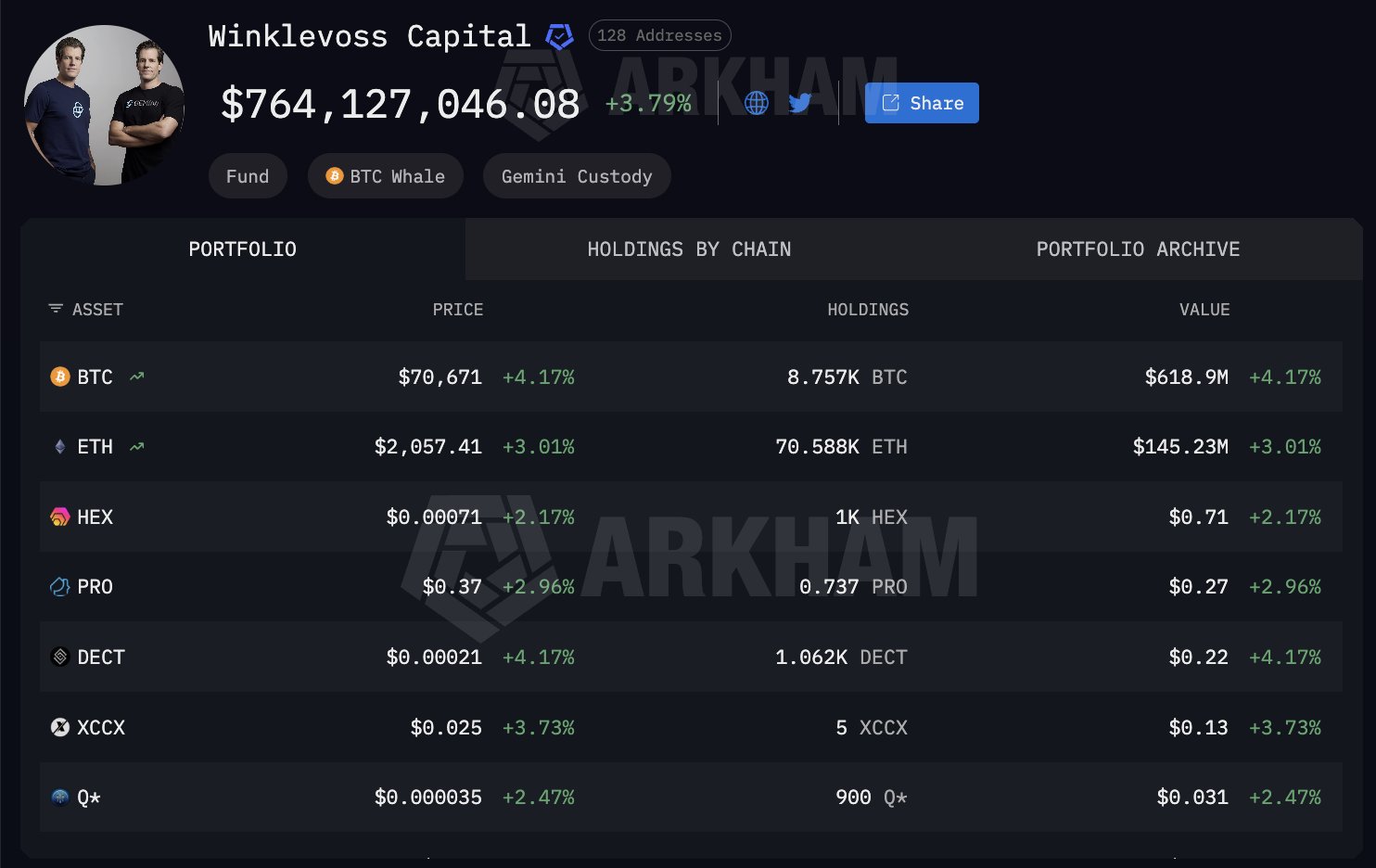
Positions of this magnitude often carry symbolic weight in the market. Early holders such as the Winklevoss twins represent a cohort of investors who accumulated Bitcoin when the asset traded at a fraction of today’s prices. As a result, even relatively small portfolio adjustments can translate into large nominal transfers.
The timing of the movement also feeds speculation because Bitcoin currently trades in an environment marked by rising volatility and uncertain direction. Price action in recent weeks has produced sharp swings as traders attempt to gauge the next phase of the market cycle.
In this context, transactions involving early Bitcoin investors can influence sentiment. Some participants interpret exchange transfers as a potential signal of profit-taking, while others view them as routine liquidity management.
Ultimately, the significance of the move will depend on whether these coins enter the open market or remain part of longer-term strategic positioning.