ETH staking service providers’ dominance is concerning, here’s why

AmbcryptoPublicado a 2023-01-24Actualizado a 2023-01-24

Resumen

70% of Ethereum staked is controlled by staking services, which has raised concerns about decentralization. Revenue generated by Ethereum has increased despite a decline in trading activity.

According to data provided by glassnode, it was observed that 70.86% of all Ethereum staked on the beacon chain was being staked by staking services such as Lido, Coinbase, Kraken, and Binance.

""

This concentration of staking services on the beacon chain has the potential to impact the overall decentralization of the Ethereum network. At press time, Lido made up 29.3% of the overall staked ETH, followed by Coinbase (12.8%), Kraken (7.6%), and Binance (6.3%).

""

This suggests that a relatively small number of entities hold a significant portion of the staked ETH and that the network is less decentralized than it could be.

""

Despite this, the number of validators on the Ethereum network continued to grow.

""

Ethereum gets validation

""

Based on data provided by Staking Rewards, the number of validators on the Ethereum network grew by 2.53% over the last month. Along with that, the revenue generated by the stakers grew as well.

""

This implied that an increasing number of people are becoming interested in staking their ETH and earning rewards for validating transactions on the network.
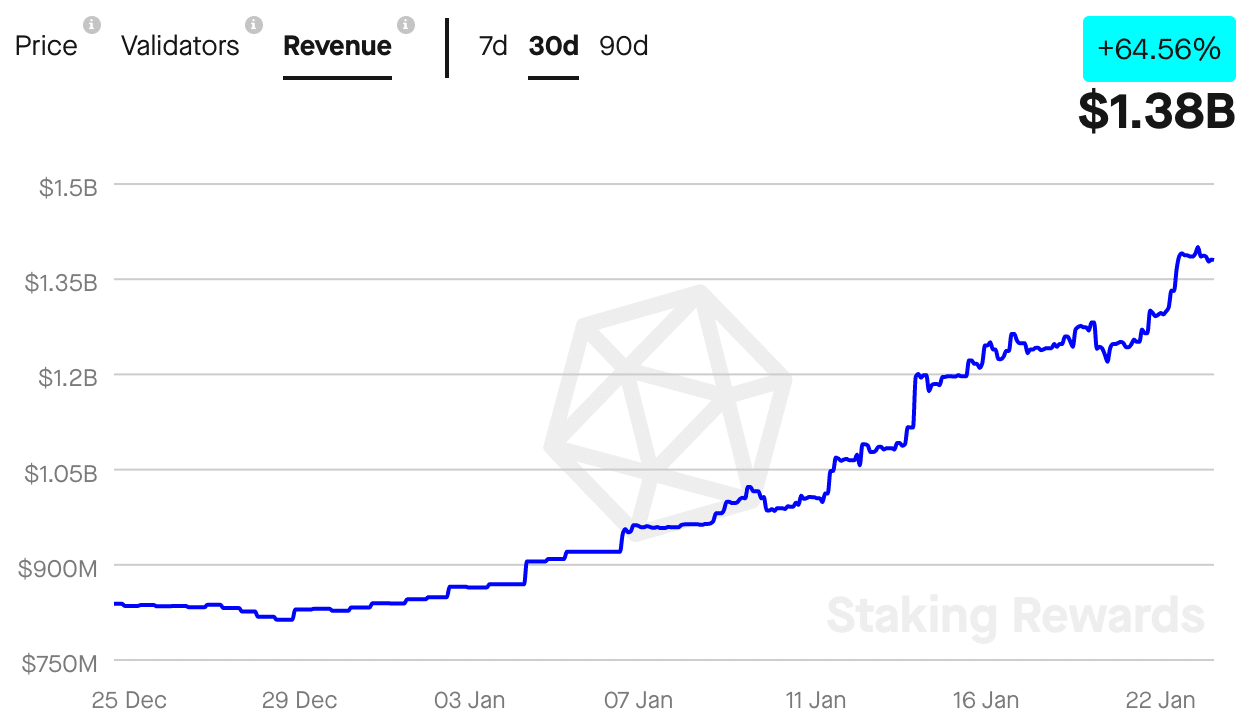
Source: Staking Rewards

""

Large ETH addresses flee

""

Although validators showed interest in ETH, it was observed that large addresses shied away from holding Ethereum, despite growing prices. According to glassnode’s data, the number of addresses holding 10k+ coins reached a 1-month low of 1,199 at press time. This suggested that large holders of ETH were not as confident in the long-term prospects of the token as they once were.

""

One of the reasons for the same could be the growing number of Ethereum addresses in profit. At the time of writing, more than 60% of addresses holding Ethereum were in profit.

""

If this number continues to grow, it could incentivize addresses to sell their holdings for a profit which could impact ETH’s price negatively.
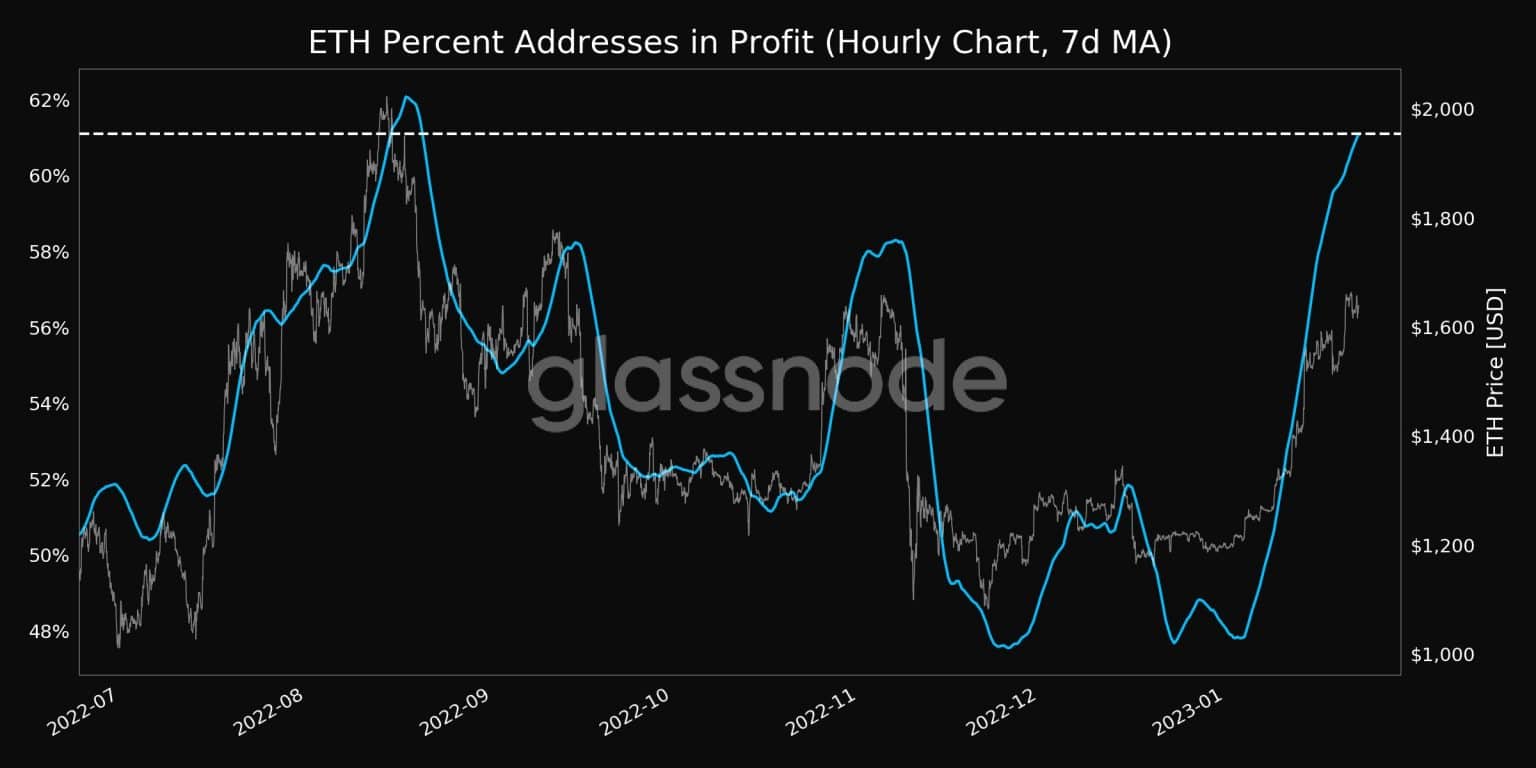
Source: glassnode

""

Another cause of concern for Ethereum would be the decline in the number of Ethereum trades. Based on Santiment’s data, the number of trades on the Ethereum network declined materially.

""

This also impacted the overall gas spent on the network, which decreased sharply over the past few days.
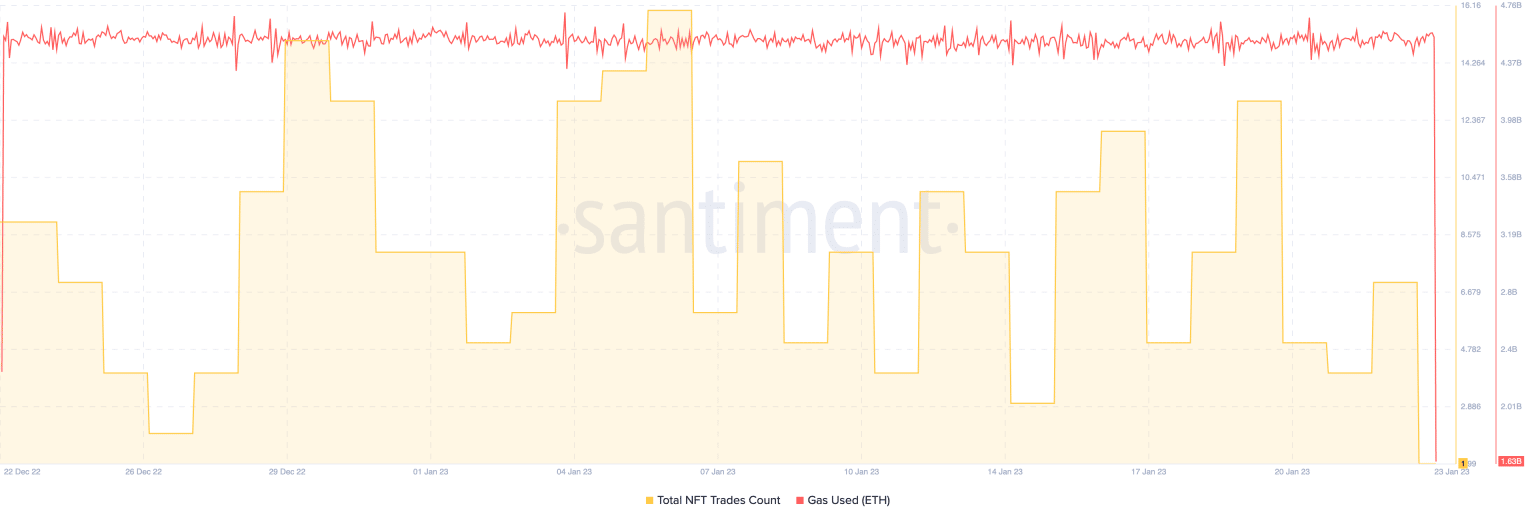
Source: Santiment

""

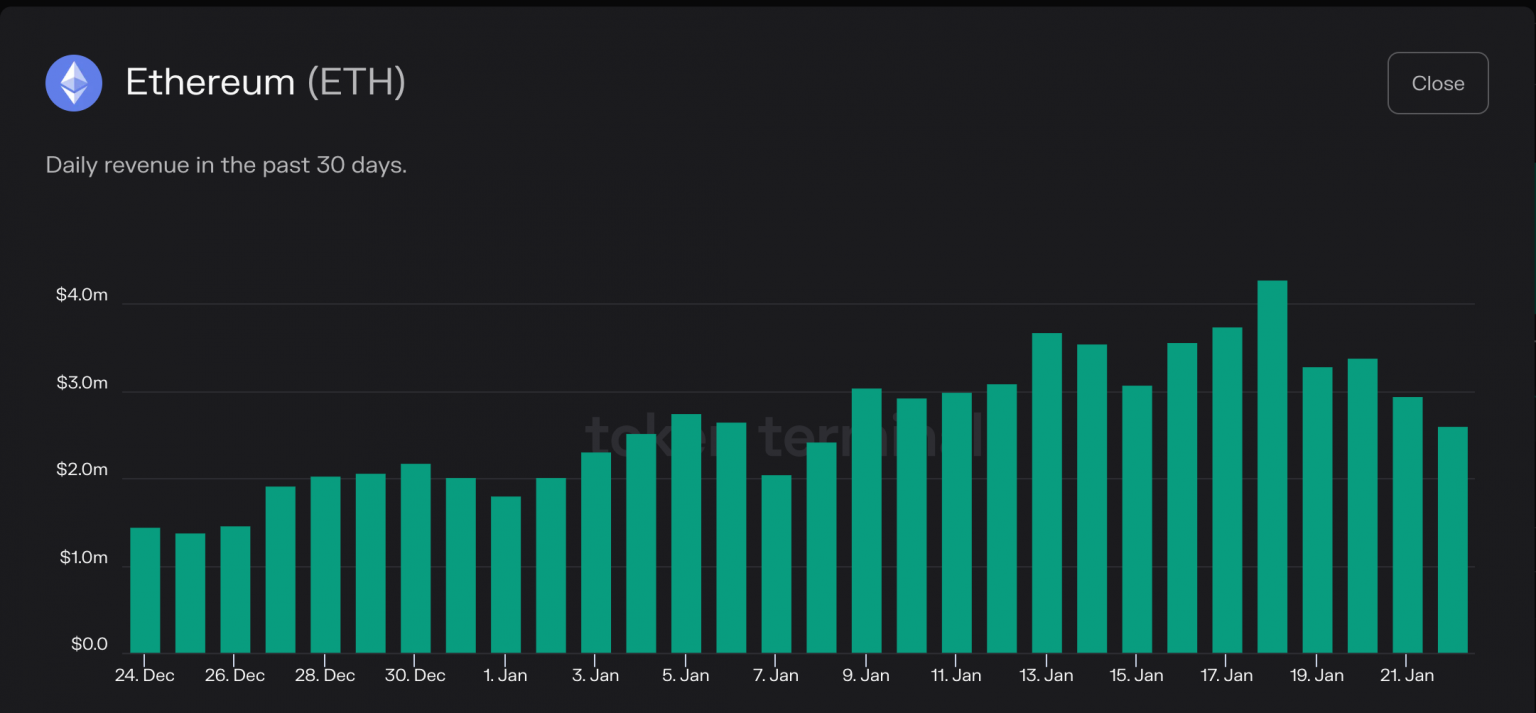
Furthermore, according to token terminals data, the revenue generated by Ethereum increased by 39.6% over the last month. During press time the cumulative revenue accumulated by Ethereum was $79.3 million.
However, it is yet to be determined how all these factors could come together and impact Ethereum’s price.


Lecturas Relacionadas

The Full Story of How Crypto Unicorn Blockstream Is Mired in Serious Fraud Allegations

This article details serious allegations of fraud against Bitcoin infrastructure company Blockstream, founded by Bitcoin pioneer Adam Back. In June 2024, investigative account NatInfoSec published a report accusing Blockstream's mining note (BMN) program of potentially operating a multi-billion dollar scheme with Ponzi-like characteristics. The core allegations focus on Blockstream Mining Notes (BMNs), which offer investors fixed annual yields up to approximately 20% from Bitcoin mining. NatInfoSec's investigation raises several key issues: 1. **Suspicious Hashrate & Payout Capacity**: The analysis suggests Blockstream would need 20-45 EH/s of mining power to cover its BMN obligations, but its public dashboard shows only around 15 EH/s. Furthermore, no verifiable public evidence (e.g., grid connection records, import data) was found to support the massive mining operation required. 2. **Questionable Payout Source**: The BMN contract allows Blockstream to use Bitcoin from *any source* (Substitute Performance BTC) to fulfill investor payouts, raising concerns that payouts may not come from actual mining revenue. 3. **High-Risk, Fixed Returns**: Offering ~20% fixed yields in the volatile, cyclical Bitcoin mining industry is viewed as highly unusual and requires clear explanation. 4. **Undisclosed Criminal Record of Key Figure**: Christopher William Cook, a key figure in Blockstream's mining operations and CEO of spin-off Exacore, was found to have a federal felony conviction for mail fraud in 2008, a fact not disclosed in BMN offering documents. His background was also allegedly embellished. 5. **Potential Contagion to BSTR SPAC**: Questions were raised about whether these liabilities and Cook's record should have been disclosed in the SEC filings for Bitcoin Standard Treasury Company (BSTR), a separate Adam Back-associated firm planning a SPAC merger. The crypto community is divided. BitMEX Research validated Cook's criminal record and expressed concern over the high yields but found other evidence lacking or misleading, noting the legal separation between BMN, Blockstream, and BSTR. Blockstream defenders, like Samson Mow, argue the mining is real. Critics, however, emphasize the lack of independent, verifiable proof of the mining operation's scale and the true source of investor payouts. The article concludes that BMN remains shrouded in key unanswered questions regarding its actual size, the verifiability of its underlying mining assets and payouts, the source of its high yields, and the full role and disclosure concerning Chris Cook. Blockstream had not issued a comprehensive response at the time of writing.

marsbitHace 1 hora(s)

The Full Story of How Crypto Unicorn Blockstream Is Mired in Serious Fraud Allegations

marsbitHace 1 hora(s)

The Full Story Behind Encryption Unicorn Blockstream's Deep Entanglement in Serious Fraud Allegations

This article details allegations of serious fraud surrounding the crypto company Blockstream, founded by Bitcoin pioneer Adam Back. Investigation account NatInfoSec accuses Blockstream of raising billions through its Blockstream Mining Note (BMN) products, which offer high fixed yields of up to 20% from purported mining revenue. The core allegations are: 1) Blockstream's public mining hash rate (15 EH/s) appears insufficient to cover the massive payout obligations from sold BMN notes, raising questions about the true source of investor payouts. 2) Key executive Christopher William Cook, central to the mining operations, has a prior federal conviction for mail fraud, a fact not disclosed to investors. Cook's background and lavish lifestyle are highlighted as red flags. 3) The structure allows payouts from any source of BTC, not necessarily mining revenue, which critics argue gives it Ponzi-like characteristics. The controversy also touches on Bitcoin Standard Treasury Company (BSTR), a related entity planning a SPAC上市. Critics question whether BMN's liabilities and Cook's record should be disclosed in BSTR's filings. BitMEX Research offered a tempered analysis, confirming Cook's criminal record is likely true and the high yields concerning, but found other claims like insufficient抵押证据 less substantiated. Community debate centers on the need for verifiable proof of Blockstream's mining output and revenue. The article concludes that while fraud is not proven, BMN presents significant, unresolved questions regarding its actual scale, the source of its high fixed returns, the verifiability of its mining operations and payouts, and the full disclosure of associated risks and personnel backgrounds. Blockstream has not yet issued a formal response.

链捕手Hace 3 hora(s)

The Full Story Behind Encryption Unicorn Blockstream's Deep Entanglement in Serious Fraud Allegations

链捕手Hace 3 hora(s)

Trading

Spot
Futuros
活动图片