[Research]Uncertainty Amongst Whales and Old Hands

GlassnodePublicado a 2022-12-19Actualizado a 2022-12-20

Resumen

In the wake of the FTX fallout, we explore the developing trends in on-chain data, which suggest that the confidence and financial position of Whales and Bitcoin old hands have been shaken by the event.

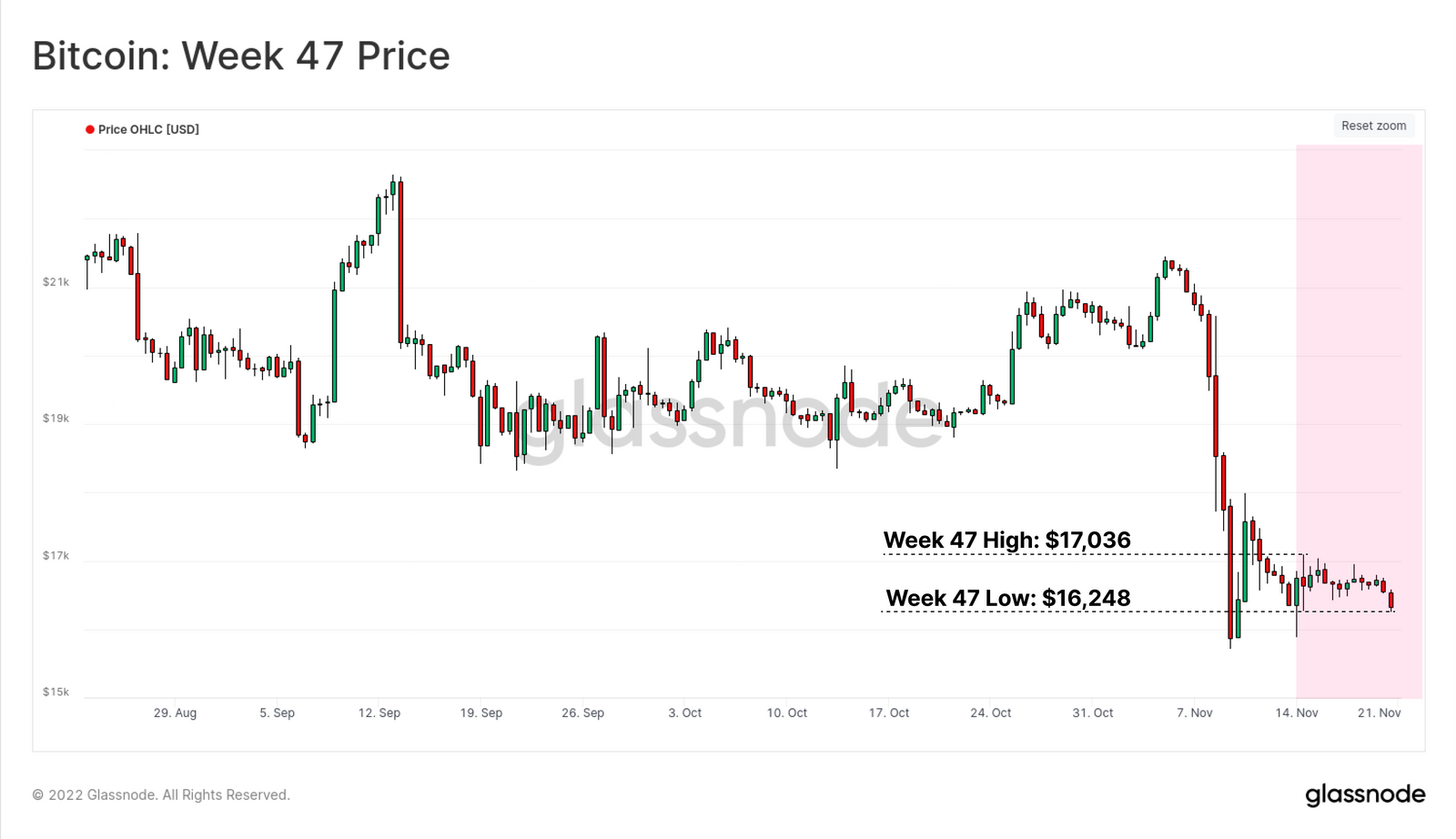
As the dust settles following the FTX fallout, and with a few more weeks of data available, we are able to assess whether recent market weakness has shaken the confidence of Bitcoin holders. The market continues to consolidate this week, however did trade down from the early-week high of $17,036, to close at $16,248, one of the lowest closing prices of the cycle.

In this edition we will zoom into three specific topics, with the goal of assessing how much of a hit Bitcoin investor conviction has taken in the wake of the FTX collapse:

Exchange outflows, which have continue to break historical records.

Whales who are more than likely underwater on their position in aggregate.

Long-term holders, whom are currently spending coins at a historically significant rate.
⚡Cyber Week Deal: 40% Off Advanced Plans⚡

Starting today, you can take advantage of our first-ever end of year sale! Save 40% on a monthly or yearly Glassnode Advanced plan and access data and insights that are helping thousands of crypto traders and investors around the world.

Translations

This Week On-chain is now being translated into Spanish, Italian, Chinese, Japanese, Turkish, French, Portuguese, Farsi, Polish, Arabic, Russian, Vietnamese and Greek.

The Week Onchain Newsletter has a live dashboard with all featured charts available here. This dashboard and all covered metrics are explored further in our Video Report, which is released on Tuesdays each week. Visit and subscribe to our Youtube Channel, and visit our Video Portal for more video content and metric tutorials.

Coins Flood Out of Exchanges

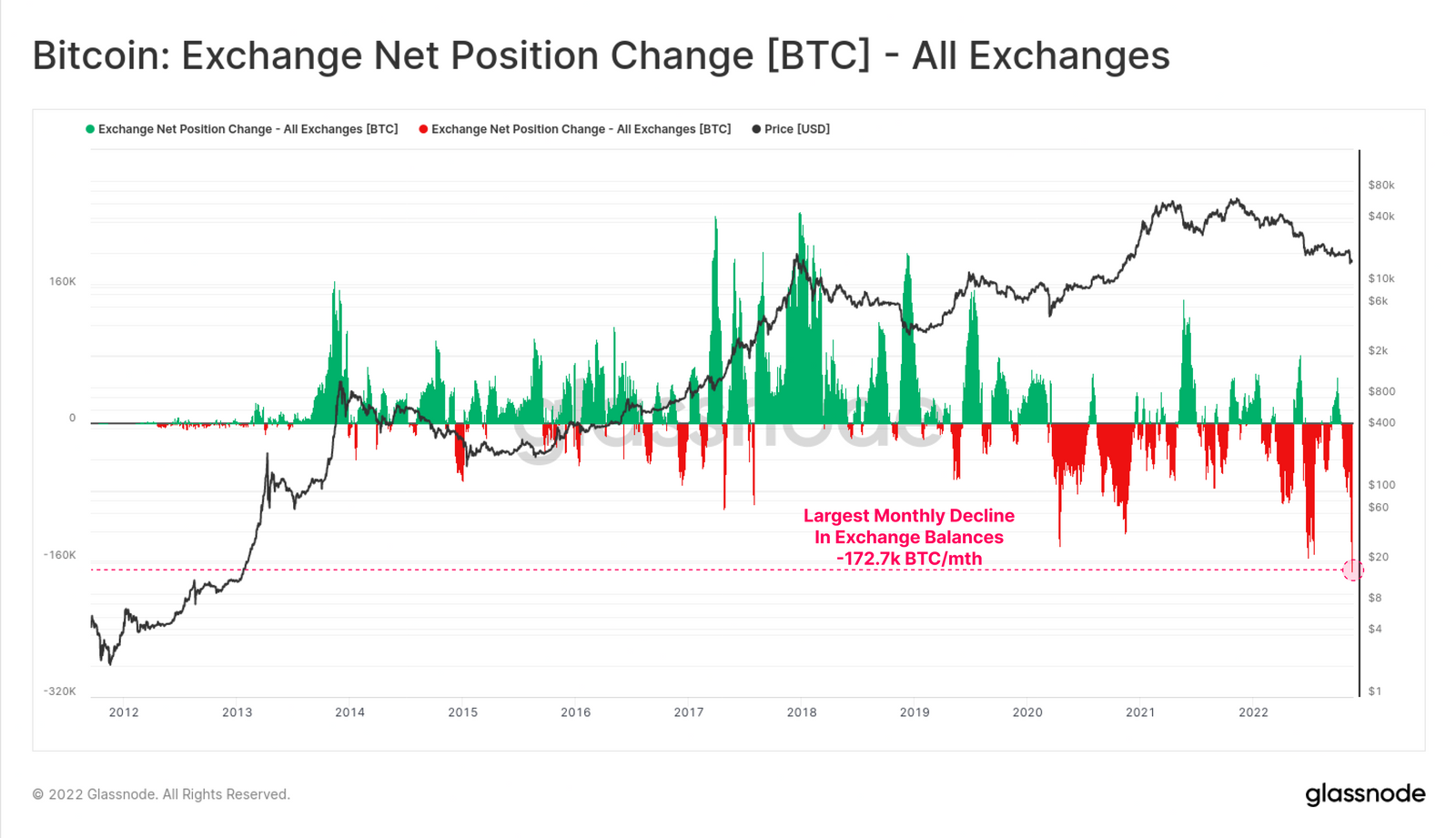
As we covered in last weeks edition, outflows from exchanges and into investor wallets of almost all sizes have been historical in scale, as BTC holders seek safety in self-custody. As a result, the 30-day net position change of all exchange balances has reached a new all-time-high for outflows this week.

BTC is currently flowing out of exchanges at a rate of -172.7k BTC per month, eclipsing the previous peak set following the June 2022 sell-off.
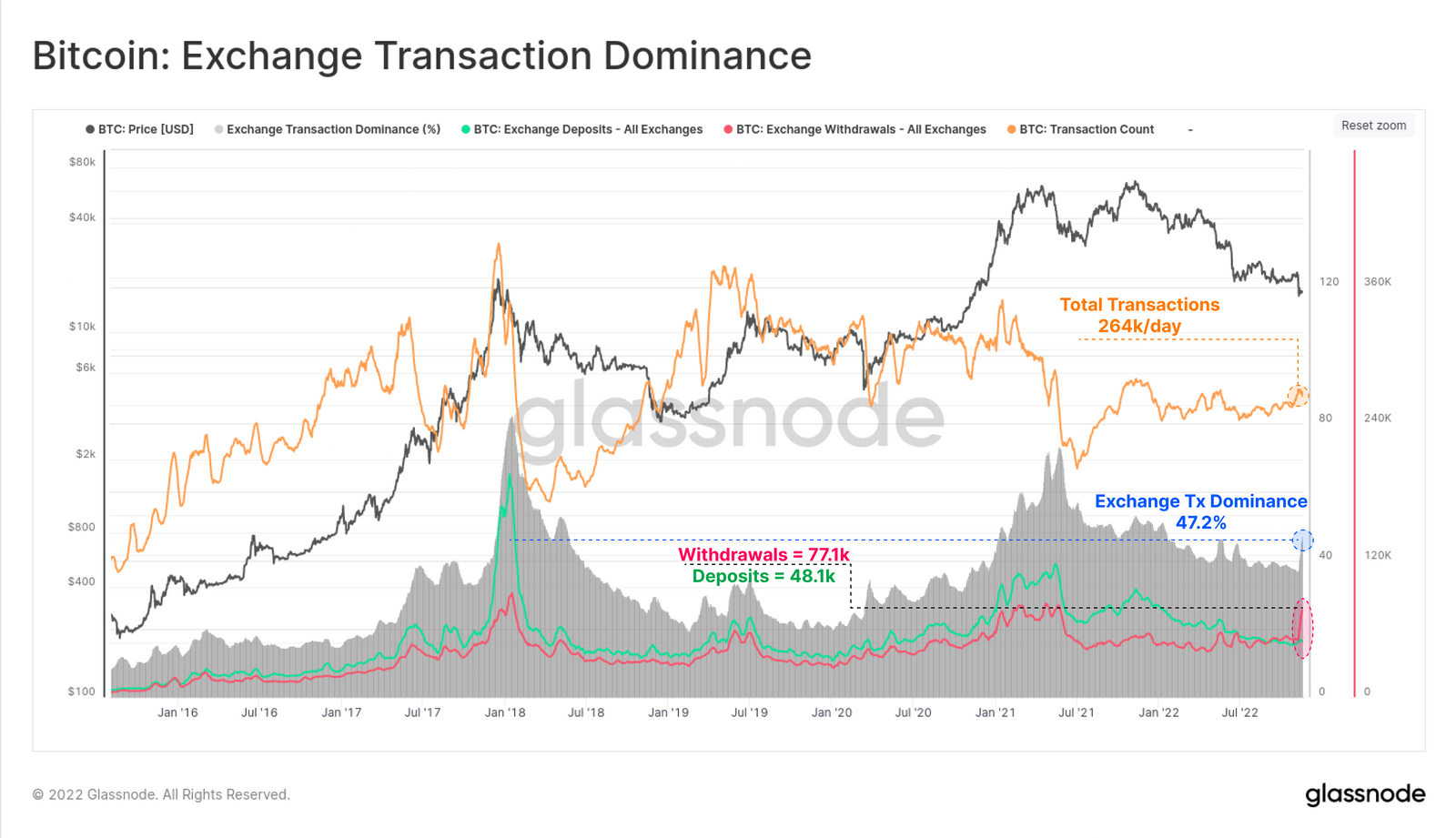
Total confirmed transactions have also seen an uptick over the last two weeks, reaching a multi-month high of 246k confirmed transactions per day. Out of this total, around 29.2% were related exchange withdrawal transfers (77.1k withdrawals), and 18.2% were exchange deposits transfers (48.1k deposits).

This burst of exchange related activity pushes the dominance of exchange deposit or withdrawal transactions to 47.4% of the toal, the highest level year-to-date. Historically, higher exchange dominance can be associated with bull markets (sustained trends), and high volatility sell-off events (short-term spikes).
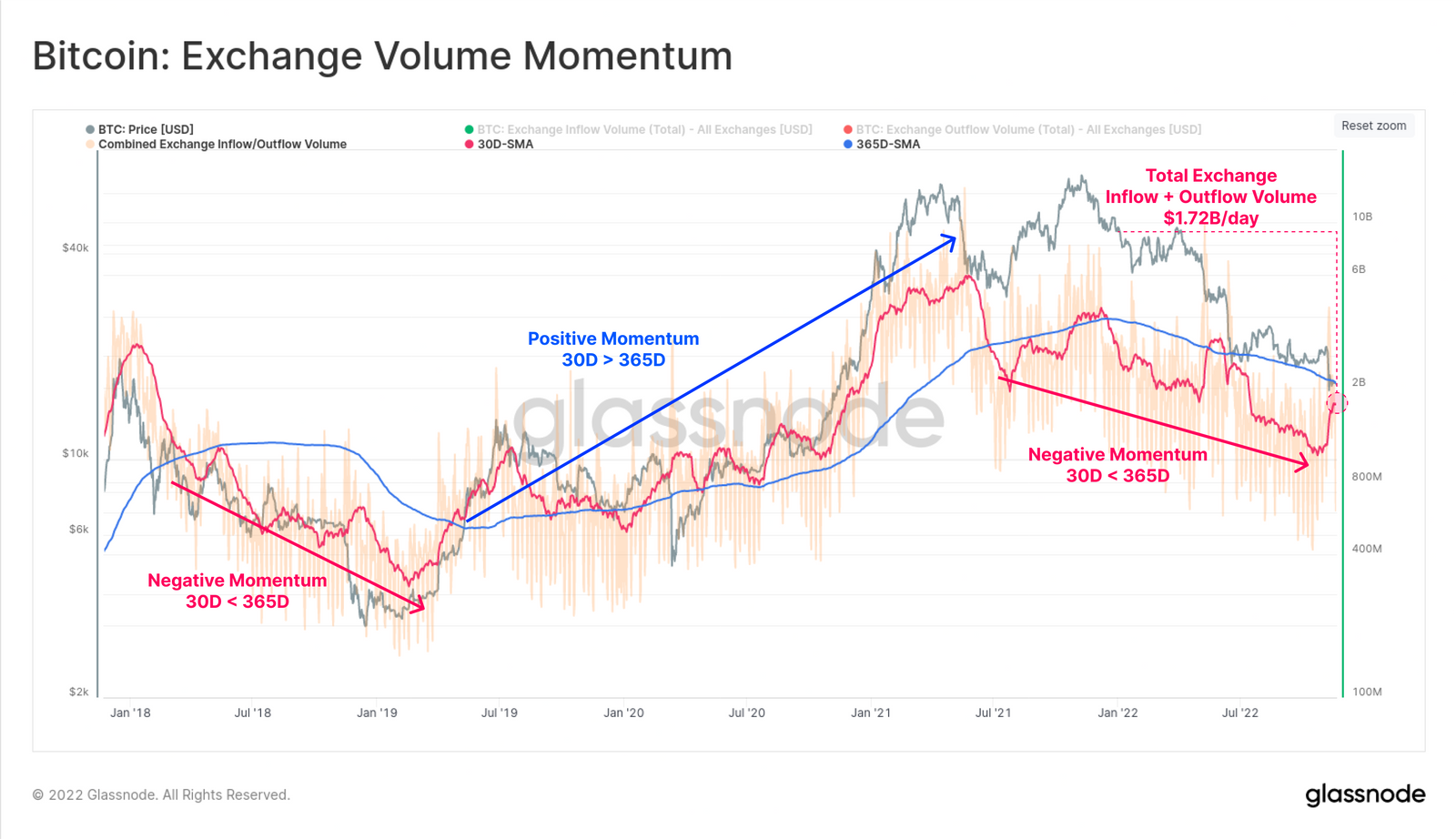
On a 30-day moving average basis, the combined USD denominated inflow and outflow volumes across all exchanges spiked higher, reaching $1.72B/day this week. The chart below presents this monthly average 🔴 relative to the yearly average 🔵 as a gauge for overall momentum of the Bitcoin economy.

Historically, periods where the monthly average of exchange volumes exceeds the yearly has signalled positive market momentum, as more coin volume changes hands. In the current market, the combined exchange inflow and outflow volume would have to reach and sustain levels above $2.15B to signify positive momentum on this front.
Whales Underwater

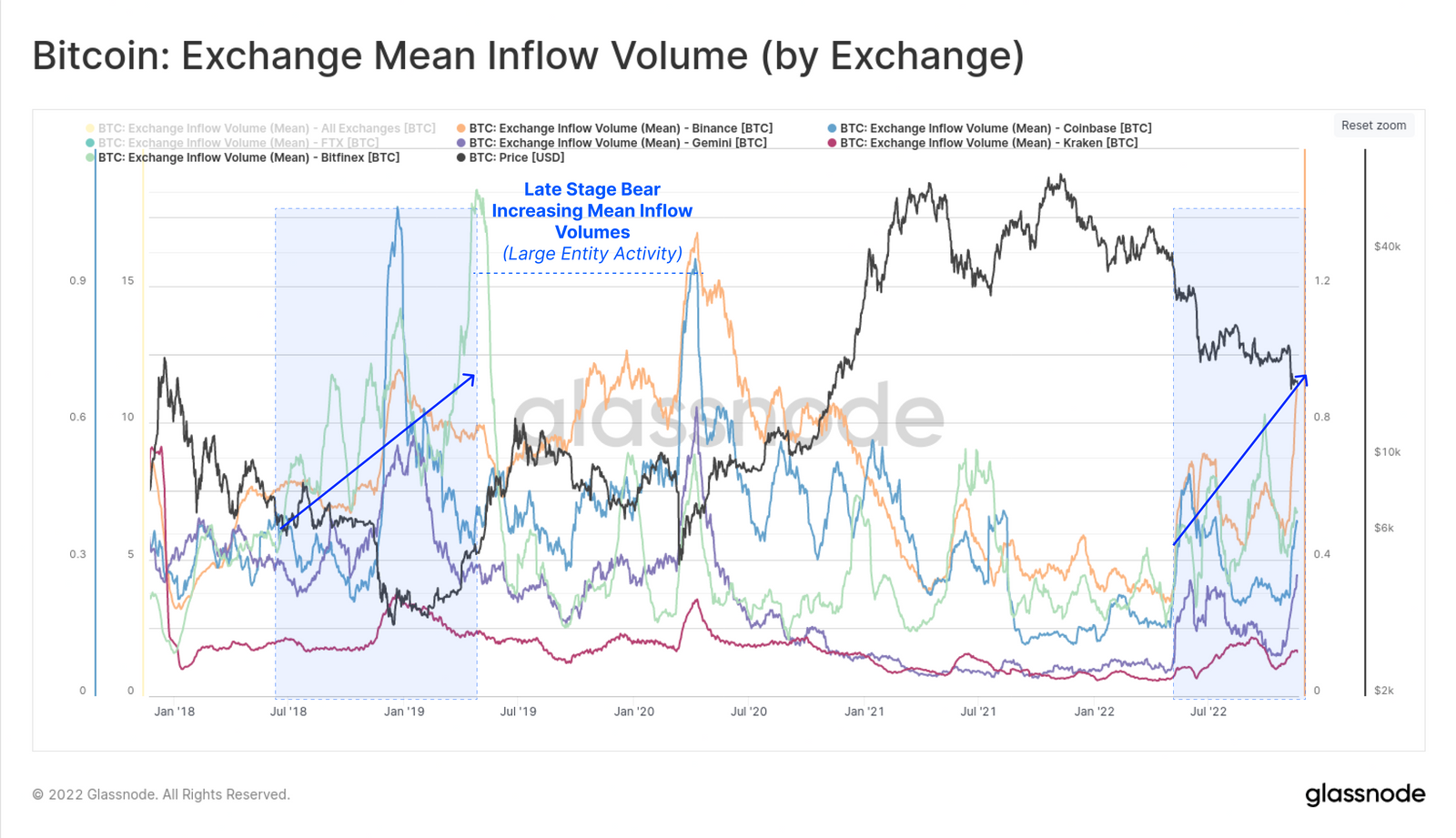
A trend which can be observed during the later stages of the 2018-19 bear market is an aggregate increase in the Mean Inflow Volume to exchanges. In other words, the average deposit size across all major exchanges increases in USD terms as the market formed a cycle bottom. This is present across all major exchanges including Binance, Bitfinex, Coinbase, Gemini, and Kraken.

A similar trend has been in effect since late May following the collapse of the LUNA-UST project. This indicates that in general, there has been a net increase in larger size deposits over the last 6-months. This indicates that entities such as whales, institutions, and trading firms have had a larger dominance across exchange deposits.
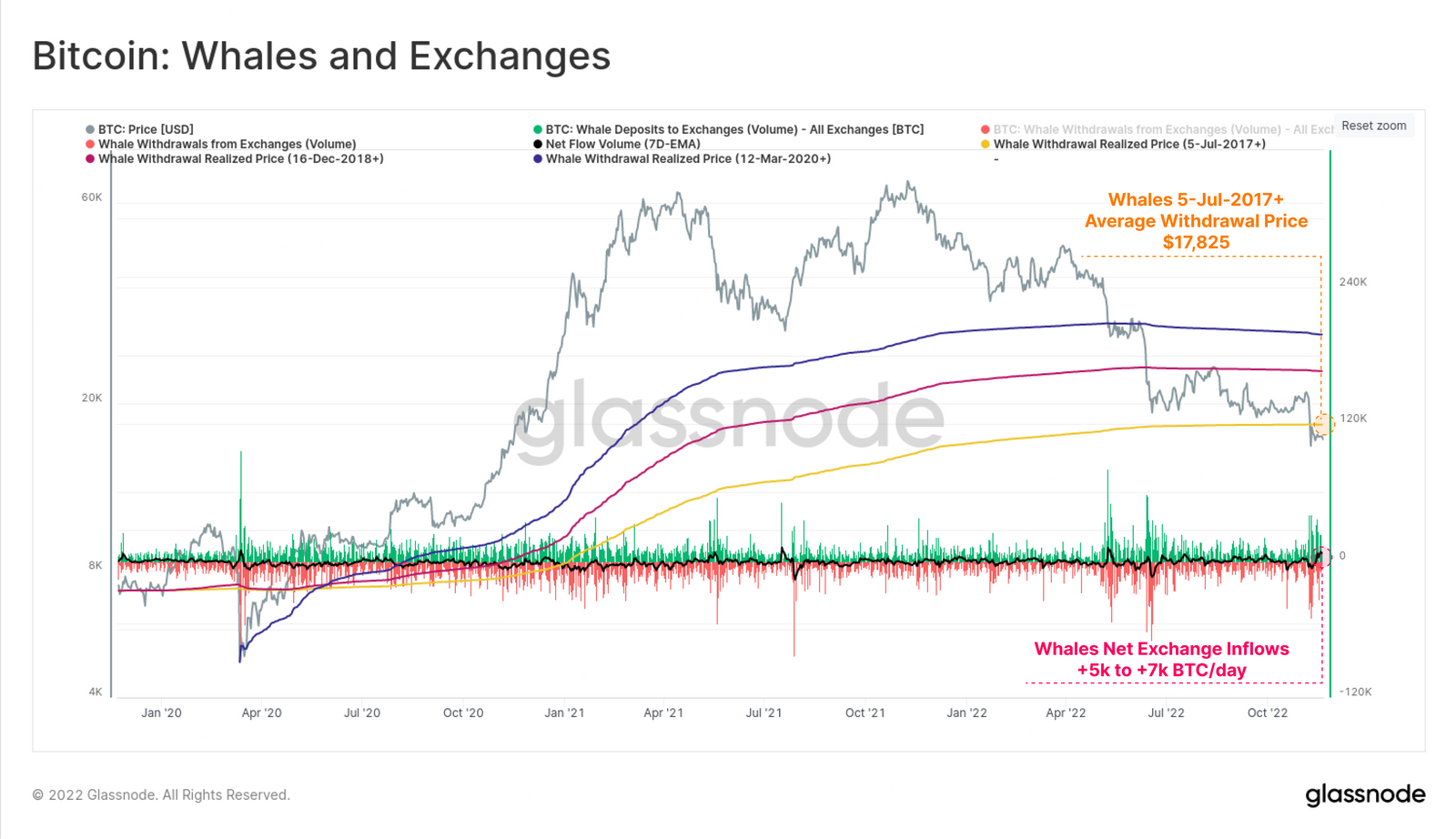
A driving factor of this may be the financial position of Whales (entities > 1k BTC). The yellow trace below shows the average withdrawal price of the Whale cohort since 5-Jul-2017 (launch of Binance), which is trading at $17,825.

With spot prices currently at $16.2k, this is the the first time since March 2020 that this Whale cohort has been at an unrealized loss. In response, Whales have actually been depositing coins to exchanges, with an excess of between 5k and 7k BTC per day in net inflows over the past week.
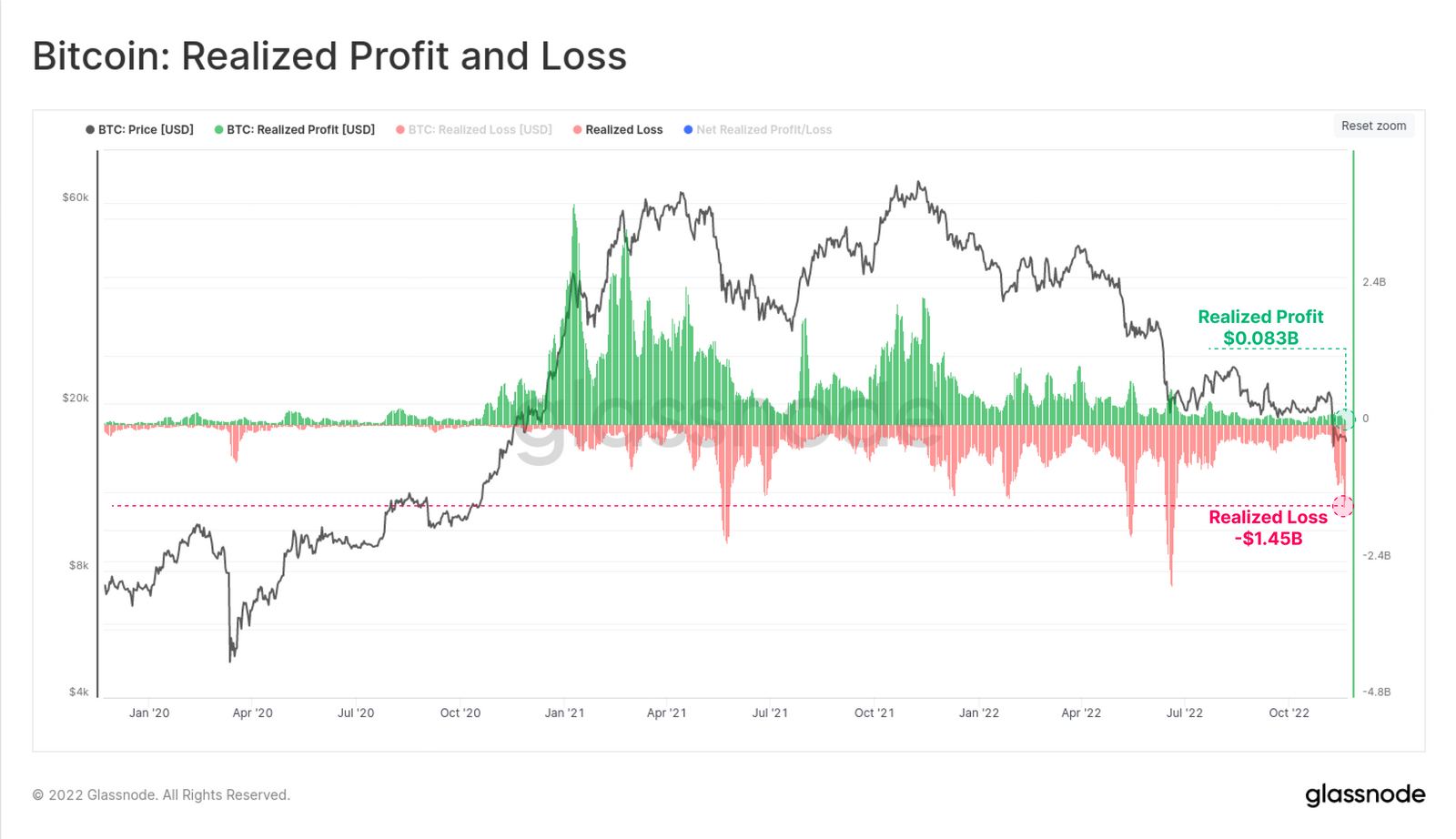
This magnitude of financial pain is being expressed across the wider market, with one of the largest spikes in Realized Loss in the 2020-22 cycle. A peak daily value of -$1.45B in realized loss was locked in this week, ranking as the fourth largest in history.

A comparably small $83M in realized profits occurred, suggesting that the vast majority of spent volume at present is sourced from investors from the current cycle, and very little coin volume from previous cycles are on the move.
Old Hands Awaken

A pattern of interest we highlighted in our last edition was the uptick in spending by Bitcoin longer-term holders. During bear markets, significant and sustained upticks in old coin spending is often a signal of reduced conviction, fear, and capitulation amongst this more experienced cohort.

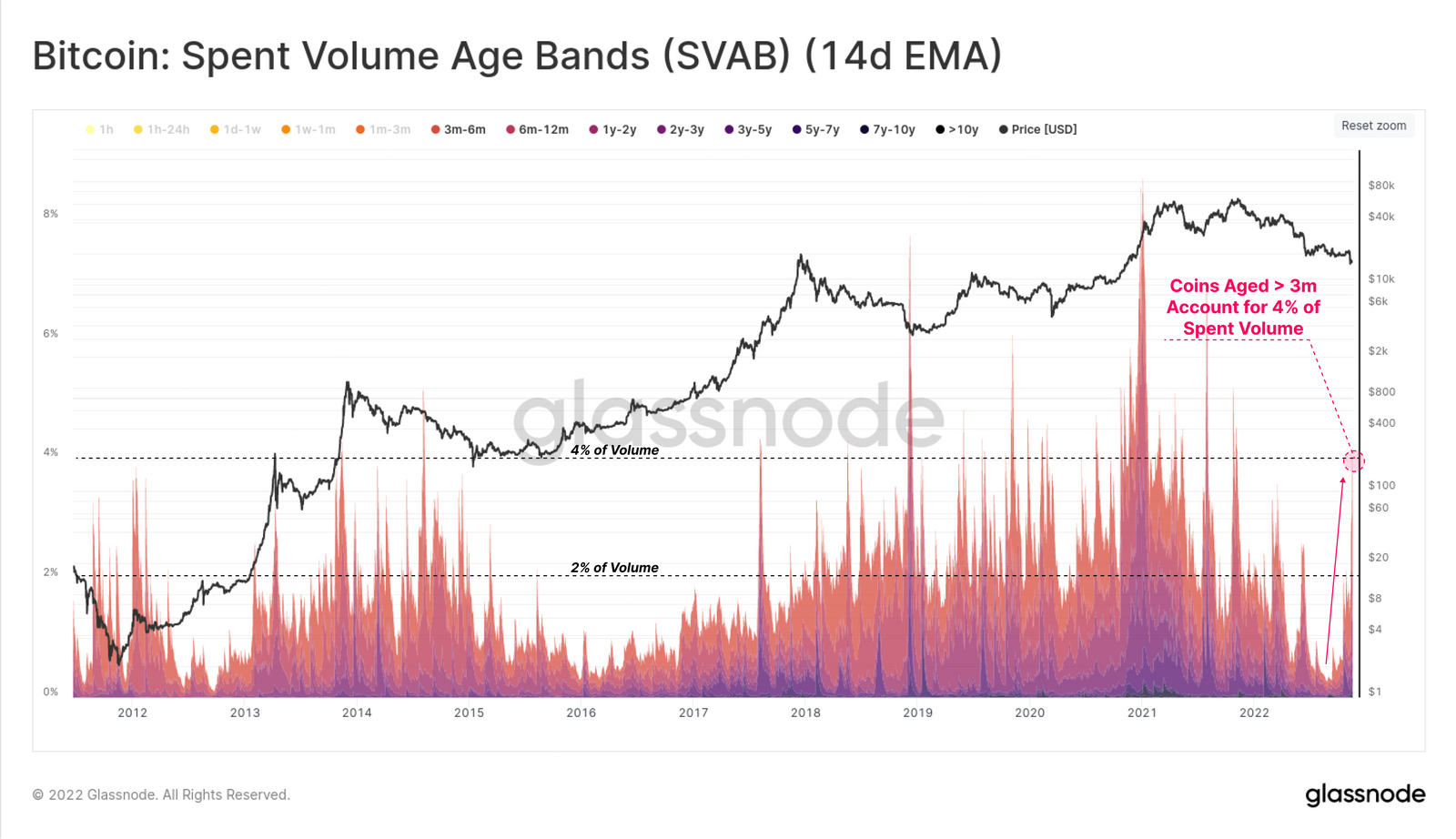
The Spent Volume Age Bands (SVAB) metric shows that just over 4% of all spent volume was sourced from coins older than 3-months this week, which is the highest level in 2022. This relative magnitude is coincident with some of the largest in history, often seen during capitulation events and wide scale panic events.
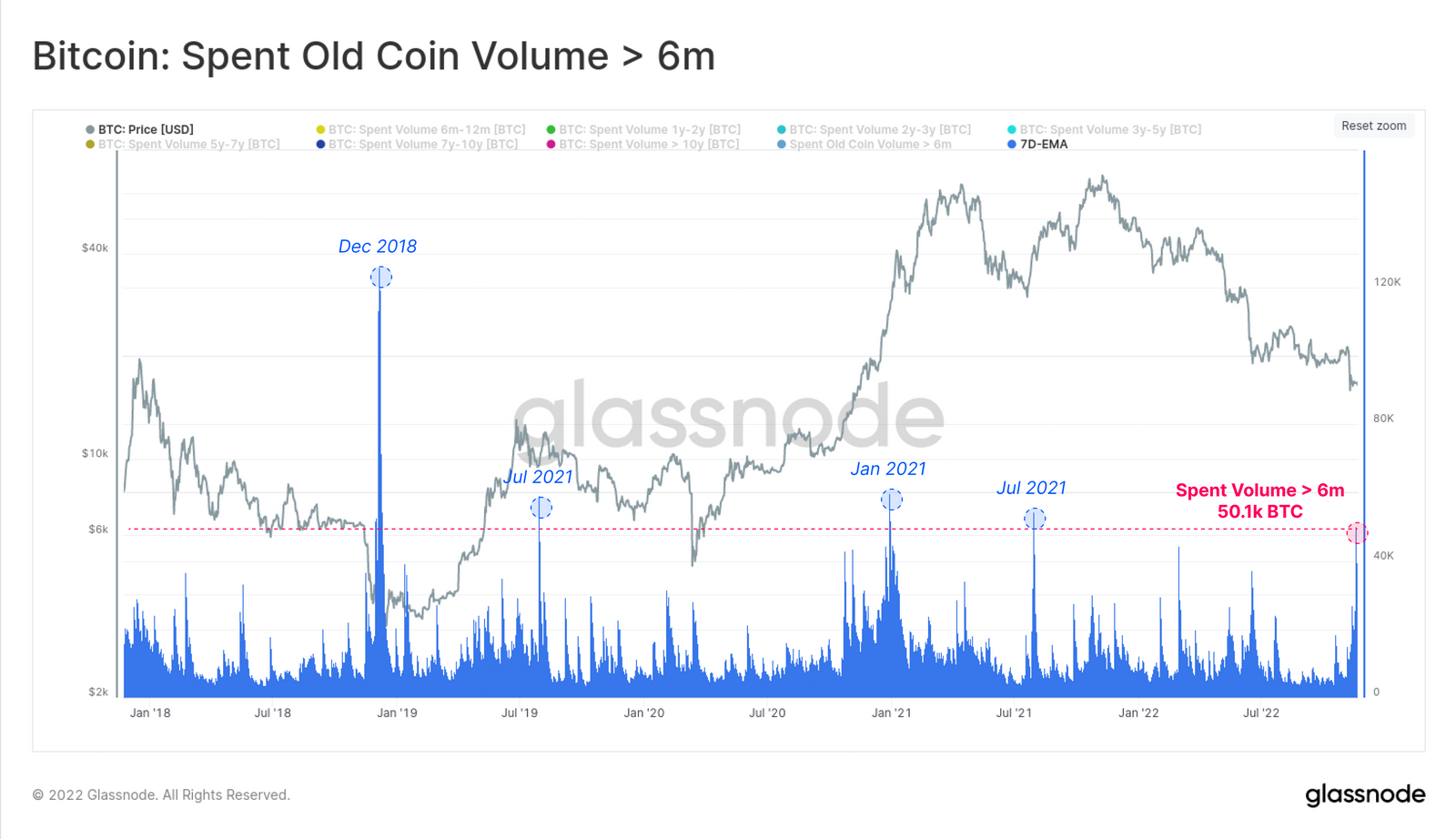
The spent BTC volume older than 6-months has hit also the fifth highest value over the last five years. Over 130.6k BTC aged 6-months or more were spent on 17-Nov alone, with the 7-day average now at 50.1k BTC per day.

This suggests that there is significant uncertainty, which is prompting the changing of hands, and or shuffling of coins by longer-term investors.
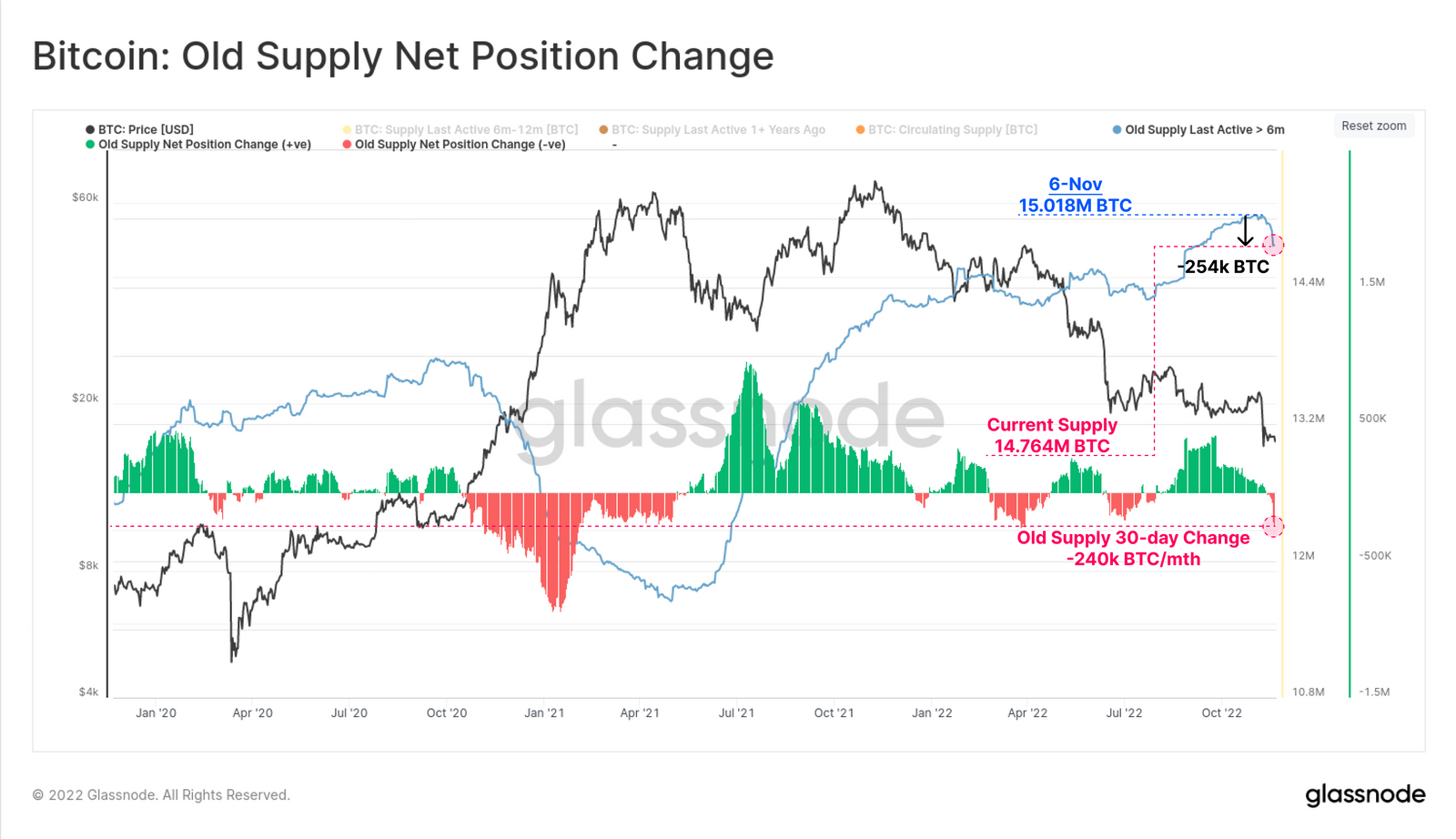
In the time since FTX collapsed, a total of 254k BTC older than 6-months have been spent, equivalent to around 1.3% of the circulating supply. On a 30-day change basis, this is the steepest decline in older coin supply since the Jan 2021 bull run, where long-term investors were taking profits in the bull market.
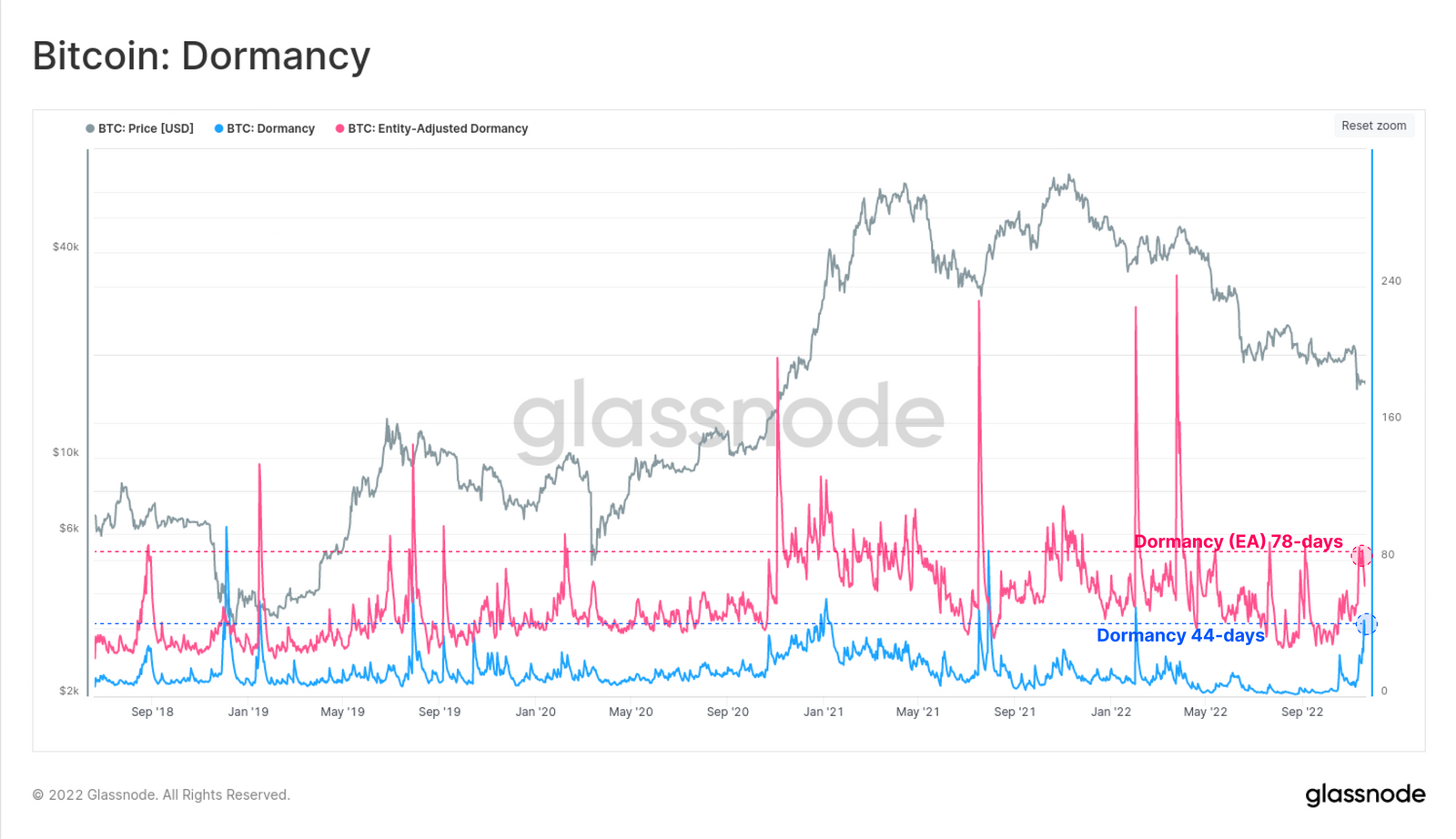
The average age per spent coin can be measured via the Dormancy metric, which has also seen a significant uptick over recent weeks. Two traces are show below, for different variants of Dormancy:

🔵 Dormancy: which has rallied to 44-days, and presents the average age per spent coin across the whole market.

🔴 Entity-Adjusted Dormancy: has similarly rallied, hitting 78-days. This variant reflects filtered data that removes self-spends and internal wallet reshuffling.

When both metrics experience a similar spike higher, it provides confidence that a meaningful portion of the spending taking place is related to coins changing hands, and less so to internal wallet shuffling. Thus it appears that even Bitcoin long-term holders have been spooked by recent events, and a sub-set of them are spending coins and divesting in response.
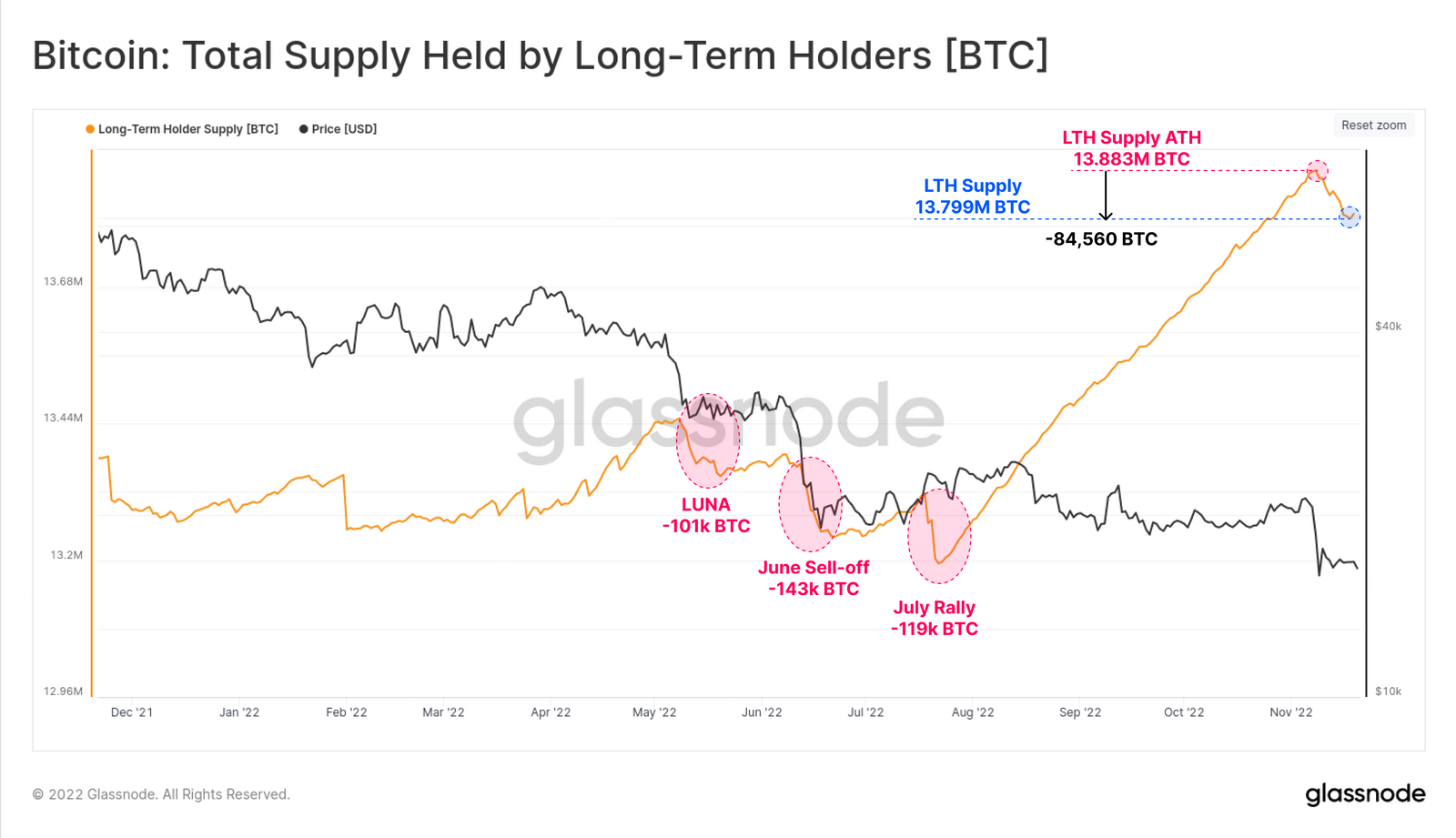
Finally, we will inspect the behavior of Long-Term Holders, which accounts for the entities that are statistically the least likely to spend in the face of volatility. Their supply has declined by 84,560 BTC post-FTX, which remains one of the most significant declines in the last year. As shown in the chart below, LTH supply declines have exceeded 100k BTC in three back-to-back months through May, June and July this year. This makes the current decline notable, but not the largest, although it is still underway.
Summary and Conclusions

Across many metrics that describe the behavior of Bitcoin longer-term investors, several are signalling that a non-trivial volume of spending, and divestment is underway. As noted last week, a slow-down and retrace of these metrics would signify this may be a short-term event, however with each passing day that these trends persist, it becomes increasingly plausible that a wider scale reduction in confidence is in play.

The Whale cohort are in a mode of net distribution at present, sending between 5k and 7k in excess BTC into exchanges. Meanwhile, the flight of coins off exchanges by almost all cohorts is at an all-time high. The whirlwind impact of the FTX collapse continues to play out, and it remains to be seen just how extensive the shake-up to investor confidence has been.


Lecturas Relacionadas

Don't Just Focus on Layoffs, The New Structure of the Ethereum Foundation is More Worthy of Appreciation

The Ethereum Foundation (EF) has undergone a significant organizational restructuring, with the most notable change being a strategic refocusing of its priorities rather than just a 20% staff reduction (approximately 54 people). The new structure clearly prioritizes the Protocol and Access layers, which now comprise the largest teams (57 and 34 people, respectively). This signals EF's intent to concentrate its core resources on fundamental, hard-to-outsource aspects of Ethereum: protocol evolution, security, privacy, client development, and the foundational access layer. Key areas within the Protocol layer, led by an architecture group including Vitalik Buterin and Justin Drake, receive heightened emphasis. These include post-quantum security, zkEVM, formal verification, and long-term roadmap development ("Strawmap"). This reflects a shift towards tackling complex, interdependent challenges like scalability, privacy, and future-proofing the protocol, potentially moving from a pure "redundant security" multi-client model towards more specialized clients aided by AI-assisted formal verification. Financially, EF's budget is being reduced by approximately 40%. The goal is to transition from spending about 15% of its remaining funds annually to a more sustainable 5% rate, akin to a long-term endowment, ensuring its longevity. Concurrently, the restructuring involves pushing certain responsibilities—such as application development, adoption, and ecosystem coordination—to external organizations like EthLabs, the Ethereum Apps Guild, and others. This "multi-node" model aims to increase ecosystem resilience by decentralizing functions beyond the EF, though it introduces new coordination challenges. In essence, the reorganization represents EF consciously narrowing its scope to focus on the hardest, most critical protocol-level problems while fostering a more distributed and sustainable ecosystem structure for Ethereum's future growth.

Foresight NewsHace 22 min(s)

Don't Just Focus on Layoffs, The New Structure of the Ethereum Foundation is More Worthy of Appreciation

Foresight NewsHace 22 min(s)

Report Analysis: What Is Coherent Planning as CPO Booms?

Title: Report Interpretation: What Moves Is Coherent Making Amid the CPO Boom? Summary: JP Morgan analyst Samik Chatterjee reiterates an Overweight rating on Coherent (COHR), citing undervalued growth potential across three core areas: data center optical transceivers, co-packaged optics (CPO) chips, and industrial lasers/thermal management. COHR's 1.6T data center transceivers are in high demand, with pricing remaining firm. The rise of CPO is seen not as a threat but as a catalyst, creating higher demand for sophisticated optical components, an area where COHR holds a competitive edge with its comprehensive portfolio (lasers, isolators, VCSELs, thermoelectric coolers). Each CPO chip offers significantly greater revenue potential than traditional transceivers. Furthermore, its Optical Circuit Switch (OCS) technology targets a potential $4B market with reliability and power advantages. The company is expanding its InP (Indium Phosphide) device capacity fourfold within two years, securing substrate supply and transitioning to more cost-effective 6-inch wafers. As one of only two major suppliers of high-quality pump lasers—currently in severe shortage—COHR can now move up the value chain from components to complete line cards/systems, boosting ASP over tenfold. Gross margin targets (>42%) may be revised upward due to high-end product premiums, cost improvements from the wafer transition, and contributions from new high-margin products like CPO and OCS. Its efficient thermadite thermal material also offers long-term growth. Industrial segment revenue grows at a steady 5-10%, supported by semiconductor equipment orders. Changes in Apple's Face ID protocol present a re-competition opportunity for 3D sensing. Overall, Coherent is positioned as a key infrastructure provider, with AI-driven compute demand fueling the need for high-speed optical interconnectivity. Growth from CPO/OCS, stable industrial performance, and margin improvement support the bullish thesis. *Disclaimer: This summary interprets a third-party analyst report from JP Morgan. It does not constitute investment advice.*

marsbitHace 44 min(s)

Report Analysis: What Is Coherent Planning as CPO Booms?

marsbitHace 44 min(s)

Dan Koe's New Article: Escape the Fate of the Wage Slave, How to Survive in the Tide of AI Replacement?

Dan Koe's article argues that the real threat in the AI era is not technology itself, but financial dependency on employers. He critiques the "wage slavery" of unfulfilling work and identifies five core skills for resilience: agency, taste, persuasion, persistence, and iteration. These are developed not by consuming content, but by starting your own venture. The key to escaping the "employee mindset" is a radical identity shift. This requires: 1) Drastically changing your environment and daily inputs, 2) Choosing a creative medium (like content or code) that provides real-world feedback through trial and error, and 3) Using that feedback to learn and adapt. Koe strongly advocates for content creation over coding for beginners, as it builds irreplaceable subjective taste and audience connection. The practical starting point is a 15-minute self-inquiry to define your "life's work." Answer: What do you know deeply? What innate abilities do you have? What childhood interests were suppressed? Then, identify your contrarian beliefs—what does the mainstream get wrong in your area? The overlap is your unique direction. The final, non-negotiable step is to publish your first piece of content tomorrow. Embrace that it will be bad; the goal is to enter the feedback loop of creation, learning, and iteration, which is the true path to independence.

marsbitHace 54 min(s)

Dan Koe's New Article: Escape the Fate of the Wage Slave, How to Survive in the Tide of AI Replacement?

marsbitHace 54 min(s)

After Laying Off 20% of Staff, What Are the Key Points of EF's New Structure?

Following the completion of a months-long organizational restructuring, the Ethereum Foundation (EF) announced a 20% workforce reduction (approximately 54 employees) on June 23rd. It reorganized its teams into five new core clusters: Protocol, Access, User, Community, and Institutional (plus Operations/Management support units). Officially, this move implements the EF's 2026 Mandate and 2025 Treasury Management Policy, aiming to create a more focused and "self-sovereign" organization. The restructuring prioritizes the CROPS principles—Censorship Resistance, Openness & Freedom, Privacy, and Security—as foundational organizational tenets. The Protocol cluster will focus on core protocol R&D, including MEV reduction and zkEVM. The Access cluster emphasizes preserving user "zero option" for non-custodial, permissionless interaction. The User, Community, and Institutional clusters will manage external engagement, with the latter handling institutional and regulatory matters. While offering enhanced severance and transition support for affected employees, the EF did not disclose budget allocations or specific KPIs for the new clusters. This has led to market uncertainty about the impact on project funding and development priorities. Analysts note the announcement's positive tone of mission focus contrasts with a backdrop of recent EF leadership changes and broader ecosystem pressures. The true impact—whether this signifies strategic realignment or reactive contraction—will become clearer as the new structure's resource allocation and project prioritization are revealed in the coming months.

marsbitHace 54 min(s)

After Laying Off 20% of Staff, What Are the Key Points of EF's New Structure?

marsbitHace 54 min(s)

Top-Tier MEV Bot Loses $7.5 Million: Is 'Approval' the Most Overlooked Fatal Risk On-Chain?

The article discusses a sophisticated attack on a prominent Ethereum MEV (Miner Extractable Value) bot, Jaredfromsubway.eth, resulting in a loss exceeding $7.5 million. Unlike typical exploits involving key leaks or smart contract bugs, this attack was a carefully orchestrated "reverse hunt." The attacker spent weeks deploying fake tokens and liquidity pools that mimicked legitimate assets like WETH and USDC. These pools were designed to appear as profitable arbitrage opportunities, tricking the automated bot's trading logic. During its normal operation, the bot was induced to grant ERC-20 token approvals to the malicious contracts. Once sufficient permissions were accumulated, the attacker drained the bot's funds by calling these pre-approved allowances. This incident highlights the often-underestimated risks associated with token approvals in Web3. The article explains that approvals are a fundamental mechanism, allowing smart contracts (like DEXs) to move a user's tokens on their behalf. However, risks arise from practices like granting infinite approvals, the persistence of approvals even after disconnecting from a dApp, and the potential for a once-trusted contract to become compromised later. The piece concludes with advice for managing approval risks: users should adopt the principle of least privilege (approving only the needed amount), use separate wallets for storage versus interactions, and regularly audit and revoke unnecessary approvals using tools like Revoke.cash. It also emphasizes the role of wallets like imToken in providing proactive defenses, such as risk warnings and clear, readable transaction signing interfaces, to help users make informed decisions. Ultimately, wallet security must extend beyond private key protection to include active management of token approvals.

marsbitHace 59 min(s)

Top-Tier MEV Bot Loses $7.5 Million: Is 'Approval' the Most Overlooked Fatal Risk On-Chain?

marsbitHace 59 min(s)

Trading

Spot
Futuros
活动图片