铭记这一刻:这些有趣的以太坊合并纪念版NFT值得收藏

FPublicado a 2022-09-08Actualizado a 2022-09-08

Resumen

距离区块链智能合约网络最大的进化以太坊合并还有一周时间,许多社区通过制定纪念版 NFT 来庆祝这一激动人心的时刻到来。

距离区块链智能合约网络最大的进化以太坊合并还有一周时间,许多社区通过制定纪念版 NFT 来庆祝这一激动人心的时刻到来。让我们梳理一下未来几天值得关注的以太坊合并纪念版 NFT 有哪些?

EPICS MERGE

EPICS MERGE 是什么?
来源

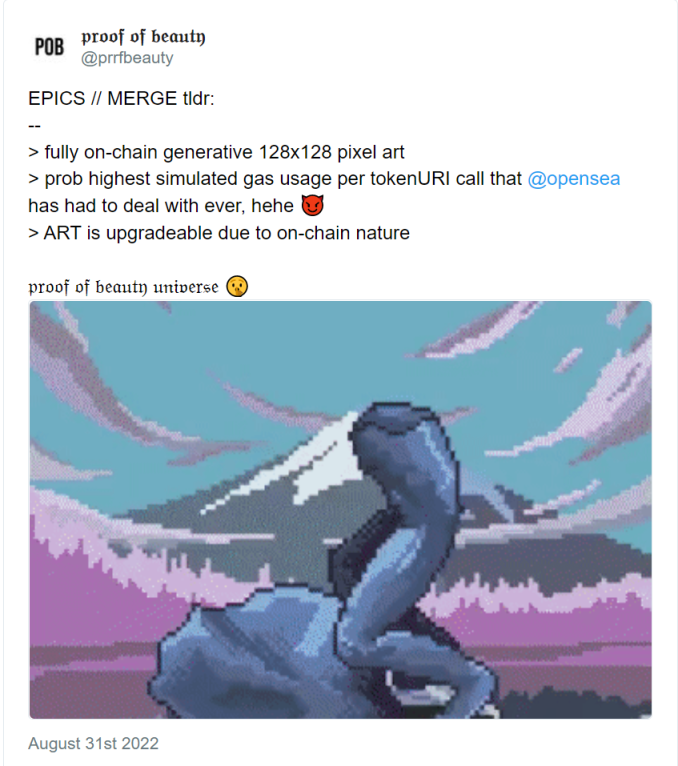
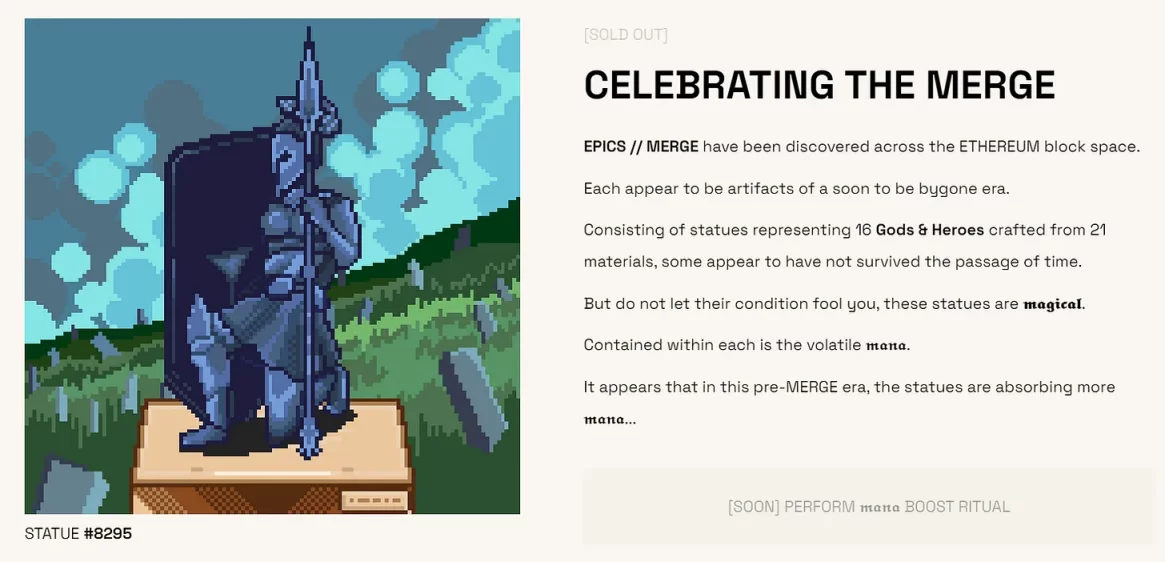
EPICS MERGE 是 Proof of Beauty NFT 工作室为庆祝以太坊合并而创建的链上像素艺术项目。EPICS MERGE 在以太坊区块空间中被发现,每一个雕像都是一个即将过去的时代文物。这些雕像由 21 种元素构成,共有 16 位神话人物和英雄。有些雕像似乎无法在时间的流逝当中幸存下来,但不要被他们的状况所欺骗,每一个雕像在合并完成之前吸收更多的法力点,合并之后,他们可以通过提升仪式得到重生。

如何参与?

目前该系列的 NFT 可以在二级市场以低于 0.007ETH 的价格购买。最近该项目已推出新的系列:NFT 雕像可以累积更多的法力点,在合并之后完成重生仪式,进化成新的 NFT。
Ethereum Merge Fractals

Ethereum Merge Fractals 是什么?
来源

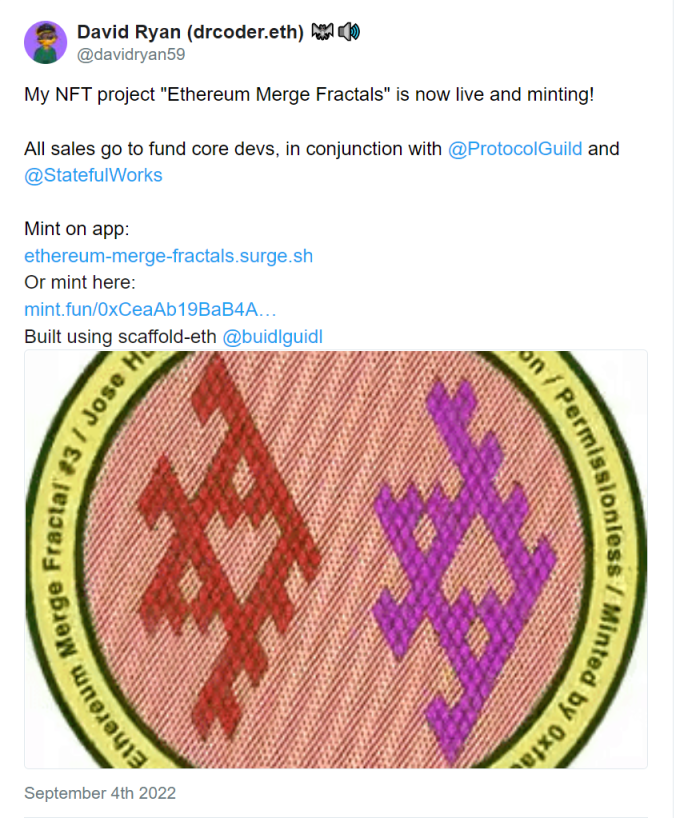
Ethereum Merge Fractals 是由开发人员David Ryan创建的一个生成式合并主题 NFT 空投,其收益将全部通过 Protocol Guild(注:Protocol Guild 是由 119 位核心贡献者组成的集体,致力于合并等事项)和 Stateful Works(以太坊艺术品展览组织)分配给以太坊协议开发者。

如何参与?
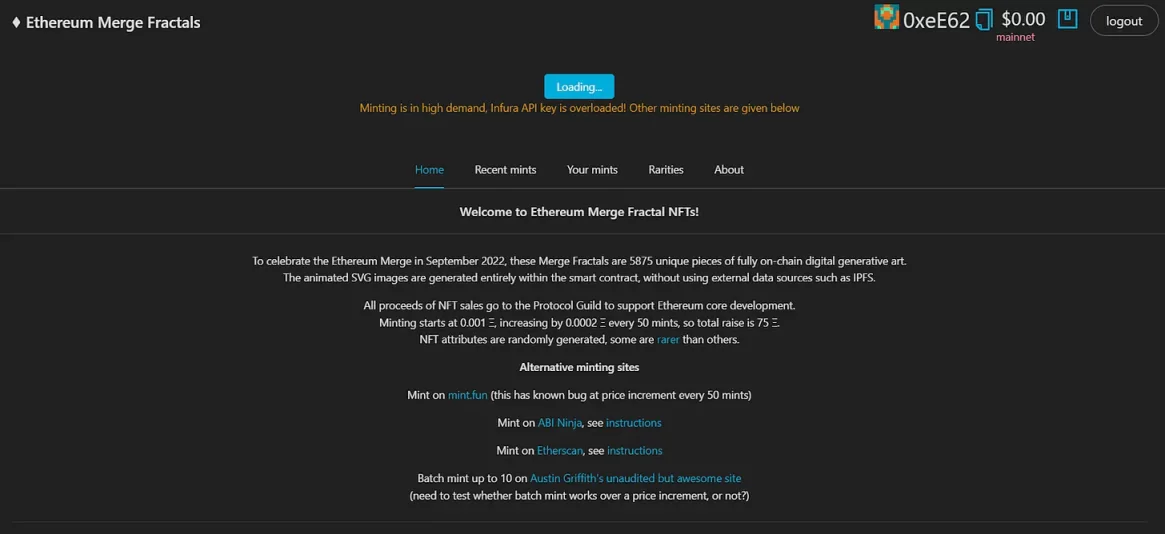
在撰写本文时,该系列中的 5875 件独特作品中已经有 650 件被铸造。价格从 0.001ETH 开始,每经过 50 次铸造就会上涨 0.0002ETH,该项目将在售罄时为以太坊核心成员筹集 75ETH 的资金。因此在mint NFT不仅可以帮助以太坊贡献者筹集资金,还可能在此过程中获得一些很酷的 NFT。

New Home of the Heart

New Home of the Heart 是什么?
来源

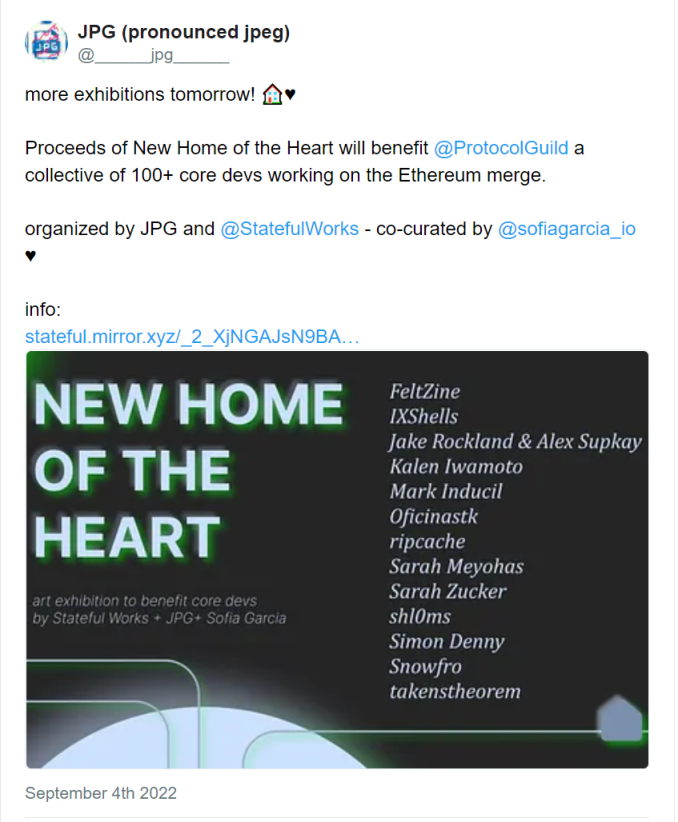
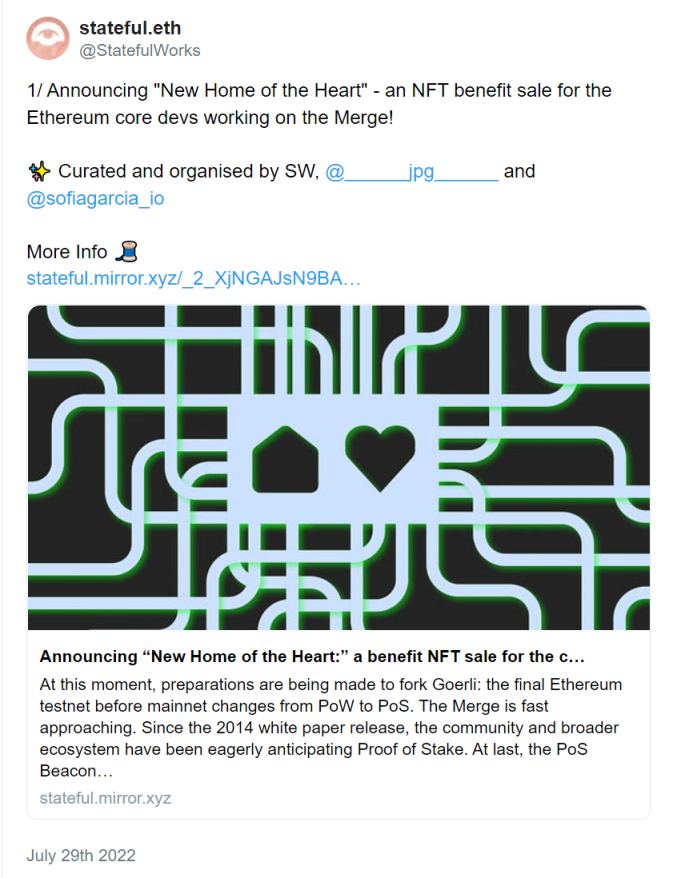
New Home of the Heart 是一个庆祝以太坊合并的 NFT 展览和销售,由 Stateful Works、JPG(注:JPG 是 Web3 文化基础设施提供者,用户可以用其策划 NFT 展览。)和 Sofía García 共同策划。该项目的任何收益都将分配给以太坊核心开发者和参与的艺术家。为展览贡献作品的艺术家包括 Sarah Zucker、Shl0ms、Snowfro 等。

如何参与?
来源

New Home of the Heart 将在 9 月 12 号星期一举行展览发布会,届时即可购买或拍卖相关 NFT。

Regenesis

Regenesis 是什么?
来源

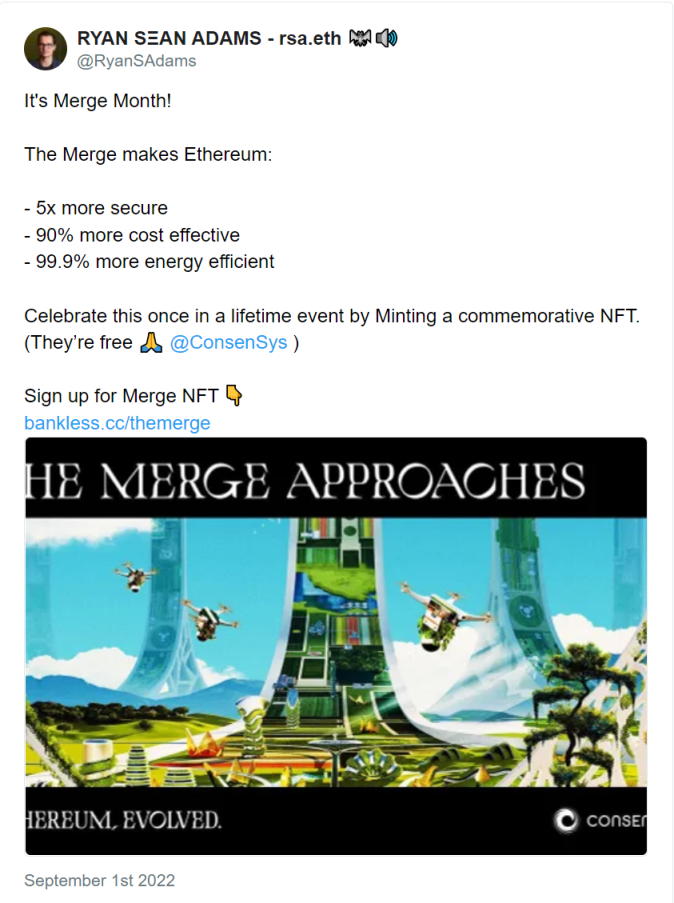
Regenesis是以太坊产品套件工作室 ConsenSys 为纪念以太坊合并推出的一系列 NFT 插画,通过细节描绘出合并的好处,例如安全性、可持续性和可拓展性等。Regenesis 将在合并之后开始免费铸造,并向所有人开放。

如何参与?

Regenesis 铸造将在以太坊合并时开始,持续 72 小时。可以通过以太坊合并时间记录器更好地了解开始铸造时间。Regenesis 是免费铸造的,只需要少量的 Gas 费,需要通过 MetaMask 钱包连接铸造。

小结

在合并期间,以太坊NFT 用户无需做任何事情,等到一切都顺利地过渡到新的 PoS 链时,就可以通过持久的数字事物 NFT 来纪念这个历史性时刻。
Lecturas Relacionadas

How Blockchain Fills the Identity, Payment, and Trust Gaps for AI Agents?

AI Agents are rapidly evolving into autonomous economic participants, but they face critical gaps in identity, payment, and trust infrastructure. They currently lack standardized ways to prove who they are, what they are authorized to do, and how they should be compensated across different environments. Blockchain technology is emerging as a solution to these challenges by providing a neutral coordination layer. Public ledgers offer auditable credentials, wallets enable portable identities, and stablecoins serve as a programmable settlement layer. A key bottleneck is the absence of a universal identity standard for non-human entities—akin to "Know Your Agent" (KYA)—which would allow Agents to operate with verifiable, cryptographically signed credentials. Without this, Agents remain fragmented and face barriers to interoperability. Additionally, as AI systems take on governance roles, there is a risk that centralized control over models could undermine decentralized governance in practice. Cryptographic guarantees on training data, prompts, and behavior logs are essential to ensure Agents act in users' interests. Stablecoins and crypto-native payment rails are becoming the default for Agent-to-Agent commerce, enabling seamless, low-cost transactions for AI-native services. These systems support permissionless, programmable payments without traditional merchant onboarding. Finally, as AI scales, human oversight becomes impractical. Trust must be built into system architecture through verifiable provenance, on-chain attestations, and decentralized identity systems. The future of Agent economies depends on cryptographically enforced accountability, allowing users to delegate tasks with clearly defined constraints and transparent operation logs.

marsbitHace 9 min(s)

How Blockchain Fills the Identity, Payment, and Trust Gaps for AI Agents?

marsbitHace 9 min(s)

Six Years Since DeFi Summer, How Will the Decentralized Financial Revolution Continue?

In 2026, the DeFi sector faces a severe trust crisis following a series of high-profile security breaches, including a $292 million theft from KelpDAO’s rsETH, a $2.85 million exploit at Drift Protocol due to permission vulnerabilities, and a $14.9 million lending failure at Venus Protocol. These incidents triggered a withdrawal of approximately $10 billion from DeFi over a single weekend, highlighting systemic risks beyond smart contract flaws—such as governance, cross-chain complexity, and operational weaknesses. Despite these challenges, on-chain finance continues to grow, with capital shifting toward safer, regulated products. Stablecoins like USDT ($185B) and USDC ($78B) have reached a combined market cap of $263 billion, while tokenized U.S. Treasuries surged to $10.93 billion. Visa’s growing USDC settlement volume, now annualized at $3.5 billion, signals increasing institutional adoption of compliant blockchain-based financial infrastructure. The competition for the future of on-chain finance is intensifying. While native DeFi struggles with trust and capital outflows, regulated products—stablecoins, tokenized assets, and ETFs—are gaining dominance by offering programmable, 24/7 settlement without high DeFi risks. Over 80 crypto projects shut down in Q1 2026, reflecting dwindling patience for speculative ventures. The core challenge for open DeFi is to rebuild trust and demonstrate irreplaceable value—or risk ceding its role as the primary entry point to on-chain finance.

marsbitHace 19 min(s)

Six Years Since DeFi Summer, How Will the Decentralized Financial Revolution Continue?

marsbitHace 19 min(s)

Trading

Spot
Futuros
活动图片