21Shares Mid-Year Key Report: Bitcoin's Four-Year Cycle Remains Intact, Stablecoins and Tokenization Emerge as New Growth Engines

marsbitPublicado a 2026-06-25Actualizado a 2026-06-25

Resumen

21Shares Mid-Year Report 2026: Bitcoin Cycle Intact, Stablecoins & Tokenization Emerge as New Engines This mid-year review assesses progress against 21Shares' ten predictions for 2026. While the overarching shift from narrative to fundamentals holds, performance varies. Key findings show Bitcoin's four-year cycle remains evident despite market maturation. Global crypto ETP AUM has declined to ~$140B, lagging the $400B target, though product innovation continues. Stablecoin supply surpassed $320B, demonstrating non-cyclical demand but falling short of the $1T forecast due to slower regulatory clarity. DeFi TVL, stalled at ~$140B, was hindered by major security incidents. Corporate crypto treasuries hold ~1.28M BTC ($100B), with consolidation pressuring weaker players. Prediction markets are on track, with $57.5B volume already surpassing half the $100B annual target. AI agent infrastructure is ready, but adoption is early. Ethereum L2 consolidation is underway, with the top 5 capturing nearly 90% of activity. Compliant token launches have a platform but lack mainstream volume. Tokenized RWAs total ~$31B on public chains, but institutional pipeline growth is strong. In summary, fundamentals like stablecoins, tokenization, and prediction markets are advancing, but targets require faster adoption or price appreciation. The market is maturing, yet cyclical patterns persist.

Author: 21shares Research

Compiled by: Jiahuan, ChainCatcher

Introduction

Welcome to the mid-year update of State of Crypto. In this report, we revisit our predictions for 2026 made at the start of the year to see how they have held up after six months.

At the beginning of the year, we proposed that 2026 would be the year the crypto industry transitions from narrative-driven to fundamentals-driven.

Specifically, we identified four core drivers: structural inflows into regulated exchange-traded funds (ETFs) and exchange-traded products (ETPs), enterprise adoption of stablecoins, tokenization of commodities and pre-IPO companies, and on-chain use cases moving from concept to scale.

Six months later, reality is more complex than we anticipated. Some calls have arrived ahead of schedule: annual trading volume in prediction markets is already close to our full-year target, consolidation in Ethereum scaling solutions is playing out as we expected, tokenized commodities are gaining renewed attention in gold and energy due to geopolitical hedging needs, the pre-IPO market is moving mainstream with a pipeline of marquee projects from SpaceX to Anthropic taking shape.

The overall direction we outlined for 2026 remains largely intact, but some predictions are ahead of schedule, while others are lagging. In this report, we take an objective look at each forecast, presenting where the market actually stands, not where we wish it were.

I. The BTC Cycle: Still Unbroken

Prediction at the start of the year: Bitcoin's four-year cycle is over.

Entering 2026, we thought Bitcoin's four-year cycle might be over. Six months later, we must be candid: the price action looks familiar. After peaking around $126,000 in October 2025, BTC pulled back sharply, a pattern highly consistent with previous post-halving cycles.

But this doesn't mean our call was entirely wrong. The market structure has indeed changed: ETF holdings are increasingly institutionalized, and the current drawdown of around 50% is far less severe than the 80%+ bear market drops of the past.

Bitcoin has also not broken below the global average cost basis of approximately $54,000, avoiding the kind of total capitulation selling seen in previous bear cycles. These are signals of a more mature market with stickier capital.

But stronger fundamentals do not mean BTC has become a "cycle-less" asset. Like most asset classes, cycles persist; only their shape changes. Investors ultimately still look at price and relative opportunity costs. Commodities, US stocks, and AI-themed stocks are all competing for the same pool of capital, and this still influences behavior.

Taken together, the continued expansion in adoption keeps us cautiously optimistic. The number of wallets holding BTC continues to grow. Our year-end base case expectation is for Bitcoin to return near $100,000, not to break to new all-time highs.
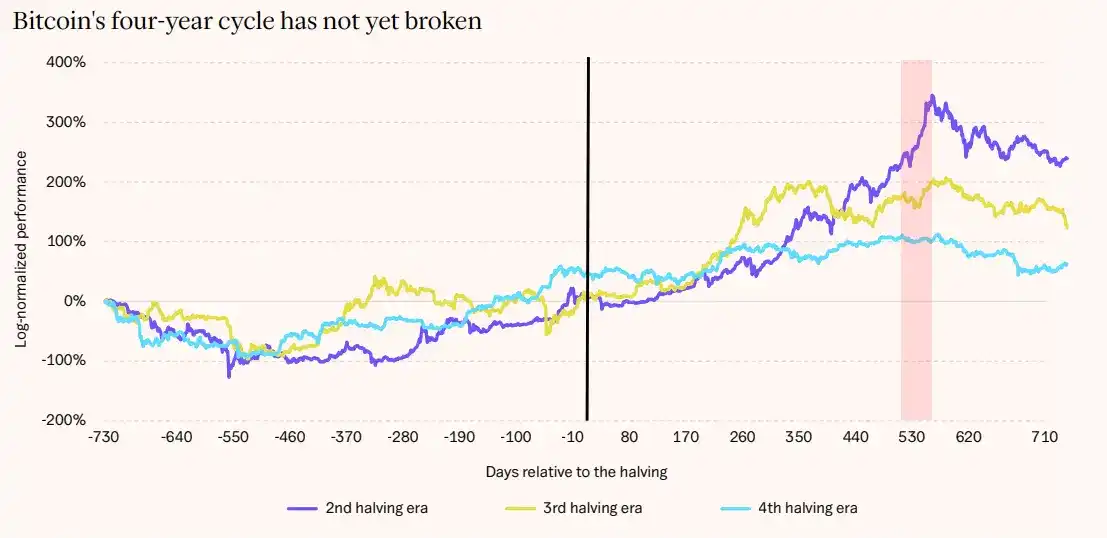
[Chart 1: Bitcoin's Four-Year Cycle Not Yet Broken]

Chart Description: Plots Bitcoin's log-normalized performance in the 2nd, 3rd, and 4th halving cycles, with the halving day as the origin (x-axis: days since halving, y-axis: log returns). The trajectory of the 4th halving cycle closely resembles that of the previous two cycles.

Data Source: Glassnode, 21Shares

II. Crypto ETPs: AUM Declines Instead of Rising

Prediction at the start of the year: Global crypto ETP AUM will surpass $400 billion.

We predicted that global crypto ETP assets under management (AUM) would exceed that of the largest and best-known Nasdaq-100 ETF (QQQ) by year-end. This forecast was built on an expected starting point of $250 billion. The reality is that AUM was around $172 billion at the end of 2025, lower than expected, and has been declining since the start of the year.

As of May 2026, total global crypto ETP AUM is approximately $140 billion, down about 15% year-to-date, with BTC ETPs accounting for roughly $110 billion of that.

The headline numbers look bad, but the underlying support is noteworthy. Despite net outflows of around $3 billion from US spot BTC ETFs year-to-date, BTC-denominated holdings remain near all-time highs, just over 1.25 million BTC, only about 8% below the peak. Investors are navigating the volatility or quietly building strategic positions, even with BTC far from its highs.

The product landscape is also maturing rapidly. The SEC's uniform listing standards have turned last year's backlog of applications into a wave of new products beyond just BTC and ETH.

Hyperliquid stands out in particular: the US spot ETF tracking this asset attracted over $150 million in net inflows in less than a month since launch, demonstrating that traditional capital is still flowing towards digital assets showing fundamental growth, even in a weak broader market.

Meanwhile, Morgan Stanley launched the first bank-sponsored spot BTC ETF in April, bringing one of the largest US advisor networks into the asset class. BlackRock and Goldman Sachs are racing to launch options-based BTC yield strategy ETFs, expanding the crypto product matrix beyond pure Delta One exposure.

The structural drivers remain. Institutional adoption is advancing, and regulatory momentum is real. But global ETP AUM largely follows the BTC price. Reaching our initial target would require a combination of significant price recovery and sustained net inflows simultaneously.

For reference, QQQ, propelled by the strength of AI and tech stocks, now boasts nearly $500 billion in AUM. Closing this gap is not impossible, but the combination of required conditions suggests this story more likely belongs to the next cycle.
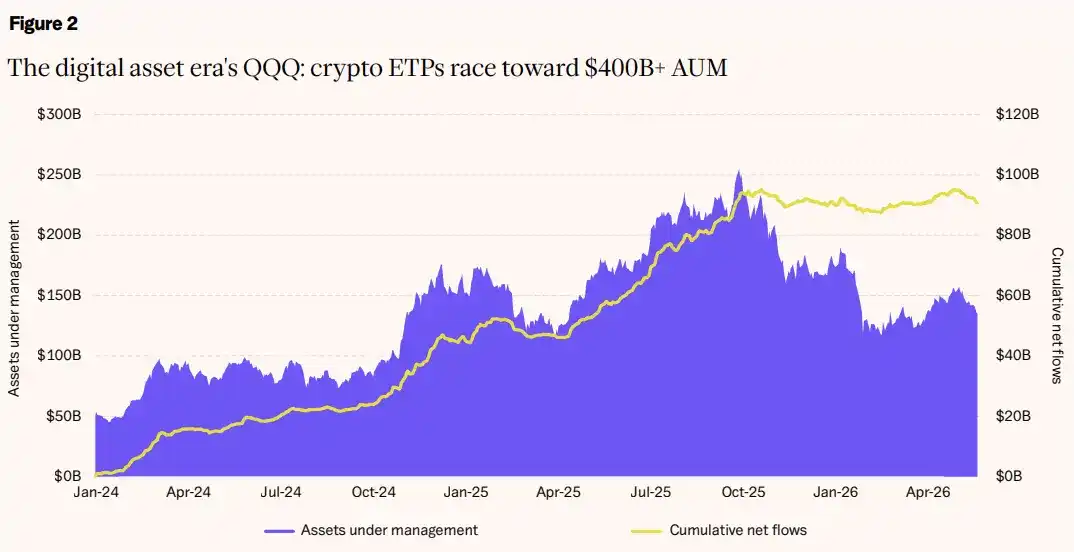
[Chart 2: The QQQ of the Digital Asset Age: Crypto ETPs Compete for Over $400 Billion AUM]

Chart Description: Left axis shows global crypto ETP Assets Under Management (AUM); right axis shows cumulative net inflows. From January 2024 to May 2026, AUM peaked in mid-2025 and subsequently declined, but cumulative net inflows remain elevated.

Data Source: Bloomberg, 21Shares

III. Stablecoins: $1 Trillion Target Arrived at Least a Year Early

Prediction at the start of the year: Stablecoin supply will reach $1 trillion.

Our prediction that stablecoin supply would reach $1 trillion was based on the assumption that regulatory clarity would unlock large-scale institutional and corporate adoption. Clarity has indeed arrived, but only partially.

The GENIUS Act was signed into law in July 2025, establishing the first federal stablecoin framework in the US. The EU's MiCA regulation is fully effective, with 14 licensed issuers and roughly 20 compliant stablecoins in circulation. The infrastructure is in place: total supply is approximately $320 billion, a significant increase from a year ago, but still only a third of the $1 trillion target.

The second step of regulatory clarity has been slower. The CLARITY bill has stalled for months, primarily over how to treat yield-bearing stablecoins, with banking groups warning that deposit-like yields could siphon funds from traditional lenders.

In mid-May, a compromise limiting passive, deposit-like yields passed the Senate Banking Committee, but this delay has dampened the near-term prospects for what could have been the biggest growth engine for the category.

Overshadowed by the headline number is genuine resilience. Stablecoin supply contracted over 30% during the last bear market; this time, supply continues to hit new all-time highs even as the market weakens, and far less new capital has entered the ecosystem than in the last cycle. For us, this is the strongest evidence of stablecoins as a core crypto use case: demand no longer relies on the cycle.

Growth is also expanding beyond the US dollar. The circulating supply of non-USD stablecoins has reached an all-time high of around $2 billion for the first time, growing over 40% year-to-date.

Traditional giants are also moving: Visa, Mastercard, Stripe, and Coinbase are reportedly jointly preparing a US stablecoin platform; Japan's three megabanks — MUFG, SMBC, and Mizuho — announced they will jointly issue trust-based stablecoins by early 2027, targeting $7 billion in issuance by 2028.

When payment and banking giants start building their own rails, whether adoption will arrive is no longer the question.

A more realistic year-end range is $400-$600 billion, reflecting steady growth in trading, cross-chain transfers, and remittances, rather than the explosive surge we originally anticipated. The direction is correct, but the timeline ran ahead of the adoption curve.
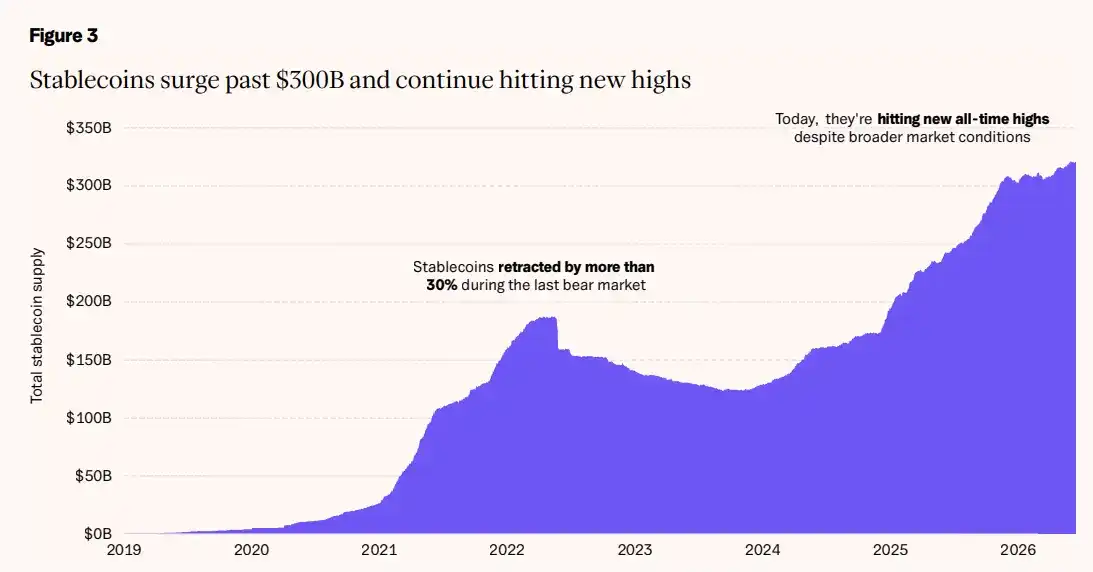
[Chart 3: Stablecoins Break Through $300 Billion and Continue Setting New All-Time Highs]

Chart Description: Change in total stablecoin supply from 2019 to 2026. Supply contracted over 30% during the 2022-2023 bear market, while currently, despite a down market environment, supply continues to reach new all-time highs.

Data Source: DeFiLlama, 21Shares

IV. DeFi: Security Incidents Dent Growth

Prediction at the start of the year: DeFi TVL will exceed $300 billion.

We predicted that DeFi Total Value Locked (TVL) would exceed $300 billion in 2026, more than doubling from the ~$130 billion at the time. This growth has not materialized. TVL sits around $140 billion, with its growth trajectory interrupted by a brutal year for security.

More than 50 security incidents have occurred so far in 2026, with cumulative losses exceeding $840 million, an increase of about 70% year-over-year. April was the single worst month in DeFi history.

A single incident at KelpDAO drained nearly $300 million, triggering over $13 billion in outflows within two days, severely denting institutional confidence in the restaking sector. We view these as growing pains of an emerging industry, not a final verdict, but they have certainly forced a lot of capital to the sidelines.

Beneath the surface weakness, capital is concentrating towards applications with real revenue and user bases.

Hyperliquid, the on-chain, full-financial asset exchange, continues to generate over $1 billion in annualized revenue, returning the majority of it to token holders via buybacks, and is up over 100% year-to-date.

Morpho, the lending engine behind Coinbase's crypto-collateralized loans, has become the highest-valued lending company in the space with a market cap over $1.2 billion, surpassing Aave. Its deposit base has recovered to near its all-time high of around $8 billion, with Apollo committing to acquire up to 9% of its token supply. Select protocols with genuine revenue are attracting outsized capital even in weak conditions.

The massive liquidity surge needed to push TVL to $300 billion hasn't arrived. Significant acceleration is more likely in 2027, before market conditions improve and confidence repairs.
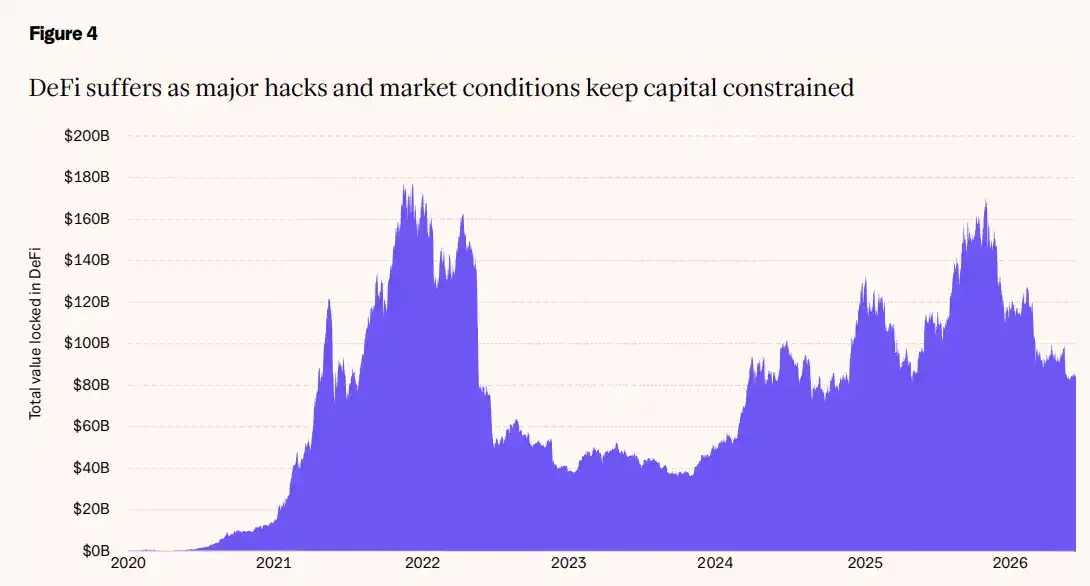
[Chart 4: DeFi Capital Constrained by Major Security Incidents and Market Conditions]

Chart Description: Change in DeFi Total Value Locked (TVL) from 2020 to 2026. TVL peaked in late 2021, declined sharply, partially recovered in 2024-2025, and has remained around $140 billion in 2026.

Data Source: DeFiLlama, 21Shares

V. Digital Asset Treasuries: The Weak Accelerating Their Exit

Prediction at the start of the year: Digital asset treasury companies' crypto holdings will exceed $250 billion, but only a few will survive.

We predicted that the total value of crypto holdings by digital asset treasury companies would exceed $250 billion by year-end, while warning that only a few would survive. On the second point, we've been proven right. On the first, the market is halfway there, but heavily reliant on price appreciation to close the gap.

Approximately 200 publicly traded companies hold BTC as a strategic asset, with combined holdings nearing 1.28 million BTC, already surpassing the 1 million milestone we highlighted last year.

The issue is valuation: at current prices, the total value of corporate crypto treasuries is about $100 billion, far from the $250 billion target. Strategy still dominates overwhelmingly, holding over 845,000 BTC at an average cost of ~$75.7k, representing over 4% of the total BTC supply, but has been in an unrealized loss position as of mid-2026.

The consolidation we pointed to is happening, just not in the form of well-capitalized players acquiring distressed assets, but rather by the weak naturally exiting.

Smaller treasury firms with market caps below the value of their BTC holdings, locked out of fundraising markets, are being forced to sell the very assets they were meant to accumulate.

Nakamoto Holdings sold BTC at an ~40% realized loss to maintain operations, with its stock down ~99% from its 2025 peak.

MARA liquidated over 15,000 BTC to pay off convertible bonds.

Strategy also executed its first BTC sale in four years (32 BTC to pay preferred stock dividends). The amount was negligible (less than 0.004% of holdings), and buying resumed a week later, but it was symbolic: business obligations will compete with BTC accumulation.

Not every company that adopted the treasury model in 2025 has the capital structure or conviction to withstand a sustained pullback.

This stress is precisely the scenario our consolidation call anticipated. Among 18 major treasury firms, 13 have market caps below the value of their BTC holdings. Acquiring one effectively means buying BTC at a discount. Consolidation is starting from the deepest pockets.

Twenty One Capital (the second-largest treasury firm), backed by Tether, is progressing with a merger involving payments company Strike and miner Elektron Energy to create a vertically integrated BTC operating company. Notably, its market cap already exceeds the value of its BTC holdings, while most peers trade at a discount.
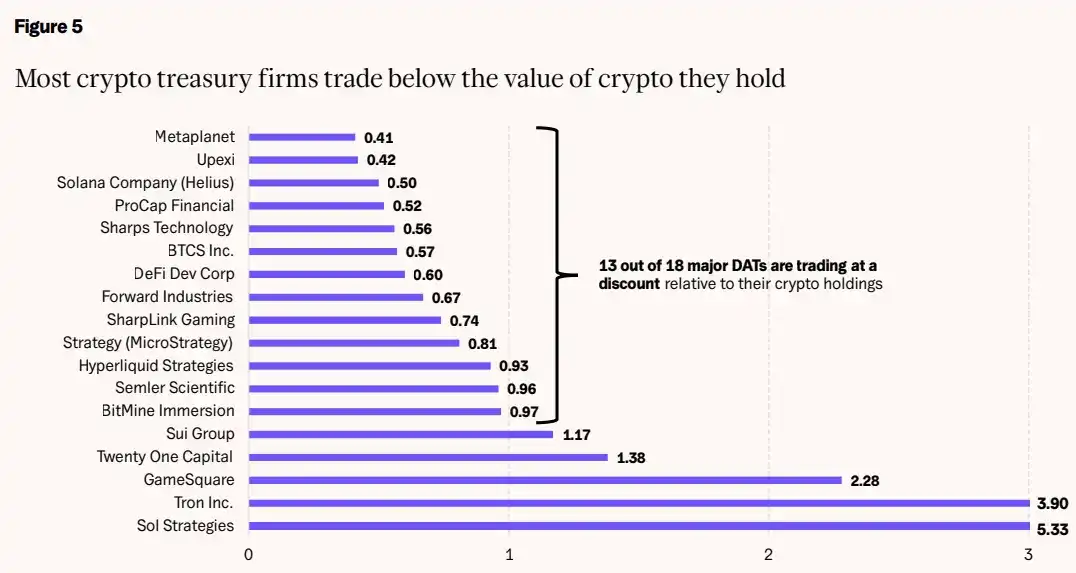
[Chart 5: Most Crypto Treasury Firms Trade at a Discount to Their Crypto Asset Value]

Chart Description: mNAV (Market Cap / Net Asset Value of Crypto Holdings) ratio for 18 major digital asset treasury companies.

Data Source: SEC EDGAR; CoinGecko; Yahoo Finance, 21Shares

VI. Prediction Markets: Half the Annual Target Achieved in Half a Year

Prediction at the start of the year: Prediction markets will bring millions of users on-chain, with annual trading volume reaching $100 billion.

We predicted prediction markets would reach $100 billion in annual trading volume. Progress has even exceeded our own expectations. As of the end of May, $57.5 billion has been traded, over half the annual target and more than ten times the volume from the same period last year. At the current pace, $100 billion would be achieved around early Q4.

We think it will be faster. Catalysts for event-driven trading are concentrated in the second half of the year: the FIFA World Cup is underway, and US House and Senate midterm elections are in November.

Activity has cooled off since the January peak (over $15 billion in a single month), but this is the natural rhythm of an event-driven market between major events. The last time event flow was concentrated (Q4 2025), monthly volume tripled. If a similar surge occurs in H2, the year could head towards $200 billion.

Our expected drivers are materializing one by one. Regulatory clarity arrived: the CFTC closed its investigations into Polymarket and Kalshi; PredictIt won its court case; and Intercontinental Exchange committed up to $2 billion to expand Polymarket.

Platform integration followed: Google and X embedded real-time odds into their own platforms. And 2026 happens to provide the political and macroeconomic volatility these markets were built for.

The competitive landscape is also broadening. Hyperliquid entered the prediction market space via HIP-4 in May. Its volume remains far below Polymarket and Kalshi's for now, but within weeks of launch, it was processing about a fifth of BTC outcome contract trading volume.

Its design points in a unique direction: a trader-focused, composable financial outcome market, a use case beyond the typical audience of Polymarket or Kalshi. The pie is getting bigger, with different segments driven by different forces.

While a US federal framework is settled, regulators elsewhere are drawing the opposite conclusion: Spain blocked both platforms citing a lack of gambling licenses in late May; Brazil, India, Indonesia, and Portugal have also restricted access this year; and some US states are challenging sports event contracts under their own betting-related laws.

These restrictions haven't materially impacted volume yet, as the growth engine remains the US, but the issue is being resolved market by market.

Nevertheless, the biggest events of H2 are yet to come. We expect 2026 to significantly surpass the original forecast, cementing prediction markets alongside stablecoins and tokenization as one of crypto's clearest product-market fits.
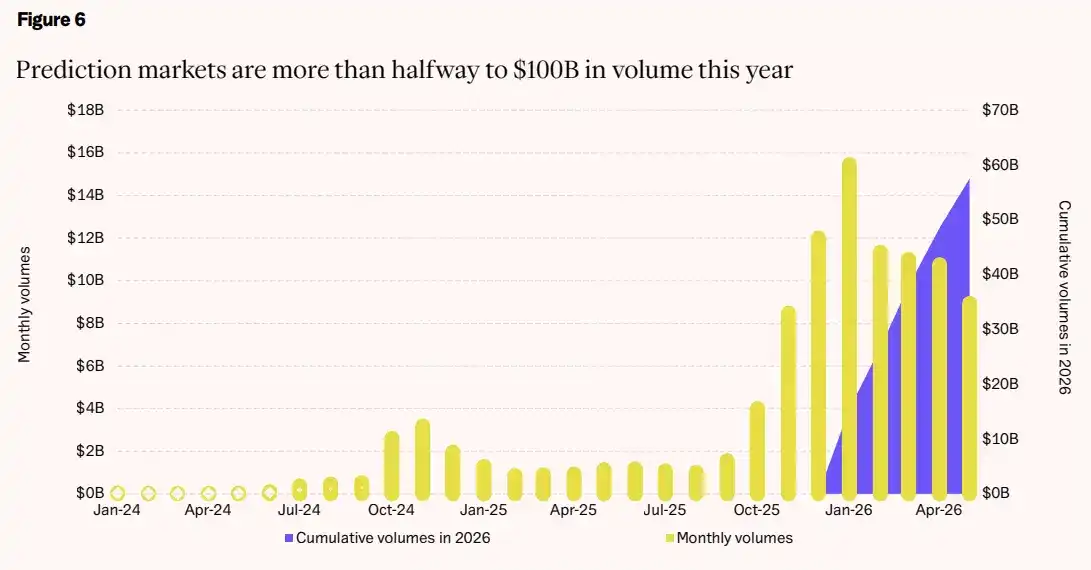
[Chart 6: Prediction Markets Have Already Traded Over Half of Their $100 Billion Annual Target This Year]

Chart Description: Left axis shows monthly trading volume (bars); right axis shows cumulative 2026 trading volume (line). Explosive peaks occurred in Q4 2025 and January 2026, followed by a pullback. Cumulative volume reached ~$57.5 billion by end of May.

Data Source: Dune, 21Shares

VII. The AI Agent Economy: Still in Its Infancy

Prediction at the start of the year: The AI agent economy becomes a reality in 2026.

We predicted that AI agents would become active in 2026, directly interacting with blockchain applications to manage yield, automate payments, optimize liquidity, and minimize human intervention. This prediction is directionally correct: blockchain infrastructure is ready, first products are live, but mass adoption hasn't arrived.

In fact, infrastructure progress has been faster than we expected. ERC-8004 (the identity and reputation layer for autonomous agents on Ethereum) went live on mainnet in January and has begun deploying to other EVM-compatible networks.

The x402 protocol revived the HTTP 402 "Payment Required" status code, designed at the birth of the web but never used, for machine-to-machine payments. It has grown from an internal Coinbase project to a standard co-governed by Coinbase, Cloudflare, and Stripe, with backing from AWS, Google, Mastercard, Microsoft, and Visa.

Traditional finance is also converging in the same direction. Visa, Mastercard, and Stripe are each building their own agent payment protocols. In March 2026, Santander and Mastercard completed Europe's first end-to-end real-time payment executed by an AI agent.

Volumes remain tiny. The x402 protocol's cumulative transaction volume is still in the tens of millions of dollars, more proof-of-concept than mature economy. What's missing is the killer app or integration that makes the agent economy as intuitive as stablecoin transfers or prediction market trading. That breakthrough may still be ahead, but we believe 2026 will be remembered as the "foundation-laying year."
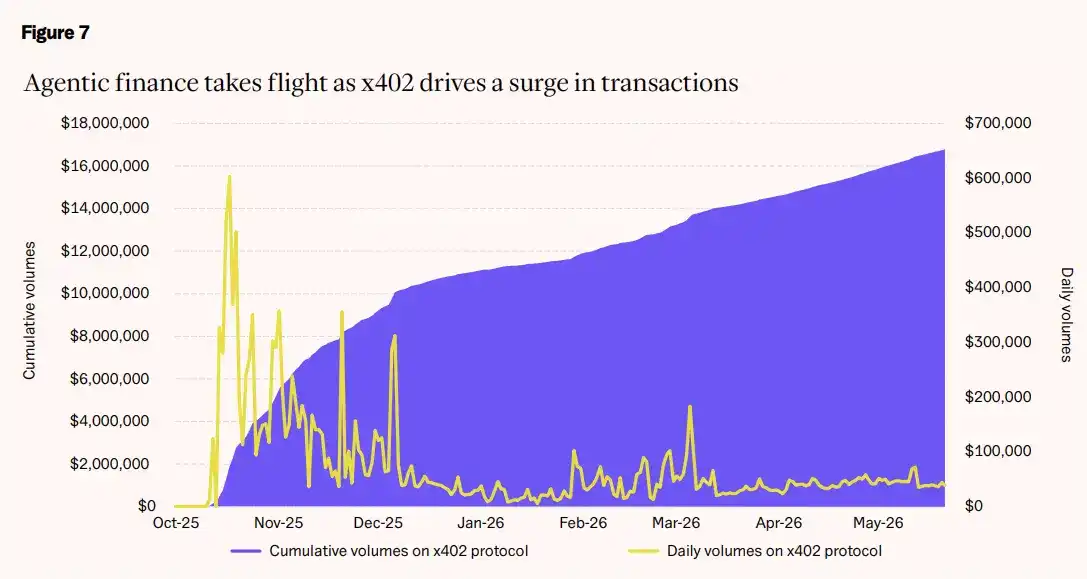
[Chart 7: AI Agent Finance Takes Off, x402 Drives Transaction Surge]

Chart Description: Left axis shows x402 protocol cumulative transaction volume (line); right axis shows daily transaction volume (line). From October 2025 to May 2026, cumulative volume grew from 0 to ~$17 million, with daily volume peaking at ~$600k in January 2026.

Data Source: Dune, 21Shares

VIII. Ethereum L2s: Consolidation Proceeds as Expected

Prediction at the start of the year: Most Ethereum scaling solutions will die out in 2026.

We predicted that most scaling solutions (Layer 2, L2) would not survive 2026, with market share concentrating among a few dominant players. This call has landed.

In February, it received an unexpected endorsement: Ethereum co-founder Vitalik Buterin publicly declared that "the rollup-centric roadmap is no longer tenable."

His reasoning aligned with our analysis: most L2s have stagnated on decentralization and sovereignty, while Ethereum itself is steadily scaling. Scaling solutions without differentiation lose their reason for being. His advice: "differentiate or die."

The data bears this out. The top 5 L2s now command nearly 90% of daily active users in the ecosystem. Asset concentration is similarly stark: Base and Arbitrum control about 70% of total value.

The winners share common traits: built-in distribution channels, credible paths to decentralization, and business models that accumulate value rather than "renting" users with incentives.

The remaining 70+ scaling solutions split the leftovers, with over 50 already irrelevant by any meaningful activity metric. Some once well-known chains have only a few hundred daily active users, running on treasury funds rather than real demand.

However, the elimination tournament isn't over. The final stages (acquisitions, formal shutdowns, migrations to app-chains) are still underway, and we expect acceleration in the second half of the year.
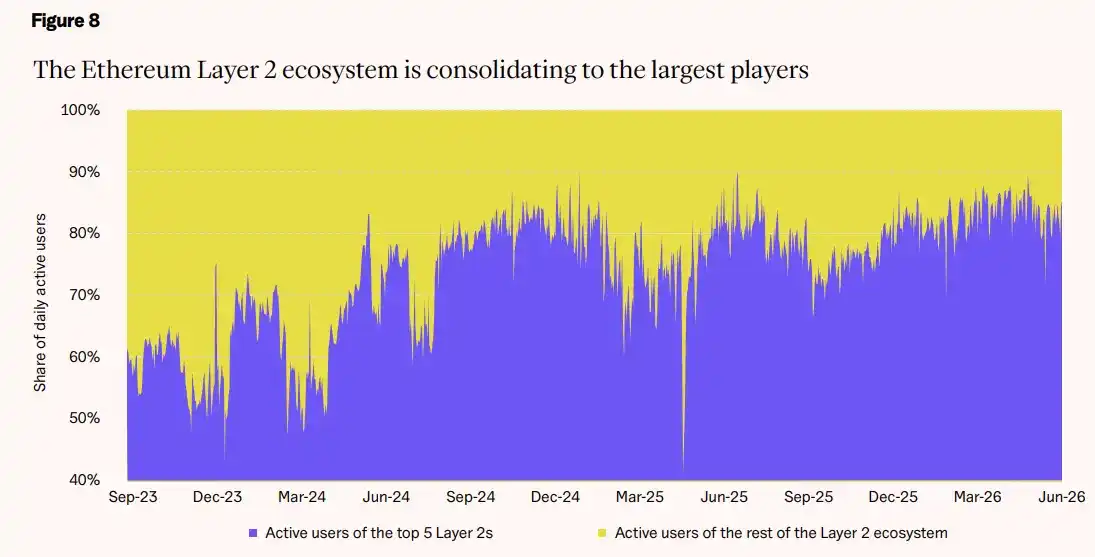
[Chart 8: Ethereum Layer 2 Ecosystem Concentrating Towards the Largest Players]

Chart Description: Comparison of daily active user share between the top 5 L2s and the rest of the L2 ecosystem from September 2023 to June 2026. The share of the top 5 L2s increased from ~70% to nearly 90%.

Data Source: TokenTerminal, 21Shares

IX. Compliant Token Offerings: Platform Ready, Capital Still on the Sidelines

Prediction at the start of the year: Compliant token offerings become a mainstream capital market in 2026.

We predicted that compliant token sales would become a mainstream capital market in 2026, a compliant revival of the 2017-2018 wave, built on transparency and institutional backing. The market exists, but whether it can be called "mainstream" is a harder question.

Infrastructure built out faster than expected. Coinbase acquired Echo for $375 million and began hosting token sales on its own platform, marking the first time US retail investors could legally participate since 2018.

Benchmark cases proved the possibility: high-performance chain Monad raised $216 million from 86,000 buyers on Coinbase. The $50 million round for Ethereum scaling network MegaETH saw $1.39 billion in interest. In Europe, Legion completed multiple compliant offerings across DeFi, DePIN, and infrastructure under the MiCA framework.

Platform quality is vastly improved from 2017: KYC, AML, structured allocations, lockups, and anti-hype rules are now standard. Compliant platforms have captured the majority of fundraising amounts in most months, a complete reversal from the unregulated frenzy of the previous wave.

But sobering limitations exist. Excluding the November peak driven by Monad, monthly fundraising amounts have trended down, hitting the lowest levels for compliant platforms in recent months.

The biggest drag isn't regulation but opportunity cost: AI, robotics, and space stocks have created unprecedented returns in public markets, siphoning off risk capital that might have otherwise flowed into token offerings.

Deal flow has decreased since the November peak, and capital raised through these platforms remains in the hundreds of millions of dollars, a small fraction of the ~$30 billion total raised in the 2017 wave. The investor base, while enthusiastic, remains largely crypto-native.

"Mainstream" status means compliant token sales stand alongside traditional IPOs as an accepted capital formation tool. That will likely require more years of case-building, track records, and broader retail awareness.
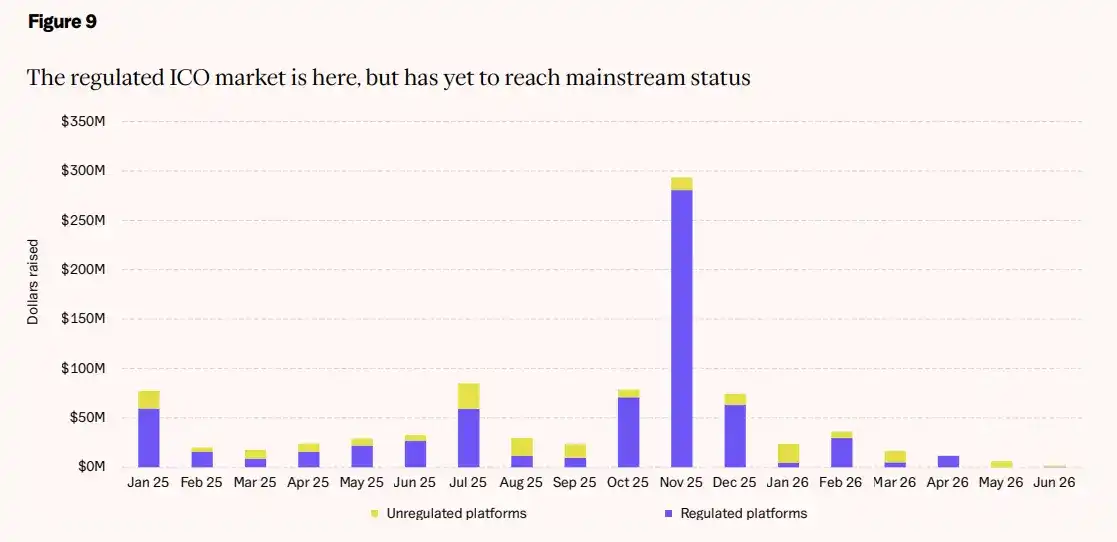
[Chart 9: The Compliant Token Offering Market Exists, But Has Not Yet Reached Mainstream Status]

Chart Description: Monthly fundraising amounts by non-compliant platforms (blue) and compliant platforms (yellow) from January 2025 to June 2026. A peak of ~$300 million occurred in November 2025 (driven by Monad), followed by a consistent decline. Compliant platforms have captured the dominant share in most months.

Data Source: CryptoRank, Messari, The Block, Company Disclosures, 21Shares

X. Tokenized Assets: Rapid Growth, Target Still Distant

Prediction at the start of the year: The total value of tokenized assets will exceed $500 billion.

We predicted that tokenized real-world assets would exceed $500 billion by year-end. Whether that number looks hopeless or within reach depends entirely on the measuring stick.

Measured by public chain distribution, the market was around $31 billion as of early June, with ~$15 billion in tokenized US Treasuries and ~$5 billion in commodities, a mere 6% of the target.

But if assets represented on-chain (like securities already circulating as 24/7 collateral on permissioned institutional networks such as Canton) are included, the figure nears $350 billion. The gap between the two numbers is the core narrative of tokenization in 2026: the speed at which institutional assets are being put on-chain is roughly ten times that of on-chain native distribution. "Representation" is the entry point; "distribution" is the destination.

This entry point will widen noticeably in the second half. Canton has been operational for a while (industry participants were already funding tokenized Treasuries 24/7 on it last year), but the qualitative leap comes from the DTCC (Depository Trust & Clearing Corporation).

This institution, which custodies over $100 trillion in securities, is beginning to tokenize US Treasuries held at the DTC onto a blockchain. Limited production trades are scheduled for July, with the full platform launching in October. Backed by an SEC no-action letter, this marks the first time core US market infrastructure has been cleared to put assets on-chain.

Our sub-predictions are progressing at different speeds. Tokenized stocks have doubled to ~$1.4 billion, still far from the $10 billion path we envisioned, but the pipeline is the strongest: Nasdaq received SEC approval in March to put stocks on-chain, with Kraken as the global distributor; the NYSE is also building its own tokenized settlement platform.

The CLARITY bill (which we expect to unlock bank issuance and custody of tokenized instruments) has passed the Senate Banking Committee, awaiting a full vote.

Reaching $500 billion in distributed value by December would still require a very unconventional acceleration. But the institutions laying the pipes are precisely those that run the existing financial system. That matters.
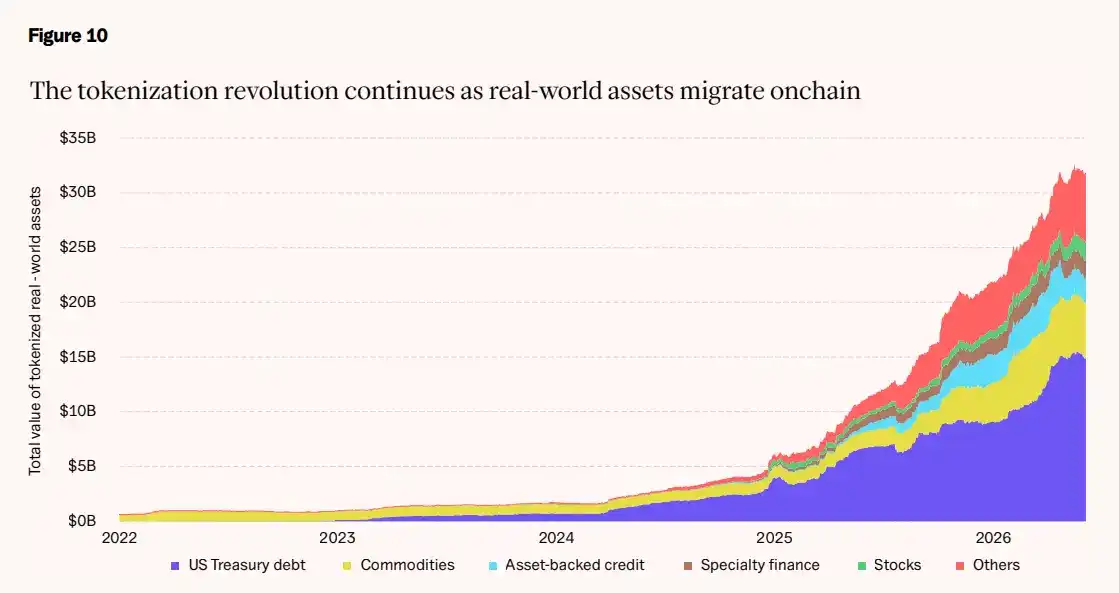
[Chart 10: The Tokenization Revolution Continues, Real-World Assets Accelerate On-Chain]

Chart Description: Composition of the total value of tokenized real-world assets from 2022 to 2026. Includes US Treasuries (largest share), Commodities, Asset-Backed Credit, Special Finance, Stocks, and Other categories. Total value grew from less than $5 billion at the end of 2022 to ~$31 billion in mid-2026.

Data Source: rwa.xyz, 21Shares

Criptos en tendencia

Preguntas relacionadas

QAccording to the report, what is the current status of Bitcoin's four-year cycle?

AThe report concludes that Bitcoin's four-year cycle has not been broken. The price action after the 2025 halving, where BTC peaked around $126k and then retraced significantly, closely mirrors patterns seen in previous cycles. While the market structure has changed (e.g., more institutional ETF holdings, shallower 50% drawdowns vs. 80+% historically), the cyclical nature persists, though its form is evolving.

QWhy did the report's prediction for global crypto ETP AUM exceeding $400 billion fail to materialize?

AThe prediction that global crypto ETP AUM would exceed $400 billion (the size of QQQ) failed because the starting AUM at the end of 2025 (~$172B) was lower than the assumed $250B baseline, and AUM has declined by about 15% year-to-date to ~$140B as of May 2026, largely following Bitcoin's price drop. While underlying adoption drivers remain strong, reaching the initial target would require significant price recovery and sustained net inflows simultaneously.

QWhat is the primary reason given for the DeFi TVL falling short of the $300 billion prediction?

AThe primary reason for DeFi TVL (~$140B) falling far short of the $300 billion prediction is a 'brutal year for security,' with over 50 incidents and $840M+ in losses year-to-date. Major exploits, like the ~$300M KelpDAO hack, severely damaged institutional confidence, particularly in the restaking sector, causing significant outflows and forcing capital to the sidelines.

QWhich prediction is significantly ahead of schedule and is expected to be achieved early?

AThe prediction for prediction markets is significantly ahead of schedule. The annual trading volume target of $100 billion is on track to be reached early, with $57.5B already completed by the end of May 2026 (over half the annual goal). Driven by events like the FIFA World Cup and US midterm elections, the report suggests the full-year volume could potentially reach $200 billion.

QWhat key distinction does the report make regarding the measurement of tokenized real-world assets (RWAs)?

AThe report makes a key distinction between 'on-chain representation' and 'on-chain distribution' when measuring tokenized RWAs. Using a public chain distribution lens, the market is only about $31B. However, if including assets 'represented' on-chain (e.g., securities circulating as collateral on permissioned institutional networks like Canton), the figure is closer to $350B. This gap highlights that institutional assets are moving on-chain ('representation') about ten times faster than they are being natively issued and distributed on public chains.

Lecturas Relacionadas

Micron Shuts Up the Bears, Makes India's 'Buffett' Regret: Sold Too Early, Missed Out on $2 Billion

Indian value investor Mohnish Pabrai, a disciple of Warren Buffett, revealed his costly mistake of selling shares in Micron Technology too early. He initially invested in 2017, holding it for six years and building a position as large as 77% of his portfolio, based on a thesis that the memory chip industry would consolidate into a stable oligopoly of Samsung, SK Hynix, and Micron. However, he sold his entire stake in September 2023, fearing oversupply after Samsung announced production expansion. Shortly after his exit, demand for high-bandwidth memory (HBM) surged with the rise of AI, and Micron's stock price skyrocketed over 15 times in two years. Pabrai estimates this premature sale cost him roughly $20 billion in potential gains. He expressed similar regret over selling his investment in SK Hynix too soon, stating he violated his own principle of holding companies forever. Reflecting on these errors, Pabrai emphasized his core investment checklist principles: avoiding leverage, focusing on the durability of a company's competitive moat, and assessing management's character. Despite these personal trading missteps, his long-term view on the remaining memory chip leaders remains bullish, advising current holders not to sell as "the party is just getting started." He concluded by sharing his philosophical outlook, prioritizing character over wealth, and his goal to donate his entire fortune before his passing.

marsbitHace 14 min(s)

Micron Shuts Up the Bears, Makes India's 'Buffett' Regret: Sold Too Early, Missed Out on $2 Billion

marsbitHace 14 min(s)

Mihoyo's Next Protagonist Is Her, Who Plays the Piano

Mihoyo, widely recognized for its hit game Genshin Impact, has long harbored a grander ambition: creating a virtual world where one billion people would want to live. While its character design is unparalleled, the company recognizes a fundamental limitation—these beloved virtual characters are not truly "alive." Their dialogue and actions are pre-scripted. This drive for authentic "living" characters has guided Mihoyo's strategic investments in cutting-edge fields like brain-computer interfaces, AI (including an early investment in MiniMax), and nuclear fusion. Following the release of ChatGPT in late 2022, co-founder Cai Haoyu stepped down from management to lead a new overseas AI venture, Anuttacon, focused on creating AI-driven virtual beings. Mihoyo's path has involved experimentation and iteration. Anuttacon's early project, *Whisper of the Stars*, showcased real-time AI conversation but revealed limitations in underlying language models. The team subsequently focused its resources on developing a sophisticated "emotional" large language model, distinct from purely utilitarian AI. Co-founder Liu Wei (Dawei) announced plans to invest up to 100 billion RMB in this AI pursuit. The first tangible product of this vision is *BSide: Olivia Lin*, a free Steam application featuring a piano-playing virtual companion. Unlike typical AI chatbots demanding constant interaction, Olivia Lin operates on a slower, more deliberate rhythm—responding to letters, playing user-submitted melodies, and serving as a desktop presence. This design emphasizes "lifelikeness" over exhaustive conversation, strategically working around current technological constraints while building a sense of authentic connection. The company's journey traces back to its name, "miHoYo," where "mi" pays homage to the virtual singer Hatsune Miku. For nearly two decades, fans have loved Miku, a character unaware of their devotion. Mihoyo's ultimate goal, now backed by massive investment and AI research, is to bridge that gap—to create virtual beings that can truly know they are loved.

marsbitHace 32 min(s)

Mihoyo's Next Protagonist Is Her, Who Plays the Piano

marsbitHace 32 min(s)

Citrini Research: Taking Stock of 5 Major Investment Themes Overshadowed by the AI Trade

Citrini Research identifies five under-the-radar investment themes potentially overshadowed by the dominant AI trade. With capital and analyst attention overwhelmingly focused on AI infrastructure, these overlooked areas present alpha opportunities as market dynamics shift. **Theme 1: Airlines** – Despite strong fundamentals, stocks like Delta and United have been penalized for 18 months due to macro concerns (tariff-inflation, oil prices), not profitability. A rebound is expected as these headwinds fade, aided by trends like premiumization and the 2026 World Cup. **Theme 2: Senior Housing** – A pure demographic play. The U.S. population over 80 is projected to grow 56% in the next decade, drastically outpacing supply. This creates a compelling need for facilities, benefiting REITs like Welltower and operators like Brookdale. **Theme 3: Live Events & Entertainment** – "Being there" is becoming a luxury. This sector has outperformed even tech over the past decade. Companies like TKO Group (WWE/UFC), Cinemark, and IMAX are capitalizing on demand for premium, in-person experiences. **Theme 4: Exchange Competition** – CME Group's ~98% monopoly in U.S. interest rate derivatives faces its first real challenge from FMX Futures Exchange. Backed by major Wall Street banks, FMX offers lower fees and margin savings. While CME's deep liquidity remains an advantage, FMX provides a competitive alternative. **Theme 5: Fintech Recovery** – Heavily sold off in 2026, fintech stocks like SoFi, Robinhood, and Upstart are showing signs of a rebound based on improving fundamentals—SoFi's stablecoin launch, Robinhood's transformation into a "financial super app," and Upstart's renewed AI lending narrative—rather than a change in sector outlook. The report advises maintaining some AI exposure but diversifying into these neglected "small themes" where mispricing exists due to a simple shortage of investor attention.

marsbitHace 1 hora(s)

Citrini Research: Taking Stock of 5 Major Investment Themes Overshadowed by the AI Trade

marsbitHace 1 hora(s)

Trading

Spot
Futuros

Artículos destacados

Qué es $S$

Entendiendo SPERO: Una Visión General Completa Introducción a SPERO A medida que el panorama de la innovación continúa evolucionando, la aparición de tecnologías web3 y proyectos de criptomonedas juega un papel fundamental en la configuración del futuro digital. Un proyecto que ha atraído la atención en este campo dinámico es SPERO, denotado como SPERO,$$s$. Este artículo tiene como objetivo reunir y presentar información detallada sobre SPERO, para ayudar a entusiastas e inversores a comprender sus fundamentos, objetivos e innovaciones dentro de los dominios web3 y cripto. ¿Qué es SPERO,$$s$? SPERO,$$s$ es un proyecto único dentro del espacio cripto que busca aprovechar los principios de descentralización y tecnología blockchain para crear un ecosistema que promueva la participación, la utilidad y la inclusión financiera. El proyecto está diseñado para facilitar interacciones de igual a igual de nuevas maneras, proporcionando a los usuarios soluciones y servicios financieros innovadores. En su esencia, SPERO,$$s$ tiene como objetivo empoderar a los individuos al proporcionar herramientas y plataformas que mejoren la experiencia del usuario en el espacio de las criptomonedas. Esto incluye habilitar métodos de transacción más flexibles, fomentar iniciativas impulsadas por la comunidad y crear caminos para oportunidades financieras a través de aplicaciones descentralizadas (dApps). La visión subyacente de SPERO,$$s$ gira en torno a la inclusividad, buscando cerrar brechas dentro de las finanzas tradicionales mientras aprovecha los beneficios de la tecnología blockchain. ¿Quién es el Creador de SPERO,$$s$? La identidad del creador de SPERO,$$s$ sigue siendo algo oscura, ya que hay recursos públicos limitados que proporcionan información de fondo detallada sobre su(s) fundador(es). Esta falta de transparencia puede derivarse del compromiso del proyecto con la descentralización, una ética que muchos proyectos web3 comparten, priorizando las contribuciones colectivas sobre el reconocimiento individual. Al centrar las discusiones en torno a la comunidad y sus objetivos colectivos, SPERO,$$s$ encarna la esencia del empoderamiento sin señalar a individuos específicos. Como tal, comprender la ética y la misión de SPERO sigue siendo más importante que identificar a un creador singular. ¿Quiénes son los Inversores de SPERO,$$s$? SPERO,$$s$ cuenta con el apoyo de una diversa gama de inversores que van desde capitalistas de riesgo hasta inversores ángeles dedicados a fomentar la innovación en el sector cripto. El enfoque de estos inversores generalmente se alinea con la misión de SPERO, priorizando proyectos que prometen avances tecnológicos sociales, inclusión financiera y gobernanza descentralizada. Estas fundaciones de inversores suelen estar interesadas en proyectos que no solo ofrecen productos innovadores, sino que también contribuyen positivamente a la comunidad blockchain y sus ecosistemas. El respaldo de estos inversores refuerza a SPERO,$$s$ como un contendiente notable en el dominio de proyectos cripto que evoluciona rápidamente. ¿Cómo Funciona SPERO,$$s$? SPERO,$$s$ emplea un marco multifacético que lo distingue de los proyectos de criptomonedas convencionales. Aquí hay algunas de las características clave que subrayan su singularidad e innovación: Gobernanza Descentralizada: SPERO,$$s$ integra modelos de gobernanza descentralizada, empoderando a los usuarios para participar activamente en los procesos de toma de decisiones sobre el futuro del proyecto. Este enfoque fomenta un sentido de propiedad y responsabilidad entre los miembros de la comunidad. Utilidad del Token: SPERO,$$s$ utiliza su propio token de criptomoneda, diseñado para servir diversas funciones dentro del ecosistema. Estos tokens permiten transacciones, recompensas y la facilitación de servicios ofrecidos en la plataforma, mejorando la participación y la utilidad general. Arquitectura en Capas: La arquitectura técnica de SPERO,$$s$ apoya la modularidad y escalabilidad, permitiendo la integración fluida de características y aplicaciones adicionales a medida que el proyecto evoluciona. Esta adaptabilidad es fundamental para mantener la relevancia en el cambiante paisaje cripto. Participación de la Comunidad: El proyecto enfatiza iniciativas impulsadas por la comunidad, empleando mecanismos que incentivan la colaboración y la retroalimentación. Al nutrir una comunidad sólida, SPERO,$$s$ puede abordar mejor las necesidades de los usuarios y adaptarse a las tendencias del mercado. Enfoque en la Inclusión: Al ofrecer tarifas de transacción bajas e interfaces amigables para el usuario, SPERO,$$s$ busca atraer a una base de usuarios diversa, incluyendo a individuos que anteriormente pueden no haber participado en el espacio cripto. Este compromiso con la inclusión se alinea con su misión general de empoderamiento a través de la accesibilidad. Cronología de SPERO,$$s$ Entender la historia de un proyecto proporciona información crucial sobre su trayectoria de desarrollo y hitos. A continuación se presenta una cronología sugerida que mapea eventos significativos en la evolución de SPERO,$$s$: Fase de Conceptualización e Ideación: Las ideas iniciales que forman la base de SPERO,$$s$ fueron concebidas, alineándose estrechamente con los principios de descentralización y enfoque comunitario dentro de la industria blockchain. Lanzamiento del Whitepaper del Proyecto: Tras la fase conceptual, se lanzó un whitepaper completo que detalla la visión, los objetivos y la infraestructura tecnológica de SPERO,$$s$ para generar interés y retroalimentación de la comunidad. Construcción de Comunidad y Primeras Interacciones: Se realizaron esfuerzos de divulgación activa para construir una comunidad de primeros adoptantes y posibles inversores, facilitando discusiones en torno a los objetivos del proyecto y obteniendo apoyo. Evento de Generación de Tokens: SPERO,$$s$ llevó a cabo un evento de generación de tokens (TGE) para distribuir sus tokens nativos a los primeros seguidores y establecer liquidez inicial dentro del ecosistema. Lanzamiento de la dApp Inicial: La primera aplicación descentralizada (dApp) asociada con SPERO,$$s$ se puso en marcha, permitiendo a los usuarios interactuar con las funcionalidades centrales de la plataforma. Desarrollo Continuo y Alianzas: Actualizaciones y mejoras continuas a las ofertas del proyecto, incluyendo alianzas estratégicas con otros actores en el espacio blockchain, han moldeado a SPERO,$$s$ en un jugador competitivo y en evolución en el mercado cripto. Conclusión SPERO,$$s$ se erige como un testimonio del potencial de web3 y las criptomonedas para revolucionar los sistemas financieros y empoderar a los individuos. Con un compromiso con la gobernanza descentralizada, la participación comunitaria y funcionalidades diseñadas de manera innovadora, allana el camino hacia un paisaje financiero más inclusivo. Como con cualquier inversión en el espacio cripto que evoluciona rápidamente, se anima a los posibles inversores y usuarios a investigar a fondo y participar de manera reflexiva con los desarrollos en curso dentro de SPERO,$$s$. El proyecto muestra el espíritu innovador de la industria cripto, invitando a una mayor exploración de sus innumerables posibilidades. Mientras el viaje de SPERO,$$s$ aún se desarrolla, sus principios fundamentales pueden, de hecho, influir en el futuro de cómo interactuamos con la tecnología, las finanzas y entre nosotros en ecosistemas digitales interconectados.

87 Vistas totalesPublicado en 2024.12.17Actualizado en 2024.12.17

Qué es $S$

Qué es AGENT S

Agent S: El Futuro de la Interacción Autónoma en Web3 Introducción En el paisaje en constante evolución de Web3 y las criptomonedas, las innovaciones están redefiniendo constantemente cómo los individuos interactúan con las plataformas digitales. Uno de estos proyectos pioneros, Agent S, promete revolucionar la interacción humano-computadora a través de su marco agente abierto. Al allanar el camino para interacciones autónomas, Agent S busca simplificar tareas complejas, ofreciendo aplicaciones transformadoras en inteligencia artificial (IA). Esta exploración detallada profundizará en las complejidades del proyecto, sus características únicas y las implicaciones para el dominio de las criptomonedas. ¿Qué es Agent S? Agent S se presenta como un marco agente abierto innovador, diseñado específicamente para abordar tres desafíos fundamentales en la automatización de tareas informáticas: Adquisición de Conocimiento Específico del Dominio: El marco aprende inteligentemente de diversas fuentes de conocimiento externas y experiencias internas. Este enfoque dual le permite construir un rico repositorio de conocimiento específico del dominio, mejorando su rendimiento en la ejecución de tareas. Planificación a Largo Plazo de Tareas: Agent S emplea planificación jerárquica aumentada por la experiencia, un enfoque estratégico que facilita la descomposición y ejecución eficiente de tareas complejas. Esta característica mejora significativamente su capacidad para gestionar múltiples subtareas de manera eficiente y efectiva. Manejo de Interfaces Dinámicas y No Uniformes: El proyecto introduce la Interfaz Agente-Computadora (ACI), una solución innovadora que mejora la interacción entre agentes y usuarios. Utilizando Modelos de Lenguaje Multimodal de Gran Escala (MLLMs), Agent S puede navegar y manipular diversas interfaces gráficas de usuario sin problemas. A través de estas características pioneras, Agent S proporciona un marco robusto que aborda las complejidades involucradas en la automatización de la interacción humana con las máquinas, preparando el terreno para una multitud de aplicaciones en IA y más allá. ¿Quién es el Creador de Agent S? Si bien el concepto de Agent S es fundamentalmente innovador, la información específica sobre su creador sigue siendo elusiva. El creador es actualmente desconocido, lo que resalta ya sea la etapa incipiente del proyecto o la elección estratégica de mantener a los miembros fundadores en el anonimato. Independientemente de la anonimidad, el enfoque sigue siendo en las capacidades y el potencial del marco. ¿Quiénes son los Inversores de Agent S? Dado que Agent S es relativamente nuevo en el ecosistema criptográfico, la información detallada sobre sus inversores y patrocinadores financieros no está documentada explícitamente. La falta de información disponible públicamente sobre las bases de inversión u organizaciones que apoyan el proyecto plantea preguntas sobre su estructura de financiamiento y hoja de ruta de desarrollo. Comprender el respaldo es crucial para evaluar la sostenibilidad del proyecto y su posible impacto en el mercado. ¿Cómo Funciona Agent S? En el núcleo de Agent S se encuentra una tecnología de vanguardia que le permite funcionar de manera efectiva en diversos entornos. Su modelo operativo se basa en varias características clave: Interacción Humano-Computadora Similar a la Humana: El marco ofrece planificación avanzada de IA, esforzándose por hacer que las interacciones con las computadoras sean más intuitivas. Al imitar el comportamiento humano en la ejecución de tareas, promete elevar las experiencias de los usuarios. Memoria Narrativa: Empleada para aprovechar experiencias de alto nivel, Agent S utiliza memoria narrativa para hacer un seguimiento de las historias de tareas, mejorando así sus procesos de toma de decisiones. Memoria Episódica: Esta característica proporciona a los usuarios una guía paso a paso, permitiendo que el marco ofrezca apoyo contextual a medida que se desarrollan las tareas. Soporte para OpenACI: Con la capacidad de ejecutarse localmente, Agent S permite a los usuarios mantener el control sobre sus interacciones y flujos de trabajo, alineándose con la ética descentralizada de Web3. Fácil Integración con APIs Externas: Su versatilidad y compatibilidad con varias plataformas de IA aseguran que Agent S pueda encajar sin problemas en ecosistemas tecnológicos existentes, convirtiéndolo en una opción atractiva para desarrolladores y organizaciones. Estas funcionalidades contribuyen colectivamente a la posición única de Agent S dentro del espacio cripto, ya que automatiza tareas complejas y de múltiples pasos con una intervención humana mínima. A medida que el proyecto evoluciona, sus posibles aplicaciones en Web3 podrían redefinir cómo se desarrollan las interacciones digitales. Cronología de Agent S El desarrollo y los hitos de Agent S pueden encapsularse en una cronología que resalta sus eventos significativos: 27 de septiembre de 2024: El concepto de Agent S fue lanzado en un documento de investigación integral titulado “Un Marco Agente Abierto que Usa Computadoras Como un Humano”, mostrando las bases del proyecto. 10 de octubre de 2024: El documento de investigación fue puesto a disposición del público en arXiv, ofreciendo una exploración profunda del marco y su evaluación de rendimiento basada en el benchmark OSWorld. 12 de octubre de 2024: Se lanzó una presentación en video, proporcionando una visión visual de las capacidades y características de Agent S, involucrando aún más a posibles usuarios e inversores. Estos marcadores en la cronología no solo ilustran el progreso de Agent S, sino que también indican su compromiso con la transparencia y la participación comunitaria. Puntos Clave Sobre Agent S A medida que el marco Agent S continúa evolucionando, varios atributos clave destacan, subrayando su naturaleza innovadora y potencial: Marco Innovador: Diseñado para proporcionar un uso intuitivo de las computadoras similar a la interacción humana, Agent S aporta un enfoque novedoso a la automatización de tareas. Interacción Autónoma: La capacidad de interactuar de manera autónoma con las computadoras a través de GUI significa un salto hacia soluciones informáticas más inteligentes y eficientes. Automatización de Tareas Complejas: Con su metodología robusta, puede automatizar tareas complejas y de múltiples pasos, haciendo que los procesos sean más rápidos y menos propensos a errores. Mejora Continua: Los mecanismos de aprendizaje permiten a Agent S mejorar a partir de experiencias pasadas, mejorando continuamente su rendimiento y eficacia. Versatilidad: Su adaptabilidad en diferentes entornos operativos como OSWorld y WindowsAgentArena asegura que pueda servir a una amplia gama de aplicaciones. A medida que Agent S se posiciona en el paisaje de Web3 y criptomonedas, su potencial para mejorar las capacidades de interacción y automatizar procesos significa un avance significativo en las tecnologías de IA. A través de su marco innovador, Agent S ejemplifica el futuro de las interacciones digitales, prometiendo una experiencia más fluida y eficiente para los usuarios en diversas industrias. Conclusión Agent S representa un audaz avance en la unión de la IA y Web3, con la capacidad de redefinir cómo interactuamos con la tecnología. Aunque aún se encuentra en sus primeras etapas, las posibilidades para su aplicación son vastas y atractivas. A través de su marco integral que aborda desafíos críticos, Agent S busca llevar las interacciones autónomas al primer plano de la experiencia digital. A medida que nos adentramos más en los reinos de las criptomonedas y la descentralización, proyectos como Agent S sin duda desempeñarán un papel crucial en la configuración del futuro de la tecnología y la colaboración humano-computadora.

499 Vistas totalesPublicado en 2025.01.14Actualizado en 2025.01.14

Qué es AGENT S

Cómo comprar S

¡Bienvenido a HTX.com! Hemos hecho que comprar Sonic (S) sea simple y conveniente. Sigue nuestra guía paso a paso para iniciar tu viaje de criptos.Paso 1: crea tu cuenta HTXUtiliza tu correo electrónico o número de teléfono para registrarte y obtener una cuenta gratuita en HTX. Experimenta un proceso de registro sin complicaciones y desbloquea todas las funciones.Obtener mi cuentaPaso 2: ve a Comprar cripto y elige tu método de pagoTarjeta de crédito/débito: usa tu Visa o Mastercard para comprar Sonic (S) al instante.Saldo: utiliza fondos del saldo de tu cuenta HTX para tradear sin problemas.Terceros: hemos agregado métodos de pago populares como Google Pay y Apple Pay para mejorar la comodidad.P2P: tradear directamente con otros usuarios en HTX.Over-the-Counter (OTC): ofrecemos servicios personalizados y tipos de cambio competitivos para los traders.Paso 3: guarda tu Sonic (S)Después de comprar tu Sonic (S), guárdalo en tu cuenta HTX. Alternativamente, puedes enviarlo a otro lugar mediante transferencia blockchain o utilizarlo para tradear otras criptomonedas.Paso 4: tradear Sonic (S)Tradear fácilmente con Sonic (S) en HTX's mercado spot. Simplemente accede a tu cuenta, selecciona tu par de trading, ejecuta tus trades y monitorea en tiempo real. Ofrecemos una experiencia fácil de usar tanto para principiantes como para traders experimentados.

1.0k Vistas totalesPublicado en 2025.01.15Actualizado en 2026.06.02

Cómo comprar S

Discusiones

Bienvenido a la comunidad de HTX. Aquí puedes mantenerte informado sobre los últimos desarrollos de la plataforma y acceder a análisis profesionales del mercado. A continuación se presentan las opiniones de los usuarios sobre el precio de S (S).

活动图片