Từ đầu cơ đến quản lý rủi ro: Các thị trường dự đoán đang lấp đầy khoảng trống bảo hiểm thương mại

marsbitPublicado a 2026-08-17Actualizado a 2026-08-17

Resumen

Từ đầu cơ đến quản lý rủi ro: Thị trường dự đoán đang lấp đầy khoảng trống bảo hiểm thương mại Bài viết phân tích sự phát triển của thị trường dự đoán (prediction markets), đặc biệt là công cụ quản lý rủi ro AI Blanket, trong việc trở thành một công cụ phòng ngừa rủi ro thay thế cho doanh nghiệp. Thay vì dựa vào công ty bảo hiểm truyền thống, doanh nghiệp có thể sử dụng các hợp đồng sự kiện (như trên nền tảng Kalshi) để bảo vệ trước các rủi ro như biến động giá năng lượng, thời tiết bất thường hay thay đổi chính sách. Phân tích dữ liệu từ tháng 8/2025 đến tháng 8/2026 trên 1265 thị trường Kalshi so sánh hành vi giao dịch trong ba lĩnh vực: Hợp đồng thời tiết trên Kalshi, hợp đồng thể thao trên Kalshi (chủ yếu đầu cơ) và hợp đồng tương lai truyền thống (CME). Ba chỉ số chính được xem xét: 1. **Tỷ lệ luân chuyển hàng ngày trung bình:** Hợp đồng thời tiết có tỷ lệ thấp nhất (0.210), cho thấy xu hướng giữ vị thế lâu hơn so với hợp đồng thể thao (0.315). 2. **Tỷ lệ giữ đến khi đáo hạn:** Hợp đồng thời tiết có tỷ lệ này rất cao (>0.5), trong khi hợp đồng thể thao rất thấp (0.012-0.033). Điều này cho thấy nhiều vị thế thời tiết được nắm giữ ổn định đến cuối, phù hợp với hành vi phòng ngừa rủi ro. 3. **Thời điểm thiết lập vị thế:** Vị thế trong hợp đồng thời tiết thường được thiết lập sớm hơn nhiều so với ngày đáo hạn, tương tự thị trường phòng ngừa rủi ro truyền thống, khác biệt rõ rệt với hợp đồng thể thao. Kết luận cho thấy thị trường thời tiết trên Kalshi không phải là thuầ...

Tác giả: G_Gyeomm

Biên dịch: AIdidiaoJP, Foresight News

I. Một loại bảo hiểm mới được định giá trực tiếp bởi thị trường

Công cụ quản lý rủi ro AI Blanket mới ra mắt gần đây đang cố gắng biến các thị trường dự đoán thành một công cụ bảo hiểm thực sự hữu ích cho doanh nghiệp. Logic rất đơn giản: Doanh nghiệp nhập thông tin kinh doanh của mình, hệ thống tự động chẩn đoán các rủi ro chính, sau đó đề xuất các hợp đồng sự kiện Kalshi tương ứng để giúp doanh nghiệp phòng ngừa những rủi ro này.

Cơ chế phòng ngừa rủi ro tự thân không phức tạp. Cấu trúc hợp đồng của thị trường dự đoán cực kỳ rõ ràng — sự kiện xảy ra thì thanh toán 1 USD, không xảy ra thì thanh toán 0 USD. Giá thực thời của hợp đồng chính là sự đánh giá tập thể của thị trường về xác suất xảy ra sự kiện đó.

Chính cấu trúc đơn giản này đã cho phép các thị trường dự đoán có tiềm năng trở thành công cụ phòng ngừa rủi ro thực tế. Doanh nghiệp có thể mua trước các hợp đồng sự kiện có thể ảnh hưởng đến hoạt động kinh doanh của mình, chẳng hạn như thời tiết bất thường, biến động giá năng lượng hoặc thay đổi chính sách thuế quan. Một khi những rủi ro này thực sự xảy ra, khoản thanh toán từ hợp đồng có thể bù đắp một phần hoặc toàn bộ thiệt hại kinh doanh.

Lấy một ví dụ cụ thể: Một cửa hàng kem, gặp phải mùa hè mát mẻ, doanh thu sẽ giảm khoảng 20.000 USD.

Thao tác phòng ngừa rủi ro như sau: Mua 20.000 hợp đồng nhiệt độ với giá 0,30 USD mỗi hợp đồng. Nếu nhiệt độ trung bình mùa hè thấp hơn ngưỡng đã định trước, mỗi hợp đồng sẽ thanh toán 1 USD. Tổng chi phí là 6.000 USD.

Kết quả chỉ có hai khả năng:

  • Mùa hè mát mẻ: Nhiệt độ thấp hơn ngưỡng, doanh thu giảm 20.000 USD, nhưng hợp đồng thanh toán một lần 20.000 USD. Cuối cùng, tổn thất ròng bị khóa ở mức 6.000 USD — chính xác là số tiền đã chi để mua hợp đồng ban đầu.
  • Mùa hè nóng bức: Nhiệt độ cao hơn ngưỡng, doanh thu không bị ảnh hưởng, nhưng hợp đồng hết hạn và trở về 0, 6.000 USD chi phí mất trắng.

Dù kết quả nào, tổn thất cuối cùng cũng bị khóa chặt ở 6.000 USD. 6.000 USD này về bản chất chính là phí bảo hiểm. Và mức phí này được định không phải bởi chuyên gia tính toán rủi ro của công ty bảo hiểm, cũng không phải bởi bất kỳ tổ chức bảo hiểm truyền thống nào, mà chính là bởi thị trường — mức giá được công bố theo thời gian thực bằng tiền thật từ vô số người mua và người bán.

II. Thị trường phòng ngừa rủi ro có thực sự đang vận hành?

Các thị trường dự đoán đã tích lũy đủ nhu cầu đầu cơ. Ban đầu, nó tạo dựng danh tiếng nhờ dự đoán bầu cử, sau đó mở rộng suôn sẻ sang lĩnh vực thể thao, vấn đề khối lượng giao dịch cơ bản đã được giải quyết. Ngành công nghiệp phổ biến tin rằng không gian tăng trưởng tiếp theo nằm ở việc mở rộng thêm nhiều kịch bản sử dụng thực tế, và nhu cầu phòng ngừa rủi ro được nhắc đến nhiều lần, là một trong những hướng đi đáng mong đợi nhất.

Về lý thuyết, giá trị của nó thực sự rất lớn. Các khu vực trống không được các công cụ phòng ngừa rủi ro hiện có bao phủ khá rộng. Bảo hiểm gián đoạn kinh doanh trong bảo hiểm thương mại truyền thống thường yêu cầu tổn thất vật chất làm tiền đề. Một cửa hàng trượt tuyết bị mất doanh thu vì cả mùa đông hầu như không có tuyết — loại "rủi ro kinh doanh" thuần túy này, trên thị trường hầu như không tìm được sản phẩm bảo hiểm phù hợp để bảo vệ.

Thị trường kỳ hạn (futures) thì có các công cụ phòng ngừa rủi ro trưởng thành, nhưng ngưỡng không thấp: cần ký kết thỏa thuận ISDA, mở tài khoản giao dịch kỳ hạn chuyên dụng, nộp tiền ký quỹ và có các hạn chế về quy mô hợp đồng tối thiểu. Những điều kiện này không phải là vấn đề đối với các tổ chức lớn, nhưng đối với các doanh nghiệp vừa và nhỏ bình thường, gần như không thể đạt được. Goldman Sachs có thể nuôi một đội ngũ giao dịch phái sinh chuyên nghiệp, nhưng một quán cà phê ở góc phố rõ ràng không làm được.

Vấn đề là, giữa tính hợp lý về lý thuyết và việc sử dụng thực tế, luôn tồn tại một khoảng cách rõ rệt. Các thị trường dự đoán lâu nay bị gán mác "cờ bạc", liệu nó có thực sự có thể hoạt động như một thị trường phòng ngừa rủi ro độc lập — chứ không chỉ là công cụ đầu cơ — chưa bao giờ được xác minh một cách có hệ thống.

Câu hỏi thực sự cần trả lời là: Các thị trường dự đoán có thực sự được sử dụng để phòng ngừa rủi ro không? Nhu cầu phòng ngừa rủi ro thực tế có tồn tại không? Bản thân hành vi giao dịch có thể cung cấp manh mối. Chúng tôi chọn ba nhóm dữ liệu để so sánh.

Nhóm thứ nhất là hợp đồng tương lai ngũ cốc CME — một thị trường phòng ngừa rủi ro truyền thống điển hình, chủ yếu được sử dụng để giảm bớt tổn thất do biến động giá nông sản và sản phẩm chăn nuôi.

Nhóm thứ hai là thị trường thể thao Kalshi — nơi nhu cầu phòng ngừa rủi ro cực kỳ hạn chế, giao dịch hầu hết đều do động cơ đầu cơ thúc đẩy.

Nhóm thứ ba là thị trường thời tiết Kalshi — nó xử lý rủi ro thời tiết theo cách tương tự như hợp đồng tương lai thời tiết CME, đồng thời chia sẻ chính xác cấu trúc hợp đồng sự kiện và môi trường giao dịch giống hệt với thị trường thể thao Kalshi. Điều này biến nó thành một mẫu thử nghiệm tuyệt vời — để xem hành vi giao dịch của nó cuối cùng gần giống bên nào hơn.

Người phòng ngừa rủi ro và người đầu cơ thường biểu hiện các đặc điểm giao dịch khác nhau. Người phòng ngừa rủi ro có xu hướng thiết lập vị thế sớm trước khi cửa sổ rủi ro thực sự đến, sau đó giữ cho đến ngày đáo hạn; người đầu cơ thì vào ra thường xuyên hơn, đuổi theo giá, tỷ lệ luân chuyển rõ ràng cao hơn.

Nếu tỷ lệ luân chuyển và hành vi nắm giữ vị thế của thị trường thời tiết Kalshi đều gần với thị trường phòng ngừa rủi ro truyền thống hơn là thị trường thể thao, thì nhu cầu phòng ngừa rủi ro là có thật.

Ngược lại, nếu nó không khác gì thị trường thể thao, thì việc sử dụng thực tế sẽ gần với đầu cơ thuần túy hơn. Trong trường hợp này, các công cụ như Blanket, có thể chỉ đáp ứng những tưởng tượng tốt đẹp trong ngành, chứ không phải nhu cầu thực tế được xác minh bởi dữ liệu.

Bộ dữ liệu phân tích này bao phủ 1265 thị trường Kalshi được thanh toán từ tháng 8 năm 2025 đến tháng 8 năm 2026. Tiêu chí lọc là: khối lượng giao dịch tích lũy ít nhất 500 hợp đồng và giao dịch kéo dài ít nhất ba ngày.

III. Dữ liệu một: Tỷ lệ luân chuyển trung bình hàng ngày

Đầu tiên, xem xét tần suất các vị thế trên mỗi thị trường được giao dịch. Tỷ lệ luân chuyển được định nghĩa là khối lượng giao dịch hàng ngày chia cho số lượng vị thế mở (OI) trong ngày đó. Chúng tôi tính tỷ lệ luân chuyển hàng ngày cho mỗi hợp đồng trên mỗi thị trường, sau đó lấy trung vị cho toàn bộ chu kỳ giao dịch.

Kết quả rõ ràng: Hợp đồng thời tiết Kalshi có tỷ lệ luân chuyển thấp nhất, chỉ 0,210. Sản phẩm phòng ngừa rủi ro truyền thống là hợp đồng tương lai ngô là 0,266, hợp đồng thể thao Kalshi cao nhất, đạt 0,315.
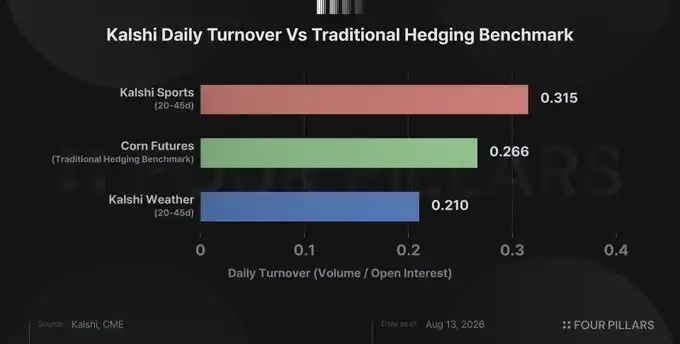
Tốc độ luân chuyển của hợp đồng thể thao cao gấp khoảng 1,5 lần hợp đồng thời tiết. Điều này cho thấy hợp đồng thời tiết có xu hướng nắm giữ lâu hơn tương đối, gợi ý ban đầu có thể tồn tại nhu cầu phòng ngừa rủi ro thực tế.

Tuy nhiên, cần lưu ý: Tỷ lệ luân chuyển của hợp đồng tương lai ngô nằm ở giữa, và sự khác biệt giữa ba nhóm dữ liệu không quá chênh lệch. Chỉ riêng chỉ số tỷ lệ luân chuyển này, chưa thể hoàn toàn khẳng định thị trường thời tiết có nhu cầu phòng ngừa rủi ro. Hiện tại, dữ liệu này có thể cho chúng ta biết rõ ràng rằng, tỷ lệ luân chuyển của hợp đồng thời tiết thấp hơn đáng kể so với hợp đồng thể thao.

IV. Dữ liệu hai: Tỷ lệ nắm giữ đến ngày đáo hạn

Chỉ số then chốt thứ hai là tỷ lệ nắm giữ đến ngày đáo hạn — đo lường có bao nhiêu vị thế còn lại trên thị trường vào lúc thanh toán mà chưa bị động chạm. Cách tính là số lượng vị thế mở cuối cùng của mỗi hợp đồng chia cho khối lượng giao dịch tích lũy. Giá trị càng cao, càng cho thấy nhiều vị thế được kiên định nắm giữ cho đến ngày đáo hạn.
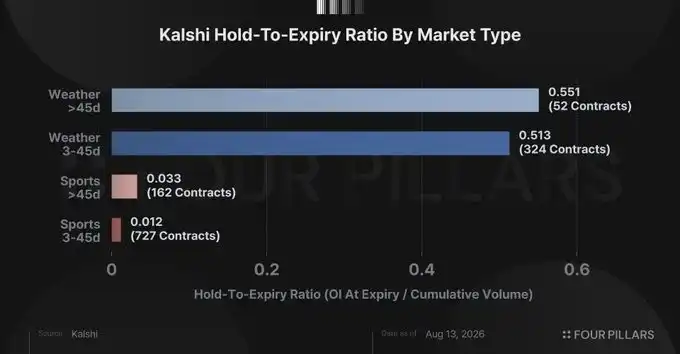
Kết quả khác biệt rất ấn tượng: Bất kể giao dịch kéo dài bao lâu, tỷ lệ nắm giữ đến ngày đáo hạn của hợp đồng thời tiết đều vượt quá 0,5. Ngược lại, hợp đồng thể thao lần lượt chỉ có 0,012 và 0,033. Trong khoảng thời gian giao dịch từ 3 đến 45 ngày, hợp đồng thời tiết cao gấp 42,8 lần thể thao; trong khoảng trên 45 ngày, chênh lệch vẫn là 16,7 lần.

Điều này cho thấy rõ ràng: Hợp đồng thời tiết có xu hướng "mua vào và không động đậy" cao hơn nhiều so với hợp đồng thể thao. Người phòng ngừa rủi ro nắm giữ hợp đồng, nhằm mục đích nhận được khoản thanh toán nếu rủi ro xảy ra, chứ không phải để mua đáy bán đỉnh kiếm chênh lệch. Do đó, tỷ lệ nắm giữ đến ngày đáo hạn cao, ủng hộ mạnh mẽ cho nhận định rằng thị trường thời tiết có nhu cầu phòng ngừa rủi ro thực tế.

Tất nhiên, điều này không thể hiểu trực tiếp rằng toàn bộ thị trường thời tiết đang được sử dụng để phòng ngừa rủi ro. Dữ liệu này không theo dõi được danh tính của bên mua và bên bán trong từng vị thế riêng lẻ, vì vậy không thể đơn giản coi đây là tỷ lệ người mua ban đầu nắm giữ đến ngày đáo hạn. Hiện tại có thể xác nhận rằng, hành vi nắm giữ vị thế của hợp đồng thời tiết khác biệt rõ ràng so với hợp đồng thể thao.

V. Dữ liệu ba: Vị thế được thiết lập khi nào?

Câu hỏi cuối cùng là: Những vị thế này được thiết lập khi nào? Chúng tôi chia số lượng vị thế mở hàng ngày của mỗi hợp đồng cho số lượng vị thế mở đỉnh của hợp đồng đó, sau đó chuyển đổi thời gian từ khi ra mắt đến ngày đáo hạn thành thanh tiến trình từ 0% đến 100%, và vẽ đường cong trung vị.

Tiêu chí đánh giá là xem thời điểm đạt được một nửa số lượng vị thế mở đỉnh. Nếu đạt được một nửa khi còn nhiều thời gian hơn đến ngày đáo hạn, điều đó cho thấy vị thế được thiết lập sớm hơn — điều này phù hợp hơn với mô hình hành vi của người phòng ngừa rủi ro.
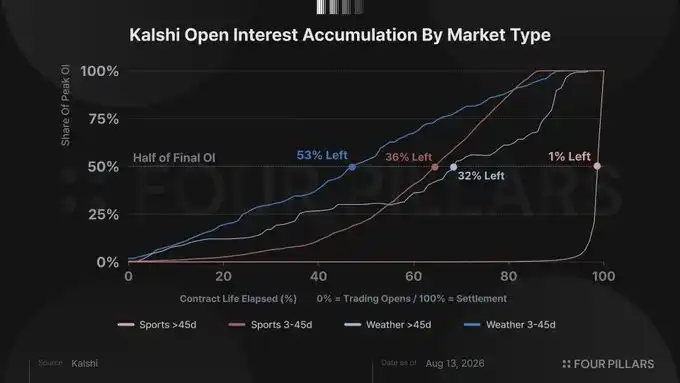
Các hợp đồng thời tiết có giao dịch kéo dài từ 3 đến 45 ngày, khi vòng đời đạt 47% đã đạt được một nửa số lượng vị thế mở đỉnh, lúc này còn 53% thời gian đến ngày đáo hạn. Các hợp đồng thể thao trong cùng khoảng thời gian phải đến 65% mới đạt một nửa, thời gian còn lại chỉ còn 36%.

Trong các hợp đồng kéo dài hơn 45 ngày, sự khác biệt còn đáng kinh ngạc hơn. Hợp đồng thời tiết đạt một nửa khi còn 32% thời gian đến ngày đáo hạn, hợp đồng thể thao chỉ còn 1,3%. Dù ở khoảng thời gian nào, vị thế thời tiết cũng được thiết lập sớm hơn nhiều so với vị thế thể thao.
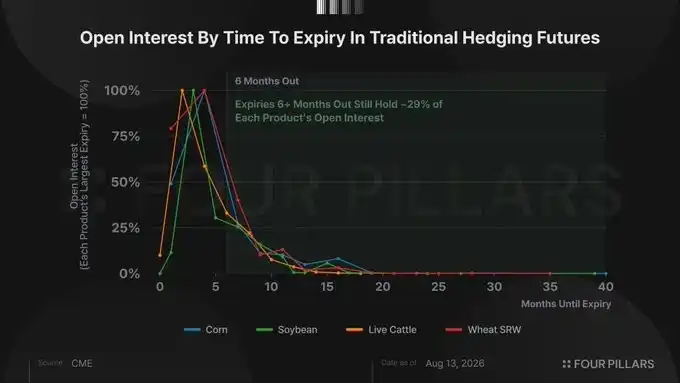
Hành vi "bố trí sớm" này chính là đặc trưng điển hình của thị trường phòng ngừa rủi ro truyền thống. Tính đến ngày 11 tháng 8 năm 2026, trong các hợp đồng tương lai ngũ cốc và sản phẩm chăn nuôi của CME, các hợp đồng còn sáu tháng nữa mới đáo hạn đã tích lũy số lượng vị thế mở khổng lồ. Hợp đồng tương lai ngô thậm chí vẫn nắm giữ 65.127 vị thế trên các hợp đồng còn 16 tháng nữa mới đáo hạn.

Điều này phản ánh xu hướng hành động sớm trước khi rủi ro thực sự ập đến. Và mô hình hành vi của hợp đồng thời tiết Kalshi, rõ ràng gần với thị trường phòng ngừa rủi ro truyền thống hơn, chứ không phải thị trường thể thao.

VI. Phòng ngừa rủi ro dựa vào thanh khoản do đầu cơ tạo ra

Nói về kết luận: Thị trường thời tiết Kalshi không phải là một thị trường phòng ngừa rủi ro thuần túy, cũng không phải là thị trường đầu cơ thuần túy như thể thao. Nhu cầu đầu cơ vẫn đóng góp một phần thanh khoản đáng kể, nhưng trên cơ sở đó, nhu cầu phòng ngừa rủi ro cũng đã xuất hiện tương đối rõ ràng.

Ba chỉ số hướng đến cùng một hướng: Hợp đồng thời tiết giao dịch ít thường xuyên hơn, giữ lại nhiều vị thế hơn khi thanh toán, vị thế được thiết lập sớm hơn. Một chỉ số đơn lẻ không thể xác nhận 100% ý định giao dịch, nhưng sự nhất quán cao của những hành vi này cùng nhau ủng hộ một đánh giá — trong thị trường thời tiết Kalshi thực sự tồn tại nhu cầu nắm giữ khác biệt với thể thao, trong đó một phần đáng kể rất có thể là nhu cầu phòng ngừa rủi ro thực tế.

Quan trọng hơn, nhu cầu đầu cơ không hẳn là điểm yếu của thị trường dự đoán, mà có lẽ là tiền đề để chức năng phòng ngừa rủi ro được thiết lập. Một thị trường chỉ có người phòng ngừa rủi ro, không có người đầu cơ, rất khó tìm đủ đối tác và duy trì thanh khoản liên tục.

Trong thị trường dự đoán, người đầu cơ chịu trách nhiệm định giá và cung cấp thanh khoản, còn người phòng ngừa rủi ro trên cơ sở đó chuyển những rủi ro mà họ không muốn gánh chịu. Rủi ro không còn được các công ty bảo hiểm trực tiếp bảo hiểm, mà được phân tán một cách tự nhiên giữa những người tham gia thị trường thông qua giao dịch.

Vì vậy, tăng trưởng ở giai đoạn tiếp theo của thị trường dự đoán, mấu chốt không nằm ở việc "loại bỏ" đầu cơ, chuyển hướng hoàn toàn sang phòng ngừa rủi ro. Điều thực sự quan trọng là: Trên nền tảng thanh khoản đã được đầu cơ xây dựng sẵn, có thể bổ sung thêm bao nhiêu nhu cầu phòng ngừa rủi ro thực tế của doanh nghiệp. Đây mới là biến số cốt lõi quyết định liệu nó có thể nâng cấp từ một "công cụ đầu cơ thú vị" thành một "cơ sở hạ tầng quản lý rủi ro có thể sử dụng được" hay không.


Criptos en tendencia

Preguntas relacionadas

QCông cụ quản lý rủi ro AI Blanket đang thử biến thị trường dự đoán thành công cụ bảo hiểm cho doanh nghiệp bằng cách nào?

ABlanket phân tích thông tin kinh doanh của doanh nghiệp để chẩn đoán rủi ro chính, sau đó đề xuất các hợp đồng sự kiện trên nền tảng Kalshi tương ứng để doanh nghiệp phòng ngừa rủi ro đó. Doanh nghiệp mua hợp đồng dự đoán các sự kiện như thời tiết bất thường hay biến động giá năng lượng. Nếu rủi ro xảy ra, khoản thanh toán từ hợp đồng sẽ bù đắp một phần hoặc toàn bộ thiệt hại kinh doanh.

QBài viết đã so sánh hành vi giao dịch của những thị trường nào để xác định nhu cầu phòng ngừa rủi ro thực sự trong thị trường thời tiết Kalshi?

ABài viết so sánh ba nhóm: 1) Hợp đồng tương lai ngũ cốc trên CME - đại diện cho thị trường phòng ngừa rủi ro truyền thống. 2) Thị trường thể thao Kalshi - nơi giao dịch chủ yếu do đầu cơ thúc đẩy. 3) Thị trường thời tiết Kalshi - mẫu thử nghiệm chính, xem xét hành vi giao dịch của nó giống với bên nào hơn để xác định có tồn tại nhu cầu phòng ngừa rủi ro hay không.

QChỉ số nào trong phân tích dữ liệu cho thấy sự khác biệt rõ ràng nhất giữa hợp đồng thời tiết và hợp đồng thể thao trên Kalshi, ủng hộ giả thuyết tồn tại nhu cầu phòng ngừa rủi ro?

AChỉ số 'Tỷ lệ nắm giữ đến khi đáo hạn' (holding-to-expiration ratio) cho thấy sự khác biệt rõ rệt nhất. Hợp đồng thời tiết có tỷ lệ này luôn trên 0.5, trong khi hợp đồng thể thao chỉ ở mức 0.012 và 0.033. Điều này có nghĩa là các vị thế trong hợp đồng thời tiết có xu hướng được giữ nguyên cho đến ngày thanh toán cao hơn rất nhiều so với hợp đồng thể thao, phù hợp với hành vi của người phòng ngừa rủi ro.

QVai trò của nhà đầu cơ trong việc phát triển thị trường dự đoán thành công cụ quản lý rủi ro là gì?

ANhà đầu cơ đóng vai trò then chốt trong việc cung cấp tính thanh khoản và định giá cho thị trường. Một thị trường chỉ có người phòng ngừa rủi ro sẽ thiếu tính thanh khoản và đối tác giao dịch. Các nhà đầu cơ tạo ra nền tảng thanh khoản, cho phép những người phòng ngừa rủi ro có thể tham gia để chuyển giao rủi ro họ không muốn chịu. Do đó, nhu cầu đầu cơ là tiền đề để chức năng phòng ngừa rủi ro của thị trường dự đoán tồn tại.

QTheo bài viết, yếu tố cốt lõi nào sẽ quyết định việc thị trường dự đoán có thể nâng cấp từ 'công cụ đầu cơ thú vị' thành 'cơ sở hạ tầng quản lý rủi ro khả dụng'?

AYếu tố cốt lõi là khả năng chồng thêm bao nhiêu nhu cầu phòng ngừa rủi ro thực tế của doanh nghiệp lên trên nền tảng thanh khoản vốn đã được xây dựng bởi hoạt động đầu cơ. Sự tăng trưởng của thị trường dự đoán không nằm ở việc loại bỏ hoàn toàn đầu cơ, mà là tận dụng nền tảng đó để đáp ứng nhu cầu quản lý rủi ro thực sự từ các doanh nghiệp.

Lecturas Relacionadas

Treasury Secretary's Move to Suppress Treasury Yields Ignites 'Currency Debasement Trade'! Gold Hits Three-Month High, Bitcoin Surges Over 25% in a Single Week

US Treasury Secretary Besant's efforts to lower long-term Treasury yields by announcing expanded buybacks had only a brief market impact. However, this move fueled a "currency devaluation trade," weakening the US dollar while boosting both gold (to a three-month high) and Bitcoin (up over 25% for the week). Analysts attribute this reaction to deepening market concerns over the massive US fiscal deficit and structural pressures keeping long-term rates elevated, including fierce competition for capital from global government borrowing and massive AI sector financing. Despite the Treasury's actions, fundamental forces like growth, inflation, and capital demand are seen as limiting its ability to sustainably suppress yields. Bitcoin's strong positive correlation with gold has reinforced its narrative as a hedge against devaluation. While equity markets have shown resilience, some strategists warn that Treasury yields nearing 5% increase pressure on the dollar and high-leverage assets. Figures like Ray Dalio have advised reducing bond exposure in favor of gold and some Bitcoin, citing US debt risks. Market opinions are divided on the sustainability of the devaluation trade, with some noting the lack of a near-term catalyst for its next leg higher. The underlying tension between the Treasury's desire for lower borrowing costs and the Federal Reserve's focus on inflation and reducing market intervention remains a key theme. Upcoming events like Nvidia's earnings and the Jackson Hole symposium will test whether AI profits can continue supporting stocks and if the Fed aligns more with Washington's preference for easier financial conditions.

华尔街日报Hace 1 hora(s)

Treasury Secretary's Move to Suppress Treasury Yields Ignites 'Currency Debasement Trade'! Gold Hits Three-Month High, Bitcoin Surges Over 25% in a Single Week

华尔街日报Hace 1 hora(s)

Alexander Shokhin: Business Needs an Interest Rate Below 10% and the Dollar at 90-95 Rubles

Alexander Shokhin, head of the Russian Union of Industrialists and Entrepreneurs (RSPP), has advocated for potentially using "non-market" tools to keep the ruble within a target exchange rate corridor. This, he argues on August 21, would help avoid excessive volatility, though he called the topic a separate discussion. Shokhin had previously raised the idea of a currency corridor in late May, noting the ruble's current exchange rate is not fully market-driven due to a limited currency segment and reduced foreign currency demand. He stated that many business community colleagues propose fixing a corridor, even through non-market methods, to ensure predictability. The business community's key targets, as outlined by Shokhin in late December 2025, are a Central Bank key rate of 12%, inflation of 4–5%, and a US dollar exchange rate of 90–95 rubles by the end of 2026. A turning point for investment, he said, would be lowering the rate to 12% with 6% inflation, though truly comfortable business conditions would require a rate below 10%. He stressed the critical importance of currency predictability for corporate investment decisions. From a data analysis perspective, the idea of a ruble corridor is not new. A similar mechanism was used in Russia from 1995 to 1998, where the central bank held the dollar within fixed boundaries through regular interventions. This regime lasted three years before ending abruptly during the 1998 default, illustrating the fragility of rigid targets under external shocks. The macro-economic link is clear: stricter corridors require more reserves to defend against currency pressure. The key unresolved technical aspect is the specific sources and volume of such interventions given the current market's limited liquidity. Whether this discussion remains theoretical or leads to concrete corridor parameters will be seen in the coming months.

cryptonews.ruHace 2 hora(s)

Alexander Shokhin: Business Needs an Interest Rate Below 10% and the Dollar at 90-95 Rubles

cryptonews.ruHace 2 hora(s)

Trading

Spot

Artículos destacados

Qué es G$

Entendiendo GoodDollar ($G$): Un Plano para Ingresos Básicos Universales Descentralizados Introducción En el panorama en constante evolución de las criptomonedas y la tecnología blockchain, las iniciativas que buscan abordar problemas sociales apremiantes han ganado una atención creciente. Uno de estos proyectos es GoodDollar ($G$), una solución de ingreso básico universal (UBI) basada en Web3. GoodDollar se esfuerza por abordar la desigualdad y cerrar la brecha de riqueza al crear y distribuir recursos económicos accesibles a aquellos que más los necesitan. A través de su innovador uso de las finanzas descentralizadas (DeFi), GoodDollar presenta un modelo único que podría reformar la forma en que se percibe y se entrega la asistencia financiera a nivel global. ¿Qué es GoodDollar ($G$)? GoodDollar es un protocolo de criptomonedas que facilita la emisión y distribución de tokens digitales, conocidos como $G$, a sus usuarios registrados a diario. Estos tokens funcionan como una forma de ingreso básico universal, promoviendo el empoderamiento financiero para individuos de diversos trasfondos, especialmente aquellos tradicionalmente excluidos del sistema financiero. Operando en la blockchain, GoodDollar utiliza múltiples cadenas, incluyendo Ethereum, Celo y Fuse, asegurando un acceso y una usabilidad amplios. El objetivo fundamental de GoodDollar es hacer que la criptomoneda sea accesible y beneficiosa para todos, independientemente de su punto de partida económico. El Creador de GoodDollar ($G$) Los detalles sobre el creador de GoodDollar permanecen algo oscuros. Sin embargo, se destaca notablemente que el proyecto cuenta con un fuerte respaldo de eToro, una plataforma de inversión ampliamente reconocida que proporcionó la financiación inicial y el apoyo fundamental para el desarrollo de GoodDollar. La visión detrás del proyecto no se basa únicamente en el lucro, sino que se inclina fuertemente hacia el emprendimiento social, buscando un cambio sistémico en la accesibilidad económica. Inversores de GoodDollar ($G$) GoodDollar disfruta del respaldo financiero y apoyo operativo de eToro. Esta asociación ha jugado un papel significativo en el lanzamiento del protocolo y sus desarrollos posteriores. Si bien eToro fue fundamental en el establecimiento de la base del proyecto, GoodDollar visualiza una transición hacia un modelo financiado por su comunidad a largo plazo. Este cambio hacia la financiación comunitaria está en línea con el compromiso de GoodDollar con la descentralización, permitiendo que sus usuarios tengan una participación directa en el futuro del proyecto. ¿Cómo Funciona GoodDollar ($G$)? El marco operativo de GoodDollar se basa en gran medida en los principios de DeFi para generar interés a partir de criptomonedas en staking. Este mecanismo permite al proyecto acuñar y distribuir tokens $G$ como un ingreso básico digital para usuarios en todo el mundo. Varios características clave contribuyen a la unicidad e innovación de GoodDollar: Ingreso Básico Universal (UBI): Cada día, los usuarios registrados reciben tokens gratuitos, estableciendo un flujo de ingresos automático destinado a aliviar las presiones financieras. Modelo Económico Sostenible: La tokenómica del proyecto busca equilibrar la oferta y la demanda de tokens $G$, asegurando que el valor permanezca estable a lo largo del tiempo. Tokens Respaladados por Reservas: Cada token $G$ está respaldado por una reserva de criptomonedas, proporcionándole un valor inherente y confiabilidad, un aspecto crucial para mantener la confianza de los usuarios. Gobernanza Descentralizada: GoodDollar incorpora un enfoque democrático para la toma de decisiones a través de una gobernanza descentralizada impulsada por tokens. Esto permite que los miembros de la comunidad participen activamente en la conformación de la trayectoria del proyecto, haciéndolo verdaderamente impulsado por la comunidad. Accesibilidad Global: GoodDollar ha establecido una considerable huella comunitaria, contando con más de 640,000 miembros en 181 países. Tal alcance generalizado es instrumental para facilitar UBI a escala global. Línea de Tiempo de GoodDollar ($G$) La evolución de GoodDollar está marcada por varios hitos significativos a lo largo de su historia: 2019: El lanzamiento de la billetera GoodDollar marcó el primer paso en la operacionalización de su visión de entregar UBI a través de criptomonedas. 2020: Tras el exitoso lanzamiento de la billetera, el protocolo GoodDollar se presentó oficialmente. Esto marcó una fase crucial en su misión de proporcionar ingresos distribuidos diariamente. 2021: El proyecto avanzó aún más con la introducción de su Organización Autónoma Descentralizada (DAO), fomentando un mayor nivel de participación y gobernanza comunitaria. 2022: GoodDollar presentó su versión 2 (V2) amigable con DeFi, esforzándose por una mayor participación del usuario y eficiencia operativa. El mismo año también se vio el cambio a una estructura de gobernanza descentralizada a través de GoodDAO. 2022: Se conceptualizó una nueva hoja de ruta, enfocándose en iniciativas como un programa de subvenciones diseñado para promover emprendimientos relacionados con $G$ y un Mercado GoodDollar mejorado. Características Clave de GoodDollar ($G$) El proyecto GoodDollar introduce numerosas características críticas destinadas a redefinir el panorama del ingreso básico: Ingreso Básico Universal: Entregar tokens gratuitos diarios a sus usuarios resalta fundamentalmente su misión de eliminar la precariedad económica. Operación Multi-Cadena: Aprovechar múltiples redes de blockchain mejora la accesibilidad y escalabilidad, asegurando una participación más amplia. Compromiso con las Finanzas Descentralizadas: El uso de DeFi permite la financiación sostenible del modelo UBI, reforzando su viabilidad como solución económica. Compromiso y Gobernanza Comunitaria: GoodDollar visualiza un modelo en el que la comunidad influencia las operaciones a través de la participación democrática, fomentando la transparencia y la rendición de cuentas. Comunidad Global: Contar con una comunidad global diversa permite al proyecto implementar soluciones UBI adaptadas a diversos contextos culturales y económicos. Conclusión GoodDollar representa un salto transformador hacia la incorporación de los principios de ingreso básico universal a través del innovador lente de la tecnología blockchain. Al aprovechar las finanzas descentralizadas, el proyecto no solo proporciona una solución a la desigualdad financiera sino que también involucra activamente a los usuarios en su gobernanza y operaciones. Con una comunidad en crecimiento y una hoja de ruta en evolución, GoodDollar se posiciona como un actor significativo en la intersección de las criptomonedas y el bien social, allanando el camino hacia un futuro financiero más equitativo. A medida que continúa evolucionando, el viaje de GoodDollar podría, en última instancia, inspirar otras iniciativas a considerar modelos similares, promoviendo así la causa del empoderamiento económico para todos.

223 Vistas totalesPublicado en 2024.04.05Actualizado en 2024.12.03

Qué es G$

Cómo comprar G

¡Bienvenido a HTX.com! Hemos hecho que comprar Gravity (G) sea simple y conveniente. Sigue nuestra guía paso a paso para iniciar tu viaje de criptos.Paso 1: crea tu cuenta HTXUtiliza tu correo electrónico o número de teléfono para registrarte y obtener una cuenta gratuita en HTX. Experimenta un proceso de registro sin complicaciones y desbloquea todas las funciones.Obtener mi cuentaPaso 2: ve a Comprar cripto y elige tu método de pagoTarjeta de crédito/débito: usa tu Visa o Mastercard para comprar Gravity (G) al instante.Saldo: utiliza fondos del saldo de tu cuenta HTX para tradear sin problemas.Terceros: hemos agregado métodos de pago populares como Google Pay y Apple Pay para mejorar la comodidad.P2P: tradear directamente con otros usuarios en HTX.Over-the-Counter (OTC): ofrecemos servicios personalizados y tipos de cambio competitivos para los traders.Paso 3: guarda tu Gravity (G)Después de comprar tu Gravity (G), guárdalo en tu cuenta HTX. Alternativamente, puedes enviarlo a otro lugar mediante transferencia blockchain o utilizarlo para tradear otras criptomonedas.Paso 4: tradear Gravity (G)Tradear fácilmente con Gravity (G) en HTX's mercado spot. Simplemente accede a tu cuenta, selecciona tu par de trading, ejecuta tus trades y monitorea en tiempo real. Ofrecemos una experiencia fácil de usar tanto para principiantes como para traders experimentados.

223 Vistas totalesPublicado en 2024.12.10Actualizado en 2026.06.02

Cómo comprar G

Qué es @G

Graphite Network, $@G: Conectando TradFi y Web3 Introducción a Graphite Network, $@G En el vibrante mundo de las criptomonedas y los proyectos web3, Graphite Network emerge como un faro de innovación. Con su token nativo, $@G, esta blockchain de Capa-1, Prueba de Autoridad (PoA) está diseñada para cerrar la brecha entre las finanzas tradicionales (TradFi) y el ecosistema Web3 en rápida evolución. A medida que las monedas digitales ganan tracción, Graphite Network se esfuerza por ofrecer una plataforma blockchain que prioriza la seguridad, el cumplimiento y la velocidad, presentándose como un facilitador de confianza y responsabilidad. ¿Qué es Graphite Network, $@G? Graphite Network no es simplemente otro proyecto de blockchain; busca redefinir cómo se perciben la descentralización, la seguridad y la responsabilidad del usuario en el ámbito de las finanzas digitales. El proyecto cuenta con una serie de características distintivas: Blockchain Basada en Reputación: En su núcleo, Graphite Network implementa una política de un usuario, una cuenta, reforzada con mecanismos integrados de Conozca a su Cliente (KYC) y verificación de puntuación. Este diseño asegura un equilibrio entre la privacidad del usuario y la transparencia, un aspecto crítico de las operaciones financieras en el mundo digital actual. Ingreso por Nodos de Punto de Entrada: La red incentiva a los usuarios a establecer nodos de punto de entrada, permitiendo a los operadores ganar recompensas de las transacciones de la red. Este modelo de generación de ingresos no solo aumenta el compromiso del usuario, sino que también refuerza la salud y descentralización de la red. Compatibilidad con EVM: Con una máquina virtual (VM) compatible con Ethereum, Graphite Network permite la integración fluida de aplicaciones descentralizadas (dApps) y contratos inteligentes existentes en Solidity, invitando a los desarrolladores a aprovechar sus capacidades sin modificaciones extensas. Integración de KYC: En una era donde el cumplimiento es primordial, el marco KYC integrado con múltiples niveles de verificación mejora el control sobre las operaciones financieras sin participación obligatoria, estableciendo un precedente para la autonomía del usuario. ¿Quién es el Creador de Graphite Network, $@G? Graphite Network nace de los esfuerzos de la Fundación Graphite, una organización sin fines de lucro dedicada al desarrollo, mantenimiento y evolución de Graphite Network. El compromiso de la fundación subraya la visión del proyecto de crear un entorno blockchain seguro y sostenible enfocado en un compromiso genuino del usuario y el cumplimiento. ¿Quiénes son los Inversores de Graphite Network, $@G? Actualmente, hay información limitada disponible sobre los inversores específicos que respaldan la iniciativa Graphite Network. La organización fundadora, la Fundación Graphite, funciona de manera independiente en la promoción del crecimiento del proyecto mientras busca asociaciones que resuenen con su visión de una plataforma blockchain accesible y en cumplimiento. ¿Cómo Funciona Graphite Network, $@G? La operación de Graphite Network se basa en su único mecanismo de consenso de Prueba de Autoridad, que logra un impresionante equilibrio entre un alto rendimiento y la descentralización. Vamos a profundizar en los diversos componentes que definen su operación: Nodos de Transporte: Sirviendo como nodos de punto de entrada, estos son críticos para el ecosistema. Los operadores pueden ganar ingresos de las transacciones que atraviesan la red, lo que no solo empodera a los usuarios individuales, sino que también refuerza la descentralización de la red. Nodos Autorizados: En el corazón de Graphite Network se encuentran los validadores centrales que se someten a rigurosas pruebas de cumplimiento, que abarcan una sólida verificación KYC junto con evaluaciones técnicas. Este nivel de confianza es esencial para garantizar que las transacciones dentro de la red mantengan un alto nivel de integridad. Sistema de Tickers: Graphite Network emplea un sistema de ticker distintivo para sus tokens envueltos, denotados como @G. Esta característica mejora la claridad en la integración de activos, haciendo que las transacciones de los usuarios sean comprensibles y directas. El enfoque innovador de Graphite Network refleja un paso significativo para abordar los problemas cruciales de las finanzas digitales, posicionándose favorablemente para el futuro a medida que más usuarios transicionan de las formas tradicionales de finanzas al mundo de las aplicaciones descentralizadas. Cronología de Graphite Network, $@G Para entender la progresión y los hitos de Graphite Network, es beneficioso revisar los eventos clave en su cronología: 2021: La creación de Graphite Network por la Fundación Graphite marca el inicio de un nuevo capítulo en el desarrollo de blockchain, centrado en el cumplimiento y el empoderamiento del usuario. Desarrollos Clave: Tras su lanzamiento, la introducción de ingresos por nodos de punto de entrada, el establecimiento de un modelo basado en reputación, la verificación KYC integrada y la provisión de compatibilidad con EVM representan avances significativos en el proyecto. Actividades Recientes: Los esfuerzos continuos de desarrollo y cuidado de la Fundación Graphite se han centrado en aumentar las características de la red mientras fomentan el crecimiento del ecosistema, demostrando un compromiso a largo plazo con la sostenibilidad y la innovación. Puntos Clave Adicionales Más allá de sus componentes fundamentales, Graphite Network abarca varias herramientas y características que refuerzan su usabilidad: Graphite Wallet: Una extensión de Chrome fácil de usar que facilita el acceso a diversas características y aplicaciones de la red a través de cadenas compatibles con Ethereum, mejorando la conveniencia del usuario. Graphite Bridge: Esta utilidad permite transferencias sin problemas de activos de Graphite a través de diferentes redes, fomentando un ecosistema integrado e interoperable. Graphite Explorer: Sirviendo como una herramienta esencial dentro del ecosistema, esta característica permite a los usuarios ver y verificar el código fuente de contratos inteligentes, rastrear transacciones y explorar otra información vital en tiempo real. Graphite Testnet: El proyecto proporciona un entorno de pruebas robusto para los desarrolladores, permitiéndoles asegurar la estabilidad y escalabilidad antes del despliegue en la red principal. Esta iniciativa no solo empodera a los desarrolladores, sino que también mejora la confiabilidad de toda la red. Conclusión Graphite Network, con su token nativo $@G, representa un avance significativo hacia la conexión entre las finanzas tradicionales y la tecnología blockchain de vanguardia. Al centrarse en la seguridad, el cumplimiento y la descentralización, esta plataforma innovadora está lista para liderar la transición hacia la era Web3. A medida que el compromiso del usuario crece y más proyectos aprovechan sus capacidades, Graphite Network está preparada para hacer contribuciones duraderas al paisaje digital en rápida evolución. En conclusión, Graphite Network se erige como un testimonio de lo que se puede lograr cuando el pensamiento innovador se encuentra con las crecientes demandas de las finanzas y la tecnología modernas. A medida que el mundo explora el potencial de las finanzas descentralizadas, Graphite Network sin duda seguirá siendo un jugador notable en este ámbito.

115 Vistas totalesPublicado en 2025.01.06Actualizado en 2025.01.06

Qué es @G

Discusiones

Bienvenido a la comunidad de HTX. Aquí puedes mantenerte informado sobre los últimos desarrollos de la plataforma y acceder a análisis profesionales del mercado. A continuación se presentan las opiniones de los usuarios sobre el precio de G (G).

活动图片