U.S. Treasury Secretary Besant's efforts to suppress long-end Treasury yields had a direct market impact lasting less than a day.
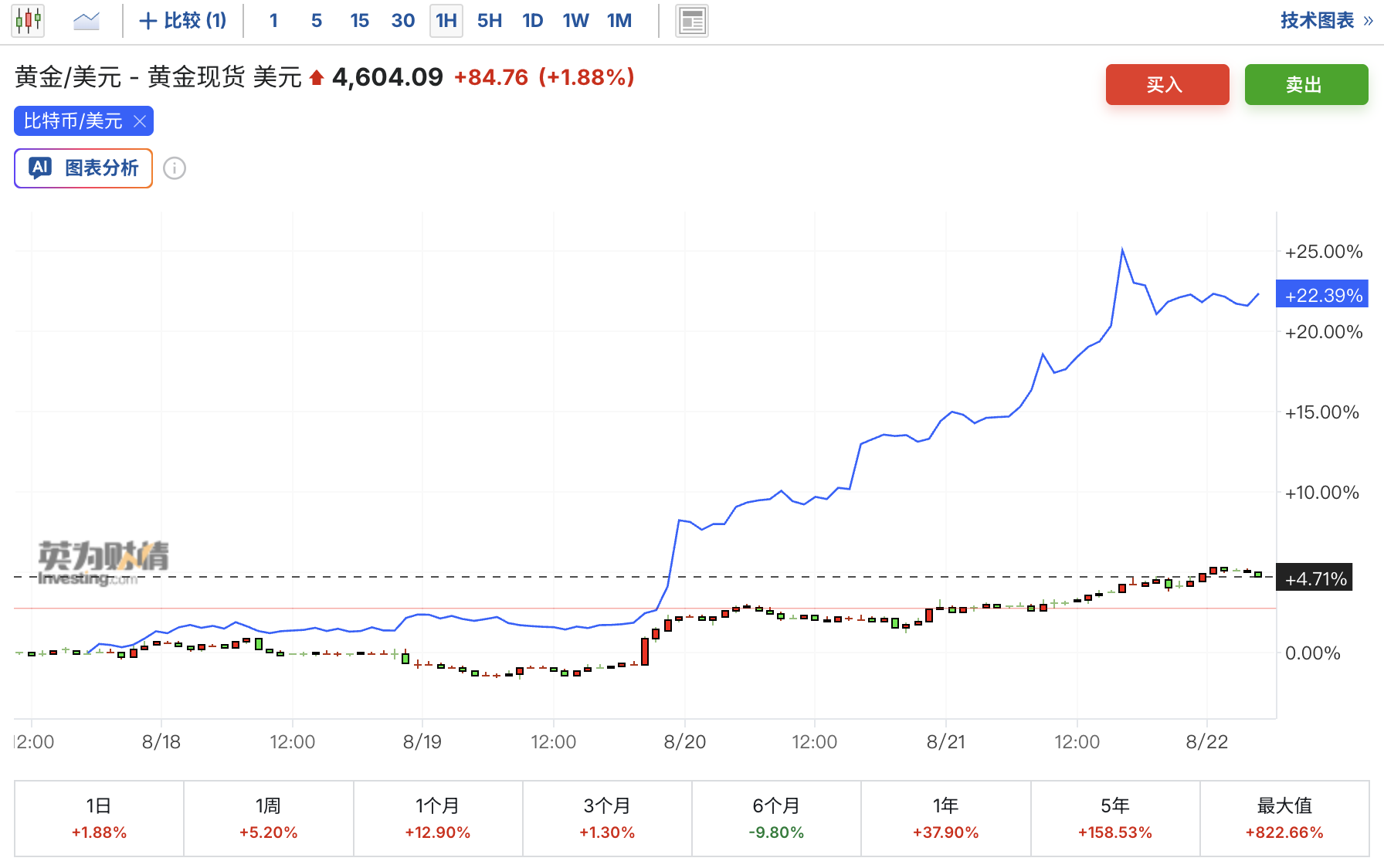
Yet this move pushed the dollar lower, with gold and Bitcoin both rising – reinforcing the logic of this "currency debasement trade," driven by the forces of a ballooning U.S. fiscal deficit and deeper market concerns about the direction of U.S. economic policy.
After announcing an expansion of buybacks, Besant said in an interview that the market was "overreacting a bit," and emphasized that the Treasury has a "strong toolkit."
However, long-end Treasury yields only briefly retreated before coming under pressure again, ending the week largely flat. Meanwhile, Bitcoin surged over 25% this week, breaking above $78,000, while gold climbed to a three-month high.
This market reaction reveals a deeper dilemma in Washington: the U.S. government wants to lower financing costs, but inflation remains a constraint on the Federal Reserve. At the same time, governments and corporations worldwide are competing for capital more intensely than ever—from massive fiscal borrowing to the huge financing needs in the artificial intelligence sector. The structural upward pressure on long-end rates has not dissipated.
Charlie McElligott of Nomura Securities characterized this week's combination of rising gold, a falling dollar, and simultaneous Bitcoin strength as a "pressure relief valve"—when U.S. authorities try to stabilize long-end rates, market anxiety vents elsewhere.
Barclays strategists believe the dollar is the "biggest loser" from this yield-suppression action, with renewed fiscal concerns stoking safe-haven demand for gold.
The 90-day correlation between Bitcoin and gold is currently at its highest level since the pandemic, further reinforcing the narrative logic of cryptocurrencies as a "debasement hedge"—though this week's crypto rally also had its own specific catalysts.
Nathan Thooft, Senior Portfolio Manager at Manulife Investment Management, noted: "The Treasury can influence liquidity and market sentiment, but it cannot sustainably suppress the fundamental forces of growth, inflation, deficits, and supply."
The U.S. government's current fiscal deficit is nearing $2 trillion, rising oil prices are exacerbating inflation risks, and governments globally continue to expand borrowing for defense, energy, and social spending.
Barclays strategists also pointed out that rising corporate bond issuance—especially by mega-cap tech companies financing AI investments—is adding extra pressure on long-end rates. The conclusion: the Treasury can adjust duration supply, but it cannot eliminate the demand for capital.
The AI frenzy plays a dual role in this capital competition: on one hand, financing for AI creates enormous demand in the bond market; on the other, investor expectations of high AI returns are helping stocks remain resilient despite rising funding costs.
Besant expressed clear displeasure in an interview Thursday regarding AI companies' borrowing behavior, saying the debt issuance strategy of such firms is "almost yield-insensitive because they believe the returns from building AI will be so great that they don't care what rate they pay."
Priya Misra, Portfolio Manager at J.P. Morgan Asset Management, said, "A global fight for capital is driving up the discount rate for equities—from governments financing defense, energy security, and social programs, to the financing needs of the entire AI ecosystem."
Florian Ielpo of Lombard Odier believes the key figure supporting stocks is not the Treasury's $4 billion-scale buyback operation, but rather "2026's 20% earnings beat." This partly explains why the stock market has largely "looked through" Besant's actions and the renewed pressure in bond markets.
Despite stock market resilience, U.S. Treasury yields approaching 5% are becoming increasingly difficult for highly valued stocks to ignore as a source of competitive pressure.
Bank of America strategist Michael Hartnett views the 5% level on the 30-year Treasury yield as a key dividing line, arguing that failure to break below it would increase pressure on the dollar and high-leverage areas—including AI hyperscalers and private credit.
On Friday, Ray Dalio, founder of Bridgewater Associates, issued a more severe warning to markets, advising investors to reduce bond exposure and hold some gold and Bitcoin as a hedge against a potential U.S. debt crisis.
Misra also noted that markets are digesting policy disruptions faster: "The speed at which markets fade policy moves is increasing because there's some expectation of 'equity market protection' from this administration—time and again, whenever there's turmoil in risk assets or bond markets, we've seen Trump or the Treasury step in."
The advantage of the debasement trade over bonds lies in its more compelling narrative logic. But there is disagreement over whether this trade can be sustained.
Brent Donnelly, President of Spectra Markets, initially interpreted Besant's announcement as a signal to buy Bitcoin and sell the dollar against the Swiss franc. But the buyback scale is minuscule relative to the entire Treasury market, causing him to later waver.
"I think the big moves in the dollar, gold, and Bitcoin are likely to cool off significantly from here," he said. "Besant's move reinforced structural themes, but those themes aren't new, and there isn't any near-term catalyst to trigger the next leg higher for the debasement trade."
At a deeper institutional level, the tension between the Treasury and the Fed is also noteworthy. The Treasury can adjust the volume and maturity structure of bond issuance, but it cannot create money out of thin air—that's the Fed's power.
However, Fed Chairman Warsh's emphasis on scaling back the central bank's market intervention leaves Washington facing the reality of resilient economic growth, persistent inflation, and large-scale capital expenditures all pushing rates higher, even as it hopes to lower borrowing costs.
Next week's market moves may further test this tension: Nvidia's earnings will reveal whether AI company profits can continue to support stocks, while at the Jackson Hole meeting, investors will watch closely for any signs of the Fed aligning with Washington on easier financial conditions.