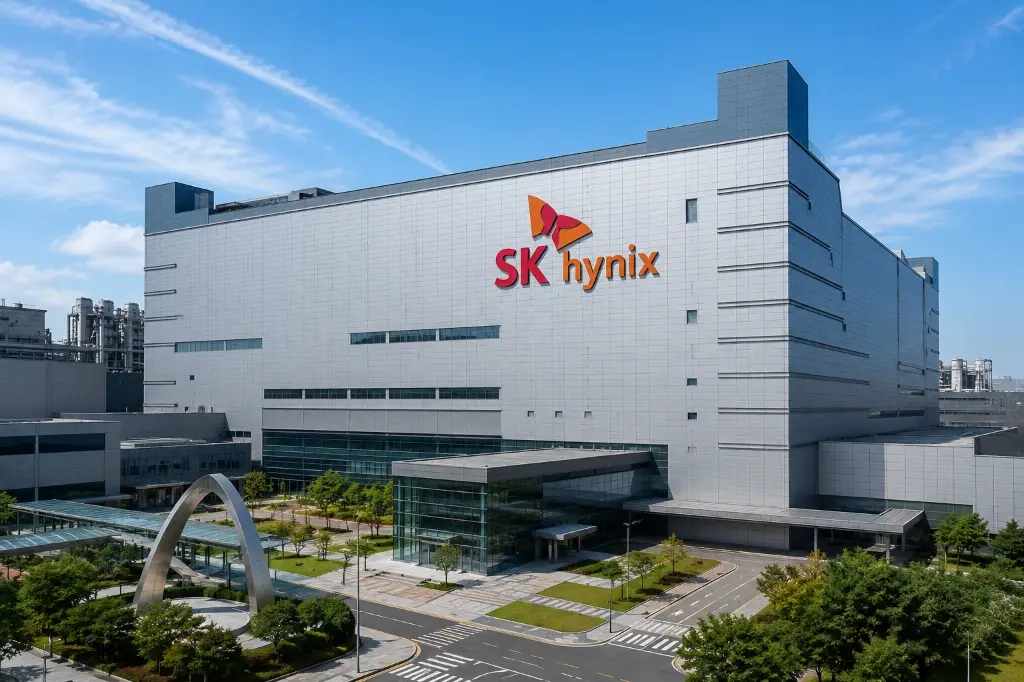
强劲美股首秀后遭抛售!SK海力士韩股暴跌逾10%,韩国央行紧急下场

ambcryptoPublicado a 2026-07-13Actualizado a 2026-07-13

Resumen

冰火两重天?SK海力士美股上周刚狂飙13%,韩股开盘却暴跌10%!三星股价同步下挫,韩国央行坐不住了……

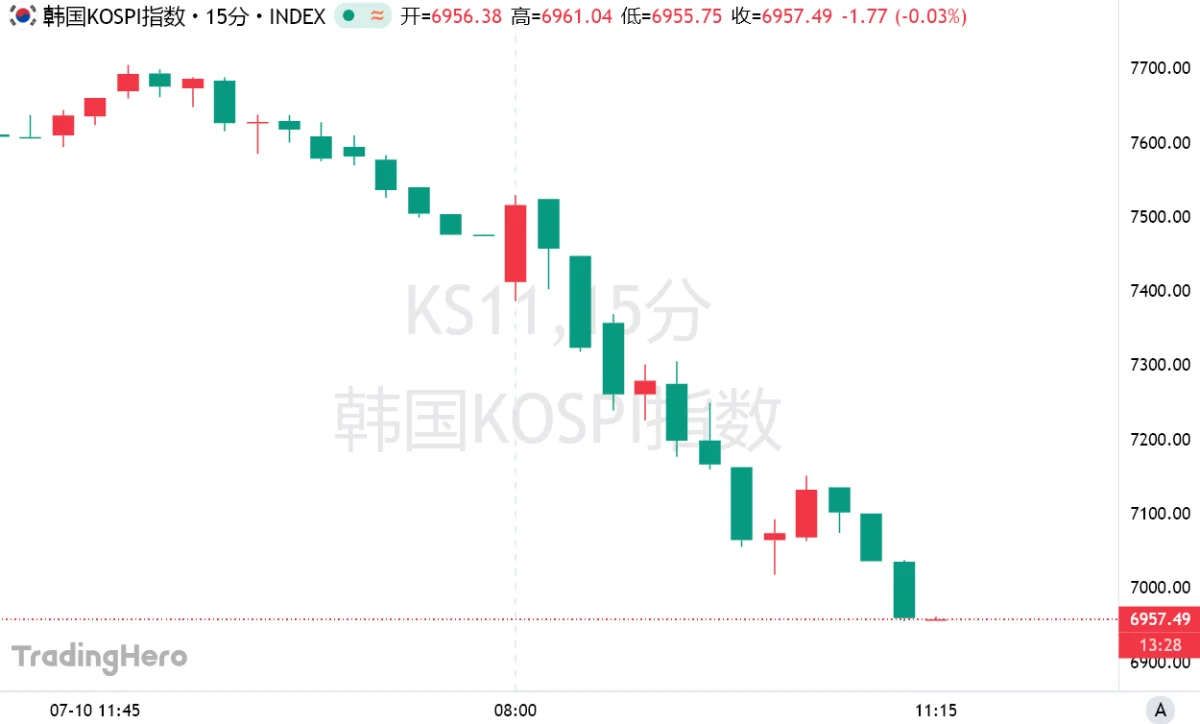
周一,韩国股市大幅下挫,截至发稿前跌超7%。作为两大权重股,SK海力士在纳斯达克强劲亮相后,周一韩股暴跌超过10%;三星电子则跌超6%。触发此次回落的可能原因有两点:一是投资者获利了结,二是市场开始重新评估,人工智能存储芯片需求的激增是否足以支撑这两只股票此前的大幅上涨。
这家韩国存储芯片制造商上周五在华尔街首秀时上涨13%,显示出美国投资者对人工智能相关半导体股票的强烈兴趣。分析师认为,美国存托凭证(ADR)挂牌后,市场实际上为这家公司估值建立了一个新的参照。

Yuanta Securities全球策略师Daniel Yoo说:“每个人都对存储需求的未来走向以及合理价格的定位感到非常困惑。”他表示,“这一切都取决于需求有多大,将有多少供应进入市场……(以及)你将获得什么样的估值倍数。”

Yoo还提到,台积电在美国上市的ADR相对于本土股票的溢价约为13%至14%,而SK海力士在美国和韩国上市的股票之间则出现了超过20%的折价。

Yoo认为,这次抛售也与发行机制有关,他称之为“额外股票发行”,因为这增加了市场可交易的股票供给。“市场将此视为SK海力士在国内的一个调整期,”他表示。他补充说,随着结构性的人工智能需求继续超过供应,这次回调可能只是暂时的,未来6至12个月内该股仍可能“朝着正确的方向”发展。

Rayliant Global Advisors首席研究官Phillip Wool则淡化了亚洲人工智能硬件概念股近期的疲软表现,认为这更像是投资组合再平衡,而不是行业前景恶化。他表示,这主要出于风险管理考虑,因为不少投资者在韩国人工智能芯片制造商强劲上涨后,已经积累了较大的多头头寸。“审慎的风险管理要求你必须缩减这些头寸,”他说。

Wool补充称,这轮抛售“并不能真正说明人们对人工智能硬件的热情有任何减退”。他认为,人工智能领域投资正在向半导体以外扩展,但这仍将继续惠及SK海力士等存储芯片供应商。

韩国央行下场:强调人工智能周期未见放缓

在韩国两大科技股大跌之际,周一,韩国央行发布报告称,全球半导体市场仍然供不应求,当前由人工智能驱动的超级周期预计将持续一段时间,这驳斥了投资者关于芯片周期已经见顶的担忧。韩国央行在提交给议员朴星勋的报告中表示,虽然受人工智能基础设施投资推动,半导体需求大幅激增,但供应扩张的步伐仍然十分缓慢。

韩国央行还指出,这一轮芯片周期与以往不同,因为它是由企业竞争性投资推动的,这些投资押注人工智能普及将给产业生态系统带来根本性变化。央行表示,由于市场由高带宽存储器(HBM)等定制化产品主导,供应扩张受到的约束比过去更大,全球半导体市场预计将在相当长一段时间内保持扩张趋势。

韩国央行表示,人工智能技术的采用速度、覆盖范围以及盈利能力仍存在不确定性。不过,该央行同时援引摩根大通、高盛和摩根士丹利等主要投行的普遍判断称,全球半导体市场至少到明年底都将保持强劲势头。
Lecturas Relacionadas

Tokenized Equity Is Unbundling Venture Capital's One-Stop-Shop Financing Business

Tokenized Equity Splits VC's One-Stop Financing Business The article explores how tokenizing company shares on the blockchain fundamentally reshapes the venture capital model. Traditionally, a VC's term sheet is a bundled service providing capital, valuation, curation/signaling, network access, governance, and implied follow-on funding. Tokenized equity, where shares are natively issued and registered on-chain, enables the unbundling of these services. Securitize exemplified this by listing on the NYSE while simultaneously issuing its native stock tokens on Solana and Avalanche. This creates continuous liquidity and price discovery, allowing startups to source services separately. Market-based platforms can handle funding and valuation; specialized service providers manage cap tables, token vesting, and programmable governance; and key individuals or smaller funds can offer brand credibility and network access. While this unbundling commoditizes transactional and administrative functions, core VC value persists in areas resistant to digitization: deep value judgment, strategic guidance, and using personal reputation to attract talent, customers, and future investors. Just as record labels survived by focusing on A&R (artist discovery) after music distribution was digitized, VCs will evolve to specialize in the nuanced, human-centric aspects of startup building. Founders gain the freedom to choose which services to source from the market versus which to obtain from trusted partners, fundamentally changing early-stage decision-making.

Foresight NewsHace 34 min(s)

Tokenized Equity Is Unbundling Venture Capital's One-Stop-Shop Financing Business

Foresight NewsHace 34 min(s)

The Success of Robinhood Chain Proves Ethereum Is Not Dead

The article argues that Robinhood's decision to build its own dedicated blockchain, Robinhood Chain, as an Ethereum Layer 2 (L2) using Arbitrum technology is a powerful endorsement of Ethereum's L1+L2 model, not a rejection of it. This move reflects a broader shift in the crypto industry from projects focused on token monetization to real-world businesses building cash-generating operations. Historically, many crypto projects chose infrastructure to support token sales and speculative value. In contrast, businesses like Robinhood and Coinbase (with Base) choose infrastructure based on commercial needs: security, liquidity, customer reach, and control. Ethereum's model provides a trusted, neutral, and liquid global settlement layer (L1) coupled with customizable, high-performance execution environments (L2s). This allows companies to maintain control and specialization without the cost and risk of building an independent L1 from scratch. The author contends that as more traditional enterprises enter the space to build sustainable businesses, they will rationally select Ethereum's L1 for maximum security and liquidity and its L2s for scalability and customization. This trend strengthens Ethereum's network effects and the utility of ETH as the native gas and asset within this expanding ecosystem. Robinhood's choice is thus seen as a landmark example of pragmatic business strategy aligning with Ethereum's architectural strengths.

marsbitHace 1 hora(s)

The Success of Robinhood Chain Proves Ethereum Is Not Dead

marsbitHace 1 hora(s)

South Korean Broker's 'Below-Expectations' Forecast Triggers 12% Plunge in SK Hynix, Putting Pressure on Entire Storage Sector

South Korean brokerage KIS released a forecast for SK Hynix's Q2 2026 earnings, predicting operating profit of 60.4 trillion won, up 556% year-over-year. However, this figure was about 8% below the market consensus of 65 trillion won. The shortfall was attributed to SK Hynix's high proportion of HBM (High Bandwidth Memory) revenue. HBM is typically sold under long-term agreements (LTAs) with fixed prices, which limited the company's average selling price (ASP) growth compared to the soaring spot market prices for standard DRAM and NAND. KIS emphasized this was a methodological adjustment to include LTA pricing, not a fundamental deterioration, and maintained its buy rating and 3.8 million won target price. Nevertheless, the report triggered a sharp market sell-off. SK Hynix's stock plunged over 12%, falling below 2 million won and extending its pullback from recent highs. The sell-off spread to related assets: leveraged ETFs tracking SK Hynix and Samsung Electronics fell sharply in Hong Kong, and A-share memory stocks also declined. Analysts note the incident highlights market sensitivity to earnings misses versus high expectations. However, KIS argues the long-term investment thesis remains intact, with the industry shift toward LTAs potentially leading to more stable, sustained profitability rather than volatile quarter-to-quarter ASP gains.

链捕手Hace 1 hora(s)

South Korean Broker's 'Below-Expectations' Forecast Triggers 12% Plunge in SK Hynix, Putting Pressure on Entire Storage Sector

链捕手Hace 1 hora(s)

Trading

Spot
活动图片