OpenAI's Hyperliquid Pre-IPO Pricing Venture: Why Did It Last Only Half a Year?

marsbitPublicado a 2026-06-17Actualizado a 2026-06-17

Resumen

The article discusses the rise and fall of Pre-IPO pricing markets on the Hyperliquid blockchain. Trade.xyz, an anonymous team, successfully built the largest pre-market for SpaceX (SPCX) by launching a contract with a clear anchor: the eventual Nasdaq listing price. This provided inherent price stability and validation. In contrast, Ventuals, a team backed by Paradigm, failed despite holding exclusive contracts for highly sought-after companies like OpenAI and Anthropic. Its key mistake was its pricing mechanism. For companies with no near-term IPO date, Ventuals' oracle relied partly on opaque private market transactions and, critically, partly on its own contract's moving average price. This created a self-referential feedback loop where prices were artificially propped up and detached from genuine supply and demand, leading to illiquid markets. Ventuals shut down after nine months, settling positions at final prices of $1,341.80 for OpenAI and $1,618.90 for Anthropic. Ironically, some employees and late-stage investors of these very companies reportedly used these flawed Ventuals prices for valuation reference, highlighting the acute demand for any price signal in illiquid private markets. The article concludes that while demand for pre-IPO trading is real and growing, with players like Coinbase now entering the space, the fundamental challenge remains: without a public listing to provide a definitive price anchor, these markets struggle to establish truly accurate and...

Original Author: Curry, Shenchao TechFlow

During the days of SpaceX's IPO, the pre-IPO price of SPCX on Hyperliquid was everywhere on social media, but few looked into who was behind building that market.

In fact, it was a team called Trade.xyz. Anonymous, emerged only this year, and now it alone accounts for over 90% of the open interest in pre-IPO contracts on Hyperliquid. The buzz around SpaceX's on-chain Pre-IPO was essentially driven by this single player.

And just three days after SpaceX's listing, on June 15, another team doing the same business announced it was shutting down.

This one was called Ventuals, backed by Paradigm, and it also offered pre-IPO contracts for SpaceX, as well as for OpenAI and Anthropic. It launched earlier this year, and from opening to closing, it lasted only nine months.
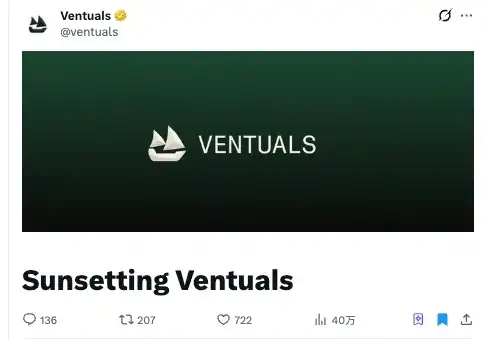
Same blockchain, same HIP-3 mechanism, same niche. One turned SpaceX into the biggest market on the platform, the other held OpenAI and Anthropic, yet ended up failing.

What's particularly noteworthy is the way Ventuals exited. According to its official social media post, it didn't shut down because it ran out of money. The announcement said it was acquired, with the entire team being integrated into another project within the Hyperliquid ecosystem. User principal was returned at 1:1, marking a relatively graceful exit.

But here's the puzzle. Holding onto the two most coveted banners in the entire market—OpenAI and Anthropic—it should have been the last one to fail. What went wrong?

Trade XYZ vs. Ventuals

The successful one, Trade.xyz, remains anonymous to this day.

The project founder only revealed a bit of background during an interview with Hyperliquid founder Jeff Yan, saying he bought his first Bitcoin for $66 in 2013, had been an investor since, never started a project, and would have left the crypto space long ago if not for meeting Jeff.

It was this semi-outsider who built the largest pre-IPO market on Hyperliquid. According to a Colossus report, Trade.xyz has grown 38% weekly since last October, with cumulative trading volume exceeding $130 billion.

It started with silver, then crude oil, then S&P 500, and finally SpaceX.
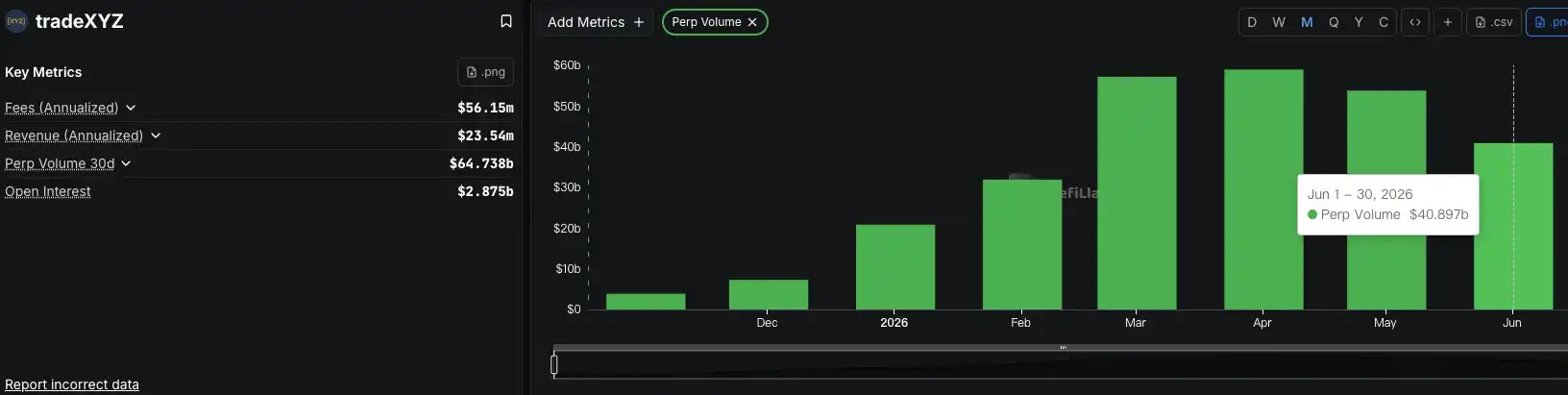
Its choice of SpaceX was clever.

SpaceX was set to list on Nasdaq on June 12, with a determined IPO price and date. By listing the pre-IPO contract, Trade.xyz was essentially betting on an event with a guaranteed outcome. On the listing day, Nasdaq would provide a real price. This real price acted like an anchor, preventing the pre-IPO price from drifting too far. Even if the price deviated in the middle, it would be pulled back at the moment of listing.

And that's exactly what happened. In the days before its IPO, SPCX traded between $154 and $172, betting on a premium above the $135 IPO price. The stock later surged at the open, proving the bet right.

Ventuals chose a different type of asset.

Backed by Paradigm, one of crypto's top-tier VCs, its pedigree was far more respectable than the anonymous Trade.xyz. Its chosen banners were also bigger: OpenAI and Anthropic, the two most coveted assets in the entire market.

But these two companies have no listing date in the foreseeable future.

There are external reference prices. According to Bloomberg, Anthropic allowed employees to sell secondary shares this year at a $350 billion valuation, and OpenAI does similar periodic offerings. But these prices are set behind closed doors. In a secondary share transaction, buyers and sellers are often the same long-term, heavily invested shareholders; the asset doesn't genuinely change hands in a public market.

Such pricing might be precise at times, but it lacks a public order book where everyone can step in to correct errors.

By putting these prices on-chain as contracts, Ventuals essentially hung the entire market on one or two off-chain price feeds. Worse, it layered on a mechanism that essentially argued with itself.

Some on-chain analysts dug into Ventuals' pricing logic:

Its oracle price was half from external secondary share transactions and fundraising valuations, and half from a moving average of the contract's own price. In other words, half the price was referencing itself. When buying pressure pushed the price up, the moving average rose, pulling the oracle price higher, which in turn pushed the price ceiling further up, leading to even higher bids.

The result was that prices for OpenAI and Anthropic contracts were perpetually pinned near the ceiling, with sell orders and liquidations difficult to execute. The charts showed steady uptrends, but in reality, prices were structurally stuck, bearing little relation to genuine supply and demand.
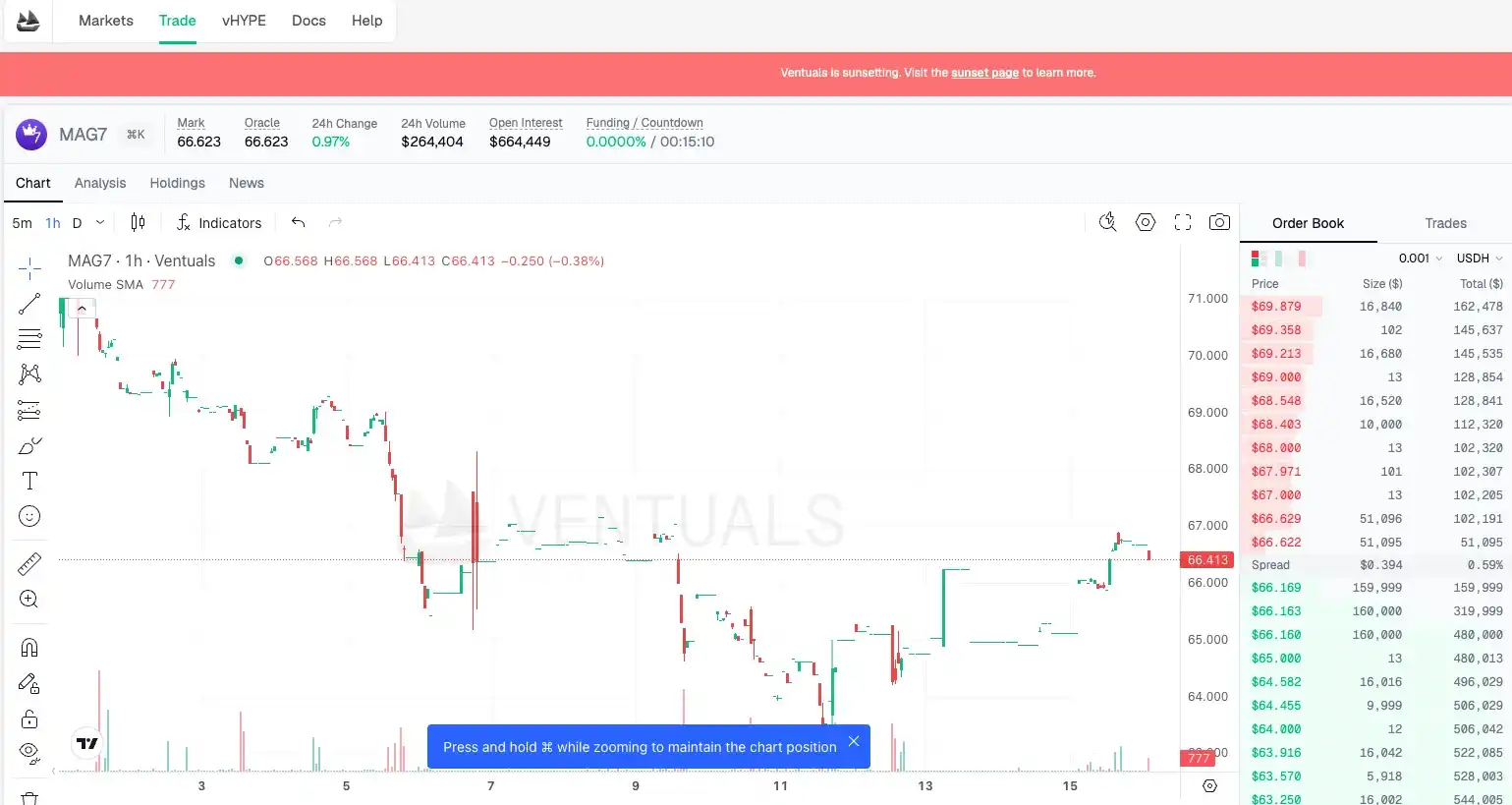
Source: MAG7 assets on Ventuals, showing intermittent candlestick charts with no trades in some periods.

So this type of Pre-IPO wasn't so much the market telling you what OpenAI was worth, but rather a machine pushing the price up and then lifting it further based on the very price it pushed up.

Trade.xyz bet on an asset destined for a Nasdaq reckoning, with a real price as a backstop if wrong; Ventuals bet on assets existing only in internal valuations, then layered on a self-referential price feed, leaving the price suspended in mid-air with no floor beneath.

Final Settlement Prices: OpenAI $1300, Anthropic $1600

When winding down, did the final price it reported count?

At shutdown, Ventuals had to set a final price for its contracts to settle all positions. Its method was to freeze the average price of the past 24 hours. OpenAI was finally set at $1341.80 per share, Anthropic at $1618.90.

These two numbers are now etched into the settlement records, becoming the last quoted prices for these companies on-chain.

As mentioned earlier, this price was half referenced from external secondary prices and half from its own price moving average, perpetually crawling near the ceiling. In other words, a significant portion of that $1341.80 was the result of the machine lifting the price based on the level it had already pushed up.

It's precise to two decimal places, but it's not necessarily true.

The most ironic part is that some people actually took this price seriously.

According to Bloomberg, employees of SpaceX, OpenAI, Anthropic, and some late-stage venture capitalists approached Ventuals, saying they used the platform to value their own equity holdings.

This needs unpacking.

These individuals hold real secondary shares. In theory, they should know best what their stock is worth. But primary market valuations are drip-fed once a year, leaving a vast blank space between funding rounds where no one knows if the price is rising or falling.

Places like Ventuals, however unreliable, at least quote a number 24/7, complete with price movements.

Thus, an inverted situation emerged. Those who should have the most pricing power were instead looking at a number from a retail trading table, seeking psychological comfort.

This is the fundamental paradox of the pre-IPO pricing business.

The most coveted assets lack a fair price the most; the greater the lack, the more willing people are to cling to anything that looks like a price, even if it's a machine arguing with itself.

Ventuals has closed shop, and those final prices are frozen in time. But the demand for such reference points likely hasn't diminished one bit.

The Pre-IPO Pricing Business: Players Rushing In

Demand hasn't decreased, but supply is actually increasing, and becoming more formal.

In the same week Ventuals shut down, Coinbase launched its own pre-IPO perpetual contracts, with SpaceX as the first asset, targeting users outside the US.

Not just Coinbase. Polymarket uses Nasdaq data for prediction markets on private company valuations; Citi launched tokenized private company stock for wealth and institutional clients. The crypto side is doing it, traditional investment banks are doing it too.

This is no longer just a small-scale experiment by a few anonymous teams on Hyperliquid. Giving unlisted companies a price that can be traded anytime is becoming a legitimate business everyone wants a piece of.

For readers in some regions, this demand isn't unfamiliar. IPO subscriptions involve long queues, primary market shares are allocated only among institutions and high-net-worth individuals, leaving ordinary people shut out. Now, seeing prices for companies like OpenAI and SpaceX listed for 24/7 trading gives many their first chance to touch such assets. The demand is real.

But Ventuals' shutdown over the past half-year has also laid bare the Achilles' heel of this business.

For a price to be meaningful, willingness to trade isn't enough. It requires a public market where anyone can step in to constantly correct errors. Even if Coinbase takes over, this fundamental flaw doesn't disappear. It merely shifts from the banner of an anonymous team to that of a bigger brand. The underlying company still isn't listed; that fair price still doesn't exist.

Will the next entity setting its price do a better job than Ventuals? The answer might only be revealed when OpenAI finally stands before its own bell-ringing day.


Criptos en tendencia

Preguntas relacionadas

QWhat was the main reason behind the failure of Ventuals compared to the success of Trade.xyz in the pre-IPO contract market on Hyperliquid?

AVentuals failed primarily because its contracts for companies like OpenAI and Anthropic lacked a clear, external price anchor like a fixed IPO date. Its pricing mechanism relied partly on a self-referential moving average, creating a structural gap from real supply and demand. Trade.xyz succeeded by focusing on SpaceX, which had a definitive IPO date, providing a real market price to converge with at listing.

QWhat were the final settlement prices for OpenAI and Anthropic contracts when Ventuals shut down, and why might these figures be questionable?

AThe final settlement prices were $1,341.80 per share for OpenAI and $1,618.90 for Anthropic. These figures are questionable because Ventuals' pricing oracle was 50% based on external private share prices and 50% on a moving average of its own contract price. This created a self-reinforcing loop, meaning the final price was partially a product of its own internal mechanism rather than a true market consensus.

QAccording to the article, what paradoxical situation arose regarding the valuation of private companies like OpenAI and Anthropic?

AA paradoxical situation arose where company insiders, venture capitalists, and employees who held the actual private shares began using the Ventuals platform prices as a reference for valuing their own holdings. This is ironic because these insiders should have the most accurate pricing information, but the illiquid, infrequent nature of private markets led them to seek real-time price signals—even unreliable ones—from a speculative crypto platform.

QWhat does the article suggest is the fundamental vulnerability of the pre-IPO pricing business, even as more established players like Coinbase enter the space?

AThe article suggests the fundamental vulnerability is the lack of a genuine, publicly-traded market price for the underlying asset. A price needs a transparent, open order book where anyone can oppose it to correct errors. Without an IPO or a liquid public market, any pre-IPO price—whether from an anonymous team or a major exchange like Coinbase—remains speculative and lacks a solid anchor for true price discovery.

QHow did Trade.xyz strategically select its initial assets before launching the successful SpaceX contract?

ATrade.xyz strategically built its market by first launching contracts for assets with clear, established public market prices. It started with silver and crude oil, then moved to the S&P 500 index. This established credibility and user trust in its pricing mechanisms before tackling the more speculative SpaceX pre-IPO contract, which benefited from having a known IPO date and public listing price as an eventual anchor.

Lecturas Relacionadas

Research Report Analysis: MRVL's Optical AI Booming, Why High Valuation Keeps Morgan Stanley's Star Analyst Sidelined?

Report Recap: MRVL Optical AI Boom - Why High Valuation Led Morgan Stanley's Star Analyst to Stay Neutral? Morgan Stanley analyst Joseph Moore maintained an "Equal-weight" (Neutral) rating on Marvell Technology (MRVL) on May 28, raising the price target from $172 to $195, below the trading price. This stance comes despite Marvell reporting a record quarter and significantly raising its full-year outlook (FY27 revenue ~$11.5B, up ~40%). Moore's neutral view is based on valuation. The $195 target implies ~40x CY2027 P/E. He contrasts MRVL with NVDA: both trade near ~$200, but Nvidia's forward EPS is more than double Marvell's. For MRVL's valuation to hold, it needs consistent earnings upgrades, proof of networking market share gains, or certainty on large-scale custom AI chip shipments—none of which are confirmed yet. Growth is driven by two pillars: **1) Optical Interconnect** (the faster runner): Moore raised FY27 growth expectations to >70%, with the optical module product line nearing a $1B annualized run rate. **2) Custom AI Chips** (the climber): Confidence in FY28 is growing, but a major new customer project only ramps in FY28, with no current revenue visibility. Key risks are the underperforming Storage, Enterprise, and legacy Networking segments. Moore acknowledges the real AI opportunity but believes the current price already reflects it. For the stock to work from here, investors need to see the optical business hit its targets, custom chips ramp as planned, and a recovery in the weaker business units.

marsbitHace 58 min(s)

Research Report Analysis: MRVL's Optical AI Booming, Why High Valuation Keeps Morgan Stanley's Star Analyst Sidelined?

marsbitHace 58 min(s)

qinbaFrank: Review and Outlook of the AI Computing Power Wave — From the Three Debates on NVIDIA to Optical Interconnect and SpaceX IPO, How is Capital Rotating?

**Summary: Retrospective and Outlook on the AI Computing Wave - A Framework for Capital Rotation** Based on a presentation by investor qinbaFrank, this analysis reviews the AI computing market trajectory since 2023 and outlines a forward-looking framework. **Key Phases and Market Debates:** The AI bull market progressed through three major debates: 1) The necessity of massive capital expenditure (late 2023). 2) The sustainability of tech giants' spending (early 2024-early 2025). 3) Potential overestimation of compute needs (early 2025). Consensus solidified in late 2025 as model capabilities and utility demonstrably improved. **Core Thesis: Penetration Rate Drives Commercialization.** Unlike the 2000 dot-com bubble, the current AI wave benefits from mature digital infrastructure, enabling faster adoption. The critical threshold is 10% penetration; surpassing it (with recent enterprise intent surveys showing ~18%) indicates entry into a rapid growth "golden period" where user scale and willingness to pay increase simultaneously. **AI vs. Internet: A Fundamental Difference.** While the internet enhanced connection efficiency, AI directly substitutes human cognition and labor. Once AI performance exceeds the "societal average" human level, its commercial value scales exponentially as payment shifts from human labor costs to AI service fees. **Investment Logic Evolution in the Compute Chain.** The focus has expanded from GPUs to a systemic re-rating of the entire hardware stack: storage/HBM, CPUs, interconnects, power, and advanced packaging. The framework is: **short-term "scarcity pricing," mid-term "upgrade pricing" (e.g., optical interconnects, power networks), and long-term "Physical AI" pricing** (edge computing, robotics). **Market Focus Shift and Adjustment Framework.** The market is transitioning from "hardware scarcity" to "commercialization validation." The ultimate anchor for the narrative is sustained high growth in model providers' Annual Recurring Revenue (ARR) and cloud business revenue, which justifies continued capital expenditure. Adjustments are categorized into three levels: * **L1 (Minor):** Driven by valuation compression or macro noise (e.g., single CPI print). Fundamentals intact. * **L2 (Moderate):** Triggered by significant macro events requiring risk repricing. Requires new data for confidence restoration. * **L3 (Major):** Involves a reset of the core industrial narrative or macro regime (e.g., AI commercialization growth stalling). The **crucial dividing line** is whether AI commercialization growth slows. Without a slowdown, pullbacks are likely L1/L2 "repricing" events. A genuine growth deceleration would signal an L2/L3 narrative reset. **Conclusion: A Foundational Civilizational Leap.** AI represents a foundational upgrade to "intelligence" itself—akin to humanity mastering fire—rather than a single-point industrial revolution. This底层能力跃迁 (underlying capability leap) will spawn successive waves of innovation (Agent, robotics, industry workflow重构). The journey will be波浪式的 (wavelike), driven by cycles of scarcity, technological upgrades, and远期兑现 (long-term realization).

marsbitHace 1 hora(s)

qinbaFrank: Review and Outlook of the AI Computing Power Wave — From the Three Debates on NVIDIA to Optical Interconnect and SpaceX IPO, How is Capital Rotating?

marsbitHace 1 hora(s)

A Country That Mined Bitcoin for 8 Years Has Built Its Own Dedicated Crypto Bank

A country that has been mining Bitcoin for eight years has established its own dedicated crypto bank. DK Bank, located in Bhutan's newly developed GMC special administrative zone, aims to fill the significant banking service gap for the cryptocurrency industry. Its CEO, Zheng YD, explained that most banks avoid crypto businesses due to a lack of risk management frameworks for decentralized and anonymous protocols. Operating under a unique "one country, two systems" governance model separate from mainland Bhutan, GMC aspires to become a financial hub for South Asia. DK Bank differentiates itself by offering integrated multi-currency accounts where users can manage both fiat currencies and stablecoins like USDT and USDC in one place, alongside services like Bitcoin-backed loans. The bank faces technical challenges in merging traditional banking systems with 24/7 crypto markets and implements rigorous on-chain and off-chain transaction monitoring for risk control. GMC's regulatory framework draws from Singaporean common law and Abu Dhabi's ADGM rules, offering a fast-track licensing process for already licensed firms while maintaining high standards. The initiative is part of Bhutan's longer-term crypto strategy, which includes Bitcoin mining since 2018. The focus, however, is on building a diversified institutional-grade crypto ecosystem—including custody and asset management—rather than retail speculative tokens. Proponents argue such sovereign crypto infrastructure is necessary, and Bhutan's early, measured approach exemplifies the thoughtful integration needed in global finance.

Foresight NewsHace 1 hora(s)

A Country That Mined Bitcoin for 8 Years Has Built Its Own Dedicated Crypto Bank

Foresight NewsHace 1 hora(s)

Trading

Spot
Futuros

Artículos destacados

Qué es $S$

Entendiendo SPERO: Una Visión General Completa Introducción a SPERO A medida que el panorama de la innovación continúa evolucionando, la aparición de tecnologías web3 y proyectos de criptomonedas juega un papel fundamental en la configuración del futuro digital. Un proyecto que ha atraído la atención en este campo dinámico es SPERO, denotado como SPERO,$$s$. Este artículo tiene como objetivo reunir y presentar información detallada sobre SPERO, para ayudar a entusiastas e inversores a comprender sus fundamentos, objetivos e innovaciones dentro de los dominios web3 y cripto. ¿Qué es SPERO,$$s$? SPERO,$$s$ es un proyecto único dentro del espacio cripto que busca aprovechar los principios de descentralización y tecnología blockchain para crear un ecosistema que promueva la participación, la utilidad y la inclusión financiera. El proyecto está diseñado para facilitar interacciones de igual a igual de nuevas maneras, proporcionando a los usuarios soluciones y servicios financieros innovadores. En su esencia, SPERO,$$s$ tiene como objetivo empoderar a los individuos al proporcionar herramientas y plataformas que mejoren la experiencia del usuario en el espacio de las criptomonedas. Esto incluye habilitar métodos de transacción más flexibles, fomentar iniciativas impulsadas por la comunidad y crear caminos para oportunidades financieras a través de aplicaciones descentralizadas (dApps). La visión subyacente de SPERO,$$s$ gira en torno a la inclusividad, buscando cerrar brechas dentro de las finanzas tradicionales mientras aprovecha los beneficios de la tecnología blockchain. ¿Quién es el Creador de SPERO,$$s$? La identidad del creador de SPERO,$$s$ sigue siendo algo oscura, ya que hay recursos públicos limitados que proporcionan información de fondo detallada sobre su(s) fundador(es). Esta falta de transparencia puede derivarse del compromiso del proyecto con la descentralización, una ética que muchos proyectos web3 comparten, priorizando las contribuciones colectivas sobre el reconocimiento individual. Al centrar las discusiones en torno a la comunidad y sus objetivos colectivos, SPERO,$$s$ encarna la esencia del empoderamiento sin señalar a individuos específicos. Como tal, comprender la ética y la misión de SPERO sigue siendo más importante que identificar a un creador singular. ¿Quiénes son los Inversores de SPERO,$$s$? SPERO,$$s$ cuenta con el apoyo de una diversa gama de inversores que van desde capitalistas de riesgo hasta inversores ángeles dedicados a fomentar la innovación en el sector cripto. El enfoque de estos inversores generalmente se alinea con la misión de SPERO, priorizando proyectos que prometen avances tecnológicos sociales, inclusión financiera y gobernanza descentralizada. Estas fundaciones de inversores suelen estar interesadas en proyectos que no solo ofrecen productos innovadores, sino que también contribuyen positivamente a la comunidad blockchain y sus ecosistemas. El respaldo de estos inversores refuerza a SPERO,$$s$ como un contendiente notable en el dominio de proyectos cripto que evoluciona rápidamente. ¿Cómo Funciona SPERO,$$s$? SPERO,$$s$ emplea un marco multifacético que lo distingue de los proyectos de criptomonedas convencionales. Aquí hay algunas de las características clave que subrayan su singularidad e innovación: Gobernanza Descentralizada: SPERO,$$s$ integra modelos de gobernanza descentralizada, empoderando a los usuarios para participar activamente en los procesos de toma de decisiones sobre el futuro del proyecto. Este enfoque fomenta un sentido de propiedad y responsabilidad entre los miembros de la comunidad. Utilidad del Token: SPERO,$$s$ utiliza su propio token de criptomoneda, diseñado para servir diversas funciones dentro del ecosistema. Estos tokens permiten transacciones, recompensas y la facilitación de servicios ofrecidos en la plataforma, mejorando la participación y la utilidad general. Arquitectura en Capas: La arquitectura técnica de SPERO,$$s$ apoya la modularidad y escalabilidad, permitiendo la integración fluida de características y aplicaciones adicionales a medida que el proyecto evoluciona. Esta adaptabilidad es fundamental para mantener la relevancia en el cambiante paisaje cripto. Participación de la Comunidad: El proyecto enfatiza iniciativas impulsadas por la comunidad, empleando mecanismos que incentivan la colaboración y la retroalimentación. Al nutrir una comunidad sólida, SPERO,$$s$ puede abordar mejor las necesidades de los usuarios y adaptarse a las tendencias del mercado. Enfoque en la Inclusión: Al ofrecer tarifas de transacción bajas e interfaces amigables para el usuario, SPERO,$$s$ busca atraer a una base de usuarios diversa, incluyendo a individuos que anteriormente pueden no haber participado en el espacio cripto. Este compromiso con la inclusión se alinea con su misión general de empoderamiento a través de la accesibilidad. Cronología de SPERO,$$s$ Entender la historia de un proyecto proporciona información crucial sobre su trayectoria de desarrollo y hitos. A continuación se presenta una cronología sugerida que mapea eventos significativos en la evolución de SPERO,$$s$: Fase de Conceptualización e Ideación: Las ideas iniciales que forman la base de SPERO,$$s$ fueron concebidas, alineándose estrechamente con los principios de descentralización y enfoque comunitario dentro de la industria blockchain. Lanzamiento del Whitepaper del Proyecto: Tras la fase conceptual, se lanzó un whitepaper completo que detalla la visión, los objetivos y la infraestructura tecnológica de SPERO,$$s$ para generar interés y retroalimentación de la comunidad. Construcción de Comunidad y Primeras Interacciones: Se realizaron esfuerzos de divulgación activa para construir una comunidad de primeros adoptantes y posibles inversores, facilitando discusiones en torno a los objetivos del proyecto y obteniendo apoyo. Evento de Generación de Tokens: SPERO,$$s$ llevó a cabo un evento de generación de tokens (TGE) para distribuir sus tokens nativos a los primeros seguidores y establecer liquidez inicial dentro del ecosistema. Lanzamiento de la dApp Inicial: La primera aplicación descentralizada (dApp) asociada con SPERO,$$s$ se puso en marcha, permitiendo a los usuarios interactuar con las funcionalidades centrales de la plataforma. Desarrollo Continuo y Alianzas: Actualizaciones y mejoras continuas a las ofertas del proyecto, incluyendo alianzas estratégicas con otros actores en el espacio blockchain, han moldeado a SPERO,$$s$ en un jugador competitivo y en evolución en el mercado cripto. Conclusión SPERO,$$s$ se erige como un testimonio del potencial de web3 y las criptomonedas para revolucionar los sistemas financieros y empoderar a los individuos. Con un compromiso con la gobernanza descentralizada, la participación comunitaria y funcionalidades diseñadas de manera innovadora, allana el camino hacia un paisaje financiero más inclusivo. Como con cualquier inversión en el espacio cripto que evoluciona rápidamente, se anima a los posibles inversores y usuarios a investigar a fondo y participar de manera reflexiva con los desarrollos en curso dentro de SPERO,$$s$. El proyecto muestra el espíritu innovador de la industria cripto, invitando a una mayor exploración de sus innumerables posibilidades. Mientras el viaje de SPERO,$$s$ aún se desarrolla, sus principios fundamentales pueden, de hecho, influir en el futuro de cómo interactuamos con la tecnología, las finanzas y entre nosotros en ecosistemas digitales interconectados.

76 Vistas totalesPublicado en 2024.12.17Actualizado en 2024.12.17

Qué es $S$

Qué es AGENT S

Agent S: El Futuro de la Interacción Autónoma en Web3 Introducción En el paisaje en constante evolución de Web3 y las criptomonedas, las innovaciones están redefiniendo constantemente cómo los individuos interactúan con las plataformas digitales. Uno de estos proyectos pioneros, Agent S, promete revolucionar la interacción humano-computadora a través de su marco agente abierto. Al allanar el camino para interacciones autónomas, Agent S busca simplificar tareas complejas, ofreciendo aplicaciones transformadoras en inteligencia artificial (IA). Esta exploración detallada profundizará en las complejidades del proyecto, sus características únicas y las implicaciones para el dominio de las criptomonedas. ¿Qué es Agent S? Agent S se presenta como un marco agente abierto innovador, diseñado específicamente para abordar tres desafíos fundamentales en la automatización de tareas informáticas: Adquisición de Conocimiento Específico del Dominio: El marco aprende inteligentemente de diversas fuentes de conocimiento externas y experiencias internas. Este enfoque dual le permite construir un rico repositorio de conocimiento específico del dominio, mejorando su rendimiento en la ejecución de tareas. Planificación a Largo Plazo de Tareas: Agent S emplea planificación jerárquica aumentada por la experiencia, un enfoque estratégico que facilita la descomposición y ejecución eficiente de tareas complejas. Esta característica mejora significativamente su capacidad para gestionar múltiples subtareas de manera eficiente y efectiva. Manejo de Interfaces Dinámicas y No Uniformes: El proyecto introduce la Interfaz Agente-Computadora (ACI), una solución innovadora que mejora la interacción entre agentes y usuarios. Utilizando Modelos de Lenguaje Multimodal de Gran Escala (MLLMs), Agent S puede navegar y manipular diversas interfaces gráficas de usuario sin problemas. A través de estas características pioneras, Agent S proporciona un marco robusto que aborda las complejidades involucradas en la automatización de la interacción humana con las máquinas, preparando el terreno para una multitud de aplicaciones en IA y más allá. ¿Quién es el Creador de Agent S? Si bien el concepto de Agent S es fundamentalmente innovador, la información específica sobre su creador sigue siendo elusiva. El creador es actualmente desconocido, lo que resalta ya sea la etapa incipiente del proyecto o la elección estratégica de mantener a los miembros fundadores en el anonimato. Independientemente de la anonimidad, el enfoque sigue siendo en las capacidades y el potencial del marco. ¿Quiénes son los Inversores de Agent S? Dado que Agent S es relativamente nuevo en el ecosistema criptográfico, la información detallada sobre sus inversores y patrocinadores financieros no está documentada explícitamente. La falta de información disponible públicamente sobre las bases de inversión u organizaciones que apoyan el proyecto plantea preguntas sobre su estructura de financiamiento y hoja de ruta de desarrollo. Comprender el respaldo es crucial para evaluar la sostenibilidad del proyecto y su posible impacto en el mercado. ¿Cómo Funciona Agent S? En el núcleo de Agent S se encuentra una tecnología de vanguardia que le permite funcionar de manera efectiva en diversos entornos. Su modelo operativo se basa en varias características clave: Interacción Humano-Computadora Similar a la Humana: El marco ofrece planificación avanzada de IA, esforzándose por hacer que las interacciones con las computadoras sean más intuitivas. Al imitar el comportamiento humano en la ejecución de tareas, promete elevar las experiencias de los usuarios. Memoria Narrativa: Empleada para aprovechar experiencias de alto nivel, Agent S utiliza memoria narrativa para hacer un seguimiento de las historias de tareas, mejorando así sus procesos de toma de decisiones. Memoria Episódica: Esta característica proporciona a los usuarios una guía paso a paso, permitiendo que el marco ofrezca apoyo contextual a medida que se desarrollan las tareas. Soporte para OpenACI: Con la capacidad de ejecutarse localmente, Agent S permite a los usuarios mantener el control sobre sus interacciones y flujos de trabajo, alineándose con la ética descentralizada de Web3. Fácil Integración con APIs Externas: Su versatilidad y compatibilidad con varias plataformas de IA aseguran que Agent S pueda encajar sin problemas en ecosistemas tecnológicos existentes, convirtiéndolo en una opción atractiva para desarrolladores y organizaciones. Estas funcionalidades contribuyen colectivamente a la posición única de Agent S dentro del espacio cripto, ya que automatiza tareas complejas y de múltiples pasos con una intervención humana mínima. A medida que el proyecto evoluciona, sus posibles aplicaciones en Web3 podrían redefinir cómo se desarrollan las interacciones digitales. Cronología de Agent S El desarrollo y los hitos de Agent S pueden encapsularse en una cronología que resalta sus eventos significativos: 27 de septiembre de 2024: El concepto de Agent S fue lanzado en un documento de investigación integral titulado “Un Marco Agente Abierto que Usa Computadoras Como un Humano”, mostrando las bases del proyecto. 10 de octubre de 2024: El documento de investigación fue puesto a disposición del público en arXiv, ofreciendo una exploración profunda del marco y su evaluación de rendimiento basada en el benchmark OSWorld. 12 de octubre de 2024: Se lanzó una presentación en video, proporcionando una visión visual de las capacidades y características de Agent S, involucrando aún más a posibles usuarios e inversores. Estos marcadores en la cronología no solo ilustran el progreso de Agent S, sino que también indican su compromiso con la transparencia y la participación comunitaria. Puntos Clave Sobre Agent S A medida que el marco Agent S continúa evolucionando, varios atributos clave destacan, subrayando su naturaleza innovadora y potencial: Marco Innovador: Diseñado para proporcionar un uso intuitivo de las computadoras similar a la interacción humana, Agent S aporta un enfoque novedoso a la automatización de tareas. Interacción Autónoma: La capacidad de interactuar de manera autónoma con las computadoras a través de GUI significa un salto hacia soluciones informáticas más inteligentes y eficientes. Automatización de Tareas Complejas: Con su metodología robusta, puede automatizar tareas complejas y de múltiples pasos, haciendo que los procesos sean más rápidos y menos propensos a errores. Mejora Continua: Los mecanismos de aprendizaje permiten a Agent S mejorar a partir de experiencias pasadas, mejorando continuamente su rendimiento y eficacia. Versatilidad: Su adaptabilidad en diferentes entornos operativos como OSWorld y WindowsAgentArena asegura que pueda servir a una amplia gama de aplicaciones. A medida que Agent S se posiciona en el paisaje de Web3 y criptomonedas, su potencial para mejorar las capacidades de interacción y automatizar procesos significa un avance significativo en las tecnologías de IA. A través de su marco innovador, Agent S ejemplifica el futuro de las interacciones digitales, prometiendo una experiencia más fluida y eficiente para los usuarios en diversas industrias. Conclusión Agent S representa un audaz avance en la unión de la IA y Web3, con la capacidad de redefinir cómo interactuamos con la tecnología. Aunque aún se encuentra en sus primeras etapas, las posibilidades para su aplicación son vastas y atractivas. A través de su marco integral que aborda desafíos críticos, Agent S busca llevar las interacciones autónomas al primer plano de la experiencia digital. A medida que nos adentramos más en los reinos de las criptomonedas y la descentralización, proyectos como Agent S sin duda desempeñarán un papel crucial en la configuración del futuro de la tecnología y la colaboración humano-computadora.

488 Vistas totalesPublicado en 2025.01.14Actualizado en 2025.01.14

Qué es AGENT S

Cómo comprar S

¡Bienvenido a HTX.com! Hemos hecho que comprar Sonic (S) sea simple y conveniente. Sigue nuestra guía paso a paso para iniciar tu viaje de criptos.Paso 1: crea tu cuenta HTXUtiliza tu correo electrónico o número de teléfono para registrarte y obtener una cuenta gratuita en HTX. Experimenta un proceso de registro sin complicaciones y desbloquea todas las funciones.Obtener mi cuentaPaso 2: ve a Comprar cripto y elige tu método de pagoTarjeta de crédito/débito: usa tu Visa o Mastercard para comprar Sonic (S) al instante.Saldo: utiliza fondos del saldo de tu cuenta HTX para tradear sin problemas.Terceros: hemos agregado métodos de pago populares como Google Pay y Apple Pay para mejorar la comodidad.P2P: tradear directamente con otros usuarios en HTX.Over-the-Counter (OTC): ofrecemos servicios personalizados y tipos de cambio competitivos para los traders.Paso 3: guarda tu Sonic (S)Después de comprar tu Sonic (S), guárdalo en tu cuenta HTX. Alternativamente, puedes enviarlo a otro lugar mediante transferencia blockchain o utilizarlo para tradear otras criptomonedas.Paso 4: tradear Sonic (S)Tradear fácilmente con Sonic (S) en HTX's mercado spot. Simplemente accede a tu cuenta, selecciona tu par de trading, ejecuta tus trades y monitorea en tiempo real. Ofrecemos una experiencia fácil de usar tanto para principiantes como para traders experimentados.

1.0k Vistas totalesPublicado en 2025.01.15Actualizado en 2026.06.02

Cómo comprar S

Discusiones

Bienvenido a la comunidad de HTX. Aquí puedes mantenerte informado sobre los últimos desarrollos de la plataforma y acceder a análisis profesionales del mercado. A continuación se presentan las opiniones de los usuarios sobre el precio de S (S).

活动图片