Broadcom vs AMD, Cổ phiếu chip AI nào đáng đầu tư nhất sau NVIDIA?

marsbitPublicado a 2026-06-09Actualizado a 2026-06-09

Resumen

Tác giả Justin Pope phân tích cuộc cạnh tranh giữa Broadcom (AVGO) và AMD để trở thành công ty chip AI đáng đầu tư thứ hai sau Nvidia. Trong khi AMD chọn con đường cạnh tranh trực tiếp với Nvidia trong chip GPU AI đa dụng (đạt một số thành công, ví dụ hợp đồng với Meta), thì Broadcom lại theo đuổi chiến lược khác biệt: thiết kế chip tùy chỉnh (XPU) cho các khối lượng công việc AI cụ thể của từng khách hàng lớn như Anthropic, Google, Meta và OpenAI. Chiến lược này mang lại lợi thế về hiệu quả và mối quan hệ khách hàng bền chặt hơn. Bài viết nhận định rằng Broadcom có vị thế cạnh tranh vượt trội hơn so với AMD. Mặc dù giá cổ phiếu Broadcom cao hơn (thể hiện qua tỷ lệ P/S kỳ hạn), nhưng mức cao hơn này là xứng đáng bởi triển vọng tăng trưởng mạnh mẽ hơn. CEO Hock Tan của Broadcom vẫn giữ vững mục tiêu doanh thu chip AI đạt 100 tỷ USD/năm vào năm tài chính 2027, bất chấp việc cổ phiếu giảm mạnh sau báo cáo quý gần đây. Vì vậy, bài viết kết luận rằng Broadcom là lựa chọn tốt hơn để đầu tư trong lĩnh vực chip AI.

Tác giả: Justin Pope

Biên dịch: Tidesight Research

Dẫn nhập: Ngoài NVIDIA, cuộc cạnh tranh cho vị trí thứ hai trong lĩnh vực chip AI đang nóng lên. AMD chọn con đường đối đầu trực diện với NVIDIA bằng chip GPU đa dụng, trong khi Broadcom theo đuổi lộ trình khác biệt với chip tùy chỉnh (XPU), thu hút được những khách hàng hàng đầu như Anthropic, Google, Meta và OpenAI.

Sau báo cáo tài chính mới nhất, giá cổ phiếu Broadcom lao dốc, nhưng CEO vẫn kiên định với mục tiêu doanh thu chip AI đạt 100 tỷ USD/năm vào năm tài chính 2027. Nhà phân tích Justin Pope của Motley Fool cho rằng, ngay cả khi định giá của Broadcom cao hơn, việc trả mức cao hơn này cũng đáng giá.
Chú thích ảnh: Nguồn Getty Images

NVIDIA vẫn giữ vững vị trí số một trong thị trường chip trung tâm dữ liệu AI. Nhưng chiếc bánh AI quá lớn, vị trí thứ hai cũng rất có giá trị. Theo ước tính của Statista, thị trường chip AI sẽ tăng trưởng lên 3330 tỷ USD vào năm 2030.

Điều này có nghĩa là các công ty khác cũng có cơ hội mang lại lợi nhuận đáng kể cho nhà đầu tư. Broadcom (AVGO, giảm 7.49% trong ngày) và AMD (giảm 11.01% trong ngày) là hai ứng viên cạnh tranh nhất. Cả hai đều đạt được tiến triển trong lĩnh vực chip AI, nhưng xét tổng thể, một công ty rõ ràng đáng nắm giữ hơn công ty còn lại.

AMD chọn một con đường khó hơn

Vấn đề cốt lõi là: Làm thế nào một công ty có quy mô nhỏ hơn có thể giành thị phần từ một gã khổng lồ ngành?

Chiến lược của AMD là cạnh tranh trực diện với NVIDIA trong lĩnh vực chip AI đa dụng. Công bằng mà nói, họ thực sự đã đạt được một số thành quả. Doanh thu trung tâm dữ liệu Q1 năm 2026 tăng 57% so với cùng kỳ, đạt 5,8 tỷ USD.

AMD được hưởng lợi từ tâm lý không muốn đặt tất cả trứng vào một giỏ NVIDIA của các khách hàng AI siêu lớn. AMD gần đây tuyên bố sẽ cung cấp 6 GW GPU Instinct cho Meta, trong đó GW đầu tiên là phiên bản tùy chỉnh.

Tuy nhiên, AMD rất khó có khả năng thực sự đe dọa vị thế thống trị của NVIDIA. Meta và các khách hàng khác của NVIDIA đã bị ràng buộc sâu với hệ sinh thái phần mềm CUDA của NVIDIA. Hào sâu bảo vệ của CUDA không thể bị vượt qua chỉ bằng thông số phần cứng.
Lộ trình chip tùy chỉnh của Broadcom mới là kẻ chiến thắng

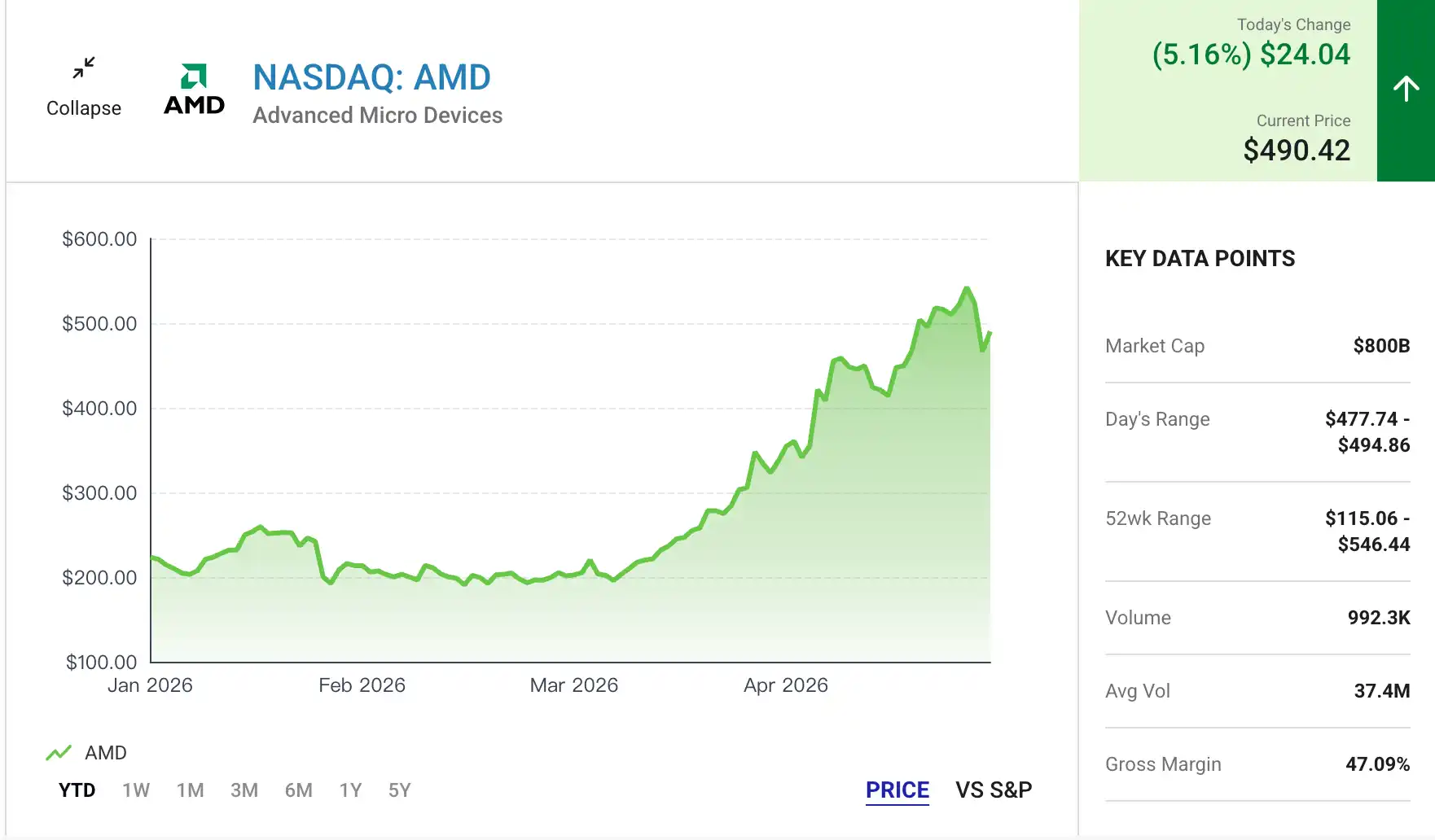
Để tạo ra một lỗ hổng trên hào sâu của NVIDIA, cần phải đi một con đường khác. Broadcom đã làm được điều này với chip XPU.

Khác với AMD nhấn mạnh chip AI đa dụng, Broadcom thiết kế chip tùy chỉnh riêng cho khối lượng công việc AI của từng khách hàng. Cách tiếp cận này mang lại lợi thế về hiệu quả và khiến mối quan hệ khách hàng trở nên bám sâu hơn. Hiện tại, Broadcom đang thiết kế chip tùy chỉnh cho các công ty như Anthropic, Alphabet (công ty mẹ của Google), Meta và OpenAI.

Khi nhu cầu điện toán chuyển từ huấn luyện sang suy luận, hiệu quả trở nên quan trọng hơn, lợi thế của chip tùy chỉnh sẽ càng được phát huy.

Sau báo cáo tài chính quý II mới nhất, Phố Wall bán tháo mạnh Broadcom, chủ yếu do dự báo doanh thu AI quý III thấp hơn kỳ vọng. Tuy nhiên, CEO Hock Tan trong cuộc gọi báo cáo tài chính đã tái khẳng định, kỳ vọng dài hạn của công ty về doanh số chip AI hàng năm đạt 100 tỷ USD vào năm tài chính 2027 vẫn không thay đổi. Doanh thu AI quý II là 10,8 tỷ USD, và không gian tăng trưởng vẫn còn rất lớn khi các dự án chip tùy chỉnh lần lượt được triển khai.

Đắt có lý do

Broadcom sở hữu danh sách khách hàng AI hàng đầu và đang liên tục tiến tới mục tiêu doanh thu hàng năm 100 tỷ USD, vị thế cạnh tranh của họ thực sự tốt hơn AMD. Các nhà đầu tư có thể nhận thấy cổ phiếu Broadcom đắt hơn cổ phiếu AMD, nhưng mức cao hơn này là hợp lý.
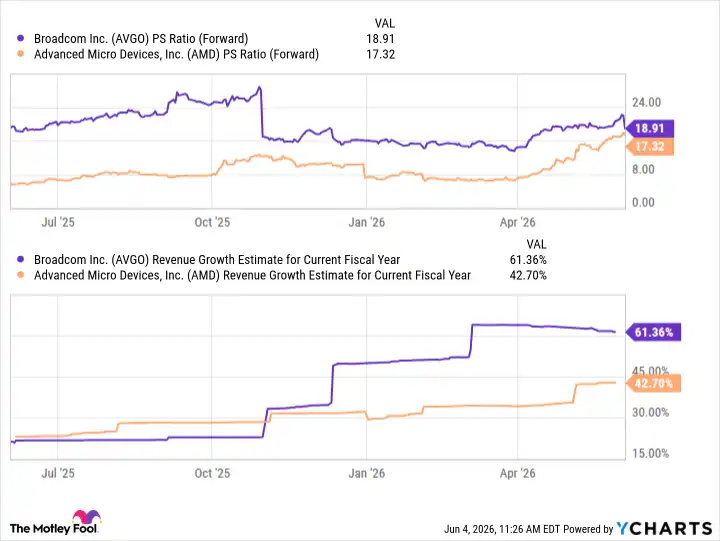
Chú thích: So sánh tỷ lệ Giá/Doanh thu kỳ hạn của AVGO và AMD, Nguồn: YCharts

Các nhà phân tích dự kiến tốc độ tăng trưởng của Broadcom sẽ nhanh hơn nhiều so với AMD, và khoảng cách định giá giữa hai công ty không quá lớn. Đặc biệt trong đợt điều chỉnh giảm sau báo cáo tài chính này, Broadcom càng đáng để mua vào.
Preguntas relacionadas

QTheo bài viết, đâu là chiến lược khác biệt chính giữa Broadcom và AMD trong cuộc đua AI chip?

AAMD lựa chọn cạnh tranh trực diện với NVIDIA trên con đường GPU đa dụng (general-purpose GPU), trong khi Broadcom đi theo con đường khác biệt là sản xuất chip tùy chỉnh (XPU) được thiết kế riêng cho khối lượng công việc AI của từng khách hàng lớn.

QTại sao bài viết cho rằng AMD có thể gặp khó khăn trong việc thách thức vị thế của NVIDIA?

ABài viết lập luận rằng các khách hàng siêu khổng lồ AI (hyper-scaler) đã bị 'khóa chặt' vào hệ sinh thái phần mềm CUDA của NVIDIA. Hào sản phẩm này của NVIDIA rất khó vượt qua chỉ bằng thông số phần cứng, khiến cho con đường cạnh tranh trực diện của AMD trở nên khó khăn hơn.

QMục tiêu doanh thu chip AI hàng năm của Broadcom cho năm tài chính 2027 là bao nhiêu, theo CEO Hock Tan?

ACEO Hock Tan của Broadcom vẫn giữ vững mục tiêu doanh thu chip AI hàng năm đạt 100 tỷ USD vào năm tài chính 2027, bất chấp việc định hướng doanh thu quý III thấp hơn kỳ vọng.

QBài viết nêu tên những công ty khách hàng AI hàng đầu nào đang sử dụng chip tùy chỉnh (XPU) của Broadcom?

ABài viết liệt kê các khách hàng AI hàng đầu của Broadcom bao gồm Anthropic, Alphabet (công ty mẹ của Google), Meta và OpenAI.

QLý do chính nào khiến bài viết kết luận rằng cổ phiếu Broadcom đắt hơn AMD nhưng vẫn đáng để đầu tư?

ABài viết lập luận rằng mức cao hơn (premium) về định giá của Broadcom là hợp lý vì công ty có vị thế cạnh tranh vượt trội với danh sách khách hàng hàng đầu và tốc độ tăng trưởng dự kiến nhanh hơn đáng kể so với AMD, đặc biệt là sau đợt điều chỉnh giá gần đây.

Lecturas Relacionadas

Pricing OpenAI Pre-IPO: A New, Life-or-Death Business on Hyperliquid Lasting Half a Year

Pricing OpenAI Pre-IPO: Hyperliquid's High-Stakes, Six-Month Business Venture The article analyzes the nascent market for pre-IPO perpetual contracts on the Hyperliquid blockchain, exemplified by two contrasting teams: Trade.xyz and Ventuals. Trade.xyz, an anonymous team, successfully built the largest pre-market on Hyperliquid. Its strategy focused on near-term events, like the SpaceX IPO. By listing a SpaceX contract with a known launch date and price, the market had a tangible "anchor" (the eventual Nasdaq opening price) to converge upon, which kept speculation in check. This approach fueled significant growth. In stark contrast, Ventuals, backed by Paradigm, failed despite holding coveted contracts for OpenAI and Anthropic. Its critical flaw was its pricing mechanism for these companies, which have no imminent IPO. Ventuals' oracle price was half-derived from infrequent private market transactions and half from its own contract's moving average. This created a self-reinforcing loop where buying pressure artificially inflated the price, disconnecting it from real supply and demand. The market became illiquid and structurally skewed. Ventuals shut down nine months after launch, reportedly through an acquisition. Its final settlement prices—OpenAI at ~$1,341 and Anthropic at ~$1,618—were thus partially products of its flawed model. Ironically, some company employees and late-stage VCs reportedly used these prices for valuation reference, highlighting the desperate demand for price discovery in opaque private markets. The failure of Ventuals exposes the core challenge of this business: price for illiquid, non-public assets requires a robust, self-correcting market, which is absent without a definitive public listing event. Nevertheless, demand is driving major players like Coinbase and traditional finance (e.g., Citi) to enter the space, aiming to provide 24/7 trading for coveted private company shares. The venture's ultimate viability, however, hinges on solving the fundamental pricing problem Ventuals could not.

marsbitHace 4 min(s)

Pricing OpenAI Pre-IPO: A New, Life-or-Death Business on Hyperliquid Lasting Half a Year

marsbitHace 4 min(s)

M&A Deals in the Crypto Market Are Unusually Active

Title: M&A Activity in Crypto Market Becomes Unusually Active A rare signal is emerging in the crypto primary market: mergers and acquisitions (M&A) are nearing half of all financing deals. According to RootData, this month, M&A cases in the crypto industry reached 10, while financing rounds numbered only 14, meaning M&A accounts for approximately 42% of primary market transactions—the highest level in history. This does not signal a sudden industry boom. Instead, the rapid rise in M&A share primarily reflects the continued downturn in the financing market. Since November 2024, monthly crypto M&A deals have remained between 10-20, while financing deals have plummeted from around 100 to about 50, possibly hitting a new low this month. For project teams, this means the traditional path of relying on narratives, token expectations, and ecosystem subsidies to maintain valuations is narrowing. For leading companies, it presents a rare window to acquire teams, licenses, technology, liquidity, and market access at lower prices, with less competition and stronger bargaining power. Key active buyers include Coinbase, Kraken, Ripple, MoonPay, Polymarket, Kaiko, Sol Strategies, GSR, Keyrock, Jupiter, Paxos, and Ondo Finance. Their M&A logic is consistent: acquiring key capabilities at lower costs during the industry downturn. This is driven by more attractive valuations, reduced time and trial-and-error costs, the acquisition of licenses and compliance resources, and the integration of industry upstream and downstream segments. Current M&A focuses are concentrated in four areas: trading infrastructure (e.g., Coinbase acquiring Deribit, Kraken acquiring NinjaTrader), payments and stablecoins (e.g., MoonPay, Ripple expanding payment networks), compliance licenses, and asset issuance/distribution (e.g., acquisitions related to RWA and token issuance platforms like Coinbase's purchases of Liquifi and Echo). The rise in M&A is altering the primary market's exit logic. It provides an alternative path to the token-dependent model, encouraging teams to build tangible products, revenue, and strategic value that can be integrated. This could inject confidence into the market, showing that asset buyers and exit possibilities still exist, albeit with a stricter focus on real utility. However, this trend also indicates the crypto industry is becoming more centralized. As asset issuance, trading, market-making, custody, payments, and data gradually consolidate in the hands of a few major players, the industry's initial emphasis on openness and anti-monopoly is being reshaped by commercial realities. Coupled with rising compliance barriers, this signals the end of the low-barrier era for crypto entrepreneurship.

链捕手Hace 38 min(s)

M&A Deals in the Crypto Market Are Unusually Active

链捕手Hace 38 min(s)

M&A Deals Are Exceptionally Active in the Crypto Market

Mergers and acquisitions (M&A) activity in the cryptocurrency primary market has reached a historic high, accounting for approximately 42% of total deals in the current month, nearly matching the number of financing rounds. This shift does not signal a new boom cycle but rather reflects a severe contraction in the venture capital funding environment. As financing dwindles, established industry giants—including major exchanges, payment firms, and infrastructure providers—are seizing the opportunity to acquire strategic assets at lower valuations. Key drivers behind the surge in M&A include depressed project valuations, the need to quickly acquire talent and technology to capture short market windows, the pursuit of crucial regulatory licenses, and the strategic expansion into adjacent business verticals such as derivatives, payments, stablecoins, and real-world asset (RWA) issuance. Major acquisitions, like Coinbase's purchase of Deribit and Kraken's acquisition of NinjaTrader, exemplify the push to expand into high-margin areas like derivatives and multi-asset trading. This trend is reshaping the industry's exit landscape, offering an alternative to token-based exits and incentivizing startups to build tangible products and revenue streams with inherent strategic value for acquisition. However, it also points toward increasing centralization, as critical functions—trading, custody, payments, compliance—become concentrated within a few large, well-capitalized platforms, potentially raising barriers to entry for new ventures.

marsbitHace 38 min(s)

M&A Deals Are Exceptionally Active in the Crypto Market

marsbitHace 38 min(s)

Trading

Spot
Futuros

Artículos destacados

Cómo comprar CHIP

¡Bienvenido a HTX.com! Hemos hecho que comprar USD.AI (CHIP) sea simple y conveniente. Sigue nuestra guía paso a paso para iniciar tu viaje de criptos.Paso 1: crea tu cuenta HTXUtiliza tu correo electrónico o número de teléfono para registrarte y obtener una cuenta gratuita en HTX. Experimenta un proceso de registro sin complicaciones y desbloquea todas las funciones.Obtener mi cuentaPaso 2: ve a Comprar cripto y elige tu método de pagoTarjeta de crédito/débito: usa tu Visa o Mastercard para comprar USD.AI (CHIP) al instante.Saldo: utiliza fondos del saldo de tu cuenta HTX para tradear sin problemas.Terceros: hemos agregado métodos de pago populares como Google Pay y Apple Pay para mejorar la comodidad.P2P: tradear directamente con otros usuarios en HTX.Over-the-Counter (OTC): ofrecemos servicios personalizados y tipos de cambio competitivos para los traders.Paso 3: guarda tu USD.AI (CHIP)Después de comprar tu USD.AI (CHIP), guárdalo en tu cuenta HTX. Alternativamente, puedes enviarlo a otro lugar mediante transferencia blockchain o utilizarlo para tradear otras criptomonedas.Paso 4: tradear USD.AI (CHIP)Tradear fácilmente con USD.AI (CHIP) en HTX's mercado spot. Simplemente accede a tu cuenta, selecciona tu par de trading, ejecuta tus trades y monitorea en tiempo real. Ofrecemos una experiencia fácil de usar tanto para principiantes como para traders experimentados.

409 Vistas totalesPublicado en 2026.04.21Actualizado en 2026.06.02

Cómo comprar CHIP

Discusiones

Bienvenido a la comunidad de HTX. Aquí puedes mantenerte informado sobre los últimos desarrollos de la plataforma y acceder a análisis profesionales del mercado. A continuación se presentan las opiniones de los usuarios sobre el precio de CHIP (CHIP).

活动图片