Breaking: OpenAI Chip Veteran Joins Anthropic

marsbitPublicado a 2026-06-07Actualizado a 2026-06-07

Resumen

Breaking News: OpenAI Chip Veteran Joins Anthropic Clive Chan, a key early member of OpenAI's in-house chip development team, has announced his departure from OpenAI to join rival AI company Anthropic. In his statement, Chan highlighted his experience as the second hire on OpenAI's hardware team, praising its exceptional talent density but expressing a desire to "climb a new mountain from the base." He cited Anthropic's talent, values, and ambitious pace as key reasons for his move. Chan also referenced OpenAI's disclosed partnership with Broadcom, aimed at deploying a 10GW AI accelerator system starting in the second half of 2026. His career includes roles at Tesla, Google, and SpaceX, focusing on AI infrastructure and hardware. This move continues a notable trend of talent flow from OpenAI to Anthropic, following other high-profile departures like researcher Andrej Karpathy. With Anthropic's recent $65 billion funding round valuing it near $1 trillion, the competition for top AI talent between these leading firms remains intense.

Zhidongxi, June 7, Report – Today, Clive Chan, the 'employee No. 002' of OpenAI's in-house chip project, announced on platform X that he has left OpenAI and officially joined Anthropic this week.
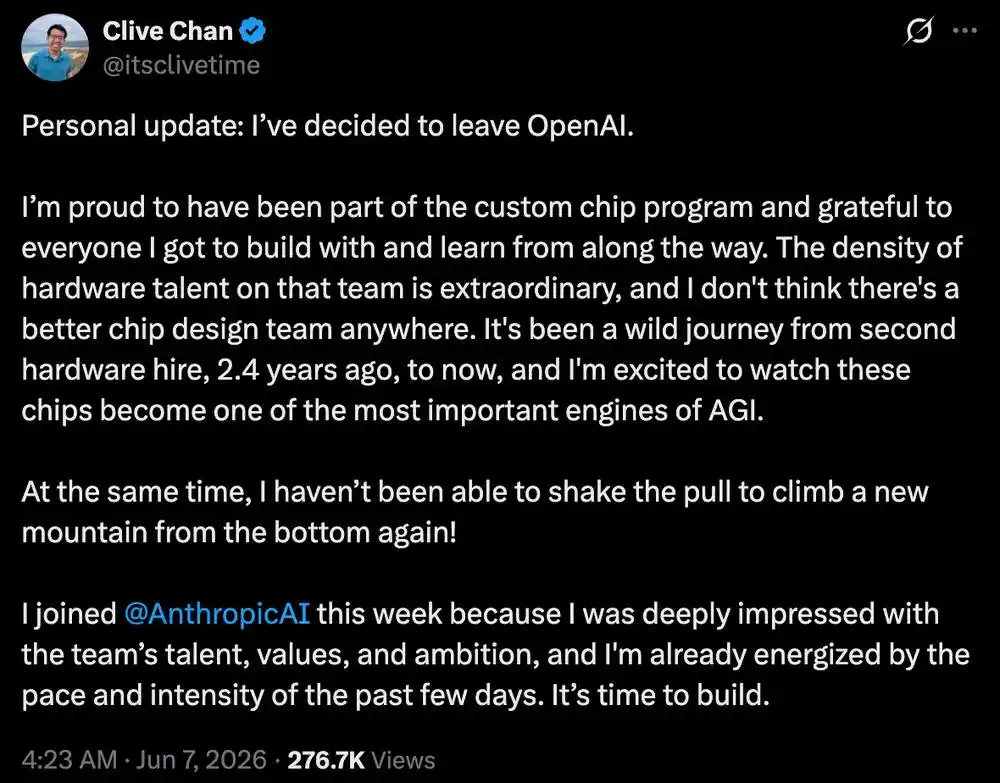
In his departure statement, Clive Chan reflected on his experience at OpenAI over the past two-plus years. He mentioned that he was the second hire for OpenAI's hardware team and witnessed the in-house chip project progress from its early formation to its current advancement. He commented that OpenAI's chip team has an incredible density of talent and that he does not believe there is a better chip design team in the world.

Regarding the future, he looks forward to seeing these chips grow into one of the most important engines for AGI.

However, Clive Chan also wrote that he could never shake the impulse to 'climb a new mountain from its base again'. This is precisely why he ultimately chose to join Anthropic.

He mentioned that the talent, values, and ambition of the Anthropic team deeply impressed him. In the short few days since joining, he has already felt the extremely high-intensity work pace, stating: "It’s time to build."

After announcing his departure, Clive Chan was questioned by netizens about the latest progress of OpenAI's in-house chip project. He responded that, apart from the information OpenAI has publicly disclosed, he cannot reveal more details at this time.
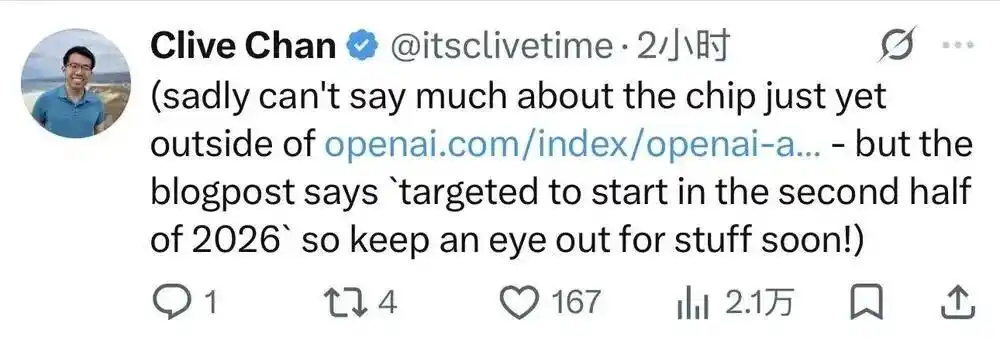
He specifically mentioned, however, the collaboration blog post previously released by OpenAI and Broadcom. According to the information disclosed in the blog, related deployment plans are targeted to commence in the second half of 2026. Clive Chan also mentioned that the outside world will soon see more related progress.
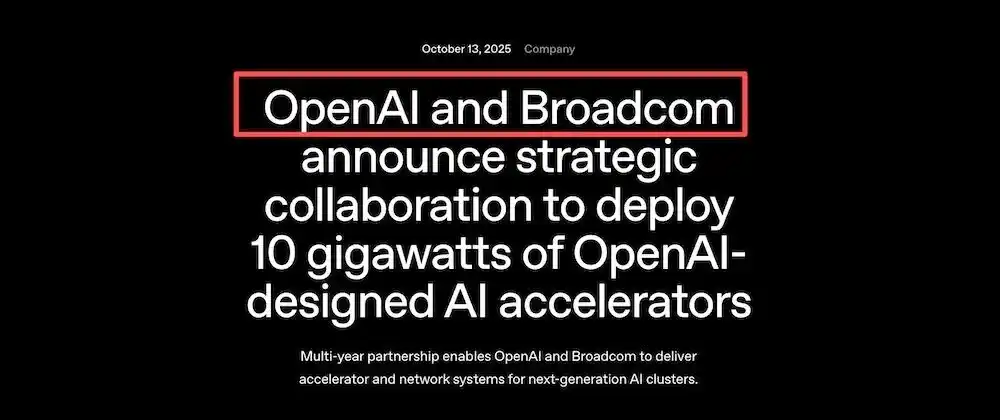
This blog post was published in October 2025. At that time, OpenAI and Broadcom announced a strategic collaboration to jointly build a total scale of 10GW for OpenAI's self-developed AI accelerator systems. OpenAI is responsible for chip and system design, while Broadcom is responsible for accelerator and network system development and deployment. The first racks are planned to begin delivery in the second half of 2026, with the entire project expected to last until the end of 2029. This marked the first time OpenAI officially disclosed a clear timeline for its self-developed AI chip project.

Looking closely at Clive Chan's career, he has worked or interned at several prominent companies including OpenAI, Tesla, Google, and SpaceX, with long-term involvement in AI infrastructure-related work.

Clive Chan graduated from the University of Waterloo in Canada in 2021. During his time there, he was also involved in the establishment of a Canadian Hyperloop-related student organization and served as co-founder and advisor for the Canadian Hyperloop Conference.
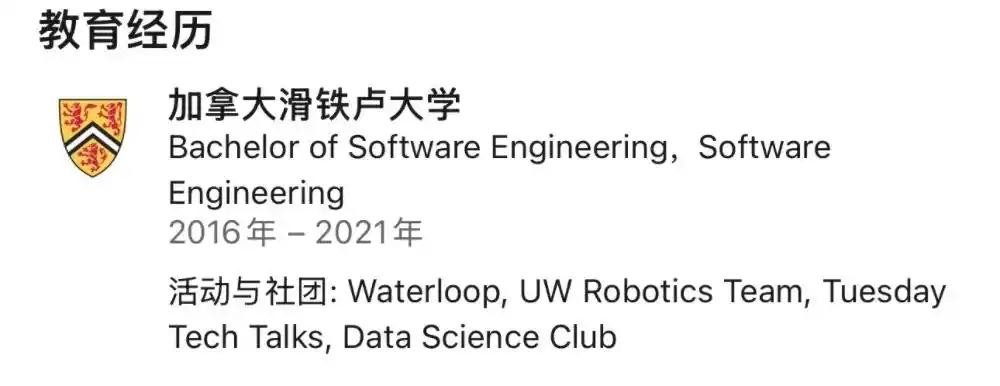
Before and after graduation, he interned or worked at Google, SpaceX, and the quantum computing company QuEra. During his time at Google, he worked on machine learning infrastructure, and at SpaceX, he participated in liquid rocket engine related projects.
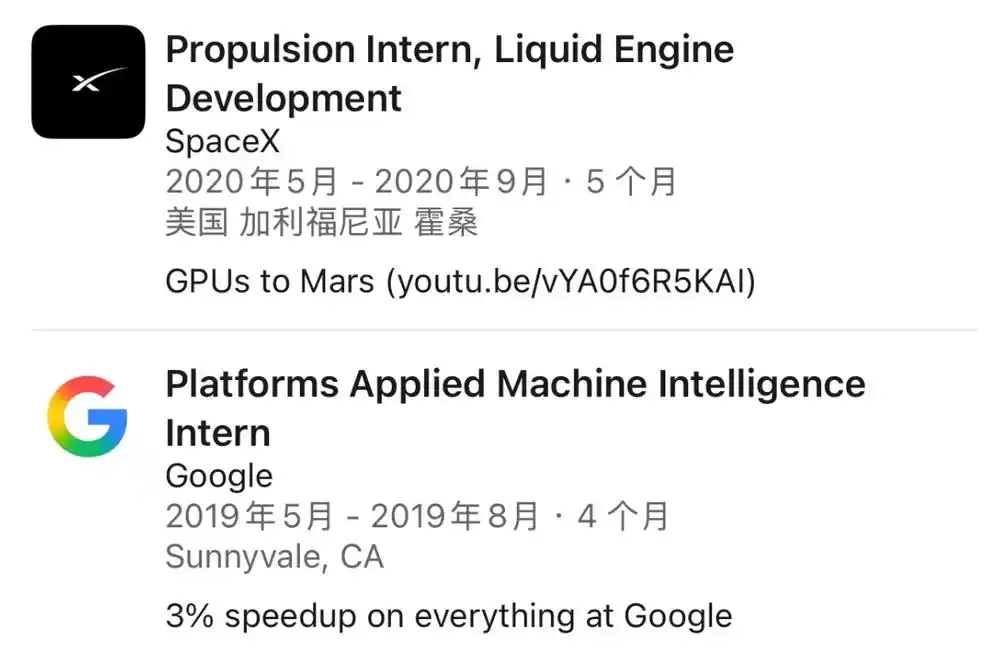
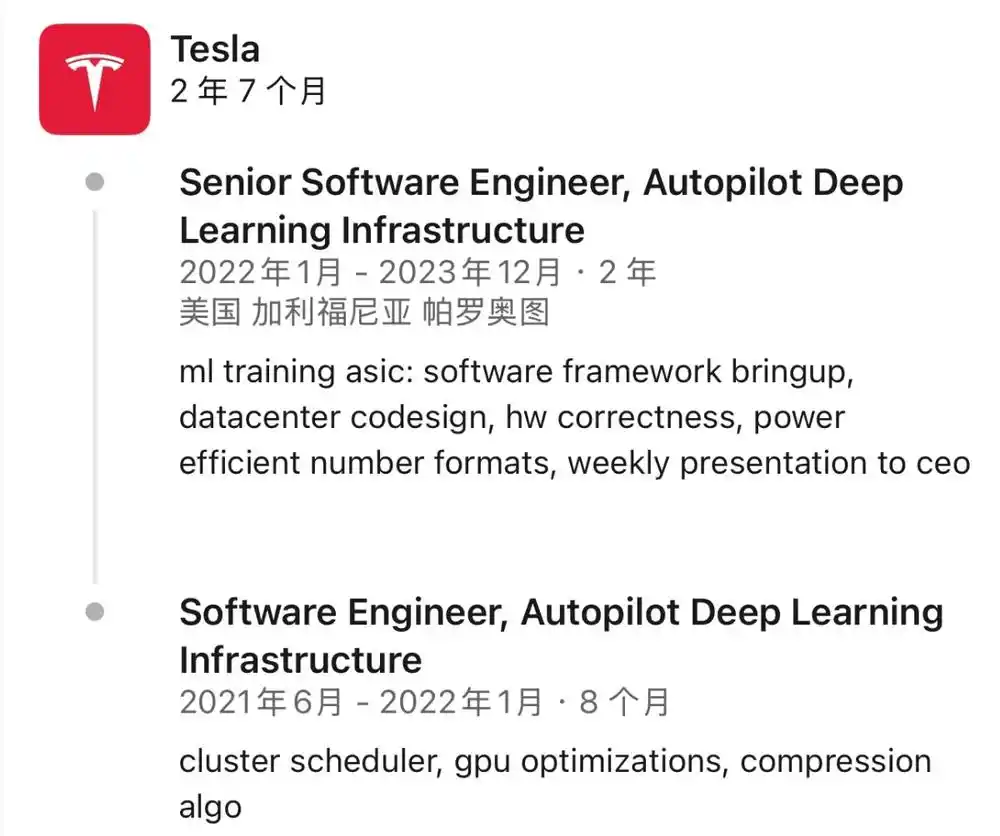
After graduation, he joined Tesla's Autopilot deep learning infrastructure team. Over nearly three years, he successively held the positions of Software Engineer and Senior Software Engineer, responsible for GPU optimization, cluster scheduling, data center software, and training infrastructure.
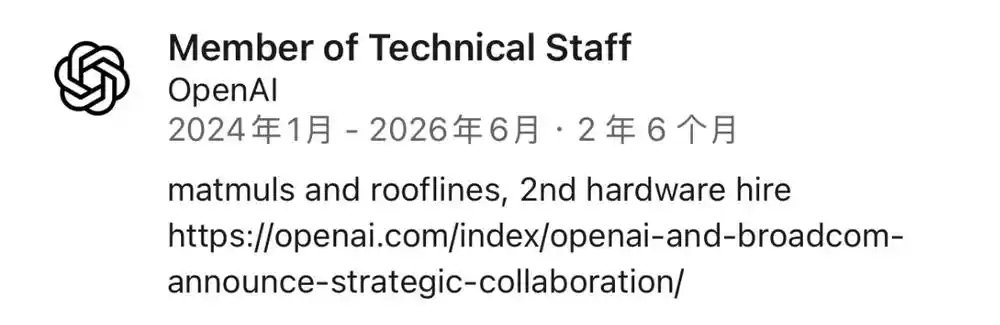
In January 2024, Clive Chan officially joined OpenAI as a member of the technical staff, responsible for matrix multiplication (Matmul), performance analysis (Roofline Analysis), and hardware-related work, and participated in the construction of OpenAI's self-developed AI chip project.
After Clive Chan announced joining Anthropic, Tony CW Liu, an Anthropic employee responsible for GPU performance optimization work, quickly appeared in the comments section with a message: "Congrats and welcome!"

Meanwhile, this job change also sparked some banter from netizens. One netizen said: "Now, every time I see 'I've decided to leave OpenAI', I know the next sentence will definitely mention Anthropic."

Another netizen made a soccer transfer analogy: "It's like leaving Real Madrid to join Barcelona."

Another netizen questioned Clive Chan's statement about "starting from the base of the mountain" in his departure announcement. Anthropic's valuation is almost a trillion dollars, how can that still be considered starting from the base?

Just on June 1, Anthropic announced the completion of a massive $65 billion Series H funding round (approximately RMB 4,397.7 billion), with a post-money valuation reaching $965 billion (approximately RMB 6.53 trillion), just one step away from the trillion-dollar club.

Conclusion: Talent Flow Between OpenAI and Anthropic Continues

It seems now that Anthropic has become one of the most important destinations for talent from OpenAI. From researchers and product leads to chip engineers, the flow of talent between the two companies has consistently attracted attention.

In May of this year, OpenAI co-founder and renowned AI researcher Andrej Karpathy announced joining Anthropic, sparking widespread discussion in the industry. One month later, Clive Chan, who participated in OpenAI's in-house chip project, also chose to join this former "competitor".

For frontier AI companies, talent remains one of the most core assets. For Anthropic, which is continuously expanding its team, this list may well grow longer.

This article is from the WeChat public account "Zhidongxi" (ID: zhidxcom), author: Jiang Yu.

Preguntas relacionadas

QWho is Clive Chan and what significant career move did he announce?

AClive Chan is the second hire on OpenAI's in-house chip development team, often referred to as employee '002'. He announced that he has left OpenAI and officially joined Anthropic.

QWhat reasons did Clive Chan give for leaving OpenAI and joining Anthropic?

AHe stated he was driven by an impulse to 'climb a new mountain from the bottom again.' He was also impressed by Anthropic's talent, values, ambition, and the intense work pace he experienced after joining.

QWhat did Clive Chan reveal about the progress of OpenAI's in-house AI chip project?

AHe said he could not reveal details beyond what OpenAI has publicly disclosed. He specifically pointed to the October 2025 collaboration blog with Broadcom, which targets the first racks for the 10GW AI accelerator system to start delivery in the second half of 2026.

QWhat significant milestone did Anthropic recently achieve regarding its valuation?

AOn June 1, Anthropic announced it completed a $65 billion H-round of financing, reaching a post-investment valuation of $965 billion, putting it on the verge of joining the trillion-dollar club.

QHow have online commenters humorously reacted to this career move?

ASome compared the move to a football transfer from Real Madrid to Barcelona. Others joked that every time they see 'I've decided to leave OpenAI,' they know the next sentence will mention Anthropic. A user also questioned how joining the highly valued Anthropic could be considered 'starting from the mountain bottom.'

Lecturas Relacionadas

The Battle for the AI Payment Race: Traditional Card Networks Face Off Against Coinbase

With the rise of AI agents conducting transactions, a battle for the underlying payment infrastructure is underway. Two distinct and incompatible approaches have emerged for enabling autonomous AI payments. The first approach is championed by traditional card networks Visa and Mastercard. They leverage their existing tokenized card credential systems, extending them to allow verified AI agents to make purchases within user-defined limits. Services like Mastercard's Agent Pay and Visa's Intelligent Commerce integrate with major AI platforms (e.g., OpenAI, Anthropic) and keep transactions within the established, decades-old card payment model. This system offers advantages for consumer retail, including robust fraud protection, chargeback mechanisms, and extensive merchant networks. The second approach, led by Coinbase, utilizes stablecoins on open internet protocols. Its x402 protocol reactivates the HTTP 402 status code for machine-to-machine micropayments, using USDC for settlement directly on-chain. This method eliminates the need for accounts or card fees, making it highly efficient for high-frequency, low-value, cross-border transactions between AI agents—such as paying for API calls, data streams, or computational resources—where traditional card fees and settlement times are impractical. While card networks excel in consumer-facing scenarios requiring dispute resolution, stablecoin protocols are tailored for machine economies. A key challenge for both is agent identity verification and transaction authorization. Notably, Visa and Mastercard are hedging their bets by also investing in stablecoins. Visa has rapidly grown its stablecoin settlement volume and is collaborating with Coinbase to bridge its network with the x402 protocol. Mastercard plans to acquire stablecoin platform BVNK. Their strategy is to become the fee-collecting gateway for all payment flows, regardless of the channel. Current applications reflect this division: consumer AI shopping tools (e.g., ChatGPT's checkout, Amazon's "Shop for Me") predominantly use card networks, while machine-focused services (e.g., Amazon Bedrock's core payments) adopt stablecoins via the x402 protocol. In the short term, a coexistence model is expected, with cards dominating retail and stablecoins powering machine transactions. The long-term outcome depends on whether AI-driven commerce evolves to resemble traditional retail or becomes a vast network of machine micropayments. By investing in both tracks, the incumbent card networks are positioning themselves to capture transaction fees regardless of which future prevails.

marsbitHace 5 min(s)

The Battle for the AI Payment Race: Traditional Card Networks Face Off Against Coinbase

marsbitHace 5 min(s)

Farewell to Traditional Bulls and Bears: The Market Has Entered an Era of Rotating Bubbles

Farewell to traditional bull and bear markets; we have entered an era of rolling bubbles. This article uses a meteorological analogy to explain the modern market's shift from slow-moving, long-term trends to a chain of rapid, successive speculative frenzies. The old market resembled "stratiform" weather—slow, broad cycles lasting years. Today's market is like a "mesoscale convective system," where isolated storms (bubbles in sectors like AI, GLP-1 drugs, or crypto) form in sequence. Each is triggered by the outflow of capital and sentiment from the previous one, creating a self-perpetuating chain of booms and busts. This structural change is driven by eight permanent shifts: the democratization of speculation (zero-commission trading, retail options activity), perpetual buying from defined-contribution retirement plans, the dominance of passive investing (creating price-insensitive flows), the rise of multi-strategy funds and high-frequency trading (weakening price discovery), suppressed volatility that erupts violently, an index composition now dominated by long-duration, narrative-driven tech stocks, the elimination of information delays, and a permissive fiscal/monetary backdrop. These conditions ensure that rolling bubbles are the new normal. To navigate this environment, investors should either become deep-sector experts who understand the underlying technologies and business models or become adept observers of trends and capital flows. While chaotic from within each "storm," a higher-altitude view reveals a predictable pattern of serial booms. The key is to avoid being emotionally swept up in any single narrative and to recognize the market's new, permanent structure.

marsbitHace 40 min(s)

Farewell to Traditional Bulls and Bears: The Market Has Entered an Era of Rotating Bubbles

marsbitHace 40 min(s)

Trading

Spot
Futuros

Artículos destacados

Cómo comprar CHIP

¡Bienvenido a HTX.com! Hemos hecho que comprar USD.AI (CHIP) sea simple y conveniente. Sigue nuestra guía paso a paso para iniciar tu viaje de criptos.Paso 1: crea tu cuenta HTXUtiliza tu correo electrónico o número de teléfono para registrarte y obtener una cuenta gratuita en HTX. Experimenta un proceso de registro sin complicaciones y desbloquea todas las funciones.Obtener mi cuentaPaso 2: ve a Comprar cripto y elige tu método de pagoTarjeta de crédito/débito: usa tu Visa o Mastercard para comprar USD.AI (CHIP) al instante.Saldo: utiliza fondos del saldo de tu cuenta HTX para tradear sin problemas.Terceros: hemos agregado métodos de pago populares como Google Pay y Apple Pay para mejorar la comodidad.P2P: tradear directamente con otros usuarios en HTX.Over-the-Counter (OTC): ofrecemos servicios personalizados y tipos de cambio competitivos para los traders.Paso 3: guarda tu USD.AI (CHIP)Después de comprar tu USD.AI (CHIP), guárdalo en tu cuenta HTX. Alternativamente, puedes enviarlo a otro lugar mediante transferencia blockchain o utilizarlo para tradear otras criptomonedas.Paso 4: tradear USD.AI (CHIP)Tradear fácilmente con USD.AI (CHIP) en HTX's mercado spot. Simplemente accede a tu cuenta, selecciona tu par de trading, ejecuta tus trades y monitorea en tiempo real. Ofrecemos una experiencia fácil de usar tanto para principiantes como para traders experimentados.

374 Vistas totalesPublicado en 2026.04.21Actualizado en 2026.06.02

Cómo comprar CHIP

Discusiones

Bienvenido a la comunidad de HTX. Aquí puedes mantenerte informado sobre los últimos desarrollos de la plataforma y acceder a análisis profesionales del mercado. A continuación se presentan las opiniones de los usuarios sobre el precio de CHIP (CHIP).

活动图片