XRP Tersandung di Hadapan Rival XLM: Mengapa Trader Ritel Meninggalkan Satu demi yang Lain

bitcoinistPublicado a 2026-06-03Actualizado a 2026-06-03

Resumen

Persaingan antara XRP dan Stellar (XLM) terus berlanjut, namun data terkini menunjukkan pergeseran minat di kalangan trader ritel Korea Selatan. Di bursa kripto terbesar negara itu, Upbit, volume perdagangan XLM telah melampaui XRP untuk pertama kalinya, dengan XLM mencatat sekitar $252,3 juta dibandingkan XRP sebesar $125,7 juta dalam 24 jam. Lonjakan minat terhadap XLM didorong oleh rencana keterlibatan jaringan Stellar dalam upaya tokenisasi bersama Depository Trust & Clearing Corporation (DTCC) AS, yang memicu kenaikan harga XLM lebih dari 55% dalam seminggu. Sementara itu, harga XRP justru turun di bawah $1,3. Meski tren saat ini menguntungkan XLM, seorang analis kripto bernama CW memperkirakan XRP mungkin akan mengikuti jejak bullish XLM. Analis tersebut menyebut XRP sedang menunggu "sinyal awal" dan berpotensi mencatat lonjakan harga signifikan, dengan target ambisius mendekati $56, meskipun prediksi ini masih sangat spekulatif. Pergeseran ini menandai perubahan notable mengingat XRP secara historis merupakan aset kripto yang sangat populer di pasar Asia seperti Korea Selatan.

Persaingan antara XRP dan Stellar (XLM) telah berlangsung selama bertahun-tahun, dengan investor sering membandingkan kedua cryptocurrency berfokus pembayaran ini karena asal-usul bersama dan kasus penggunaan yang serupa. Sementara XRP sejak lama mempertahankan kehadiran pasar yang lebih besar, XLM tampaknya unggul di beberapa wilayah. Laporan baru menunjukkan bahwa trader ritel di Korea Selatan kini meninggalkan XRP untuk beralih ke XLM, mendorong lonjakan nilai pasar Stellar sementara harga XRP terus menurun.

XLM Lampaui XRP Dalam Volume Perdagangan di Korea Selatan

Token asli Stellar, XLM, telah melampaui XRP dalam pergeseran besar di bursa kripto terbesar Korea Selatan, Upbit. Perkembangan ini terjadi seiring trader ritel berbondong-bondong masuk ke XLM, mendorong aktivitas perdagangannya melebihi salah satu aset digital paling populer di negara tersebut.

Data yang dibagikan oleh analis pasar Xaif Crypto menunjukkan XLM mencatatkan sekitar $252,3 juta dalam volume perdagangan 24 jam di Upbit. Sebagai perbandingan, XRP mencatatkan sekitar $125,7 juta pada periode yang sama, kurang dari setengah volume yang terlihat pada XLM. Kesenjangan yang mengejutkan ini menandai pertama kalinya XLM melampaui XRP dalam volume perdagangan, kini menempati peringkat pertama di Upbit.
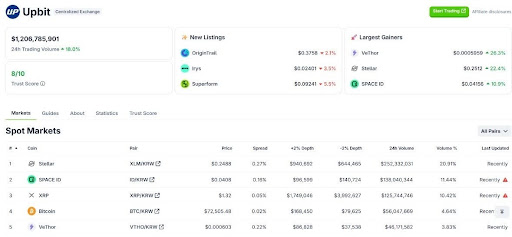
Sumber: CoinCodex

Lonjakan terbaru ini terjadi setelah minat terhadap peran Stellar dalam keuangan tokenisasi melonjak di Korea Selatan. Trader bereaksi positif terhadap rencana terbaru yang menghubungkan jaringan blockchain dengan upaya tokenisasi yang melibatkan US Depository Trust & Clearing Corporation (DTCC), salah satu perusahaan infrastruktur pasar keuangan terbesar di dunia.

Berita tentang DTCC membantu memicu permintaan baru untuk XLM di kalangan investor Korea Selatan, yang biasanya lebih suka memperdagangkan XRP. Patut dicatat, XLM juga mengalami kenaikan harga yang kuat seiring dengan peningkatan aktivitas perdagangan. Laporan menunjukkan token tersebut naik lebih dari 55% menjadi $11 selama seminggu terakhir seiring momentum yang terus terbangun di seluruh pasar. Sementara itu, XRP kesulitan mengikuti reli tersebut, bahkan jatuh di bawah $1,3, meskipun popularitasnya yang sudah lama di kalangan trader Korea Selatan.

Pergeseran minat dan permintaan ini patut diperhatikan karena XRP secara historis merupakan salah satu cryptocurrency yang paling banyak diperdagangkan di pasar Asia seperti Korea Selatan, Jepang, dan Thailand. Baru beberapa minggu lalu, XRP memimpin volume perdagangan di Upbit Korea Selatan di depan Bitcoin dan Ethereum. Namun, angka terbaru menunjukkan perhatian ritel kini telah beralih ke XLM karena trader mengejar momentum terkuat di pasar.

Analis Ramalkan Bull Run Untuk XRP Setelah Rally XLM

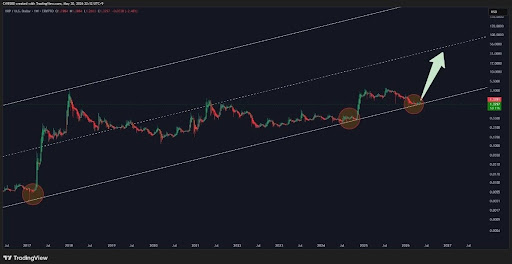
Dalam analisis terpisah, analis kripto CW percaya bahwa XRP bisa menjadi pemenang besar berikutnya setelah breakout terbaru Stellar. Dalam postingan yang dibagikan di X, analis tersebut mengatakan reli bullish untuk XLM telah dimulai dan menyarankan bahwa XRP kini berada pada posisi serupa sebelum pergerakannya sendiri ke atas.

Menurut CW, XRP sedang menunggu "sinyal mulai" dan saat ini diperdagangkan di sekitar level yang sama di mana XLM berada sebelum reli harga 57% baru-baru ini. Analis tersebut berargumen bahwa XRP dapat mengikuti jalur bullish XLM jika momentum terus terbangun.
Sumber: X

Namun, bagan CW memproyeksikan pergerakan yang jauh lebih besar untuk XRP, menargetkan kemungkinan rekor tertinggi baru mendekati $56. Meskipun prediksi ini tetap sangat spekulatif dan ambisius mengingat harga cryptocurrency saat ini yang rendah, ini mencerminkan optimisme yang tumbuh di antara beberapa peserta pasar yang percaya XRP belum melakukan pergerakan terbesarnya dalam siklus saat ini.

Harga mengikuti tren penurunan pasar | Sumber: XRPUSDT di Tradingview.com

Preguntas relacionadas

QMengapa trader ritel di Korea Selatan dikatakan beralih dari XRP ke XLM?

AArtikel menyebutkan bahwa minat terhadap peran Stellar (XLM) dalam keuangan tokenisasi melonjak di Korea Selatan. Berita tentang rencana keterkaitan jaringan blockchain Stellar dengan upaya tokenisasi yang melibatkan DTCC (Depository Trust & Clearing Corporation AS) memicu permintaan baru untuk XLM di kalangan investor Korea Selatan, yang biasanya lebih memilih untuk memperdagangkan XRP.

QBagaimana perbandingan volume perdagangan XLM dan XRP di bursa Upbit Korea Selatan berdasarkan data yang diberikan?

AMenurut data dari analis pasar Xaif Crypto yang dikutip dalam artikel, XLM mencatat volume perdagangan 24 jam sekitar $252,3 juta di Upbit. Sebagai perbandingan, XRP hanya sekitar $125,7 juta dalam periode yang sama, kurang dari setengah volume XLM. Ini adalah pertama kalinya XLM melampaui volume perdagangan XRP di Upbit.

QApa prediksi dari analis kripto CW mengenai pergerakan harga XRP setelah reli harga XLM?

AAnalis kripto CW berpendapat bahwa XRP bisa menjadi pemenang besar berikutnya setelah reli harga XLM. CW mengatakan bahwa reli bullish untuk XLM telah dimulai dan XRP sekarang berada di posisi yang sama sebelum pergerakan naiknya sendiri. CW bahkan memproyeksikan target potensial untuk XRP mendekati rekor tertinggi baru di sekitar $56, meskipun prediksi ini diakui sangat spekulatif.

QFaktor apa yang disebutkan menyebabkan penurunan harga XRP sementara XLM mengalami kenaikan?

AArtikel menyebutkan bahwa XRP kesulitan mengikuti reli pasar, bahkan jatuh di bawah $1,3, meskipun populer di kalangan trader Korea Selatan. Di sisi lain, XLM mengalami lonjakan harga lebih dari 55% menjadi $11 dalam seminggu terakhir. Pergeseran minat dan permintaan dari trader ritel yang mengejar momentum terkuat di pasar disebut sebagai penyebab perbedaan performa ini.

QMengapa persaingan antara XRP dan XLM (Stellar) sudah berlangsung lama menurut artikel?

AMenurut artikel, persaingan antara XRP dan Stellar (XLM) telah berlangsung selama bertahun-tahun karena investor sering membandingkan kedua kripto yang berfokus pada pembayaran ini. Hal ini disebabkan oleh asal-usul mereka yang sama (keduanya didirikan oleh Jed McCaleb) dan kasus penggunaan yang serupa dalam mentransfer nilai lintas batas.

Lecturas Relacionadas

Dalio's Latest Warning: Don't Get Carried Away by AI, Real Returns on US Stocks in the Next 5-10 Years Could Be -5% to -10%

Ray Dalio, founder of Bridgewater Associates, warns investors against excessive concentration in AI stocks. He argues the current market, dominated by a few AI giants, mirrors historical patterns where revolutionary new technologies lead to high risk, volatility, and uncertainty. While acknowledging AI's transformative potential, Dalio emphasizes that most investors fail at this stage of the cycle by over-concentrating in a handful of leading companies. He cites inherent risks: companies cannot accurately forecast investment needs or external shocks (e.g., monetary policy, geopolitics, taxes), face potential disruption from future technologies and international competition (notably from China), and experience significant price swings. Dalio's core advice is diversification, calling it his "Holy Grail of Investing." He presents a mathematical case that a well-diversified portfolio of 15-20 uncorrelated, good bets offers a superior risk-adjusted return compared to a concentrated position. Dalio also offers a cautious outlook, suggesting U.S. stocks may deliver real returns of -5% to -10% over the next 5-10 years based on valuation and bubble indicators. He concludes that in the face of high uncertainty, the prudent strategy is not to avoid betting entirely, but to avoid large, concentrated bets where one lacks sufficient informational edge. Instead, investors should build a strategically balanced, diversified portfolio.

marsbitHace 1 hora(s)

Dalio's Latest Warning: Don't Get Carried Away by AI, Real Returns on US Stocks in the Next 5-10 Years Could Be -5% to -10%

marsbitHace 1 hora(s)

Rain Valuation Approaches $20 Billion: The Battle for U-Cards Extends to Rewards Systems

Rain, a stablecoin payments infrastructure company, is shifting the competitive focus for U Cards from simple issuance to user retention and repeated usage. On June 15, Rain launched "Rain Rewards," an embedded loyalty program capability within its card-issuing infrastructure. This allows partner businesses—like fintech platforms and neobanks—to configure branded loyalty points, earning rules, redemptions, and merchant promotions directly within their card products. The system, built from the 2025 acquisition of Uptop, ensures points are only issued upon final transaction settlement, preventing liabilities from refunds. Trials, such as with Avalanche Card, reportedly boosted spending by 25% among enrolled users. Founded by Farooq Malik and Charles Yoo-Naut, Rain evolved from a tool for managing Web3 company expenses into a full-stack enterprise platform. It is a Principal Member of Visa and Mastercard, enabling partners to issue stablecoin-backed cards and wallets while leveraging traditional payment networks. Notably, the popular U Card Plasma One is issued by Rain under Visa's authority. Rain also integrates with Visa's stablecoin settlement pilot, using USDC for network settlement. Rain's rapid funding reflects growing institutional interest in stablecoin payment infrastructure. It raised a $245 million Series A in March 2025, a $58 million Series B in August 2025, and a $250 million Series C in January of this year, reaching a $19.5 billion valuation. Annualized transaction volume exceeds $3 billion, serving over 200 partners including Western Union and Nuvei. Beyond cards, Rain is expanding into programmable payments. Its June 2026 "Agent Control Layer" allows businesses to set spending rules—like merchant categories, amounts, and frequency—for AI agents before transactions occur. This positions Rain not as a single product but as an operating system for stablecoin payments, handling everything from card issuance and wallet management to rewards, on/off-ramps, and automated compliance. The goal is to enable seamless, often invisible, real-world spending of on-chain assets.

Foresight NewsHace 1 hora(s)

Rain Valuation Approaches $20 Billion: The Battle for U-Cards Extends to Rewards Systems

Foresight NewsHace 1 hora(s)

Google TPU Shipments Revised Up by 50%

Recent industry research indicates a significant upward revision in the shipments of Google's TPU (Tensor Processing Unit) chips. Previous expectations for 2027 were set at around 10 million units, but new estimates now point to 15 million units, a 50% increase. This substantial boost directly translates to higher demand across the entire supporting supply chain. Google's TPU clusters utilize a standardized all-optical interconnect architecture. Consequently, key hardware components are deeply integrated and scaled in fixed ratios with the chips. The 15 million TPU target will drive corresponding demand increases for NPO optical engines (roughly a 1:1 match), 1.6T optical modules, OCS optical switches, high-end server power supplies, fiber optics & MPO connectors, and liquid cooling solutions. Among these, liquid cooling is highlighted as the sector experiencing the most significant transformation and offering the most stable potential for excess returns. As next-generation TPU chips reach power levels where traditional air cooling is insufficient, liquid cooling becomes essential. 2026 is forecasted as the first year of substantial adoption for Google's liquid cooling solutions. This shift, coupled with delivery and capacity bottlenecks faced by incumbent overseas manufacturers, is creating a prime window for domestic Chinese suppliers to enter and secure Google's core supply chain. The market size for Google-specific liquid cooling is projected to potentially triple from a baseline of hundreds of billions to around 300 billion units by 2028. The logic for the fiber optic sector is also being rewritten. Once considered a cyclical commodity tied to telecom operator procurement, fiber is now a strategic and scarce resource for AI Data Centers (AIDC). A severe supply-demand imbalance, driven by the long lead time for preform production (18-24 months) and surging demand from cloud giants, is supporting strong performance. Chinese fiber manufacturers are well-positioned to capture a significant share of global AIDC demand, with exports potentially reaching 200-300 million core kilometers in 2026. Overall, the investment focus within the AI computing industry is shifting from pure "chip performance speculation" towards the more certain incremental growth in computing infrastructure and its supporting ecosystem. The upward revision in Google TPU shipments, along with the potential for further doubling by 2028, is seen as solidifying performance visibility for the entire supporting supply chain over the next two years.

marsbitHace 2 hora(s)

Google TPU Shipments Revised Up by 50%

marsbitHace 2 hora(s)

Trading

Spot
Futuros

Artículos destacados

Qué es XRP 2.0

XRP 2.0: Una Nueva Frontera en el Panorama de las Criptomonedas Introducción a XRP 2.0 En el siempre cambiante ámbito de las criptomonedas, nuevos proyectos surgen continuamente, compitiendo por atención y adopción. Una de estas iniciativas prometedoras es XRP 2.0, un nuevo proyecto de criptomoneda diseñado para aprovechar la tecnología blockchain avanzada y metodologías de encriptación robustas. Aunque el nombre establece paralelismos con el XRP de Ripple, es crucial señalar que XRP 2.0 opera de manera independiente, enfocándose en mejorar la seguridad de las transacciones, la privacidad y la escalabilidad. A medida que el panorama financiero digital abraza cada vez más soluciones descentralizadas, XRP 2.0 busca contribuir de manera significativa a web3 y a la expansión general de los proyectos de criptomonedas. ¿Qué es XRP 2.0? En esencia, XRP 2.0 es un proyecto de criptomoneda que busca crear un ecosistema de moneda digital seguro y descentralizado. Su tecnología fundamental integra principios avanzados de blockchain con técnicas de encriptación de vanguardia. El objetivo principal de XRP 2.0 es establecerse como una plataforma confiable y eficiente que permita la ejecución rápida de transacciones mientras prioriza la protección de la privacidad de sus usuarios. El proyecto se promociona como una solución a muchas limitaciones enfrentadas por las criptomonedas existentes, proponiendo un sistema que puede manejar un mayor volumen de transacciones con mejor velocidad y privacidad. Esta versatilidad posiciona a XRP 2.0 como un competidor significativo en un mercado plagado de diversas monedas digitales. ¿Quién es el Creador de XRP 2.0? La identidad del creador detrás de XRP 2.0 ha sido señalada como 'Wilbur.' Sin embargo, los detalles completos sobre Wilbur o su entidad asociada siguen siendo elusivos. La anonimidad de muchos creadores de criptomonedas no es un fenómeno poco común en la industria, a menudo diseñado para mantener un grado de privacidad y seguridad. ¿Quiénes son los Inversores de XRP 2.0? Hasta ahora, la información específica relacionada con las fundaciones o organizaciones de inversión que apoyan a XRP 2.0 no está disponible públicamente. En el sector de las criptomonedas, el respaldo de inversores respetables puede influir significativamente en la credibilidad y el éxito de un proyecto, sin embargo, la transparencia sobre los patrocinadores financieros de XRP 2.0 no se ha establecido. ¿Cómo Funciona XRP 2.0? XRP 2.0 se destaca al emplear una combinación de tecnología blockchain y algoritmos de encriptación avanzados que aseguran transacciones seguras y descentralizadas. Su estructura innovadora incluye características únicas diseñadas para fomentar el compromiso del usuario y ampliar las funcionalidades más allá de las transacciones convencionales de criptomonedas. Entre estas características, XRP 2.0 incorpora capacidades impulsadas por IA, como funcionalidades de texto a imagen y de texto a voz. Estas adiciones están diseñadas para mejorar la experiencia interactiva de los usuarios, promoviendo una mayor aplicabilidad en diversos sectores. Al unir avances tecnológicos con un diseño centrado en el usuario, XRP 2.0 busca captar la atención de una amplia gama de individuos y empresas que buscan integrar soluciones de criptomonedas en sus marcos operativos. Cronología de XRP 2.0 Entender XRP 2.0 requiere examinar los hitos que han definido su viaje hasta ahora: 23 de julio de 2023: Se presenta XRP 2.0 como un nuevo proyecto de criptomonedas, con el objetivo de revolucionar las capacidades de transacciones seguras y descentralizadas en el ámbito de blockchain. 8 de septiembre de 2023: Se lanza otro proyecto, XRP20, marcando la aparición de un token ERC-20 en la blockchain de Ethereum que no guarda relación con XRP 2.0. 13 de noviembre de 2023: El Libro Mayor de XRP experimenta una actualización significativa con el lanzamiento de la versión 2.0.0 del software del servidor rippled. Es esencial señalar que este desarrollo está desconectado del proyecto de criptomonedas XRP 2.0. Puntos Clave sobre XRP 2.0 Para destilar la esencia de XRP 2.0, surgen varios factores críticos: Características Únicas: La inclusión de características como texto a imagen y texto a voz impulsadas por IA diversifica aún más las aplicaciones potenciales de XRP 2.0. Tecnología Blockchain: El marco utiliza mecanismos avanzados de blockchain y protocolos de encriptación, asegurando un entorno seguro y descentralizado para las transacciones. Escalabilidad y Privacidad: XRP 2.0 prioriza la protección mejorada de la privacidad en los procesos de transacción y la escalabilidad necesaria para acomodar una base de usuarios creciente. No Afiliación con Ripple: Es importante destacar que, a pesar de su nombre, XRP 2.0 no tiene ninguna lealtad ni colaboración con el XRP de Ripple, diferenciando su marco operativo y objetivos dentro del ecosistema de criptomonedas. Conclusión XRP 2.0 representa una ambiciosa aventura en la esfera de las criptomonedas, buscando ofrecer una combinación de seguridad, privacidad y eficiencia en las transacciones digitales. Al integrar tecnologías sofisticadas y características amigables para el usuario, el proyecto se propone ampliar los horizontes de lo que la criptomoneda puede lograr en la economía digital de hoy. Si bien la anonimidad de su creador y la falta de inversores revelados pueden generar cuestionamientos para algunos, el enfoque de XRP 2.0 en funcionalidades avanzadas y descentralización realza su atractivo en un mercado de criptomonedas cada vez más abarrotado. A medida que el paisaje de las criptomonedas sigue evolucionando, XRP 2.0 podría emerger como un jugador crucial en la expansión de soluciones blockchain seguras y escalables.

178 Vistas totalesPublicado en 2024.04.05Actualizado en 2024.12.03

Qué es XRP 2.0

Cómo comprar XRP

¡Bienvenido a HTX.com! Hemos hecho que comprar XRP (XRP) sea simple y conveniente. Sigue nuestra guía paso a paso para iniciar tu viaje de criptos.Paso 1: crea tu cuenta HTXUtiliza tu correo electrónico o número de teléfono para registrarte y obtener una cuenta gratuita en HTX. Experimenta un proceso de registro sin complicaciones y desbloquea todas las funciones.Obtener mi cuentaPaso 2: ve a Comprar cripto y elige tu método de pagoTarjeta de crédito/débito: usa tu Visa o Mastercard para comprar XRP (XRP) al instante.Saldo: utiliza fondos del saldo de tu cuenta HTX para tradear sin problemas.Terceros: hemos agregado métodos de pago populares como Google Pay y Apple Pay para mejorar la comodidad.P2P: tradear directamente con otros usuarios en HTX.Over-the-Counter (OTC): ofrecemos servicios personalizados y tipos de cambio competitivos para los traders.Paso 3: guarda tu XRP (XRP)Después de comprar tu XRP (XRP), guárdalo en tu cuenta HTX. Alternativamente, puedes enviarlo a otro lugar mediante transferencia blockchain o utilizarlo para tradear otras criptomonedas.Paso 4: tradear XRP (XRP)Tradear fácilmente con XRP (XRP) en HTX's mercado spot. Simplemente accede a tu cuenta, selecciona tu par de trading, ejecuta tus trades y monitorea en tiempo real. Ofrecemos una experiencia fácil de usar tanto para principiantes como para traders experimentados.

1.4k Vistas totalesPublicado en 2024.12.10Actualizado en 2026.06.02

Cómo comprar XRP

Discusiones

Bienvenido a la comunidad de HTX. Aquí puedes mantenerte informado sobre los últimos desarrollos de la plataforma y acceder a análisis profesionales del mercado. A continuación se presentan las opiniones de los usuarios sobre el precio de XRP (XRP).

活动图片














