In-Depth Report on Web3 Robots Sector: When Machines Become On-Chain Economic Agents

HTX LearnPublicado a 2026-04-09Actualizado a 2026-06-19

Resumen

In 2026, the deep integration of AI, robotics, and Web3 infrastructure is giving rise to an entirely new narrative—the Web3 Robots sector. This sector has moved beyond conceptual hype into a critical phase of real-world application deployment. This report systematically outlines the definition, boundaries, and developmental logic of the Web3 Robots sector, and conducts an in-depth analysis across three layers: the infrastructure layer (operating systems, data layer, network layer), the machine economy layer (tokenized platforms, positioning networks), and the application-deployment layer (DePIN investment)—of representative projects including OpenMind, PrismaX, peaq, Virtuals Protocol, Geodnet, and XMAQUINA. The analysis covers their technical architectures, funding backgrounds, market performance, and participation opportunities. The research reveals that the sector is forming a three-tiered, synergistic architecture: “data-layer training for intelligence - system-layer standardization - network-layer incentive-driven collaboration”. Machines are evolving from closed-off tools into autonomous economic agents with on-chain identities, payment capabilities, and collaborative networks. Although the sector remains in its early stage and primarily focuses on foundational capability building, the emergence of tangible yield cases (e.g., peaq’s robot farm delivering 18% APY) signals a definitive shift from theoretical concept to observable, participable, substantive development. Fo...

I. Sector Definition & Evolutionary Logic: From Automated Tools to On-Chain Economic Agents

Robotics technology is nothing new. Over the past decade, industrial robotic arms, warehouse robots, and drones have achieved large-scale deployment across manufacturing and logistics sectors. Yet these robots remain fundamentally closed-system tools—they execute pre-programmed instructions but lack identity recognition, autonomous decision-making, value exchange, or cross-platform collaboration capabilities. As large AI models endow machines with “thinking” ability and blockchain provides identity and settlement infrastructure, a new paradigm is emerging: machines are no longer mere hardware—they are autonomous economic agents capable of holding on-chain identities, executing transactions independently, and participating in real-world production.
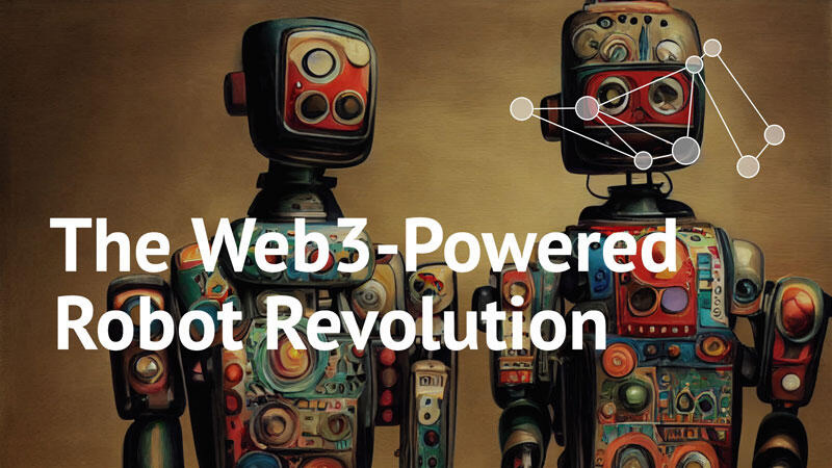
This transformation is driven by technological maturity across three dimensions. First, breakthroughs in embodied AI: large language models and multimodal models have endowed robots with natural language understanding, environmental perception, and task planning capabilities. For example, OpenMind’s OM1 operating system unifies perception, memory, reasoning, and action into a single framework, evolving robots from “capable of movement” to “capable of understanding and thinking”. Second, the rise of decentralized physical infrastructure networks (DePIN): blockchain provides physical devices with decentralized identifiers (DIDs), trusted data recording, and automated settlement, enabling machines to participate in market transactions as economic agents. Third, the maturation of stablecoins and Layer-2 solutions: efficient micropayment infrastructure makes high-frequency, low-value settlements between machines feasible, laying the financial foundation for the Machine Economy.

Forbes’ 2026 forecast states that blockchain will become AI’s trust network—every significant agent action will be recorded on a lightweight ledger, enabling compliance, governance, and accountability. In essence, the Web3 Robots sector is constructing a new economic system wherein machines can prove themselves, trust others, create value, and participate in distribution. This system comprises three architectural layers: the base layer is the OS empowering machine intelligence (e.g., OpenMind OM1); the middle layer is the protocol layer providing identity and collaborative networks (e.g., OpenMind FABRIC, peaq); and the top layer consists of labor markets and tokenized platforms targeting specific applications (e.g., Konnex, Virtuals). Synergy among these three layers is reshaping robots from “tools” into “digital citizens”.

II. Infrastructure Layer: Co-Evolution of Operating Systems, Data, and Networks

Foundational infrastructure development for the Web3 Robots sector is advancing simultaneously across multiple dimensions, with OpenMind’s OS-layer strategy, PrismaX’s data-layer exploration, and peaq’s network-layer construction standing out as most representative. Together, these three projects form a complete infrastructure loop of “system–data–network”, providing the operational bedrock for upper-layer applications.

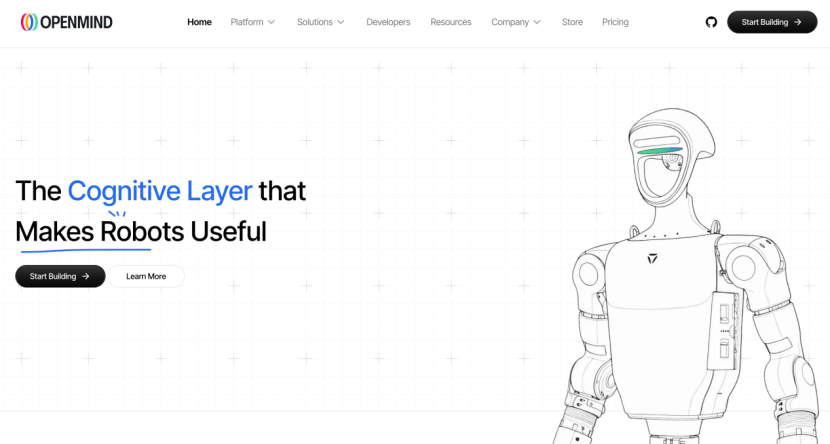
OpenMind is hailed as “Android for robotics”. Its core products include the open-source, AI-native robot operating system OM1 and the decentralized collaboration network FABRIC. OM1, licensed under MIT, has garnered over 2,500 stars on GitHub, attracted more than 500 global contributors, and welcomed over 7,500 independent developers. Unlike traditional robot operating systems (ROS), which focus solely on motion control and navigation, OM1 integrates four core modules—perception, memory, reasoning, and action—and supports advanced functions such as natural language interaction, environment mapping, and object recognition. OM1 has already been adapted for over ten leading hardware manufacturers including Unitree, Fourier Intelligence, UBTECH, and Deep Robotics, covering humanoid robots, quadrupeds, and robotic arms. The FABRIC protocol establishes a decentralized machine collaboration network, assigning each robot an on-chain identity (peaq ID) and supporting inter-machine skill sharing, task coordination, and USDC micropayments. In February 2026, FABRIC Protocol (ROBO) was launched on Binance Alpha and Binance Futures, achieving over $140 million in 24-hour trading volume, and was subsequently listed on OKX, Coinbase, Kraken, and other major exchanges. The project raised about $20 million in August 2025, led by Pantera Capital, with participation from Coinbase Ventures, DCG, and Sequoia China. Its latest valuation stands at approximately $200 million, while its Kaito Launchpad presale reached a $400 million FDV. Current participation avenues include Season 1 points programs, NFT minting on the FABRIC Identity Network, and GitHub code contributions, with strong expectations for upcoming airdrops.
PrismaX is dubbed the “gold mine” of physical-world training data. If algorithms are robots’ “brains”, then data is their “nourishment”. PrismaX targets the AI-robotics data layer, solving the industry’s most scarce resource—“physical-world interaction data”—Reinforcement Learning from Human Feedback (RLHF). Its platform allows users to remotely control real robotic arms via web interface and the system to record those operations, and sell the resulting datasets to robotics companies for AI training, rewarding users with points redeemable for future tokens. This “Play-to-Train” model creates a data flywheel: more users → more data → better models → more users. PrismaX recently closed an $11 million seed round led by top-tier VC a16z, with participation from Virtuals Protocol. Its ecosystem already hosts over 500 participants who’ve completed remote robotic arm operations, and it has deployed two fully functional robotic arm systems (“Tommy” and “Bill” from Unitech Walker). Users earn points via daily check-ins, whitepaper quizzes, or even paid training ($99), with market expectations pointing toward future airdrop distributions. Key risks include potential dilution of point value due to influxes of “airdrop-farming groups", and ongoing industry debate over whether remote-operation data can truly train commercially viable robots.

peaq is the Layer-1 network for the Machine Economy. peaq is a Layer-1 blockchain purpose-built for the Machine Economy, offering core functionalities including machine identity (peaq IDs), on-chain wallets, access control, and nanosecond-level time synchronization and supporting autonomous transactions among millions of robots and devices. Unlike many DePIN projects stuck at the conceptual stage, peaq has already validated a genuine commercial closed loop. Its Hong Kong-based Robo-farm deploys automated robots to grow hydroponic vegetables; users purchase NFTs representing farm equity, and vegetable sales revenue—converted into stablecoins—is distributed directly on-chain to NFT holders. Its first revenue distribution in late January 2026 yielded $3,820 USDT per claim, translating to an annualized return of approximately 18%. This “earn money by selling vegetables—not inflating tokens” model positions peaq as a flagship case of RWA (real-world asset) adoption. Partnerships include Bosch, Mastercard, and Airbus—spanning IoT sensor integration, payment gateway interoperability, and supply chain tracking. Its mainnet was launched in 2024; current circulating market cap stands at $34.25 million or so, with FDV at about $78 million. It hosts 50–60 live DePIN applications connecting over 2 million physical devices. Its native token $PEAQ serves primarily for gas fees and staking. The ongoing “Get Real” campaign offers a $210 million $PEAQ reward pool (valued at >$100 million), allowing users to earn XP/NP and claim tokens by completing real-world DePIN tasks.

The relationship among these three projects mirrors a complete production system: PrismaX supplies the “raw material” (data) for robot training; OpenMind’s OM1 serves as the “operating system” enabling intelligent robot operation; and peaq provides the “network and incentive layer” facilitating economic settlement. Their synergy forms the full infrastructure stack for decentralized embodied intelligence.

III. Financial Layer of the Machine Economy: Tokenized Platforms & Positioning Networks

Once the infrastructure layer resolves “how machines become intelligent” and “how machines collaborate”, the financial layer of the Machine Economy emerges. This layer addresses the core question: how do we price, trade, and circulate machine value? Virtuals Protocol and Geodnet offer distinct answers from complementary angles.

Virtuals Protocol is a tokenization platform for AI agents/robots, enabling community participation in agent issuance, staking, and governance. Its core mechanisms include the Pegasus/Unicorn ecosystem, the Agent Commerce Protocol (ACP) marketplace, and the Butler toolset. The ACP marketplace facilitates trustless commercial transactions among AI agents, supporting fully on-chain task posting, verification, and settlement. In March 2026, Virtuals co-developed the ERC-8183 standard (Agentic Commerce) with the Ethereum Foundation’s dAI team, introducing work primitives featuring on-chain escrow, evaluator certification, and modular hooks, enabling trustless agent-to-agent commerce. Data shows on-chain agent-generated revenue on Virtuals has surpassed $3 million (excluding fees), marking the emergence of verifiable, AI-agent-created economic output at scale. Its native token $VIRTUAL was launched at the end of 2023, currently commanding a $500 million or so market cap and being listed on major CEXs like Gate.io. Its weekly Epoch airdrop program remains active, allocating rewards based on veVIRTUAL staking and Butler usage: 2% to stakers, 3% to ecosystem participants. Early 2026 saw Virtuals partner with OpenMind’s FABRIC protoco, enabling robots to acquire economic identity via FABRIC, receive tasks from agents and settle them on-chain via ACP, achieving deep integration between the machine economy layer and infrastructure layer.

Geodnet is dubbed the centimeter-accurate navigation infrastructure for robots. Built on Solana, Geodnet is a decentralized high-precision positioning network delivering RTK (Real-Time Kinematic) centimeter-grade navigation services for robots, drones, and autonomous vehicles. Its network comprises globally distributed reference stations; node operators earn $GEOD tokens by deploying hardware, while users subscribe to access positioning data. Geodnet’s business model exhibits classic “real yield” traits: 80% of data revenue funds $GEOD buybacks and burns, creating a deflationary mechanism. At CES 2026 in January, Geodnet showcased its Geoswarm home-security drone, which autonomously launches from a compact rooftop docking station, patrols using GEODNET’s high-precision positioning data, and returns to dock without human intervention. Additionally, Geodnet launched consumer-facing RTK automotive hardware ($150) and an RTK survey receiver ($695), with the latter winning a CES Innovation Award. Geodnet has raised over $15 million total, including a round led by Multicoin Capital. Its token has migrated from Polygon to Solana and is now tradable on Coinbase. For investors, Geodnet’s buyback-and-burn mechanism and real hardware sales provide fundamental value support; notable ongoing incentives include node deployment rewards and staking yields.

From the financial-layer perspective, Virtuals Protocol solves the “liquidity” problem for AI agents, enabling agent capabilities to be tokenized, traded, and priced; Geodnet solves robots’ “spatial awareness” problem, enabling precise physical-world localization and navigation. Together, they expand the boundaries of the Machine Economy: the former allows machine value to flow within the digital world; the latter ensures machine activity in the physical world becomes more accurate and reliable.

IV. Application-Deployment Layer: From DePIN Investment to Real-World Assets

The infrastructure and financial layers constitute the “skeleton” and “blood” of the Web3 Robots sector, but what ultimately determines its vitality is whether the application-deployment layer can generate value in the real world. XMAQUINA and Robonomics explore this proposition from divergent angles.

XMAQUINA is a DAO-governed robot investment bank. XMAQUINA is a DePIN project that invests in and tokenizes real humanoid robot companies through DAO governance, allowing token holders to share in the companies’ earnings. Its core mechanisms include the “Robotics Bank” and the “Machine Economy Launchpad”. The DAO allocates capital to promising robotics startups (e.g., Apptronik, Figure AI) and manages them via specialized SubDAOs. In January 2026, XMAQUINA completed its final public auction, raising over $3.25 million from the community in less than 30 minutes, bringing its cumulative fundraising to $10 million. Its native token $DEUS was scheduled for TGE activation in January–February 2026, with 33% unlocked at launch and 67% released linearly. Current participation paths include holding $DEUS for governance voting and profit-sharing, monitoring DAO proposals and staking mechanisms, and preparing for upcoming Launchpad project listings. XMAQUINA’s model is essentially a “robotics-focused investment fund”, lowering the barrier for retail investors to participate in early-stage robotics company investments while decentralizing investment decisions via DAO governance.

Robonomics represents the earliest Web3 robot coordination platform. A pioneer in Web3 robotics since launching its testnet back in 2018, Robonomics provides cloud robotics services and smart-contract-based task assignment. Its core capabilities include IoT device integration, sensor data on-chain recording, and automated task execution. Its native token $XRT was launched in 2019 and trades on exchanges including Kraken, but maintains a relatively small market cap, making it an established project within the sector. Compared to newer entrants, Robonomics’ ecosystem is comparatively mature yet growth-stagnant, lacking recent large-scale airdrops or incentive campaigns, making it better suited for long-term observers focused on IoT-robotics integration.

Notably, innovative models are emerging across the application-deployment layer. peaq’s “Universal Basic Ownership Pilot” explores inclusive ownership of machine assets, while its tokenized machine deployment mechanism enables ordinary users to invest in and share profits from robot operations. Meanwhile, Virtuals’ ecosystem has given birth to agents like ArAIstotle ($FACY), achieving 382,000 queries, possessing 8,000 users, and generating $760,000 in tax revenue with ACP monthly growth surging 413x MoM, demonstrating the immense potential of the AI agent economy.

V. Challenges, Risks, and Future Outlook

Although the Web3 Robots sector holds vast promise, it remains in its infancy and faces multiple challenges and risks.

Technically, the sector still faces bottlenecks in hardware reliability and environmental adaptability. As OpenMind founder Jan Liphardt notes, reliability of critical components like dexterous hands remains a challenge: a five-fingered, 12-degree-of-freedom robotic hand failing after just 100 hours of operation would severely undermine its practical utility. Moreover, gaps between simulation tools and real environments as well as voice-interaction simulation requirements for social robots demand sustained engineering effort.

Valuation-wise, some projects face high-valuation/low-circulation risk. Take OpenMind for instance, its Kaito Launchpad presale is valued the project at $400 million FDV, doubling its prior round valuation ($200 million), potentially overextending secondary-market upside and exposing it to sell pressure from early VC unlocks. Investors must remain wary of projects where “narrative premiums” far exceed actual deployment progress.

Data-quality-wise, data-layer projects like PrismaX confront risks from “airdrop-farming groups" flooding in the system. If teams fail to effectively filter high-quality training data, points lose value, triggering sharp sell-offs during airdrops. Balancing user incentives with data integrity remains a universal challenge for all data-layer projects.

On the competition landscape, traditional robotics vendors favor closed systems (e.g., Tesla Optimus), akin to Apple’s iOS model. Whether open-source “Android-style” alternatives like OpenMind can survive amid tech giants hinges on their ability to attract sufficient mid-tier hardware vendors to build collective ecosystem momentum.

Looking ahead, the Web3 Robots sector will evolve along three primary trajectories: First, standardization. A2A (Agent-to-Agent) communication protocols are becoming the universal language for robots and agents. Just as HTTP unified the early internet, A2A will serve as the foundational communication layer for the autonomous world. Second, real yield. The peaq robot farm demonstrates that Web3 robotics projects can generate genuine cash flow independent of token inflation. More projects will explore “Device-as-a-Service” and “Robot-as-an-Asset” business models. Third, compliance and governance. As robots deepen economic participation, regulators will demand explainability and traceability for AI decisions. Blockchain’s immutable ledger will become critical infrastructure for meeting compliance requirements.

VI. Conclusion: Participation Strategy & Investment Logic

The Web3 Robots sector stands at a pivotal inflection point of transitioning from proof-of-concept to scalable application. For investors and ecosystem participants, the core strategic imperative today is to prioritize foundational capability building, track real-world deployment scale, and seize early participation opportunities.

On the ecosystem side, infrastructure-layer projects (OpenMind, peaq) offer higher certainty and moats, but valuations may already partially reflect expectations; data-layer projects (PrismaX) offer high optionality alongside data-quality risks; financial-layer (Virtuals) and application-layer (XMAQUINA) projects depend more heavily on ecosystem vitality and community engagement.

Reflecting on the mobile industry’s evolution from “copycat phone era” to the “Android/iOS duopoly”, the Web3 robotics sector may be experiencing a similar nascent phase. As OpenMind’s founder observes, there won’t be just one winner, rather, many strong players will emerge. For investors tracking this space, it is the optimal window now for observation, learning, and selective participation. The future of machines as on-chain economic agents is no longer science fiction, rather, it’s becoming reality.


Criptos en tendencia

Lecturas Relacionadas

Conversation with Investor Zheng Di: MicroStrategy's Coin Sale Experiment, AI Economy, and Opportunities in US Stocks

Frontier tech investor Zheng "Didier" Di discusses the recent Bitcoin price drop, the financial strategy shift at MicroStrategy, the AI-driven surge in U.S. stocks, and the evolving role of crypto exchanges. Didier posits that the recent BTC decline stems less from macro factors or ETF outflows, and more from market repricing due to MicroStrategy's new financial structure. Following a wave of preferred stock and debt issuance (STRC, STRZ, etc.), MicroStrategy must now manage cash flow to pay dividends, potentially leading to a market expectation of sustained, small-scale BTC sales to maintain its "per-share bitcoin neutral" principle. Didier views this as a financial "experiment" testing market capacity for such recurring sell pressure, which, while creating near-term structural headwinds, likely avoids a true "death spiral" absent major new external shocks. Shifting to AI, Didier argues that tokens are becoming the new form of labor, with AI models and compute (tokenized inputs) increasingly replacing human roles in execution and middle-management. This drives enterprise efficiency and higher margins, fueling the sustained rally in U.S. semiconductor, data center, and infrastructure stocks. He foresees an emerging "machine economy" where automated agents transact and collaborate on-chain. Regarding crypto exchanges offering U.S. equities, Didier sees this as a natural evolution. With few crypto-native assets generating lasting value, exchanges are pivoting towards real-world assets (RWAs) like stocks and bonds. This doesn't necessarily cannibalize crypto but reflects a maturing industry focusing on blockchain's core utilities: decentralized choice and efficient settlement. He notes that trading logic for crypto natives doesn't need to drastically change, as meme-driven and fundamentalist strategies find analogs in U.S. markets. The "1011 event" (likely referring to a major market crash) severely damaged crypto market liquidity, marking a probable end to the altcoin speculative cycle, with capital flowing towards the deeper liquidity of U.S. markets. For the macro outlook, Didier is cautious about near-term market pressure from potential mega-IPOs (e.g., SpaceX) and the U.S. midterm elections, which could bring more regulatory scrutiny. Long-term, he remains bullish on AI's productivity gains and its convergence with blockchain/Web3, predicting a shift from speculative frenzy to a more institutionalized, industrial phase for the crypto sector.

marsbitHace 30 min(s)

Conversation with Investor Zheng Di: MicroStrategy's Coin Sale Experiment, AI Economy, and Opportunities in US Stocks

marsbitHace 30 min(s)

Playnance’s $GCOIN Lists on KoinBX Amid Rapid Growth in India

Playnance's native token, $GCOIN, has been listed on the cryptocurrency exchange KoinBX as of June 18. This move aims to enhance accessibility for its rapidly growing community, particularly in India, where the blockchain-powered Web3 iGaming ecosystem has gained significant traction. Over 130 partners in Playnance's "Be the Boss" program have built communities engaging thousands of active players in the region. The "Be the Boss" model allows participants to create and manage their own gaming communities, earning rewards tied to community activity. CEO Pini Peter noted India's high engagement, with community leaders successfully building player networks. One partner, Dr. Nicolas, reported earning over $57,000 through the program in recent months, highlighting both the financial rewards and the opportunity to grow an engaged community. $GCOIN serves as the ecosystem's core utility token, incentivizing participation and aligning the interests of players and community leaders ("Bosses"). The listing on KoinBX is part of Playnance's strategy to expand globally, increasing the token's utility and accessibility by combining community ownership, gamified engagement, and blockchain-based incentives. Founded in 2020, Playnance is a Web3 iGaming infrastructure company focused on creating live, non-custodial, on-chain products to onboard mainstream users. It currently processes approximately one million transactions daily, aiming to simplify the user experience while maintaining full on-chain transparency.

TheNewsCryptoHace 1 hora(s)

Playnance’s $GCOIN Lists on KoinBX Amid Rapid Growth in India

TheNewsCryptoHace 1 hora(s)

STRC Hits Historic Low, Saylor's Perpetual Motion Machine Grinds to a Halt

STRC, the perpetual preferred stock issued by MicroStrategy to fund its Bitcoin purchases, hit a historic low of $85.32, a 17% discount to its $100 par value. Designed as a "digital credit engine" to trade stably near par and enable continuous share issuance for buying Bitcoin, its plunge signals a breakdown in this model. Three key factors drove the decline: 1. Bitcoin's price fell over 50% from its peak, trading around $63,000 amid hawkish Fed signals. 2. MicroStrategy's cash reserves were depleted after a $1.5 billion convertible note repayment, slashing the dividend coverage for STRC's 11.5% yield to ~7 months. The company then sold 32 BTC to cover dividends—Michael Saylor's first Bitcoin sale since 2022—damaging the "never sell" narrative. 3. A competing Bitcoin-backed preferred stock, Strive's SATA, offers a higher yield (~13%) and daily dividends, drawing investors away from STRC. The drop triggers a negative cycle: STRC below par halts ATM share issuances, cutting off a key funding source for Bitcoin buys and potentially forcing more BTC sales for dividends, further eroding confidence. While Saylor argues the model is mathematically sound—needing only 2.3% annual Bitcoin growth to sustain itself—the market is testing the resilience of the leveraged Bitcoin treasury strategy in a bear market. The STRC price now reflects rising skepticism about this financial machinery's durability during downturns.

marsbitHace 1 hora(s)

STRC Hits Historic Low, Saylor's Perpetual Motion Machine Grinds to a Halt

marsbitHace 1 hora(s)

A Guide to Grayscale’s ‘Bottom Fishing’: Using Cash Flow to Assess Cryptocurrency Value

**Title:** Grayscale's Guide to Bottom-Fishing: Valuing Cryptoassets Using Cash Flows **Summary:** This report by Grayscale Research presents a fundamental valuation framework for cryptocurrency assets, moving beyond pure speculation to analyze those with underlying cash flows. It distinguishes between "commodity-like" assets (e.g., Bitcoin) and "cash-flow" assets, primarily within DeFi. Using the leading decentralized lending protocol Aave as a case study, the analysis applies traditional financial methodologies like Discounted Cash Flow (DCF) and Price-to-Earnings (P/E) multiples. Key findings indicate that AAVE tokens are currently undervalued. Despite recent challenges, the protocol's strong revenue growth, ~50% net profit margin, and diversified treasury support a fundamental valuation range of $80-$100 per token (compared to a ~$75 market price at the time of writing). In a base-case scenario driven by stablecoin adoption and regulatory clarity, the fair value could rise to around $175 within a year. The report emphasizes that protocol success does not automatically translate to token value. It critically examines the "value capture" mechanisms—such as buybacks, burns, and staking rewards—that channel protocol profits to token holders. Furthermore, it addresses the legal and governance complexities of Decentralized Autonomous Organizations (DAOs), noting their difference from traditional corporate equity but highlighting how robust, transparent governance can align protocol economics with holder interests. The conclusion is that the crypto market is maturing, with capital increasingly flowing towards projects with demonstrable fundamentals, real adoption, and disciplined capital allocation, creating opportunities for value-based investors.

marsbitHace 2 hora(s)

A Guide to Grayscale’s ‘Bottom Fishing’: Using Cash Flow to Assess Cryptocurrency Value

marsbitHace 2 hora(s)

Trading

Spot
Futuros

Artículos destacados

Qué es ETH 2.0

ETH 2.0: Una Nueva Era para Ethereum Introducción ETH 2.0, conocido ampliamente como Ethereum 2.0, marca una actualización monumental para la blockchain de Ethereum. Esta transición no es solo una mejora superficial; busca mejorar fundamentalmente la escalabilidad, seguridad y sostenibilidad de la red. Con un cambio del mecanismo de consenso intensivo en energía Prueba de Trabajo (PoW) a una Prueba de Participación (PoS) más eficiente, ETH 2.0 promete un enfoque transformador para el ecosistema blockchain. ¿Qué es ETH 2.0? ETH 2.0 es un conjunto de actualizaciones interconectadas y distintivas centradas en optimizar las capacidades y el rendimiento de Ethereum. La reestructuración está diseñada para abordar desafíos críticos que el mecanismo actual de Ethereum ha enfrentado, particularmente en lo que respecta a la velocidad de transacción y la congestión de la red. Objetivos de ETH 2.0 Los objetivos principales de ETH 2.0 giran en torno a mejorar tres aspectos clave: Escalabilidad: Con el objetivo de aumentar significativamente el número de transacciones que la red puede manejar por segundo, ETH 2.0 busca superar la limitación actual de aproximadamente 15 transacciones por segundo, potencialmente alcanzando miles. Seguridad: Las medidas de seguridad mejoradas son fundamentales para ETH 2.0, particularmente a través de una mejor resistencia contra ciberataques y la preservación del ethos descentralizado de Ethereum. Sostenibilidad: El nuevo mecanismo PoS está diseñado no solo para mejorar la eficiencia, sino también para reducir drásticamente el consumo de energía, alineando el marco operativo de Ethereum con consideraciones ambientales. ¿Quién es el Creador de ETH 2.0? La creación de ETH 2.0 se puede atribuir a la Fundación Ethereum. Esta organización sin fines de lucro, que desempeña un papel crucial en el apoyo al desarrollo de Ethereum, es liderada por el notable cofundador Vitalik Buterin. Su visión de un Ethereum más escalable y sostenible ha sido la fuerza motriz detrás de esta actualización, involucrando contribuciones de una comunidad global de desarrolladores y entusiastas dedicados a mejorar el protocolo. ¿Quiénes son los Inversores de ETH 2.0? Si bien los detalles sobre los inversores de ETH 2.0 no se han hecho públicos, se sabe que la Fundación Ethereum recibe apoyo de varias organizaciones e individuos en el ámbito de blockchain y tecnología. Estos socios incluyen firmas de capital de riesgo, compañías tecnológicas y organizaciones filantrópicas que comparten un interés mutuo en apoyar el desarrollo de tecnologías descentralizadas e infraestructura blockchain. ¿Cómo Funciona ETH 2.0? ETH 2.0 se distingue por introducir una serie de características clave que lo diferencian de su predecesor. Prueba de Participación (PoS) La transición a un mecanismo de consenso PoS es uno de los cambios más destacados de ETH 2.0. A diferencia de PoW, que se basa en la minería intensiva en energía para la verificación de transacciones, PoS permite a los usuarios validar transacciones y crear nuevos bloques de acuerdo con la cantidad de ETH que apuestan en la red. Esto conduce a una mayor eficiencia energética, reduciendo el consumo en aproximadamente un 99.95%, convirtiendo a Ethereum 2.0 en una alternativa considerablemente más verde. Cadenas Shard Las cadenas shard son otra innovación crítica de ETH 2.0. Estas cadenas más pequeñas operan en paralelo con la cadena principal de Ethereum, lo que permite que múltiples transacciones sean procesadas simultáneamente. Este enfoque mejora la capacidad general de la red, abordando las preocupaciones de escalabilidad que han afectado a Ethereum. Cadena Beacon En el núcleo de ETH 2.0 se encuentra la Cadena Beacon, que coordina la red y gestiona el protocolo PoS. Funciona como un organizador de cierta manera: supervisa a los validadores, asegura que los shards permanezcan conectados a la red y monitorea la salud general del ecosistema blockchain. Cronología de ETH 2.0 El viaje de ETH 2.0 ha estado marcado por varios hitos clave que trazan la evolución de esta importante actualización: Diciembre 2020: El lanzamiento de la Cadena Beacon marcó la introducción de PoS, preparándose para la migración hacia ETH 2.0. Septiembre 2022: La finalización de “La Fusión” representa un momento crucial en el que la red Ethereum se trasladó exitosamente de un marco PoW a uno PoS, anunciando una nueva era para Ethereum. 2023: El lanzamiento esperado de cadenas shard tiene como objetivo mejorar aún más la escalabilidad de la red Ethereum, consolidando a ETH 2.0 como una plataforma robusta para aplicaciones y servicios descentralizados. Características Clave y Beneficios Escalabilidad Mejorada Una de las ventajas más significativas de ETH 2.0 es su escalabilidad mejorada. La combinación de PoS y cadenas shard permite que la red expanda su capacidad, permitiendo acomodar un volumen mucho mayor de transacciones en comparación con el sistema heredado. Eficiencia Energética La implementación de PoS representa un gran paso hacia la eficiencia energética en la tecnología blockchain. Al reducir drásticamente el consumo de energía, ETH 2.0 no solo disminuye los costos operativos, sino que también se alinea más estrechamente con los objetivos de sostenibilidad global. Seguridad Mejorada Los mecanismos actualizados de ETH 2.0 contribuyen a mejorar la seguridad en toda la red. El despliegue de PoS, junto con las medidas de control innovadoras establecidas a través de cadenas shard y la Cadena Beacon, asegura un mayor grado de protección contra posibles amenazas. Costos Más Bajos para los Usuarios A medida que la escalabilidad mejora, los efectos sobre los costos de transacción también serán evidentes. Se espera que una mayor capacidad y una menor congestión se traduzcan en tarifas más bajas para los usuarios, haciendo que Ethereum sea más accesible para transacciones cotidianas. Conclusión ETH 2.0 marca una evolución significativa en el ecosistema blockchain de Ethereum. A medida que aborda problemas fundamentales como la escalabilidad, el consumo de energía, la eficiencia en las transacciones y la seguridad general, la importancia de esta actualización no puede ser subestimada. La transición a la Prueba de Participación, la introducción de cadenas shard y el trabajo fundamental de la Cadena Beacon son indicativos de un futuro donde Ethereum puede satisfacer las crecientes demandas del mercado descentralizado. En una industria impulsada por la innovación y el progreso, ETH 2.0 se erige como un testimonio de las capacidades de la tecnología blockchain para allanar el camino hacia una economía digital más sostenible y eficiente.

171 Vistas totalesPublicado en 2024.04.04Actualizado en 2024.12.03

Qué es ETH 2.0

Qué es ETH 3.0

ETH3.0 y $eth 3.0: Un Examen Profundo del Futuro de Ethereum Introducción En el paisaje en rápida evolución de las criptomonedas y la tecnología blockchain, ETH3.0, a menudo denotado como $eth 3.0, ha surgido como un tema de considerable interés y especulación. El término abarca dos conceptos principales que merecen aclaración: Ethereum 3.0: Esto representa una posible actualización futura destinada a aumentar las capacidades de la blockchain existente de Ethereum, enfocándose particularmente en mejorar la escalabilidad y el rendimiento. ETH3.0 Meme Token: Este proyecto de criptomoneda distinto busca aprovechar la blockchain de Ethereum para crear un ecosistema centrado en memes, promoviendo la participación dentro de la comunidad de criptomonedas. Comprender estos aspectos de ETH3.0 es esencial no solo para los entusiastas de las criptomonedas, sino también para aquellos que observan tendencias tecnológicas más amplias en el espacio digital. ¿Qué es ETH3.0? Ethereum 3.0 Ethereum 3.0 se presenta como una actualización propuesta para la red de Ethereum ya establecida, que ha sido la columna vertebral de muchas aplicaciones descentralizadas (dApps) y contratos inteligentes desde su inicio. Las mejoras previstas se concentran principalmente en la escalabilidad, integrando tecnologías avanzadas como sharding y pruebas de conocimiento cero (zk-proofs). Estas innovaciones tecnológicas tienen como objetivo facilitar un número sin precedentes de transacciones por segundo (TPS), potencialmente alcanzando millones, abordando así una de las limitaciones más significativas que enfrenta la tecnología blockchain actual. La mejora no es meramente técnica, sino también estratégica; está destinada a preparar la red de Ethereum para su adopción generalizada y utilidad en un futuro marcado por una mayor demanda de soluciones descentralizadas. ETH3.0 Meme Token En contraste con Ethereum 3.0, el ETH3.0 Meme Token se aventura en un ámbito más ligero y juguetón al combinar la cultura de memes de internet con la dinámica de las criptomonedas. Este proyecto permite a los usuarios comprar, vender e intercambiar memes en la blockchain de Ethereum, proporcionando una plataforma que fomenta la participación comunitaria a través de la creatividad y los intereses compartidos. El ETH3.0 Meme Token tiene como objetivo demostrar cómo la tecnología blockchain puede intersectarse con la cultura digital, creando casos de uso que son tanto entretenidos como financieramente viables. ¿Quién es el Creador de ETH3.0? Ethereum 3.0 La iniciativa hacia Ethereum 3.0 es impulsada principalmente por un consorcio de desarrolladores e investigadores dentro de la comunidad de Ethereum, incluyendo notablemente a Justin Drake. Conocido por sus ideas y contribuciones a la evolución de Ethereum, Drake ha sido una figura prominente en las discusiones sobre la transición de Ethereum a una nueva capa de consenso, denominada “Beam Chain.” Este enfoque colaborativo para el desarrollo significa que Ethereum 3.0 no es el producto de un creador singular, sino más bien una manifestación de ingenio colectivo centrado en avanzar la tecnología blockchain. ETH3.0 Meme Token Los detalles sobre el creador del ETH3.0 Meme Token son actualmente inidentificables. La naturaleza de los tokens de memes a menudo conduce a una estructura más descentralizada y dirigida por la comunidad, lo que podría explicar la falta de atribución específica. Esto se alinea con la ética de la comunidad cripto más amplia, donde la innovación a menudo surge de esfuerzos colaborativos en lugar de individuales. ¿Quiénes son los Inversores de ETH3.0? Ethereum 3.0 El apoyo a Ethereum 3.0 proviene principalmente de la Fundación Ethereum junto con una entusiasta comunidad de desarrolladores e inversores. Esta asociación fundamental proporciona un grado significativo de legitimidad y mejora la perspectiva de una implementación exitosa, ya que aprovecha la confianza y credibilidad construidas a lo largo de años de operaciones en la red. En el clima cambiando rápidamente de las criptomonedas, el apoyo de la comunidad juega un papel crucial en impulsar el desarrollo y la adopción, posicionando a Ethereum 3.0 como un contendiente serio para futuros avances en blockchain. ETH3.0 Meme Token Si bien las fuentes actualmente disponibles no proporcionan información explícita sobre las fundaciones o organizaciones de inversión que respaldan el ETH3.0 Meme Token, es indicativo del modelo de financiamiento típico para tokens de memes, que a menudo depende del apoyo de base y la participación comunitaria. Los inversores en tales proyectos suelen consistir en individuos motivados por el potencial de innovación impulsada por la comunidad y el espíritu de cooperación que se encuentra dentro de la comunidad cripto. ¿Cómo Funciona ETH3.0? Ethereum 3.0 Las características distintivas de Ethereum 3.0 radican en su implementación propuesta de sharding y tecnología zk-proof. Sharding es un método de particionamiento de la blockchain en piezas más pequeñas y manejables o “shards,” que pueden procesar transacciones de manera concurrente en lugar de secuencial. Esta descentralización del procesamiento ayuda a prevenir la congestión y asegura que la red permanezca receptiva incluso bajo una carga pesada. La tecnología de prueba de conocimiento cero (zk-proof) contribuye con otra capa de sofisticación al permitir la validación de transacciones sin revelar los datos subyacentes involucrados. Este aspecto no solo mejora la privacidad, sino que también aumenta la eficiencia general de la red. También se habla de incorporar una Máquina Virtual de Ethereum de conocimiento cero (zkEVM) en esta actualización, amplificando aún más las capacidades y utilidad de la red. ETH3.0 Meme Token El ETH3.0 Meme Token se distingue al capitalizar la popularidad de la cultura de memes. Establece un mercado para que los usuarios participen en el comercio de memes, no solo por entretenimiento sino también por el posible beneficio económico. Al integrar características como staking, provisión de liquidez y mecanismos de gobernanza, el proyecto fomenta un entorno que incentiva la interacción y participación de la comunidad. Al ofrecer una mezcla única de entretenimiento y oportunidad económica, el ETH3.0 Meme Token tiene como objetivo atraer a una audiencia diversa, que abarca desde entusiastas de las criptomonedas hasta conocedores casuales de memes. Línea de Tiempo de ETH3.0 Ethereum 3.0 11 de noviembre de 2024: Justin Drake insinúa la próxima actualización de ETH 3.0, centrada en mejoras de escalabilidad. Este anuncio significa el comienzo de las discusiones formales sobre la futura arquitectura de Ethereum. 12 de noviembre de 2024: Se espera que la propuesta anticipada para Ethereum 3.0 se desvele en Devcon en Bangkok, preparando el escenario para una mayor retroalimentación de la comunidad y posibles próximos pasos en el desarrollo. ETH3.0 Meme Token 21 de marzo de 2024: El ETH3.0 Meme Token se lista oficialmente en CoinMarketCap, marcando su incursión en el dominio público de las criptomonedas y mejorando la visibilidad de su ecosistema basado en memes. Puntos Clave En conclusión, Ethereum 3.0 representa una evolución significativa dentro de la red de Ethereum, enfocándose en superar las limitaciones en términos de escalabilidad y rendimiento a través de tecnologías avanzadas. Sus actualizaciones propuestas reflejan un enfoque proactivo hacia las demandas y la usabilidad futura. Por otro lado, el ETH3.0 Meme Token encapsula la esencia de la cultura impulsada por la comunidad en el espacio de las criptomonedas, aprovechando la cultura de memes para crear plataformas atractivas que fomentan la creatividad y participación del usuario. Comprender los distintos propósitos y funcionalidades de ETH3.0 y $eth 3.0 es fundamental para cualquiera interesado en los desarrollos en curso dentro del espacio cripto. Con ambas iniciativas abriendo caminos únicos, subrayan colectivamente la naturaleza dinámica y multifacética de la innovación en blockchain.

185 Vistas totalesPublicado en 2024.04.04Actualizado en 2024.12.03

Qué es ETH 3.0

Cómo comprar ETH

¡Bienvenido a HTX.com! Hemos hecho que comprar Ethereum (ETH) sea simple y conveniente. Sigue nuestra guía paso a paso para iniciar tu viaje de criptos.Paso 1: crea tu cuenta HTXUtiliza tu correo electrónico o número de teléfono para registrarte y obtener una cuenta gratuita en HTX. Experimenta un proceso de registro sin complicaciones y desbloquea todas las funciones.Obtener mi cuentaPaso 2: ve a Comprar cripto y elige tu método de pagoTarjeta de crédito/débito: usa tu Visa o Mastercard para comprar Ethereum (ETH) al instante.Saldo: utiliza fondos del saldo de tu cuenta HTX para tradear sin problemas.Terceros: hemos agregado métodos de pago populares como Google Pay y Apple Pay para mejorar la comodidad.P2P: tradear directamente con otros usuarios en HTX.Over-the-Counter (OTC): ofrecemos servicios personalizados y tipos de cambio competitivos para los traders.Paso 3: guarda tu Ethereum (ETH)Después de comprar tu Ethereum (ETH), guárdalo en tu cuenta HTX. Alternativamente, puedes enviarlo a otro lugar mediante transferencia blockchain o utilizarlo para tradear otras criptomonedas.Paso 4: tradear Ethereum (ETH)Tradear fácilmente con Ethereum (ETH) en HTX's mercado spot. Simplemente accede a tu cuenta, selecciona tu par de trading, ejecuta tus trades y monitorea en tiempo real. Ofrecemos una experiencia fácil de usar tanto para principiantes como para traders experimentados.

4.2k Vistas totalesPublicado en 2024.12.10Actualizado en 2026.06.02

Cómo comprar ETH

Discusiones

Bienvenido a la comunidad de HTX. Aquí puedes mantenerte informado sobre los últimos desarrollos de la plataforma y acceder a análisis profesionales del mercado. A continuación se presentan las opiniones de los usuarios sobre el precio de ETH (ETH).

活动图片