Bankless: A Guide to Winning The Merge

BanklessPublicado a 2022-08-13Actualizado a 2022-08-13

Resumen

How will you gain exposure, anon?

At long last, it’s here. Following the successful completion of the Goerli Testnet, the Merge is coming with a TTD of block 58750000000000000000000, which is estimated to be sometime between September 15-16.

The benefits of the Merge have been discussed ad nauseum, but for good reason. The event is one of the most significant catalysts in Ethereum history as it impacts the network on several fronts.

For instance, the Merge will significantly reduce Ethereum’s energy consumption, alleviating critics’ concerns around its environmental impact and making the asset more attractive to ESG-conscious institutional investors.

The Merge will also clear the path for other changes to Ethereum at the protocol level, such as proposer-builder separation. This helps democratize MEV extraction by separating block production from block validation, as well as EIP-4844, which will reduce transaction costs for rollups by an order of magnitude.

Finally, the Merge will greatly increase the attractiveness of ETH the asset. ETH’s issuance will be cut by ~90%, likely making it deflationary, while also providing stakers with the ability to earn a yield on their holdings.

The most obvious way to gain exposure to this monumental event is to buy ETH… but there’s more than that. There are numerous other ways for investors willing to go out on the risk-curve to gain exposure.

Let’s explore four different ways in which investors can capitalize on the Merge.

1️. Liquid Staking Tokens

Examples: LDO, RPL, SWISE

Liquid staking services are the most direct beneficiaries of the Merge, with the non-custodial protocols likely to experience significant growth in the months following the transition to PoS.

The value proposition of liquid staking is straightforward — It allows users to do all three of the following at once: Maintain custody of their collateral, earn a staking reward, and deploy their assets within DeFi through the issuance of a liquid staking derivative (LSD).

The Merge will dramatically accelerate the growth of these protocols as it will de-risk staking by removing the pre-Merge technical and execution risk.

In addition, a completed Merge and a clearer timeline for withdrawals will also help reduce the discount that LSDs trade at relative to ETH. Lido’s stETH is currently valued at ~0.963 ETH, but when I wrote about Celsius’ implosion in June, recall that the stETH:ETH parity depegged as hard as ~0.933 ETH.

True—Beacon Chain withdrawals will not be enabled until the Shanghai network upgrade, expected to be ~6-12 months post-Merge. But the magnitude of the Merge will drive a decrease in this discount, making staking with these protocols more attractive as it implies depositors are taking on less price risk.

Furthermore, liquid staking protocols are likely to grow deposits due to the projected increase in staking yields. Today, Beacon Chain validators solely earn block rewards. Post-Merge, stakers will be able to earn transaction fees and revenue from MEV. This is projected to dramatically increase the staking yield from roughly ~4%, where it sits today, to anywhere from 6-12%.

These growth drivers should also lead to increased revenues for liquid staking protocols, as deposits, higher yields, and a potentially higher ETH-price (the asset in which their revenue is denominated) will bolster their top-line.

There are currently three liquid staking protocols with publicly traded tokens: Lido (LDO), Rocket Pool (RPL), and Stakewise (SWISE).

Each token can play a different role within a portfolio:

Investors looking for blue-chip exposure may want to take a look at LDO, as it is the largest entity staking on the Beacon Chain with a 31.2% share of deposits. Lido has an even greater hold over the liquid staking sector with a 90.3% market share within this niche. The token currently trades with a market cap of $1.48B and FDV of $2.70B.

Tokenomics-oriented investors may look to Rocket Pool’s RPL, the second largest liquid staking protocol with a 1.6% share of Beacon Chain deposits and a 4.5% share in the liquid staking sector that has a MC of $467.52M and FDV of $519.73M. RPL has unique tokenomics in that minipool operators, or entities validating via Rocket Pool, are required to purchase 1.6 ETH worth of RPL for each new validator they spin up, which ties demand for the token to growth for RPL. This ties demand for the token to growth.

Investors wanting to maximize risk and optimize for beta can look to StakeWise (SWISE), which trades at a MC of $26.66M and FDV of $198.45M. While the protocol has just a 0.4% and 1.3% share of Beacon Chain and liquid staking deposits respectively, it is likely to be the highest beta token among the three due to its smaller size and low float.

2️. Event-Based DeFi Bets

Buying tokens is not the only way to get exposure to the Merge. Savvy market participants can leverage DeFi in a variety of different ways to “trade the narrative” and express their views on how different markets will react to it before, during, and after.

One way in which a user can do this is by lending ETH on money markets like Aave, Compound, and Euler. Why? There will likely be a considerable increase in demand to borrow ETH around the time of the Merge, as investors will want to accumulate as much of the asset as possible in order to farm the “airdrop” from a potential PoW-based Ethereum fork (ETHPOW).

As interest rates on these protocols are based on utilization (i.e., how much of the asset is borrowed), a major spike in borrowing demand would lead to incredibly high deposit rates for lenders. The interest rate curve for ETH on Aave V2 begins to “kink” or accelerate rapidly at 70% utilization. With this market currently at 61.56% utilization, and having spiked considerably since August 8, it is certainly possible that this scenario unfolds.
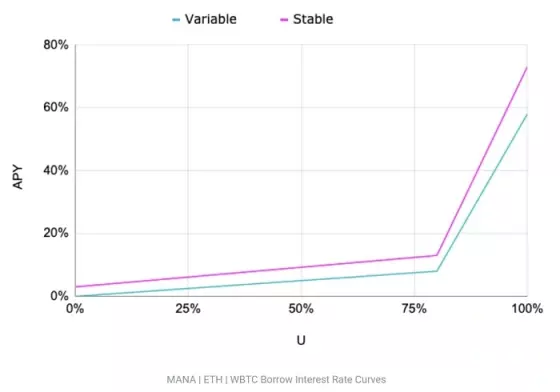
Source: Aave docs

Of course, this strategy is not without risk. In an extreme scenario where there are incredibly high borrowing demand, meaning there is little ETH liquid in Aave, lenders may be temporarily unable to withdraw the asset until borrowers repay or more deposits flood into the protocol.

A second way to use DeFi to express a view on Merge-related events is to use Voltz Protocol, an AMM for interest-rate swaps to bet on the LSD staking yields.

Since returns from staking are likely to increase post-Merge, market participants can use Voltz to express this view by posting ETH as margin and purchase variable rate stETH or rETH tokens (which are issued synthetically). Users can magnify their returns by utilizing leverage, though this of course introduces considerably more risk as it opens them up to the risk of liquidation. Please be careful when using leverage of any kind!

3️. PoW Airdrop Farming

There are billions at stake in the mining industry, and as Lucas wrote earlier this week, it is a near certainty that some PoW instantiation of Ethereum will exist post-Merge. Numerous high-profile industry figures, such as Justin Sun and his exchange, Poloniex, have already pledged to support this hard fork and plan to list the ETHPOW token.

While it is unclear if this chain will have any long-term viability, or how much value ETHPOW will have, users can still put themselves in a position to earn the seemingly inevitable airdrop in multiple different ways.

The simplest way to qualify for this airdrop is to hold ETH in a non-custodial wallet (Metamask, Coinbase Wallet, etc.).

But if you’re looking for higher-risk opportunities, one way is to take the other side of the bet by borrowing ETH on a money market, which can be profitable if the value of the airdrop is greater than the cost of borrowing ETH. This strategy comes with considerable risk though. Not only may borrow rates exceed any earnings from the airdrop, but borrowers also stand to be liquidated should the price of ETH soar, or their collateral fall in value. Given the high likelihood of massive volatility on the day of the Merge, investors will need to proceed very carefully.

Another way investors can farm the airdrop without taking on any price risk is to create a delta-neutral ETH position using perpetual futures. To do this, a user would purchase spot ETH while shorting an equivalent amount of ETH using perps on a CEX or DEX. This way, users are exposed to ETH, so they can earn the airdrop, while not taking on the price risk that comes with holding the asset. This strategy will be profitable if the value of the airdrop exceeds funding (the cost of keeping open a perps position).

However, there is no such thing as a free lunch. This strategy is significantly risky, as funding, like borrow rates may skyrocket with the Merge approaches. Any kind of leveraged strategies like these, coupled with the volatility will put users at outsized risk of being liquidated.

Proceed with caution!

4️. Follow-On Beneficiaries

Finally, a post-Merge Ethereum is poised to have a transformative impact on other sectors of the Ethereum economy.

One of these beneficiaries are Layer-2s (L2), as the transition to PoS will pave the way for scalability upgrades (e.g. EIP-4844) which will dramatically reduce transaction fees for end-users on rollups by decreasing the cost of storing call data on-chain. This fee reduction should serve to catalyze L2 adoption by increasing the number of users that can transact on the network and unlocking the capability to build new, novel dapps.

Investors can (and already have begun) capitalize on this by investing throughout the L2 ecosystem, such as on the L2 base layer (OP), or L2-native DeFi primitives like Synthetix (SNX) and GMX (GMX), or smaller-caps projects native to different ecosystems. Don’t forget about supporting L2 infrastructure like fast-bridging services such as Synapse (SYN) and Hop Protocol (HOP).

Another industry that is set to change after the Merge is MEV. The competitive dynamics of MEV are set to change drastically following the implementation of proposer-builder separation which will separate the production of blocks (deciding what transactions go in one) from the validation of blocks. David eloquently outlined this yesterday in The Ethereum Watershed.

There are numerous projects within the MEV stack with publicly traded tokens that could provide a way to gain exposure to this shift, such as Manifold Finance (FOLD) Rook Protocol (ROOK), and Cow Protocol (COW).

While many of these tokens have run considerably in recent weeks, they are still poised to be long-term beneficiaries of a PoS Ethereum.

Conclusion: Choose Your Own Adventure

The Merge is fast approaching, and promises to bring with it significant changes to the Etheruem economy, as well as shorter-term chaos on-chain.

The safest way to gain exposure is to simply buy ETH.

But this is no longer the 2018 bear market and we live in a DeFi world, so there are numerous other ways in which investors can play the Merge, whether it be through investing/trading in liquid staking protocols and long-term Merge beneficiaries in the L2 and MEV sectors, or by using DeFi to earn yield or farm the ETHPOW airdrop.

Criptos en tendencia

Lecturas Relacionadas

No Sales Team, $20 Million in Revenue: How Did AI Employee Viktor Win Over 30,000 Companies?

The AI employee Viktor, developed by a team with DeepMind background, has achieved $20 million in annual revenue without a traditional sales team, serving over 30,000 companies. Its core innovation lies in positioning itself as a "Tier 3 AI Coworker" capable of "end-to-end execution and delivery of results," moving beyond the "draft and wait for human completion" model of typical AI assistants. Users can simply mention Viktor in Slack or Microsoft Teams using natural language commands, and it autonomously performs tasks like pulling sales data from a CRM, generating reports, or even cross-tool operations like creating board meeting PPTs by aggregating data from six different sources. Key to its growth is a pure Product-Led Growth (PLG) model, eliminating complex implementation cycles and per-seat licensing. Instead, it charges based on task credits or consumption, lowering the trial barrier with a $100 free credit offer and no credit card required. This enabled viral, bottom-up adoption within organizations. Viktor's interaction paradigm removes the barrier of prompt engineering, allowing non-technical employees to delegate complex workflows seamlessly. It also features proactive, automated task execution (e.g., overnight bookkeeping, scheduled reports) based on triggers, effectively embedding AI as an automated "process layer" within business operations. However, its expansion into Microsoft Teams—a platform with 320 million users—highlights challenges. Large enterprises require stringent IT compliance, security reviews (e.g., SOC 2), and governance, potentially hindering the frictionless, user-driven adoption that succeeded in Slack. Additionally, the "black box" nature of its autonomous decision-making raises concerns about operational risks, data integrity, and the need for robust audit logs and permission controls. Balancing efficiency gains with security and trust remains a critical hurdle for Viktor and similar AI agents aiming to become core enterprise infrastructure.

marsbitHace 12 min(s)

No Sales Team, $20 Million in Revenue: How Did AI Employee Viktor Win Over 30,000 Companies?

marsbitHace 12 min(s)

Manus Buyback Plan Emerges: Chinese Investors Plan to Repurchase Equity with $2 Billion, Path to Hong Kong IPO Becomes Clearer

According to a report by The Information, early Chinese investors of Manus, including Tencent, Sequoia Capital China, and ZhenFund, are planning to repurchase the company from Meta for $2 billion—the same price Meta paid in its acquisition last December. This move is a direct response to the Chinese government's prohibition of the foreign acquisition in April. As part of the repurchase plan, Manus is considering establishing a Sino-foreign joint venture within China. This structure is seen as a way to ensure regulatory compliance for its Chinese investors and to pave the way for a future IPO in Hong Kong. Notably, U.S. investor Benchmark will not participate in the buyback, which will concentrate ownership even more among Chinese capital. Since its acquisition by Meta, Manus's business has grown rapidly, with its annualized revenue run rate reportedly increasing four-to-fivefold to $400-$500 million in roughly six months. This strong growth underpins the investors' willingness to repurchase at the original price. Financially, the forced unwinding of the deal may benefit the early investors, allowing them to regain equity at a cost far below the company's current implied valuation, with the added prospect of an independent future listing. However, specific terms of the repurchase, including funding proportions and the joint venture's equity structure, are still under negotiation. This "repurchase-joint venture-Hong Kong IPO" approach could serve as a reference model for other Chinese AI startups navigating cross-border M&A regulations.

marsbitHace 39 min(s)

Manus Buyback Plan Emerges: Chinese Investors Plan to Repurchase Equity with $2 Billion, Path to Hong Kong IPO Becomes Clearer

marsbitHace 39 min(s)

STRC Loses Peg by 11%, Can Strategy's Perpetual Motion Machine Keep Running?

The article discusses the significant and concerning depegging of MicroStrategy's (MSTR) preferred stock, STRC. Designed to trade near its $100 target par value, STRC has recently fallen sharply, reaching a low of $83.26 and closing at $88.59, representing an over 11% discount. STRC is a core component of MicroStrategy's financial strategy. As a perpetual preferred stock, it allows the company to raise capital through an "at-the-market" (ATM) issuance program without diluting common shareholders (MSTR). This capital is primarily used to purchase Bitcoin, creating a "capital flywheel": issuing STRC → raising cash → buying BTC → increasing net assets → supporting STRC's value. The flywheel's operation depends on STRC maintaining its $100 price. To enforce this, MicroStrategy employs a dynamic dividend mechanism, recently raising the rate to 11.5% and increasing payout frequency. However, this has failed to halt the depegging, indicating market concerns extend beyond yield. Analysts cite two main reasons. First, technical factors like forced liquidations from leveraged arbitrage trades may have exacerbated the sell-off. Second, and more fundamentally, is waning confidence in MicroStrategy's financial resilience. A JPMorgan report highlighted the company's limited cash relative to its ~$1.7 billion annual dividend obligation, raising liquidity concerns. While MicroStrategy counters that its massive Bitcoin holdings provide decades of coverage, this argument relies on the potential need to sell BTC—a departure from its long-standing "never sell" narrative. The company's recent sale of a small amount of Bitcoin for "testing," despite being framed as minor, has intensified these fears. The persistent depegging threatens to cripple MicroStrategy's primary funding channel. If STRC remains discounted, the company's ability to fund further Bitcoin purchases weakens. Should cash reserves dwindle while financing is constrained, the market may increasingly price in the risk of MicroStrategy becoming a forced seller of Bitcoin to meet obligations. This shift from a major marginal buyer to a potential seller could pose significant downside risk to the broader Bitcoin market.

链捕手Hace 48 min(s)

STRC Loses Peg by 11%, Can Strategy's Perpetual Motion Machine Keep Running?

链捕手Hace 48 min(s)

Trading

Spot
Futuros

Artículos destacados

Qué es ETH 2.0

ETH 2.0: Una Nueva Era para Ethereum Introducción ETH 2.0, conocido ampliamente como Ethereum 2.0, marca una actualización monumental para la blockchain de Ethereum. Esta transición no es solo una mejora superficial; busca mejorar fundamentalmente la escalabilidad, seguridad y sostenibilidad de la red. Con un cambio del mecanismo de consenso intensivo en energía Prueba de Trabajo (PoW) a una Prueba de Participación (PoS) más eficiente, ETH 2.0 promete un enfoque transformador para el ecosistema blockchain. ¿Qué es ETH 2.0? ETH 2.0 es un conjunto de actualizaciones interconectadas y distintivas centradas en optimizar las capacidades y el rendimiento de Ethereum. La reestructuración está diseñada para abordar desafíos críticos que el mecanismo actual de Ethereum ha enfrentado, particularmente en lo que respecta a la velocidad de transacción y la congestión de la red. Objetivos de ETH 2.0 Los objetivos principales de ETH 2.0 giran en torno a mejorar tres aspectos clave: Escalabilidad: Con el objetivo de aumentar significativamente el número de transacciones que la red puede manejar por segundo, ETH 2.0 busca superar la limitación actual de aproximadamente 15 transacciones por segundo, potencialmente alcanzando miles. Seguridad: Las medidas de seguridad mejoradas son fundamentales para ETH 2.0, particularmente a través de una mejor resistencia contra ciberataques y la preservación del ethos descentralizado de Ethereum. Sostenibilidad: El nuevo mecanismo PoS está diseñado no solo para mejorar la eficiencia, sino también para reducir drásticamente el consumo de energía, alineando el marco operativo de Ethereum con consideraciones ambientales. ¿Quién es el Creador de ETH 2.0? La creación de ETH 2.0 se puede atribuir a la Fundación Ethereum. Esta organización sin fines de lucro, que desempeña un papel crucial en el apoyo al desarrollo de Ethereum, es liderada por el notable cofundador Vitalik Buterin. Su visión de un Ethereum más escalable y sostenible ha sido la fuerza motriz detrás de esta actualización, involucrando contribuciones de una comunidad global de desarrolladores y entusiastas dedicados a mejorar el protocolo. ¿Quiénes son los Inversores de ETH 2.0? Si bien los detalles sobre los inversores de ETH 2.0 no se han hecho públicos, se sabe que la Fundación Ethereum recibe apoyo de varias organizaciones e individuos en el ámbito de blockchain y tecnología. Estos socios incluyen firmas de capital de riesgo, compañías tecnológicas y organizaciones filantrópicas que comparten un interés mutuo en apoyar el desarrollo de tecnologías descentralizadas e infraestructura blockchain. ¿Cómo Funciona ETH 2.0? ETH 2.0 se distingue por introducir una serie de características clave que lo diferencian de su predecesor. Prueba de Participación (PoS) La transición a un mecanismo de consenso PoS es uno de los cambios más destacados de ETH 2.0. A diferencia de PoW, que se basa en la minería intensiva en energía para la verificación de transacciones, PoS permite a los usuarios validar transacciones y crear nuevos bloques de acuerdo con la cantidad de ETH que apuestan en la red. Esto conduce a una mayor eficiencia energética, reduciendo el consumo en aproximadamente un 99.95%, convirtiendo a Ethereum 2.0 en una alternativa considerablemente más verde. Cadenas Shard Las cadenas shard son otra innovación crítica de ETH 2.0. Estas cadenas más pequeñas operan en paralelo con la cadena principal de Ethereum, lo que permite que múltiples transacciones sean procesadas simultáneamente. Este enfoque mejora la capacidad general de la red, abordando las preocupaciones de escalabilidad que han afectado a Ethereum. Cadena Beacon En el núcleo de ETH 2.0 se encuentra la Cadena Beacon, que coordina la red y gestiona el protocolo PoS. Funciona como un organizador de cierta manera: supervisa a los validadores, asegura que los shards permanezcan conectados a la red y monitorea la salud general del ecosistema blockchain. Cronología de ETH 2.0 El viaje de ETH 2.0 ha estado marcado por varios hitos clave que trazan la evolución de esta importante actualización: Diciembre 2020: El lanzamiento de la Cadena Beacon marcó la introducción de PoS, preparándose para la migración hacia ETH 2.0. Septiembre 2022: La finalización de “La Fusión” representa un momento crucial en el que la red Ethereum se trasladó exitosamente de un marco PoW a uno PoS, anunciando una nueva era para Ethereum. 2023: El lanzamiento esperado de cadenas shard tiene como objetivo mejorar aún más la escalabilidad de la red Ethereum, consolidando a ETH 2.0 como una plataforma robusta para aplicaciones y servicios descentralizados. Características Clave y Beneficios Escalabilidad Mejorada Una de las ventajas más significativas de ETH 2.0 es su escalabilidad mejorada. La combinación de PoS y cadenas shard permite que la red expanda su capacidad, permitiendo acomodar un volumen mucho mayor de transacciones en comparación con el sistema heredado. Eficiencia Energética La implementación de PoS representa un gran paso hacia la eficiencia energética en la tecnología blockchain. Al reducir drásticamente el consumo de energía, ETH 2.0 no solo disminuye los costos operativos, sino que también se alinea más estrechamente con los objetivos de sostenibilidad global. Seguridad Mejorada Los mecanismos actualizados de ETH 2.0 contribuyen a mejorar la seguridad en toda la red. El despliegue de PoS, junto con las medidas de control innovadoras establecidas a través de cadenas shard y la Cadena Beacon, asegura un mayor grado de protección contra posibles amenazas. Costos Más Bajos para los Usuarios A medida que la escalabilidad mejora, los efectos sobre los costos de transacción también serán evidentes. Se espera que una mayor capacidad y una menor congestión se traduzcan en tarifas más bajas para los usuarios, haciendo que Ethereum sea más accesible para transacciones cotidianas. Conclusión ETH 2.0 marca una evolución significativa en el ecosistema blockchain de Ethereum. A medida que aborda problemas fundamentales como la escalabilidad, el consumo de energía, la eficiencia en las transacciones y la seguridad general, la importancia de esta actualización no puede ser subestimada. La transición a la Prueba de Participación, la introducción de cadenas shard y el trabajo fundamental de la Cadena Beacon son indicativos de un futuro donde Ethereum puede satisfacer las crecientes demandas del mercado descentralizado. En una industria impulsada por la innovación y el progreso, ETH 2.0 se erige como un testimonio de las capacidades de la tecnología blockchain para allanar el camino hacia una economía digital más sostenible y eficiente.

171 Vistas totalesPublicado en 2024.04.04Actualizado en 2024.12.03

Qué es ETH 2.0

Qué es ETH 3.0

ETH3.0 y $eth 3.0: Un Examen Profundo del Futuro de Ethereum Introducción En el paisaje en rápida evolución de las criptomonedas y la tecnología blockchain, ETH3.0, a menudo denotado como $eth 3.0, ha surgido como un tema de considerable interés y especulación. El término abarca dos conceptos principales que merecen aclaración: Ethereum 3.0: Esto representa una posible actualización futura destinada a aumentar las capacidades de la blockchain existente de Ethereum, enfocándose particularmente en mejorar la escalabilidad y el rendimiento. ETH3.0 Meme Token: Este proyecto de criptomoneda distinto busca aprovechar la blockchain de Ethereum para crear un ecosistema centrado en memes, promoviendo la participación dentro de la comunidad de criptomonedas. Comprender estos aspectos de ETH3.0 es esencial no solo para los entusiastas de las criptomonedas, sino también para aquellos que observan tendencias tecnológicas más amplias en el espacio digital. ¿Qué es ETH3.0? Ethereum 3.0 Ethereum 3.0 se presenta como una actualización propuesta para la red de Ethereum ya establecida, que ha sido la columna vertebral de muchas aplicaciones descentralizadas (dApps) y contratos inteligentes desde su inicio. Las mejoras previstas se concentran principalmente en la escalabilidad, integrando tecnologías avanzadas como sharding y pruebas de conocimiento cero (zk-proofs). Estas innovaciones tecnológicas tienen como objetivo facilitar un número sin precedentes de transacciones por segundo (TPS), potencialmente alcanzando millones, abordando así una de las limitaciones más significativas que enfrenta la tecnología blockchain actual. La mejora no es meramente técnica, sino también estratégica; está destinada a preparar la red de Ethereum para su adopción generalizada y utilidad en un futuro marcado por una mayor demanda de soluciones descentralizadas. ETH3.0 Meme Token En contraste con Ethereum 3.0, el ETH3.0 Meme Token se aventura en un ámbito más ligero y juguetón al combinar la cultura de memes de internet con la dinámica de las criptomonedas. Este proyecto permite a los usuarios comprar, vender e intercambiar memes en la blockchain de Ethereum, proporcionando una plataforma que fomenta la participación comunitaria a través de la creatividad y los intereses compartidos. El ETH3.0 Meme Token tiene como objetivo demostrar cómo la tecnología blockchain puede intersectarse con la cultura digital, creando casos de uso que son tanto entretenidos como financieramente viables. ¿Quién es el Creador de ETH3.0? Ethereum 3.0 La iniciativa hacia Ethereum 3.0 es impulsada principalmente por un consorcio de desarrolladores e investigadores dentro de la comunidad de Ethereum, incluyendo notablemente a Justin Drake. Conocido por sus ideas y contribuciones a la evolución de Ethereum, Drake ha sido una figura prominente en las discusiones sobre la transición de Ethereum a una nueva capa de consenso, denominada “Beam Chain.” Este enfoque colaborativo para el desarrollo significa que Ethereum 3.0 no es el producto de un creador singular, sino más bien una manifestación de ingenio colectivo centrado en avanzar la tecnología blockchain. ETH3.0 Meme Token Los detalles sobre el creador del ETH3.0 Meme Token son actualmente inidentificables. La naturaleza de los tokens de memes a menudo conduce a una estructura más descentralizada y dirigida por la comunidad, lo que podría explicar la falta de atribución específica. Esto se alinea con la ética de la comunidad cripto más amplia, donde la innovación a menudo surge de esfuerzos colaborativos en lugar de individuales. ¿Quiénes son los Inversores de ETH3.0? Ethereum 3.0 El apoyo a Ethereum 3.0 proviene principalmente de la Fundación Ethereum junto con una entusiasta comunidad de desarrolladores e inversores. Esta asociación fundamental proporciona un grado significativo de legitimidad y mejora la perspectiva de una implementación exitosa, ya que aprovecha la confianza y credibilidad construidas a lo largo de años de operaciones en la red. En el clima cambiando rápidamente de las criptomonedas, el apoyo de la comunidad juega un papel crucial en impulsar el desarrollo y la adopción, posicionando a Ethereum 3.0 como un contendiente serio para futuros avances en blockchain. ETH3.0 Meme Token Si bien las fuentes actualmente disponibles no proporcionan información explícita sobre las fundaciones o organizaciones de inversión que respaldan el ETH3.0 Meme Token, es indicativo del modelo de financiamiento típico para tokens de memes, que a menudo depende del apoyo de base y la participación comunitaria. Los inversores en tales proyectos suelen consistir en individuos motivados por el potencial de innovación impulsada por la comunidad y el espíritu de cooperación que se encuentra dentro de la comunidad cripto. ¿Cómo Funciona ETH3.0? Ethereum 3.0 Las características distintivas de Ethereum 3.0 radican en su implementación propuesta de sharding y tecnología zk-proof. Sharding es un método de particionamiento de la blockchain en piezas más pequeñas y manejables o “shards,” que pueden procesar transacciones de manera concurrente en lugar de secuencial. Esta descentralización del procesamiento ayuda a prevenir la congestión y asegura que la red permanezca receptiva incluso bajo una carga pesada. La tecnología de prueba de conocimiento cero (zk-proof) contribuye con otra capa de sofisticación al permitir la validación de transacciones sin revelar los datos subyacentes involucrados. Este aspecto no solo mejora la privacidad, sino que también aumenta la eficiencia general de la red. También se habla de incorporar una Máquina Virtual de Ethereum de conocimiento cero (zkEVM) en esta actualización, amplificando aún más las capacidades y utilidad de la red. ETH3.0 Meme Token El ETH3.0 Meme Token se distingue al capitalizar la popularidad de la cultura de memes. Establece un mercado para que los usuarios participen en el comercio de memes, no solo por entretenimiento sino también por el posible beneficio económico. Al integrar características como staking, provisión de liquidez y mecanismos de gobernanza, el proyecto fomenta un entorno que incentiva la interacción y participación de la comunidad. Al ofrecer una mezcla única de entretenimiento y oportunidad económica, el ETH3.0 Meme Token tiene como objetivo atraer a una audiencia diversa, que abarca desde entusiastas de las criptomonedas hasta conocedores casuales de memes. Línea de Tiempo de ETH3.0 Ethereum 3.0 11 de noviembre de 2024: Justin Drake insinúa la próxima actualización de ETH 3.0, centrada en mejoras de escalabilidad. Este anuncio significa el comienzo de las discusiones formales sobre la futura arquitectura de Ethereum. 12 de noviembre de 2024: Se espera que la propuesta anticipada para Ethereum 3.0 se desvele en Devcon en Bangkok, preparando el escenario para una mayor retroalimentación de la comunidad y posibles próximos pasos en el desarrollo. ETH3.0 Meme Token 21 de marzo de 2024: El ETH3.0 Meme Token se lista oficialmente en CoinMarketCap, marcando su incursión en el dominio público de las criptomonedas y mejorando la visibilidad de su ecosistema basado en memes. Puntos Clave En conclusión, Ethereum 3.0 representa una evolución significativa dentro de la red de Ethereum, enfocándose en superar las limitaciones en términos de escalabilidad y rendimiento a través de tecnologías avanzadas. Sus actualizaciones propuestas reflejan un enfoque proactivo hacia las demandas y la usabilidad futura. Por otro lado, el ETH3.0 Meme Token encapsula la esencia de la cultura impulsada por la comunidad en el espacio de las criptomonedas, aprovechando la cultura de memes para crear plataformas atractivas que fomentan la creatividad y participación del usuario. Comprender los distintos propósitos y funcionalidades de ETH3.0 y $eth 3.0 es fundamental para cualquiera interesado en los desarrollos en curso dentro del espacio cripto. Con ambas iniciativas abriendo caminos únicos, subrayan colectivamente la naturaleza dinámica y multifacética de la innovación en blockchain.

185 Vistas totalesPublicado en 2024.04.04Actualizado en 2024.12.03

Qué es ETH 3.0

Cómo comprar ETH

¡Bienvenido a HTX.com! Hemos hecho que comprar Ethereum (ETH) sea simple y conveniente. Sigue nuestra guía paso a paso para iniciar tu viaje de criptos.Paso 1: crea tu cuenta HTXUtiliza tu correo electrónico o número de teléfono para registrarte y obtener una cuenta gratuita en HTX. Experimenta un proceso de registro sin complicaciones y desbloquea todas las funciones.Obtener mi cuentaPaso 2: ve a Comprar cripto y elige tu método de pagoTarjeta de crédito/débito: usa tu Visa o Mastercard para comprar Ethereum (ETH) al instante.Saldo: utiliza fondos del saldo de tu cuenta HTX para tradear sin problemas.Terceros: hemos agregado métodos de pago populares como Google Pay y Apple Pay para mejorar la comodidad.P2P: tradear directamente con otros usuarios en HTX.Over-the-Counter (OTC): ofrecemos servicios personalizados y tipos de cambio competitivos para los traders.Paso 3: guarda tu Ethereum (ETH)Después de comprar tu Ethereum (ETH), guárdalo en tu cuenta HTX. Alternativamente, puedes enviarlo a otro lugar mediante transferencia blockchain o utilizarlo para tradear otras criptomonedas.Paso 4: tradear Ethereum (ETH)Tradear fácilmente con Ethereum (ETH) en HTX's mercado spot. Simplemente accede a tu cuenta, selecciona tu par de trading, ejecuta tus trades y monitorea en tiempo real. Ofrecemos una experiencia fácil de usar tanto para principiantes como para traders experimentados.

4.2k Vistas totalesPublicado en 2024.12.10Actualizado en 2026.06.02

Cómo comprar ETH

Discusiones

Bienvenido a la comunidad de HTX. Aquí puedes mantenerte informado sobre los últimos desarrollos de la plataforma y acceder a análisis profesionales del mercado. A continuación se presentan las opiniones de los usuarios sobre el precio de ETH (ETH).

活动图片