Strike CEO forced out after JPMorgan raises ‘fraudulent activities’ concern

ambcryptoPublicado a 2025-11-25Actualizado a 2025-11-25

Key Takeaways 

What triggered the latest crypto debanking controversy?

Strike CEO revealed that JPMorgan Chase blocked his account and restricted customer deposits into Strike. 

How did the community react? 

The community slammed JPMorgan. But the bank had not issued any statement on the issue as of the time of writing. 


Crypto debanking is back in the headlines, this time throwing JPMorgan Chase under scrutiny.  

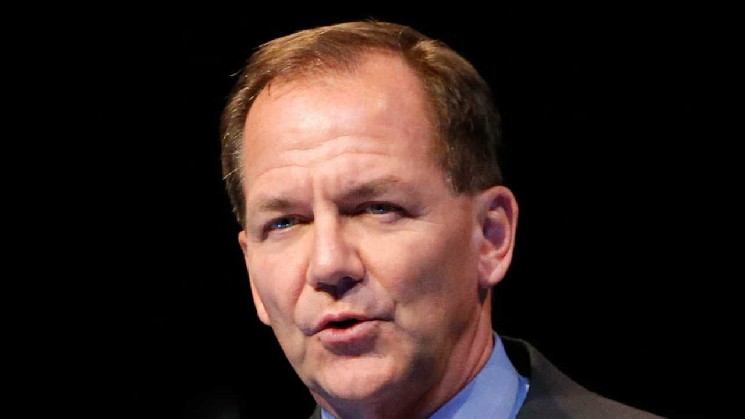
Jack Mallers, CEO of Strike, a U.S.-based Bitcoin [BTC]-focused payment platform, decried that JPMorgan kicked him out of the bank. 

He added that the bank blocked some customers from depositing with Strike, claiming that the firm was involved in “known fraudulent activities.”

JPMorganJPMorgan

Source: X

Senator Lummis slams JPMorgan

Reacting to the alleged banking restriction, pro-Bitcoin Senator Cynthia Lummis slammed JPMorgan’s actions. She warned that such debanking would push digital assets overseas and added

“Operation Chokepoint 2.0 regrettably lives on. It’s past time we put it to rest to make America the digital asset capital of the world.”

The systematic and targeted crypto debanking was widespread during the Biden era, a phenomenon the industry dubbed “Chokepoint 2.0.” 

Many U.S. banks viewed crypto firms and investors as reputational risks due to the prevailing political climate and regulatory pressure at the time. 

When the tides shifted after the pro-crypto Trump administration took office in 2025, a formal inquiry was quickly established to address the issue.

By August, President Donald Trump signed an executive order advocating for fair banking to remedy the situation. The Fed and other regulators were ordered to remove “reputational risk” and others as part of the solution. 

The White House, at that time, added that the digital assets industry has been the target of “unfair debanking initiatives.” 

Unfortunately, three months after the order, the same issue is surfacing again.

Divided opinions on crypto risks

Supporters of the JPMorgan move, such as Steve Hanke, claimed that $28 billion has been laundered by criminal rings through cryptocurrency since 2024.  

However, John Deaton, a former U.S. Senate aspirant, clapped back, noting that JPMorgan has paid $40 billion in fines for illicit activity since 2000. He added, 

“Since 2000 JPMorgan alone has paid $40 billion in fines for illicit activity – significantly less than the total fined all crypto companies.”

Interestingly, in August, even President Trump claimed that JPMorgan and Bank of America rejected his deposits. According to him, this supported his belief that the debanking was due to politics. 

That being said, it remains to be seen whether the friction between the crypto industry and banks will be fully resolved.


Share

Lecturas Relacionadas

Programmers Worldwide Are Wasting Money on Anthropic! The Company Can't Stand It Anymore

Anthropic recently published guidelines to help developers using Claude Code reduce unnecessary token costs. The key recommendations include: 1) Clear (/clear) conversations after completing a task to avoid carrying irrelevant file reads and command outputs into the next task. 2) Set the model and reasoning effort level at the start of a session, as switching mid-session invalidates the prompt cache, requiring a full-price recalculation of the entire dialog history. 3) Attach files using @ references instead of typing paths manually to avoid extra tool calls and searches that bloat the context. 4) Add quiet flags to verbose commands (e.g., in CLAUDE.md) to minimize lengthy output in the dialog history. 5) Use /compact while the session cache is still warm (before breaks) to compress the dialog at one-tenth the cost. 6) Offload large-output tasks to a sub-agent, which runs in an isolated context and only returns conclusions, preventing intermediate outputs from polluting the main dialog. The article explains token pricing: input tokens (prefill) are processed in parallel, while output tokens (decode) are generated serially, making output tokens five times more expensive. Caching is crucial for savings—if a request's prefix (system prompt, CLAUDE.md, dialog history) matches the previous one byte-for-byte, reading it costs only 10% of the standard input price. However, cache invalidation occurs when changing models, effort levels, fast mode, compressing dialogs, after cache expiration, or when resuming old sessions. Dialog history also grows quadratically (O(n²)) as file contents and command outputs accumulate, increasing costs per round. Proactive context management—like isolating noisy tasks, using /rewind to trim unproductive turns, and task-based session clearing—is becoming an essential skill for cost-effective AI-assisted development.

marsbitHace 1 hora(s)

Programmers Worldwide Are Wasting Money on Anthropic! The Company Can't Stand It Anymore

marsbitHace 1 hora(s)

Pax Silica vs. WAICO: The US Wants to Prohibit Europe from Using Chinese Artificial Intelligence

The United States is preparing to demand that European and other partners abandon Chinese artificial intelligence initiatives, threatening exclusion from the American-led "Pax Silica" coalition, according to a leaked U.S. State Department document. This ultimatum forces signatories of the "AI Opportunity Statement" to choose between the Western technological ecosystem and alternative frameworks, with China not explicitly named but clearly targeted. Pax Silica is a U.S. strategy for AI and semiconductor hegemony, launched in late 2025. Its European presence expanded significantly in mid-2026. Concurrently, China, Russia, and 27 other nations established the World AI Cooperation Organization (WAICO) in July 2026 as an independent intergovernmental platform promoting AI governance based on UN principles. This situation creates a difficult choice, especially for European nations balancing strategic autonomy with dependence on U.S. tech and security. It also pressures Global South countries with pragmatic ties to both Washington and Beijing. The formation of competing blocks risks fragmenting the global tech landscape, forcing companies to split supply chains, increasing costs, and potentially leading to incompatible standards and protocols. The era of open globalization in AI may be ending, replaced by geopolitical confrontation where technological sovereignty trumps economic efficiency. The decisions made will shape the global digital economy for decades.

cryptonews.ruHace 3 hora(s)

Pax Silica vs. WAICO: The US Wants to Prohibit Europe from Using Chinese Artificial Intelligence

cryptonews.ruHace 3 hora(s)

Robert Kiyosaki Shares His Mentor's Predictions About the Emergence of Bitcoin and AI

American entrepreneur and author of "Rich Dad Poor Dad," Robert Kiyosaki, discussed the influence of futurist R. Buckminster Fuller on his worldview, linking Fuller's past technological predictions to the emergence of Bitcoin and the development of artificial intelligence. In an X post, Kiyosaki also reflected on personal purpose, sharing his journey from the music business—where he worked with bands like The Police and Iron Maiden—to creating the "Cashflow" board game and writing his famous book. He described feeling an inner emptiness despite his success, a turning point that came after meeting Fuller, whom he studied with for three summers. Kiyosaki described Fuller as a "friendly genius" who foresaw world-changing developments like Bitcoin and AI. However, the core of his post focused on Fuller's philosophical impact, particularly a quote about belonging to the universe and finding purpose by dedicating one's life to the maximum benefit of others. The entrepreneur remains a vocal advocate for cryptocurrencies. He regularly advises buying Bitcoin during market panics, viewing it and assets like Ethereum, gold, and silver as hedges against traditional financial system failures. Kiyosaki has predicted a major market crash by 2026, seeing it as an opportunity for prepared investors, with long-term price targets including $750,000 for Bitcoin and $95,000 for Ethereum.

cryptonews.ruHace 5 hora(s)

Robert Kiyosaki Shares His Mentor's Predictions About the Emergence of Bitcoin and AI

cryptonews.ruHace 5 hora(s)

Etherealize CEO Calls Wall Street's Private Blockchains a 'Race to the Bottom'

Etherealize co-founder and CEO Vivek Raman criticized Wall Street's growing interest in private, permissioned blockchains, calling them a "race to the bottom." In an interview with CoinDesk, Raman argued that consortium networks fragment liquidity and return the industry to the siloed systems that blockchain technology was meant to overcome. He stated that closed networks do not interoperate, undermining two key advantages of the technology: system compatibility and liquidity concentration. Etherealize promotes Ethereum as an open, foundational layer for institutional players. Raman insists that privacy and access restrictions should be built on top of public infrastructure—at the application or L2 level—rather than creating separate, closed networks. He compared Ethereum to HTTP as a base layer, with additional permissioned and private layers akin to HTTPS. Examples of this new wave of "closed" solutions mentioned include Canton Network from Digital Asset, Circle's Arc project, and Stripe's Tempo. Raman termed this trend "consortium chains 2.0," recalling earlier initiatives like the R3 interbank consortium and the Hyperledger corporate ecosystem from 2016 that failed to gain significant traction. He reiterated his firm belief that a global, open, permissionless infrastructure is necessary as a foundational base layer. Raman previously noted in June that traditional financial institutions had begun implementing Ethereum-based solutions into real business processes.

cryptonews.ruHace 5 hora(s)

Etherealize CEO Calls Wall Street's Private Blockchains a 'Race to the Bottom'

cryptonews.ruHace 5 hora(s)

Trading

Spot
活动图片