Paxos Labs запустила кроссчейн-стейблкоин USDG0

cryptonews.ruPublicado a 2025-03-19Actualizado a 2025-11-20

Paxos Labs выпустила USDG0, мультичейн-расширение своего регулируемого стейблкоина USDG, которое обеспечивает полностью обеспеченную долларовую ликвидность для Hyperliquid, Plume и Aptos с использованием стандарта OFT от LayerZero.

Согласно публикации Paxos Labs в X во вторник, USDG0 расширяет функциональность Global Dollar (USDG) — стейблкоина с долларовым обеспечением 1:1, эмитируемого Paxos и управляемого Global Dollar Network, на новые блокчейны без создания отдельных версий.

Благодаря стандарту OFT от LayerZero, USDG0 может перемещаться между блокчейнами как единый нативный актив при сохранении тех же регуляторных защит и обеспечения, что и USDG в Ethereum, Solana, Ink и X Layer.
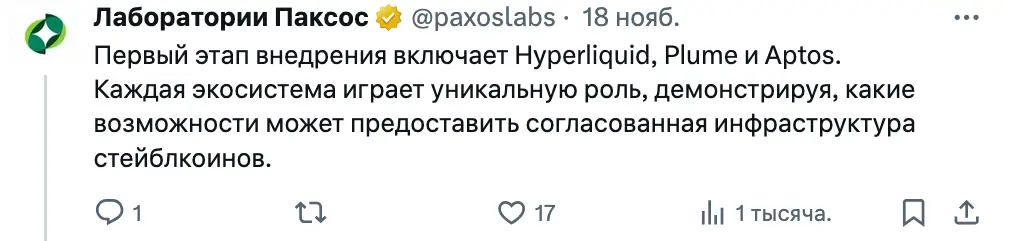

Источник: Paxos Labs.

В Paxos Labs отметили, что первоначальный запуск демонстрирует возможности подключения разных сетей к экономике стейблкоина. В Hyperliquid USDG0 будет поддерживать торговлю с доходностью и новые кредитные рынки, в то время как Plume и Aptos планируют использовать его для модульных DeFi, токенизированных доходов и корпоративных платежных систем на основе стейблкоинов.

Во всех трех экосистемах USDG0 позволит приложениям встраивать долларовую ликвидность в свои продукты, получать доходность, привязанную к казначейским эталонам, и передавать стоимость между блокчейнами без использования традиционных мостов.

Компания подчеркнула, что эта инициатива показывает, «как регулируемая инфраструктура сочетается с композабельностью DeFi и как доверенные деньги становятся по-настоящему безграничными».

С 2018 года Paxos обработала более $180 млрд операций по токенизации под надзором глобальных регуляторов. Компания управляет тремя регулируемыми стейблкоинами с долларовым обеспечением: Pax Dollar (USDP), PayPal USD (PYUSD) и Global Dollar (USDG).

Стейблкоины по всему миру

Регуляторная ясность в Соединенных Штатах в соответствии с законом GENIUS и в Европе через регуляторные рамки MiCA способствовала росту использования стейблкоинов. Согласно данным DefiLlama, рыночная капитализация стейблкоинов составляет $303,44 млрд, увеличившись почти на $100 млрд с начала года.

Хотя рынок стейблкоинов продолжает доминировать Tether (USDT) и USD-Coin (USDC) от Circle, несколько новых участников вышли на рынок в этом году из разных стран.
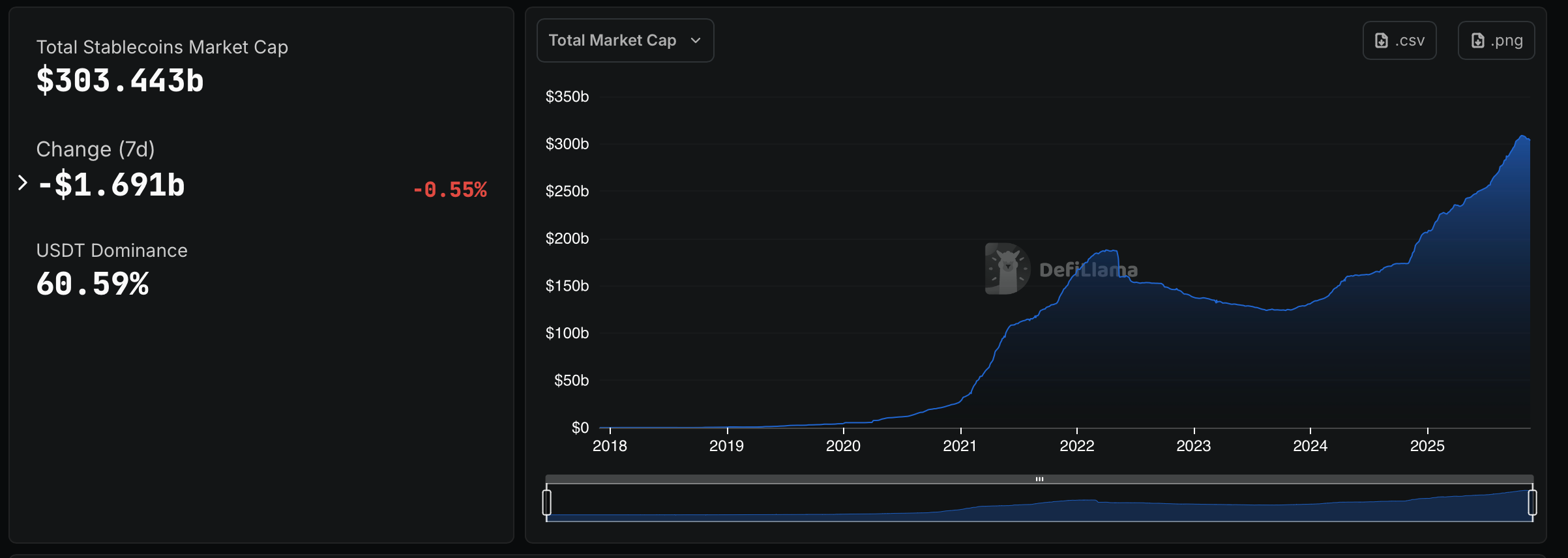

Рыночная капитализация стейблкоинов. Источник: Defillama

В октябре Western Union анонсировала планы по запуску USDPT, стейблкоина, привязанного к доллару США, эмитируемого Anchorage Digital Bank на блокчейне Solana (SOL). Токен предназначен для объединения цифровых и фиатных платежных систем компании и поддержки ее глобальных денежных переводов и казначейских операций.

В том же месяце JPYC, токийская финтех-компания, запустила первый в Японии стейблкоин с иеновым обеспечением — токен с привязкой 1:1 к иене, обеспечиваемый банковскими депозитами и государственными облигациями.

Также в октябре франко-германская банковская группа ODDO BHF запустила стейблкоин, привязанный к евро, в соответствии с регламентом Европейского союза «Рынки криптовалютных активов» (MiCA).

В сентябре европейский консорциум из девяти банков сообщил о планах запуска стейблкоина, привязанного к евро, для конкуренции с растущими стейблкоинами с долларовым обеспечением. Ожидается, что стейблкоин будет запущен во второй половине 2026 года.
Lecturas Relacionadas

South Korean Institutions' Crypto Race: Dual Explosion of Stablecoins and RWA

**Summary: South Korea's Institutional Crypto Race: Stablecoins and RWA Take Off** South Korea is undergoing a structural shift in its crypto ecosystem, moving beyond its historical role as a major retail trading hub. Major financial institutions and internet platforms are now building institutional-grade blockchain infrastructure, with stablecoins and Real-World Asset (RWA) tokenization as the primary drivers. The push for a regulated Korean won stablecoin market is a major policy and corporate focus. This is driven partly by an estimated $115 billion outflow into dollar stablecoins like USDC, threatening the domestic financial system. Banks (e.g., KB Financial, Hana), payment giants (e.g., Shinhan Card, BC Card), and internet super-apps (KakaoPay, NAVER Pay) are all conducting pilots. The goal is to anchor future digital finance to the Korean won and local regulations. In RWA, South Korea is advancing rapidly within regulatory sandboxes, focusing on unique domestic assets beyond typical global templates like US Treasuries. Projects involve tokenizing ships (with Hyundai Heavy Industries), defense supply chain assets, and K-pop intellectual property, alongside more conventional assets. A legal framework is set for 2027, and platforms like NXT are preparing for regulated trading. Key opportunities for crypto-native projects lie in providing the underlying technology these traditional institutions lack: global distribution channels for tokenized assets, cross-chain liquidity solutions, and enabling infrastructure tools (e.g., for asset packaging and management). Partnerships, such as Solana with Shinhan Card or LayerZero with the Korea Gold Exchange, exemplify this proactive approach. Crucially, user access is being shaped by consumer platforms. NAVER's planned acquisition of Upbit's operator Dunamu and Kakao's development of a unified wallet aim to seamlessly integrate crypto with everyday payments for tens of millions of users. The race is now about which protocols and projects will become the foundational standards as regulation solidifies and institutional adoption accelerates.

Foresight NewsHace 1 hora(s)

South Korean Institutions' Crypto Race: Dual Explosion of Stablecoins and RWA

Foresight NewsHace 1 hora(s)

How to Detect AI-Generated Videos? A Review of Dynamic, Traceable, and Explainable Detection Systems

**How to Detect AI-Generated Videos: A Survey on Dynamic, Traceable, and Explainable Detection Systems** With rapid advances in AI video generation (e.g., Sora, Veo), creating highly realistic, multi-minute videos is now possible, widening the gap with detection research. Current AI video detection, often limited to unreliable binary classifications, is insufficient. This survey, accepted at ACL 2026, reframes the goal as **"factual fidelity verification"**—checking if a video's content (who, when, where, what) aligns with the real world perceptually and cognitively. It categorizes AI-generated videos into three paradigms: **Local Manipulation Videos (LMV**, e.g., face swaps), **Audio-Visual Editing (AVE**, e.g., lip-syncing), and **Generative Video Synthesis (GVS**, fully synthetic videos like Sora's). Detection challenges evolve from visual artifacts in LMV to multi-modal inconsistencies in AVE and higher-level world knowledge violations in GVS. The core proposal is a **Vision-Language Dual-View framework** with four hierarchical layers: 1. **Layer 1 (Intrinsic Visual Cues):** Analyzes low-level signal statistics, noise patterns, and physiological signals. 2. **Layer 2 (Spatiotemporal Consistency):** Checks for temporal coherence in object motion and scene dynamics. 3. **Layer 3 (Cross-Modal Consistency):** Verifies alignment between video, audio, and text within the video. 4. **Layer 4 (Language-Guided World-Level Reasoning):** Uses external knowledge, facts, and physical laws to judge semantic plausibility and factual correctness. The survey traces a shift in detection focus from lower layers (1 & 2) toward higher, language-involved layers (3 & 4). It also reviews evolving evaluation metrics and datasets tailored for each video paradigm. The conclusion advocates for a **dynamic, evidence-first detection system** that moves beyond simple classification. Future trustworthy detection requires combining visual evidence (from CV) with semantic reasoning and explanation (from NLP & multimodal AI), ultimately creating traceable and explainable judgments about a video's adherence to real-world constraints.

marsbitHace 1 hora(s)

How to Detect AI-Generated Videos? A Review of Dynamic, Traceable, and Explainable Detection Systems

marsbitHace 1 hora(s)

Trading

Spot
活动图片