Санкции, блокировки и стейблкоины: Дмитрий Мачихин о будущем криптокомплаенса в РФ

cryptonews.ruPublicado a 2025-04-09Actualizado a 2025-11-10

Почему биржи и обменники все чаще блокируют криптовалюту российских пользователей и как санкции изменили правила игры? В эксклюзивном интервью для BeInCrypto CEO компании BitOK и эксперт «Цифком» Дмитрий Мачихин объяснил, чего ждать трейдерам и майнерам.

Индустрия цифровых активов в России проходит через сложный этап трансформации.

С одной стороны — растущий интерес пользователей и бизнеса, с другой — усиливающееся регуляторное давление и санкционные ограничения. Все чаще майнеры, трейдеры и обычные держатели криптовалют сталкиваются с блокировкой своих средств на торговых площадках. Причины не всегда очевидны, а перспективы туманны.

Чтобы прояснить ситуацию, управляющий редактор BeInCrypto Илья Ткаченко поговорил с Дмитрием Мачихиным, CEO компании BitOK и экспертом «Цифком». В рамках конференции «Цифком 2025» Дмитрий рассказал, как развивается российский рынок цифрового комплаенса, почему даже «чистая» криптовалюта может попасть под блокировку и какую роль в будущем сыграют стейблкоины.

Цифровой комплаенс в условиях изоляции

Первый вопрос коснулся развития индустрии цифрового комплаенса — процедур по борьбе с отмыванием денег (AML) и проверке клиентов (KYC) — в России. По словам Дмитрия Мачихина, эта сфера уже сформировалась, но носит локальный характер из-за политической обстановки.

«Весь мир транслирует, что площадки „Made in Russia“ — это плохо. Санкции наложим и так далее. С другой стороны, полно компаний в России, имеющих выход на международные рынки. Возникает двойственность: какими системами пользоваться?» — отмечает эксперт.

Таким образом, на рынке сложилась уникальная ситуация. Компании, работающие исключительно внутри страны, нуждаются в «суверенной» российской разметке данных. Однако бизнес, который взаимодействует с зарубежными партнерами, обязан использовать международные инструменты и получать полный спектр данных, чтобы соответствовать глобальным стандартам.

Основой для российского криптокомплаенса стала методология, разработанная Евразийской группой по противодействию легализации преступных доходов и финансированию терроризма (ЕАГ). Эта структура выступает локальным аналогом Группы разработки финансовых мер борьбы с отмыванием денег (FATF). Однако, по признанию Мачихина, российская система пока значительно уступает европейским аналогам, таким как регламент MiCA.

Почему биржи блокируют вашу криптовалюту

Илья Ткаченко затронул одну из самых болезненных тем для российских пользователей: участившиеся случаи блокировки средств на биржах и в обменниках. Часто под ограничения попадают активы, происхождение которых владельцам кажется абсолютно прозрачным, например, полученные от майнинга.

Дмитрий Мачихин объясняет, что проблема не в политической позиции самих площадок, а в их экономических интересах. Большинство российских сервисов зависят от ликвидности западных бирж, и они не готовы рисковать своим бизнесом.

«Речь не о политической позиции. В теме AML/KYC политическая позиция мешает. У нас получается, этот биткоин — иранский, он плохой. Этот — американский, он хороший. Так как так? Так быть не должно, но есть как есть», — подчеркивает Мачихин.

Игроки рынка — биржи и обменники — вынуждены играть по правилам, которые диктует глобальная финансовая система. Они не могут повлиять на ситуацию, поэтому предпочитают перестраховываться и блокировать любые сомнительные, с их точки зрения, активы. По мнению эксперта, в ближайшее время послаблений в этой сфере ждать не стоит. Напротив, проблемы будут лишь усугубляться, пока не появятся более четкие и понятные регламенты.

Будущее регулирования: битва CBDC и стейблкоинов

Несмотря на текущие сложности, индустрия продолжает развиваться. Регуляторы по всему миру пытаются угнаться за технологиями. Например, в США недавно заявили о планах взять под контроль децентрализованные биржи (DEX).

По мнению Дмитрия Мачихина, главный тренд ближайших лет — это усиление роли стейблкоинов и их последующее регулирование. Он видит в них более жизнеспособную альтернативу цифровым валютам центральных банков (CBDC).

«CBDC — это отличник. А у него есть такой брат-хулиган, брат-троечник. Это стейблкоин. И я ставлю на брата-троечника. Мне кажется, что регуляторы будут стремиться максимально оседлать тему стейблкоинов, что и сейчас происходит», — делится прогнозом эксперт.

Мачихин также отметил «сверхтренд» на создание локальных стейблкоинов. По его словам, многие финансовые процессы постепенно переезжают на рельсы «стабильных монет». Это приводит к тому, что доминирование гиганта вроде Tether (USDT) постепенно размывается, хотя он и сохранит свои позиции.

На вопрос о доверии к новым, небольшим стейблкоинам, эксперт ответил философски: сегодняшний небольшой игрок завтра может стать лидером рынка. Главное — это развитие и движение вперед, ведь «дорогу осилит идущий». Диалог между криптоиндустрией и регуляторами, начавшийся на таких площадках, как «Цифком», — важный шаг на этом пути.


Lecturas Relacionadas

Mysterious "Ox Alpha" Large Model Goes Viral with Limited-Time Free Access

A mysterious anonymous AI model named "Ox Alpha," nicknamed "Cow is Coming" by Chinese netizens, has appeared on OpenRouter, sparking widespread speculation. The model offers a 1 million token context, supports text, image, and video inputs, can call tools, and is currently free. Its standout feature is strong coding ability. Initial tests on the DeepSWE benchmark, which evaluates real-world software engineering tasks, showed an 80% pass rate on a subset of tasks, reportedly nearing top-tier code models. However, follow-up tests yielded a 63% score, with variations attributed to different task sets and configurations. The model's true developer is a major topic of debate. The prevailing theory points to Zhipu AI's unreleased GLM-5.3 Flash or its multimodal variant. Evidence cited includes identical visual token consumption patterns with GLM-5V-Turbo for videos, a consistent offset in text token counts compared to GLM-5.3, and similar behavioral traits like refusing audio processing. Zhipu has a precedent of anonymous testing. Simultaneously, another anonymous model, "korrine," appeared on Code Arena, with guesses ranging from Moonshot's Kimi K3.1 to models from Qwen or MiMo, adding to the industry's guessing game. This trend of anonymous "undercover" testing allows for unbiased performance evaluation in platforms like Arena and provides real-world, high-pressure testing through tools like OpenRouter before official release. It also serves as an effective marketing tactic, prolonging discussion through suspense. If Ox Alpha is indeed a "Flash" model, its performance raises expectations for the full-scale version's potential.

marsbitHace 4 hora(s)

Mysterious "Ox Alpha" Large Model Goes Viral with Limited-Time Free Access

marsbitHace 4 hora(s)

Breaking News: DeepSeek Announces All-Day Off-Peak Pricing on Weekends, Making Weekend Work More Cost-Effective?

DeepSeek has announced a significant change to its API pricing model, effective August 23. The new policy removes peak/off-peak distinctions on weekends (Saturdays and Sundays), charging the lower off-peak rate for the entire two-day period. This adjustment has sparked mixed reactions within the developer and professional communities. For developers and businesses heavily reliant on DeepSeek's V4-Flash and V4-Pro APIs, this is welcome news. It allows them to schedule bulk processing tasks on weekends without the higher peak-hour costs, potentially halving their API bills for such workloads. Some users have celebrated the move for making weekend work more cost-effective. However, the announcement has also raised concerns among employees. There is apprehension that companies, particularly in cost-sensitive sectors like AI-powered short drama production, might reorganize work schedules to align with these new cost incentives. Instances are already emerging where teams schedule high-token tasks during cheaper nighttime hours or adjust staff shifts. This has led to worries about a potential shift towards weekend workdays and weekday time-off, prioritizing cost savings over traditional work-life balance. Debate has ensued regarding the practicality of such schedule changes, with questions about increased communication overhead and overall efficiency. Speculation about DeepSeek's motives for the change includes theories that peak pricing correlates with internal model training schedules, though others counter that training is largely automated. The new pricing structure is now in effect, prompting users to reconsider their task scheduling strategies.

marsbitHace 5 hora(s)

Breaking News: DeepSeek Announces All-Day Off-Peak Pricing on Weekends, Making Weekend Work More Cost-Effective?

marsbitHace 5 hora(s)

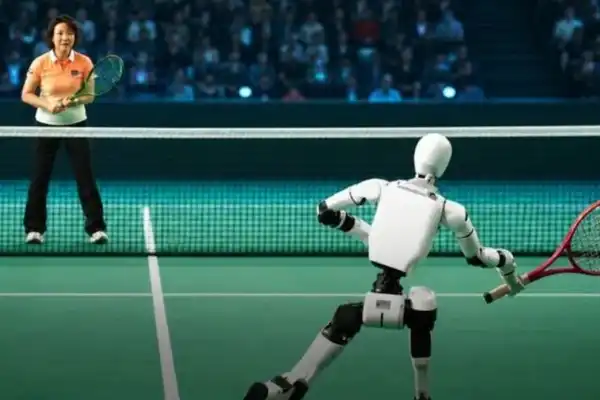
Just Now, The World's First Human vs. Robot Tennis Match Begins, Robot's Desperate Save Leaves Zheng Jie Astonished

Just now, the world's first human vs. robot tennis match began, featuring stunning robotic saves that left tennis star Zheng Jie in awe. This historic event, part of the second World Humanoid Robot Games and broadcast live globally by China Media Group, marked a pivotal moment in Chinese technological innovation and embodied artificial intelligence. The match featured both mixed human-robot doubles and a groundbreaking singles match between Zheng Jie and the "Galaxy Xingzai" humanoid robot developed by Galaxy General. The robot demonstrated impressive skills including serving, forehands, backhands, and strategic court movement, with serves exceeding 100 km/h. It exhibited remarkable adaptability, recovering from a fall to continue play and handling slices and spins. The doubles match highlighted its ability to coordinate dynamically with a human partner. The event's significance extends far beyond a novelty match. Tennis represents an ultimate pressure test for embodied AI, demanding real-time integration of perception, decision-making, full-body motion control, and live博弈 within fractions of a second—a stark contrast to the discrete, contemplative environment of board games like Go mastered by AlphaGo. It directly confronts Moravec's paradox, showcasing AI's move from digital cognition to physical execution. This capability is powered by Galaxy General's proprietary "Galaxy Star Brain" (AstraBrain) model. Its key innovation is a unified architecture that integrates high-level task understanding/tactical decision-making ("brain") and dynamic whole-body motion control ("cerebellum") into a single model, eliminating latency and information loss between separate modules. The model was trained using a two-step process via the "Galaxy Star Workshop" platform. First, it learned foundational movement priors from "imperfect" human motion data (both amateur and professional). Second, it underwent massive-scale evolution in a virtual tennis simulator where multiple AI agents played millions of games against each other. Through this adversarial training, skills like极限救球and recovery from falls emerged autonomously without explicit programming, before being transferred to the physical robot. This "AstraTennis" moment symbolizes a major leap: a decade after AlphaGo conquered the digital world, embodied AI from China has now demonstrated it can operate under the extreme, unpredictable physical pressures of real-world competition.

marsbitHace 5 hora(s)

Just Now, The World's First Human vs. Robot Tennis Match Begins, Robot's Desperate Save Leaves Zheng Jie Astonished

marsbitHace 5 hora(s)

Trading

Spot
活动图片