EOS token plunges 10% amid sell-offs – Why THIS support is key!

ambcryptoPublicado a 2025-10-30Actualizado a 2025-10-30

Key Takeaways

Why was the EOS token rebranded?

The EOS Network was making a bold leap into Web3 banking, and presented as an evolution of EOS bridging decentralized and traditional finance.

What is the price prediction for Vaulta?

The rebranding did little to shift the long-term downtrend. Vaulta has been losing value against BTC as well, and this weakness showed a lack of market confidence.


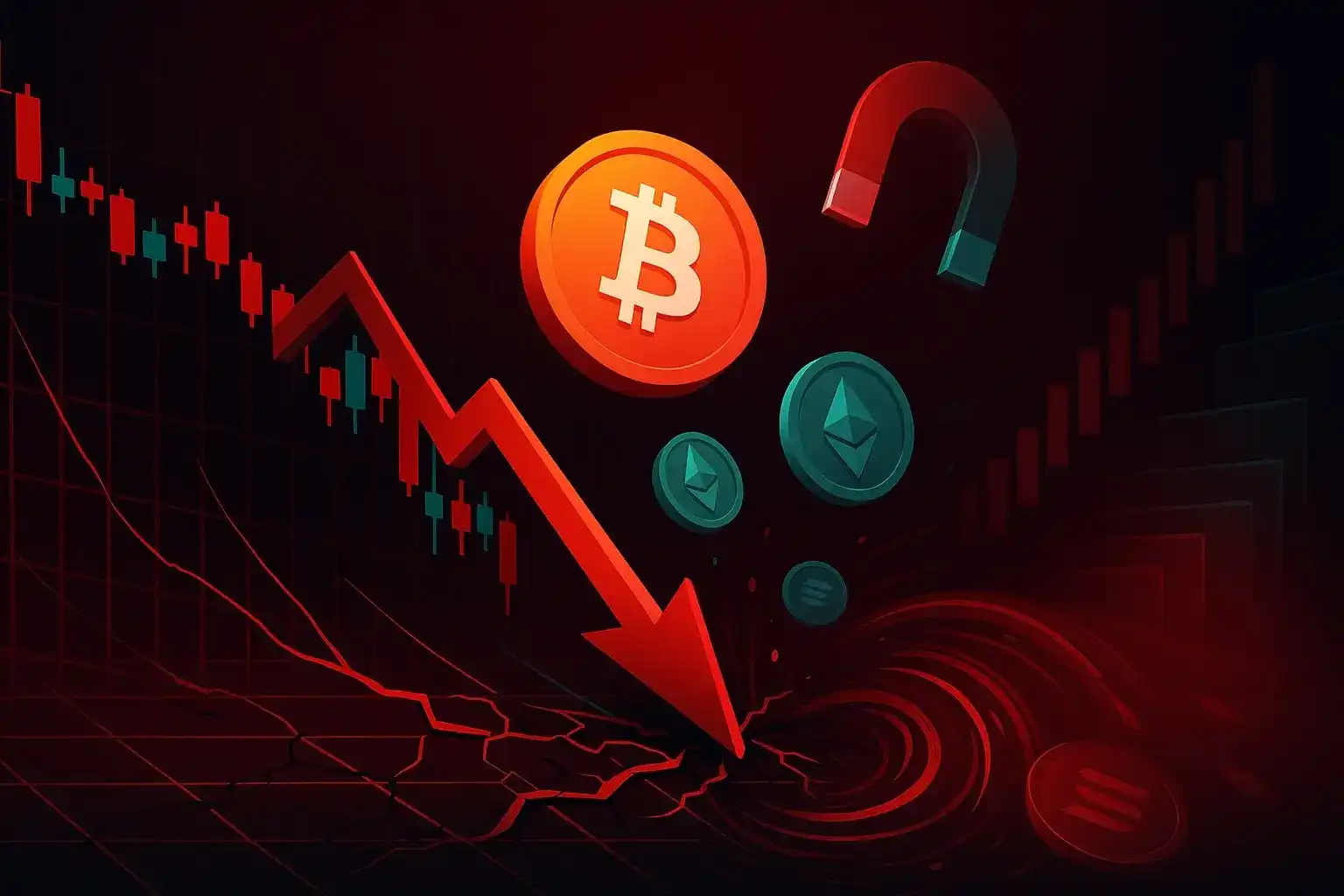
The EOS [EOS] token was down 9.4% in just over three days, at press time. The drawdown came alongside a Bitcoin [BTC] correction from the $116.1k local resistance level.

While Bitcoin has fallen 5% in three days, EOS has shed nearly twice that value.

It was rebranded to Vaulta [A] in March 2025. It was delisted from some exchanges while other centralized exchanges carried out a 1:1 token swap in May, after the official swap portal went live.

The Vaulta Team confirmed that there would be no changes to the tokenomics of A.

Rebranded EOS token, unchanged price trajectory

A 1-day ChartA 1-day Chart

Source: A/USD on TradingView

The reimagined and rebranded EOS Network token, despite its evolution, was unable to stop the long-term downtrend. The Moving Averages on the daily chart captured the steady bearish momentum of Vaulta even after the rebranding.

The trading volume picked up above its 20-day average during the market correction earlier this month. The sellers continued to dominate the market, as the OBV showed by making another lower low.

The Fibonacci extension levels showed that, below the $0.258 support, the $0.219 and $0.155 were the next price targets for the EOS token, now A.

A CoinalyzeA Coinalyze

Source: Coinalyze

In the short-term, the sentiment remained bearish. The long/short ratio has been under 1 over the past ten days, showing more accounts were bearishly positioned than bullish. The Funding Rate remained positive, but has receded in recent hours.

More accounts being short does not drive funding down, as Funding Rate calculation depends on the difference between perpetuals and spot pair prices. The rising spot CVD over the past 24 hours suggested a spark of hope for Vaulta.

Yet, this spark is likely to fade soon. The $0.3 level was a strong local resistance. Moreover, during the yesterday’s price dip from $0.29 to $0.2745, the Open Interest climbed higher.

This signified increased short-selling and helped explain the dip in Funding Rate.

Disclaimer: The information presented does not constitute financial, investment, trading, or other types of advice and is solely the writer’s opinion


Share

Criptos en tendencia

Lecturas Relacionadas

Token Economy Surges, Have Ordinary People Got a Slice of the Pie?

Token Frenzy: Is the Average Person Getting a Piece of the Pie? As AI adoption soars in China, daily Token consumption—the basic unit for AI text processing—has skyrocketed, exceeding 140 trillion. This "Token economy" is often measured like GDP, touted as a sign of progress. However, this metric primarily reflects supply-side activities: corporate investment, infrastructure scaling, and platform revenues. The crucial question of whether this growth translates into tangible benefits for ordinary citizens—higher wages, better jobs, improved public services, or increased leisure—remains largely unanswered. The article argues there's a fundamental mismatch. Policy, exemplified by subsidies in Beijing's Yizhuang district, often stimulates "demand" by incentivizing companies to consume more Tokens (an intermediate business cost), rather than by boosting household income or final consumer spending. This creates a closed loop where growth in Token usage justifies further production capacity expansion, without necessarily extending value to the broader population. Several disconnects are highlighted. High Token usage doesn't equal completed tasks, increased profits, or macroeconomic productivity gains. Even when corporate efficiency improves, the benefits may not trickle down due to existing economic structures favoring investment over household consumption. The risk is that AI, a genuinely productive technology, becomes another tool for supply-side expansion within a system adept at measuring output (like server capacity and call volumes) but less focused on distributing the gains widely. Drawing a parallel to Henry Ford's assembly line, the piece notes that Ford's revolution combined ruthless production efficiency with a social compact (higher wages, stability) that enabled mass consumption. Today's "Token economy" narrative enthusiastically champions the first part—process re-engineering and cost reduction—but lacks a credible mechanism for the second: ensuring that productivity gains lead to broader societal welfare. The ultimate challenge is not whether Tokens have value, but whether their economic benefits can escape a system that excels at building supply but struggles to cultivate its own demand.

marsbitHace 4 min(s)

Token Economy Surges, Have Ordinary People Got a Slice of the Pie?

marsbitHace 4 min(s)

Overnight Global Shock: Why Did AI Stocks Plunge Across the Board?

Overnight, U.S. AI-related stocks fell sharply, with the Nasdaq down 1.33% and the Philadelphia Semiconductor Index plunging nearly 5%. Panic spread globally, dragging down Asia-Pacific markets. Key negative drivers included: 1. **Geopolitical Tension & Macro Pressure:** Escalating U.S.-Iran tensions pushed oil prices higher, fueling inflation fears and expectations of prolonged high interest rates. Rising bond yields pressured high-valuation, capital-intensive AI stocks, especially as soaring AI infrastructure financing costs became evident. 2. **AI Commercialization Concerns:** OpenAI's Q2 results showed slowing revenue growth and widening losses, dampening market optimism about near-term AI application profitability. This shifted investor focus from pure capital expenditure narratives to actual commercial returns. 3. **Supply Chain Uncertainty:** U.S.-South Korea semiconductor investment disputes intensified. Market fears that Korean memory giants (Samsung, SK Hynix) face a dilemma—either divert capital to costly U.S. production or risk trade barriers—disrupted the critical HBM memory sector, amplifying sell-offs via leveraged ETFs. While long-term AI demand remains, the market is now scrutinizing real profitability, financing costs, and supply chain stability rather than paying premiums for unchecked growth stories. For markets like China's A-shares, the impact is primarily sentiment-driven, requiring distinction between short-term panic and fundamental deterioration.

marsbitHace 5 min(s)

Overnight Global Shock: Why Did AI Stocks Plunge Across the Board?

marsbitHace 5 min(s)

Q2 Wall Street Institutional Crypto Holdings: Most Institutions Increased Positions Against the Trend, ETH Exposure Outperformed BTC Across the Board

In Q2 2024, despite a roughly 14.2% decline in Bitcoin's price, many Wall Street institutions increased their crypto holdings, revealing a divergence from ETF flow trends. Overall institutional Bitcoin exposure grew by 7.5% to ~536k BTC, while aggregate spot Bitcoin ETF holdings declined. Notably, exposure concentration increased, with fewer reporting institutions holding larger positions. A key trend was the significant outperformance of Ethereum (ETH) exposure growth over Bitcoin (BTC) among major banks. For instance, JPMorgan's ETH exposure surged 67.3% versus 12.2% for BTC, and Morgan Stanley's ETH exposure grew 18.6% versus 3.7%. Individual bank holdings of Ethereum ETFs like ETHA saw dramatic increases, even as the overall Ethereum ETF market experienced net outflows during the quarter. Trading firms like Jane Street significantly rebuilt its iShares Bitcoin Trust (IBIT) position, while several hedge funds, including Brevan Howard and Graham Capital, reduced spot ETF holdings but added substantial option positions (both calls and puts), indicating more complex strategies. Institutions showed diverging views on crypto-related equities: some sold shares of MicroStrategy (MSTR) after its announced Bitcoin sales, while others like Renaissance Technologies and BlackRock were buyers. New entrants like Spain's Santander Bank disclosed initial crypto ETF positions. Meanwhile, long-term holders like Abu Dhabi's sovereign wealth funds paused their accumulation, and Harvard's endowment maintained a flat Bitcoin position. Key signals include the deepening institutionalization of crypto assets, a clear institutional preference for accumulating Ethereum, and growing divergence in views on crypto equities. This institutional buying in Q2 preceded a price recovery and renewed inflows into Ethereum ETFs in July and August.

marsbitHace 23 min(s)

Q2 Wall Street Institutional Crypto Holdings: Most Institutions Increased Positions Against the Trend, ETH Exposure Outperformed BTC Across the Board

marsbitHace 23 min(s)

TSMC, Another Winning Bet

TSMC Gains Another Strategic Advantage as Samsung Delays 1.4nm Process Samsung Foundry has adjusted its advanced process roadmap, postponing the mass production timeline for its 1.4nm process from 2027 to 2029. This two-year delay signals a strategic shift from aggressively pursuing the next node to focusing on maturing and scaling its 2nm platform. Samsung plans to extend the commercial lifespan of its 2nm technology through derivative versions optimized for different applications, including those incorporating backside power delivery for AI and HPC chips. A notable aspect of this shift is Samsung's cautious approach toward High-NA EUV lithography. The company views it as essential for 1nm-class nodes and beyond but not as an immediate necessity for 1.4nm, opting instead to refine its existing Low-NA EUV-based processes. This highlights a broader industry trend where the competition is evolving beyond simply reaching the next node. Success now depends on achieving high yield, managing soaring costs, integrating new transistor architectures like GAA, and delivering a compelling overall package of performance, power efficiency, and area (PPA) at a viable cost. While Samsung consolidates its 2nm efforts, TSMC continues its advance. Its N2 node is in production, and the A16 node (post-2nm, ~1.6nm) is scheduled for mass production in the second half of 2026. A16 introduces TSMC's Super Power Rail backside power delivery technology, which is expected to deliver significant performance and power efficiency gains. TSMC's previously stated cautious stance on High-NA EUV appears validated by Samsung's roadmap adjustment. The delay underscores that the competition in leading-edge semiconductor manufacturing is entering a new phase. It is no longer just a race to smaller node numbers but a multifaceted contest involving process maturity, yield, cost, design-technology co-optimization (DTCO), and advanced packaging. Samsung aims to solidify its 2nm platform over the next three years. However, as it targets 1.4nm for 2029, the industry will be watching how far ahead TSMC and Intel have moved by then.

marsbitHace 29 min(s)

TSMC, Another Winning Bet

marsbitHace 29 min(s)

Trading

Spot

Artículos destacados

Cómo comprar KODEX200

¡Bienvenido a HTX.com! Hemos hecho que comprar Samsung KODEX 200 ETF (KODEX200) sea simple y conveniente. Sigue nuestra guía paso a paso para iniciar tu viaje de criptos.Paso 1: crea tu cuenta HTXUtiliza tu correo electrónico o número de teléfono para registrarte y obtener una cuenta gratuita en HTX. Experimenta un proceso de registro sin complicaciones y desbloquea todas las funciones.Obtener mi cuentaPaso 2: ve a Comprar cripto y elige tu método de pagoTarjeta de crédito/débito: usa tu Visa o Mastercard para comprar Samsung KODEX 200 ETF (KODEX200) al instante.Saldo: utiliza fondos del saldo de tu cuenta HTX para tradear sin problemas.Terceros: hemos agregado métodos de pago populares como Google Pay y Apple Pay para mejorar la comodidad.P2P: tradear directamente con otros usuarios en HTX.Over-the-Counter (OTC): ofrecemos servicios personalizados y tipos de cambio competitivos para los traders.Paso 3: guarda tu Samsung KODEX 200 ETF (KODEX200)Después de comprar tu Samsung KODEX 200 ETF (KODEX200), guárdalo en tu cuenta HTX. Alternativamente, puedes enviarlo a otro lugar mediante transferencia blockchain o utilizarlo para tradear otras criptomonedas.Paso 4: tradear Samsung KODEX 200 ETF (KODEX200)Tradear fácilmente con Samsung KODEX 200 ETF (KODEX200) en HTX's mercado spot. Simplemente accede a tu cuenta, selecciona tu par de trading, ejecuta tus trades y monitorea en tiempo real. Ofrecemos una experiencia fácil de usar tanto para principiantes como para traders experimentados.

94 Vistas totalesPublicado en 2026.08.14Actualizado en 2026.08.14

Cómo comprar KODEX200

Qué es ZHONGJI

El activo subyacente del contrato es ZHONGJI INNOLIGHT CO., LTD. - ACCIONES H (HKEX: 3308). Zhongji Innolight Co., Ltd. es una empresa con sede en China que se dedica principalmente a la investigación y desarrollo, diseño, fabricación y venta de transceptores ópticos de alta velocidad.

29 Vistas totalesPublicado en 2026.08.17Actualizado en 2026.08.17

Qué es ZHONGJI

Cómo comprar ZHONGJI

¡Bienvenido a HTX.com! Hemos hecho que comprar Zhongji Innolight (ZHONGJI) sea simple y conveniente. Sigue nuestra guía paso a paso para iniciar tu viaje de criptos.Paso 1: crea tu cuenta HTXUtiliza tu correo electrónico o número de teléfono para registrarte y obtener una cuenta gratuita en HTX. Experimenta un proceso de registro sin complicaciones y desbloquea todas las funciones.Obtener mi cuentaPaso 2: ve a Comprar cripto y elige tu método de pagoTarjeta de crédito/débito: usa tu Visa o Mastercard para comprar Zhongji Innolight (ZHONGJI) al instante.Saldo: utiliza fondos del saldo de tu cuenta HTX para tradear sin problemas.Terceros: hemos agregado métodos de pago populares como Google Pay y Apple Pay para mejorar la comodidad.P2P: tradear directamente con otros usuarios en HTX.Over-the-Counter (OTC): ofrecemos servicios personalizados y tipos de cambio competitivos para los traders.Paso 3: guarda tu Zhongji Innolight (ZHONGJI)Después de comprar tu Zhongji Innolight (ZHONGJI), guárdalo en tu cuenta HTX. Alternativamente, puedes enviarlo a otro lugar mediante transferencia blockchain o utilizarlo para tradear otras criptomonedas.Paso 4: tradear Zhongji Innolight (ZHONGJI)Tradear fácilmente con Zhongji Innolight (ZHONGJI) en HTX's mercado spot. Simplemente accede a tu cuenta, selecciona tu par de trading, ejecuta tus trades y monitorea en tiempo real. Ofrecemos una experiencia fácil de usar tanto para principiantes como para traders experimentados.

30 Vistas totalesPublicado en 2026.08.17Actualizado en 2026.08.17

Cómo comprar ZHONGJI

Discusiones

Bienvenido a la comunidad de HTX. Aquí puedes mantenerte informado sobre los últimos desarrollos de la plataforma y acceder a análisis profesionales del mercado. A continuación se presentan las opiniones de los usuarios sobre el precio de A (A).

活动图片