火星早报 | 美国政府「停摆」持续,稳定币年交易额达46万亿美元,是PayPal的20倍

marsbitPublicado a 2025-10-22Actualizado a 2025-10-23

美国政府「停摆」持续,参议院第12次否决临时拨款法案

10 月 23 日,当地时间 10 月 22 日,美国参议院未能通过共和党提出的临时拨款法案,政府「停摆」僵局仍在持续。 据悉,这是近期在美国政府「停摆」之后,参议院第 12 次投票否决了该临时拨款法案。由于美国共和、民主两党在医保相关福利支出等核心议题上分歧巨大,国会参议院未能在 9 月 30 日上一财年结束前通过新的临时拨款法案,导致联邦政府维持正常运转的资金耗尽,于 10 月 1 日起「停摆」。

某100%胜率交易员清仓止盈1.1亿美元BTC空单

10 月 23 日,据链上分析师 Ai 姨(@ai_9684xtpa)监测,「100% 胜率神秘巨鲸」已在一小时前清仓止盈,最终获利 83.5 万美元,过去半个月 8 次杠杆胜率 100%。 其今晨一度将 BTC 空单加仓至 1018.75 枚(约 1.1 亿美元),随后在 7 点分批平仓。

a16z:稳定币年交易额达46万亿美元,是PayPal的20倍

10 月 23 日,a16z 发布的《State of Crypto 2025》报告指出,加密市场仍在扩张,并呈现「价格—开发者—用户」的循环反馈特征。加密使用具有全球性,但链上活动增长最快的区域来自发展中国家;开发者最活跃在以太坊(含 L2)、Solana、比特币等多链生态。此外,稳定币已成为广泛讨论的话题,其年交易额达 46 万亿美元,是 PayPal 的 20 倍,Visa 的 3 倍。

比特币回升突破10.8万美元

10 月 23 日,据 行情数据,比特币回升突破 10.8 万美元,现报价 108,326 美元,24 小时跌幅收窄至 0.06%。

Meteora 创始人被指控涉嫌利用名人形象操纵加密代币

据 Decrypt 报道,一项集体诉讼指控 Meteora 创始人 Benjamin Chow 为加密货币骗局的核心策划者,非法利用美国前第一夫人 Melania Trump 和阿根廷总统 Javier Milei 的形象作为"诈骗代币"宣传道具。涉案的 MELANIA 和 LIBRA 代币在推出后迅速升值,随后暴跌。法律文件引用 Telegram 截图显示,Chow 与 Hayden Davis 及 Kelsier Ventures 合作,通过"拉高出货"手法操纵至少 15 种代币。尽管法院对诉讼前景持怀疑态度,已解冻与 LIBRA 代币相关的 5760 万美元 USDC 资金。

Hyperliquid Strategies 提交 S-1 文件,拟募资最高 10 亿美元或用于购入 HYPE 代币

Hyperliquid Strategies Inc. 向美国证券交易委员会提交 S-1 注册声明,拟在完成与 Sonnet BioTherapeutics Holdings 和 Rorschach I LLC 的双重合并交易后,通过与 Chardan Capital Markets 签署的承诺股权融资协议(Facility),发行最多 1.6 亿股普通股,融资最多 10 亿美元。募集资金将用于一般企业用途,包括可能购买 HYPE Token。

数据:过去 24 小时全网爆仓 5.31 亿美元,多单爆仓 4.02 亿美元,空单爆仓 1.29 亿美元

据 Coinglass 数据,过去 24 小时全网爆仓 5.31 亿美元,多单爆仓 4.02 亿美元,空单爆仓 1.29 亿美元。其中比特币多单爆仓 8,679.47 万美元,比特币空单爆仓 2,505.6 万美元,以太坊多单爆仓 1.13 亿美元,以太坊空单爆仓 4,968.23 万美元。此外,最近 24 小时,全球共有 151,206 人被爆仓,最大单笔爆仓单发生在 Hyperliquid - BTC-USD 价值 1397.22 万美元。

特斯拉2025年第三季度财报显示其比特币持仓为公司带来了8000万美元的利润

10月23日,特斯拉(Tesla)近日公布了2025年第三季度财报,显示其比特币持仓为公司带来了8000万美元的利润。截至9月30日,特斯拉持有11,509枚比特币,市值约为13.15亿美元。尽管在第三季度未对比特币持仓进行任何调整,但比特币价格的上涨使得公司实现了这一收益。在整体财务表现方面,特斯拉第三季度营收达到281亿美元,超过分析师预期的263.6亿美元。然而,调整后每股收益(EPS)为0.50美元,略低于市场预期的0.54美元。根据新的美国财务会计准则(FASB),特斯拉需每季度确认比特币的盈亏,这意味着公司需将持有的数字资产按最低市值计价。

在盘后交易中,特斯拉股价小幅下跌至434美元。

加密行业领袖与美国两党讨论市场结构法案推迟原因

十几位加密行业领袖于 10 月 23 日与美国两党领导人进行了近三个小时的会面,讨论的核心是加密市场结构法案,该法案旨在确立对该行业的监管,原定于 10 月下旬进行审议,但因持续的政府停摆而推迟。参会人士表示,议员们在与民主党人的会谈中询问了非法金融和去中心化金融相关问题,而在与共和党议员的会谈中则表达了对该行业和法案的支持。

比特币的“黄金时刻”还未到来:ETF 买盘只是序章

文章分析了比特币价格停滞的两大疑问,指出央行购金是金价上涨主因,而比特币因缺乏央行支持未能跟随。同时,ETF和企业买入虽多,但价格敏感投资者抛售导致价格平稳。

100美元勇闯预测市场和Meme,哪一种机会更大?

文章比较了预测市场和Pumpfun平台上的Memecoin交易,分析了两种市场的机制、可访问性、风险与回报,并探讨了小额资本(100美元)在不同市场中的策略应用。预测市场基于信息决策和群体智慧,而Memecoin交易则依赖炒作和运气。

RIVER 暴涨 100% 的背后:它如何将“空投抛压”变成了一个“看涨期权”市场?

RIVER代币价格暴涨至9美元新高,背后驱动因素是动态空投转换机制,而非传统空投或DeFi协议投机。该机制通过时间兑换曲线递延抛压,为项目赢得早期无砸盘环境。
Lecturas Relacionadas

Number of Active XRP Addresses Reaches Two-Month High Amid Worsening Market Sentiment

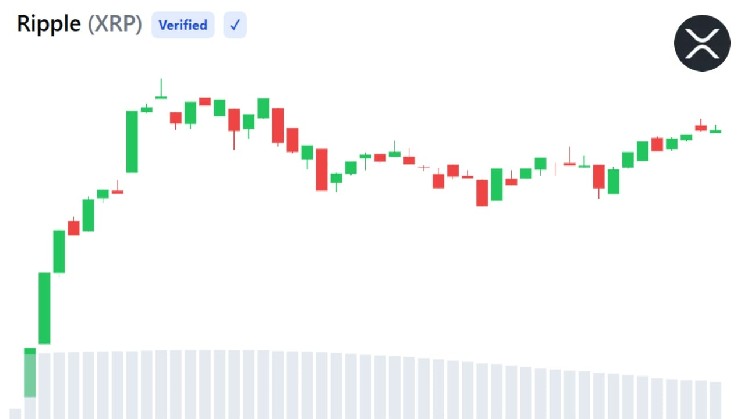
On August 14th, activity on the XRP Ledger surged to a two-month high, with 49,929 active addresses recorded in a 24-hour period. This spike occurred despite market sentiment towards XRP hitting a three-month low, as the token traded below $1, highlighting a sharp divergence between on-chain activity and retail investor mood. The data from Santiment shows that average daily active addresses had already risen to around 35,700 by August 12th, up from approximately 26,400 in July—a nearly 35% increase. However, the number of new addresses remained flat, suggesting the surge was driven by existing addresses becoming more active rather than an influx of new users. Analysts caution that while high address activity indicates increased network participation, it doesn't specify whether the activity stems from new investors, institutional moves, exchange transactions, or existing holders. Concurrently, the bearish sentiment, tracked from social platforms like X and Reddit, reflects crowd psychology rather than fundamental network health. The report notes that the XRP Ledger's validator-based consensus allows for such on-chain activity to grow independently of short-term price pessimism. Furthermore, broader ecosystem development, including Ripple's reported $550 million in investments since 2017 into grants and institutional infrastructure for tokenized assets, provides a long-term context separate from current price trends. The key question is whether the elevated address activity will be sustained beyond the single-day spike amidst ongoing negative sentiment, or if it represents only a temporary divergence.

cryptonews.ruHace 5 min(s)

Number of Active XRP Addresses Reaches Two-Month High Amid Worsening Market Sentiment

cryptonews.ruHace 5 min(s)

IPO Imminent, OpenAI Faces Major Personnel Upheaval

OpenAI, preparing for a potential IPO, is experiencing significant leadership turmoil. In mid-August 2026, longtime "GPU geek" Scott Gray quietly left, and within three days, Chief Operating Officer Brad Lightcap (8-year veteran) and Chief Revenue Officer Denise Dresser (8-month tenure) departed. This follows a broader exodus of at least 10 senior executives in 2026, including heads of product, safety, and ethics. Analysts view this as a strategic "surgery" to transform from a research lab into a sales-driven enterprise company before going public. Revenue now tilts toward enterprise clients, surpassing consumer income sooner than expected, with annualized revenue reaching $40 billion. The new CRO, Dali Rajic, is a veteran enterprise sales leader. Concurrently, OpenAI has disbanded independent safety teams like "Preparedness," which assessed catastrophic risks, integrating their functions into core research. Critics warn this removes dedicated "brakes" on AI development. The leadership vacuum raises questions about who is the clear second-in-command after former apps CEO Fidji Simo moved to an advisory role. Co-founder Greg Brockman appears to be consolidating power. As OpenAI races against rival Anthropic ($47B annualized revenue), it faces the dual challenge of commercial execution while managing the departure of foundational technical talent and ensuring responsible AI development remains a priority.

marsbitHace 2 hora(s)

IPO Imminent, OpenAI Faces Major Personnel Upheaval

marsbitHace 2 hora(s)

AI Can 'Have Moods Too'! New Research from USTC: Confusion and Anxiety Make AI Work Better

The article discusses research from the University of Science and Technology of China and Oxford, revealing that allowing AI to recognize and act upon simulated "internal emotions" can significantly improve its performance. The study demonstrates a coherent pairing between specific emotional states in AI agents and their subsequent skill choices. For instance, an agent feeling curious and desirous will search for products, while one feeling confused and tense will rephrase queries. This mirrors human decision-making influenced by emotions. Statistical validation showed a 76.5% semantic consistency in these pairings. Crucially, the research challenges the traditional view of AI errors as flaws to be eliminated. It found that "bad" emotions like confusion, tension, or frustration serve as useful metacognitive signals, indicating a mismatch between the current strategy and the environment. By responding to these signals, AI can proactively adjust before a failure occurs. This is particularly effective in complex tasks prone to failure. For example, in tasks like "heating an item" and "picking up two items," success rates surged from 9.6% to 56.9% and 4.4% to 31.3%, respectively, when using the emotion-driven skill selection method (EMOTION2SKILL). The AI's "nervous" state about a closed microwave, for instance, prompted it to check and open it first, preventing failure. The article also mentions related work from Tianjin University, which embeds emotional prediction into world models (Large Emotional World Model, LEWM), significantly improving prediction accuracy in human-centric environments. Removing emotional data was found to degrade performance even in unrelated logical reasoning tasks. These studies build on earlier findings, like those from Anthropic, that identifiable emotional representations exist within large language models (LLMs). The focus is shifting from philosophical debate about AI emotion to practically harnessing these internal states as functional signals to enhance AI robustness and capability.

marsbitHace 2 hora(s)

AI Can 'Have Moods Too'! New Research from USTC: Confusion and Anxiety Make AI Work Better

marsbitHace 2 hora(s)

Trading

Spot
活动图片