为什么以太坊需要ZK-VM:扩容的终极路径

marsbitPublicado a 2025-10-17Actualizado a 2025-10-18

在以太坊扩容的众多思路中,ZK 是最复杂也最关键的方向

纵观全网,V 神和以太坊基金会对 ZK 的押注是最多的。ZK 有点像以太坊家里最小的儿子,倾注心血最多,但是未来也最不明朗。

前几天,以太坊基金会发布了 Kohaku 路线图,这是一套隐私钱包的基础组件规划。路线图再次强调,许多核心功能仍将依赖 ZK-EVM 或 ZK-VM 的落地。

那么,以太坊为何如此迫切地需要 ZK-VM?

答案很简单:为了性能提升,而不是以牺牲安全为代价。

提升性能的瓶颈:全员验证与 GAS 上限

此前我们提过,提高以太坊性能最立竿见影的手段就是提高 GAS 上限,也就是让区块变得更大。

但问题在于,但是,提高 GAS 上限是有代价的,过大的区块对于节点是沉重的负担。

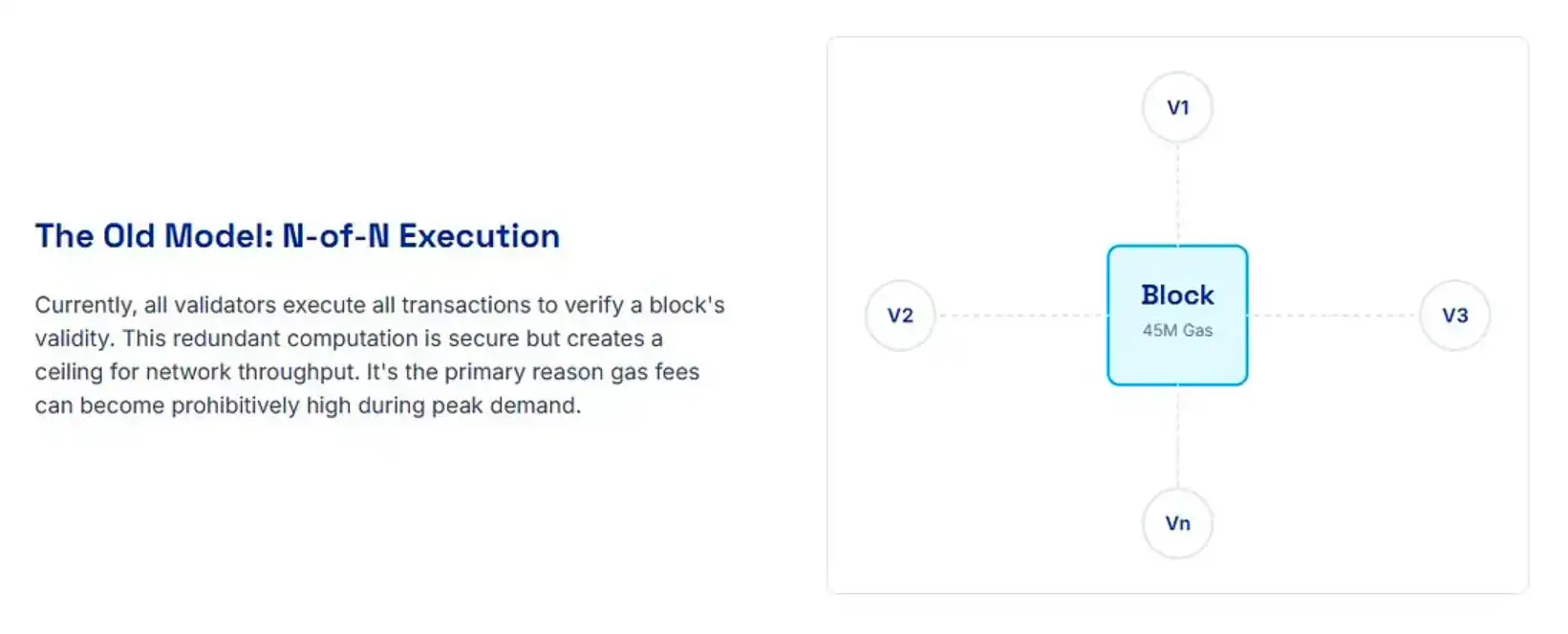
目前,以太坊采用一种称为「全员全验」的验证模式,即所有节点都要完整验证每一个区块。这个机制虽然简单且安全,但冗余极高。
以太坊基金会

如果 GAS 上限显著提高,每个节点的计算量都会同步暴涨。

考虑到以太坊的区块间隔仅 12 秒,其中还需预留时间用于区块传播和 MEV 排序,验证者实际可用于验证的时间大约只有 4–8 秒,几乎没有余地去处理更大的负载。

ZK 化后的以太坊:从「全员全验」到「全员一验」

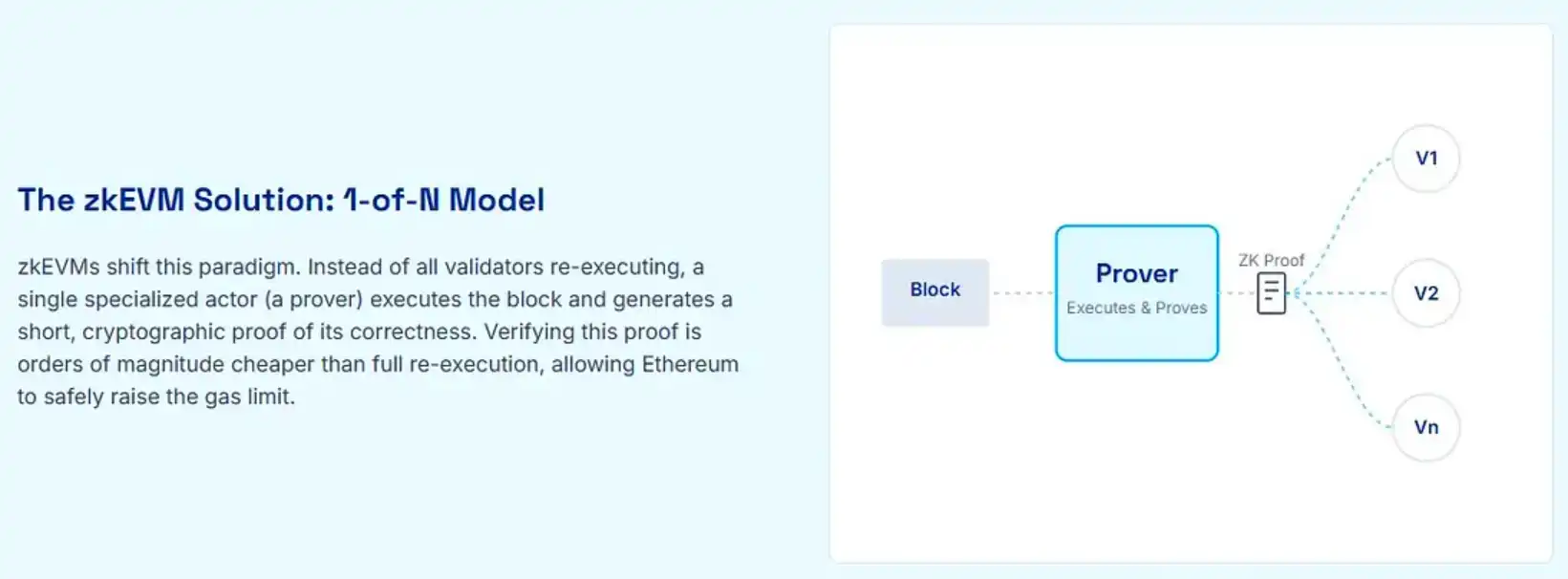
如果将以太坊 L1 全面 ZK 化,验证模式将从「全员全验」变为「全员一验」。在这种模式下,当一个区块被组装好后,会首先生成一个 ZK 证明。

ZK 的特点是生成证明慢,但验证极快。因此,节点只需验证一次证明是否正确,而无需重复执行区块内的所有交易。
以太坊基金会

这意味着,以太坊可以在不显著增加节点负担的前提下,大幅提高 GAS 上限。

一个形象的比喻是:过去你在钉钉上提交请假流程(发交易),需要每位领导(节点)逐一核实你还有没有假期余额(全员全验),全员批准后流程才通过。

而 ZK 化后,系统先验证你确实有假期,再统一向所有领导出具证明(ZK),此时领导只需信任并快速批准即可(全员一验)。

ZK 化之后,你还是申请请假流程(发交易),系统发现你有剩余假期,直接告诉各位领导「这个人有假」,且领导完全相信系统不会出错(ZK),然后领导批准就快多了(全员一验)。

这就是以太坊要进行 ZK 化的原因。

密码学的挑战与案例

当然,实现这一切的工程量极大,密码学难度也非常高,因此以太坊必须与专业团队合作。

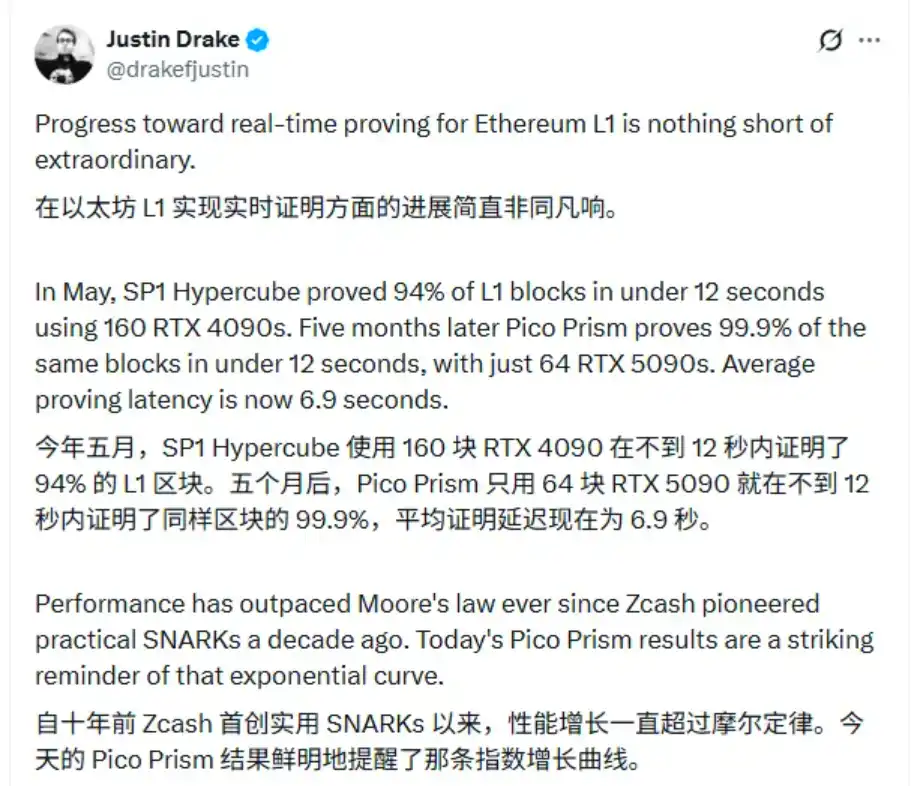
以太坊基金会研究员 Justin 提到的 Brevis 协议 就是目前在该领域领先的案例之一。
以太坊基金会

Brevis 专注于 ZK-VM,其最新的 Pico Prism 技术 是当前在给定条件下生成 ZK 证明最快的方案之一。

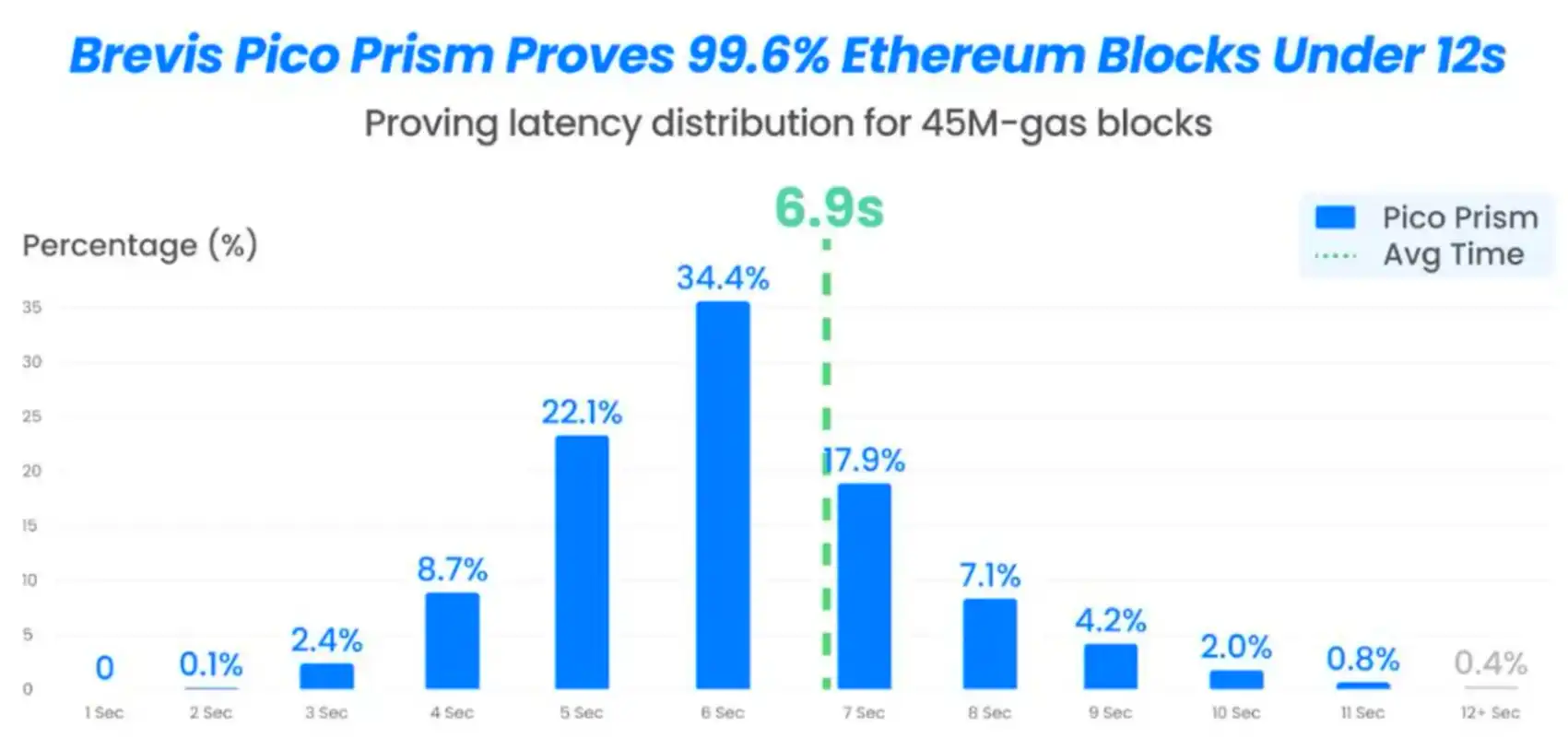
根据测试数据,在当前以太坊 45M GAS 的区块规模下,Brevis 使用 64 张 RTX 5090 GPU,可在 12 秒内完成 99.6% 的区块证明,其中 96.8% 的区块能在 10 秒内完成证明生成。
以太坊基金会

为了保持去中心化,以太坊要求 ZK 证明设备的成本不得超过 10 万美元。

虽然更高端的 GPU(如 H200 或 B200)可以更快生成证明,但那会大幅提高准入门槛。Brevis 当前的设计正好卡在这一限制之内。

为什么「10 秒覆盖率」也至关重要?因为 MEV 区块通常在 1–3 秒内生成,加上 10 秒的证明时间刚好填满 12 秒区块间隔。

总结:以太坊 ZK 化的路径逻辑

以太坊想要加快 L1 性能提升,就必须提高 GAS 上限;

要想安全地提高 GAS 上限,就必须推进 ZK 化;

而要想优雅地实现 ZK 化(10 秒内生成证明、10 万美元以下硬件成本),则需要密码学界与加密生态的共同努力。

ZK 是以太坊扩容路线中最复杂但也最具确定性的方向。

它不仅关乎性能,更是以太坊在安全性与去中心化之间,寻求平衡的终极方案。

Criptos en tendencia

Lecturas Relacionadas

Upbit is Anxious: A Hasty Counterattack Aimed at Regaining Stablecoin Market Share

Title: Upbit's Rushed Counterattack to Reclaim Stablecoin Market Share Facing a dramatic shift in South Korea's stablecoin market, leading exchange Upbit launched a promotional campaign from July 26 to August 9, waiving the 0.05% trading fee for stablecoins paired with the Korean Won (KRW) and rapidly listing new stablecoins like RLUSD and USDG. This move is a direct response to its plummeting market share in this sector. Historically a duopoly with Bithumb, the market has been reshaped since October 2025 when Coinone permanently removed fees for USDC trading. By June 2026, Coinone led with 34.8% of stablecoin volume, followed by Bithumb (31.1%) and Upbit (30.1%). This contrasts sharply with the overall crypto market, where Upbit commands 60%. The data shows stablecoin demand is highly sensitive to fees, as users primarily buy them to transfer capital overseas for derivatives trading or forex arbitrage. South Korean exchanges have seen a net outflow of stablecoins for 18 consecutive months, totaling approximately 14.9 trillion KRW, underscoring their role as a cross-border capital conduit. Upbit's limited-time promotion initially boosted its daily stablecoin volume by 162%, but the surge was almost entirely in USDT (98.1% of volume). The newly listed stablecoins saw negligible, fleeting interest. Furthermore, the promotional effect quickly waned in the second week, with volume dropping 33% on weekdays. A concurrent weakening of the KRW also contributed to the trading spike, independent of the fee waiver. The analysis suggests that once the promotion ends, Upbit is unlikely to retain its temporary gains unless it matches Coinone's permanent zero-fee policy, forcing a choice between market share and fee revenue. Upbit's strategic push may be less about immediate profit and more about preparing for future regulatory shifts. With South Korea's *Digital Asset Basic Act* on the horizon, which will regulate KRW-backed stablecoins, and following Dunamu's (Upbit's parent) integration into Naver Financial to build a payment ecosystem, securing a dominant position in the dollar stablecoin distribution channel holds long-term strategic value. However, potential regulatory conflicts could prevent Upbit from listing a future Naver-issued KRW stablecoin, making the current fight for dollar stablecoin flow even more critical.

marsbitHace 3 hora(s)

Upbit is Anxious: A Hasty Counterattack Aimed at Regaining Stablecoin Market Share

marsbitHace 3 hora(s)

Michael Saylor Compares Bitcoin and Gold!

Michael Saylor, founder of MicroStrategy, argues that Bitcoin fundamentally changes how wealth is stored and transferred by transforming digital scarcity into economic value. He describes Bitcoin as the first digital monetary network, combining computers, digital networks, and cryptography. It digitizes monetary assets, allowing their supply to be controlled by public protocols rather than institutions, thus converting economic value into information transmissible over global networks. Comparing Bitcoin to gold, Saylor states that while increasing Bitcoin's supply is harder, its integration with software and transfer is easier. He highlights Bitcoin's proof-of-work mechanism, which ties it to the physical world by consuming real energy to secure the ledger, making past transactions immutable. This creates a shared security system involving miners, energy companies, and investors. Saylor suggests "digital monetary energy" is a more accurate term than "digital gold." He emphasizes that the Bitcoin network is an adaptive ecosystem of miners, nodes, developers, and users. Its core design is intentionally simple, focused on maintaining a secure ledger for scarce digital assets, with complex functionalities built in higher-layer applications. This architecture allows Bitcoin to serve as a foundation for transmitting value and fostering innovation in payments and financial services. Saylor notes Bitcoin's deeper impact lies in creating digital sovereignty, where private keys give individuals permissionless control over their economic power, with ownership verified mathematically, not by institutions. He concludes that while gold's physical scarcity makes it money, Bitcoin's digital scarcity does the same, characterizing Bitcoin as the monetary energy of the digital age.

cryptonews.ruHace 4 hora(s)

Michael Saylor Compares Bitcoin and Gold!

cryptonews.ruHace 4 hora(s)

Trading

Spot

Artículos destacados

Cómo comprar ZK

¡Bienvenido a HTX.com! Hemos hecho que comprar ZKsync (ZK) sea simple y conveniente. Sigue nuestra guía paso a paso para iniciar tu viaje de criptos.Paso 1: crea tu cuenta HTXUtiliza tu correo electrónico o número de teléfono para registrarte y obtener una cuenta gratuita en HTX. Experimenta un proceso de registro sin complicaciones y desbloquea todas las funciones.Obtener mi cuentaPaso 2: ve a Comprar cripto y elige tu método de pagoTarjeta de crédito/débito: usa tu Visa o Mastercard para comprar ZKsync (ZK) al instante.Saldo: utiliza fondos del saldo de tu cuenta HTX para tradear sin problemas.Terceros: hemos agregado métodos de pago populares como Google Pay y Apple Pay para mejorar la comodidad.P2P: tradear directamente con otros usuarios en HTX.Over-the-Counter (OTC): ofrecemos servicios personalizados y tipos de cambio competitivos para los traders.Paso 3: guarda tu ZKsync (ZK)Después de comprar tu ZKsync (ZK), guárdalo en tu cuenta HTX. Alternativamente, puedes enviarlo a otro lugar mediante transferencia blockchain o utilizarlo para tradear otras criptomonedas.Paso 4: tradear ZKsync (ZK)Tradear fácilmente con ZKsync (ZK) en HTX's mercado spot. Simplemente accede a tu cuenta, selecciona tu par de trading, ejecuta tus trades y monitorea en tiempo real. Ofrecemos una experiencia fácil de usar tanto para principiantes como para traders experimentados.

568 Vistas totalesPublicado en 2024.12.13Actualizado en 2026.06.02

Cómo comprar ZK

Discusiones

Bienvenido a la comunidad de HTX. Aquí puedes mantenerte informado sobre los últimos desarrollos de la plataforma y acceder a análisis profesionales del mercado. A continuación se presentan las opiniones de los usuarios sobre el precio de ZK (ZK).

活动图片