Сложность майнинга биткоина упала впервые с июня. Что стало с доходностью

cryptonews.ruPublicado a 2025-06-15Actualizado a 2025-10-16

Добывать криптовалюту стало немного проще, мощности майнеров продолжают расти

Сложность майнинга биткоина снизилась впервые с июня. 16 октября в результате очередного перерасчета она упала на 2,73%. Хешрейт сети, наоборот, накануне обновил исторический максимум.

Предыдущие три месяца сложность майнинга непрерывно росла и в конце сентября впервые превысила 150 Т, поднявшись за год на 70%. По данным Cloverpool, утром в четверг показатель упал до 146,72 Т. Это значит, что теперь майнерам нужно в среднем вычислить около 146 трлн хеш-функций, чтобы добавить один блок в сеть биткоина и получить за это новые 3,125 BTC ($346 тыс. по текущему курсу).

rbc.group

Напротив, глобальный хешрейт — совокупная мощность всех устройств, активно добывающих биткоин, — накануне перерасчета сложности обновил максимум. Он впервые в моменте поднялся до 1,28 Zh/s (зетахеш в секунду). Средний хешрейт за последние три дня держится около 1,10 Zh/s.
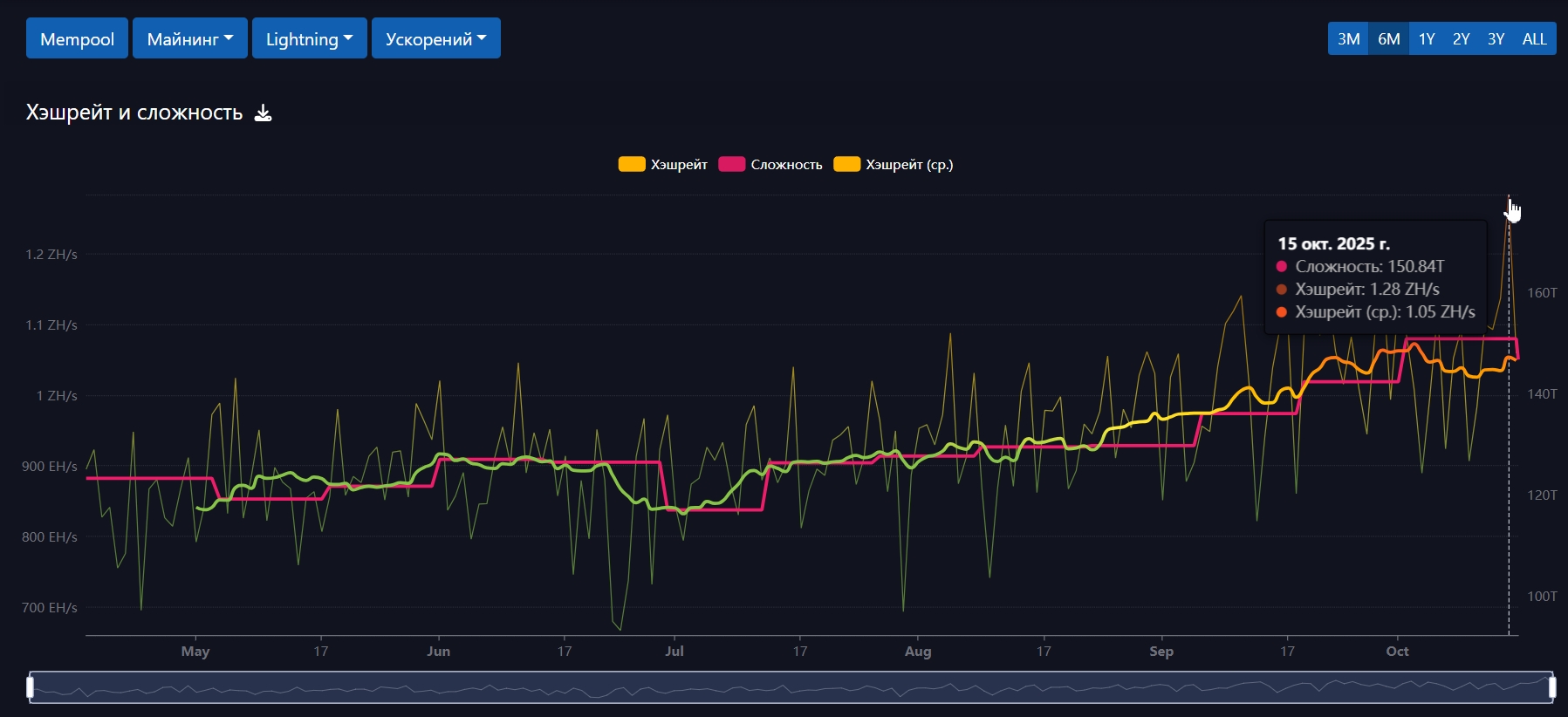
Хешрейт и сложность майнинга биткоина. Источник: mempool.space

В то же время после падения сложности выросла доходность майнинга, согласно индексу Bitcoin Hashprice Index. Значение этого индикатора говорит о том, сколько может заработать майнер биткоина, затратив 1 петахэш в секунду (Ph/s) вычислительной мощности в день.
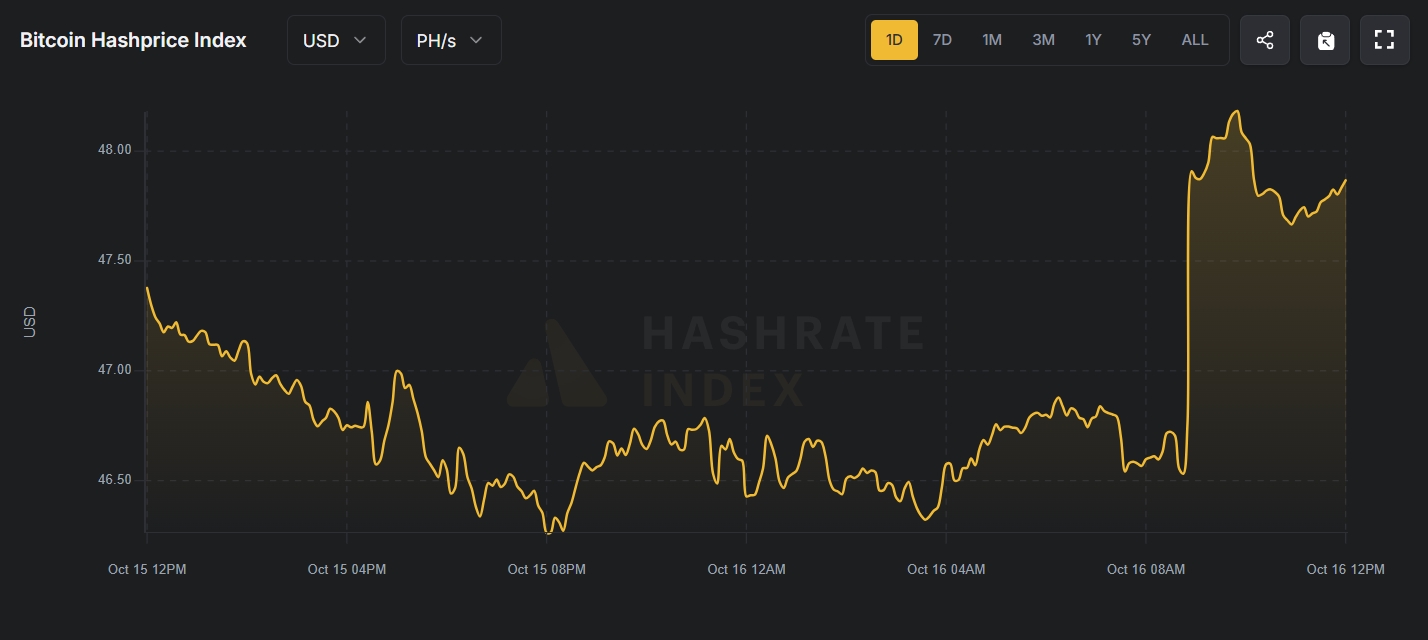
Индекс доходности биткоина Bitcoin Hashprice Index. Источник: Hashrate Index

Снижение сложности привело к тому, что Bitcoin Hashprice Index резко поднялся с $46,5 до $48. В то же время, индекс в первую очередь учитывает цену биткоина. Десять дней назад первая криптовалюта торговалась около $125 тыс., и Bitcoin Hashprice Index, несмотря на рекордную сложность, достигал $52,7.


Lecturas Relacionadas

U.S. Liquidity Support Has Arrived, This is the Core Positive Catalyst

The U.S. Treasury announced on August 19th an expansion of its liquidity support repurchase operations for long-term bonds. The single-operation limit for older, off-the-run nominal coupon securities in the 10-20 year and 20-30 year maturities will be increased from $2 billion to at least $4 billion, effective from September 9th until the end of the current quarterly refunding on November 4th. The market reacted positively to the news, with yields on 10-year and 30-year Treasury notes falling. This action is seen as a key relief for assets like tech stocks, long-term bonds, gold, and cryptocurrencies, as a lower long-end yield reduces discount rate pressure on valuations. However, analysts caution against interpreting this as a form of quantitative easing (QE). The operation specifically targets less liquid older bonds to improve market functioning, unlike QE which involves the Federal Reserve expanding its balance sheet. The move is viewed primarily as a signal that the Treasury is unwilling to let liquidity deteriorate in the long-end of the bond market, prompting short-covering and a relief rally. Its impact is constrained by the scale (a potential maximum of around $14 billion in additional repurchases this quarter), funding sources that may shift pressure to other maturities, and overarching macro factors like inflation and Fed policy. The sustainability of the resulting market rebound will be tested by the Treasury's November quarterly refunding statement. If it includes sustained repurchases and a slowdown in long-term net issuance, the valuation support for long-duration assets could persist. If not, the operation may prove to be merely a tactical measure to reduce short-term volatility without altering the long-term pressures from deficits and inflation.

marsbitHace 50 min(s)

U.S. Liquidity Support Has Arrived, This is the Core Positive Catalyst

marsbitHace 50 min(s)

SEC New Regulations Released, Bulls Are Here

The U.S. Securities and Exchange Commission (SEC), under Chairman Paul Atkins, has released a draft of the "Regulation Crypto Assets." This proposal introduces a new regulatory framework for crypto asset issuance and fundraising. A key feature is the establishment of an "Investment Contract Safe Harbor" mechanism, allowing projects to raise up to $5 million (or higher amounts for larger projects) over four years without full securities registration. To exit this safe harbor and potentially shed securities status, project teams must self-certify via a Form TR, declaring they have completed or permanently ceased their previously stated "essential managerial efforts." The SEC retains the power to challenge this certification after the fact. This shift moves the regulatory focus from pre-approval to a system of issuer self-attestation and SEC post-facto enforcement. It clarifies the process for determining when a token may transition from being an investment contract to a non-securities asset. The rules also specify that airdrops and network rewards may be counted toward fundraising limits, and they incentivize fundraising activities to remain within the U.S. jurisdiction. The draft is seen as a move away from the previous "regulation by enforcement" approach and an effort to provide clearer guidelines while Congressional legislation like the CLARITY法案 faces delays. The proposal is currently open for public comment.

marsbitHace 59 min(s)

SEC New Regulations Released, Bulls Are Here

marsbitHace 59 min(s)

Trading

Spot
活动图片