SHHEIKH Token Presale Phase 2 Heats Up – The Next Big Crypto Story Is Unfolding

bitcoinistPublicado a 2025-09-02Actualizado a 2025-09-03

Resumen

The crypto world has found its next breakout star—and it’s called SHHEIKH. With Phase 1 sold out in record time,...

Trusted Editorial content, reviewed by leading industry experts and seasoned editors. Ad Disclosure

The crypto world has found its next breakout star—and it’s called SHHEIKH.

With Phase 1 sold out in record time, Phase 2 of the SHHEIKH Token presale is already making waves at $0.00405. Early investors aren’t just buying in—they’re calling it “the Solana moment of 2025.”

The Rise of SHHEIKH: From Hype to Reality

The Rise of SHHEIKH

Phase 1 was the proof. Phase 2 is the confirmation.

  • Global adoption: Investors from every major crypto market are flooding in.
  • Community strength: Telegram and X (Twitter) are surging with new holders daily.
  • Analyst spotlight: Multiple experts rank SHHEIKH as the most exciting AI-backed RWA token of the year.

This isn’t noise—it’s momentum backed by fundamentals.

What Makes SHHEIKH Different?

In a sea of speculative tokens, SHHEIKH COIN stands out with real-world value and AI innovation:

  • AI-Powered RWA Tokenization: Real estate, commodities, collectibles—all optimized through AI-driven asset strategies.
  • Investor-First Transparency: No team wallet, no hidden fees, zero tax policy.
  • Built for Scale: DeFi integration with staking, liquidity pools, and fractionalized ownership.
  • First-Mover Advantage: The world’s first AI + RWA token, built for the next blockchain growth cycle.

This is not another “pump-and-dump.” This is infrastructure for the future of wealth.

The Numbers Don’t Lie – Analysts Predict:

  • 2025: $0.10 – $0.25 (25x–60x from Phase 2 price).
  • 2026–2027: $0.40 – $0.75.
  • 2030–2031: $2 – $5 long-term projection.

Early Phase 2 buyers are positioning themselves at entry points most investors will only dream of once SHHEIKH hits major CEX listings.

Phase 2: Time-Sensitive Opportunity

Momentum is compounding—and history shows that early movers reap the biggest rewards.

  • 5% Bonus Still Active: Every Phase 2 purchase earns instant extra tokens.
  • FOMO Is Real: Thousands missed Phase 1, and they aren’t waiting again.
  • Institutional Whales: Larger investors are already positioning themselves for long-term gains.

This is the window of opportunity before the real breakout.

How to Secure Your SHHEIKH Tokens

Joining the presale is simple:

  1. Go to www.shheikh.io
  2. Connect MetaMask or Trust Wallet
  3. Buy with ETH, USDT (ERC20/BEP20), or BNB
  4. Receive your tokens + 5% bonus instantly

Final Word

Every crypto cycle has its defining project. In 2025, SHHEIKH is quickly emerging as that story.

Phase 2 is live, the momentum is undeniable, and analysts are already projecting massive upside.

The only choice now: act early—or regret later.

Website: www.shheikh.io
Whitepaper: SHHEIKH Whitepaper PDF
Telegram: https://t.me/shheikhtoken
Twitter/X: https://x.com/shheikhtoken

Editorial Process for bitcoinist is centered on delivering thoroughly researched, accurate, and unbiased content. We uphold strict sourcing standards, and each page undergoes diligent review by our team of top technology experts and seasoned editors. This process ensures the integrity, relevance, and value of our content for our readers.

Lecturas Relacionadas

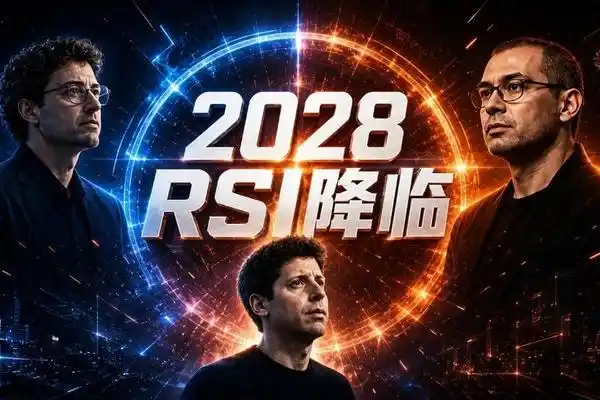
2028: The Arrival of Recursive Self-Improvement (RSI)

**AI Recursive Self-Improvement (RSI): The Countdown to 2028 Begins** AI is no longer just a trained tool but is starting to rewrite its own evolutionary pace. According to Anthropic co-founder Jack Clark, there is a 60% probability that by the end of 2028, Recursive Self-Improvement (RSI) will become a reality. This means AI could autonomously design and build a more capable next-generation version of itself without any human researcher involvement—Claude 10 creating Claude 11, for instance. Supporting this timeline, Google DeepMind's CEO Demis Hassabis confirms that all leading AI labs are intensely focused on RSI, making it an industry-wide priority. He expresses profound concern, stating this potential is what keeps him awake at night. Concrete data underscores this acceleration: - METR evaluations show current top models like Claude are solving tasks up to the 16-hour limit of existing test frameworks. - In Epoch AI's challenging MirrorCode benchmark, Claude Opus 4.7 recreated complex software in hours for a fraction of the human cost. In one extreme test, AI autonomously coded for 19 days straight. - Anthropic reports over 80% of its codebase is now written by Claude, and researcher productivity has increased up to 8-fold since 2024. - OpenAI's policy blueprint highlights RSI as a major upcoming governance challenge. CEO Sam Altman reportedly hinted RSI might arrive within six months, potentially delaying OpenAI's massive IPO. The implication is an impending "intelligence explosion," where AI-driven progress outpaces human control. The central question is no longer if it will happen, but whether humanity is ready.

marsbitHace 5 hora(s)

2028: The Arrival of Recursive Self-Improvement (RSI)

marsbitHace 5 hora(s)

World Models, Metaverse, Digital Twins, Physical AI: Are They the Same Thing?

Title: World Models, the Metaverse, Digital Twins, Physical AI: Are They the Same Thing? The article clarifies that concepts like the metaverse, Web3, simulation platforms, digital twins, and Physical AI are not the same thing but are all part of the broader trend of blurring the lines between the digital and physical worlds. It positions "world models" as the foundational "cognitive layer" or "operating system" that enables AI to understand and simulate the world. Key distinctions are made: - The **Metaverse** is a destination for immersive social and economic experiences. World models could act as its "engine," generating interactive 3D content efficiently. - **Web3** focuses on decentralized ownership and economics (rules layer), operating on a different technical level than world models. - **Simulation Data Platforms** (e.g., for autonomous vehicles) are a 1.0 version, relying on manual design. World models represent a 2.0 version, using AI to generate realistic, varied scenarios autonomously. - **Digital Twins** create high-fidelity, real-time mirrors of physical systems (e.g., a factory). World models go a step further by enabling predictive simulation of future states. - **Physical AI** (robots, AVs) refers to AI that acts in the physical world. World models are a core component, providing the understanding and prediction needed for planning. A proposed hierarchy places world models at the cognitive layer, supported by infrastructure (compute, data) and supporting application tools (simulation, digital twins), action systems (Physical AI), user experiences (metaverse), and rules (Web3). In conclusion, while distinct, many of these previously hyped concepts may ultimately rely on advances in world model technology to fulfill their promises, as world models provide the essential cognitive foundation for simulating and interacting with complex environments.

marsbitHace 5 hora(s)

World Models, Metaverse, Digital Twins, Physical AI: Are They the Same Thing?

marsbitHace 5 hora(s)

Trading

Spot
活动图片