Семья Трампа стала поддерживать криптовалюты после того, как Байден «превратил банки в оружие»

cryptonews.ruPublicado a 2025-08-25Actualizado a 2025-08-25

Сын президента США Дональда Трампа, Эрик Трамп, заявил, что семейный конгломерат столкнулся с ограничением банковских услуг после инцидента с атакой на Капитолий в 2021 году.

Эрик Трамп, сын президента США Дональда Трампа, заявил, что семья стала поддерживать криптовалюты после того, как их ограничили в банковских услугах после инцидента с атакой на Капитолий в начале 2021 года.

Несколько банков закрыли сотни счетов, связанных с Trump Organization, без объяснения причин, рассказал Эрик Трамп The Wall Street Journal. Это вынудило группу искать новые, менее известные банки для перевода средств.

«Тогда я понял, насколько хрупкой может быть финансовая система и как легко ее можно использовать против вас», — сказал он.
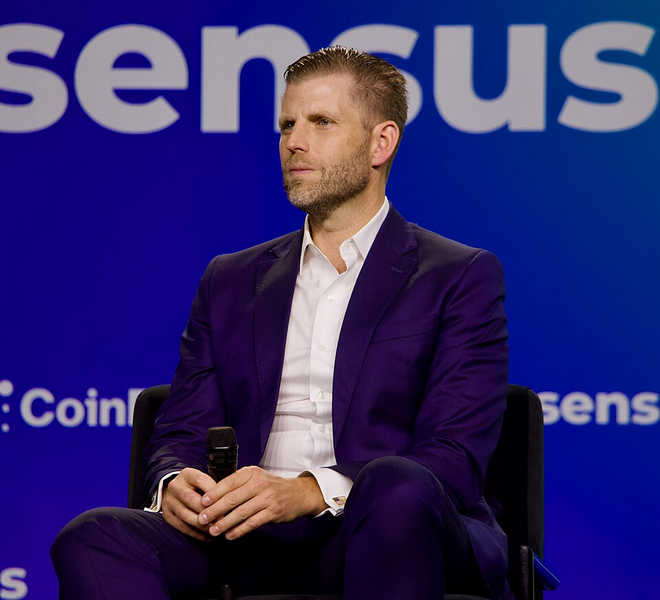

Эрик Трамп на конференции Consensus 2025. Источник: Wikimedia Commons

Американский бизнесмен заявил, что причины были исключительно политическими, что и привело его к поддержке криптовалют. По словам инсайдеров отрасли, администрация Байдена ограничивала доступ криптокомпаний к банковским услугам, оказывая давление на регулирующие органы.

«Вся эта система была настроена против них, точно так же, как она была настроена против нас по другим причинам», — сказал Эрик Трамп.

Примечательно, что в марте этого года Trump Organization подала иск против Capital One, утверждая, что банк закрыл их счета по политическим мотивам, что нанесло организации значительный финансовый ущерб.

Месяц спустя Трамп заявил, что банки должны перейти на криптовалюту, иначе им грозит исчезновение в течение 10 лет.

Некоторые эксперты утверждают, что банки придерживаются политики ограничения операций, закрывая счета, принадлежащие криптокомпаниям.

Эрик Трамп также высказался в поддержку токенизации реальных активов.

«Почему, если я захочу рефинансировать Trump Tower, я не могу токенизировать этот актив и предложить его для инвестиций миллиардам людей по всему миру?» — задался вопросом Трамп.

Растущая связь семьи Трампа с криптовалютой

Семья Трампа тесно связана с криптовалютной индустрией, что стало предметом критики о возможном использовании этой связи для личного обогащения.

Среди проектов — официальный мемкоин Дональда Трампа TRUMP, запущенный за несколько дней до его инаугурации в качестве 47-го президента США.

World Liberty Financial (WLFI) была запущена 16 сентября 2024 года и в настоящее время предлагает стейблкоин номиналом $1. На сайте Дональд Трамп указан как почетный соучредитель, а его сыновья — как соучредители.

Сыновья Трампа, Дональд Трамп-младший и Эрик Трамп, являются основателями American Bitcoin, дочерней компании Hut 8, которая привлекла $220 млн для покупки биткоина и майнингового оборудования.

Согласно отчету от 11 августа, Дональд Трамп заработал $2,4 млрд на своих криптовалютных проектах.

Эрик Трамп отверг обвинения в том, что семья Трампа получила выгоду от избрания его отца президентом. Он также высказал идею о возможном выдвижении кого-то из членов семьи на пост президента на выборах 2028 года.


Lecturas Relacionadas

Upbit is Anxious: A Hasty Counterattack Aimed at Regaining Stablecoin Market Share

Title: Upbit's Rushed Counterattack to Reclaim Stablecoin Market Share Facing a dramatic shift in South Korea's stablecoin market, leading exchange Upbit launched a promotional campaign from July 26 to August 9, waiving the 0.05% trading fee for stablecoins paired with the Korean Won (KRW) and rapidly listing new stablecoins like RLUSD and USDG. This move is a direct response to its plummeting market share in this sector. Historically a duopoly with Bithumb, the market has been reshaped since October 2025 when Coinone permanently removed fees for USDC trading. By June 2026, Coinone led with 34.8% of stablecoin volume, followed by Bithumb (31.1%) and Upbit (30.1%). This contrasts sharply with the overall crypto market, where Upbit commands 60%. The data shows stablecoin demand is highly sensitive to fees, as users primarily buy them to transfer capital overseas for derivatives trading or forex arbitrage. South Korean exchanges have seen a net outflow of stablecoins for 18 consecutive months, totaling approximately 14.9 trillion KRW, underscoring their role as a cross-border capital conduit. Upbit's limited-time promotion initially boosted its daily stablecoin volume by 162%, but the surge was almost entirely in USDT (98.1% of volume). The newly listed stablecoins saw negligible, fleeting interest. Furthermore, the promotional effect quickly waned in the second week, with volume dropping 33% on weekdays. A concurrent weakening of the KRW also contributed to the trading spike, independent of the fee waiver. The analysis suggests that once the promotion ends, Upbit is unlikely to retain its temporary gains unless it matches Coinone's permanent zero-fee policy, forcing a choice between market share and fee revenue. Upbit's strategic push may be less about immediate profit and more about preparing for future regulatory shifts. With South Korea's *Digital Asset Basic Act* on the horizon, which will regulate KRW-backed stablecoins, and following Dunamu's (Upbit's parent) integration into Naver Financial to build a payment ecosystem, securing a dominant position in the dollar stablecoin distribution channel holds long-term strategic value. However, potential regulatory conflicts could prevent Upbit from listing a future Naver-issued KRW stablecoin, making the current fight for dollar stablecoin flow even more critical.

marsbitHace 3 hora(s)

Upbit is Anxious: A Hasty Counterattack Aimed at Regaining Stablecoin Market Share

marsbitHace 3 hora(s)

Michael Saylor Compares Bitcoin and Gold!

Michael Saylor, founder of MicroStrategy, argues that Bitcoin fundamentally changes how wealth is stored and transferred by transforming digital scarcity into economic value. He describes Bitcoin as the first digital monetary network, combining computers, digital networks, and cryptography. It digitizes monetary assets, allowing their supply to be controlled by public protocols rather than institutions, thus converting economic value into information transmissible over global networks. Comparing Bitcoin to gold, Saylor states that while increasing Bitcoin's supply is harder, its integration with software and transfer is easier. He highlights Bitcoin's proof-of-work mechanism, which ties it to the physical world by consuming real energy to secure the ledger, making past transactions immutable. This creates a shared security system involving miners, energy companies, and investors. Saylor suggests "digital monetary energy" is a more accurate term than "digital gold." He emphasizes that the Bitcoin network is an adaptive ecosystem of miners, nodes, developers, and users. Its core design is intentionally simple, focused on maintaining a secure ledger for scarce digital assets, with complex functionalities built in higher-layer applications. This architecture allows Bitcoin to serve as a foundation for transmitting value and fostering innovation in payments and financial services. Saylor notes Bitcoin's deeper impact lies in creating digital sovereignty, where private keys give individuals permissionless control over their economic power, with ownership verified mathematically, not by institutions. He concludes that while gold's physical scarcity makes it money, Bitcoin's digital scarcity does the same, characterizing Bitcoin as the monetary energy of the digital age.

cryptonews.ruHace 4 hora(s)

Michael Saylor Compares Bitcoin and Gold!

cryptonews.ruHace 4 hora(s)

Trading

Spot
活动图片



