СМИ: Дональд Трамп заработал на криптопроектах почти $2,4 млрд

cryptonews.ruPublicado a 2025-11-12Actualizado a 2025-11-12

  • Издание The New Yorker опубликовало статью о доходах Трампа за время его президентства.
  • Согласно ей, политик и его семья получили более $3,3 млрд, из них $2,37 млрд — от криптопроектов.
  • Это NFT-коллекции, инвестиции в токены и монеты, сделки с USD1, а также доля Трампа в Trump Media & Technology Group.

Президент США Дональд Трамп заработал на криптовалютных проектах $2,37 млрд. Это следует из статьи, опубликованной The New Yorker.

В материале автор разбирает доходы Трампа до его первого президентства, во время оного, а также в течение второго срока. В частности, согласно статье, к 2015 году предприниматель растратил большую часть своего семейного состояния.

С 2014 по 2016 год Трамп якобы продал акций на $220 млн для покрытия убытков. Однако во время первого срока политик и его семья «сохраняли сдержанность», подчеркивается в материале, отказываясь от привлекательных предложений.

Как отметила одна из его налоговых юристов Шери Диллон, ни он, ни его семья «никогда не сделали бы ничего такого, что позволило бы обвинить их в эксплуатации поста президента США». Однако в 2021 году компания Диллон — Morgan, Lewis & Bockius LLP — отказалась представлять Трампа после событий в Капитолии.

При этом, во время уже второго срока Трампа в Белом доме, его сын, Дональд Трамп-младший, заявил во время визита в Катар, что сдержанность его отца не помешала критикам обвинить их семью в жажде наживы.

В результате с момента своей инаугурации в январе 2025 года Трамп стал значительно богаче, в том числе благодаря сделкам за рубежом и криптовалютным проектам.

При этом, как подчеркивается в статье, точную стоимость активов президента никто не знает, поскольку он отказался от практики добровольной подачи налоговых деклараций. СМИ, в свою очередь, приводят разные числа.

В мае 2025 года издание The New York Times, например, опубликовало заметку, согласно которой за месяц семья Трампа заработала на разных проектах до $2 млрд. Это включает в себя не только криптоактивы, но также недвижимость, подарки и роялти.

В целом, согласно статье, семья Трампа заработала $3,37 млрд за время двух его каденций. Большая часть от этого — поступления от прямых инвестиций в криптоактивы, проектов в этой сфере, включая запуск NFT-коллекций и мемкоинов.
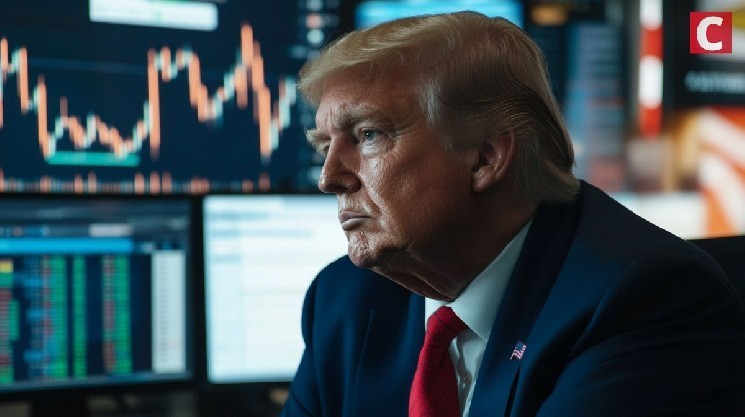
Распределение доходов семьи Трампа. Источник: The New Yorker.

В материале приводятся различные сделки, но мы остановимся подробнее именно на криптовалютных проектах Трампа. Интерес к этой сфере у семьи президента возник после того, как некоторые крупные банки отказали им в обслуживании, говорится в статье.

Более того, ранее об этом говорил сын политика — Эрик Трамп. Первым начинаем президента в криптосфере стал запуск нескольких NFT-коллекций в сотрудничестве с Биллом Занкером, что принесло ему $14,4 млн.

Также среди поступлений стоит отметить:

  • $412,5 млн от инвестиций в криптоактивы;
  • $243 млн от сделок властей Эмиратов с платформой World Liberty Financial и стейблкоином USD1;
  • $13 млн от сделок, связанных с предприятием American Bitcoin;
  • $1,3 млрд в виде доли Трампа и в компании Trump Media & Technology Group;
  • $385 млн на мемкоинах TRUMP и MELANIA.

Отметим, потенциальный конфликт интересов Трампа вызывает вопросы не только у прессы, но и у некоторых политиков. В частности, демократы подали несколько законопроектов, призванных ограничить возможность президента зарабатывать на криптоактивах. Однако пока что ни один из них не вступил в силу.
Lecturas Relacionadas

Sevenfold Oversubscription, Can SK Hynix Save the Semiconductor Industry This Time?

SK Hynix's planned US ADR listing is drawing intense interest, with its offering reportedly oversubscribed by over seven times, potentially making it the largest foreign listing in US history. The fundraising of approximately $24.5 billion is intended for expanding its Korean production capacity, including advanced packaging and EUV equipment. This massive demand from long-term funds and prominent institutions like Baillie Gifford and Situational Awareness Partners (led by noted investor Leopold Aschenbrenner) presents a stark contrast to the recent downturn in the broader semiconductor sector. The sector has faced a significant correction, with SK Hynix's own stock falling nearly 30% from its June high. This sell-off was triggered by concerns that major tech giants might slow their AI infrastructure spending, following signals like Meta's reported plan to sell surplus computing capacity. The strong ADR appetite suggests long-term investors still believe in the AI investment cycle's fundamentals, viewing the recent decline more as a valuation reset than a demand collapse. Some market speculation even suggests the pre-IPO price drop could be strategic, setting the stage for a stronger post-listing performance. While SK Hynix's successful listing may act as a short-term positive catalyst for market sentiment, the article argues the true signal for a sustained semiconductor recovery will come from upcoming earnings reports of tech giants like Microsoft, Google, Meta, and Amazon. Their future capital expenditure plans will be crucial in determining whether the AI-driven growth cycle can continue.

Odaily星球日报Hace 9 min(s)

Sevenfold Oversubscription, Can SK Hynix Save the Semiconductor Industry This Time?

Odaily星球日报Hace 9 min(s)

Breaking News: Musk Delivers the Most Powerful Grok 4.5, Slashes Price of Top-tier Opus Intelligence Drastically

**Elon Musk Launches Grok 4.5: A Cost-Effective, High-Performance AI Rival** SpaceXAI, in collaboration with Cursor, has released Grok 4.5, its new flagship AI model designed specifically for coding and agentic tasks. Trained on tens of thousands of NVIDIA GB300 GPUs using massive, high-quality data filtered from trillions of Cursor developer interactions, the model emphasizes "per-token intelligence." In benchmark performance, Grok 4.5 is highly competitive. It scores 64.7% on SWE Bench Pro (surpassing GPT-5.5's 58.6% and Opus 4.7's 64.3%), 83.3% on Terminal Bench 2.1 (nearly matching GPT-5.5), and 62.0% on DeepSWE 1.0 (beating Opus 4.8). Overall, it ranks fourth in AAAI official tests and first in the Harvey legal agent benchmark. The model's key advantage is its combination of speed, efficiency, and low cost. It generates responses at 80 tokens per second and, crucially, uses far fewer tokens to complete tasks—4.2 times fewer than Opus 4.8 on SWE Bench Pro. It is priced at $2 per million input tokens and $6 per million output tokens, significantly undercutting competitors. Musk stated it is "roughly equivalent to Opus 4.7, but much faster." Early user tests show Grok 4.5 can generate functional code for applications like 3D solar system simulators and basic games from simple prompts, though some note it still lags behind top models in certain creative tasks. Musk has hinted at a major update next month, leveraging real-world engineering data from his companies, with an even larger 2-trillion parameter version reportedly in development. Grok 4.5 positions itself not as the absolute strongest model, but as a highly efficient and affordable alternative in the top tier.

marsbitHace 13 min(s)

Breaking News: Musk Delivers the Most Powerful Grok 4.5, Slashes Price of Top-tier Opus Intelligence Drastically

marsbitHace 13 min(s)

Today, The Hong Kong Exchange Was Once Again Overwhelmed

Hong Kong's stock exchange witnessed an exceptionally busy day on July 9, with a record seven companies conducting initial public offerings (IPOs) simultaneously. The list included major firms such as Luxshare Precision, which launched the largest Hong Kong IPO of the year, and other notable names like Tri-Ring Group and Qiyunshan Food. However, the market reception was sharply divided on the first trading day. While Qiyunshan Food's shares surged over 110%, several other newcomers, including Luxshare Precision, Dingtai High-Tech, and Rigol Technologies, opened below their issue prices, with some falling nearly 20%. This event highlights a broader, bustling IPO scene in Hong Kong for 2024, with 82 Chinese companies listing in the first half alone—more than double the figure from the same period last year. A significant portion of this activity comes from dual "A+H" listings, where mainland China-listed firms seek secondary listings in Hong Kong. These larger companies have accounted for nearly 60% of total fundraising. Despite the high volume, recent trends show a cooling market sentiment for many new listings. Several IPOs in early July, including that of Tongrentang Healthcare, debuted with significant losses, indicating increased investor caution and selectivity. The market narrative is shifting, with capital increasingly concentrating on high-growth sectors like artificial intelligence, robotics, and semiconductors, while traditional manufacturing and consumer goods face greater pressure and volatility. This divergence underscores a market where success is no longer guaranteed by merely listing, but depends heavily on a company's growth prospects and sector appeal.

marsbitHace 17 min(s)

Today, The Hong Kong Exchange Was Once Again Overwhelmed

marsbitHace 17 min(s)

Glassnode: Crypto Market Enters Later Stages of Bottoming Phase

Glassnode: Crypto Market Enters Later Stages of Bottom Formation Bitcoin has traded below the true market average and the short-term holder cost basis for five consecutive months, indicating a deep undervaluation. On-chain data reveals a significant shift in selling pressure, with long-term holders now accounting for 43% of all realized losses. Daily realized losses for this group recently peaked at $280 million, the highest level since December 2022. While this large-scale capitulation is a hallmark of bear market bottoms, a sustained decline in this metric is a prerequisite for a sustained recovery. Institutional demand remains weak. US spot Bitcoin ETFs continue to see monthly net outflows, although the pace has moderated from June's peak. Furthermore, average daily ETF trading volumes have contracted by approximately 80% from their October 2025 peak, reflecting subdued institutional participation. Derivatives markets present a mixed picture. Overall positioning has shifted to cautiously bullish, with the put/call ratio dropping to a yearly low. However, the options volatility skew remains elevated, signaling that traders are still paying a premium for downside protection. The spot price also trades below the gamma "max pain" level. In summary, multiple indicators suggest the market is in the later phases of a bottoming process, characterized by long-term holder capitulation and weak institutional inflows. However, key confirmation signals for a durable trend reversal—a sustained drop in long-term holder selling pressure, stabilization of ETF flows, and a price recovery above key cost bases—are still pending.

Foresight NewsHace 44 min(s)

Glassnode: Crypto Market Enters Later Stages of Bottoming Phase

Foresight NewsHace 44 min(s)

Trading

Spot
活动图片