$300,000 Gold-Plated Trump Statue: The Crazy Marketing of a Meme Coin

marsbitPublicado a 2026-02-04Actualizado a 2026-02-04

Resumen

A group of cryptocurrency investors spent $300,000 to commission a 15-foot-tall, gold-plated bronze statue of former President Donald Trump, dubbed "Don Colossus," as part of a marketing campaign for a meme token called PATRIOT. The statue, designed by sculptor Alan Cottrill, was intended to capitalize on Trump’s pro-crypto stance and generate social media buzz. Despite initial excitement and plans for a unveiling at Trump’s Florida golf resort, the project faced delays, internal disputes, and a sharp decline in the token’s value. Cottrill accused the investors of using his copyrighted work without full payment, while organizers claimed the token was meant to fund the statue. Although a base was installed at the resort, Trump’s son Eric later denied any involvement with the token. The effort highlights the speculative and often chaotic nature of meme coin ventures.

Written by: David Yaffe-Bellany, The New York Times

Compiled by: Luffy, Foresight News

This statue of President Trump is called "Don Colossus." It stands 15 feet tall, mounted on a base weighing 7,000 pounds, making its total height comparable to a two-story building. The giant statue is cast in bronze and plated with a thick layer of gold leaf. (Note: Don Colossus translates literally to "Giant Don," referring to Trump as a giant.)

For over a year, this gold-plated statue has been at the heart of one of the strangest money-making schemes of the Trump era. A group of cryptocurrency investors spent $300,000 to commission a sculptor to create this statue as a tribute to Trump, who has been outspoken in his support for cryptocurrency.

Subsequently, they used the statue to promote a Meme coin called PATRIOT.

Now, unexpectedly, this plan seems to be coming to fruition. Last month, a base made of concrete and stainless steel was installed at Trump's golf resort complex in Doral, Florida. According to message records reviewed by The New York Times, Mark Burns, a close associate of Trump and one of the organizers of the plan, told collaborators that the President plans to attend the local unveiling ceremony for the statue.

"The statue looks great," Trump wrote in a letter to Burns last December.
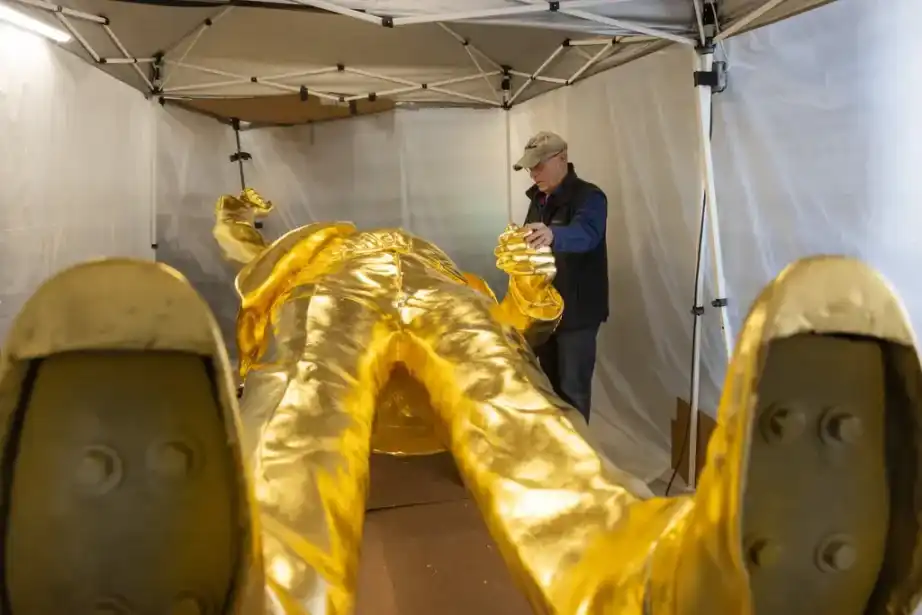
Alan Cottrill inspects his designed gold-plated statue of President Trump in Zanesville, Ohio

Almost everyone in the cryptocurrency space has tried to profit from Trump's presidency: either by striking business deals with his family or seeking regulatory leniency from his administration. But few have been as audacious as the backers of PATRIOT.

Meme coins are a type of cryptocurrency with almost no function other than speculation, often built around viral internet jokes or celebrity images, their value depends entirely on what online fans are willing to pay. The key to creating a Meme coin is generating enough online buzz to make potential buyers believe its price will keep rising.

Building a giant statue is an expensive way to create social media hype, but it's also a potentially profitable plan. According to one of the organizers, the investors who funded the statue received large quantities of the token, the price of which sometimes skyrocketed. For months, supporters of "Don Colossus" posted progress pictures of the statue's creation on platform X, forging alliances within the "Make America Great Again" camp, aiming for a marketing coup: getting the statue placed on Trump's official property.

In late 2024, the PATRIOT Meme coin was officially launched, coinciding with Trump's promise to make the U.S. the "crypto capital of the world." The token's price surged initially. During an event in Washington on the presidential inauguration weekend, the token's supporters presented a miniature bronze statue to Trump's former advisor Steve Bannon and interacted with other conservative figures.

But repeated project delays and internal disputes cast a shadow over this money-making scheme, offering a glimpse into the volatility of the Meme coin market: a market rife with scams where investors often end up losing everything. Last year, PATRIOT's price plummeted, nearly reaching zero. To rush the completion of the statue and boost the token, investors also clashed with Alan Cottrill, the sculptor based in Ohio.

In text messages reviewed by The New York Times, Cottrill stated that the investors still owed him $75,000 for the intellectual property rights to the statue.

"You are using my copyrighted statue image to market your token!" he wrote in a message to one of the token supporters last month.

"Yeah, haha, we planned to do that from day one," replied Ashley Sansalone. Sansalone is a cryptocurrency developer involved in another token project called Elon GOAT, besides PATRIOT.
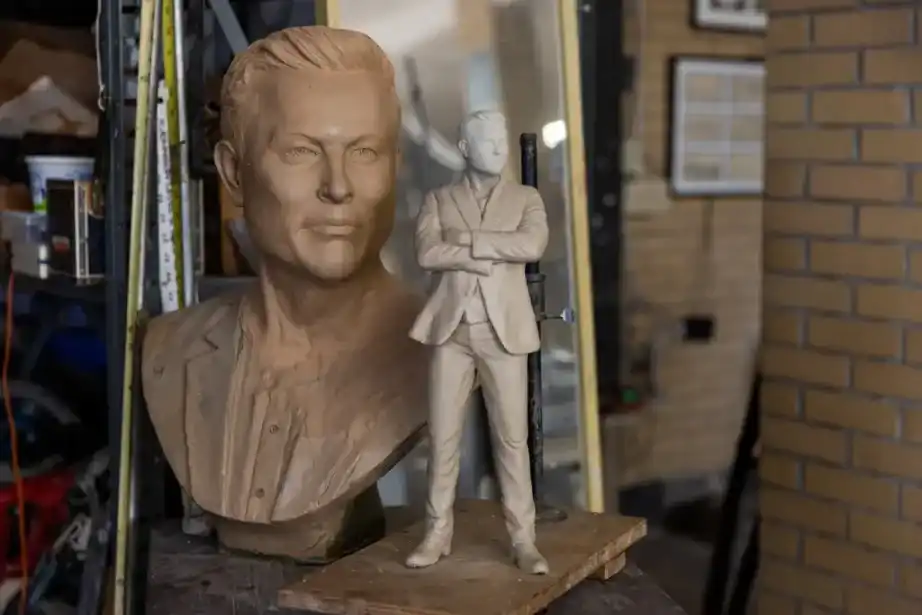
An Elon Musk sculpture commissioned and designed by Alan Cottrill

Sansalone said in a statement that Cottrill would be paid in full before the statue's unveiling. "In any commercial agreement, a portion of the payment is withheld until the finished product is delivered," he said.

But it remains unclear when the statue will actually be officially displayed.

This past Monday, after The New York Times inquired with the White House and the Trump Organization about the PATRIOT token, the president's son Eric Trump posted a related statement on platform X.

"We appreciate everyone's support and enthusiasm," he said, "but it must be clear that we are not involved in any matters related to this token."

Creating "Don Colossus"

The plan to create "Don Colossus" was born in a group chat on the instant messaging app Telegram, a platform where cryptocurrency enthusiasts often exchange investment tips and promote tokens. It was July 2024, just after Trump had narrowly survived an assassination attempt in Butler, Pennsylvania, where he raised his fist defiantly.

Sansalone wanted to make this defiant image the core of a Meme coin. He collaborated with right-wing activist Dustin Stockton, and well-connected cryptocurrency investor Brock Pierce, who has a history of legal and financial troubles, also joined.

Shortly after the bullet grazed Trump's ear, Sansalone contacted the 73-year-old Cottrill, whose bronze statue of Edison is now displayed in the U.S. Capitol. Over the years, Cottrill has created statues of over a dozen U.S. presidents, including 10-foot-tall memorial statues of George Washington and Thomas Jefferson.
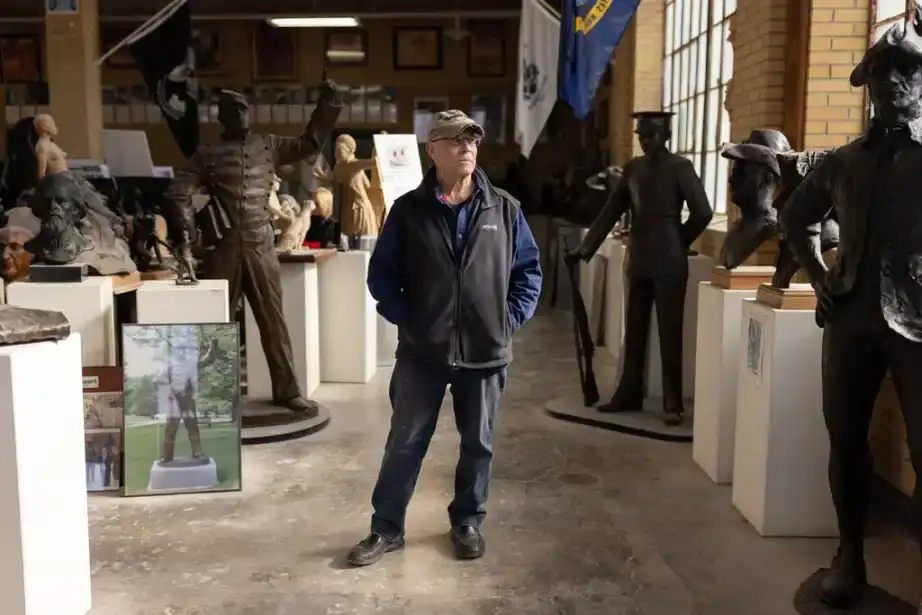
Cottrill stands in a room filled with sculptures

The cryptocurrency investors wanted Trump's statue to be taller than his previous works and requested some aesthetic modifications.

"My initial sculpture was very realistic," Cottrill said in an interview last month. "Those crypto guys asked me to trim some of the fat on his neck and slim down his figure a bit."

By the time of Trump's inauguration, Cottrill had completed the statue. The giant bronze figure, not yet gold-plated, was the tallest he had ever made. Last December, Trump reposted a Breitbart News article about the project on social media. The article stated that Stockton was communicating with the presidential inaugural committee about plans to hold a statue unveiling ceremony during the inauguration weekend.

The timing of this repost was perfect: the PATRIOT token had just been launched.

The official website read: "The crypto token for the people, the statue that no one can erase."

But then, the project suffered two major setbacks. Freezing weather in Washington caused a series of logistical problems, forcing the statue unveiling plan to be shelved; and shortly before the inauguration, Trump launched his own Meme coin, TRUMP.

As cryptocurrency traders scrambled to buy the official token, Stockton and Pierce held a "Patriot Awards" event at the National Press Club in Washington, handing out miniature models of the statue.

"The atmosphere suddenly cooled because Trump's token price suddenly skyrocketed," Cottrill said.

By the end of January, the price of PATRIOT had plummeted by over 90%.

"A Prime Location"

Despite this setback, the cryptocurrency investors continued their marketing push. Last February, the disgraced former Congressman George Santos displayed a miniature Trump statue on Fox News, specifically mentioning the PATRIOT token.
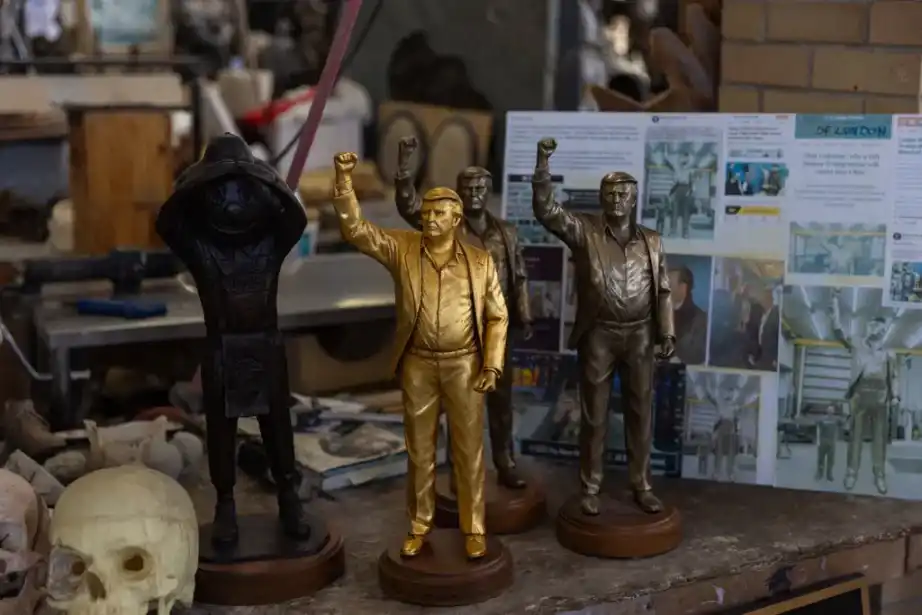
A small gold-plated statue of Trump with a raised fist, surrounded by several darker versions of the same statue

Stockton reposted the video on platform X, proclaiming: "This kind of exposure is priceless!" In a brief phone interview, Santos said: "I was paid to advertise it, I'm always upfront about that."

The investors also courted another influential ally: Burns. The prominent pastor is a confidant of Trump and is sometimes referred to as the president's informal "spiritual advisor."

After Pierce introduced him to the project team, Burns began participating in the statue-related work. He quickly became a key figure in reviving the project, suggesting that the bronze statue be plated with gold leaf.

"The President just asked me for photos of the statue after it's gold-plated," Burns wrote in a message to collaborators last November.

Trump's wish eventually came true. Sansalone informed the team that he had consulted a gold leaf supplier in New York that had previously provided decorations for Trump Tower. Cottrill also shared the latest finished photos of the statue.

"So dazzling, so exquisite," Sansalone replied.

"Wow...... sending this to the President now," Burns wrote.

Clearly, Trump was impressed by the statue. Last month, Cottrill traveled to Florida to install the 7,000-pound base at the Trump National Doral golf resort complex. Stockton boasted on social media that it was a "prime location." Burns said in a text message to collaborators in January that White House schedulers were "actively finalizing" the date for the President to attend the official statue unveiling ceremony.

Trump National Doral Golf Club in Florida

This should have been Cottrill's moment of glory, but he says he has had enough of the cryptocurrency investors behind it.

Cottrill stated that it wasn't until the fall of 2024 that he discovered these cryptocurrency investors were using images of his work to market a digital currency, which he believed infringed on his intellectual property.

Eventually, he reached an agreement with the investors: they would pay a $150,000 copyright fee for the statue. But he claims he has not received the remaining payment, and with other outstanding fees, they still owe him about $90,000 in total.
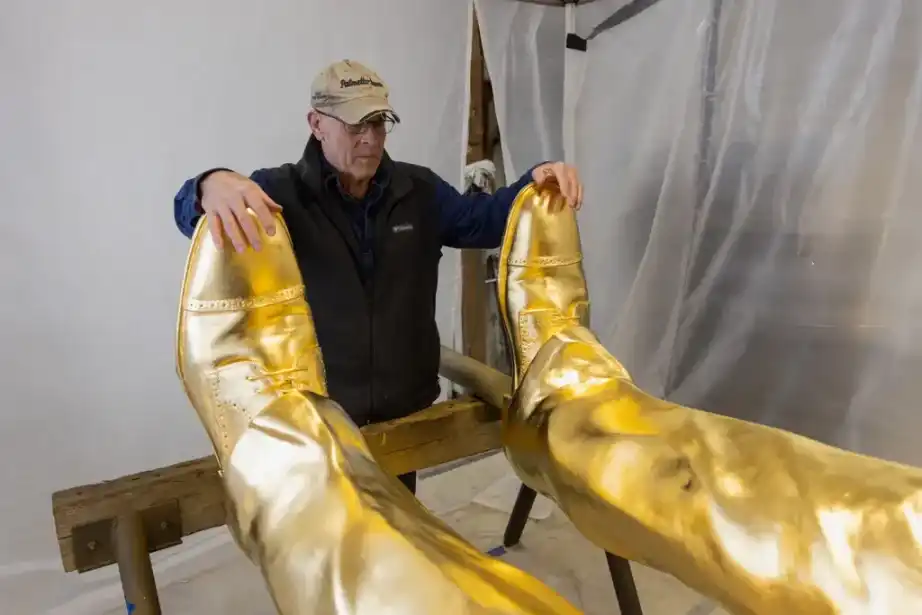
Cryptocurrency investors demanded that Trump's statue be sufficiently large and requested some aesthetic modifications

"In my view, they never actually acquired this intellectual property and are now using it illegally," he said. "Unless all debts are settled, this statue will absolutely not leave my foundry."

But the organizers of the plan argue that this project hasn't actually made much money.

Burns said he never asked for or received any payment. Stockton said in an interview that the PATRIOT token was merely a financing tool intended "to provide funding support for various matters related to the statue."

"I haven't seen anyone make big money from this," Stockton said.

Kimberly Benza, a spokesperson for the Trump Organization, said the company was unaware of the existence of this Meme coin until The New York Times inquired about it this week. She did not respond to questions about whether the statue unveiling ceremony would proceed as planned.

The farce has not stopped the project's promotion on social media. An X account associated with the token recently posted photos of the statue base in Doral and pinned a message detailing how to purchase the Meme coin.

"The dream is still alive," Sansalone said during a live stream with Burns on January 16th.

In addition to the giant statue, the team also hopes to present Trump with a gold-plated miniature version of the same statue. "We hope to have a piece displayed in the Oval Office," Sansalone said.

Criptos en tendencia

Preguntas relacionadas

QWhat is the main purpose behind the creation of the 'Don Colossus' golden statue of Donald Trump?

AThe main purpose was to promote a meme cryptocurrency called PATRIOT, using the statue as a marketing tool to generate hype and attract investors.

QWho was the sculptor commissioned to create the Trump statue, and what was his primary complaint?

AThe sculptor was Alan Cottrill. His primary complaint was that the cryptocurrency investors were using his copyrighted statue image to market their PATRIOT token without fully paying him the agreed-upon intellectual property fees, which he claimed they still owed him approximately $90,000.

QWhat significant event caused the price of the PATRIOT token to plummet shortly after its launch?

AThe price of the PATRIOT token plummeted by over 90% after Donald Trump launched his own official meme token, TRUMP, which caused investors to shift their focus and capital away from PATRIOT.

QWhich key Trump ally, described as an 'informal spiritual advisor,' became involved in promoting the statue project?

APastor Mark Burns, a key Trump ally and informal spiritual advisor, became involved in promoting the project, communicating with Trump about it and helping to arrange its placement.

QWhat was the official response from the Trump Organization regarding their involvement with the PATRIOT meme coin?

AA spokesperson for the Trump Organization, Kimberly Benza, stated that the company was not aware of the PATRIOT meme coin until contacted by The New York Times and emphasized that they were not involved in any aspect of the token.

Lecturas Relacionadas

GPT-5.6 Countdown: Abandon the Illusion of a Single API, Computational Iteration Can't Outpace a Single Page of Compliance

In mid-June, three seemingly independent industry events—the compliance-driven throttling of Fable 5, the open-sourcing of GLM-5.2, and the leaked release timeline for GPT-5.6—are pushing the global AI industry toward a watershed moment. These shifts signal a fundamental restructuring of the industry's underlying logic. First, **"usability" has substantially overtaken "advanced capabilities"** as the primary weight, pushing the global large language model (LLM) supply chain into a "dual-track" phase of controlled closed-source and local open-source coexistence. Second, **the competitive moats of closed-source giants are shifting**. Their technical focus is moving from "language intelligence" toward "spatial intelligence (world models)"—a domain heavily reliant on computing power. Third, faced with常态化 transnational compliance risks, **a "model-agnostic" decoupled design has become a survival necessity for application-layer developers to maintain business continuity.** The article details how Anthropic's Fable 5, despite its advanced engineering feats, was restricted for non-U.S. citizens within 72 hours of launch, highlighting how geopolitical compliance can instantly limit even the most advanced models. In response, the open-source camp, exemplified by Zhipu AI's MIT-licensed GLM-5.2, is gaining market share by offering stable performance improvements and significant cost advantages (up to 70% savings for enterprises), while achieving full adaptation with domestic semiconductor platforms. Meanwhile, closed-source leaders like OpenAI are pivoting. The anticipated GPT-5.6 reportedly shifts focus from language to spatial intelligence and world models, aiming to rebuild a generational gap in areas like 3D understanding, simulation, and industrial design that demand immense compute. The core conclusion is that the LLM supply chain's logic has changed. Enterprises must now evaluate infrastructure based on a composite of technical performance and policy compliance. For developers, complete reliance on a single closed-source API poses unacceptable risk. Implementing a truly model-agnostic architecture—enabling swift switches to compliant, locally deployable open-source alternatives—is no longer just good practice but a fundamental baseline for business continuity.

marsbitHace 53 min(s)

GPT-5.6 Countdown: Abandon the Illusion of a Single API, Computational Iteration Can't Outpace a Single Page of Compliance

marsbitHace 53 min(s)

Is the 'Token Subsidy War' Among AI Giants Almost Over?

The article discusses the ongoing "token subsidy war" among AI giants like OpenAI and Anthropic, questioning whether it's nearing its end. It reveals that current AI subscription prices are heavily subsidized, with some plans offering tokens at up to 70 times the actual cost to attract and retain heavy users, especially developers and enterprises. This strategy mirrors past internet-era subsidy battles, but with a key difference: AI tokens lack "lock-in" effects. Unlike ride-hailing or food delivery apps, users can easily switch between AI providers as APIs become standardized, making it difficult for companies to raise prices post-subsidy. The piece highlights a structural asymmetry in the competition. Giants like Google, with massive advertising revenue, can afford to subsidize tokens indefinitely, akin to using "tokens as a weapon." In contrast, venture-backed companies like OpenAI and Anthropic face pressure to become profitable, especially as they approach IPO. The article cites Google Ventures founder Bill Maris, who suggests Google could slash token prices by 80%, putting immense pressure on competitors. Two potential endgames are presented: the "internet service" model (subsidize, monopolize, then raise prices) and the "utility" model (tokens become a standardized, low-margin commodity like electricity). Given the low switching costs, the latter seems more likely. The competition may not have a single winner but could instead accelerate AI's evolution into a foundational, infrastructure-level technology, akin to a public utility. For now, users continue to benefit from heavily subsidized token costs.

marsbitHace 1 hora(s)

Is the 'Token Subsidy War' Among AI Giants Almost Over?

marsbitHace 1 hora(s)

Beyond the Stadium: The Profitable Games Surrounding the World Cup

"Beyond the Pitch: The Profit Game Around the World Cup" The FIFA World Cup transcends being a sporting spectacle, evolving into a massive global arena for speculation and profit-seeking. The 2026 tournament has amplified this dynamic, creating a multi-layered ecosystem of financial opportunism alongside the football. **Prediction markets** have surged into the mainstream. Platforms like Polymarket and Kalshi saw trading volumes for World Cup contracts soar, attracting new users with their financial trading model and high-profile, chain-based wealth stories that overshadow traditional sports betting in terms of growth and narrative. However, **traditional sportsbooks** remain the dominant force, leveraging established user habits, legal markets, and comprehensive product offerings to handle the vast majority of speculative wagers, with projections suggesting record-breaking betting volumes. Capital markets also react. **"Concept stocks"** in countries like South Korea and Japan experience volatile price swings based on team performance and anticipated fan spending on items like chicken, beer, and viewing parties, effectively becoming a stock market reflecting fan sentiment. The **ticket resale market** has become a sophisticated arena for arbitrage. Prices fluctuate wildly based on team draws and star power, with sellers sometimes listing tickets they don't yet own in a practice akin to short-selling, while FIFA's own "Right to Buy" tokens add another layer of speculative trading. **Collectibles and merchandise** offer another avenue. Panini sticker albums, with their inherent scarcity and nostalgic value, can become high-value collectibles. Limited-edition or locally themed jerseys command significant premiums on secondary markets, and even counterfeit vendors profit from fans' desire for affordable match-day identity. The **cryptocurrency** space has seen a frenzy of speculative, unauthorized World Cup-themed meme coins on chains like Solana. These tokens, often exploiting team names and player imagery, experience extreme pump-and-dump cycles, creating stories of massive gains for a few early entrants and steep losses for many others. Finally, an entire industry thrives on **providing information and tools** to other speculators. Developers create platforms like SeatSidekick to track ticket inventory and prices, while paid Telegram groups and subscriptions sell betting tips and predictions, monetizing the widespread desire for an informational edge. In essence, the World Cup has become a compressed, global laboratory for speculation. While the games determine champions on the field, a parallel, complex network of financial transactions—spanning prediction contracts, bets, stocks, tickets, collectibles, crypto, and information services—settles its own scores in the global market.

marsbitHace 1 hora(s)

Beyond the Stadium: The Profitable Games Surrounding the World Cup

marsbitHace 1 hora(s)

How Does Codex Use a Computer? Three Entry Points and Permission Boundaries

This article explains the three primary methods for Codex to interact with a computer, each with distinct use cases, permission boundaries, and trust levels. **1. Computer Use:** This offers the broadest access, allowing Codex to visually control and interact with the graphical user interface of authorized macOS/Windows apps, system settings, and even iOS simulators. It's ideal for tasks lacking APIs or structured tools, such as operating legacy software or multi-app workflows. However, it's the slowest method and has the widest permission scope, requiring careful supervision for sensitive actions. **2. Chrome Extension:** This grants Codex access to the user's logged-in Chrome browser state, including cookies, profiles, and open tabs. It's best for tasks requiring user identity across websites like Gmail, LinkedIn, Salesforce, or internal dashboards. Its key advantage is multi-tab control for complex workflows. While more powerful for browser-based tasks than Computer Use, it carries higher sensitivity as actions are performed under the user's identity. **3. In-App Browser:** This is a browser isolated within the Codex thread, separate from the user's personal browsing data. It excels in web development and debugging scenarios—previewing local servers, testing responsive layouts, or annotating designs directly on the page. Its isolation is a strength for development but a limitation for tasks requiring login sessions. The core principle is to choose the narrowest, safest, and most structured interface for the task. Use plugins or MCPs first, resort to visual control (Computer Use) only for GUI-dependent tasks, employ the Chrome extension for identity-reliant browser work, and prefer the In-App Browser for isolated development. **Appshots** are clarified as a fourth, complementary tool for *inputting* context—capturing a screenshot of a window to point Codex to something—rather than a method for Codex to *act*. Together, this layered approach highlights a key to AI agent productization: not granting unlimited permissions, but constraining them within clear boundaries for specific tasks while preserving user oversight.

marsbitHace 3 hora(s)

How Does Codex Use a Computer? Three Entry Points and Permission Boundaries

marsbitHace 3 hora(s)

Trading

Spot
Futuros

Artículos destacados

Qué es MEME 2.0

Memecoin 2.0: El Ascenso de $MEME 2.0 en el Mundo de las Criptomonedas Introducción En el panorama siempre cambiante de las criptomonedas, ha surgido un nuevo contendiente. Memecoin 2.0, simbolizada como $MEME 2.0, lleva el concepto de las monedas meme a un emocionante nuevo nivel. Como un subproducto del Memecoin original, este proyecto ha capturado la atención de la comunidad cripto al cambiar el enfoque de los incentivos financieros típicos a una experiencia comprometida y entretenida. Operando en la blockchain de Ethereum, Memecoin 2.0 redefine audazmente la participación de la comunidad en la esfera cripto. ¿Qué es Memecoin 2.0, $MEME 2.0? En su núcleo, Memecoin 2.0 es un proyecto de criptomoneda que prioriza el espíritu comunitario y la diversión asociada con la cultura meme. A diferencia de las criptomonedas convencionales, que se concentran en casos de uso prácticos y beneficios tangibles, Memecoin 2.0 se distingue al abrazar el lado más liviano de la moneda digital. El proyecto existe sin promesas de utilidad, un mapa estructurado o retornos financieros, enfocándose en cambio en fomentar una comunidad vibrante centrada en memes y en el disfrute compartido. Al hacerlo, aprovecha la creciente tendencia de la cultura meme en el espacio en línea, convirtiéndose en un jugador único en el mundo de los activos digitales. Creador de Memecoin 2.0, $MEME 2.0 A pesar de la extensa investigación sobre los orígenes de Memecoin 2.0, la identidad explícita de su creador sigue siendo desconocida. Esta anonimidad no es inusual en la comunidad cripto, donde muchos proyectos son liderados por individuos o grupos que prefieren permanecer en las sombras. La falta de información disponible públicamente sobre el creador podría verse como un movimiento estratégico, poniendo el foco en la participación comunitaria en lugar de la notoriedad individual dentro del espacio. Inversores de Memecoin 2.0, $MEME 2.0 La información sobre los inversores o el respaldo financiero de Memecoin 2.0 es escasa. Esta ausencia de detalles puede sugerir que el proyecto es autofinanciado o que su enfoque en la comunidad en lugar de las estructuras de inversión tradicionales ha atraído a un tipo diferente de apoyo. Dado que el mundo de las monedas meme generalmente involucra una participación más de base en lugar de inversión institucional, este enfoque está alineado con la ética de los proyectos impulsados por la comunidad. ¿Cómo Funciona Memecoin 2.0, $MEME 2.0? Memecoin 2.0 opera completamente en la blockchain de Ethereum, capitalizando sus robustas características de seguridad y escalabilidad. Al aprovechar las fortalezas de Ethereum, Memecoin 2.0 puede ofrecer un entorno seguro para las interacciones de los usuarios, asegurando que las transacciones sean tanto eficientes como rentables. Uno de los atributos únicos de Memecoin 2.0 radica en su estructura impulsada por la comunidad. El valor y la popularidad del token $MEME 2.0 derivan de la participación activa de sus usuarios, en vez de de una utilidad inherente. Este diseño refuerza el enfoque del proyecto en el aspecto de entretenimiento de las criptomonedas, lo que implica que la risa y la participación comunitaria son las verdaderas monedas que impulsan su éxito. Además, el proyecto encaja dentro del ecosistema más amplio de las monedas meme, donde el valor de cada moneda meme oscila basado en la cultura, tendencias y la participación de la comunidad, en lugar de principios económicos tradicionales. Cronología de Memecoin 2.0, $MEME 2.0 Para entender mejor la evolución y los hitos de Memecoin 2.0, aquí hay una cronología que destaca eventos significativos en su historia: 2024: Se reconoce la creación de Memecoin 2.0 como una ramificación del Memecoin original, estableciéndose dentro del contexto próspero de las monedas meme mientras opera en la blockchain de Ethereum. 13 de julio de 2024: Memecoin 2.0 se posiciona oficialmente como una moneda meme centrada en la comunidad en la red de Ethereum, enfatizando su enfoque centrado en el entretenimiento que invita a los usuarios a participar y crecer. Puntos Clave Sobre Memecoin 2.0, $MEME 2.0 Varios rasgos críticos definen a Memecoin 2.0: Enfoque Centrado en la Comunidad: La misión principal de Memecoin 2.0 es crear una experiencia comunitaria divertida y atractiva, capitalizando en el disfrute colectivo derivado de la cultura memética. Construido sobre Ethereum: Operar en la blockchain de Ethereum proporciona al proyecto una infraestructura esencial que garantiza seguridad y escalabilidad. Falta de Utilidad o Hoja de Ruta: En un notable desvío de las criptomonedas tradicionales, Memecoin 2.0 no promete características utilitarias ni retornos financieros, reafirmando su compromiso con la participación comunitaria y el compromiso social. Enfoque en la Cultura Memética: Al abrazar los aspectos humorísticos y culturales del fenómeno meme, Memecoin 2.0 proporciona una plataforma para que los usuarios interactúen con cripto tanto fuera de línea como en línea. Contexto Adicional: La Importancia de las Monedas Meme Las monedas meme han surgido como una clase distinta de criptomonedas, a menudo impulsadas por el humor y un enfoque desenfadado para el comercio. Estas monedas generalmente carecen de una utilidad significativa o hojas de ruta de desarrollo, atrayendo a los usuarios con la promesa de diversión, interacción comunitaria y relevancia cultural. En el panorama del ecosistema cripto más amplio, las monedas meme reviven la importancia de la participación comunitaria, revirtiendo enfoques únicamente motivados por el lucro. Proyectos como Memecoin 2.0 inauguran una era donde el entretenimiento puede armonizar con las aspiraciones financieras, convirtiendo la blockchain en un parque de diversiones para la creatividad y la interacción social. Conclusión Memecoin 2.0, o $MEME 2.0, encarna una nueva ola de criptomonedas que prioriza la participación comunitaria sobre estructuras financieras rígidas. Con un enfoque en el humor y la interacción social, capitaliza sobre la fascinación que rodea la cultura meme. Al operar en la blockchain de Ethereum, Memecoin 2.0 aprovecha las capacidades de la tecnología mientras se mantiene firme en su compromiso con el valor de entretenimiento de la moneda digital. A medida que el espacio alrededor de las criptomonedas continúa evolucionando, Memecoin 2.0 sirve como un testimonio de la noción de que el futuro de los activos digitales podría depender, en gran medida, de experiencias compartidas, risas y sólidas conexiones comunitarias. En el mundo impredecible de las criptomonedas, quizás la alegría pueda ser tan valiosa como la ganancia financiera tradicional.

103 Vistas totalesPublicado en 2024.04.04Actualizado en 2024.12.03

Qué es MEME 2.0

Cómo comprar MEME

¡Bienvenido a HTX.com! Hemos hecho que comprar Memeland (MEME) sea simple y conveniente. Sigue nuestra guía paso a paso para iniciar tu viaje de criptos.Paso 1: crea tu cuenta HTXUtiliza tu correo electrónico o número de teléfono para registrarte y obtener una cuenta gratuita en HTX. Experimenta un proceso de registro sin complicaciones y desbloquea todas las funciones.Obtener mi cuentaPaso 2: ve a Comprar cripto y elige tu método de pagoTarjeta de crédito/débito: usa tu Visa o Mastercard para comprar Memeland (MEME) al instante.Saldo: utiliza fondos del saldo de tu cuenta HTX para tradear sin problemas.Terceros: hemos agregado métodos de pago populares como Google Pay y Apple Pay para mejorar la comodidad.P2P: tradear directamente con otros usuarios en HTX.Over-the-Counter (OTC): ofrecemos servicios personalizados y tipos de cambio competitivos para los traders.Paso 3: guarda tu Memeland (MEME)Después de comprar tu Memeland (MEME), guárdalo en tu cuenta HTX. Alternativamente, puedes enviarlo a otro lugar mediante transferencia blockchain o utilizarlo para tradear otras criptomonedas.Paso 4: tradear Memeland (MEME)Tradear fácilmente con Memeland (MEME) en HTX's mercado spot. Simplemente accede a tu cuenta, selecciona tu par de trading, ejecuta tus trades y monitorea en tiempo real. Ofrecemos una experiencia fácil de usar tanto para principiantes como para traders experimentados.

223 Vistas totalesPublicado en 2024.12.12Actualizado en 2026.06.02

Cómo comprar MEME

Discusiones

Bienvenido a la comunidad de HTX. Aquí puedes mantenerte informado sobre los últimos desarrollos de la plataforma y acceder a análisis profesionales del mercado. A continuación se presentan las opiniones de los usuarios sobre el precio de MEME (MEME).

活动图片