SEC 决定拯救自己,圈一片野草疯长

深潮Publicado a 2025-08-03Actualizado a 2025-08-04

SEC 拥抱 RWA 和 DeFi。

撰文:佐爷

1929 年的大萧条,促成 1934 年证券交易法和 SEC(美国证监会)的成立,但可惜或幸运,这取决于你是 e/acc 加速主义还是监管下的自由视角,此后的 SEC 再也没有阻止过金融创新或危机。

1998 年,LTCM(长期资本管理公司)用量化的方式折戟于俄罗斯债券,差点让 1929 年大危机重演,不妨碍 1999 年 ATS(电子交易系统)条例生效,量化、对冲和套利彻底拥抱信息技术。

2008 年金融危机后,针对暗池交易发起监管,但是暗池仍然存在,2025 年,SEC 在 Gary Gensler 离职后,决心拥抱未来的新趋势——一切都可链上化,所有都可合规化。

  • 链上化:RWA 只是起点,未来的交易、资产分配和生息,都要围绕链上进行,就像使用计算机一样去拥抱区块链;

  • 合规化:空投、质押、IXO 和 Reward,打造美国特色的超级 App(Reg Super-App),所有 DeFi 重新再美国化。

SEC 的生存危机

大萧条制造了 SEC,加密货币终结了 SEC。

SEC 监管转向时间线:Gary Gensler 下野 —> Crypto Task Force –> Project Crypto

有迹可循,SEC 针对监管活动的变迁可以分为 1 月 Gary 被离职,以及现任主席 Atkins 4 月上任后的加密新政,以成立 Crypto Task Force 为标志,到 7 月末的 Project Crypto,完成对加密的全方位「投降」。

要想明白 Project Crypto 为何会出现,还要从 4-7 月的 SEC 监管动态中找到答案,其间动作频频,一方面,Ripple、Kraken 等官司要体面结束,另一方面 Coinbase、灰度等公司愈发强势,主动要求 SEC 放松监管。

尤其是 Ripple 案成为 SEC 从「执法式监管」向「监管式服务」的标志,后续 Kraken 重启 IPO 进程证明加密概念彻底被美国监管层接受,Robinhood 也放开手脚开始推进代币化股票。

批准 BTC/ETH ETF 实物质押和赎回是最重大进步,但是更多币种,更多形式还是一例一审的状态,比如特朗普自家的 Trump 集团的 ETF 也在排队中。

敢阻挠美国太阳的加密征程,这已经不是普通的 SEC,必须出重拳!

图片说明:SEC 2025 加密监管范式变革,图片来源:@zuoyeweb3

于是特朗普选择不按常理出牌,扶植 CFTC 和开展 Genius Act 等立法动作,CFTC 已经走在扩权的路上,白宫加密货币报告更宣布实质接受现有 DeFi 的一切。

SEC 此前已经将稳定币监管「转移」至银行监管机构,更多的数字资产监管权限更多划归 CFTC,SEC 向何处去成为必须考虑的现实问题。

更重磅的 Clarity Act 还未正式成为法律,如果 SEC 再不主动作为,就要被 CFTC 彻底夺舍,尤其是稳定币的发行已经实质上触及证券法的核心,SEC 要在 Clarity Act 彻底成为法律前,从行政实践入手,抢先划分监管势力范围,造成既定事实。

但是在目前的框架下,SEC 能做的很少,比如围绕的话题包括批准更多质押型 ETF(如 SOL)、任意型币种 ETF 发行、代币化股票、证券等,以及加密企业上市和财库(DATCO)公司的批准上,SEC 的态度是以拖待变,多次延迟、暂停各类议题。

7 月 17 日,已经有传言要 SEC 计划和 CFTC 合并,就在 SEC 的 Project Crypto 出台后,CFTC 的 Crypto Sprint 计划也紧随其后,细则并不重要。

SEC 和 CFTC 分管局面将在加密货币时代终结,SEC 部门利益最大化的选择只能是拥抱新时代,放弃旧世界的一切教条。

真实世界的「链上化」

DeFi 彻底合规,离岸套利时代终结。

之前写过,Genius Act 和 Clarity Act 都未涉及专门的 DeFi 监管,前者只涉及稳定币,后者过于宏观,现在 SEC 的 Project Crypto 从行政角度详细规定,从人、财和规三个方面框住了 DeFi 的方方面面。

不必去海外,人回美国来。

一句话总结,离岸交易所、海外基金会能做的,现在都可以在美国本土干。

不管是稳定币、IXO 还是代币化(股票、债券),虽然归属监管部分有异,但是 SEC 不会随便以非法证券发行起诉,只要沟通好即可。

其次,Tornado Cash 创始人怎么判 SEC 无权干涉,但是 SEC 可以保证开发人员的安全,确保 Builder 首选美国进行开发,鼓励良性有序竞争。

DeFi 有规则,钱回美国来。

一句话总结,不要搞什么海外套壳,也无需过度纠结去中心化程度。

DeFi 涉及的代币发行、链上活动(质押、借贷、交易、投资)和奖励分发全部合规,尤其是自托管交易被上升到「美国自由主义价值观」高度,各类加密质押 ETF 会全面放开。

最后,不要离岸监管套利,可以都回美国本土投资、开发和创业,确保加密发生在美国。

RWA 有规定,币上美国链。

一句话总结,链上化正式成为主旋律。

相比于 DeFi,RWA 更有单独规定,区分为股票、债券、权益和实物等各类型,代币化股票和私募市场的代币化(Pre-IPO)的窗口敞开。

这次会是比计算机化更深刻的变革,从纸质化凭证,到电子化交易,再到全面链上化,任何可被金融化的资产,都会被代币化,少数人对多数人的信息差将被彻底消除,当然,这个可能要经历很多年。

最终,DeFi 将成为新的金融形式,而不是 TradFi 的补充,ETH 将成为美国金融霸权的新载体。
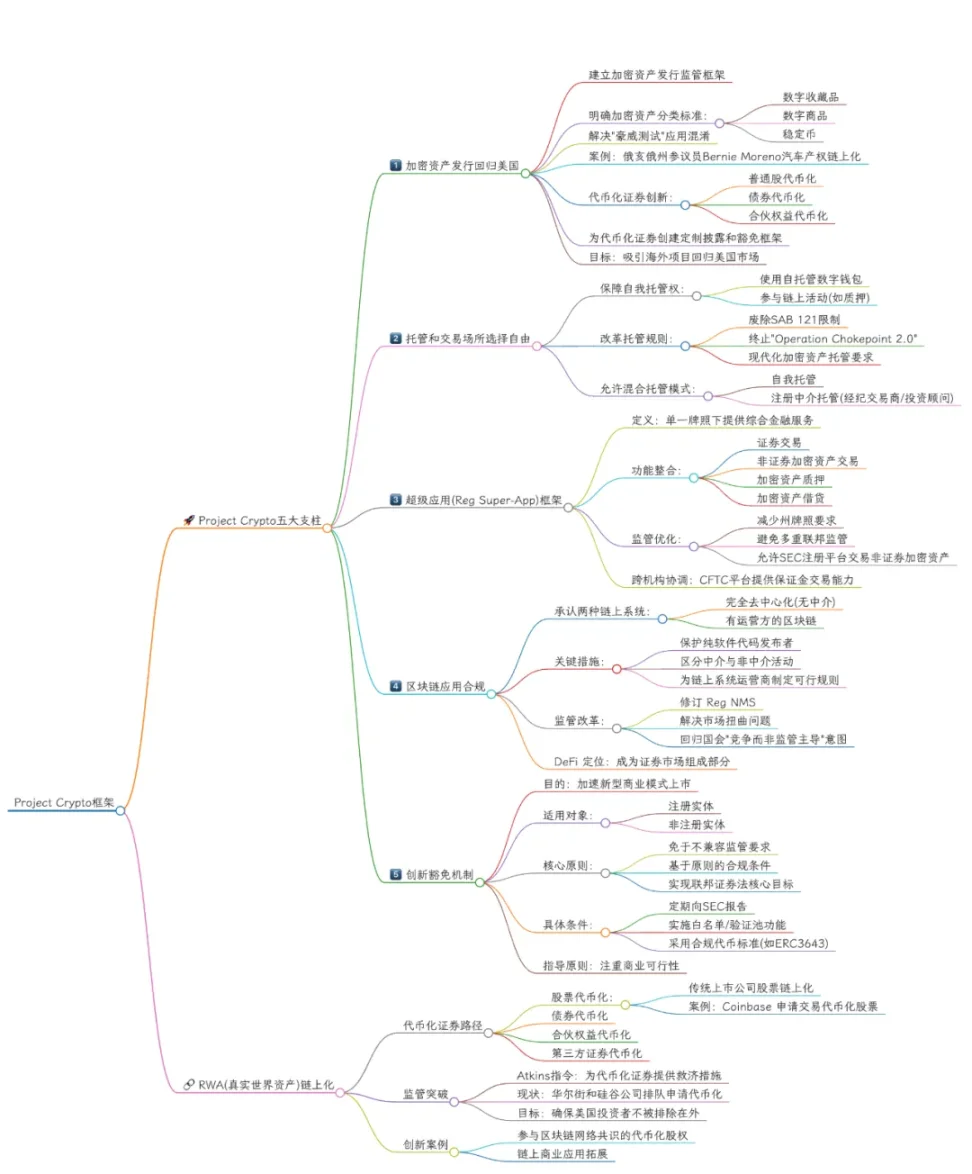
图片说明:SEC Project Crypto 框架,图片来源:@zuoyeweb3

本节标题借鉴的是 Subzero Labs 开发的 RWA L1 Rialo 的 Slogan,这次的 RWA 将不再是合成资产或者虚拟化的托管发行,而是直接打通任意资产上链的可能,比如刚上市的 Figma 也保留了发行代币化股票的选项。

股票就是代币化股票,资产就是代币化资产。

结语

金融泡沫的助推器,还是资产创新的必经之路。

今日之后,Project Crypto 可以说是 DeFi 的证券法时刻,不过部门原则能落实多少,以及能被特朗普和国会山接纳多少,那就只能听天由命。

不过,CFTC 和 SEC 将彻底融为一体,因为未来的数字商品和数字证券将难分彼此。

Lecturas Relacionadas

Treasury Secretary's Move to Suppress Treasury Yields Ignites 'Currency Debasement Trade'! Gold Hits Three-Month High, Bitcoin Surges Over 25% in a Single Week

US Treasury Secretary Besant's efforts to lower long-term Treasury yields by announcing expanded buybacks had only a brief market impact. However, this move fueled a "currency devaluation trade," weakening the US dollar while boosting both gold (to a three-month high) and Bitcoin (up over 25% for the week). Analysts attribute this reaction to deepening market concerns over the massive US fiscal deficit and structural pressures keeping long-term rates elevated, including fierce competition for capital from global government borrowing and massive AI sector financing. Despite the Treasury's actions, fundamental forces like growth, inflation, and capital demand are seen as limiting its ability to sustainably suppress yields. Bitcoin's strong positive correlation with gold has reinforced its narrative as a hedge against devaluation. While equity markets have shown resilience, some strategists warn that Treasury yields nearing 5% increase pressure on the dollar and high-leverage assets. Figures like Ray Dalio have advised reducing bond exposure in favor of gold and some Bitcoin, citing US debt risks. Market opinions are divided on the sustainability of the devaluation trade, with some noting the lack of a near-term catalyst for its next leg higher. The underlying tension between the Treasury's desire for lower borrowing costs and the Federal Reserve's focus on inflation and reducing market intervention remains a key theme. Upcoming events like Nvidia's earnings and the Jackson Hole symposium will test whether AI profits can continue supporting stocks and if the Fed aligns more with Washington's preference for easier financial conditions.

华尔街日报Hace 2 hora(s)

Treasury Secretary's Move to Suppress Treasury Yields Ignites 'Currency Debasement Trade'! Gold Hits Three-Month High, Bitcoin Surges Over 25% in a Single Week

华尔街日报Hace 2 hora(s)

Alexander Shokhin: Business Needs an Interest Rate Below 10% and the Dollar at 90-95 Rubles

Alexander Shokhin, head of the Russian Union of Industrialists and Entrepreneurs (RSPP), has advocated for potentially using "non-market" tools to keep the ruble within a target exchange rate corridor. This, he argues on August 21, would help avoid excessive volatility, though he called the topic a separate discussion. Shokhin had previously raised the idea of a currency corridor in late May, noting the ruble's current exchange rate is not fully market-driven due to a limited currency segment and reduced foreign currency demand. He stated that many business community colleagues propose fixing a corridor, even through non-market methods, to ensure predictability. The business community's key targets, as outlined by Shokhin in late December 2025, are a Central Bank key rate of 12%, inflation of 4–5%, and a US dollar exchange rate of 90–95 rubles by the end of 2026. A turning point for investment, he said, would be lowering the rate to 12% with 6% inflation, though truly comfortable business conditions would require a rate below 10%. He stressed the critical importance of currency predictability for corporate investment decisions. From a data analysis perspective, the idea of a ruble corridor is not new. A similar mechanism was used in Russia from 1995 to 1998, where the central bank held the dollar within fixed boundaries through regular interventions. This regime lasted three years before ending abruptly during the 1998 default, illustrating the fragility of rigid targets under external shocks. The macro-economic link is clear: stricter corridors require more reserves to defend against currency pressure. The key unresolved technical aspect is the specific sources and volume of such interventions given the current market's limited liquidity. Whether this discussion remains theoretical or leads to concrete corridor parameters will be seen in the coming months.

cryptonews.ruHace 3 hora(s)

Alexander Shokhin: Business Needs an Interest Rate Below 10% and the Dollar at 90-95 Rubles

cryptonews.ruHace 3 hora(s)

Trading

Spot
活动图片