Sen. Lummis Proposes Bill to Use Crypto in Home Loans

TheCryptoTimesPublicado a 2025-07-01Actualizado a 2025-07-29

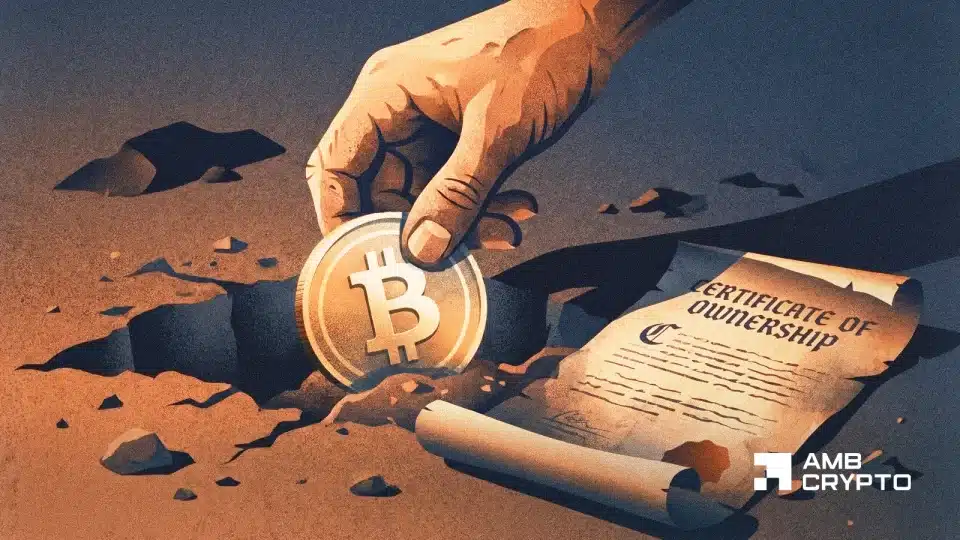
Senator Cynthia Lummis introduced a new bill called the 21st Century Mortgage Act, requiring mortgage companies, including Fannie Mae and Freddie Mac, to consider cryptocurrency holdings when evaluating single-family home loan applications. The legislation aims to help younger Americans qualify for mortgages by counting digital assets without requiring conversion to U.S. dollars.

“The American dream of homeownership is not a reality for many young people,” Lummis said in a statement on Tuesday. “This legislation embraces an innovative path to wealth-building keeping in mind the growing number of young Americans who possess digital assets.”

The proposed law would also stop lenders from requiring borrowers to convert their crypto into U.S. dollars to be considered in loan evaluations. The bill also says that people should not have to change their crypto into U.S. dollars just to qualify. This means the value of their crypto could be counted as-is.

Federal Housing Agency Directive Spurs Legislative Action

The bill comes after an order was given last month by William Pulte, Director of the U.S. Federal Housing Finance Agency (FHFA), who ordered Fannie Mae and Freddie Mac to create a plan for including crypto in their risk assessments for home loans.

The two agencies were initially created by Congress to keep the mortgage market stable by buying home loans from lenders. They play a huge role in helping people get access to financing.

These two companies were created by the government to help make sure the housing market is strong and steady. They buy home loans from banks, which helps more people get approved. Lummis’ bill is expected to turn Pulte’s idea into a real law.

Lawmakers Split Over Crypto’s Role in Housing Finance

However, not everyone is on board with the plan. Some lawmakers, like Senators Elizabeth Warren,  Bernie Sanders, and other Democrats, warned that crypto is too unstable to be used in this way.

In a letter to Pulte last week. They explained that “Expanding underwriting criteria to include the consideration of unconverted cryptocurrency assets could pose risks to the stability of the housing market and the financial system.”

In short, they fear that linking crypto with home lending could expose the housing market to the same risk seen in the digital assets market, which is often volatile.

Why This Could Matter to Young People

U.S. Census Bureau data shows only 36.6% of Americans under 35 owned homes in early 2025, the lowest rate since 1982. Simultaneously, 21% of U.S. adults now own cryptocurrency, with the majority of ownership concentrated among Americans under 45, according to 2025 adoption surveys.

The demographic overlap between declining homeownership and rising crypto adoption among young Americans provides the policy foundation for Lummis’s legislative approach. Traditional mortgage underwriting may not adequately capture the wealth profiles of crypto-native younger generations.

The legislation would prevent lenders from requiring cryptocurrency conversion to dollars for mortgage qualification purposes, allowing digital asset values to count directly toward borrower financial profiles. This approach addresses concerns about forcing asset liquidation during potentially unfavorable market conditions.

Housing policy experts note the bill raises questions about volatility management and asset valuation standardization that would require detailed regulatory guidance for implementation across the mortgage industry.

Also Read: FIS Partners With Circle to Bring Stablecoin Payments to U.S. Banks


Criptos en tendencia

Lecturas Relacionadas

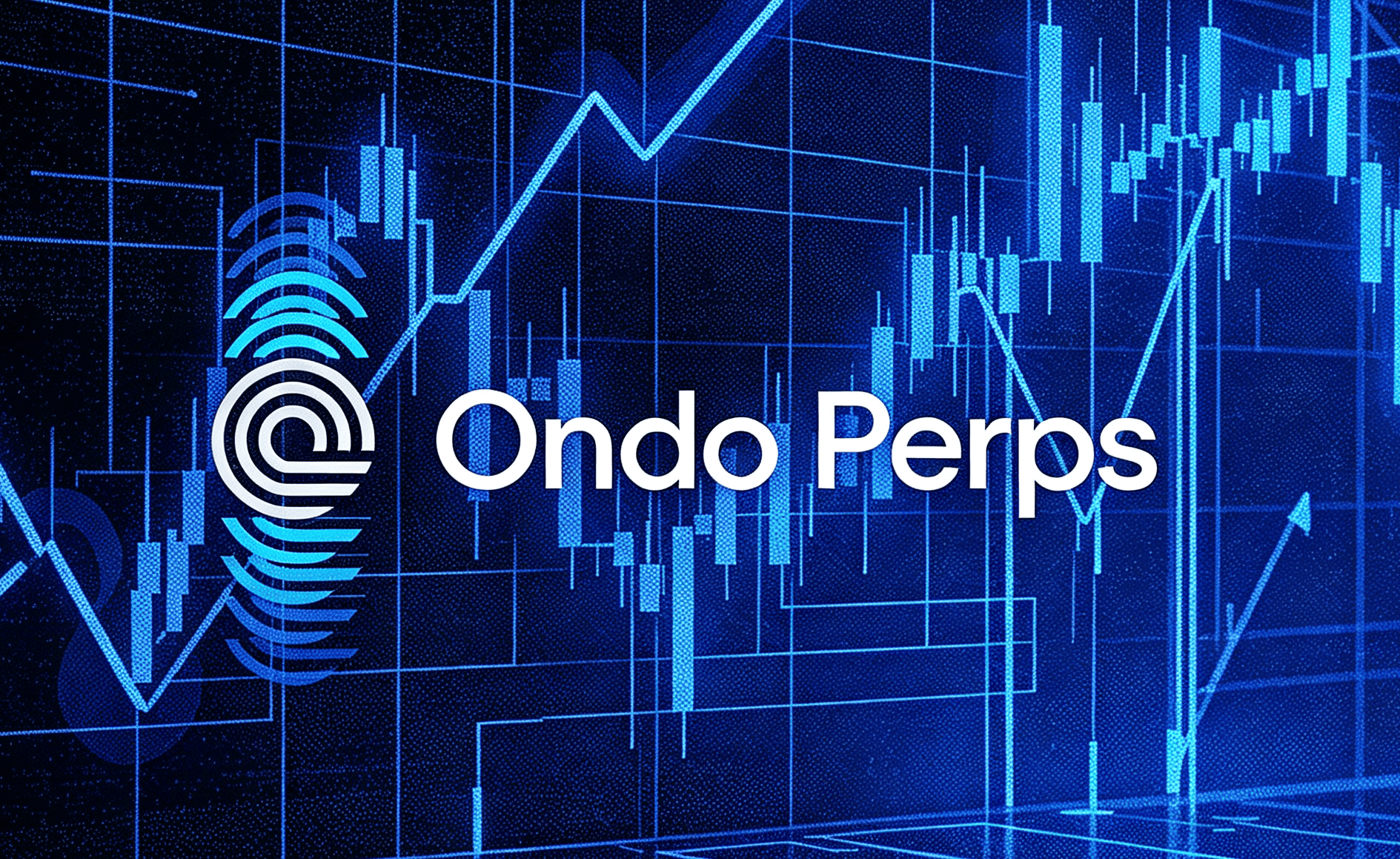
Ondo, the Leader in RWA Tokenization, is Entering the Perp DEX Arena

Ondo Finance, the dominant player in the real-world asset (RWA) tokenization space, is entering the perpetual futures (Perp) DEX arena with the launch of "Ondo Perps." This move signifies a strategic pivot from primarily being an asset issuer to becoming a comprehensive trading infrastructure provider. The platform uniquely focuses on tokenized traditional assets like stocks, indices (e.g., US 500), and commodities (gold, silver, oil), offering up to 20x leverage for 24/7 trading. A key differentiator is its planned multi-asset collateral system, which will allow users to employ tokenized stocks and bonds as margin, enabling sophisticated portfolio hedging and strategies. This approach leverages Ondo's existing strengths—deep institutional relationships, regulatory approvals, and a vast library of tokenized assets—to create a bridge between traditional finance liquidity and decentralized, permissionless trading. By integrating its asset issuance (Ondo Global Markets) with a proprietary trading venue, Ondo aims to complete the RWA financialization loop, transforming tokenized holdings from passive investments into productive capital for leverage and complex financial engineering. The launch positions Ondo Perps not just as another derivatives exchange, but as a foundational piece of next-generation infrastructure merging TradFi assets with DeFi-native execution.

Foresight NewsHace 43 min(s)

Ondo, the Leader in RWA Tokenization, is Entering the Perp DEX Arena

Foresight NewsHace 43 min(s)

Founder of Baixing.com: The Notion That Large Language Models Will Devour Everything, I Believe Half of It

Founder of Baixing.com: I Only Half-Believe the Saying “Large Language Models Will Devour Everything” Author: Wang Jianshuo, Founder of Baixing.com Many proclaim that large models are everything, but the author is skeptical. He argues that such sweeping claims often stem from a limited understanding of the future. Drawing parallels to past technologies like electricity and the internet—which were predicted to “devour everything” but didn’t—he suggests that large language models (LLMs) are better seen as a foundational base. Like electricity, this base is essential for modern development, but its real value emerges only when applied to specific scenarios through various “machines” or “tools” (e.g., Claude Code for programming, Claude Design for design). The author acknowledges that LLMs may indeed replace many existing software systems built on rigid rules, workflows, and forms (e.g., CRMs, SaaS tools), as these are precisely what LLMs excel at processing. However, he emphasizes that beyond software, elements like customer data, execution capabilities (e.g., booking a flight), trust, and physical-world interactions will not be “devoured.” Instead, he foresees that after streamlining existing software, LLMs will open up a larger space for innovative, next-generation applications. These new tools will likely feature fluid interfaces and rely less on fixed rules, unleashing greater creativity. The author cautions against short-sightedness, recalling how in 2004 many believed internet giants like Sina, Sohu, and NetEase would monopolize the market—only to be proven wrong by subsequent disruptions. In conclusion, while LLMs are a crucial foundation and a current focal point, the true mainstream of this wave lies in the diverse applications built atop them to solve concrete problems. The phrase “devour everything” is imprecise; the real opportunity lies in identifying and leveraging the areas where LLMs do bring transformative change.

marsbitHace 57 min(s)

Founder of Baixing.com: The Notion That Large Language Models Will Devour Everything, I Believe Half of It

marsbitHace 57 min(s)

Founder of Baixing.com: I Only Half Believe in the Notion that Large Language Models Devour Everything

The founder of Baixing Wang states that while large language models (LLMs) are an extremely important foundational technology—akin to electricity or the internet—he only "half believes" the notion that they will "consume everything." He argues that LLMs provide a base layer of intelligence, but real-world value and transformation come from integrating this intelligence into specific applications and devices designed for particular scenarios—like how electricity powers various appliances from washing machines to TVs. He agrees LLMs will likely consume or replace a significant portion of existing rule-based, workflow-driven software (e.g., many SaaS systems, CRMs), as these are precisely what LLMs excel at handling. However, numerous other elements—such as customer data, execution capabilities (e.g., booking a flight), trust, and physical-world interactions—will not be consumed. Wang emphasizes that after LLMs absorb certain software layers, they will open up a much larger space for innovation: new types of "streaming" software with less rigid interfaces, where fixed rules are managed by AI. This next wave of applications built on top of the stable LLM foundation is where the true mainstream opportunity lies. He cautions against the short-sightedness of declaring any technology as all-consuming, drawing parallels to past premature predictions about internet giants monopolizing the web. The key is to find opportunities within the areas LLMs do transform.

链捕手Hace 1 hora(s)

Founder of Baixing.com: I Only Half Believe in the Notion that Large Language Models Devour Everything

链捕手Hace 1 hora(s)

Trading

Spot

Artículos destacados

Cómo comprar HOME

¡Bienvenido a HTX.com! Hemos hecho que comprar Defi.app (HOME) sea simple y conveniente. Sigue nuestra guía paso a paso para iniciar tu viaje de criptos.Paso 1: crea tu cuenta HTXUtiliza tu correo electrónico o número de teléfono para registrarte y obtener una cuenta gratuita en HTX. Experimenta un proceso de registro sin complicaciones y desbloquea todas las funciones.Obtener mi cuentaPaso 2: ve a Comprar cripto y elige tu método de pagoTarjeta de crédito/débito: usa tu Visa o Mastercard para comprar Defi.app (HOME) al instante.Saldo: utiliza fondos del saldo de tu cuenta HTX para tradear sin problemas.Terceros: hemos agregado métodos de pago populares como Google Pay y Apple Pay para mejorar la comodidad.P2P: tradear directamente con otros usuarios en HTX.Over-the-Counter (OTC): ofrecemos servicios personalizados y tipos de cambio competitivos para los traders.Paso 3: guarda tu Defi.app (HOME)Después de comprar tu Defi.app (HOME), guárdalo en tu cuenta HTX. Alternativamente, puedes enviarlo a otro lugar mediante transferencia blockchain o utilizarlo para tradear otras criptomonedas.Paso 4: tradear Defi.app (HOME)Tradear fácilmente con Defi.app (HOME) en HTX's mercado spot. Simplemente accede a tu cuenta, selecciona tu par de trading, ejecuta tus trades y monitorea en tiempo real. Ofrecemos una experiencia fácil de usar tanto para principiantes como para traders experimentados.

235 Vistas totalesPublicado en 2025.06.10Actualizado en 2026.06.10

Cómo comprar HOME

Discusiones

Bienvenido a la comunidad de HTX. Aquí puedes mantenerte informado sobre los últimos desarrollos de la plataforma y acceder a análisis profesionales del mercado. A continuación se presentan las opiniones de los usuarios sobre el precio de HOME (HOME).

活动图片